Prednisone CINFA 10 mg tablets
Spain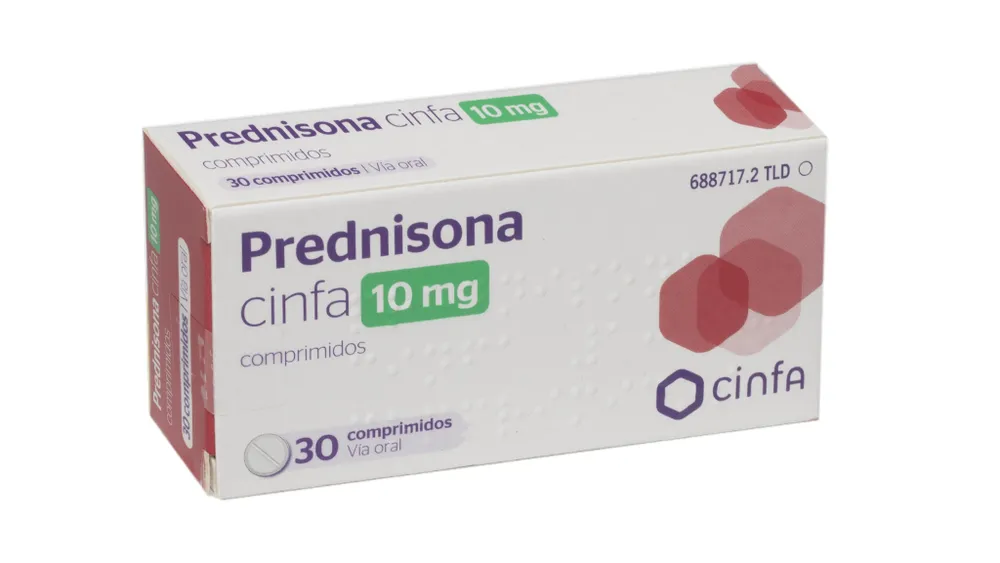
Table of Contents
- Patient Information Leaflet
- Introduction
- 1. What prednisona cinfa is and what it is used for
- 2. What you need to know before starting to take prednisona cinfa
- 3. How to take prednisona cinfa
- 4. Possible adverse effects
- 5. Storage of prednisone cinfa
- 6. Contents of the container and other information
Patient Information Leaflet
Introduction
Package leaflet: Information for the patient
prednisona cinfa 10 mg tablets
Read the entire leaflet carefully before you start taking this medicine, because it contains important information for you.
- Keep this leaflet, as you may need to read it again.
- If you have any questions, ask your doctor or pharmacist.
- This medicine has been prescribed for you only, and you should not give it to other people, even if they have the same symptoms as you, because it could harm them.
- If you experience any adverse effects, consult your doctor or pharmacist, even if they are effects not listed in this leaflet. See section 4.
Leaflet contents
- What prednisona cinfa is and what it is used for
- What you need to know before taking prednisona cinfa
- How to take prednisona cinfa
- Possible adverse effects
- How to store prednisona cinfa
- Contents of the pack and other information
1. What prednisona cinfa is and what it is used for
Prednisone is a corticosteroid (glucocorticoid) derived from cortisone.
It acts by regulating many of the body's metabolic processes.
prednisona cinfa is used for the treatment of:
- acute and chronic rheumatic disorders affecting joints and muscles,
- bronchial asthma and pulmonary fibrosis,
- ulcerative colitis (inflammatory bowel disease),
- hepatitis,
- Addison's disease,
- adrenogenital syndrome,
- kidney and urinary tract disorders,
- allergic and inflammatory skin conditions,
- hemolytic anemias,
- agranulocytosis (absence of defense blood cells),
- rheumatic purpura,
- acute leukemia and other hematological disorders,
- certain inflammatory eye diseases (allergic conjunctivitis, keratitis, choriorretinitis, iritis, iridocyclitis).
2. What you need to know before starting to take prednisona cinfa
Do not take prednisona cinfa
-
if you are allergic to prednisone, other glucocorticoids, or any of the other ingredients of this medicine (listed in section 6)
-
if you have stomach ulcer, gastritis, esophagitis (digestive system disorders)
-
if you have viral infections (such as ocular herpes simplex, chickenpox), before or after having received a vaccine
Your doctor may have advised you to take prednisone despite having one of the following conditions, in which case regular monitoring will be necessary:
-
if you have osteomalacia or osteoporosis (bone disorders)
-
if you have severe diabetes
-
if you have psychosis (mental disorder) not controlled by treatment
-
if you have tuberculosis that is not being treated
-
if you have an infection caused by bacteria, fungi, amoebae, or if you have systemic mycosis (a fungal infection disseminated throughout the body)
-
if you have lymphomas (a type of tumor of the lymphatic system) that have appeared after vaccination against tuberculosis
-
if you have any psychiatric disorder. Consult your doctor about the advisability of using this medicine
-
if you have severe high blood pressure
-
if you have asystole (heart disease) with pulmonary edema and uremia (a syndrome characterized by excess nitrogenous substances in the blood)
-
if you have myasthenia gravis (muscular disease)
-
if you have renal insufficiency.
Warnings and precautions
Talk to your doctor or pharmacist before starting to take prednisona cinfa.
Treatment with prednisone may increase the risk of infections, as it can reduce your body's defenses, potentially causing new infections or reactivating existing ones (e.g., tuberculosis or hepatitis B). In severe infections or in case of tuberculosis, prednisone should only be used in combination with treatment for the infection.
Inform your doctor if you have any type of infection, or if you have been vaccinated or plan to be vaccinated. If during treatment symptoms of acute-onset diseases appear—such as infectious, gastrointestinal, or psychiatric disturbances—consult your doctor.
You should avoid contact with people who have chickenpox or measles. If during treatment with prednisone you are exposed to these infections, contact a doctor immediately, even if you do not have symptoms.
This medicine should be used with caution in patients with stomach ulcer, ulcerative colitis (intestinal disease), diverticulitis (intestinal disease), or enteroanastomosis (after surgery), or with mental disorders.
If you have osteoporosis, your doctor may recommend additional intake of calcium and vitamin D. Inform your doctor if you have heart disease and require high doses of prednisone.
If you are diabetic, or have heart failure, very high blood pressure, or glaucoma, your doctor will perform regular check-ups.
If this medicine is taken together with fluoroquinolones (e.g., ciprofloxacin), the risk of tendon rupture and tendinitis increases.
If you have an overactive thyroid gland (hyperthyroidism).
Contact your doctor immediately if you experience muscle weakness, muscle pain, cramps, or muscle stiffness while using prednisone. These may be symptoms of a condition called thyrotoxic periodic paralysis, which may occur in patients with hyperthyroidism treated with prednisone. Additional treatment may be needed to relieve this condition.
Your doctor may increase your dose if you experience a stressful situation (infections, surgery, trauma, etc.).
During long-term treatment, your doctor will perform regular monitoring to prevent complications in the eyes, blood tests, growth monitoring (in children and adolescents), and monitoring of your hypothalamic-pituitary-adrenal axis function.
Contact your doctor if you experience blurred vision or other visual disturbances.
During prolonged treatment with prednisone, your doctor may prescribe potassium supplements and advise you to reduce sodium (salt) intake.
Consult your doctor before starting prednisone if you have scleroderma (also known as systemic sclerosis, an autoimmune disorder), because daily doses equal to or greater than 15 mg may increase the risk of a serious complication called scleroderma renal crisis. Signs of scleroderma renal crisis include increased blood pressure and reduced urine output. Your doctor may recommend regular monitoring of blood pressure and urine.
The administration of prednisone to children should be carefully evaluated, and if administered, should be given intermittently or on alternate days.
When administered to elderly patients, your doctor will monitor the patient regularly. Elderly patients should avoid prolonged treatment with this medicine.
Taking prednisone may lead to false results in skin allergy tests (tuberculin test, allergy patches, etc.).
Use in athletes
This medicine contains prednisone, which may produce a positive result in doping control tests.
Treatment should not be stopped abruptly, but gradually tapered off. Do not stop using this medicine without consulting your doctor (see section 3 “How to take prednisona cinfa”).
Taking prednisona cinfa with other medicines
Inform your doctor if you are taking or have recently taken any other medicines, including those obtained without a prescription.
Some medicines may increase the effects of prednisone, so your doctor will perform careful monitoring if you are taking these medicines (including some for HIV: ritonavir, cobicistat).
Prednisone may interfere with the following medicines:
-
Non-steroidal anti-inflammatory drugs (e.g., indometacin, salicylates)
-
Antidiabetic agents
-
Enzyme inducers:
o Carbamazepine, phenytoin, phenobarbital, or primidone (medicines used to treat epilepsy)
o Rifampicin, rifabutin (antibiotics)
-
Enzyme inhibitors such as ketoconazole (used for fungal infections)
-
Ephedrine
-
Oral anticoagulants (such as Sintrom)
-
Estrogens (medicines used for hormonal disorders), oral contraceptives
-
Atropine
-
Cardiac glycosides (medicines used to treat heart diseases)
-
Potassium-depleting diuretics (medicines used to eliminate water) and laxatives
-
Praziquantel (an antiparasitic medicine)
-
Some medicines used to treat high blood pressure
-
Some medicines for malaria
-
Immunosuppressive agents (medicines used to prevent rejection)
-
Non-depolarizing neuromuscular blockers (medicines mainly used in ICU or operating room)
-
Growth hormone
-
Protirelin (a medicine that stimulates the thyroid)
-
Fluoroquinolones: may increase the risk of tendon abnormalities.
-
Antacids
-
Salicylates (medicines of the aspirin type)
Interference with laboratory tests: Allergy tests may be suppressed.
Pregnancy and breastfeeding
If you are pregnant or breastfeeding, think you may be pregnant, or plan to become pregnant, consult your doctor or pharmacist before using this medicine.
Prednisone, like most medicines, should not be used during pregnancy or breastfeeding unless your doctor considers it essential. Therefore, you should inform your doctor as soon as possible if you become pregnant during treatment.
Prednisone passes into breast milk, so breastfeeding is not recommended during treatment, especially during long-term treatment or when high doses are used.
Driving and using machines
It should be noted that long-term treatment may reduce visual acuity.
This could negatively affect your ability to drive or operate machinery.
prednisona cinfa contains lactose. This medicine contains lactose. If your doctor has diagnosed you with an intolerance to certain sugars, consult him before taking this medicine.
prednisona cinfa contains sodium. This medicine contains less than 23 mg of sodium (1 mmol) per tablet; this is essentially “sodium-free”.
3. How to take prednisona cinfa
Follow exactly the instructions given by your doctor or pharmacist for taking this medicine. If in doubt, consult your doctor or pharmacist again.
Remember to take your medicine.
The tablets should be taken whole with sufficient liquid. The total daily dose will be divided into three or four doses, taken during or after meals. In some cases, the prescribed dose may be taken as a single daily dose during or after breakfast. Occasionally, especially in children and only if specifically instructed by your doctor, treatment may be administered on alternate days. Your doctor will determine the dose required, adjusting it according to your individual needs.
Prednisone must not be stopped abruptly; instead, the dosage should be progressively reduced. In general, the maintenance dose should always be the lowest possible.
The tablet may be divided into equal doses.
Your doctor will determine the duration of your treatment with prednisona cinfa. Do not stop treatment prematurely or abruptly, as this could worsen your condition.
If you feel that the effect of prednisona cinfa is too strong or too weak, inform your doctor or pharmacist.
Adults:
The treatment dose will depend on the type and severity of the disease and on the individual patient's response. Generally, the initial dose is 20 to 60 mg (milligrams) per day, as prescribed by your doctor. These initial doses will be administered until a satisfactory response is observed.
Once this occurs, your doctor will gradually reduce your prednisone dose to reach the maintenance dose, which usually ranges between 5 and 10 mg daily. In bronchial asthma, the same approach is followed, although the initial dose in very severe cases ranges from 15 to 60 mg.
Children:
In general, treatment with prednisone in children may be given on alternate days or intermittently. The recommended initial doses are 1 to 3 mg of prednisone per kilogram of body weight per day.
The maintenance dose is typically 0.25 mg of prednisone per kilogram of body weight per day.
If you take more prednisona cinfa than you should
In case of overdose or accidental ingestion, contact your doctor or pharmacist immediately or call the Toxicology Information Service at telephone number 91 562 04 20, indicating the medication and the amount ingested.
If you forget to take prednisona cinfa
Do not take a double dose to make up for forgotten doses.
If you stop treatment with prednisona cinfa
Do not stop using this medicine without consulting your doctor.
If you have any further questions about the use of this medicine, ask your doctor or pharmacist.
4. Possible adverse effects
Like all medicines, this medicine may cause adverse effects, although not everyone experiences them.
The observed adverse effects, according to their frequency of occurrence, are as follows: very common (may affect more than 1 in 10 patients); common (may affect up to 1 in 10 patients); uncommon (may affect up to 1 in 100 patients); rare (may affect up to 1 in 1,000 patients); very rare (may affect up to 1 in 10,000 patients); frequency not known (cannot be estimated from the available data).
In most cases, adverse reactions occur especially when high doses are used and during long-term treatments, and are detailed below:
Blood and lymphatic system disorders: leukocytosis (increased white blood cells in blood), lymphopenia (reduction in lymphocytes in blood), eosinopenia (reduction in eosinophils in blood), polycythemia (increased red blood cells in blood).
Endocrine disorders: signs of adrenal hyperactivity (Cushing's syndrome, a disease caused by increased production of a hormone called cortisol); in prolonged treatments, adrenocortical insufficiency (a condition characterized by weakness, constant fatigue, loss of appetite, and weight loss).
Eye disorders: glaucoma and cataracts. Blurred vision.
Gastrointestinal disorders: stomach ulcer, intestinal bleeding, pancreatitis (inflammation of the pancreas).
General disorders and administration site conditions: delayed wound healing.
Immune system disorders: severe allergic-type reactions, including arrhythmias, bronchospasm, decreased or increased blood pressure, circulatory failure, heart attack.
Infections and infestations: existing infections may worsen, and new infections that are difficult to diagnose may appear.
Metabolism and nutrition disorders: fluid retention (edema), potassium loss (which may cause disturbances in heart rhythm), weight gain, increased blood sugar, diabetes mellitus, increased levels of cholesterol and triglycerides in blood, increased appetite, growth retardation in children.
Cardiac disorders (frequency not known): decreased heart rate.
Musculoskeletal and connective tissue disorders: muscle diseases and muscle weakness, tendon abnormalities, tendinitis, tendon ruptures, loss of calcium from bones, osteoporosis, growth retardation in children.
Nervous system disorders: increased intracranial pressure (especially in children), increased seizures in epileptic patients or onset of epilepsy.
Psychiatric disorders: psychosis, mania, depression, hallucinations, emotional instability, irritability, increased activity, euphoria, anxiety, sleep disturbances, suicidal thoughts.
Reproductive system and breast disorders: irregular menstruation or absence of menstruation, hirsutism (excessive hair growth).
Skin and subcutaneous tissue disorders: acne or other skin problems (allergy, bruising, stretch marks), edema, changes in skin color, perioral dermatitis.
Vascular disorders: high blood pressure, increased risk of atherosclerosis (narrowing and hardening of arteries) and thrombosis (blood clot formation), vasculitis, capillary fragility.
Renal and urinary disorders: scleroderma renal crisis in patients who already have scleroderma (an autoimmune disorder). Signs of scleroderma renal crisis include increased blood pressure and decreased urine output.
Rapidly reducing the dose after long-term treatment may cause muscle and joint pain.
If you consider any of the adverse effects you experience to be severe, or if you notice any adverse effects not listed in this leaflet, inform your doctor or pharmacist.
Reporting of adverse effects
If you experience any type of adverse effect, consult your doctor or pharmacist, even if it is a possible adverse effect not listed in this leaflet. You may also report them directly via the Spanish Pharmacovigilance System for Human Medicines: https://www.notificaram.es. By reporting adverse effects, you can help provide more information on the safety of this medicine.
5. Storage of prednisone cinfa
Keep this medicine out of the sight and reach of children.
This medicine does not require any special storage conditions.
Do not use this medicine after the expiry date stated on the packaging after "EXP". The expiry date refers to the last day of the month indicated.
Medicines must not be disposed of via wastewater or household waste. Dispose of unused medicines and their containers at a SIGRE Point at your pharmacy. If you have any doubts, ask your pharmacist how to dispose of unused medicines and their containers. This will help protect the environment.
6. Contents of the container and other information
Composition of prednisone cinfa
- The active substance is prednisone. Each tablet contains 10 mg of prednisone.
- The other components (excipients) are:
Monohydrate lactose, sodium carboxymethyl starch (type A) (from potato), magnesium stearate, colloidal anhydrous silica, and talc.
Appearance of the product and contents of the container
White, cylindrical, biconvex tablets, scored on one side and marked "PD10" on the other.
Prednisone cinfa tablets are packaged in PVC-PVDC/Aluminum blisters.
Prednisone cinfa tablets are available in packages containing 30 or 500 tablets (hospital pack).
Only certain package sizes may be commercially available.
Marketing Authorization Holder and Manufacturer:
Laboratorios Cinfa, S.A.
Carretera Olaz-Chipi, 10. Polígono Industrial Areta
31620 Huarte (Navarra) - Spain
Date of the most recent revision of this summary: January 2026
Detailed and up-to-date information on this medicinal product is available on the website of the Spanish Agency of Medicines and Health Products (AEMPS) www.aemps.gob.es/
You can access detailed and updated information about this medicine by scanning with your mobile phone (smartphone) the QR code included in the package leaflet and outer packaging. You can also access this information at the following internet address: https://cima.aemps.es/cima/dochtml/p/75649/P_75649.html
QR code to: https://cima.aemps.es/cima/dochtml/p/75649/P_75649.html