Pravastatin Sandoz 40 mg tablets EFG
Spain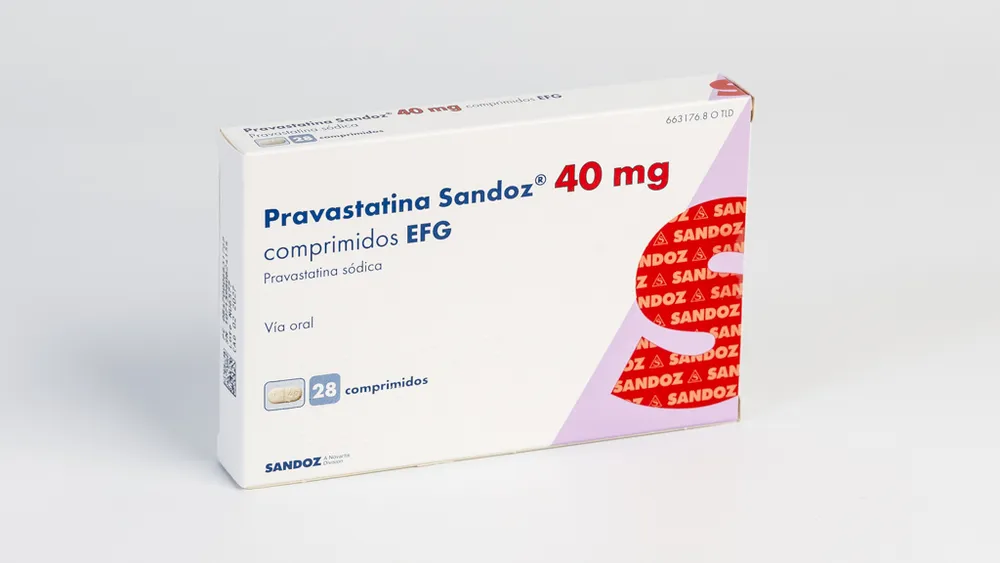
Table of Contents
- Package leaflet: Information for the user
- Introduction
- 1. What Pravastatina Sandoz is and what it is used for
- 2. What you need to know before starting to take Pravastatin Sandoz
- 3. How to take Pravastatin Sandoz
- 4. Possible adverse effects
- 5. Storage of Pravastatin Sandoz
- 6. Contents of the pack and other information
Package leaflet: Information for the user
Introduction
Package leaflet: information for the patient
Pravastatin Sandoz 10 mg tablets EFG
Pravastatin Sandoz 20 mg tablets EFG
Pravastatin Sandoz 40 mg tablets EFG
Read the entire leaflet carefully before you start taking this medicine because it contains important information for you.
-
Keep this leaflet. You may need to read it again.
-
If you have any questions, ask your doctor or pharmacist.
-
This medicine has been prescribed for you only. Do not pass it on to others, even if they have the same symptoms as you, because it could harm them.
- If you experience any adverse effects, consult your doctor or pharmacist, even if they are effects not listed in this leaflet. See section 4.
Leaflet contents:
- What Pravastatin Sandoz is and what it is used for
- What you need to know before taking Pravastatin Sandoz
- How to take Pravastatin Sandoz
- Possible side effects
- How to store Pravastatin Sandoz
- Contents of the pack and other information
1. What Pravastatina Sandoz is and what it is used for
Pravastatina Sandoz belongs to a group of medicines called HMG-CoA reductase inhibitors (or statins) that work by reducing the production of "bad cholesterol" in your body and increasing levels of "good cholesterol". Cholesterol is a lipid that can cause coronary heart disease by narrowing the blood vessels that supply blood to the heart. This condition, known as atherosclerosis or hardening of the arteries, may lead to chest pain (angina pectoris), a heart attack (myocardial infarction), or stroke.
If you have already had a heart attack or suffer from chest pain at rest (unstable angina), pravastatin reduces the risk of having another heart attack or stroke in the future, regardless of your cholesterol levels.
If you have high cholesterol levels but do not have coronary heart disease, pravastatin will reduce the risk of having a heart attack in the future.
When taking pravastatin, your doctor will recommend that, as part of your treatment, you take additional measures such as following a low-fat diet, exercising, and losing weight.
Pravastatin reduces elevated lipid levels in patients who have undergone an organ transplant and are taking medications to prevent rejection of the transplanted organ.
2. What you need to know before starting to take Pravastatin Sandoz
Do not take Pravastatin Sandoz:
- if you are allergic to pravastatin sodium or any of the other ingredients of this medicine (listed in section 6),
- if you have had repeated blood tests showing abnormal liver function (increased levels of liver enzymes in the blood),
- if you are pregnant or there is any possibility you could become pregnant,
- if you are breastfeeding (see section “Pregnancy and breastfeeding”),
- if you have liver problems (see section 2: “Warnings and precautions”).
Consult your doctor if you have any doubts about whether you can take Pravastatin Sandoz.
Warnings and precautions
Consult your doctor or pharmacist before starting to take Pravastatin Sandoz if you have experienced any of the following:
- kidney disease or an underactive thyroid,
- alcohol-related problems (regular consumption of large amounts of alcohol),
- a hereditary muscle disorder, either in yourself or in a close blood relative,
- side effects affecting your muscles while taking other cholesterol-lowering medicines such as statins or fibrates,
- if you have or have had myasthenia (a disease characterized by generalized muscle weakness that, in some cases, affects the muscles used for breathing) or ocular myasthenia (a condition causing weakness of the eye muscles), as statins may sometimes worsen the condition or trigger the onset of myasthenia (see section 4),
- if you have a history of liver problems,
- if you have severe respiratory insufficiency,
- if you are currently taking or have taken within the last 7 days an oral or injectable medicine containing fusidic acid (used to treat bacterial infection). The combination of fusidic acid and pravastatin may lead to a serious muscle problem (rhabdomyolysis).
If you have experienced any of these conditions, your doctor will need to perform a blood test before, and possibly during, treatment with pravastatin to assess your risk of developing muscle-related adverse effects. You may also require this blood test if you are over 70 years of age.
Contact your doctor as soon as possible to discuss your concerns and follow the recommended precautions.
Also inform your doctor or pharmacist if you experience persistent muscle weakness. Additional tests and treatments may be needed to diagnose and manage this condition.
While taking this medicine, your doctor will closely monitor whether you have diabetes or are at risk of developing diabetes. You may develop diabetes if you have high blood sugar and fat levels, are overweight, and have high blood pressure.
In a small number of people, statins may affect the liver. This is detected by a simple blood test that identifies increased levels of liver enzymes. For this reason, your doctor will usually perform this blood test (liver function test) before and during treatment with pravastatin.
If you experience unexplained muscle pain, weakness, or cramps while taking statins, contact your doctor immediately without delay.
Also inform your doctor or pharmacist if you have persistent muscle weakness. Additional testing and treatment may be necessary to diagnose and manage this condition.
Children and adolescents (8–18 years of age) with an inherited condition that increases blood cholesterol levels (heterozygous familial hypercholesterolemia):
In pre-pubertal children, the doctor must carefully evaluate the benefit-risk balance of treatment before starting therapy.
Taking Pravastatin Sandoz with other medicines
Inform your doctor or pharmacist if you are taking, have recently taken, or might need to take any other medicines.
It is important that you inform your doctor if you are already being treated with any of the following medicines:
- other cholesterol-lowering medicines called fibrates (e.g., gemfibrozil, fenofibrate) and nicotinic acid. The combination may increase the risk of developing muscle problems,
- medicines used to modify or regulate the immune response, e.g., cyclosporine. The combination may increase the risk of adverse effects,
- antibiotics such as erythromycin, clarithromycin, and roxithromycin. The combination may increase the risk of developing muscle problems,
- a lipid-lowering resin agent such as cholestyramine or colestipol. Pravastatin should usually be taken at least one hour before or four hours after taking the resin. This is because the resin may interfere with the absorption of pravastatin if both medicines are taken close together,
- rifampicin (an antibiotic). The combination may result in increased levels of pravastatin. Pravastatin should usually be taken at least two hours before taking rifampicin,
- colchicine (used to treat gout attacks). The combination may increase the risk of developing muscle problems,
- lenalidomide (a medicine that affects the function of your immune system). The combination may increase the risk of developing muscle problems.
If you are taking a medicine used to treat and prevent blood clots known as a “vitamin K antagonist,” consult your doctor before taking pravastatin, as concomitant use of vitamin K antagonists with pravastatin may increase the results of blood tests used to monitor treatment with vitamin K antagonists.
If you need to take oral fusidic acid to treat a bacterial infection, you must temporarily stop taking this medicine. Your doctor will advise you when you can restart treatment with pravastatin. Using pravastatin with fusidic acid may cause muscle weakness, tenderness, or pain (rhabdomyolysis). For further information on rhabdomyolysis, see section 4.
Taking Pravastatin Sandoz with food, drink, and alcohol
Pravastatin Sandoz can be taken with or without food. Inform your doctor if you regularly consume large amounts of alcohol.
If you are unsure about this, follow your doctor’s advice.
Pregnancy and breastfeeding
If you are pregnant or breastfeeding, think you may be pregnant, or are planning to become pregnant, consult your doctor or pharmacist before using this medicine.
You must not take pravastatin during pregnancy. Your doctor will exercise special caution when prescribing this medicine to young women who could become pregnant and will explain the potential risks associated with pravastatin treatment during pregnancy. If you are pregnant or planning to become pregnant, you must stop taking pravastatin and inform your doctor immediately (see section 2: “Do not take Pravastatin Sandoz”).
You must not take pravastatin while breastfeeding because pravastatin passes into breast milk (see section 2: “Do not take Pravastatin Sandoz”).
Driving and using machines
Pravastatin usually does not affect the ability to drive. However, if you experience symptoms such as dizziness, blurred or double vision before driving or operating machinery, ensure you are fit to do so.
Pravastatin Sandoz contains lactose
This medicine contains lactose. If your doctor has informed you that you have an intolerance to certain sugars, consult him before taking this medicine.
Pravastatin Sandoz contains sodium
This medicine contains less than 23 mg of sodium (1 mmol) per tablet; this is essentially “sodium-free.”
3. How to take Pravastatin Sandoz
Follow exactly the instructions provided by your doctor or pharmacist for taking this medicine. If in doubt, consult your doctor or pharmacist again.
Adults
The recommended dose is 10 to 40 mg once daily, preferably at night. Pravastatin can be taken with or without food, with half a glass of water. The tablet may be divided into equal doses.
Use in children and adolescents (8 to 18 years of age) with heterozygous familial hypercholesterolemia
Use in children and adolescents (8 to 13 years of age): The recommended dose range is 10 to 20 mg once daily.
Use in children and adolescents (14 to 18 years of age): The recommended dose range is 10 to 40 mg once daily.
Renal and hepatic impairment
The usual dose is 10 mg once daily in patients with renal or hepatic impairment.
After organ transplantation
The usual starting dose is 20 mg once daily. The dose may be increased up to 40 mg daily under medical supervision.
Other medicines
Pravastatin should normally be taken at least one hour before, or four hours after, taking cholestyramine or colestipol.
The usual starting dose for patients taking medications to modify or suppress the immune response (e.g., cyclosporine) is 20 mg once daily. This dose may be increased up to 40 mg daily under medical supervision.
Duration of treatment
Your doctor will determine how long you should take this medicine. This medicine should be used regularly and for as long as your doctor prescribes, even if this is for a very long period. Do not stop treatment on your own initiative.
If you think that the effect of pravastatin is too strong or too weak, inform your doctor or pharmacist.
If you take more Pravastatin Sandoz than you should
If you have taken more Pravastatin Sandoz than you should, or if someone has accidentally taken Pravastatin Sandoz, contact your doctor, pharmacist, or call the Poison Information Service immediately at telephone number: 91 562 04 20, stating the medicine and amount taken. It is recommended to bring the packaging and leaflet to the healthcare professional.
If you forget to take Pravastatin Sandoz
If you forget a dose, do not worry. Simply take your usual dose at the next scheduled time. Do not take a double dose to make up for forgotten doses.
If you stop taking Pravastatin Sandoz
Always consult your doctor if you wish to stop treatment.
If you have any further questions about the use of this medicine, ask your doctor or pharmacist.
4. Possible adverse effects
Like all medicines, this medicine can cause adverse effects, although not everyone will experience them.
Stop taking Pravastatin Sandoz and contact your doctor immediately if you experience symptoms such as:
- swelling of the face, tongue, mouth, eyes or throat, difficulty swallowing, hives, or breathing difficulties, dizziness. These are symptoms of a serious allergic reaction (angioedema, anaphylaxis), which must be treated immediately, usually in a hospital,
- unexplained or persistent muscle pain, tenderness, weakness or cramps, especially if you also feel unwell or have a fever. In very rare cases, muscle problems can be serious (rhabdomyolysis) and may lead to potentially fatal kidney disease,
- yellowing of the skin or whites of the eyes and/or loss of appetite and general malaise, stomach pain. These are symptoms of severe inflammation of the liver and/or pancreas, and rapid loss of liver function may occur.
Other adverse effects
Uncommon adverse effects (may affect up to 1 in 100 people)
-
dizziness, headache, sleep disorders, insomnia,
-
vision problems such as double or blurred vision,
-
stomach and intestinal problems such as indigestion, heartburn, stomach pain, discomfort, nausea, vomiting, diarrhoea or constipation, and flatulence,
-
skin reactions such as itching and rash, hives (urticaria), or problems with hair and scalp, including hair loss,
-
bladder problems (frequent or painful urination, night-time leakage),
-
sexual difficulties,
-
tiredness,
-
muscle and joint pain,
-
tendon inflammation, which may progress to tendon rupture.
Rare adverse effects (may affect up to 1 in 1,000 people)
- increased sensitivity of the skin to sunlight.
Very rare adverse effects (may affect up to 1 in 10,000 patients)
- sensory disturbances, including burning/tingling or numbness sensations, which may indicate nerve ending damage,
- allergic reactions causing joint pain, skin rashes and fever (lupus erythematosus),
- muscle pain or weakness (myopathy), inflammation of the muscles (myositis, polymyositis),
- abnormal blood tests: increased transaminases (a group of enzymes naturally present in the blood), which may indicate liver problems. Your doctor may wish to carry out periodic blood tests to monitor these,
- inflammation of the skin and muscles (dermatomyositis).
Adverse effects with unknown frequency (frequency cannot be estimated from available data)
- persistent muscle weakness,
- rash, including lichenoid eruption,
- myasthenia gravis (a disease causing generalized muscle weakness which, in some cases, affects the muscles used for breathing),
- ocular myasthenia (a disease causing weakness of the eye muscles),
- muscle rupture.
Contact your doctor if you experience worsening weakness in your arms or legs after periods of activity, double vision or drooping eyelids, difficulty swallowing, or difficulty breathing.
The following adverse effects have been reported with some statins (medicines of the same type):
- nightmares,
- memory loss,
- depression,
- respiratory problems including persistent cough and/or shortness of breath or fever,
- diabetes. This may occur more frequently if you have high levels of sugar and fats in your blood, are overweight, or have high blood pressure. Your doctor will monitor you while you are taking this medicine.
Reporting of adverse effects
If you experience any adverse effects, consult your doctor or pharmacist, even if they are possible adverse effects not listed in this leaflet. You may also report them directly via the Spanish Pharmacovigilance System for Human Medicines: https://www.notificaram.es. By reporting adverse effects, you can help provide more information on the safety of this medicine.
5. Storage of Pravastatin Sandoz
Keep this medicine out of sight and reach of children.
Do not use this medicine after the expiry date stated on the packaging or on the blister after EXP. The expiry date refers to the last day of the month indicated.
Store in the original packaging to protect from moisture.
Medicines must not be disposed of via wastewater or household waste. Dispose of unused medicines and their packaging at the SIGRE Point at your pharmacy. If in doubt, ask your pharmacist how to properly dispose of medicines and packaging you no longer need. This will help protect the environment.
6. Contents of the pack and other information
Composition of Pravastatin Sandoz
- The active substance is: sodium pravastatin.
Pravastatin Sandoz 10 mg:
Each tablet contains 10 mg of sodium pravastatin.
Pravastatin Sandoz 20 mg:
Each tablet contains 20 mg of sodium pravastatin.
Pravastatin Sandoz 40 mg:
Each tablet contains 40 mg of sodium pravastatin.
- The other components are: microcrystalline cellulose, lactose monohydrate, anhydrous disodium phosphate, sodium croscarmellose, sodium lauryl sulfate, povidone K25, iron oxide (brown E172), anhydrous colloidal silica, and magnesium stearate.
Appearance of the product and contents of the pack
Pravastatin Sandoz 10 mg:
Light brown, mottled, oval tablets, with a score line on both sides and marked with “P 10” on one side.
Pravastatin Sandoz 20 mg:
Light brown, mottled, oval tablets, with a score line on both sides and marked with “P 20” on one side.
Pravastatin Sandoz 40 mg:
Light brown, mottled, oval tablets, with a score line on both sides and marked with “P 40” on one side.
Alu/Alu blister packs:
1, 7, 10, 14, 20, 21, 28, 30, 50, 60, 98, 100, 100x1 tablets.
Only certain pack sizes may be marketed.
Marketing Authorization Holder
Sandoz Farmacéutica, S.A.
Parque Norte Business Park
Roble Building
C/ Serrano Galvache, 56
28033 Madrid
Spain
Manufacturer
Lek Pharmaceuticals d.d
Verovskova 57
SI-1526 Ljubljana
Slovenia
or
Lek S.A. Ul. Domaniewska 50C
02-672 Warszawa
Poland
or
Salutas Pharma GmbH Otto-von-Guericke-Allee 1
39179 Barleben
Germany
or
Lek Pharmaceuticals d.d.
Trimlini 2 D
9220 Lendava
Slovenia
This medicinal product is authorized in the Member States of the European Economic Area under the following names:
Belgium: Pravastatine Sandoz 20 mg tabletten
Pravastatine Sandoz 40 mg tabletten
Denmark: Pravastatin Sandoz
Finland: Pravastatina Sandoz 20 mg Tabletti
Pravastatina Sandoz 40 mg Tabletti
France: Pravastatine Sandoz 10 mg, comprimé sécable
Pravastatine Sandoz 20 mg, comprimé sécable
Pravastatine Sandoz 40 mg, comprimé sécable
Italy: PRAVASTATINA SANDOZ GMBH
Netherlands: PRAVASTATINENATRIUM SANDOZ 10, tabletten 10
PRAVASTATINENATRIUM SANDOZ 20, tabletten 20
PRAVASTATINENATRIUM SANDOZ 40, tabletten 40
Norway: Pravastatin Sandoz 20 mg tabletter
Pravastatin Sandoz 40 mg tabletter
Portugal: PRAVASTATINA SANDOZ
United Kingdom: Pravastatin Sodium 10 mg Tablets
Pravastatin Sodium 20 mg Tablets
Pravastatin Sodium 40 mg Tablets
Sweden: Pravastatin Sandoz 20 mg tabletter
Pravastatin Sandoz 40 mg tabletter
Date of the most recent revision of this leaflet: April 2024
Detailed and up-to-date information on this medicinal product is available on the website of the Spanish Agency of Medicines and Health Products (AEMPS) http://www.aemps.gob.es/