Normostat 120 mg hard capsules
Spain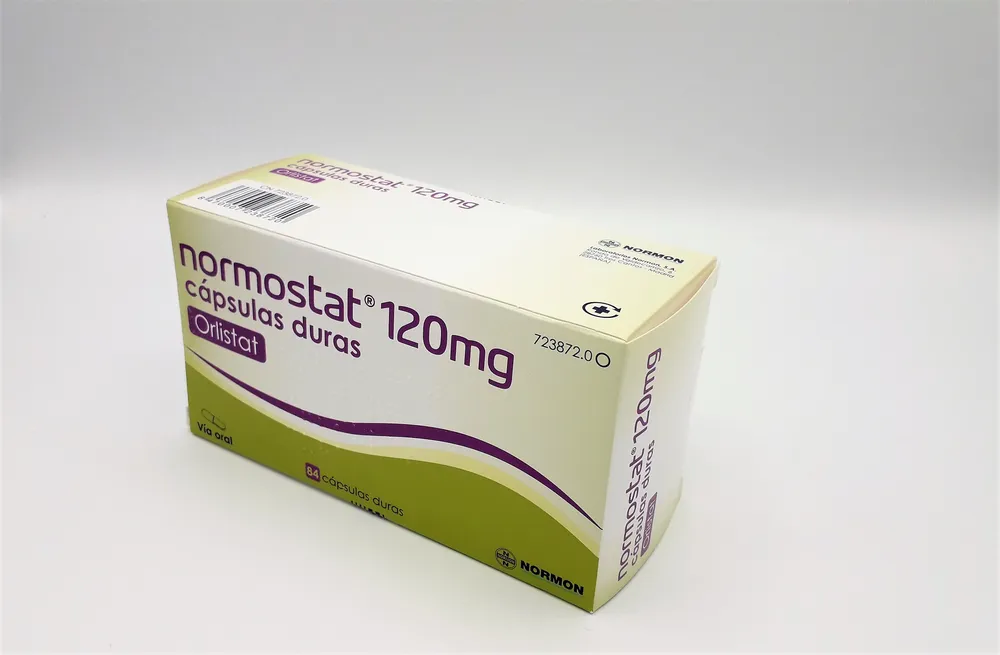
Table of Contents
- Package leaflet: Information for the user
- Introduction
- 1. What Normostat is and what it is used for
- 2. What you need to know before starting to take Normostat
- **Do not take Normostat**
- **Warnings and precautions**
- **Children**
- **Taking Normostat with other medicines**
- **Taking Normostat with food, drink, and alcohol**
- **Pregnancy and lactation**
- **Driving and operating machinery**
- 3. How to take Normostat
- **If you take more Normostat than you should**
- **If you forget to take Normostat**
- 4. Possible adverse effects
- **Very common adverse effects (affect more than 1 in 10 patients)**
- **Frequent adverse effects (affect between 1 and 10 out of every 100 patients)**
- 5. Storage of Normostat
- 6. Contents of the container and other information
- **Appearance of the product and contents of the container**
- **Marketing Authorization Holder**
Package leaflet: Information for the user
Introduction
Package leaflet: information for the user
Normostat 120 mg hard capsules
Orlistat
Read all of this leaflet carefully before you start taking this medicine, because it contains important information for you.
- Keep this leaflet, as you may need to read it again. If you have any questions, ask your doctor or pharmacist.
- This medicine has been prescribed for you only, and you should not give it to other people, even if they have the same symptoms as you, because it may harm them.
- If you experience any adverse effects, consult your doctor or pharmacist, even if they are adverse effects not listed in this leaflet. See section 4.
Contents of this leaflet
- What Normostat is and what it is used for
- What you need to know before taking Normostat
- How to take Normostat
- Possible adverse effects
- How to store Normostat
- Contents of the pack and other information
1. What Normostat is and what it is used for
Normostat is a medicine used to treat obesity. It acts on your digestive system by preventing the digestion of about one-third of the fat contained in the food you consume. Normostat binds to enzymes in your digestive system (lipases), thereby inhibiting the hydrolysis of part of the fats you have ingested during meals. Undigested fat cannot be absorbed and is eliminated from your body.
Normostat is indicated for the treatment of obesity in conjunction with a low-calorie diet.
2. What you need to know before starting to take Normostat
Do not take Normostat
- If you are allergic (hypersensitive) to orlistat or to any of the other components of Normostat.
- If you have chronic malabsorption syndrome (inadequate absorption of nutrients through the digestive tract).
- If you have cholestasis (a liver disorder).
- If you are breastfeeding.
Warnings and precautions
Weight loss may also affect the dosage of medications you are taking for other conditions (e.g. high cholesterol or diabetes). Be sure to inform your doctor if you are taking these or other medications. Weight loss may mean that you require a dosage adjustment for these medications.
To achieve the maximum benefit from Normostat, you must follow the nutritional program recommended by your doctor. As with any weight control program, excessive intake of fat and calories may reduce the weight-loss effect.
This medicine may cause a harmless change in your bowel habits, such as oily or fatty stools, due to the excretion of undigested fat in the feces. The likelihood of this occurring may increase if Normostat is taken with a high-fat diet. In addition, your daily fat intake should be evenly distributed among the three main meals, since taking Normostat with a meal very high in fat may increase the likelihood of gastrointestinal effects.
In case of severe diarrhea, oral contraceptives may become less effective; therefore, the use of an additional contraceptive method is recommended.
In patients with chronic kidney disease, the use of orlistat may be associated with kidney stones. Inform your doctor if you have kidney problems.
Children
Normostat is not indicated for use in children.
Taking Normostat with other medicines
Inform your doctor or pharmacist if you are taking, have recently taken, or might need to take any other medicines.
This is important because using more than one medicine at the same time may increase or decrease their effects.
Normostat may modify the action of:
- Anticoagulants (e.g., warfarin); therefore, your doctor may need to monitor your blood coagulation.
- Cyclosporine. Concomitant administration with cyclosporine is not recommended. Your doctor may need to monitor your cyclosporine plasma levels more frequently than usual.
- Iodine salts and/or levothyroxine. These may cause cases of hypothyroidism and/or disturbances in the control of hypothyroidism.
- Amiodarone. Consult your doctor.
- Medicines used to treat AIDS.
- Medicines for depression, psychiatric disorders, or anxiety.
Normostat reduces the absorption of supplements of certain fat-soluble nutrients, especially beta-carotene and vitamin E. Therefore, you should follow your doctor's advice and maintain a balanced diet rich in fruits and vegetables. Your doctor may recommend a multivitamin supplement.
Orlistat may interfere with anticonvulsant treatment by reducing the absorption of antiepileptic medicines, which could lead to seizures. Consult your doctor if you notice any change in the frequency or severity of seizures while taking Normostat together with antiepileptic medicines.
Normostat is not recommended for patients taking acarbose (an anti-diabetic drug used for Type 2 diabetes).
Taking Normostat with food, drink, and alcohol
Normostat can be taken immediately before, during, or up to one hour after a meal. The capsule should be swallowed with water.
Pregnancy and lactation
Normostat is not recommended during pregnancy.
You should not breastfeed your child during treatment with Normostat, as it is unknown whether Normostat passes into breast milk.
Driving and operating machinery
Normostat has no known effect on the ability to drive or operate machinery.
Normostat contains sodium
This medicine contains less than 1 mmol of sodium (23 mg) per capsule; this is essentially "sodium-free".
3. How to take Normostat
Follow exactly the administration instructions for Normostat given by your doctor. If in doubt, consult your doctor or pharmacist.
The recommended dose of Normostat is one 120 mg capsule taken with each of the three main meals of the day. It may be taken immediately before, during, or up to one hour after the meal. The capsule should be swallowed with water.
Normostat should be taken with a calorie-controlled, well-balanced diet rich in fruits and vegetables and containing approximately 30% of calories from fat. Your daily intake of fats, carbohydrates, and proteins should be distributed over three meals. This means that you will usually take one capsule at breakfast, another at lunch, and another at dinner. To achieve optimal benefits, avoid eating fatty foods between meals, such as biscuits, chocolate, or salty snacks.
Normostat works only in the presence of dietary fat. Therefore, you do not need to take Normostat if you skip a main meal or if you eat a meal that contains no fat.
If for any reason you have not taken your medicine exactly as prescribed, inform your doctor. Otherwise, your doctor may think that this medicine was not effective or well tolerated and may change your treatment unnecessarily.
Your doctor will discontinue treatment with Normostat if, after 12 weeks, you have not lost at least 5% of your initial body weight at the start of treatment.
Normostat has been studied in clinical trials lasting up to 4 years.
If you take more Normostat than you should
If you take more capsules than your doctor has instructed, or if someone else accidentally takes your medicine, contact your doctor, pharmacist, or hospital, as you may require medical attention.
If you forget to take Normostat
If you forget to take your medication at any time, take it as soon as you remember, provided that it is within one hour after eating your meal; then continue taking it at your usual intervals. Do not take a double dose to make up for missed doses. If you have missed several doses, please inform your doctor and follow the advice given by him or her.
Do not change the prescribed dose yourself unless your doctor tells you to do so.
If you have any questions about the use of this product, ask your doctor or pharmacist.
4. Possible adverse effects
Like all medicines, this medicine can cause adverse effects, although not everyone will experience them.
If you feel unwell while taking Normostat, tell your doctor or pharmacist as soon as possible.
Most of the unwanted effects associated with the use of Normostat are due to its local action on the digestive system. These symptoms are usually mild, occur at the beginning of treatment, and appear mainly after meals high in fat.
Normally, these symptoms disappear if you continue with the treatment and follow the recommended diet.
Very common adverse effects (affect more than 1 in 10 patients)
Headache, upper respiratory tract infection, abdominal pain or discomfort, urgency or increased need to defecate, flatulence (gas), flatulence (gas) with fecal incontinence, oily fecal incontinence, oily or fatty stools, liquid stools, more frequent bowel movements, influenza, low blood sugar levels (experienced by some patients with type 2 diabetes)
Frequent adverse effects (affect between 1 and 10 out of every 100 patients)
Lower respiratory tract infection, rectal pain or discomfort, soft stools, incontinence (fecal), bloating (experienced by some patients with type 2 diabetes), disturbances in teeth and gums, menstrual irregularity, fatigue, anxiety.
The following adverse effects have also been reported, but their frequency cannot be estimated from the available data:
Allergic reactions. The main symptoms are: itching, skin rash, hives (slightly raised, itchy areas of skin that are paler or redder than surrounding skin), severe difficulty breathing, nausea, vomiting, and malaise. Blisters on the skin (including blisters that burst). Diverticulitis. Rectal bleeding. Increases in liver enzyme levels may be detected in blood tests. Hepatitis (inflammation of the liver). Symptoms may include yellowing of the skin and eyes, itching, dark-colored urine, stomach pain, and liver tenderness (indicated by pain under the front part of the rib cage on the right side), sometimes accompanied by loss of appetite. Stop taking Normostat if these symptoms occur and inform your doctor. Gallstones. Pancreatitis (inflammation of the pancreas). Oxalate nephropathy (caused by calcium oxalate, which may lead to kidney stones). See Section 2: Warnings and precautions. Interactions with anticoagulants.
Reporting of adverse effects
If you experience any type of adverse effect, consult your doctor, pharmacist, or nurse, even if it is a possible adverse effect not listed in this leaflet. You may also report them directly through the Spanish Pharmacovigilance System for Human Medicinal Products: www.notificaram.es. By reporting adverse effects, you can help provide more information on the safety of this medicine.
5. Storage of Normostat
Keep out of sight and reach of children.
Do not store above 25°C.
Keep in the original packaging to protect from light and moisture.
Medicines must not be disposed of via wastewater or household waste. Ask your pharmacist how to dispose of medicines and packaging you no longer need. This will help protect the environment.
6. Contents of the container and other information
Composition of Normostat
The active substance is orlistat. Each capsule contains 120 mg of orlistat.
The other components are:
- capsule filling: microcrystalline cellulose PH112, sodium carboxymethyl starch (from potato) (type A), colloidal anhydrous silica, sodium lauryl sulfate
- capsule shell: gelatin, titanium dioxide (E171), indigo carmine (E132).
Appearance of the product and contents of the container
Normostat capsules have a light blue body and cap.
Normostat is available in blister packs containing 42 and 84 capsules. Only certain pack sizes may be marketed.
Marketing Authorization Holder
LABORATORIOS NORMON, S.A.
Ronda de Valdecarrizo, 6 – 28760 Tres Cantos – Madrid (SPAIN)
Manufacturer responsible:
Pharmaceutical Works POLPHARMA S.A.
19 Pelplinska Street
83-200 Starogard Gdanski
Poland
or
Rontis Hellas Medical and Pharmaceutical Products S.A.
P.O. BOX 3012 Larisa Industrial Area,
Larisa, 41004
Greece
Date of latest revision of this leaflet: May 2020
Detailed information on this medicine is available on the website of the Spanish Agency of Medicines and Health Products (AEMPS) http://www.aemps.gob.es/