Mayzent 0.25 mg film-coated tablets
Spain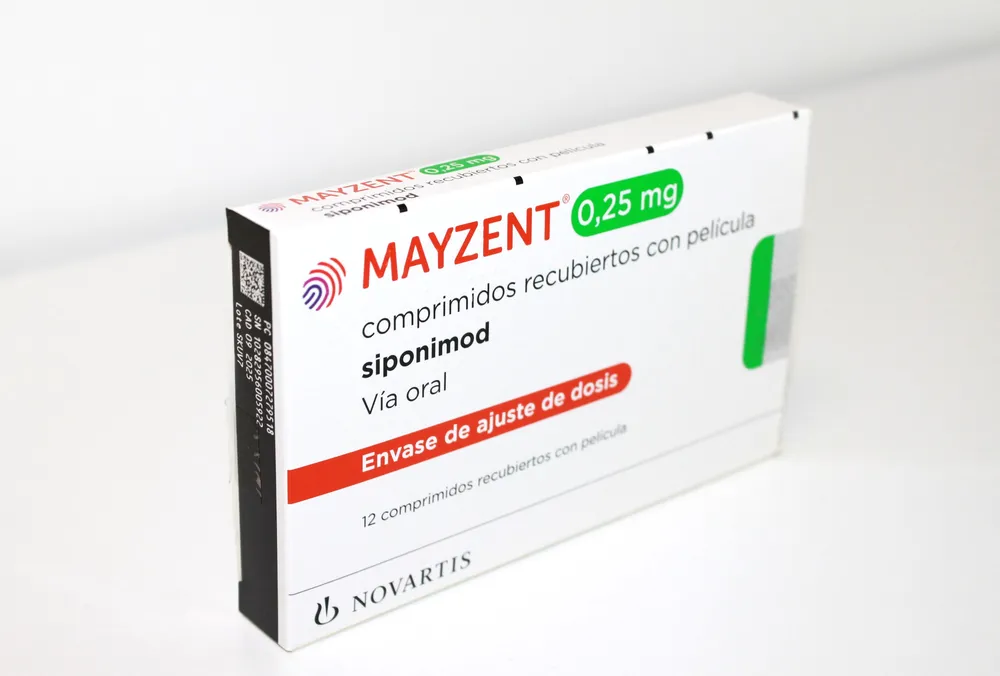
Table of Contents
Package leaflet: Information for the user
Introduction
Package leaflet: information for the user
Mayzent 0.25 mg film-coated tablets
Mayzent 1 mg film-coated tablets
Mayzent 2 mg film-coated tablets
siponimod
Read the entire leaflet carefully before you start taking this medicine, because it contains important information for you.
- Keep this leaflet; you may need to read it again.
- If you have any questions, ask your doctor or pharmacist.
- This medicine has been prescribed for you only; do not give it to others, even if they have the same symptoms as you, because it may harm them.
- If you experience any adverse effects, consult your doctor or pharmacist, even if they are effects not listed in this leaflet. See section 4.
Leaflet contents
- What Mayzent is and what it is used for
- What you need to know before taking Mayzent
- How to take Mayzent
- Possible side effects
- How to store Mayzent
- Contents of the pack and other information
1. What Mayzent is and what it is used for
What Mayzent is
Mayzent contains the active substance siponimod. Siponimod belongs to a group of medicines called sphingosine 1-phosphate (S1P) receptor modulators.
What Mayzent is used for
Mayzent is used to treat adults with secondary progressive multiple sclerosis (SPMS) with active disease. In active SPMS, relapses are still occurring or MRI (magnetic resonance imaging) results show signs of inflammation.
How Mayzent works
Mayzent helps protect the central nervous system (CNS) from attacks by the body's own immune system. It does this by:
- reducing the ability of certain white blood cells (called lymphocytes) to move freely throughout the body, and
- preventing these cells from reaching the brain and spinal cord.
This reduces nerve damage caused by SPMS, and as a result, Mayzent helps slow the effects of disease activity (such as worsening disability, brain lesions, and relapses).
2. What you need to know before taking Mayzent
Do not take Mayzent
- if you are allergic to siponimod, peanut, soy, or any of the other ingredients of this medicine (listed in section 6).
- if you have an immunodeficiency syndrome.
- if you have ever had progressive multifocal leukoencephalopathy or cryptococcal meningitis.
- if you have active cancer.
- if you have severe liver problems.
- if you have had a heart attack, unstable angina, stroke, or any type of heart failure within the past 6 months.
- if you have any type of irregular or abnormal heartbeat (arrhythmia) and do not have a pacemaker.
- if blood tests show that your body cannot break down this medicine sufficiently well, you should not take it (see “Blood tests before and during treatment” below).
- if you are pregnant or could become pregnant and are not using an effective method of contraception.
Warnings and precautions
Talk to your doctor before starting Mayzent:
- if you have an infection or if your immune system is not working properly (for example, due to a disease or medications that suppress the immune system; see also “Other medicines and Mayzent”).
- if you have never had chickenpox and have not been vaccinated against it. If you develop chickenpox during treatment with Mayzent, you may be at higher risk of complications. Your doctor may want to vaccinate you against chickenpox before starting treatment.
- if you are planning to receive any vaccine. Your doctor will advise you (see “Other medicines and Mayzent”).
- if you have ever had, or currently have, vision problems (specifically a condition called macular edema) or eye infection or inflammation (uveitis). Your doctor may want to perform eye examinations before starting treatment and regularly during treatment. Mayzent can cause inflammation of the macula (the area of the eye that allows you to see shapes, colors, and details), known as macular edema. The risk of developing macular edema is higher if you have previously had macular edema or uveitis (inflammation of the eye).
- if you have diabetes. The risk of developing macular edema (see previous point) is higher in patients with diabetes.
- if you have ever had any of the following conditions (even if you are receiving treatment for them): serious heart disease, irregular or abnormal heartbeat (arrhythmia), stroke (cerebrovascular accident), or other conditions related to blood vessels in the brain, slow heart rate, fainting, or heart rhythm disorders (indicated by abnormal ECG results).
- if you have severe breathing problems while sleeping (sleep apnea).
- if you have high blood pressure that cannot be controlled with medication. You will need to monitor your blood pressure regularly.
- if you have ever had liver problems. Your doctor may want to perform blood tests to monitor your liver function before prescribing Mayzent.
- if you could become pregnant, as siponimod may harm the fetus when used during pregnancy. Before starting treatment, your doctor will explain the risks and will ask you to take a pregnancy test to ensure you are not pregnant. During treatment and for at least 10 days after stopping treatment, you must use an effective method of contraception (see "Pregnancy, breastfeeding, and fertility").
If any of the above apply to you, inform your doctor before taking Mayzent.
Monitor the following while taking Mayzent
If you experience any of the following symptoms while taking Mayzent, contact your doctor immediately as they could be serious:
- if you have an infection. Mayzent reduces the number of white blood cells in the blood. White blood cells fight infections, so during treatment with Mayzent (and up to 3 to 4 weeks after stopping it), you may be more susceptible to infections. This could be serious and even potentially fatal.
- if you think your multiple sclerosis (MS) is worsening or if you notice any new or unusual symptoms. A rare brain infection called progressive multifocal leukoencephalopathy (PML) can cause symptoms similar to MS. It may occur in patients taking medicines like Mayzent and other medicines used to treat MS. If PML is confirmed, your doctor will stop your treatment with Mayzent. Some people may have a reaction when Mayzent is cleared from the body. This reaction (known as immune reconstitution inflammatory syndrome or IRIS) may cause worsening of your disease, including worsening of brain function.
- if you have fever, flu-like symptoms, or headache accompanied by neck stiffness, light sensitivity, nausea, or confusion. These may be symptoms of meningitis and/or encephalitis caused by fungal or viral infections (such as cryptococcal meningitis).
- if you notice changes in your vision, for example if the center of your visual field becomes blurry or shadowy, a blind spot appears in the center of your visual field, or if you have difficulty seeing colors or small details. These may be symptoms of macular edema. In the early stages of macular edema, you may have no symptoms, and it can cause similar visual symptoms to an MS relapse (optic neuritis). Your doctor may want you to have an eye examination 3 or 4 months after starting treatment and possibly repeated later. If macular edema is confirmed, your doctor may advise you to stop treatment with Mayzent.
- if you experience symptoms such as sudden onset of severe headache, confusion, seizures, and changes in vision. These may be symptoms of a condition called posterior reversible encephalopathy syndrome (PRES).
- if you have symptoms such as nausea, vomiting, abdominal pain, fatigue, yellowing of the skin or the whites of the eyes, or abnormally dark urine without apparent cause. These may be symptoms of liver problems.
- if you notice any skin nodules (e.g., shiny, pearl-like nodules), spots, or open sores that do not heal for weeks.
Slow heart rate (bradycardia) and irregular heartbeats
During the first few days of treatment, Mayzent may cause a decrease in heart rate (bradycardia). You may not notice anything, or you may feel dizzy or tired. It may also cause irregular heartbeats at the beginning of treatment. If there is any indication that you are at higher risk of these effects, your doctor may decide to monitor you more closely at the start of treatment, refer you first to a heart specialist (cardiologist), or not prescribe Mayzent.
Blood tests before and during treatment
The rate at which this medicine is broken down (metabolized) in the body varies from patient to patient, so different people require different doses. Your doctor will perform a blood or saliva test before starting treatment to determine the best dose for you. In rare cases, the test result may indicate that you should not take Mayzent.
- Blood count
The expected effect of treatment with Mayzent is to reduce the number of white blood cells in the blood. This decrease usually returns to normal levels between 3 and 4 weeks after stopping treatment. If you need blood tests, inform your doctor that you are taking Mayzent. Otherwise, the results may not be clear to the doctor, and depending on the type of blood test, a larger than usual blood sample may be required.
Before starting treatment with Mayzent, your doctor will confirm that you have a sufficient number of white blood cells in your blood and may want to repeat this check periodically. If you do not have a sufficient number of white blood cells, your doctor may ask you not to take Mayzent or to reduce the dose.
Before starting treatment, a blood test will also be performed to check that your liver is functioning properly.
Skin cancer
Cases of skin cancer have been reported in MS patients treated with Mayzent. Inform your doctor immediately if you notice any skin nodules (e.g., shiny, pearl-like nodules), spots, or open sores that do not heal for weeks. Symptoms of skin cancer may include abnormal growth or changes in skin tissue (e.g., unusual moles) that change in color, shape, or size over time. A skin examination is required before starting treatment with Mayzent to check for any skin nodules. Your doctor will also perform periodic skin checks during treatment with Mayzent. If any skin problems occur, your doctor may refer you to a dermatologist, who may decide that regular visits are necessary.
Sun exposure and sun protection
Mayzent weakens your immune system. This may increase your risk of developing skin cancer. You should limit your exposure to sunlight and UV rays by:
- wearing appropriate protective clothing.
- routinely applying a high-SPF sunscreen.
Worsening of MS after stopping treatment with Mayzent
Do not stop taking Mayzent or change your prescribed dose without first discussing it with your doctor.
Contact your doctor immediately if you think your MS worsens after stopping treatment with Mayzent (see “If you stop taking Mayzent” in section 3).
Elderly patients (aged 65 years and older)
There is no experience with Mayzent in elderly patients. Consult your doctor if you have any concerns.
Children and adolescents
Do not give this medicine to children and adolescents under 18 years of age, as it has not yet been studied in this age group.
Other medicines and Mayzent
Tell your doctor or pharmacist if you are taking, have recently taken, or might need to take any other medicines. Be sure to inform your doctor if you are taking or receiving any of the following medicines or therapies:
- medicines to treat irregular heartbeats, such as amiodarone, procainamide, quinidine, or sotalol. Your doctor may decide not to prescribe Mayzent, as they could intensify the effect on irregular heartbeats.
- medicines that slow the heartbeat, such as diltiazem or verapamil (which belong to a group of medicines called calcium channel blockers), digoxin, or ivabradine. Your doctor may refer you to a heart specialist, as it may be necessary to adjust your medicines, since Mayzent can also slow the heartbeat during the first few days of treatment. If you are taking a beta-blocker, such as atenolol or propranolol, your doctor may ask you to temporarily stop the beta-blocker until you have reached your full daily dose of Mayzent.
- medicines that affect the immune system, such as chemotherapy, immunosuppressants, or other medicines used to treat MS. Your doctor may ask you to stop these treatments to avoid an increased effect on the immune system.
- vaccines. If you need to receive a vaccine, speak to your doctor first. During treatment with Mayzent and for 4 weeks after stopping treatment, you should not receive certain types of vaccines (called live attenuated vaccines), as they could trigger the infections they are meant to prevent (see section 2).
- strong inhibitors of CYP2C9 are expected to increase Mayzent levels in the blood and are not recommended to be taken in combination with Mayzent. Your doctor will advise you on this.
- carbamazepine and other medicines that may reduce Mayzent levels in your blood and thus prevent it from working properly. Your doctor will advise you on this.
- modafinil and other medicines that may reduce Mayzent levels in the blood in certain patients and thus prevent it from working properly. Your doctor will inform you if this applies to you.
- UV phototherapy or PUVA photochemotherapy. UV therapy during treatment with Mayzent may increase your risk of developing skin cancer.
Pregnancy, breastfeeding, and fertility
If you are pregnant or breastfeeding, think you may be pregnant, or plan to become pregnant, consult your doctor or pharmacist before using this medicine.
Do not use Mayzent during pregnancy, if you plan to become pregnant, or if you are a woman who could become pregnant and are not using an effective method of contraception. If Mayzent is used during pregnancy, there is a risk of harm to the fetus. If you are a woman who could become pregnant, your doctor will inform you of this risk before starting treatment with Mayzent and will ask you to take a pregnancy test to confirm you are not pregnant. You must use an effective method of contraception during treatment with Mayzent and for at least 10 days after stopping treatment to avoid becoming pregnant. Discuss reliable contraceptive methods with your doctor.
If you become pregnant while taking Mayzent, inform your doctor immediately. Your doctor will decide whether to stop treatment (see “If you stop taking Mayzent” in section 3). You will receive specific prenatal follow-up.
Do not breastfeed during treatment with Mayzent. Mayzent may pass into breast milk and there is a risk of serious adverse effects for the baby.
Driving and using machines
Your doctor will advise you whether your condition allows you to drive or operate machinery safely. Mayzent is not expected to affect your ability to drive or use machines when you are on the regular maintenance dose. However, at the beginning of treatment, you may occasionally feel dizzy. Therefore, on the first day of treatment with Mayzent, you should not drive or operate machinery.
Mayzent contains lactose and soy lecithin
If your doctor has informed you that you have an intolerance to certain sugars, consult with him before taking this medicine.
If you are allergic to peanut or soy, do not use this medicine.
3. How to take Mayzent
Treatment with Mayzent will be supervised by a doctor experienced in the treatment of MS.
Always follow exactly the instructions for taking this medicine as given by your doctor.
If in doubt, consult your doctor again.
How much Mayzent to take
Starting treatment
You will be given a dose-escalation pack, through which your dose will gradually increase over 5 days. Follow the instructions provided on the pack (see also the table "Dose-escalation pack").
The purpose of the dose-escalation period is to reduce the risk of adverse cardiac reactions at the start of treatment. Your doctor may closely monitor you at the beginning of treatment if you are at risk of having a slower or irregular heartbeat.
Dose-escalation pack
Day | Dose | Number of Mayzent 0.25 mg tablets to take | |
Day 1 | 0.25 mg | 1 tablet | |
Day 2 | 0.25 mg | 1 tablet | |
Day 3 | 0.5 mg | 2 tablets | |
Day 4 | 0.75 mg | 3 tablets | |
Day 5 | 1.25 mg | 5 tablets |
On day 6, you will switch to taking your regular maintenance dose.
For the first 6 days of treatment, it is recommended to take the tablets in the morning, with or without food.
Maintenance dose
The recommended dose is 2 mg once daily (one 2 mg Mayzent tablet) with or without food.
Your doctor may have instructed you to take only 1 mg once daily (one Mayzent 1 mg tablet or four Mayzent 0.25 mg tablets) if the blood test performed before starting treatment showed that your body metabolizes Mayzent slowly (see “Blood tests before and during treatment”). However, if this applies to you, note that it is safe to take five 0.25 mg tablets on day 5 of the dose titration period as described above.
Mayzent is administered orally. Take the tablet with water.
If you take more Mayzent than you should
If you have taken too many Mayzent tablets, or if by mistake the first tablet you took was from the maintenance dose pack instead of the dose titration pack, contact your doctor immediately. Your doctor may decide to keep you under observation.
If you forget to take Mayzent
If during the first 6 days of treatment you miss a dose, speak with your doctor before taking the next dose. Your doctor will need to prescribe a new dose titration pack. You will have to restart treatment beginning with day 1.
If you miss a dose while on the regular maintenance dose (day 7 onwards), take it as soon as you remember. If it is almost time for your next dose, do not take the missed dose and continue with your regular dosing schedule. Do not take a double dose to make up for a missed dose. If you miss taking Mayzent for 4 or more consecutive days, speak with your doctor before taking the next dose. Your doctor will need to prescribe a new dose titration pack, and you will have to restart treatment beginning with day 1.
If you stop taking Mayzent
Do not stop taking Mayzent or change your dose without first discussing it with your doctor.
Mayzent will remain in your body for up to 10 days after you stop treatment. The number of white blood cells (lymphocytes) in your blood may remain low for up to 3 to 4 weeks after stopping Mayzent. Adverse effects described in this leaflet may still occur during this period (see “Possible side effects” in section 4).
If you need to restart Mayzent after a treatment interruption of more than 4 days, your doctor will prescribe a new dose titration pack, and you will have to restart treatment beginning with day 1.
Contact your doctor immediately if you think your MS is worsening after stopping Mayzent.
If you have any further questions about the use of this medicine, ask your doctor or pharmacist.
4. Possible side effects
Like all medicines, this medicine can cause side effects, although not everyone gets them.
Serious side effects
Frequent (may affect up to 1 in 10 patients)
- Rash with small fluid-filled blisters appearing on red skin (symptoms of a viral infection called herpes zoster, which can be severe)
- A type of skin cancer known as basal cell carcinoma (BCC), which often appears as a pearly-looking nodule, although it may also have other appearances
- Fever, sore throat and/or mouth ulcers due to infection (lymphopenia)
- Seizures, fits
- Vision problems such as a shadow or blind spot in the center of the visual field, blurred vision, problems seeing colors or details (symptoms of macular edema, which is swelling in the macula area of the retina at the back of the eye)
- Irregular heartbeat (atrioventricular block)
- Slow heartbeat (bradycardia)
Uncommon (may affect up to 1 in 100 patients)
- A type of skin cancer known as squamous cell carcinoma, which may appear as a firm red nodule, a sore with a crust, or a new sore on an existing scar
- A type of skin cancer known as malignant melanoma, which usually develops from an unusual mole. Possible signs of melanoma include moles that change over time in size, shape, thickness, or color, or the development of new moles. Moles may become itchy, bleed, or ulcerate.
Rare (may affect up to 1 in 1,000 patients)
- A brain infection called progressive multifocal leukoencephalopathy (PML). Symptoms of PML may be similar to those of MS, such as weakness or changes in vision, memory loss, problems thinking, or difficulty walking.
- Inflammatory disorder after stopping treatment with Mayzent (known as immune reconstitution inflammatory syndrome or IRIS).
Frequency not known (cannot be estimated from available data)
- Cryptococcal infections (a type of fungal infection) or viral infections (caused by herpes virus or varicella zoster virus), including meningitis and/or encephalitis with symptoms such as headache together with neck stiffness, sensitivity to light, feeling unwell (nausea), or confusion
If you have any of these symptoms, contact your doctor immediately.
Other side effects
Other side effects include those listed below. If any of these side effects become severe, contact your doctor or pharmacist.
Very common (may affect more than 1 in 10 patients)
- Headache
- High blood pressure (hypertension), sometimes with symptoms such as headache and dizziness
- Blood test results showing increased levels of liver enzymes
Common (may affect up to 1 in 10 patients)
- New moles
- Dizziness
- Involuntary body tremors (tremor)
- Diarrhea
- Feeling unwell (nausea)
- Pain in the hands or feet
- Swelling of hands, ankles, legs, or feet (peripheral edema)
- Weakness (asthenia)
- Results from lung function tests showing reduced function
Reporting of side effects
If you experience any side effect, talk to your doctor or pharmacist, even if it is a possible side effect not listed in this leaflet. You can also report them directly through the national reporting system detailed in Appendix V. By reporting side effects, you can help provide more information on the safety of this medicine.
5. Storage of Mayzent
Keep this medicine out of the sight and reach of children.
Do not use this medicine after the expiry date stated on the carton after “EXP” and on the blister after “EXP”. The expiry date is the last day of the month indicated.
Do not store above 25 °C.
Do not use this medicine if you notice that the packaging is damaged or shows signs of tampering.
Medicines should not be disposed of via wastewater or household waste. Ask your pharmacist how to dispose of medicines and packaging that you no longer need. This will help protect the environment.
6. Contents of the pack and other information
Composition of Mayzent
- The active substance is siponimod.
Mayzent 0.25 mg film-coated tablets
- Each tablet contains 0.25 mg of siponimod (as siponimod fumaric acid).
- The other components are:
Tablet core: Lactose monohydrate (see “Mayzent contains lactose and soya lecithin” in section 2), microcrystalline cellulose, crospovidone, glyceryl dibehenate, colloidal anhydrous silica.
Tablet coating: Polyvinyl alcohol, titanium dioxide (E171), red iron oxide (E172), black iron oxide (E172), talc, soya lecithin (see “Mayzent contains lactose and soya lecithin” in section 2), xanthan gum.
Mayzent 1 mg film-coated tablets
- Each tablet contains 1 mg of siponimod (as siponimod fumaric acid).
- The other components are:
Tablet core: Lactose monohydrate (see “Mayzent contains lactose and soya lecithin” in section 2), microcrystalline cellulose, crospovidone, glyceryl dibehenate, colloidal anhydrous silica.
Tablet coating: Polyvinyl alcohol, titanium dioxide (E171), red iron oxide (E172), black iron oxide (E172), talc, soya lecithin (see “Mayzent contains lactose and soya lecithin” in section 2), xanthan gum.
Mayzent 2 mg film-coated tablets
- Each tablet contains 2 mg of siponimod (as siponimod fumaric acid).
- The other components are:
Tablet core: Lactose monohydrate (see “Mayzent contains lactose and soya lecithin” in section 2), microcrystalline cellulose, crospovidone, glyceryl dibehenate, colloidal anhydrous silica.
Tablet coating: Polyvinyl alcohol, titanium dioxide (E171), yellow iron oxide (E172), red iron oxide (E172), talc, soya lecithin (see “Mayzent contains lactose and soya lecithin” in section 2), xanthan gum.
Appearance of the product and contents of the pack
Mayzent 0.25 mg film-coated tablets are round, pale red, film-coated tablets with the company logo on one side and “T” on the other.
Mayzent 1 mg film-coated tablets are round, violet-white, film-coated tablets with the company logo on one side and “L” on the other.
Mayzent 2 mg film-coated tablets are round, pale yellow, film-coated tablets with the company logo on one side and “II” on the other.
Mayzent 0.25 mg film-coated tablets are available in the following pack sizes:
- Dose titration pack in the form of a kit containing 12 tablets, and
- Packs containing 84 or 120 tablets
Mayzent 1 mg film-coated tablets are available in packs containing 28 or 98 tablets.
Mayzent 2 mg film-coated tablets are available in packs containing 14, 28 or 98 tablets.
Only some pack sizes may be marketed.
Marketing Authorization Holder
Novartis Europharm Limited
Vista Building
Elm Park, Merrion Road
Dublin 4
Ireland
Manufacturer
Novartis Farmacéutica, S.A.
Gran Via de les Corts Catalanes, 764
08013 Barcelona
Spain
Novartis Pharma GmbH
Roonstrasse 25
D-90429 Nuremberg
Germany
Novartis Pharma GmbH
Sophie-Germain-Strasse 10
90443 Nürnberg
Germany
For further information about this medicinal product, please contact the local representative of the Marketing Authorization Holder:
Belgium/Belgium/Belgium Novartis Pharma N.V. Tel/Tel: +32 2 246 16 11 | Lithuania SIA Novartis Baltics Lithuania branch Tel: +370 5 269 16 50 |
| Luxembourg/Luxembourg Novartis Pharma N.V. Tel/Tel: +32 2 246 16 11 |
Czech Republic Novartis s.r.o. Tel: +420 225 775 111 | Hungary Novartis Hungária Kft. Tel.: +36 1 457 65 00 |
Denmark Novartis Healthcare A/S Tlf.: +45 39 16 84 00 | Malta Novartis Pharma Services Inc. Tel: +356 2122 2872 |
Germany Novartis Pharma GmbH Tel: +49 911 273 0 | Netherlands Novartis Pharma B.V. Tel: +31 88 04 52 111 |
Estonia SIA Novartis Baltics Estonia branch Tel: +372 66 30 810 | Norway Novartis Norge AS Tlf: +47 23 05 20 00 |
Greece Novartis (Hellas) A.E.B.E. Tel: +30 210 281 17 12 | Austria Novartis Pharma GmbH Tel: +43 1 86 6570 |
Spain Novartis Farmacéutica, S.A. Tel: +34 93 306 42 00 | Poland Novartis Poland Sp. z o.o. Tel.: +48 22 375 4888 |
France Novartis Pharma S.A.S. Tél: +33 1 55 47 66 00 | Portugal Novartis Farma - Produtos Farmacêuticos, S.A. Tel: +351 21 000 8600 |
Croatia Novartis Hrvatska d.o.o. Tel. +385 1 6274 220 | Romania Novartis Pharma Services Romania SRL Tel: +40 21 31299 01 |
Ireland Novartis Ireland Limited Tel: +353 1 260 12 55 | Slovenia Novartis Pharma Services Inc. Tel: +386 1 300 75 50 |
Iceland Vistor hf. Tel: +354 535 7000 | Slovakia Novartis Slovakia s.r.o. Tel: +421 2 5542 5439 |
Italy Novartis Farma S.p.A. Tel: +39 02 96 54 1 | Finland Novartis Finland Oy Puh/Tel: +358 (0)10 6133 200 |
Cyprus Novartis Pharma Services Inc. Tel: +357 22 690 690 | Sweden Novartis Sverige AB Tel: +46 8 732 32 00 |
Latvia SIA Novartis Baltics Tel: +371 67 887 070 |
Date of latest review of this leaflet:
Other sources of information
Detailed information on this medicine is available on the website of the European Medicines Agency: https://www.ema.europa.eu