Imbruvica 140 mg film-coated tablets
Spain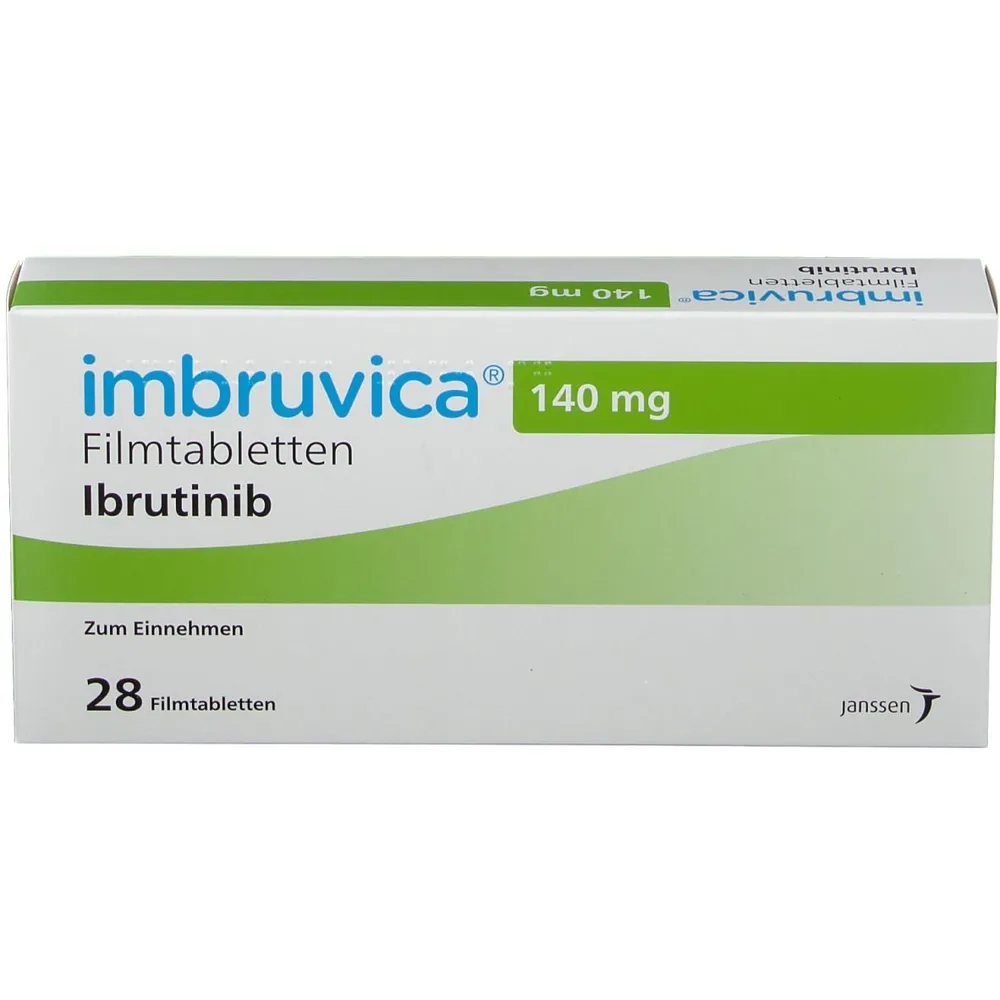
Table of Contents
Package leaflet: Information for the user
Introduction
Package leaflet: information for the patient
IMBRUVICA 140 mg film-coated tablets
IMBRUVICA 280 mg film-coated tablets
IMBRUVICA 420 mg film-coated tablets
IMBRUVICA 560 mg film-coated tablets
Ibrutinib
Read the entire leaflet carefully before you start taking this medicine, because it contains important information for you.
- Keep this leaflet, as you may need to read it again.
- If you have any questions, ask your doctor, pharmacist, or nurse.
- This medicine has been prescribed for you only, and you should not give it to other people, even if they have the same symptoms as you, because it could harm them.
- If you experience any adverse reactions, consult your doctor, pharmacist, or nurse, even if they are possible adverse reactions not listed in this leaflet. See section 4.
Contents of the leaflet
- What IMBRUVICA is and what it is used for
- What you need to know before taking IMBRUVICA
- How to take IMBRUVICA
- Possible adverse effects
- How to store IMBRUVICA
- Contents of the pack and other information
1. What IMBRUVICA is and what it is used for
What IMBRUVICA is
IMBRUVICA is a cancer medicine that contains the active substance ibrutinib, which belongs to a class of medicines called protein kinase inhibitors.
What IMBRUVICA is used for
It is used in adults for the treatment of the following blood cancers:
- Mantle Cell Lymphoma (MCL), a type of cancer affecting the lymph nodes, when the disease has relapsed or has not responded to treatment.
- Chronic Lymphocytic Leukemia (CLL), a type of cancer affecting white blood cells called lymphocytes, which also affects the lymph nodes. IMBRUVICA is used in patients with CLL who have not been previously treated or in whom the disease has relapsed or not responded to treatment.
- Waldenström’s Macroglobulinaemia (WM), a type of cancer affecting white blood cells called lymphocytes. It is used when the disease has relapsed or has not responded to treatment, or in patients for whom chemotherapy combined with an antibody is not an appropriate treatment.
How IMBRUVICA works
In MCL, CLL and WM, IMBRUVICA works by blocking Bruton's tyrosine kinase, a protein in the body that helps cancer cells grow and survive. By blocking this protein, IMBRUVICA helps destroy and reduce the number of cancer cells. It may also slow down the progression of the cancer.
2. What you need to know before starting IMBRUVICA
Do not take IMBRUVICA
- if you are allergic to ibrutinib or to any of the other ingredients of this medicine (listed in section 6)
- if you are taking a herbal medicine called St. John’s wort (also known as Hypericum perforatum), used for depression. If you are unsure, consult your doctor, pharmacist, or nurse before taking this medicine.
Warnings and precautions
Talk to your doctor, pharmacist, or nurse before starting IMBRUVICA:
- if you have ever had unusual bruising or bleeding, or if you are taking any medicines or supplements that increase your risk of bleeding (see section “Use of IMBRUVICA with other medicines”)
- if you have ever had irregular heartbeats, have a history of irregular heartbeats or severe heart failure, or if you experience any of the following: shortness of breath, weakness, dizziness, lightheadedness, fainting or near-fainting, chest pain, or swollen legs
- if you have liver or kidney problems
- if you have high blood pressure
- if you have recently undergone surgery, especially if it may have affected the absorption of food or medicines in the stomach or intestine
- if you are scheduled for surgery, your doctor may ask you to stop taking IMBRUVICA for a short period (3 to 7 days) before and after the procedure
- if you have had a Hepatitis B infection or might currently have it. This is because IMBRUVICA can reactivate Hepatitis B. Your doctor will carefully monitor you for signs of this infection before starting treatment.
If any of the above apply to you (or if you are unsure), consult your doctor, pharmacist, or nurse before taking this medicine.
While taking IMBRUVICA, inform your doctor immediately if you or someone else notices any of the following: memory loss, confusion, difficulty walking, or vision loss—these could be due to a very rare but serious brain infection that can be fatal (Progressive Multifocal Leukoencephalopathy or PML).
Tests and monitoring before and during treatment
Tumour Lysis Syndrome (TLS): Cases of abnormal levels of chemicals in the blood have occurred due to the rapid breakdown of cancer cells during treatment, and sometimes even without treatment. This may lead to changes in kidney function, abnormal heart rhythm, or seizures. Your doctor or other healthcare professional may perform blood tests to check for TLS.
Lymphocytosis: Laboratory tests may show an increase in white blood cells (called “lymphocytes”) in your blood during the first few weeks of treatment. This effect is expected and may last for several months. This does not necessarily mean that your blood cancer is worsening.
Your doctor will check your blood tests before or during treatment and, in rare cases, may need to give you another medicine. Talk to your doctor about the meaning of these test results.
Children and adolescents
IMBRUVICA should not be used in children or adolescents, as it has not been studied in these age groups.
Other medicines and IMBRUVICA
Tell your doctor or pharmacist if you are taking, have recently taken, or might need to take any other medicines, including those obtained without a prescription, herbal medicines, and supplements. This is because IMBRUVICA can affect how other medicines work. In addition, other medicines can affect how IMBRUVICA works.
IMBRUVICA may make you bleed more easily. This means you should inform your doctor if you are taking other medicines that increase your risk of bleeding. This includes:
- acetylsalicylic acid and non-steroidal anti-inflammatory drugs (NSAIDs) such as ibuprofen or naproxen
- anticoagulants such as warfarin, heparin, or other medicines that prevent blood clots
- supplements that may increase your risk of bleeding, such as fish oil, vitamin E, or flaxseed.
If any of the above apply to you (or if you are unsure), consult your doctor, pharmacist, or nurse before taking IMBRUVICA.
Also inform your doctor if you are taking any of the following medicines: The effects of IMBRUVICA or other medicines may be affected if you take IMBRUVICA together with any of the following:
- antibiotics used to treat bacterial infections: clarithromycin, telithromycin, ciprofloxacin, erythromycin, or rifampicin
- antifungal medicines: posaconazole, ketoconazole, itraconazole, fluconazole, or voriconazole
- medicines for HIV infection: ritonavir, cobicistat, indinavir, nelfinavir, saquinavir, amprenavir, atazanavir, or fosamprenavir
- medicines to prevent nausea and vomiting associated with chemotherapy: aprepitant
- medicines for depression: nefazodone
- kinase inhibitor medicines used to treat other cancers: crizotinib or imatinib
- calcium channel blockers used for high blood pressure or chest pain: diltiazem or verapamil
- statins used to treat high cholesterol: rosuvastatin
- heart medicines/antiarrhythmics: amiodarone or dronedarone
- medicines to prevent seizures or treat epilepsy, or medicines to treat a painful facial condition called trigeminal neuralgia: carbamazepine or phenytoin.
If any of the above apply to you (or if you are unsure), consult your doctor, pharmacist, or nurse before taking IMBRUVICA.
If you are taking digoxin, a medicine used for heart problems, or methotrexate, a medicine used to treat other cancers and to reduce immune system activity (e.g., for rheumatoid arthritis or psoriasis), you should take it at least 6 hours before or after IMBRUVICA.
Use of IMBRUVICA with food
Do not take IMBRUVICA with grapefruit or bitter orange: this means you must not eat them, drink their juice, or take any supplement containing them. This is because they can increase the amount of IMBRUVICA in your blood.
Pregnancy and breastfeeding
You must not become pregnant during treatment with this medicine.
IMBRUVICA must not be used during pregnancy. There is no information available on the safety of IMBRUVICA in pregnant women.
Women of childbearing potential must use a highly effective method of contraception during treatment and for three months after receiving IMBRUVICA to avoid becoming pregnant during treatment with IMBRUVICA. If you use hormonal contraceptives such as pills or contraceptive devices, you should also use a barrier method of contraception (e.g., condoms).
- Inform your doctor immediately if you become pregnant.
- Do not breastfeed while taking this medicine.
Driving and using machines
You may feel tired or dizzy after taking IMBRUVICA, which could affect your ability to drive or use tools or machines.
IMBRUVICA contains lactose
IMBRUVICA contains lactose (a type of sugar). If your doctor has told you that you have an intolerance to certain sugars, consult with them before taking this medicine.
IMBRUVICA contains sodium
IMBRUVICA contains less than 1 mmol of sodium (23 mg) per dose; therefore, it is essentially “sodium-free”.
3. How to take IMBRUVICA
Follow exactly the instructions for using this medicine given by your doctor, pharmacist, or nurse. If you are unsure, consult your doctor, pharmacist, or nurse again.
How much to take
Mantle Cell Lymphoma (MCL)
The recommended dose of IMBRUVICA is 560 mg once daily.
Chronic Lymphocytic Leukemia (CLL)/Waldenström’s Macroglobulinemia (WM)
The recommended dose of IMBRUVICA is 420 mg once daily.
Your doctor may need to adjust your dose.
How to take IMBRUVICA
- Take the tablets orally (by mouth) with a glass of water.
- Take the tablets at approximately the same time each day.
- Swallow the tablets whole. Do not break or chew the tablets.
If you take more IMBRUVICA than you should
If you take more IMBRUVICA than you should, consult your doctor or go immediately to a hospital.
Take the tablets and this leaflet with you.
If you forget to take IMBRUVICA
- If you miss a dose, you may take it as soon as possible on the same day and then resume your regular schedule the next day.
- Do not take a double dose to make up for the missed dose.
- If you have any doubts, speak with your doctor, pharmacist, or nurse about when to take your next dose.
If you stop taking IMBRUVICA
Do not stop taking this medicine unless instructed by your doctor.
If you have any further questions about the use of this medicine, ask your doctor, pharmacist, or nurse.
4. Possible adverse effects
Like all medicines, this medicine can cause adverse effects, although not everyone will experience them.
The following adverse effects may occur with this medicine:
Stop taking IMBRUVICA and contact a doctor immediately if you experience any of the following adverse effects:
rash with lumps and itching, difficulty breathing, swelling of the face, lips, tongue or throat: you may be having an allergic reaction to the medicine.
Contact your doctor immediately if you experience any of the following adverse effects:
Very common (may affect more than 1 in 10 people)
- fever, chills, body pain, feeling tired, cold or flu-like symptoms, difficulty breathing: all of these may be symptoms of an infection (viral, bacterial or fungal). These may include infections of the nose, sinuses or throat (upper respiratory tract infections), or of the lungs, or of the skin.
- bruising or increased tendency to bruise
- mouth sores
- headache
- constipation
- feeling dizzy or being dizzy (nausea or vomiting)
- diarrhea, your doctor may need to give you treatment to replace fluids and salts or another medicine
- skin rash
- pain in arms or legs
- back or joint pain
- muscle cramps, muscle pain or muscle spasms
- low number of cells that help with blood clotting (platelets), very low white blood cell count: shown in blood tests
- swollen hands, ankles or feet
- high blood pressure.
Common (may affect up to 1 in 10 people)
- serious infections spread throughout the body (septicemia)
- urinary tract infections
- nosebleeds, small red or purple spots caused by bleeding under the skin
- blood in the stomach, intestines, stools or urine, heavier menstrual bleeding, or bleeding from a wound that cannot be stopped
- increased heart rate, missed heartbeats, weak or irregular pulse, dizziness, difficulty breathing, chest discomfort (symptoms of heart rhythm disorders)
- increased number or proportion of white blood cells in blood tests
- decreased white blood cell count with fever (febrile neutropenia)
- unusual levels of chemical substances in the blood, caused by rapid destruction of cancer cells during treatment and sometimes even without treatment (tumor lysis syndrome)
- skin cancer other than melanoma, most commonly basal cell carcinoma and squamous cell carcinoma
- feeling dizzy
- blurred vision
- skin redness
- high level of "uric acid" in the blood (shown in blood tests), which may cause gout
- inflammation of respiratory pathways (pulmonary) that may lead to permanent damage
- nail breakage
- weakness, numbness, tingling or pain in the hands or feet or other parts of the body (peripheral neuropathy)
Uncommon (may affect up to 1 in 100 people)
- confusion, headache with difficulty speaking or feeling faint: these may be symptoms of a serious internal bleeding in the brain
- allergic reaction, sometimes severe, which may include swelling of the face, lip, mouth, tongue or throat, difficulty swallowing or breathing, itchy skin rash (urticaria)
- inflammation of fatty tissue beneath the skin.
Rare (may affect up to 1 in 1,000 people)
- marked increase in white blood cell count that may cause cells to clump together.
Not known (frequency cannot be estimated from available data)
- liver failure
- severe skin rash with blisters and peeling of the skin, particularly around the mouth, nose, eyes and genitals (Stevens-Johnson Syndrome).
Reporting of adverse effects
If you experience any adverse effects, consult your doctor, pharmacist or nurse, even if they are possible adverse effects not listed in this leaflet. You may also report them directly through the national reporting system included in Appendix V.
By reporting adverse effects, you can help provide more information on the safety of this medicine.
5. Storage of IMBRUVICA
Keep this medicine out of the sight and reach of children.
Do not use this medicine after the expiry date stated on the carton after EXP.
The expiry date is the last day of the month indicated.
No special storage conditions are required.
Medicines should not be disposed of via wastewater or household waste. Ask your pharmacist how to dispose of medicines and packaging that you no longer need. This will help protect the environment.
6. Contents of the pack and other information
Composition of IMBRUVICA
-
The active substance is ibrutinib.
- IMBRUVICA 140 mg film-coated tablets: Each tablet contains 140 mg of ibrutinib.
-
IMBRUVICA 280 mg film-coated tablets: Each tablet contains 280 mg of ibrutinib.
-
IMBRUVICA 420 mg film-coated tablets: Each tablet contains 420 mg of ibrutinib.
-
IMBRUVICA 560 mg film-coated tablets: Each tablet contains 560 mg of ibrutinib.
-
The other components are:
-
Tablet core: colloidal anhydrous silica, sodium croscarmellose, lactose monohydrate (see section 2 “IMBRUVICA contains lactose”), magnesium stearate, microcrystalline cellulose, povidone, sodium lauryl sulfate (E487).
-
Film coating: polyvinyl alcohol, macrogol, talc, titanium dioxide (E171);
IMBRUVICA 280 mg film-coated tablets also contain black iron oxide (E172) and red iron oxide (E172);
IMBRUVICA 560 mg film-coated tablets also contain red iron oxide (E172) and yellow iron oxide (E172).
Appearance of the product and contents of the pack
IMBRUVICA 140 mg film-coated tablets
Greenish-yellow to green, round tablet (9 mm), marked with “ibr” on one side and “140” on the other. Each 28-day pack contains 28 film-coated tablets in 2 cardboard boxes with 14 film-coated tablets each. Each 30-day pack contains 30 film-coated tablets in 3 cardboard boxes with 10 film-coated tablets each.
IMBRUVICA 280 mg film-coated tablets
Purple, oblong tablet (15 mm long and 7 mm thick), marked with “ibr” on one side and “280” on the other. Each 28-day pack contains 28 film-coated tablets in 2 cardboard boxes with 14 film-coated tablets each. Each 30-day pack contains 30 film-coated tablets in 3 cardboard boxes with 10 film-coated tablets each.
IMBRUVICA 420 mg film-coated tablets
Greenish-yellow to green, oblong tablet (17.5 mm long and 7.4 mm thick), marked with “ibr” on one side and “420” on the other. Each 28-day pack contains 28 film-coated tablets in 2 cardboard boxes with 14 film-coated tablets each. Each 30-day pack contains 30 film-coated tablets in 3 cardboard boxes with 10 film-coated tablets each.
IMBRUVICA 560 mg film-coated tablets
Yellow to orange, oblong tablet (19 mm long and 8.1 mm thick), marked with “ibr” on one side and “560” on the other. Each 28-day pack contains 28 film-coated tablets in 2 cardboard boxes with 14 film-coated tablets each. Each 30-day pack contains 30 film-coated tablets in 3 cardboard boxes with 10 film-coated tablets each.
Marketing Authorization Holder
Janssen-Cilag International NV
Turnhoutseweg 30
B-2340 Beerse
Belgium
Manufacturer
Janssen-Cilag SpA
Via C. Janssen,
Loc. Borgo S. Michele,
04100 Latina,
Italy
For further information regarding this medicinal product, please contact the local representative of the Marketing Authorization Holder:
Belgium/Belgium/Belgien Janssen-Cilag NV Tel/Tél: +32 14 64 94 11 | Lithuania UAB "JOHNSON & JOHNSON" Tel: +370 5 278 68 88 |
Bulgaria „Johnson & Johnson Bulgaria” EOOD Tel.: +359 2 489 94 00 | Luxembourg/Luxemburg Janssen-Cilag NV Tél/Tel: +32 14 64 94 11 |
Czech Republic Janssen-Cilag s.r.o. Tel: +420 227 012 227 | Hungary Janssen-Cilag Kft. Tel.: +36 1 884 2858 |
Denmark Janssen-Cilag A/S Tlf: +45 45 94 82 82 | Malta AM MANGION LTD. Tel: +356 2397 6000 |
Germany Janssen-Cilag GmbH Tel: +49 2137 955 955 | Netherlands Janssen-Cilag B.V. Tel: +31 76 711 1111 |
Estonia UAB "JOHNSON & JOHNSON" Estonian branch Tel: +372 617 7410 | Norway Janssen-Cilag AS Tlf: +47 24 12 65 00 |
Greece Janssen-Cilag Pharmaceutical S.A.R.L. Tel: +30 210 80 90 000 | Austria Janssen-Cilag Pharma GmbH Tel: +43 1 610 300 |
Spain Janssen-Cilag, S.A. Tel: +34 91 722 81 00 | Poland Janssen-Cilag Polska Sp. z o.o. Tel.: +48 22 237 60 00 |
France Janssen-Cilag Tél: 0 800 25 50 75 / +33 1 55 00 40 03 | Portugal Janssen-Cilag Farmacêutica, Lda. Tel: +351 214 368 600 |
Croatia Johnson & Johnson S.E. d.o.o. Tel: +385 1 6610 700 | Romania Johnson & Johnson România SRL Tel: +40 21 207 1800 |
Ireland Janssen Sciences Ireland UC Tel: +353 1 800 709 122 | Slovenia Johnson & Johnson d.o.o. Tel.: +386 1 401 18 00 |
Iceland Janssen-Cilag AB c/o Vistor hf Tel: +354 535 7000 | Slovakia Johnson & Johnson, s.r.o. Tel: +421 232 408 400 |
Italy Janssen-Cilag SpA Tel: 800 688 777 / +39 02 2510 1 | Finland Janssen-Cilag Oy Tel: +358 207 531 300 |
Cyprus Varnavas Hadjipanagis Ltd Tel: +357 22 207 700 | Sweden Janssen-Cilag AB Tel: +46 8 626 50 00 |
Latvia UAB "JOHNSON & JOHNSON" Latvian branch Tel: +371 678 93561 | United Kingdom Janssen-Cilag Ltd. Tel: +44 1 494 567 444 |
Date of the most recent review of this leaflet:
Other sources of information
Detailed information on this medicinal product is available on the website of the European Medicines Agency: http://www.ema.europa.eu.