Hepamed tablets
Spain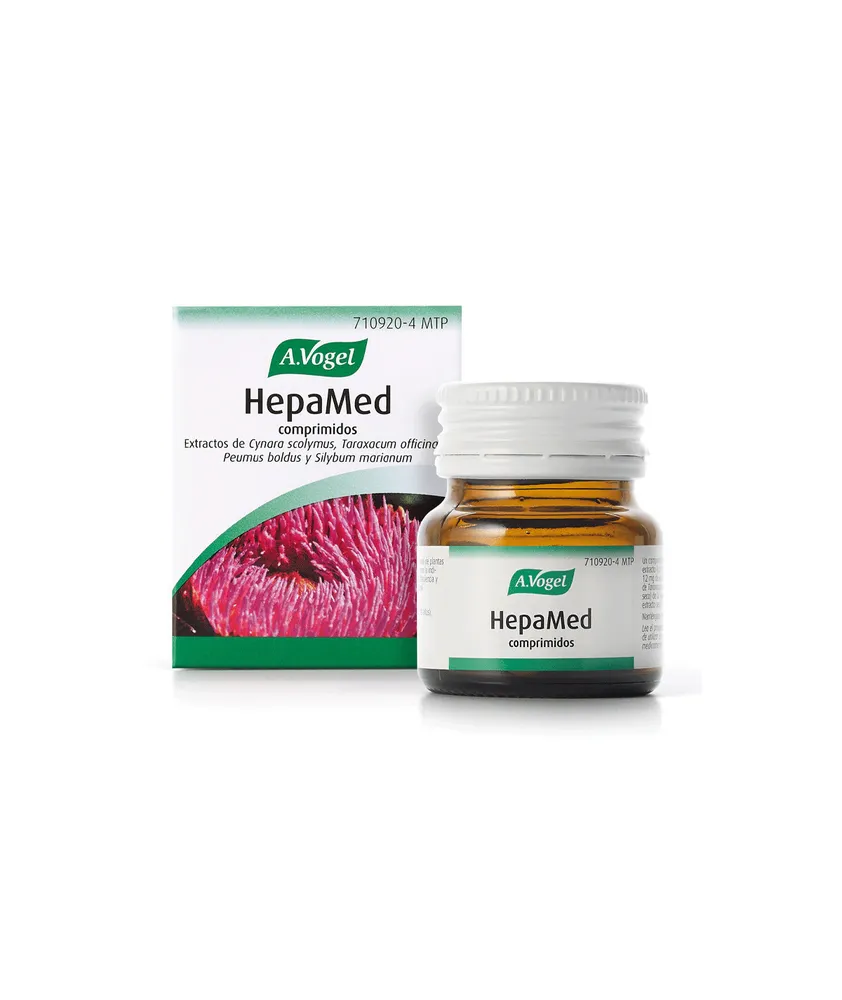
Table of Contents
- Package leaflet: Information for the user
- Introduction
- 1. What HepaMed tablets are and what they are used for
- 2. What you need to know before starting to take HepaMed tablets
- 3. How to take HepaMed tablets
- 4. Possible adverse effects
- 5. Storage of HepaMed tablets
- 6. Package contents and additional information
Package leaflet: Information for the user
Introduction
Package leaflet: information for the user
HepaMed, tablets
Read the entire leaflet carefully before you start taking this medicine, because it contains important information for you.
This medicine can be purchased without a prescription for the treatment of minor conditions, without the intervention of a doctor. However, to achieve the best results, it must be used correctly.
Always follow exactly the instructions for use provided in this leaflet or as directed by your doctor or pharmacist.
-Keep this leaflet, as you may need to read it again.-If you need advice or further information, consult your pharmacist.
-If you experience any adverse effects, consult your doctor or pharmacist, even if they are effects not listed in this leaflet. See section 4.
-You should consult a doctor if your condition worsens or if you do not improve after 15 days of treatment.
Contents of the package leaflet
- What HepaMed tablets are and what they are used for
- What you need to know before taking HepaMed tablets
- How to take HepaMed tablets
- Possible side effects
- How to store HepaMed tablets
- Contents of the pack and other information
1. What HepaMed tablets are and what they are used for
HepaMed tablets are a traditional herbal medicinal product used to treat symptoms of dyspepsia, such as indigestion, heartburn, bloating, flatulence, and nausea, based solely on its traditional use.
2. What you need to know before starting to take HepaMed tablets
Do not take HepaMed tablets:
-
If you are allergic to artichoke, dandelion, boldo, milk thistle, or to any
of the other components of this medicine (listed in section 6). -
If you are allergic to plants of the Compositae (Asteraceae) family. Artichoke, dandelion, and milk thistle belong to this family.
-
If you are under 18 years of age.
-
If you are pregnant or breastfeeding.
-
You have biliary duct obstruction, gallstones, cholangitis (inflammation of the bile ducts), or other biliary disorders.
-
Intestinal obstruction.
-
Liver disorders, including hepatitis.
-
Active peptic ulcer.
Warnings and precautions
- Patients with renal insufficiency, cardiac insufficiency, or diabetes should avoid using this medicine due to possible complications from hyperkalemia.
- Patients with liver problems should consult their doctor before taking this medicine.
- If symptoms such as fever, dysuria, spasms, or blood in the urine occur during treatment, treatment must be discontinued and a doctor consulted.
- If symptoms worsen or no improvement is seen after 2 weeks of
treatment, consult a doctor.
Children and adolescents
This product is not indicated for patients under 18 years of age.
Other medicines and HepaMed
Inform your doctor or pharmacist if you are taking, have recently taken, or might need to take any other medicine.
No interactions with other medicines have been reported.
Pregnancy and breastfeeding
As a precautionary measure and in the absence of sufficient data, use during pregnancy and breastfeeding is not recommended.
If you are pregnant or think you might be pregnant, consult your doctor before taking this medicine. Taking medicines during pregnancy may be dangerous for the embryo or fetus and should be monitored by your doctor.
Driving and use of machinery:
The influence of this medicine on the ability to drive vehicles and use machinery has not been studied.
3. How to take HepaMed tablets
Follow the administration instructions provided in this leaflet or those indicated by your doctor or pharmacist.
The recommended dose is:
Adults (over 18 years of age): take one tablet twice daily.
HepaMed tablets are administered orally.
Use in children
This product is not indicated for patients under 18 years of age.
If symptoms worsen or no improvement is observed after 2 weeks of treatment, consult your doctor.
If you take more HepaMed tablets than you should:
It is unlikely that symptoms or toxicity will occur.
In case of overdose or accidental ingestion, go to a medical center or contact the Toxicology Information Service at telephone number 91 562 0420, indicating the medication and the amount ingested.
If you forget to take HepaMed tablets
Do not take a double dose to make up for forgotten doses.
4. Possible adverse effects
Make sure you have read section 2 of this leaflet.
Do not take HepaMed tablets if you are allergic to artichoke, dandelion, boldo, milk thistle, or to any of the other ingredients of this medicine.
Like all medicines, HepaMed tablets may have adverse effects, although not everybody will experience them.
Adverse reactions are generally mild.
Gastrointestinal discomfort may occasionally occur, such as nausea, stomach discomfort, diarrhea, cramps, abdominal pain, hyperacidity, and heartburn, as well as skin allergic reactions (urticaria, rash, pruritus, anaphylactic reactions). The frequency of occurrence is unknown.
If you experience any adverse effects, consult your doctor or pharmacist, even if these are adverse effects not listed in this leaflet.
Reporting of adverse effects:
If you experience any type of adverse effect, talk to your doctor, pharmacist, or nurse, even if they are possible adverse effects not mentioned in this leaflet. You may also report them directly via the Spanish Pharmacovigilance System for Human Medicinal Products: https://www.notificaram.es.
By reporting adverse effects, you can help provide more information on the safety of this medicine.
5. Storage of HepaMed tablets
Keep this medicine out of the sight and reach of children.
Do not use HepaMed tablets after the expiry date stated on the packaging.
Use within 5 months after opening.
This medicine should be stored at a temperature not exceeding 30°C.
Do not use the medicine if you notice any changes in its appearance. HepaMed tablets are round, beige-colored tablets.
Medicines must not be disposed of via wastewater or household waste. Dispose of empty containers and unused medicines at a SIGRE collection point at your pharmacy. If you are unsure, ask your pharmacist how to properly dispose of containers and medicines you no longer need. This helps protect the environment.
6. Package contents and additional information
Composition of HepaMed
One tablet of HepaMed contains the following active substance:
4.6 mg of extract (as dry extract) from fresh leaf of Cynara scolymus L.
(1:30-31) Extraction solvent: ethanol 65% v/v
1.2 mg of extract (as dry extract) from fresh aerial parts and root of Taraxacum officinale Weber ex Wigg.
(1:17-18) Extraction solvent: ethanol 51% v/v
0.7 mg of extract (as dry extract) from leaf of Peumus boldus Molina
(1:10-11) Extraction solvent: ethanol 70% v/v
3.2 mg of extract (as dry extract) from fruit of Silybum marianum (L.) Gaertn.
(1:2.0-2.1) Extraction solvent: ethanol 58% v/v
The other components are excipients:
Microcrystalline cellulose
Glycerol diestearate
Presentation of the product and contents of the container
HepaMed is presented as round, biconvex, beige tablets, packed in an amber glass bottle containing 60 tablets.
Marketing Authorization Holder and Manufacturer
Marketing Authorization Holder
Bioforce España A.Vogel, S.A.
Platón 6,
08021-Barcelona
Spain
Tel: 93 201 99 22
Fax: 93 209 03 19
Manufacturer
VOGEL B.V.
J.P. Broekhovenstraat 16
ELBURG - The Netherlands
Date of the most recent revision of this summary: January 2020
Detailed and up-to-date information on this medicine is available on the website of the Spanish Agency of Medicines and Medical Devices (AEMPS) http://www.aemps.gob.es/