Furaseptic 10 mg/ml cutaneous solution
Spain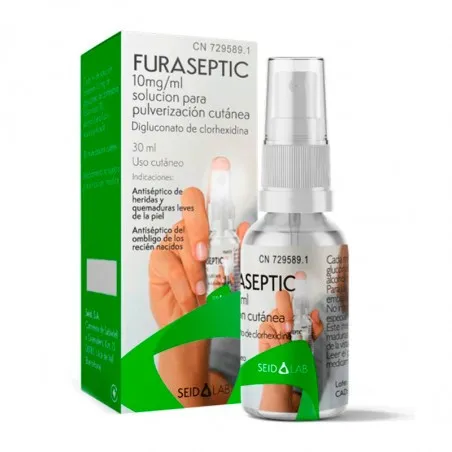
Table of Contents
- Package leaflet: Information for the user
- Introduction
- 1. What Furaseptic 10 mg/ml is and what it is used for
- 2. What you need to know before using Furaseptic 10 mg/ml cutaneous solution
- 3. How to use Furaseptic 10 mg/ml
- 4. Possible adverse effects
- 5. Storage of Furaseptic 10 mg/ml
- 6. Contents of the pack and other information
Package leaflet: Information for the user
Introduction
Package leaflet: information for the patient
Furaseptic 10 mg/ml cutaneous solution
Chlorhexidine digluconate
Read the entire leaflet carefully before you start using this medicine, because it contains important information for you.
Follow exactly the instructions for use provided in this leaflet or as directed by your doctor or pharmacist.
- Keep this leaflet, as you may need to read it again.
- If you need advice or more information, consult your pharmacist.
- If you experience any adverse effects, consult your doctor or pharmacist, even if they are effects not listed in this leaflet. See section 4.
- You should consult a doctor if your condition worsens or does not improve after 5 days.
Contents of the leaflet
- What Furaseptic 10 mg/ml is and what it is used for
- What you need to know before using Furaseptic 10 mg/ml
- How to use Furaseptic 10 mg/ml
- Possible adverse effects
- How to store Furaseptic 10 mg/ml
- Contents of the pack and other information
1. What Furaseptic 10 mg/ml is and what it is used for
Furaseptic contains the active substance chlorhexidine. Chlorhexidine is an antiseptic applied to the skin.
It is indicated as an antiseptic for wounds and mild skin burns, and as an antiseptic for the umbilicus in newborns.
You should consult a doctor if your condition worsens or does not improve after 5 days.
2. What you need to know before using Furaseptic 10 mg/ml cutaneous solution
Do not use Furaseptic
-
If you are allergic to chlorhexidine or any of the other ingredients of
this medicine (listed in section 6). -
Do not use in the eyes or ears, or inside the mouth or on other mucous membranes.
Warnings and precautions
Consult your doctor or pharmacist before starting to use this medicine.
- This medicine is for external use on the skin only. DO NOT INGEST.
- Avoid contact with the brain, meninges (the membranes surrounding the brain and spinal cord), and the middle ear.
- Furaseptic must not come into contact with the eyes due to the risk of visual damage. If contact occurs, rinse immediately and thoroughly with water. In case of eye irritation, redness or pain, or visual disturbances, consult a doctor immediately.
Severe cases of persistent corneal injury (damage to the surface of the eye) have been reported, which could eventually require a corneal transplant, when similar products have accidentally come into contact with the eyes during surgical procedures in patients under general anesthesia (deep, painless induced sleep).
- Should not be used for deep or extensive wounds without first consulting a doctor.
- Should not be applied repeatedly, nor used over large areas, under occlusive dressings (impermeable to air), on damaged skin, or on mucous membranes.
- Should not be used for antisepsis of puncture or injection sites, or for disinfection of surgical instruments.
- Any soaked materials, gauze, or garments must be removed before starting the procedure.
- Do not use large quantities and avoid allowing the solution to accumulate in skin folds, under the patient, or soaking bed linens or other wet materials in direct contact with the patient.
- When applying an occlusive dressing to areas previously treated with this medicine, special care must be taken to ensure there is no excess product before applying the dressing.
Children and adolescents
- Consult a doctor before use in children under 30 months of age.
- Use with caution in neonates, especially premature infants born before 32 weeks of gestation and during the first two weeks of life. This medicine may cause chemical burns on the skin.
Use of Furaseptic with other medicines
-
Inform your doctor or pharmacist if you are using, have recently used, or might need to
use any other medicines. -
The simultaneous or sequential use of multiple antiseptics should be avoided, except with other cationic compounds (e.g. benzalkonium chloride).
-
Must not be used in combination with, or after application of, anionic soaps (soaps), acids, heavy metal salts, or iodine; therefore, the skin should be thoroughly rinsed after cleansing.
Pregnancy, breastfeeding, and fertility
If you are pregnant or breastfeeding, think you might be pregnant, or are planning to become pregnant, consult your doctor or pharmacist before using this medicine.
There are no data or data are limited regarding the use of chlorhexidine in pregnant women.
It is unknown whether chlorhexidine is excreted in breast milk, so the potential risk of systemic effects should be considered.
Driving and using machines
The influence of this medicine on the ability to drive and operate machinery is none or negligible.
3. How to use Furaseptic 10 mg/ml
For cutaneous use only. DO NOT INGEST
Follow exactly the instructions for use provided in this leaflet or those given by your doctor or pharmacist. If in doubt, consult your doctor or pharmacist.
Apply undiluted. It is recommended to clean and dry the wound before applying Furaseptic. Apply directly to the affected area, or onto a gauze dressing, once or twice daily. Leave to act and dry.
Do not apply the product more than twice a day.
If you use more Furaseptic than you should
In case of overdose or accidental ingestion, consult your doctor or pharmacist immediately, or call the Toxicology Information Service at telephone number: 91 562 04 20, indicating the medicine and the amount ingested.
Information for healthcare professionals
In case of accidental ingestion, perform gastric lavage and protect the gastrointestinal mucosa. Cases of haemolysis following chlorhexidine ingestion have been reported.
In case of haemolysis, blood transfusion may be necessary.
4. Possible adverse effects
Like all medicines, this medicine may cause adverse effects,
although not everybody gets them.
The following adverse effects may occur (frequency not known: cannot be estimated from available data):
- Allergic skin disorders such as dermatitis (inflammation of the skin), pruritus (itching), erythema (redness of the skin), eczema, rash, urticaria (hives), skin irritation, and blisters and chemical burns in neonates.
- Corneal lesion (damage to the surface of the eye) and permanent eye injury, including permanent visual impairment (following accidental ocular exposure during surgical procedures on the head, face, and neck) in patients under general anaesthesia (induced painless deep sleep).
Reporting of adverse effects
If you experience any type of adverse effect, consult your doctor or pharmacist, even if
they are possible adverse effects not listed in this leaflet. You can
also report them directly via the Spanish Pharmacovigilance System for
Human Medicinal Products: http://www.notificaram.es. By reporting
adverse effects, you can help provide more information on the safety of
this medicine.
5. Storage of Furaseptic 10 mg/ml
Keep this medicine out of the sight and reach of children.
Store below 30°C.
Keep in the original packaging to protect from light.
Do not use this medicine after the expiry date stated on the packaging following
EXP. The expiry date refers to the last day of the month indicated.
Medicines should not be disposed of via wastewater or household waste. Dispose of unused containers and medicines at a SIGRE collection point at your pharmacy. If you have any doubts, ask your pharmacist how to dispose of containers and unused medicines. This way, you will help protect the environment.
6. Contents of the pack and other information
Composition of Furaseptic 10 mg/ml
- The active substance is chlorhexidine digluconate. Each ml contains 10 mg of chlorhexidine digluconate.
- The other components (excipients) are: purified water.
Appearance of the product and contents of the container
Clear solution presented in a 30 ml white plastic bottle with dropper or in a 30 ml white plastic bottle with spray pump.
Additional information
Clothing that has come into contact with this medicinal product should not be washed with bleach or other hypochlorites, as this would cause a brownish discoloration of the fabrics. Instead, wash with domestic detergents based on sodium perborate.
Marketing Authorization Holder and Manufacturer
SEID, S.A.
Carretera de Sabadell a Granollers Km 15
08185 Lliçà de Vall – Barcelona
Spain
Date of the most recent review of this leaflet: June 2024
Detailed and up-to-date information on this medicinal product is available on the website of the Spanish Agency of Medicines and Health Products (AEMPS):
http://www.aemps.gob.es/