Dexketoprofen Sandoz Care 25 mg oral solution
Spain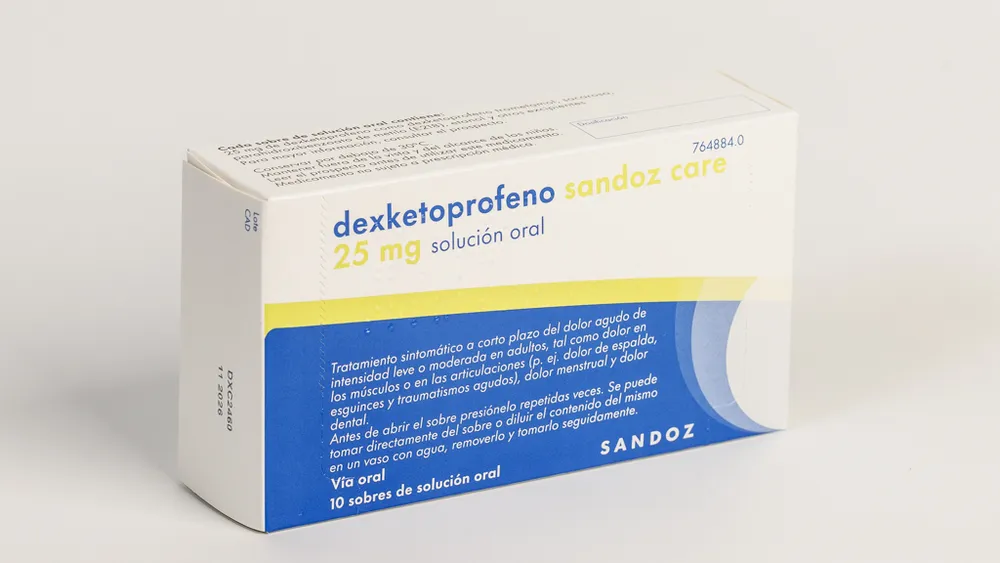
Table of Contents
- Package leaflet: Information for the user
- Introduction
- 1. What Dexketoprofeno Sandoz Care is and what it is used for
- 2. What you need to know before taking Dexketoprofeno Sandoz Care
- 3. How to take Dexketoprofeno Sandoz Care
- 4. Possible adverse effects
- 5. Storage of Dexketoprofen Sandoz Care
- 6. Contents of the pack and other information
Package leaflet: Information for the user
Introduction
Package leaflet: information for the user
Dexketoprofen Sandoz Care 25 mg oral solution
Read the entire leaflet carefully before starting to take this medicine, as it contains important information for you.
Always follow exactly the instructions for taking this medicine as described in this leaflet or as given by your doctor or pharmacist.
- Keep this leaflet, as you may need to read it again.
- If you need advice or more information, consult your pharmacist.
- If you experience any adverse reactions, consult your doctor or pharmacist, even if they are not listed in this leaflet. See section 4.
- You should consult a doctor if you worsen or do not improve after 4 days.
Contents of the leaflet
- What Dexketoprofen Sandoz Care is and what it is used for
- What you need to know before taking Dexketoprofen Sandoz Care
- How to take Dexketoprofen Sandoz Care
- Possible side effects
- How to store Dexketoprofen Sandoz Care
- Contents of the pack and other information
1. What Dexketoprofeno Sandoz Care is and what it is used for
This medicine is an analgesic belonging to a group of medicines called non-steroidal anti-inflammatory drugs (NSAIDs).
It is used for the short-term symptomatic treatment of mild to moderate acute pain, such as acute muscular or joint pain, menstrual pain (dysmenorrhoea), or dental pain.
Dexketoprofeno Sandoz Care is indicated for use in adult patients.
2. What you need to know before taking Dexketoprofeno Sandoz Care
Do not take Dexketoprofeno Sandoz Care
- If you are allergic to dexketoprofen or any of the other ingredients of this medicine (listed in section 6);
- If you are allergic to acetylsalicylic acid or to any other non-steroidal anti-inflammatory drug (NSAID);
- If you have asthma or have experienced asthma attacks, acute allergic rhinitis (a short period of inflammation of the nasal mucosa), nasal polyps (fleshy growths inside the nose due to allergy), urticaria (skin rash), angioedema (swelling of the face, eyes, lips or tongue, or difficulty breathing), or wheezing in the chest after taking acetylsalicylic acid (aspirin) or other NSAIDs;
- If you have previously experienced photoallergic or phototoxic reactions (a special type of redness or sunburn-like skin damage on sun-exposed skin) while taking ketoprofen (a non-steroidal anti-inflammatory) or fibrates (medicines used to reduce blood fat levels);
- If you have peptic ulcer, gastrointestinal bleeding, or have previously had gastrointestinal bleeding, ulceration, or perforation;
- If you have chronic digestive problems (e.g., indigestion, heartburn);
- If you have previously experienced gastrointestinal bleeding or perforation due to prior use of non-steroidal anti-inflammatory drugs (NSAIDs) taken for pain;
- If you have chronic inflammatory bowel disease (Crohn's disease or ulcerative colitis);
- If you have severe heart failure, moderate to severe renal impairment, or severe hepatic impairment;
- If you have bleeding disorders or blood coagulation disorders;
- If you are severely dehydrated (have lost a lot of body fluid) due to vomiting, diarrhoea, or insufficient fluid intake;
- If you are in the third trimester of pregnancy or during breastfeeding;
Warnings and precautions
Talk to your doctor or pharmacist before taking dexketoprofen:
- If you are allergic or have had allergic problems in the past;
- If you have kidney, liver, or heart disease (hypertension and/or heart failure), fluid retention, or have had any of these conditions in the past;
- If you are taking diuretics or have inadequate hydration and reduced blood volume due to excessive fluid loss (e.g., from excessive urination, diarrhoea, or vomiting);
- If you have heart problems, a history of stroke, or think you may be at risk of such conditions (e.g., you have high blood pressure, diabetes, high cholesterol, or are a smoker). You should discuss this treatment with your doctor or pharmacist. Medicines like dexketoprofen may be associated with a small increased risk of heart attacks ("myocardial infarction") or strokes ("cerebrovascular accident"). This risk is more likely with high doses and prolonged treatment. Do not exceed the recommended dose or duration of treatment;
- If you are elderly, you may be more likely to experience adverse effects (see section 4). If they occur, consult your doctor immediately;
- If you are a woman with fertility problems (see section 2, "Pregnancy, breastfeeding and fertility");
- If you have a disorder affecting blood or blood cell production;
- If you have systemic lupus erythematosus or mixed connective tissue disease (immune system disorders affecting connective tissue);
- If you currently have or have previously had chronic inflammatory bowel disease (ulcerative colitis, Crohn's disease);
- If you currently have or have previously had stomach or intestinal disorders;
- If you have an infection; see the "Infections" section below;
- If you are taking other medicines that increase the risk of peptic ulcer or bleeding, such as oral corticosteroids, certain antidepressants (SSRIs, selective serotonin reuptake inhibitors), or agents that prevent blood clotting such as acetylsalicylic acid (aspirin) or anticoagulants like warfarin or acenocoumarol. In such cases, consult your doctor before taking this medicine: your doctor may prescribe an additional medicine to protect your stomach (e.g., misoprostol or other drugs that block gastric acid production);
- If you have asthma, especially when combined with rhinitis or chronic sinusitis, and/or nasal polyps, as you have a higher risk of allergy to acetylsalicylic acid and/or NSAIDs than the general population. Taking this medicine may trigger asthma attacks or bronchospasm, particularly in patients allergic to acetylsalicylic acid or NSAIDs.
Children and adolescents
This medicine has not been studied in children or adolescents. Therefore, safety and efficacy have not been established, and the medicine should not be used in children or adolescents.
Kounis Syndrome
What you should know before taking Dexketoprofeno Sandoz Care
Allergic reactions to dexketoprofen, including respiratory problems, facial and neck swelling (angioedema), and chest pain, have been reported. Stop treatment with dexketoprofen immediately and contact your doctor or nearest emergency service right away if you experience any of these symptoms.
Infections
This medicine may mask signs of infection such as fever and pain. Therefore, it may delay appropriate treatment of the infection, increasing the risk of complications. This has been observed in bacterial pneumonia and bacterial skin infections associated with chickenpox. If you take this medicine while having an infection and infection symptoms persist or worsen, consult a doctor without delay.
Avoid using this medicine if you have chickenpox.
Other medicines and Dexketoprofeno Sandoz Care
Tell your doctor or pharmacist if you are taking, have recently taken, or might need to take any other medicines, including those obtained without a prescription. Some medicines should not be taken together, while others may require dose adjustments when used concurrently.
Always inform your doctor, dentist, or pharmacist if, in addition to this medicine, you are taking any of the following:
Combinations not recommended:
- Acetylsalicylic acid, corticosteroids, and other anti-inflammatory drugs;
- Warfarin or acenocoumarol, heparin, or other medicines used to prevent blood clotting;
- Lithium, used to treat certain mood disorders;
- Methotrexate, used for rheumatoid arthritis, cancer, and as an immunosuppressant, at high doses of 15 mg/week;
- Hydantoins and phenytoin, used for epilepsy;
- Sulfamethoxazole, used for bacterial infections;
Combinations requiring caution:
- ACE inhibitors, diuretics, and angiotensin II antagonists, used to control high blood pressure and heart conditions;
- Pentoxifylline and oxpentifylline, used to treat chronic venous ulcers;
- Zidovudine, used to treat viral infections;
- Aminoglycoside antibiotics, used to treat bacterial infections;
- Sulfonylureas (e.g., chlorpropamide and glibenclamide), used for diabetes;
- Methotrexate, used at low doses, less than 15 mg/week.
Combinations to be aware of:
- Quinolones (e.g., ciprofloxacin, levofloxacin), used for bacterial infections;
- Cyclosporine or tacrolimus, used to treat immune system disorders and in organ transplantation;
- Streptokinase and other thrombolytic and fibrinolytic medicines, i.e., medicines used to dissolve clots;
- Probenecid, used for gout;
- Digoxin, used in the treatment of chronic heart failure;
- Mifepristone, used as an abortifacient (for termination of pregnancy);
- Antidepressants of the selective serotonin reuptake inhibitor (SSRI) type;
- Antiplatelet agents used to reduce platelet aggregation and clot formation;
- Beta-blockers, used for high blood pressure and heart conditions;
- Tenofovir, deferasirox, pemetrexed.
If you have any doubts about taking other medicines with dexketoprofen, consult your doctor or pharmacist.
Taking Dexketoprofeno Sandoz Care with food, drinks, and alcohol
In general, it is recommended to take the medicine with food to reduce the possibility of stomach-related side effects (see also section 3, "How to take").
Using NSAIDs in combination with alcohol may worsen adverse reactions caused by the active substance.
Pregnancy, breastfeeding and fertility
If you are pregnant or breastfeeding, think you may be pregnant, or are planning to become pregnant, consult your doctor or pharmacist before using this medicine.
Do not take dexketoprofen during the last three months of pregnancy, as it may harm the fetus or cause problems during delivery. It may cause kidney and heart problems in your unborn baby. It may affect your and your baby's tendency to bleed and may delay or prolong labour beyond the expected duration. You should not take dexketoprofen during the first six months of pregnancy unless clearly necessary and as directed by your doctor. If treatment is needed during this period or while trying to conceive, you should take the lowest possible dose for the shortest possible time. From week 20 of pregnancy, dexketoprofen may cause kidney problems in your fetus if taken for more than a few days, which may lead to low levels of amniotic fluid surrounding the baby (oligohydramnios). If you require treatment for longer than a few days, your doctor may recommend additional monitoring.
Use of this medicine may impair fertility and therefore is not recommended while trying to conceive or during investigation of infertility.
Driving and using machines
This medicine may slightly affect your ability to drive and use machines, as it may cause dizziness, drowsiness, and blurred vision as adverse effects. If you experience these effects, do not operate machinery or drive until symptoms resolve. Seek advice from your doctor.
Dexketoprofeno Sandoz Care contains sucrose, methyl parahydroxybenzoate (E-218), ethanol, and sodium
It may cause allergic reactions (possibly delayed) because it contains methyl parahydroxybenzoate.
If your doctor has told you that you have an intolerance to certain sugars, consult with him before taking this medicine.
Patients with diabetes mellitus should note that this medicine contains 2 g of sucrose per sachet.
This medicine contains 0.1% alcohol (ethanol) per sachet, equivalent to 13.8 mg. The small amount of alcohol in this medicine does not produce any noticeable effect.
This medicine contains less than 1 mmol of sodium (23 mg) per sachet; hence, it is essentially "sodium-free".
3. How to take Dexketoprofeno Sandoz Care
Follow exactly the instructions for use provided in this leaflet or as directed by your doctor or pharmacist. If in doubt, consult your doctor or pharmacist.
The dose you require may vary depending on the type, intensity, and duration of pain.
The lowest effective dose should be used for the shortest duration necessary to relieve symptoms. If you have an infection, consult a doctor promptly if symptoms (such as fever and pain) persist or worsen (see section 2).
Adults over 18 years of age
The usual recommended dose is 1 sachet (25 mg of dexketoprofen) every 8 hours, without exceeding 3 sachets per day (75 mg).
Elderly patients or those with renal or hepatic impairment
If you are elderly or have mild renal impairment or mild to moderate hepatic impairment, treatment should be initiated with a maximum of 2 sachets per day (50 mg of dexketoprofen).
In elderly patients, this initial dose may subsequently be increased to the general recommended dose (75 mg of dexketoprofen) if the medicine has been well tolerated.
Dexketoprofen must not be used if you have moderate or severe renal impairment or severe hepatic impairment. Consult your doctor or pharmacist if you are unsure.
Use in children and adolescents
This medicine must not be used in children and adolescents (under 18 years of age).
Method of administration
The oral solution can be taken directly from the sachet or after mixing its contents in a glass of water. Once opened, the entire contents of the sachet should be consumed.
The medicine may be taken with or without food. Taking the medicine with food helps reduce the risk of gastrointestinal disturbances. However, if your pain is severe and you need rapid relief, take the sachets on an empty stomach (at least 15 minutes before any food or drink), as they will be absorbed more easily (see section 2, "Taking Dexketoprofeno Sandoz Care with food, beverages, and alcohol").
If you take more Dexketoprofeno Sandoz Care than you should
In case of overdose or accidental ingestion, contact your doctor or pharmacist immediately or call the Toxicology Information Service at telephone number 91 562 04 20, indicating the medicine and the amount ingested.
If you forget to take Dexketoprofeno Sandoz Care
Do not take a double dose to make up for a missed dose. Take the next dose as scheduled (according to section 3, "How to take Dexketoprofeno Sandoz Care").
If you stop taking Dexketoprofeno Sandoz Care
If you have any further questions about using this medicine, consult your doctor or pharmacist.
4. Possible adverse effects
Like all medicines, this medicine can cause adverse effects, although not everyone will experience them.
The possible adverse effects are listed below according to their frequency.
Because maximum plasma concentration levels of dexketoprofen achieved with the oral solution formulation are higher than those obtained with tablets, a potential increase in the risk of experiencing adverse reactions (gastrointestinal) cannot be ruled out.
Frequent adverse effects (may affect up to 1 in 10 people)
Nausea and/or vomiting, stomach pain, diarrhoea, digestive disorders (dyspepsia).
Uncommon adverse effects (may affect up to 1 in 100 people)
Rotational sensation (vertigo), dizziness, drowsiness, sleep disorders, nervousness, headache, palpitations, hot flushes, inflammation of the stomach wall (gastritis), constipation, dry mouth, flatulence, skin rash, fatigue, pain, feeling feverish and chills, malaise.
Rare adverse effects (may affect up to 1 in 1,000 people)
Peptic ulcer, peptic ulcer perforation or bleeding (which may present as vomiting blood or black stools), fainting, high blood pressure, slow breathing, fluid retention and peripheral swelling (e.g., swelling of ankles), laryngeal oedema, loss of appetite (anorexia), abnormal sensation, pruritic rash, acne, increased sweating, lower back pain, frequent urination, menstrual disorders, prostate disorders, abnormal liver function tests (blood tests), liver cell damage (hepatitis), acute kidney failure.
Very rare adverse effects (may affect up to 1 in 10,000 people)
Anaphylactic reaction (hypersensitivity reaction which may also lead to collapse), skin, mouth, eye and genital ulcers (Stevens-Johnson syndrome and Lyell syndrome), facial swelling or swelling of lips and throat (angioedema), breathing difficulty due to narrowing of the airways (bronchospasm), shortness of breath, tachycardia, low blood pressure, pancreatitis, liver cell damage (hepatitis), blurred vision, ringing in the ears (tinnitus), skin sensitivity, light sensitivity, itching, kidney problems. Decreased number of white blood cells (neutropenia), decreased number of platelets (thrombocytopenia).
Frequency not known: frequency cannot be estimated from the available data
Chest pain, which may be a symptom of a potentially serious allergic reaction known as Kounis syndrome.
Drug eruption (fixed drug eruption)
Allergic skin reaction known as fixed drug eruption, which may include round or oval red patches and skin swelling, blisters and itching. Darkening of the skin in affected areas may also occur, which can persist after healing. Fixed drug eruption usually reappears in the same location or locations if the medicine is taken again.
Immediately inform your doctor if you notice any gastrointestinal adverse effects at the beginning of treatment (e.g., stomach pain or burning sensation or bleeding), especially if you have previously experienced any of these adverse effects due to long-term treatment with anti-inflammatory medicines, and particularly if you are an elderly patient.
Stop taking this medicine immediately if you notice the appearance of a skin rash or any lesions inside the mouth or on the genitals, or any other sign of allergy.
During treatment with non-steroidal anti-inflammatory drugs, cases of fluid retention and swelling (especially in ankles and legs), increased blood pressure and heart failure have been reported.
Medicines such as dexketoprofen may be associated with a small increased risk of having a heart attack ("myocardial infarction") or stroke ("cerebrovascular accident").
In patients with immune system disorders affecting connective tissue (systemic lupus erythematosus or mixed connective tissue disease), anti-inflammatory medicines may rarely cause fever, headache and neck stiffness.
The most commonly observed adverse effects are gastrointestinal. Peptic ulcers, gastrointestinal perforation or bleeding, sometimes fatal, may occur, particularly in elderly patients.
After administration, nausea, vomiting, diarrhoea, flatulence, constipation, dyspepsia, abdominal pain, melena, haematemesis, ulcerative stomatitis, and worsening of colitis and Crohn's disease have been reported. Less frequently, inflammation of the stomach wall (gastritis) has been observed.
As with other NSAIDs, aseptic meningitis may occur, predominantly in patients with systemic lupus erythematosus or mixed connective tissue disease, and haematological reactions (purpura, aplastic and haemolytic anaemia, and more rarely agranulocytosis and bone marrow hypoplasia).
Reporting of adverse effects
If you experience any adverse effect, talk to your doctor, pharmacist or nurse, even if it is a possible adverse effect not listed in this leaflet. You can also report them directly via the Spanish Pharmacovigilance System for Human Medicines: www.notificaram.es. By reporting adverse effects, you can help provide more information on the safety of this medicine.
5. Storage of Dexketoprofen Sandoz Care
Keep this medicine out of sight and reach of children.
Do not use this medicine after the expiry date stated on the packaging and on the sachet after EXP. The expiry date refers to the last day of the month indicated.
Store below 30°C.
Medicines should not be disposed of via wastewater or household waste. Dispose of unused containers and medicines at the SIGRE collection point at your pharmacy. If in doubt, ask your pharmacist how to dispose of containers and medicines you no longer need. This will help protect the environment.
6. Contents of the pack and other information
Composition of Dexketoprofeno Sandoz Care
- The active substance is 25 mg of dexketoprofen, in the form of dexketoprofen trometamol.
- The other components are: ammonium glycyrrhizinate, neohesperidin dihydrochalcone, methyl parahydroxybenzoate (E-218), sodium saccharin, sucrose, macrogol, lemon flavour (contains ethanol), povidone, anhydrous sodium hydrogen phosphate, sodium dihydrogen phosphate dihydrate, purified water.
Appearance of the medicine and contents of the pack
Yellow-orange transparent solution with a lemon-citrus odour, packed in single-dose sachets of 10 ml.
It is available in packs containing 10 or 15 sachets.
Marketing Authorisation Holder:
Sandoz Farmacéutica, S.A.
Parque Norte Business Park
Roble Building
C/ Serrano Galvache, 56
28033 Madrid
Spain
Manufacturer:
SAG MANUFACTURING S.L.U.
Crta N-I, Km 36, San Agustin de Guadalix,
28750 Madrid
Spain
or
Galenicum Health., S.L.U.
Sant Gabriel, 50,
Esplugues de Llobregat,
08950 Barcelona
Spain
Date of the most recent review of this leaflet: October 2025
Other sources of information:
Detailed information on this medicine is available on the website of the Spanish Agency of Medicines and Health Products (AEMPS): http://www.aemps.gob.es.