Dexketoprofen Pensavital 25 mg film-coated tablets EFG
Spain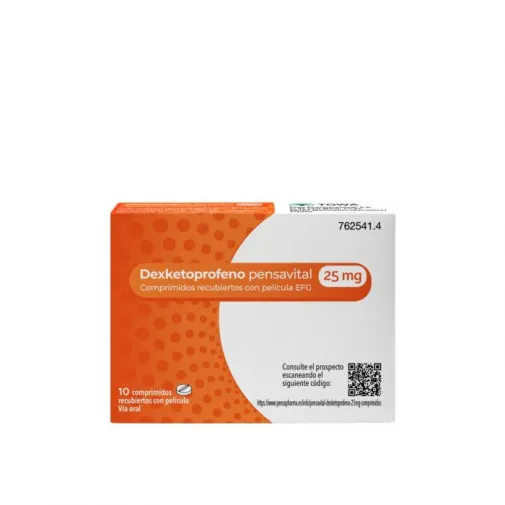
Table of Contents
- Package leaflet: Information for the user
- Introduction
- 1. What Dexketoprofen pensavital is and what it is used for
- 2. What you need to know before taking Dexketoprofeno pensavital
- 3. How to take Dexketoprofeno pensavital
- 4. Possible adverse effects
- 5. Storage of Dexketoprofen pensavital
- 6. Contents of the pack and other information
- **Composition of dexketoprofen pensavital**
- **Appearance of the product and contents of the pack**
- **Marketing Authorization Holder**
- **Manufacturer**
- **This medicinal product is authorized in the Member States of the European Economic Area under the following names:**
Package leaflet: Information for the user
Introduction
Package leaflet: information for the user
Dexketoprofeno pensavital 25 mg film-coated tablets EFG
Read the entire leaflet carefully before you start taking this medicine, because it contains important information for you.
Always follow exactly the instructions for use contained in this leaflet or as indicated by your doctor or pharmacist.
- Keep this leaflet, as you may need to read it again.
- If you have any questions, consult your doctor or pharmacist.
- This medicine has been prescribed for you only, and you should not give it to other people, even if they have the same symptoms as you, since it could harm them.
- If you experience any adverse effects, consult your doctor or pharmacist, even if they are adverse effects not listed in this leaflet. See section 4.
Leaflet contents
- What Dexketoprofeno pensavital is and what it is used for
- What you need to know before taking Dexketoprofeno pensavital
- How to take Dexketoprofeno pensavital
- Possible adverse effects
- How to store Dexketoprofeno pensavital
- Contents of the pack and other information
1. What Dexketoprofen pensavital is and what it is used for
Dexketoprofen is an analgesic belonging to the group of medicines known as non-steroidal anti-inflammatory drugs (NSAIDs).
It is used to treat mild to moderate pain, such as muscle or joint pain, menstrual pain (dysmenorrhea), and dental pain.
2. What you need to know before taking Dexketoprofeno pensavital
Do not take dexketoprofeno pensavital
- If you are allergic to dexketoprofen or to any of the other ingredients of this medicine (listed in section 6);
- If you are allergic to acetylsalicylic acid or to any other non-steroidal anti-inflammatory drug (NSAID);
- If you have asthma or have experienced asthma attacks, acute allergic rhinitis (a short period of inflammation of the nasal mucosa), nasal polyps (fleshy growths inside the nose due to allergy), urticaria (skin rash), angioedema (swelling of the face, eyes, lips, or tongue, or difficulty breathing), or wheezing in the chest after taking acetylsalicylic acid or other NSAIDs;
- If you have previously experienced photoallergic or phototoxic reactions (a special type of redness or sunburn-like skin damage on sun-exposed skin) while taking ketoprofen (a non-steroidal anti-inflammatory) or fibrates (medicines used to reduce blood fat levels);
- If you have peptic ulcer, gastrointestinal bleeding, or have previously experienced stomach or intestinal bleeding, ulceration, or perforation;
- If you have chronic digestive problems (e.g. indigestion, heartburn);
- If you have previously experienced stomach or intestinal bleeding or perforation due to prior use of non-steroidal anti-inflammatory drugs (NSAIDs) used for pain relief;
- If you have chronic inflammatory bowel disease (Crohn’s disease or ulcerative colitis);
- If you have severe heart failure, moderate to severe renal failure, or severe hepatic impairment;
- If you have bleeding disorders or blood coagulation disorders;
- If you are severely dehydrated (have lost a large amount of body fluid) due to vomiting, diarrhea, or insufficient fluid intake;
- If you are in the third trimester of pregnancy or breastfeeding.
Warnings and precautions
Consult your doctor or pharmacist before taking dexketoprofeno:
- If you are allergic or have previously had allergic problems;
- If you have kidney, liver, or heart disease (hypertension and/or heart failure), or fluid retention, or have previously had any of these conditions;
- If you are taking diuretics or have inadequate hydration and reduced blood volume due to excessive fluid loss (e.g., from excessive urination, diarrhea, or vomiting);
- If you have heart conditions, a history of stroke, or think you may be at risk of these conditions (e.g., you have high blood pressure, diabetes, elevated cholesterol, or are a smoker), you should discuss this treatment with your doctor or pharmacist. Medicines like dexketoprofen may be associated with a small increased risk of heart attack (“myocardial infarction”) or stroke (“cerebrovascular accident”). This risk is more likely with high doses and prolonged treatment. Do not exceed the recommended dose or duration of treatment;
- If you are elderly, you may be more likely to experience adverse effects (see section 4). If these occur, consult your doctor immediately;
- If you are a woman with fertility problems (dexketoprofen may reduce fertility, so you should not take it if you are planning to become pregnant or undergoing fertility investigations);
- If you have a disorder affecting blood or blood cell production;
- If you have systemic lupus erythematosus or mixed connective tissue disease (immune system disorders affecting connective tissue);
- If you currently have or have previously had chronic inflammatory bowel disease (ulcerative colitis, Crohn’s disease);
- If you currently have or have previously had stomach or intestinal disorders;
- If you have an infection; see the section “Infections” below;
- If you are taking other medicines that increase the risk of peptic ulcer or bleeding, such as oral corticosteroids, certain antidepressants (SSRIs, selective serotonin reuptake inhibitors), or agents that prevent blood clotting such as acetylsalicylic acid (aspirin) or anticoagulants like warfarin. In such cases, consult your doctor before taking dexketoprofen: your doctor may prescribe an additional medicine to protect your stomach (e.g., misoprostol or other drugs that reduce gastric acid production);
- If you suffer from asthma, combined with rhinitis or chronic sinusitis, and/or nasal polyps, as you are at higher risk of allergy to acetylsalicylic acid and/or NSAIDs compared to the general population. Administration of this medicine may trigger asthma attacks or bronchospasm, particularly in patients allergic to acetylsalicylic acid or NSAIDs.
Allergic reactions to dexketoprofen, including respiratory problems, facial and neck swelling (angioedema), and chest pain, have been reported. Immediately discontinue treatment with Dexketoprofeno pensa and contact your doctor or nearest emergency service if you experience any of these symptoms.
Children and adolescents
Dexketoprofeno pensavital has not been studied in children or adolescents. Therefore, safety and efficacy have not been established, and the product should not be used in children or adolescents.
Other medicines and dexketoprofeno pensavital
Inform your doctor or pharmacist if you are taking, have recently taken, or might need to take any other medicines, including those obtained without a prescription. Some medicines should not be taken together, while others may require dose adjustments when used concomitantly.
Always inform your doctor, dentist, or pharmacist if, in addition to Dexketoprofeno pensavital, you are taking any of the following medicines:
Combinations not recommended:
- Acetylsalicylic acid (aspirin), corticosteroids, and other anti-inflammatory drugs;
- Warfarin, heparin, and other medicines used to prevent blood clot formation;
- Lithium, used to treat certain mood disorders;
- Methotrexate, used for rheumatoid arthritis and cancer;
- Hydantoins and phenytoin, used for epilepsy;
- Sulfamethoxazole, used for bacterial infections.
Combinations requiring caution:
- ACE inhibitors, diuretics, and angiotensin II antagonists, used to control high blood pressure and heart conditions;
- Pentoxifylline and oxpentifylline, used to treat chronic venous ulcers;
- Zidovudine, used to treat viral infections;
- Aminoglycoside antibiotics, used to treat bacterial infections;
- Chlorpropamide and glibenclamide, used for diabetes.
Combinations to be aware of:
- Quinolones (e.g., ciprofloxacin, levofloxacin), used for bacterial infections;
- Cyclosporine or tacrolimus, used to treat immune system disorders and in organ transplantation;
- Streptokinase and other thrombolytic and fibrinolytic agents; i.e., medicines used to dissolve blood clots;
- Probenecid, used for gout;
- Digoxin, used in the treatment of chronic heart failure;
- Mifepristone, used as an abortifacient (for termination of pregnancy);
- Selective serotonin reuptake inhibitors (SSRIs);
- Antiplatelet agents used to reduce platelet aggregation and clot formation;
- Tenofovir, deferasirox, pemetrexed.
If you have any doubts about taking other medicines with Dexketoprofeno pensavital, consult your doctor or pharmacist.
Taking dexketoprofeno pensavital with food and drinks
Take the tablets with an adequate amount of water. Take the tablets with food, as this helps reduce the risk of gastrointestinal adverse effects. However, in case of acute pain, take the tablets on an empty stomach—i.e., at least 30 minutes before meals—since this allows the medicine to act slightly faster.
Pregnancy, breastfeeding, and fertility
Do not take dexketoprofen during the last three months of pregnancy, as it may harm the fetus or cause problems during delivery. It may cause kidney and heart problems in your fetus. It may affect your and your baby’s tendency to bleed and may delay or prolong labor. You should not take Dexketoprofeno pensavital during the first six months of pregnancy unless clearly necessary and as directed by your doctor. If treatment is needed during this period or while trying to become pregnant, you should take the lowest effective dose for the shortest possible time. From week 20 of pregnancy, Dexketoprofeno pensavital may cause kidney problems in your fetus, leading to low levels of amniotic fluid surrounding the baby (oligohydramnios) or narrowing of a blood vessel (ductus arteriosus) in the baby’s heart. If treatment is needed for more than a few days, your doctor may recommend additional monitoring.
If you are pregnant or breastfeeding, think you may be pregnant, or plan to become pregnant, consult your doctor or pharmacist before using this medicine.
Women who are planning a pregnancy or are pregnant should avoid using dexketoprofen. Treatment at any stage of pregnancy should only occur under medical supervision. The use of Dexketoprofeno pensavital is not recommended when trying to conceive or during fertility investigations.
Driving and using machines
Dexketoprofen may slightly affect your ability to drive and use machines, as it may cause drowsiness or dizziness as adverse effects of treatment. If you experience these effects, do not operate machinery or drive until the symptoms have resolved. Seek advice from your doctor.
Dexketoprofeno pensavital contains sodium
This medicine contains less than 1 mmol of sodium (23 mg) per tablet; therefore, it is essentially “sodium-free.”
3. How to take Dexketoprofeno pensavital
Follow exactly the instructions for administration of this medicine as given by your doctor or pharmacist. In case of doubt, consult your doctor or pharmacist again.
The dose of dexketoprofen you require may vary, depending on the type, intensity, and duration of pain. Your doctor will tell you how many tablets to take each day and for how long.
In general, the recommended dose is 1 tablet (25 mg) every 8 hours, without exceeding 3 tablets per day (75 mg).
If you are an elderly patient or suffer from kidney or liver disease, it is recommended to initiate therapy with a maximum of 2 tablets per day (50 mg).
In elderly patients, this initial dose may subsequently be increased according to the general recommended dose (75 mg), if dexketoprofen has been well tolerated.
If your pain is severe and you need rapid relief, take the tablets on an empty stomach (at least 30 minutes before food), as they will be absorbed more easily (see section 2, “Taking Dexketoprofeno pensavital with food and drink”).
Use in children and adolescents
This medicine must not be used in children and adolescents (under 18 years of age).
If you take more Dexketoprofeno pensavital than you should
If you have taken too much medicine, inform your doctor or pharmacist immediately or go to the nearest hospital emergency department. Please remember to always bring the medicine carton or this leaflet with you.
In case of overdose or accidental ingestion, contact your doctor or pharmacist immediately, or call the Toxicology Information Service at telephone number 91 562 04 20, indicating the medicine and the amount ingested.
If you forget to take Dexketoprofeno pensavital
Do not take a double dose to make up for missed doses. Take the next dose at the scheduled time (according to section 3, “How to take Dexketoprofeno pensavital”).
If you have any doubts about the use of this medicine, consult your doctor or pharmacist.
4. Possible adverse effects
Like all medicines, this medicine can cause adverse effects, although not everyone will experience them.
The possible adverse effects are listed below according to their frequency:
Frequent adverse effects (may affect up to 1 in 10 people):
Nausea and/or vomiting, stomach pain, diarrhoea, digestive disorders (dyspepsia).
Uncommon adverse effects (may affect up to 1 in 100 people):
Spinning sensation (vertigo), dizziness, drowsiness, sleep disturbances, nervousness, headache, palpitations, hot flushes, stomach problems, constipation, dry mouth, flatulence, skin rash, fatigue, pain, feeling feverish and chills, general malaise.
Rare adverse effects (may affect up to 1 in 1,000 people):
Peptic ulcer, perforation of peptic ulcer or bleeding, which may present as vomiting blood or black stools, fainting, high blood pressure, slow breathing, fluid retention and peripheral swelling (e.g. swollen ankles), laryngeal oedema, loss of appetite (anorexia), abnormal sensation, itchy rash, acne, increased sweating, back pain, frequent urination, menstrual disorders, prostate disorders, abnormal liver function tests (blood tests), liver cell damage (hepatitis), acute kidney failure.
Very rare (may affect up to 1 in 10,000 people):
Anaphylactic reaction (hypersensitivity reaction which may also lead to collapse), skin, mouth, eye and genital ulcers (Stevens-Johnson syndrome and Lyell syndrome), facial swelling or swelling of lips and throat (angioedema), breathing difficulty due to narrowing of the airways (bronchospasm), shortness of breath, tachycardia, low blood pressure, pancreatitis, blurred vision, ringing in the ears (tinnitus), sensitive skin, light sensitivity, itching, kidney problems. Decrease in white blood cell count (neutropenia), decrease in platelet count (thrombocytopenia).
Frequency unknown (cannot be estimated from available data):
Chest pain, which may be a symptom of a potentially serious allergic reaction called Kounis syndrome.
Fixed drug eruption: An allergic skin reaction known as fixed drug eruption which may include round or oval red patches and skin swelling, blisters and itching. Darkening of the skin in affected areas may also occur, which may persist after healing. Fixed drug eruption usually reappears in the same location or locations if the medicine is taken again.
Immediately inform your doctor if you notice any gastrointestinal adverse effects at the beginning of treatment (e.g. stomach pain or burning sensation or bleeding), especially if you have previously experienced any of these adverse effects due to prolonged treatment with anti-inflammatory medicines, and particularly if you are an elderly patient.
Immediately stop taking Dexketoprofen pensavital if you notice the appearance of a skin rash or any lesions inside the mouth or in the genital area, or any other signs of allergy.
During treatment with non-steroidal anti-inflammatory drugs, cases of fluid retention and swelling (especially in ankles and legs), increased blood pressure and heart failure have been reported.
Medicines such as Dexketoprofen pensavital may be associated with a small increased risk of heart attack ("myocardial infarction") or stroke ("cerebrovascular accident").
In patients with immune system disorders affecting connective tissue (systemic lupus erythematosus or mixed connective tissue disease), anti-inflammatory medicines may rarely cause fever, headache and neck stiffness.
Reporting of adverse effects
If you experience any adverse effects, consult your doctor or pharmacist, even if they are possible adverse effects not listed in this leaflet.
You can also report them directly via the national reporting system included in the Spanish Pharmacovigilance System for Human Medicinal Products: www.notificaRAM.es
By reporting adverse effects, you can help provide more information on the safety of this medicine.
5. Storage of Dexketoprofen pensavital
Keep this medicine out of the sight and reach of children.
Do not use this medicine after the expiry date stated on the packaging and on the blister after EXP. The expiry date refers to the last day of the month indicated.
Do not store above 30°C. Keep the blisters in the original packaging to protect them from light.
Medicines must not be disposed of via wastewater or household waste. Dispose of empty containers and unused medicines at the SIGRE collection point at your pharmacy. If in doubt, ask your pharmacist how to properly dispose of unused containers and medicines. This way, you will help protect the environment.
6. Contents of the pack and other information
Composition of dexketoprofen pensavital
- The active substance is dexketoprofen trometamol (36.90 mg), corresponding to 25 mg of dexketoprofen.
- The other components (excipients) are: maize starch, microcrystalline cellulose, sodium carboxymethylstarch, glycerol distearate, hypromellose, titanium dioxide, and macrogol 400.
Appearance of the product and contents of the pack
Dexketoprofeno pensavital film-coated tablets (tablets), white, biconvex, cylindrical, scored tablets marked with “DT2” on one side.
The tablet can be divided into equal doses.
Dexketoprofeno pensavital is available in packs containing 10 and 20 film-coated tablets.
Only some pack sizes may be marketed.
Marketing Authorization Holder
Towa Pharmaceutical, S.A.
C/ de Sant Martí, 75-97
08107 Martorelles (Barcelona)
Spain
Manufacturer
SAG Manufacturing, S.L.U.
Crta. N-I, Km 36,
San Agustín de Guadalix,
Madrid, 28750 - Spain
or
Galenicum Health, S.L.U.
Sant Gabriel, 50
Esplugues de Llobregat
Barcelona, 08950 – Spain
This medicinal product is authorized in the Member States of the European Economic Area under the following names:
Portugal: Dexcetoprofeno Pensavital 25mg Film-coated tablets
Italy: Dexketoprofene Pensavital 25mg, compresse rivestite con film
Spain: Dexketoprofeno pensavital 25mg film-coated tablets EFG
Date of the most recent review of this leaflet: September 2025.
Detailed information on this medicinal product is available on the website of the Spanish Agency for Medicines and Health Products (AEMPS) http://www.aemps.gob.es//
You can access detailed and up-to-date information about this medicine by scanning with your mobile phone (smartphone) the QR code included in the packaging. You can also access this information at the following URL: https://qr.towapharmaceutical.es/info/pensavital-dexketoprofeno-25mg-comprimidos/ and at the following internet address: https://cima.aemps.es/cima/dochtml/p/88796/P_88796.html