Coaprovel 300 mg/12.5 mg film-coated tablets
Spain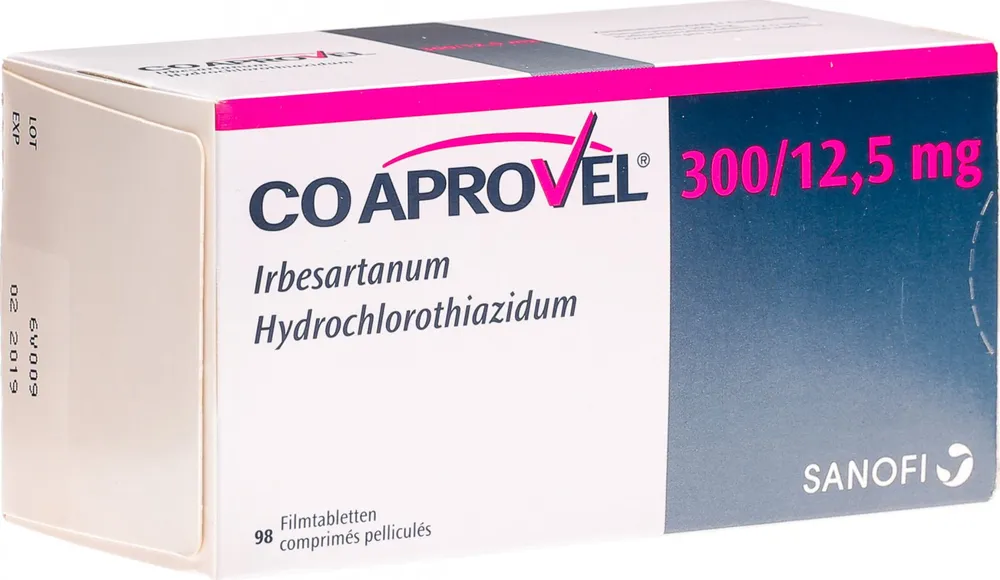
Instructions for Use
Package leaflet: Information for the user
Introduction
Package leaflet: information for the patientCoAprovel 300mg/12.5mg film-coated tablets
Irbesartan/hydrochlorothiazide
Read the entire leaflet carefully before you start taking this medicine, because it contains important information for you.
- Keep this leaflet, as you may need to read it again.
- If you have any questions, ask your doctor or pharmacist.
- This medicine has been prescribed for you only and must not be given to other people, even if they have the same symptoms as you, because it may harm them.
- If you experience any adverse effects, consult your doctor or pharmacist, even if they are adverse effects not listed in this leaflet. See section 4.
Contents of the leaflet
- What CoAprovel is and what it is used for
- What you need to know before taking CoAprovel
- How to take CoAprovel
- Possible side effects
- How to store CoAprovel
- Contents of the pack and other information
1. What CoAprovel is and what it is used for
CoAprovel is a combination of two active substances, irbesartan and hydrochlorothiazide.
Irbesartan belongs to a group of medicines known as angiotensin-II receptor antagonists.
Angiotensin-II is a substance produced in the body that binds to receptors in blood vessels, causing them to constrict. This leads to an increase in blood pressure. Irbesartan blocks angiotensin-II from binding to these receptors, relaxing the blood vessels and thereby lowering blood pressure.
Hydrochlorothiazide belongs to a group of medicines (called thiazide diuretics) that lower blood pressure by increasing the amount of urine produced.
The two active substances in CoAprovel work together to lower blood pressure more effectively than either of them used alone.
CoAprovel is used to treat high blood pressure when treatment with either irbesartan or hydrochlorothiazide alone does not provide adequate control of your blood pressure.
2. What you need to know before taking CoAprovel
Do not take CoAprovel
- if you are allergic to irbesartan or any of the other ingredients of this medicine (listed in section 6)
- if you are allergic to hydrochlorothiazide or any other sulfonamide-derived medicines
- if you are more than 3 months pregnant. (In any case, it is better to avoid taking this medicine also during early pregnancy – see section “Pregnancy”)
- if you have severe liver or kidney problems
- if you have difficulty passing urine
- if your doctor finds that you have persistently high levels of calcium or low levels of potassium in your blood
- if you have diabetes or kidney failure and are being treated with a blood pressure-lowering medicine containing aliskiren.
Warnings and precautions
Talk to your doctor before starting to take CoAprovel and in any of the following cases:
-
if you have excessive vomiting or diarrhoea
-
if you have kidney problems or have had a kidney transplant
-
if you have heart problems
-
if you have liver problems
-
if you have diabetes
-
if you have low blood sugar levels (symptoms may include sweating, weakness, hunger, dizziness, trembling, headache, flushing or paleness, numbness, rapid and strong heartbeat), especially if you are being treated for diabetes
-
if you have lupus erythematosus (also known as lupus or SLE)
-
if you have primary hyperaldosteronism (a condition related to excessive production of the hormone aldosterone, leading to sodium retention and, in turn, increased blood pressure)
-
if you are taking any of the following medicines for high blood pressure (hypertension):
-
an angiotensin-converting enzyme inhibitor (ACE inhibitor) (e.g. enalapril, lisinopril, ramipril), particularly if you have kidney problems related to diabetes.
-
aliskiren.
- if you have had skin cancer or develop an unexpected skin lesion during treatment. Treatment with hydrochlorothiazide, particularly long-term use at high doses, may increase the risk of certain types of non-melanoma skin cancer and lip cancer. Protect your skin from sun exposure and UV radiation while taking CoAprovel.
- if you have previously experienced respiratory or lung problems (such as inflammation or fluid in the lungs) after taking hydrochlorothiazide. If you develop shortness of breath or severe difficulty breathing after taking CoAprovel, seek medical help immediately.
Your doctor may monitor your kidney function, blood pressure, and blood electrolyte levels (e.g. potassium) at regular intervals.
Consult your doctor if you experience abdominal pain, nausea, vomiting, or diarrhoea after taking CoAprovel. Your doctor will decide whether to continue treatment. Do not stop taking CoAprovel as monotherapy.
See also the information under the heading “Do not take CoAprovel”.
If you are pregnant, suspect you may be pregnant, or plan to become pregnant, you must inform your doctor. Use of CoAprovel is not recommended during early pregnancy (first three months), and must not be used from the third month of pregnancy onwards, as it may cause serious harm to your baby (see section “Pregnancy”).
You should also tell your doctor:
- if you are on a low-salt diet
- if you experience any of the following signs: feeling thirsty, dry mouth, general weakness, drowsiness, muscle pains or cramps, nausea, vomiting, or rapid heartbeat, as these may indicate an excessive effect of hydrochlorothiazide (contained in CoAprovel)
- if you experience increased skin sensitivity to sunlight, with symptoms of sunburn (such as redness, itching, swelling, blisters) occurring more quickly than usual
- if you are going to have surgery (operation) or will be given anaesthetics
- if you experience decreased vision or pain in one or both eyes while taking CoAprovel. These could be symptoms of fluid accumulation in the vascular layer of the eye (choroidal effusion) or increased eye pressure (glaucoma), which may occur within hours to a week after taking CoAprovel. This may lead to permanent vision loss if not treated. If you previously had an allergy to penicillin or sulfonamides, you may have a higher risk of developing this. You should stop treatment with CoAprovel and seek immediate medical help.
The hydrochlorothiazide contained in this medicine may cause positive results in doping controls.
Children and adolescents
CoAprovel must not be given to children and adolescents (under 18 years of age).
Taking CoAprovel with other medicines
Tell your doctor or pharmacist if you are taking, have recently taken, or might need to take any other medicines.
Diuretics such as hydrochlorothiazide contained in CoAprovel may interact with other medicines. You must not take preparations containing lithium together with CoAprovel without medical supervision.
Your doctor may need to adjust your dose and/or take other precautions:
If you are taking an angiotensin-converting enzyme inhibitor (ACE inhibitor) or aliskiren (see also information under the headings “Do not take CoAprovel” and “Warnings and precautions”).
You may need blood tests if you are taking:
- potassium supplements
- salt substitutes containing potassium
- potassium-sparing medicines or other diuretics (tablets that increase urine production)
- certain laxatives
- medicines used to treat gout
- vitamin D supplements
- medicines to control heart rhythm
- medicines for diabetes (oral agents such as repaglinide or insulin)
- carbamazepine (a medicine used to treat epilepsy)
It is also important to inform your doctor if you are taking other blood pressure-lowering medicines, steroids, cancer treatments, painkillers, arthritis medicines, or cholestyramine or colestipol resins to lower blood cholesterol.
Taking CoAprovel with food, drinks and alcohol
CoAprovel can be taken with or without food.
Due to the hydrochlorothiazide contained in CoAprovel, drinking alcohol while taking this medicine may increase the likelihood of dizziness when standing up, especially when rising from a sitting position.
Pregnancy, breastfeeding and fertility
Pregnancy
Inform your doctor if you are pregnant, suspect you may be pregnant, or plan to become pregnant. Your doctor will generally advise you to stop taking CoAprovel before becoming pregnant or as soon as pregnancy is confirmed, and will recommend an alternative antihypertensive medicine. CoAprovel is not recommended during early pregnancy and must not be used from the third month of pregnancy onwards, as it may cause serious harm to your baby when used from that time.
Breastfeeding
Inform your doctor if you are breastfeeding or plan to breastfeed, as CoAprovel is not recommended for women during this period. Your doctor may choose a treatment more suitable for you if you wish to breastfeed, especially if your baby is a newborn or premature.
Driving and using machines
It is unlikely that CoAprovel will affect your ability to drive or operate machinery. However, dizziness or fatigue may occasionally occur during antihypertensive treatment. If you experience these symptoms, talk to your doctor before driving or using machines.
CoAprovel contains lactose. If your doctor has told you that you have an intolerance to certain sugars (e.g. lactose), consult him before taking this medicine.
CoAprovel contains sodium. This medicine contains less than 1 mmol of sodium (23 mg) per tablet, i.e., essentially "sodium-free".
3. How to take CoAprovel
Follow exactly the instructions for using this medicine as given by your doctor. If in doubt, check with your doctor or pharmacist again.
Dosage
The recommended dose of CoAprovel is one tablet daily. Your doctor will generally prescribe CoAprovel when previous treatments have not sufficiently lowered your blood pressure. Your doctor will advise you on how to switch from previous treatments to CoAprovel.
Method of administration
CoAprovel is administered orally. The tablets should be swallowed with a sufficient amount of liquid (e.g. a glass of water). You may take CoAprovel with or without food. You should try to take your daily dose at the same time each day. It is important that you continue taking CoAprovel until your doctor advises you otherwise.
Maximum blood pressure-lowering effect should be achieved within 6–8 weeks after starting treatment.
If you take more CoAprovel than you should
If you accidentally take too many tablets, contact your doctor immediately.
Children must not take CoAprovel
CoAprovel must not be given to children under 18 years of age. If a child swallows any tablets, contact your doctor immediately.
If you forget to take CoAprovel
If you accidentally miss a dose, simply take your next dose at the usual time. Do not take a double dose to make up for missed doses.
If you have any further questions about the use of this medicine, ask your doctor or pharmacist.
4. Possible adverse effects
Like all medicines, CoAprovel can cause adverse effects, although not everyone experiences them.
Some of these effects may be serious and may require immediate medical attention.
Rare cases of skin allergic reactions (rash, urticaria) have been reported in patients treated with irbesartan, as well as localized swelling of the face, lips and/or tongue. If you experience any of the above symptoms or have difficulty breathing, stop taking CoAprovel and contact your doctor immediately.
The frequency of the adverse effects listed below is defined using the following convention:
Frequent: may affect up to 1 in 10 people
Uncommon: may affect up to 1 in 100 people
Adverse effects reported in clinical studies for patients treated with CoAprovel were:
Frequent adverse effects (may affect up to 1 in 10 people):
- nausea/vomiting
- urinary abnormalities
- fatigue
- dizziness (including dizziness upon standing up from a lying or sitting position)
- blood tests may show elevated levels of an enzyme that measures muscle and heart function (creatine kinase) or elevated levels of substances that measure kidney function (blood urea nitrogen, creatinine).
If any of these adverse effects cause you problems, consult your doctor.
Uncommon adverse effects (may affect up to 1 in 100 people):
- diarrhoea
- low blood pressure
- fainting
- tachycardia
- flushing
- swelling due to fluid retention (oedema)
- sexual dysfunction (disturbances in sexual function)
- blood tests may show low levels of sodium and potassium in your blood.
If any of these adverse effects cause you problems, consult your doctor.
Adverse effects reported since CoAprovel was marketed
Since the marketing of CoAprovel, some adverse effects have been reported. Adverse effects observed with an unknown frequency include: headache, tinnitus, cough, altered taste, indigestion, joint and muscle pain, liver function abnormalities, kidney failure, elevated potassium levels in the blood, and allergic reactions such as rash, urticaria, swelling of the face, lips, mouth, tongue or throat. Rare cases of jaundice (yellowing of the skin and/or whites of the eyes) have also been observed.
As with all fixed-dose combinations of two active substances, adverse effects associated with each individual component cannot be excluded.
Adverse effects associated solely with irbesartan
In addition to the adverse effects described above, chest pain, severe allergic reactions (anaphylactic shock), reduced number of red blood cells (anaemia – symptoms may include tiredness, headaches, shortness of breath on exertion, dizziness and paleness), reduced platelet count (a blood cell essential for blood clotting), and low blood sugar levels have also been observed.
Rare (may affect up to 1 in 1,000 people): intestinal angioedema: swelling in the intestine presenting with symptoms such as abdominal pain, nausea, vomiting and diarrhoea.
Adverse effects associated with hydrochlorothiazide in monotherapy
Loss of appetite; stomach irritation; stomach cramps; constipation; jaundice (yellowing of the skin and/or whites of the eyes); inflammation of the pancreas characterized by severe upper abdominal pain, often with nausea and vomiting; sleep disorders; depression; blurred vision; lack of white blood cells, which may lead to frequent infections and fever; reduced platelet count (blood cells essential for blood clotting), reduced number of red blood cells (anaemia) characterized by fatigue, headaches, shortness of breath on exertion, dizziness and paleness; kidney disease; lung disorders including pneumonia or fluid accumulation in the lungs; increased sensitivity of the skin to sunlight; inflammation of blood vessels; a skin disorder characterized by peeling of the skin all over the body; cutaneous lupus erythematosus, identified by a rash that may appear on the face, neck and scalp; allergic reactions; weakness and muscle spasms; irregular heartbeat; drop in blood pressure upon changing body position; swelling of the salivary glands; high blood sugar levels; sugar in the urine; increases in certain types of blood fats; high levels of uric acid in the blood, which may cause gout.
Very rare: Acute breathing difficulty (signs include severe shortness of breath, fever, weakness and confusion).
Frequency not known (cannot be estimated from available data): Skin and lip cancer (non-melanoma skin cancer), decreased vision or eye pain due to increased pressure (possible signs of fluid accumulation in the vascular layer of the eye (choroidal effusion) or acute angle-closure glaucoma).
It is known that adverse effects associated with hydrochlorothiazide may increase with higher doses of hydrochlorothiazide.
Reporting of adverse effects
If you experience any adverse effect, talk to your doctor or pharmacist, even if it is a possible adverse effect not listed in this leaflet. You can also report them directly through the national reporting system included in Appendix V. By reporting adverse effects, you can help provide more information on the safety of this medicine.
5. Storage of CoAprovel
Keep this medicine out of the sight and reach of children.
Do not use this medicine after the expiry date stated on the carton and blister after EXP. The expiry date refers to the last day of the month indicated.
Do not store above 30 °C.
Store in the original packaging to protect from moisture.
Medicines should not be disposed of via wastewater or household waste. Ask your pharmacist how to dispose of medicines and packaging you no longer need. This will help protect the environment.
6. Contents of the pack and other information
Composition of CoAprovel
- The active substances are irbesartan and hydrochlorothiazide. Each CoAprovel 300 mg/12.5 mg film-coated tablet contains 300 mg of irbesartan and 12.5 mg of hydrochlorothiazide.
- The other components are lactose monohydrate, microcrystalline cellulose, croscarmellose sodium, hypromellose, colloidal silica, magnesium stearate, titanium dioxide, macrogol 3000, red and yellow iron oxides, and carnauba wax. See section 2 "CoAprovel contains lactose".
Nature and contents of the container
CoAprovel 300 mg/12.5 mg film-coated tablets are peach-coloured, biconvex, oval-shaped tablets, with a heart-shaped breakline on one side and the number 2876 engraved on the other.
CoAprovel 300 mg/12.5 mg film-coated tablets are available in blister packs containing 14, 28, 30, 56, 84, 90 or 98 film-coated tablets. They are also available in unit-dose blister packs of 56 x 1 film-coated tablet for hospital supply.
Only certain pack sizes may be marketed.
Marketing Authorization Holder
Sanofi Winthrop Industrie
82 avenue Raspail
94250 Gentilly
France
Manufacturer
SANOFI WINTHROP INDUSTRIE
1, rue de la Vierge
Ambarès & Lagrave
F-33565 Carbon Blanc Cedex - France
SANOFI WINTHROP INDUSTRIE
30-36 Avenue Gustave Eiffel
37100 Tours - France
SANOFI-AVENTIS, S.A.
Ctra. C-35 (La Batlloria-Hostalric), km. 63.09
17404 Riells i Viabrea (Girona)
Spain
For further information about this medicinal product, please contact the local representative of the Marketing Authorization Holder:
Belgium/Belgium/Belgium Sanofi Belgium Tel/Tel: +32 (0)2 710 54 00 | Luxembourg/Luxembourg Sanofi Belgium Tel/Tel: +32 (0)2 710 54 00 (Belgium/Belgium) |
| Hungary sanofi-aventis zrt., Hungary Tel.: +36 1 505 0050 |
Czech Republic Sanofi, s.r.o. Tel: +420 233 086 111 | Malta Sanofi S.r.l. Tel: +39 02 39394275 |
Denmark Sanofi A/S Tlf: +45 45 16 70 00 | Netherlands Sanofi B.V. Tel: +31 20 245 4000 |
Germany Sanofi-Aventis Deutschland GmbH Tel: 0800 52 52 010 Tel. from abroad: +49 69 305 21 131 | Norway sanofi-aventis Norge AS Tlf: +47 67 10 71 00 |
Estonia Swixx Biopharma OÜ Tel: +372 640 10 30 | Austria sanofi-aventis GmbH Tel: +43 1 80 185 – 0 |
Greece Sanofi-Aventis Monoprosopi EPE Tel: +30 210 900 16 00 | Poland Sanofi Sp. z o.o. Tel.: +48 22 280 00 00 |
Spain sanofi-aventis, S.A. Tel: +34 93 485 94 00 | Portugal Sanofi - Produtos Farmacêuticos, Lda Tel: +351 21 35 89 400 |
France Sanofi Winthrop Industrie Tél: 0 800 222 555 Call from abroad: +33 1 57 63 23 23 Croatia Swixx Biopharma d.o.o. Tel: +385 1 2078 500 | Romania Sanofi Romania SRL Tel: +40 (0) 21 317 31 36 |
Ireland sanofi-aventis Ireland Ltd. T/A SANOFI Tel: +353 (0) 1 403 56 00 | Slovenia Swixx Biopharma d.o.o. Tel: +386 1 235 51 00 |
Iceland Vistor hf. Sími: +354 535 7000 | Slovakia Swixx Biopharma s.r.o. Tel: +421 2 208 33 600 |
Italy Sanofi S.r.l. Tel: 800.536389 | Finland Sanofi Oy Puh/Tel: +358 (0) 201 200 300 |
Cyprus C.A. Papaellinas Ltd. Tel: +357 22 741741 | Sweden Sanofi AB Tel: +46 (0)8 634 50 00 |
Latvia Swixx Biopharma SIA Tel: +371 6616 47 50 | United Kingdom (Northern Ireland) sanofi-aventis Ireland Ltd. T/A SANOFI Tel: +44 (0) 800 035 2525 |
Lithuania Swixx Biopharma UAB Tel: +370 5 236 91 40 |
Date of the most recent review of this leaflet:
Detailed information on this medicine is available on the website of the European Medicines Agency: http://www.ema.europa.eu.
Similar Medications
-
Coaprovel 150 mg/12.5 mg film-coated tablets
Form: tablets, film-coated
Active substance Dosage IRBESARTAN 150 mg HYDROCHLOROTHIAZIDE 12,5 mg Manufacturer: Sanofi Winthrop Industrie
-
Coaprovel 300 mg/25 mg film-coated tablets
Form: tablets, film-coated
Active substance Dosage IRBESARTAN 300 mg HYDROCHLOROTHIAZIDE 25 mg Manufacturer: Sanofi Winthrop Industrie
-
Ifirmacom 300 mg/12.5 mg film-coated tablets EFG
Form: tablets, film-coated
Active substance Dosage IRBESARTAN 300 mg HYDROCHLOROTHIAZIDE 12,5 mg Manufacturer: Krka D.D. Novo Mesto
-
IfirmacomBi 150 mg/12.5 mg film-coated tablets EFG
Form: tablets, film-coated
Active substance Dosage IRBESARTAN 150 mg HYDROCHLOROTHIAZIDE 12,5 mg Manufacturer: Krka D.D. Novo Mesto
-
IfirmacomBi 300 mg/25 mg film-coated tablets EFG
Form: tablets, film-coated
Active substance Dosage IRBESARTAN 300 mg HYDROCHLOROTHIAZIDE 25 mg Manufacturer: Krka D.D. Novo Mesto
-
Irbesartan/hydrochlorothiazide Almus 150 mg/12.5 mg film-coated tablets EFG
Form: tablets, film-coated
Active substance Dosage IRBESARTAN 150,00 mg HYDROCHLOROTHIAZIDE 12,50 mg Manufacturer: Almus Farmaceutica S.A.U.
-
Irbesartan/hydrochlorothiazide Almus 300 mg/12.5 mg film-coated tablets EFG
Form: tablets, film-coated
Active substance Dosage IRBESARTAN 300 mg HYDROCHLOROTHIAZIDE 12,50 mg Manufacturer: Almus Farmaceutica S.A.U.
-
Irbesartan/hydrochlorothiazide Almus 300 mg/25 mg film-coated tablets EFG
Form: tablets, film-coated
Active substance Dosage IRBESARTAN 300,00 mg HYDROCHLOROTHIAZIDE 25,00 mg Manufacturer: Almus Farmaceutica S.A.U.
-
Irbesartan/hydrochlorothiazide Alter 150 mg/12.5 mg film-coated tablets EFG
Form: tablets, film-coated
Active substance Dosage IRBESARTAN 150 mg HYDROCHLOROTHIAZIDE 12,5 mg Manufacturer: Laboratorios Alter S.A.
-
Irbesartan/hydrochlorothiazide Alter 300 mg/12.5 mg film-coated tablets EFG
Form: tablets, film-coated
Active substance Dosage IRBESARTAN 300 mg HYDROCHLOROTHIAZIDE 12,5 mg Manufacturer: Laboratorios Alter S.A.
-
Irbesartan/hydrochlorothiazide Alter 300 mg/25 mg film-coated tablets EFG
Form: tablets, film-coated
Active substance Dosage IRBESARTAN 300 mg HYDROCHLOROTHIAZIDE 25 mg Manufacturer: Laboratorios Alter S.A.
-
Irbesartan/hydrochlorothiazide Aurovitas 150 mg/12.5 mg film-coated tablets EFG
Form: tablets, film-coated
Active substance Dosage IRBESARTAN 150,000 mg HYDROCHLOROTHIAZIDE 12,500 mg Manufacturer: Aurovitas Spain, S.A.U.
This page has been machine-translated and may contain inaccuracies. The original data is available in the manufacturing country's language.
Last data check: May 18, 2026 · Data source: CIMA — AEMPS