Citalopram Sandoz 20 mg film-coated tablets EFG
Spain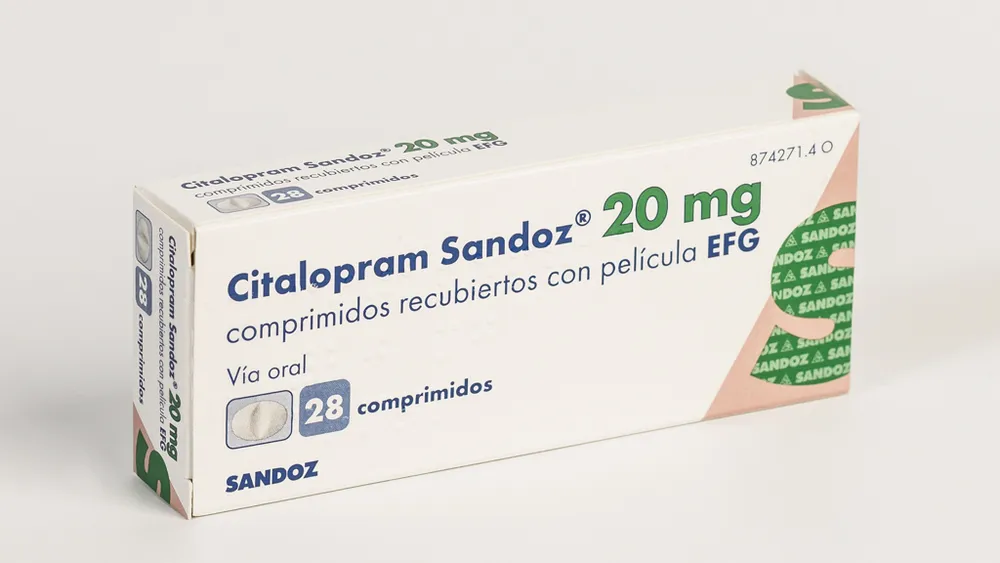
Instructions for Use
Table of Contents
- Introduction
- 1. What Citalopram Sandoz is and what it is used for
- 2. What you need to know before taking Citalopram Sandoz
- **Citalopram Sandoz contains lactose and sodium**
- 3. How to take Citalopram Sandoz
- 4. Possible adverse effects
- 5. Storage of Citalopram Sandoz
- 6. Contents of the container and additional information
- **Composition of Citalopram Sandoz 30 mg film-coated tablets**
Package leaflet: Information for the user
Introduction
Package leaflet: information for the user
Citalopram Sandoz 20 mg film-coated tablets EFG
Citalopram Sandoz 30 mg film-coated tablets EFG
Read the entire leaflet carefully before you start taking this medicine, because it contains important information for you.
- Keep this leaflet. You may need to read it again.
- If you have any questions, ask your doctor or pharmacist.
- This medicine has been prescribed for you only. Do not pass it on to others, even if they have the same symptoms as you, because it may harm them.
- If you experience any adverse effects, consult your doctor or pharmacist, even if they are adverse effects not listed in this leaflet. See section 4.
Contents of the leaflet:
- What Citalopram Sandoz is and what it is used for.
- What you need to know before taking Citalopram Sandoz.
- How to take Citalopram Sandoz.
- Possible side effects.
- How to store Citalopram Sandoz.
- Contents of the pack and other information.
1. What Citalopram Sandoz is and what it is used for
Citalopram is a selective serotonin reuptake inhibitor (SSRI) and belongs to a group of medicines known as antidepressants. These medicines help correct certain chemical imbalances in the brain that cause the symptoms of your illness.
Citalopram is indicated for the treatment of:
- Depression and prevention of relapses and recurrences.
- Panic disorder with or without agoraphobia.
- Obsessive-compulsive disorder (OCD).
However, your doctor may prescribe citalopram for other purposes. If you have any doubts about why citalopram has been prescribed for you, ask your doctor.
2. What you need to know before taking Citalopram Sandoz
Do not take Citalopram Sandoz
- If you are allergic to citalopram or to any of the other ingredients of this medicine (listed in section 6),
- If you are taking other medicines belonging to a group called monoamine oxidase inhibitors (MAOIs). MAOIs include medicines such as phenelzine, iproniazid, isocarboxazid, nialamide, tranylcypromine, selegiline (for the treatment of Parkinson's disease), moclobemide (for the treatment of depression), and linezolid (an antibiotic).
- If you have had from birth a certain type of heart rhythm disorder or have ever experienced an episode of this kind (this is detected by electrocardiogram, a test used to assess how the heart is functioning).
- If you are taking medicines for a disease that affects heart rhythm.
- If you are taking medicines that may affect heart rhythm.
- See also the section “Other medicines and Citalopram Sandoz” below.
Even if you have completed treatment with MAOIs, you must wait 2 weeks before starting treatment with citalopram.
You must wait 1 day after taking moclobemide.
After stopping citalopram, you must wait 1 week before taking any MAOI.
Warnings and precautions
Talk to your doctor or pharmacist before starting to take Citalopram Sandoz.
Please inform your doctor if you have any other condition or illness, as your doctor may need to take this into account. In particular, tell your doctor:
- If you have manic episodes or panic disorder.
- If you have liver or kidney impairment. Your doctor may need to adjust your dose.
- If you have diabetes. Treatment with citalopram may alter glucose control. You may need adjustment of insulin and/or oral hypoglycemic agent doses.
- If you have epilepsy. Treatment with citalopram should be discontinued if seizures occur or if there is an increase in seizure frequency (see also section 4 "Possible side effects").
- If you have a history of bleeding disorders, develop unusual bruising, or are pregnant (see “Pregnancy, breastfeeding and fertility”).
- If you have low sodium levels in the blood.
- If you are receiving electroconvulsive therapy.
- If you have heart problems or have recently had a heart attack.
- If your heart beats slowly at rest (known as bradycardia) and/or you think your body may be losing salts, for example due to severe diarrhea and vomiting over several days or due to diuretic use (medicines to increase urination).
- If you have noticed rapid or irregular heartbeats, or have experienced fainting or dizziness when standing up from a sitting or lying position. This could indicate a heart rhythm disorder.
- If you have a problem with dilation of the pupils (mydriasis).
Consult your doctor, even if any of the above circumstances occurred in the past.
Some patients with bipolar disorder may enter a manic phase. This is characterized by unusual and rapid thought changes, excessive happiness, and excessive physical activity. If you experience this, contact your doctor.
Symptoms such as restlessness or difficulty sitting or standing still (akathisia) may also occur during the first weeks of treatment. Inform your doctor immediately if you experience these symptoms.
Some medicines in the same group as citalopram (called SSRIs/SNRIs) may cause symptoms of sexual dysfunction (see section 4). In some cases, these symptoms persist after stopping treatment.
Special information related to your illness
Like other medicines used to treat depression or related conditions, improvement does not occur immediately. After starting treatment with citalopram, it may take several weeks before you notice any improvement.
In the treatment of panic disorder, improvement usually occurs after 2 to 4 weeks.
At the beginning of treatment, some patients may experience increased anxiety, which subsides with continued treatment. Therefore, it is very important that you follow your doctor's instructions exactly and do not stop treatment or change your dose without consulting your doctor.
Suicidal thoughts and worsening of depression or anxiety disorder
If you are depressed and/or suffer from an anxiety disorder, you may sometimes have thoughts of harming yourself or ending your life. These thoughts may increase when you first start taking antidepressants, because all these medicines require time to begin working—usually about two weeks, although in some cases it may take longer.
You are more likely to have these types of thoughts:
- If you have previously had thoughts of harming yourself or ending your life.
- If you are a young adult. Clinical trial data have shown an increased risk of suicidal behavior in young adults (under 25 years) with psychiatric disorders who were treated with an antidepressant.
If at any time you have thoughts of harming yourself or ending your life, contact your doctor or go directly to a hospital.
It may be helpful for you to tell a family member or close friend that you are depressed or have an anxiety disorder and ask them to read this leaflet. You may ask them whether they think your depression or anxiety disorder has worsened, or if they are concerned about changes in your behavior.
Children and adolescents
Citalopram should not normally be used in the treatment of children and adolescents under 18 years of age. In addition, you should know that in patients under 18 years of age, there is an increased risk of adverse effects such as suicide attempts, suicidal thoughts, and hostility (mainly aggression, confrontational behavior, and irritability) when taking this type of medicine.
Nevertheless, your doctor may prescribe citalopram to patients under 18 years of age if they decide it is in the patient's best interest. If your doctor has prescribed citalopram to you and you are under 18 years of age and wish to discuss this decision, please speak to your doctor again. You must inform your doctor if any of the symptoms mentioned above worsen or complications arise while patients under 18 years of age are taking citalopram. In addition, the long-term effects on safety, growth, maturation, and cognitive and behavioral development of citalopram in this age group have not yet been fully established.
Other medicines and Citalopram Sandoz
Tell your doctor or pharmacist if you are taking, have recently taken, or might need to take any other medicine.
Some medicines may affect the action of others and this can sometimes cause serious adverse reactions.
Inform your doctor if you are taking any of the following medicines:
- Non-selective monoamine oxidase inhibitors (MAOIs) containing phenelzine, iproniazid, isocarboxazid, nialamide, or tranylcypromine as active substances. If you have taken any of these medicines, you must wait 14 days before starting citalopram. After finishing citalopram treatment, you must wait 7 days before taking any of these medicines.
- Reversible selective MAO-A inhibitors containing moclobemide (for the treatment of depression).
- The antibiotic linezolid.
- Lithium (for prophylaxis and treatment of bipolar disorder) and tryptophan.
- Imipramine and desipramine (for the treatment of depression).
- Irreversible MAO-B inhibitors containing selegiline (for the treatment of Parkinson's disease); these increase the risk of adverse effects. The selegiline dose must not exceed 10 mg per day.
- Metoprolol (for the treatment of high blood pressure and/or heart disease); metoprolol blood levels increase, but no signs of increased effect or adverse effects of metoprolol have been observed.
- Sumatriptan and similar medicines (for the treatment of migraine) and opioids such as tramadol and buprenorphine (for the treatment of severe pain) increase the risk of adverse effects. If you experience any unusual symptoms while using this combination, see your doctor.
- Cimetidine, lansoprazole, and omeprazole (used to treat stomach ulcers), fluconazole (used to treat fungal infections), fluvoxamine (an antidepressant), and ticlopidine (used to reduce the risk of stroke). These may increase citalopram blood levels, but no increase in citalopram adverse effects has been reported.
- Medicines that affect platelet function (e.g., some antipsychotics, acetylsalicylic acid (for pain relief), non-steroidal anti-inflammatory drugs (for the treatment of arthritis)); these slightly increase the risk of bleeding disorders.
- St. John’s wort (Hypericum perforatum) (a herbal remedy used for depression); concomitant administration with citalopram may increase the risk of adverse effects.
- Mefloquine (for the treatment of malaria), bupropion (for the treatment of depression), and tramadol (for the treatment of severe pain) due to a possible risk of lowering the seizure threshold.
- Neuroleptics (medicines for the treatment of schizophrenia, psychosis), due to a possible risk of lowering the seizure threshold, and antidepressants.
- Class IA and III antiarrhythmics, antipsychotics (e.g., phenothiazine derivatives, pimozide, haloperidol), tricyclic antidepressants, certain antimicrobial agents (sparfloxacin, moxifloxacin, IV erythromycin, pentamidine, antimalarials particularly halofantrine), certain antihistamines (astemizole, mizolastine).
- Medicines that reduce potassium or magnesium levels in the blood, as this increases the risk of life-threatening heart rhythm disturbances. Do not take citalopram if you are taking medicines for a disease that affects heart rhythm or if you are taking medicines that may themselves affect heart rhythm. If you have any doubts about this, consult your doctor.
Taking Citalopram Sandoz with food, drinks, and alcohol
Citalopram may be taken with or without food (see section 3, “How to take Citalopram Sandoz”).
It has been observed that citalopram does not increase the effects of alcohol. However, it is advisable to avoid alcohol consumption during treatment with citalopram.
Pregnancy, breastfeeding, and fertility
If you are pregnant or breastfeeding, think you may be pregnant, or plan to become pregnant, consult your doctor or pharmacist before using this medicine.
Pregnant women should normally not take citalopram, and mothers should not breastfeed while taking this medicine, unless your doctor has evaluated the risks and benefits involved.
If you take citalopram during the last 3 months of pregnancy up to delivery, be aware that the following effects may occur in the newborn baby: breathing difficulties, bluish skin, seizures, changes in body temperature, feeding difficulties, vomiting, low blood sugar, muscle stiffness or floppiness, exaggerated reflexes, tremors, restlessness, irritability, lethargy, constant crying, drowsiness, and sleep difficulties. If your newborn baby shows any of these symptoms, please contact your doctor immediately.
If you take citalopram in late pregnancy, there may be an increased risk of heavy vaginal bleeding shortly after delivery, especially if you have a history of bleeding disorders. Your doctor or midwife should be aware that you are taking citalopram so they can advise you appropriately.
Citalopram passes into breast milk in small amounts. There is a risk of effects on the infant. If you are taking citalopram, inform your doctor before starting breastfeeding.
Ensure that your midwife and/or doctor are informed that you are being treated with citalopram.
During pregnancy, particularly in the last 3 months, medicines like citalopram may increase the risk of a serious condition in newborns called persistent pulmonary hypertension of the newborn (PPHN), in which the baby breathes rapidly and appears blue. These symptoms usually begin within the first 24 hours after birth. If they occur in your baby, contact your midwife and/or doctor immediately.
Citalopram has been shown to reduce sperm quality in animal models. Theoretically, this effect could affect fertility, but to date, no impact on human fertility has been observed.
Driving and using machines
Citalopram generally does not cause drowsiness; however, if you feel dizzy or sleepy when you start taking this medicine, do not drive or operate tools or machinery until these effects subside.
Citalopram Sandoz contains lactose and sodium
If your doctor has informed you of an intolerance to certain sugars, consult with him before taking this medicine.
This medicine contains less than 1 mmol of sodium (23 mg) per film-coated tablet; hence, it is essentially "sodium-free".
3. How to take Citalopram Sandoz
Follow exactly the instructions for use of this medicine given by your doctor. If in doubt, consult your doctor or pharmacist again.
Adults
Depression
The usual dose is 20 mg daily. If necessary, your doctor may increase this dose up to a maximum of 40 mg daily.
Panic disorder
The initial dose is 10 mg daily for the first week before increasing to 20 or 30 mg daily. If necessary, your doctor may increase this dose up to a maximum of 40 mg daily.
Obsessive-compulsive disorder (OCD)
The initial dose is 20 mg daily. If necessary, your doctor may increase this dose up to a maximum of 40 mg daily.
Elderly (over 65 years of age)
In elderly patients, treatment should be initiated at half the recommended dose, for example 10 or 20 mg daily.
In general, elderly patients should not take more than 20 mg daily.
Patients with special risks
Patients with liver disease should not take more than 20 mg daily.
Use in children and adolescents
Citalopram must not be administered to children or adolescents. For further information, see section 2 “What you need to know before taking Citalopram Sandoz”.
How and when to take Citalopram Sandoz
Citalopram is taken every day as a single daily dose.
The tablets may be taken at any time of day, regardless of meals.
The tablets should be swallowed with a glass of water. Do not chew them (they have a bitter taste).
Duration of treatment
Like other medicines for depression, panic disorder, and obsessive-compulsive disorder, it may take several weeks before you notice any improvement. Continue taking citalopram even if it takes some time before you feel better.
Never modify the dose of the medicine without first talking to your doctor.
The duration of treatment is individual, but generally at least 6 months. Continue taking the tablets for the time recommended by your doctor. Do not stop taking them even if you feel better, unless your doctor has instructed you to do so. The underlying condition may persist for a long period, and if you stop treatment too early, your symptoms may return.
Patients with recurrent depression benefit from maintenance treatment, sometimes for several years, to prevent the occurrence of new depressive episodes.
If you take more Citalopram Sandoz than you should
If you have taken more Citalopram Sandoz than you should, contact your doctor, pharmacist, or call the Toxicology Information Service immediately at telephone number: 91 562 04 20, indicating the medicine and the amount taken. Do this even if you do not observe any discomfort or signs of poisoning. Take the Citalopram Sandoz packaging with you to the doctor or hospital.
Some symptoms of an overdose may include irregular heartbeats with life-threatening risk, seizures, changes in heart rhythm, drowsiness, coma, vomiting, tremors, decreased blood pressure, increased blood pressure, nausea (feeling nauseated), serotonin syndrome (see section 4. “Possible side effects”), agitation, dizziness, dilated pupils, sweating, bluish skin, hyperventilation (increased respiratory rate).
If you forget to take Citalopram Sandoz
If you forget to take a dose, take the next dose at the usual time.
Do not take a double dose to make up for forgotten doses.
If you stop taking Citalopram Sandoz
Do not stop taking Citalopram Sandoz until your doctor tells you to do so. When completing your treatment, it is generally recommended that the dose of citalopram be gradually reduced over several weeks.
Abrupt discontinuation of the medication may cause some mild or transient disturbances such as dizziness, tingling sensations, sleep disturbances (vivid dreams, nightmares, inability to sleep), feeling of anxiety, headache, dizziness (nausea), vomiting, sweating, restlessness or agitation, tremors, feelings of confusion or disorientation, feelings of emotion or irritability, diarrhea (loose stools), visual disturbances, rapid pulse or palpitations.
When you have completed your treatment period, it is generally recommended that the dose of citalopram be gradually reduced over a couple of weeks rather than stopped abruptly.
If you have any further questions about the use of this medicine, ask your doctor or pharmacist.
4. Possible adverse effects
Like all medicines, this medicine can cause adverse effects, although not everyone will experience them.
Adverse effects usually disappear after a few weeks of treatment. Please note that many of these effects may also be symptoms of your illness and therefore will improve as you start to feel better.
Some patients have reported the following serious adverse effects. If you experience any of the symptoms listed below, you must stop taking citalopram and see your doctor immediately.
- High fever, agitation, confusion, tremors, and sudden muscle contractions; these may be signs of a rare condition called serotonin syndrome, which has been reported with combined use of antidepressants.
- Swelling of the skin, tongue, lips, or face, or difficulty breathing or swallowing (allergic reaction).
- Unusual bleeding, including gastrointestinal bleeding.
Rare but serious adverse effects (may affect up to 1 in 1,000 patients):
If you experience any of the following symptoms, you must stop taking citalopram and contact your doctor immediately.
- Hyponatremia: low sodium levels in the blood, which may cause tiredness, confusion, and muscle spasms.
- Rapid or irregular heartbeat, or feeling faint, as these could be symptoms of a serious heart condition known as torsade de pointes.
The following adverse effects are generally mild and usually disappear after a few days of treatment. Please be aware that several of the effects listed below may be symptoms of your illness and will therefore improve as you start to feel better.
If adverse effects are troublesome or last longer than a few days, consult your doctor.
Dry mouth increases the risk of dental caries. Therefore, you should brush your teeth more often than usual.
Very common adverse effects (may affect more than 1 in 10 patients):
- Tendency to feel sleepy.
- Difficulty sleeping.
- Increased sweating.
- Dry mouth.
- Nausea (feeling sick).
- Headache.
Common adverse effects (may affect up to 1 in 10 patients):
- Decreased appetite.
- Agitation.
- Decreased sexual drive or performance.
- Anxiety.
- Restlessness.
- Confusional state.
- Abnormal dreams.
- Tremors.
- Tingling or numbness in hands or feet.
- Dizziness.
- Attention disturbance.
- Ringing in the ears (tinnitus).
- Yawning.
- Diarrhea.
- Vomiting.
- Constipation.
- Rash.
- Muscle and joint pain.
- Men may experience problems with ejaculation and erection.
- Women may experience difficulty achieving orgasm.
- Fatigue.
- Fever.
- Skin irritation.
- Weight loss.
Uncommon adverse effects (may affect up to 1 in 100 patients):
- Bleeding disorders of the skin (easy bruising).
- Increased appetite.
- Aggressiveness.
- Depersonalization.
- Hallucinations.
- Mania.
- Fainting.
- Dilated pupils.
- Rapid heartbeat.
- Slow heartbeat.
- Hives (urticaria).
- Hair loss.
- Skin rash.
- Light sensitivity.
- Difficulty urinating.
- Excessive menstrual bleeding.
- Swelling of arms and legs.
- Weight gain.
Rare adverse effects (may affect up to 1 in 1,000 patients):
- Seizures.
- Involuntary movements.
- Taste disturbances.
- Bleeding.
- Hepatitis.
- Fever.
Frequency not known (cannot be estimated from available data):
- Thoughts of harming yourself or thoughts of suicide; see also section "Warnings and precautions".
- Reduction in blood platelets, which increases the risk of bleeding or bruising (hematoma).
- Hypersensitivity (rash).
- Severe allergic reaction causing difficulty breathing or dizziness.
- Increased amount of urine excreted.
- Hypokalemia: low potassium levels in the blood, which may cause muscle weakness, contractions, or abnormal heart rhythm.
- Panic attacks.
- Teeth grinding.
- Restlessness.
- Abnormal muscle movements or stiffness.
- Akathisia (involuntary muscle movements).
- Vision disturbances.
- Low blood pressure.
- Nosebleeds.
- Bleeding disorders including bleeding from the skin and mucous membranes (ecchymosis).
- Sudden swelling of the skin or mucous membranes.
- Painful erections.
- Increased levels of prolactin hormone in the blood.
- Milk production in men and in women who are not breastfeeding.
- Irregular menstrual periods.
- Heavy vaginal bleeding shortly after childbirth (postpartum hemorrhage); see section 2 “Pregnancy, breastfeeding and fertility” for more information.
- Abnormal liver function tests.
- Orthostatic hypotension (a significant drop in blood pressure when standing up).
- An increased risk of bone fractures has been observed in patients treated with this type of medicine.
- Abnormal heart rhythm.
If you experience any adverse effects, consult your doctor or pharmacist, even if they are adverse effects not listed in this leaflet.
Reporting of adverse effects
If you experience any adverse effect, talk to your doctor or pharmacist, even if it is a possible adverse effect not listed in this leaflet. You can also report them directly via the Spanish Pharmacovigilance System for Human Medicines: https://www.notificaram.es. By reporting adverse effects, you can help provide more information on the safety of this medicine.
5. Storage of Citalopram Sandoz
Keep this medicine out of the sight and reach of children.
No special storage conditions are required.
Do not use this medicine after the expiry date stated on the packaging after CAD/EXP. The expiry date refers to the last day of the month indicated.
Medicines should not be disposed of via wastewater or household waste. Dispose of unused medicines and their containers at the SIGRE collection point at your pharmacy. If you are unsure, ask your pharmacist how to dispose of medicines and containers you no longer need. This way, you will help protect the environment.
6. Contents of the container and additional information
Composition of Citalopram Sandoz 20 mg film-coated tablets:
- The active substance is citalopram. Each tablet contains 24.99 mg of citalopram hydrobromide (equivalent to 20 mg of citalopram).
The other components (excipients) are: corn starch, lactose monohydrate, povidone K64, glycerol 85% (E-422), microcrystalline cellulose, magnesium stearate, sodium carboxymethyl starch (type A) (derived from potato starch), hypromellose, titanium dioxide (E 171), macrogol 6000, and talc.
Composition of Citalopram Sandoz 30 mg film-coated tablets
- The active substance is citalopram. Each tablet contains 37.48 mg of citalopram hydrobromide (equivalent to 30 mg of citalopram).
- The other components (excipients) are: maize starch, monohydrate lactose, povidone K64, glycerol 85% (E-422), microcrystalline cellulose, magnesium stearate, sodium carboxymethyl starch (type A) (derived from potato starch), hypromellose, titanium dioxide (E 171), macrogol 6000 and talc.
Appearance of the product and contents of the pack
Citalopram Sandoz 20 mg are film-coated tablets, white, oblong, biconvex, scored on one side and marked with “C20” on the other. Packaged in PVC/Aluminum blisters or Aluminum/PVC/PVDC blisters in packs of 14, 28 or 56 tablets.
Citalopram Sandoz 30 mg are film-coated tablets, white, oblong, biconvex, scored on one side and marked with “C30” on the other.
Packaged in PVC/Aluminum blisters or Aluminum/PVC/PVDC blisters in packs of 28 or 56 tablets.
Only certain pack sizes may be marketed.
Marketing Authorization Holder and Manufacturer
Marketing Authorization Holder
Sandoz Farmacéutica, S.A.
Centro Empresarial Parque Norte
Edificio Roble
C/ Serrano Galvache, 56
28033 Madrid
Spain
Manufacturer
Salutas Pharma GmbH
Otto-von-Guericke Allee 1
Barleben 39179
Germany
LEK, S.A.
Ul Domaniewska 50 C,
Warzawa, PL 02-672
Poland
Date of latest review of this leaflet: July 2024
Detailed information on this medicine is available on the website of the Spanish Agency of Medicines and Medical Devices (AEMPS) http://www.aemps.gob.es/
Similar Medications
-
Citalopram Alter 20 mg film-coated tablets EFG
Form: tablets, film-coated
Active substance Dosage CITALOPRAM HYDROBROMIDE 25,000 mg Manufacturer: Laboratorios Alter S.A.
-
Citalopram Alter 30 mg film-coated tablets EFG
Form: tablets, film-coated
Active substance Dosage CITALOPRAM HYDROBROMIDE 37,500 mg Manufacturer: Laboratorios Alter S.A.
-
Citalopram Aurovitas 20 mg film-coated tablets EFG
Form: tablets, film-coated
Active substance Dosage CITALOPRAM HYDROBROMIDE 24.98 mg Manufacturer: Aurovitas Spain, S.A.U.
-
Citalopram Aurovitas 30 mg film-coated tablets EFG
Form: tablets, film-coated
Active substance Dosage CITALOPRAM HYDROBROMIDE 37,47 mg Manufacturer: Aurovitas Spain, S.A.U.
-
Citalopram Bexal 20 mg film-coated tablets EFG
Form: tablets, film-coated
Active substance Dosage CITALOPRAM HYDROBROMIDE 24,990 mg Manufacturer: Bexal Farmaceutica S.A.
-
Citalopram Bexal 30 mg film-coated tablets EFG
Form: tablets, film-coated
Active substance Dosage CITALOPRAM HYDROBROMIDE 37,48 mg Manufacturer: Bexal Farmaceutica S.A.
-
Citalopram Cinfa 20 mg film-coated tablets EFG
Form: tablets, film-coated
Active substance Dosage CITALOPRAM HYDROBROMIDE 25,00 mg Manufacturer: Laboratorios Cinfa S.A.
-
Citalopram Cinfa 30 mg film-coated tablets EFG
Form: tablets, film-coated
Active substance Dosage CITALOPRAM HYDROBROMIDE 37,50 mg Manufacturer: Laboratorios Cinfa S.A.
-
Citalopram Combix 10 mg film-coated tablets EFG
Form: tablets, film-coated
Active substance Dosage CITALOPRAM HYDROBROMIDE 12,490 mg Manufacturer: Laboratorios Combix S.L.U.
-
Citalopram Combix 20 mg film-coated tablets EFG
Form: tablets, film-coated
Active substance Dosage CITALOPRAM HYDROBROMIDE 24,98 mg Manufacturer: Laboratorios Combix S.L.U.
-
Citalopram Combix 30 mg film-coated tablets EFG
Form: tablets, film-coated
Active substance Dosage CITALOPRAM HYDROBROMIDE 37,47 mg Manufacturer: Laboratorios Combix S.L.U.
-
Citalopram Kern Pharma 20 mg film-coated tablets EFG
Form: tablets, film-coated
Active substance Dosage CITALOPRAM HYDROBROMIDE 24,990 mg Manufacturer: Kern Pharma S.L.
This page has been machine-translated and may contain inaccuracies. The original data is available in the manufacturing country's language.
Last data check: May 18, 2026 · Data source: CIMA — AEMPS