Bicavera glucose 2.3%, calcium 1.25 mmol/l solution for peritoneal dialysis
Spain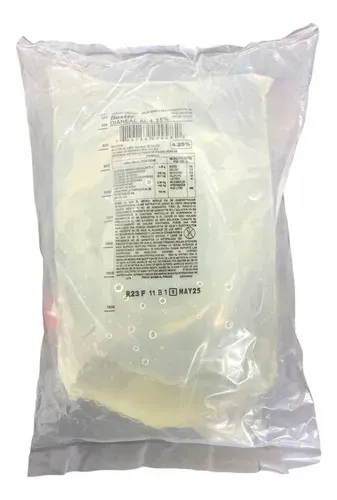
Table of Contents
Package leaflet: Information for the user
Introduction
Package leaflet: information for the user
bicaVera Glucose 2.3%, Calcium 1.25 mmol/l solution for peritoneal dialysis
Read all of this leaflet carefully before you start using this medicine because it contains important information for you.
- Keep this leaflet. You may need to read it again.
- If you have any questions, ask your doctor, pharmacist, or nurse.
- This medicine has been prescribed for you only. Do not give it to other people, even if they have the same symptoms as you, because it may harm them.
- If you experience any side effects, talk to your doctor, pharmacist, or nurse, even if it is a side effect not listed in this leaflet. See section 4.
Contents of this leaflet
- What bicaVera is and what it is used for
- What you need to know before using bicaVera
- How to use bicaVera
- Possible side effects
- How to store bicaVera
- Contents of the pack and other information
1. What bicaVera is and what it is used for
bicaVera is used to clean the blood through the peritoneum in patients with end-stage chronic renal failure. This type of blood cleansing is known as peritoneal dialysis.
2. What you need to know before using bicaVera
Do not use bicaVera Glucose 2.3%, Calcium 1.25 mmol/l
- if your blood potassium level is very low
- if your blood calcium level is very low
- if your body fluid volume is too low
- if your blood pressure is low
Peritoneal dialysis must not be started if you have
-
abdominal conditions such as
-
wounds, or after surgical procedures
-
severe burns
-
extensive inflammatory skin reactions
-
peritonitis (inflammation of the peritoneum)
-
non-healing, suppurative wounds
-
umbilical, inguinal, or diaphragmatic hernias
-
tumors in the abdomen or intestines
-
inflammatory bowel diseases
-
intestinal obstruction
-
lung disease, especially pneumonia
-
generalized blood infection caused by bacteria
-
very high levels of fat in the blood
-
accumulation in the blood of toxins originating from urine that cannot be removed by peritoneal dialysis
-
malnutrition and severe weight loss, especially when adequate protein intake through nutrition is not possible
Warnings and precautions
Consult your doctor immediately:
-
in case of severe loss of electrolytes (salts) caused by vomiting and/or diarrhoea
-
if you have hyperparathyroidism or low blood calcium levels. It may be necessary to take calcium binders containing additional phosphates and/or vitamin D. If this is not possible, a peritoneal dialysis solution with a higher calcium concentration may be used.
-
if you have peritonitis , which may be recognized by cloudy dialysis fluid draining from your peritoneum, abdominal pain, fever, malaise, or, very rarely, blood infection. Please show the bag containing the drained fluid to your doctor.
-
if you have polycystic kidneys.
-
if you experience severe abdominal pain, abdominal distension, or vomiting. This may be a sign of encapsulating peritoneal sclerosis, a complication related to peritoneal dialysis treatment that may become life-threatening.
Peritoneal dialysis may cause loss of proteins and water-soluble vitamins. It is recommended to follow an adequate diet or take nutritional supplements to prevent nutritional deficiencies.
Your doctor should monitor your electrolyte (salt) balance, blood cell count, kidney function, body weight, and nutritional status.
Use of bicaVera with other medicines
Inform your doctor or pharmacist if you are taking, have recently taken, or might need to take any other medicines.
Peritoneal dialysis may alter the effect of certain medicines, so your doctor may need to adjust the dose of some of them, especially the following:
- Medicines for heart failure, such as digitoxin. Your doctor will determine your blood potassium level and take appropriate measures if necessary.
- Medicines affecting calcium levels, such as those containing calcium or vitamin D.
- Medicines that increase urine excretion, such as diuretics.
- Insulin or oral medicines that lower blood sugar levels. Your blood sugar level should be monitored regularly.
Pregnancy and breastfeeding
If you are pregnant or breastfeeding, think you might be pregnant, or are planning to become pregnant, consult your doctor before using this medicine.
There are no adequate data on the use of bicaVera in pregnant or breastfeeding women. If you are pregnant or breastfeeding, bicaVera should only be used if your doctor considers it absolutely necessary.
Driving and using machines
The influence of bicaVera on the ability to drive and use machines is negligible or none.
3. How to use bicaVera
Follow exactly the administration instructions for this medicine given by your doctor or pharmacist. If in doubt, consult your doctor or pharmacist again.
Your doctor will determine the method, duration and frequency of use, as well as the required volume of solution and dwell time in the peritoneal cavity.
If you have abdominal discomfort or pressure, your doctor may reduce the volume.
Continuous ambulatory peritoneal dialysis (CAPD)
-
Adults: The usual dose is 2000 – 2500 ml of solution four times daily, depending on body weight and renal function. The solution is drained after a dwell time of 2 to 10 hours.
-
Children: The physician will determine the required dialysis solution volume based on the child's tolerance, age, and body surface area. The recommended initial dose is 600 – 800 ml/m² of body surface area, administered four times daily (up to 1000 ml/m² at night).
Automated peritoneal dialysis (APD)
For this type of dialysis, the sleep•safe system is used. Bag exchanges are automatically controlled by the cycler throughout the night.
-
Adults: The usual prescription is 2000 ml (maximum 3000 ml) per exchange, with 3–10 exchanges during the night over a cycler time of 8 to 10 hours, plus one or two daytime exchanges.
-
Children: The volume per exchange should be 800–1000 ml/m² (up to 1400 ml/m²) of body surface area, with 5–10 exchanges during the night.
Use bicaVera only into the peritoneal cavity.
Use only bicaVera if the solution is clear and the bag is undamaged.
bicaVera is supplied in a dual-chamber bag. Before use, mix the solutions from the two chambers as described below.
Instructions for use:
For use of the stay•safe system for continuous ambulatory peritoneal dialysis (CAPD)
First, warm the solution bag to body temperature using an appropriate heating plate. The heating time depends on the bag volume and the type of bag warmer used (for a 2000 ml bag starting at 22°C, approximately 120 minutes). More detailed information can be found in the instructions manual of your bag warmer. Do not use a microwave oven to heat the solution due to the risk of local overheating. Bag exchange can be performed after the solution has been warmed.
- Preparation of the solution
? Check the warmed solution bag (label, expiry date, clarity of solution, integrity of bag and overpouch, integrity of seals).
? Place the bag on a solid surface.
? Open the overpouch of the bag and the packaging of the disinfection cap/closing cap.
? Wash your hands using an antimicrobial hand wash solution.
? Roll the bag, placed horizontally on the overpouch, from one of the side edges until the intermediate seal opens. The solutions from the two chambers will mix automatically.
? Then roll the bag from the top edge until the lower triangular seal is fully opened.
? Check that all seals are completely open.
? Check that the solution is clear and that the bag has no leaks.
- Preparation for bag exchange
? Hang the solution bag on the upper hanger of the infusion stand. Unroll the tubes of the solution bag and place the DISC connector into the organizer. After unrolling the drainage bag tubes, hang the drainage bag on the lower hanger of the infusion stand.
? Attach the catheter connector to one of the two organizer ports.
? Screw the new disinfection cap/closing cap into the remaining free port.
? Disinfect your hands and remove the protective cap from the DISC connector.
? Connect the catheter connector to the DISC.
- Drainage flow
? Open the tap on the extension set. Drainage flow begins. ? Position ?
- Purge
? After completion of drainage, purge new solution into the drainage bag (approximately 5 seconds). ? Position ??
- Infusion flow
? Start infusion flow by turning the control switch to ? Position ???
- Safety phase
? Automatic closure of the catheter extension set by the PIN. ? Position ????
- Disconnection
? Remove the protective cap from the new disinfection cap/closing cap and screw it onto the old one.
? Unscrew the catheter connector from the DISC and screw the catheter connector onto the new disinfection cap/closing cap.
- Closing the DISC connector
? Close the DISC with the open end of the protective cap, which has remained in the other hole of the organizer.
- Check the clarity and weight of the drained dialysate, and if the effluent is clear, discard it.
For use of the sleep•safe system for automated peritoneal dialysis (APD)
For setting up the sleep-safe system, refer to its instruction manual.
sleep•safe system 3000 ml
- Preparation of the solution: see stay•safe system
- Unroll the tube of the bag
- Remove the protective cap
- Insert the connector into the free port of the cycler tray
- The bag is ready for use with the sleep•safe equipment
sleep•safe system 5000 ml
? Check the solution bag (label, expiry date, clarity of solution, integrity of bag and overpouch, integrity of seals).
? Place the bag on a solid surface.
? Open the overpouch of the bag.
? Wash your hands using an antimicrobial hand wash solution.
? Unfold the intermediate seal and the bag connector.
? Roll the bag, placed horizontally on the overpouch, from the diagonal end toward the bag connector. The intermediate seal will open.
? Continue until the seal of the small chamber also opens.
? Check that all seals are completely open.
? Check that the solution is clear and that the bag has no leaks.
Steps 1–5: see sleep•safe system 3000 ml.
The bags are for single use only, and any unused solution must be discarded.
After proper training, bicaVera can be used independently at home. Ensure you follow all steps learned during training and maintain appropriate hygiene when exchanging bags.
Always check the dialysate drainage for cloudiness. See section 2 “Warnings and precautions”.
If you use more bicaVera than you should
If an excess of dialysis solution is infused into the peritoneal cavity, it can be drained out. If too many bags have been used, contact your doctor, as this may cause electrolyte and/or fluid imbalance.
If you forget to use bicaVera
Try to achieve the total prescribed volume for 24 hours to avoid life-threatening consequences. Consult your doctor if you are unsure.
If you have any further questions about the use of this medicine, ask your doctor, pharmacist, or nurse.
4. Possible adverse effects
Like all medicines, this medicine can cause adverse effects, although not everyone will experience them.
You may experience the following adverse effects as a result of peritoneal dialysis treatment in general:
Very common (may affect more than 1 in 10 people):
- Peritonitis (inflammation of the peritoneum), indicated by cloudy dialysate fluid draining from your abdomen, abdominal pain, fever, malaise, or, very rarely, blood infection.
Please show your doctor the bag containing the drained dialysate solution.
- Inflammation of the skin at the catheter exit site or along the length of the catheter, recognizable by redness, swelling, pain, exudate, or crusting.
- Abdominal wall hernia.
Contact your doctor immediately if you experience any of these adverse effects.
Other adverse effects of the treatment include:
Common (may affect up to 1 in 10 people):
- Problems with inflow or outflow of dialysate
- A feeling of abdominal stretching or fullness
- Shoulder pain
Uncommon (may affect up to 1 in 100 people):
- Diarrhea
- Constipation
Frequency not known (cannot be estimated from available data):
- Breathing difficulties due to elevation of the diaphragm
- Encapsulating peritoneal sclerosis, whose symptoms may include abdominal pain, abdominal distension, or vomiting.
You may experience the following adverse effects when using bicaVera:
Very common (may affect more than 1 in 10 people):
- Potassium deficiency
Common (may affect up to 1 in 10 people):
- High blood sugar levels
- High blood fat levels
- Weight gain
Uncommon (may affect up to 1 in 100 people):
- Calcium deficiency
- Too low body fluid level, which may be recognized by rapid weight loss
- Low blood pressure
- Rapid pulse
- Too high body fluid level, which may be recognized by rapid weight gain
- Fluid accumulation in tissues and lungs
- High blood pressure
- Breathing difficulties
Not known (frequency cannot be estimated from available data):
- Increased parathyroid gland activity with potential disturbances in bone metabolism
Reporting of adverse effects
If you experience any type of adverse effect, consult your doctor, pharmacist, or nurse, even if it is a possible adverse effect not listed in this leaflet. You may also report them directly via the Spanish Pharmacovigilance System for Human Medicines: https://www.notificaram.es. By reporting adverse effects, you can help provide more information on the safety of this medicine.
5. Storage of bicaVera
Keep this medicine out of the sight and reach of children.
Do not use this medicine after the expiry date stated on the pouch and carton after EXP. The expiry date is the last day of the month indicated.
bicaVera stay•safe / sleep•safe: Do not store below 4 ºC.
bicaVerasleep•safe combo: Store at 5 °C – 30 °C.
The ready-to-use solution should be used immediately and within a maximum of 24 hours after mixing.
Do not use this medicine if the solution is not clear or if the pouch is damaged.
6. Contents of the container and additional information
Composition of bicaVera
The active substances in one liter of ready-to-use solution are
Calcium chloride dihydrate | 0.1838 g |
Sodium chloride | 5.786 g |
Sodium bicarbonate | 2.940 g |
Magnesium chloride hexahydrate | 0.1017 g |
Glucose monohydrate (equivalent to 15.0 g of glucose) | 16.5 g |
These quantities of active substance are equivalent to:
1.25 mmol/l calcium, 134 mmol/l sodium, 0.5 mmol/l magnesium, 103.5 mmol/l chloride, 34 mmol/l bicarbonate, and 83.25 mmol/l glucose.
The other components of bicaVera are water for injections, hydrochloric acid, sodium hydroxide, carbon dioxide.
Appearance of the medicinal product and contents of the container
The solution is clear and colourless.
The theoretical osmolarity of the ready-to-use solution is 357 mOsm/l; the pH is approximately 7.4.
bicaVera is available in a dual-chamber bag. One chamber contains the alkaline sodium bicarbonate solution and the other chamber contains the acidic solution with glucose and electrolytes in a 1:1 ratio.
bicaVera is available in the following administration systems and container sizes:
stay•safe: 4 bags of 2000 ml 4 bags of 2500 ml | sleep•safe: 4 bags of 3000 ml 2 bags of 5000 ml |
sleep*•*safe combo :
2 bags of 5000 ml + disinfection cap + sleep•safe Set Plus
Only certain pack sizes may be marketed.
Marketing Authorisation Holder and Manufacturer
Marketing Authorisation Holder
Fresenius Medical Care Deutschland GmbH, Else-Kröner-Straße 1, 61352 Bad Homburg v.d.H., Germany
Manufacturer
bicaVera stay•safe / sleep•safe :
Fresenius Medical Care Deutschland GmbH, Frankfurter Straße 6-8, 66606 St. Wendel, Germany
bicaVera sleep•safe combo :
Fresenius Medical Care Deutschland GmbH, Else-Kröner-Straße 1, 61352 Bad Homburg v.d.H., Germany
Local Representative
Fresenius Medical Care España S.A.
C/ Ronda de Poniente, 8, ground floor, Parque Empresarial Euronova,
28760 Tres Cantos (Madrid)
This medicinal product is authorised in the European Economic Area and the United Kingdom (Northern Ireland) under the following names:
See end of this multilingual package leaflet.
Date of the latest revision of this leaflet: 11/2022
Detailed information on this medicinal product is available on the website of the Spanish Agency of Medicines and Health Products (AEMPS) http://www.aemps.gob.es/.
This medicinal product is authorised in the European Economic Area and the United Kingdom (Northern Ireland) under the following names:
CZ | bicaVera 1,5 % glucose, 1,25 mmol/l calcium solution for peritoneal dialysis |
DE, AT, BE | bicaVera 1,5 % Glucose, 1,25 mmol/l Calcium Peritonealdialyselösung |
DK | bicaVera 1,5 % Glucose, 1,25 mmol/l calcium, peritonealdialysevæske |
EL, CY | bicaVera 1,25 mmol/l calcium, 1,5% glucose, dialysis solution for peritoneal dialysis (cleansing) |
ES | bicaVera Glucose 1,5%, Calcium 1,25 mmol/l solution for peritoneal dialysis |
FI | bicaVera 1,5 % glukose, 1,25 mmol/l kalsium, peritoneaalidialyysineste |
FR, BE, LU | bicaVera 1,5 % glucose, 1,25 mmol/L calcium solution for peritoneal dialysis |
HR | bicaVera 1,5 % glukoze, 1,25 mmol/l kalcija otopina za peritonejsku dijalizu |
IT | equiVera 1,5 % Glucosio, 1,25 mmol/l Calcio soluzione per dialisi peritoneale |
LV | bicaVera 1,5 % glikoze, 1,25 mmol/l kalcijs, šķīdums peritoneālai dialīzei |
NL, BE | bicaVera 1,5 % glucose, 1,25 mmol/l calcium, oplossing voor peritoneale dialyse |
NO | bicaVera 1,5% glukose, 1,25 mmol/l kalsium peritonealdialysevæske |
PL | bicaVera with 1,5% glucose and 1,25 mmol/l calcium |
PT | bicaVera 1,5% Glucose 1,25 mmol/l Calcium, solution for peritoneal dialysis |
SE | bicaVera 1,5% Glucose, 1,25 mmol/l Calcium, peritonealdialysvätska |
UK(XI) | bicaVera 1.5 % Glucose, 1.25 mmol/l Calcium solution for peritoneal dialysis |