Aubagio 14 mg film-coated tablets
Spain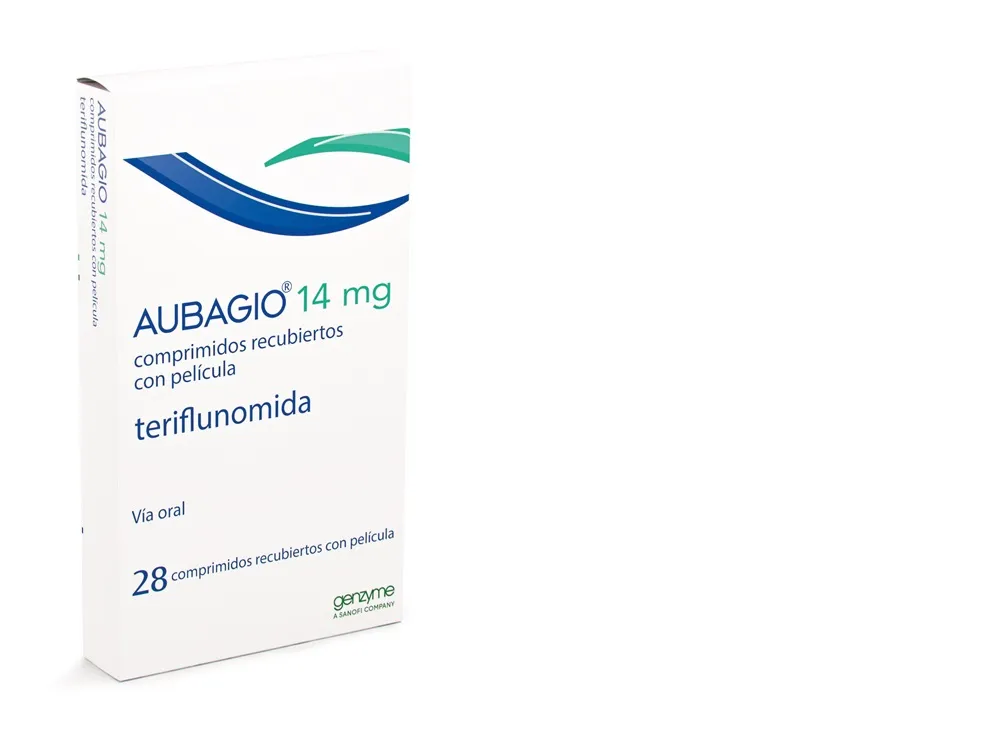
Table of Contents
Package leaflet: Information for the user
Introduction
Package leaflet: information for the patient
AUBAGIO 7 mg film-coated tablets
AUBAGIO 14 mg film-coated tablets
teriflunomide
Read the entire leaflet carefully before you start taking this medicine, because it contains important information for you.
- Keep this leaflet, as you may need to read it again.
- If you have any questions, ask your doctor or pharmacist.
- This medicine has been prescribed for you only and must not be given to other people, even if they have the same symptoms as you, because it may harm them.
- If you experience any adverse reactions, consult your doctor or pharmacist, even if they are adverse reactions not listed in this leaflet. See section 4.
Contents of the leaflet
- What AUBAGIO is and what it is used for
- What you need to know before taking AUBAGIO
- How to take AUBAGIO
- Possible side effects
- How to store AUBAGIO
- Contents of the pack and other information
1. What AUBAGIO is and what it is used for
AUBAGIO contains the active substance teriflunomide, which is an immunomodulatory agent that modulates the immune system to reduce its attack on the central nervous system.
What AUBAGIO is used for
AUBAGIO is used in adults and in children and adolescents (10 years of age and older) to treat relapsing-remitting multiple sclerosis (MS).
What is multiple sclerosis
MS is a long-term disease affecting the central nervous system (CNS). The CNS consists of the brain and spinal cord. In multiple sclerosis, inflammation destroys the protective sheath (myelin) surrounding the nerves of the CNS. This loss of myelin is called demyelination. This causes the nerves to malfunction.
People with the relapsing form of multiple sclerosis experience repeated attacks (relapses) of physical symptoms caused by improper nerve function. These symptoms vary from patient to patient but typically include:
- difficulty walking
- vision problems
- balance problems.
Symptoms may completely disappear after a relapse, but over time, some problems may persist. This can lead to physical disabilities that may interfere with daily activities.
How AUBAGIO works
AUBAGIO helps protect the central nervous system from immune system attacks by limiting the growth of certain white blood cells (lymphocytes). This reduces the inflammation that causes nerve damage in MS.
2. What you need to know before taking AUBAGIO
Do not take AUBAGIO:
- if you are allergic to teriflunomide or any of the other ingredients of this medicine (listed in section 6),
- if you have ever developed a severe skin rash, skin peeling, blisters, and/or mouth ulcers after taking teriflunomide or leflunomide,
- if you have severe liver problems,
- if you are pregnant, think you might be pregnant, or are breastfeeding,
- if you have a serious immune system disorder, for example, acquired immunodeficiency syndrome (AIDS),
- if you have severe bone marrow problems or have a low number of white blood cells or red blood cells in your blood, or a reduced number of platelets,
- if you have a serious infection,
- if you have severe kidney problems requiring dialysis,
- if you have very low levels of protein in your blood (hypoproteinemia).
If in doubt, ask your doctor or pharmacist before taking this medicine.
Warnings and precautions
Talk to your doctor or pharmacist before starting AUBAGIO if:
- you have liver problems and/or drink large amounts of alcohol. Your doctor may carry out blood tests to check your liver function before and during treatment. If test results indicate a problem with your liver, your doctor may stop treatment with AUBAGIO. See section 4.
- you have high blood pressure (hypertension), whether or not you are being treated for it. AUBAGIO may cause an increase in blood pressure. Your doctor will monitor your blood pressure before starting treatment and regularly during treatment. See section 4.
- you have an infection. Before you start taking AUBAGIO, your doctor will ensure you have sufficient white blood cells and platelets in your blood. Since AUBAGIO reduces the number of white blood cells in the blood, this may affect your ability to fight infections. Your doctor may perform blood tests to check your white blood cell count if they suspect you have an infection. Infections caused by herpes viruses, including oral herpes or herpes zoster (shingles), may occur during treatment with teriflunomide. In some cases, serious complications have occurred. Inform your doctor immediately if you suspect you have symptoms of a herpes virus infection. See section 4.
- you have severe skin reactions.
- you have respiratory symptoms.
- you have weakness, numbness, and pain in your hands and feet.
- you are due to be vaccinated.
- you are taking leflunomide with AUBAGIO.
- you are switching from or to AUBAGIO.
- you are scheduled for a specific blood test (calcium level). A false decrease in calcium levels may be detected.
Inform your doctor or pharmacist:
-
if you develop skin ulcers or experience problems with wound healing while taking AUBAGIO.
-
if you are scheduled for or have recently undergone major surgery, or if you still have an unhealed wound after surgery, as AUBAGIO may affect wound healing.
Respiratory reactions
Inform your doctor if you have unexplained cough or dyspnea (shortness of breath). Your doctor may carry out additional tests.
Children and adolescents
AUBAGIO is not indicated for use in children under 10 years of age, as it has not been studied in pediatric patients with MS in this age group.
The warnings and precautions listed above also apply to children. The following information is important for children and their caregivers:
- pancreatitis (inflammation of the pancreas) has been observed in patients receiving teriflunomide. Your child’s doctor may perform blood tests if pancreatitis is suspected.
Other medicines and AUBAGIO
Tell your doctor or pharmacist if you are taking, have recently taken, or might need to take any other medicines. This includes medicines not requiring a prescription.
In particular, inform your doctor or pharmacist if you are taking any of the following medicines:
- leflunomide, methotrexate, and other medicines that affect the immune system (often called immunosuppressants or immunomodulators)
- rifampicin (a medicine used to treat tuberculosis and other infections)
- carbamazepine, phenobarbital, phenytoin for epilepsy
- St. John’s wort (a herbal medicine for depression)
- repaglinide, pioglitazone, nateglinide, or rosiglitazone for diabetes
- daunorubicin, doxorubicin, paclitaxel, or topotecan for cancer
- duloxetine for depression, urinary incontinence, or kidney disease in diabetics
- alosetron for severe diarrhea
- theophylline for asthma
- tizanidine, a muscle relaxant
- warfarin, an anticoagulant to thin the blood and prevent clots
- oral contraceptives (ethinylestradiol, levonorgestrel)
- cefaclor, benzylpenicillin (penicillin G), ciprofloxacin for infections
- indometacin, ketoprofen for pain or inflammation
- furosemide for heart disease
- cimetidine to reduce gastric acid
- zidovudine for AIDS
- rosuvastatin, simvastatin, atorvastatin, pravastatin for hypercholesterolemia (high cholesterol)
- sulfasalazine for inflammatory bowel disease or rheumatoid arthritis
- cholestyramine for high cholesterol or relief of itching in liver disease
- activated charcoal to reduce absorption of medicines or other substances.
Pregnancy and breastfeeding
Do not take AUBAGIO if you are pregnant or think you might be pregnant. If you become pregnant while taking AUBAGIO, there is an increased risk of having a baby with birth defects. Women of childbearing potential must not take this medicine unless they are using reliable contraceptive methods.
If your daughter starts menstruating while taking AUBAGIO, inform the doctor, who will provide specialized advice regarding contraceptive methods and potential risks in case of pregnancy.
Inform your doctor if you plan to become pregnant after stopping treatment with AUBAGIO, as you must ensure that most of the medicine has been eliminated from your body before attempting pregnancy. Natural elimination of the active substance may take up to 2 years. This period can be reduced to a few weeks by taking certain medicines to accelerate the elimination of AUBAGIO from the body.
In any case, your doctor must confirm, through a blood test, that the level of active substance in the blood is low enough to allow pregnancy.
For further information about laboratory tests, contact your doctor.
If you suspect you are pregnant while taking AUBAGIO or within two years after stopping treatment, you must stop AUBAGIO and contact your doctor immediately for a pregnancy test. If the test confirms pregnancy, your doctor may recommend treatment with certain medicines to rapidly reduce AUBAGIO levels in your body, as this may reduce the risk to your baby.
Contraception
You must use an effective method of contraception during and after treatment with AUBAGIO. Teriflunomide remains in the blood for a long time after stopping treatment. Continue using contraception after stopping treatment.
- Continue until AUBAGIO blood levels are sufficiently low (your doctor will check this).
- Consult your doctor about the best contraceptive method for you and if you need to change methods.
Do not take AUBAGIO during breastfeeding, as teriflunomide passes into breast milk.
Driving and use of machines
AUBAGIO may cause dizziness, which may affect concentration and reaction ability. If affected, do not drive or operate machinery.
AUBAGIO contains lactose
AUBAGIO contains lactose (a type of sugar). If your doctor has informed you that you have an intolerance to certain sugars, consult with them before taking this medicine.
AUBAGIO contains sodium
This medicine contains less than 1 mmol of sodium (23 mg) per tablet, i.e., essentially “sodium-free”.
3. How to take AUBAGIO
Treatment with AUBAGIO will be supervised by a physician experienced in the management of multiple sclerosis.
Always follow your doctor's instructions for taking this medicine exactly. If you are unsure, consult your doctor again.
Adults
The recommended dose is one 14 mg tablet once daily.
Children and adolescents (10 years of age and above)
The dose depends on body weight:
- children with body weight greater than 40 kg: 14 mg once daily.
- children with body weight less than or equal to 40 kg: 7 mg once daily.
Your doctor will instruct children and adolescents who reach a stable body weight above 40 kg to switch to a 14 mg tablet once daily.
Form/route of administration
AUBAGIO is administered orally. AUBAGIO is taken daily as a single daily dose at any time of day.
The tablet should be swallowed whole with water.
AUBAGIO may be taken with or without food.
If you take more AUBAGIO than you should
If you have taken too much AUBAGIO, contact your doctor immediately. You may experience adverse effects similar to those described in section 4 (below).
If you forget to take AUBAGIO
Do not take a double dose to make up for the missed dose.
If you stop taking AUBAGIO
Do not interrupt treatment or change the dose of AUBAGIO without first consulting your doctor.
If you have any further questions about the use of this medicine, ask your doctor or pharmacist.
4. Possible adverse effects
Like all medicines, this medicine can cause adverse effects, although not everyone will experience them.
The following adverse effects may occur with this medicine.
Serious adverse effects
Some adverse effects may be serious or may become serious. If you experience any of these, contact your doctor immediately.
Frequent (may affect up to 1 in 10 people)
- Inflammation of the pancreas, which may include symptoms such as abdominal pain, nausea, or vomiting (frequent in pediatric patients and uncommon in adult patients).
Uncommon (may affect up to 1 in 100 people)
- Allergic reactions that could include symptoms such as rash, hives, swelling of the lips, tongue, or face, or sudden difficulty breathing
- Severe skin reactions that could include symptoms such as skin rash, blisters, fever, or mouth ulcers
- Serious infections or sepsis (a type of infection that may be potentially life-threatening), which could include symptoms such as high fever, shaking, chills, reduced urine output, or confusion
- Inflammation of the lungs that could include symptoms such as shortness of breath or persistent cough
Frequency not known (frequency cannot be estimated from the available data)
- Severe liver disease, which may include symptoms such as yellowing of the skin or whites of the eyes, darker than normal urine, unexplained nausea and vomiting, or abdominal pain.
Other adverse effects may occur with the following frequencies:
Very common (may affect more than 1 in 10 people)
- Headache
- Diarrhea, feeling unwell
- Increased ALT (elevation of certain liver enzymes in blood tests)
- Thinner hair
Frequent (may affect up to 1 in 10 people)
- Flu, upper respiratory tract infection, urinary tract infection, bronchitis, sinusitis, sore throat and discomfort when swallowing, cystitis, viral gastroenteritis, dental infection, laryngitis, fungal foot infection
- Herpes virus infections, including oral herpes and herpes zoster (shingles), with symptoms such as blisters, burning, itching, numbness, or pain on the skin, usually on one side of the upper body or face, and other symptoms such as fever and weakness
- Laboratory findings: a decrease in red blood cells (anemia) has been observed, changes in liver function and white blood cells in blood tests (see section 2), as well as elevations in a muscle enzyme (creatine phosphokinase)
- Mild allergic reactions
- Feeling anxious
- Muscle cramps, feeling weak, numbness, tingling, or pain in the lower back or leg (sciatica); numbness, burning, tingling, or pain in hands and fingers (carpal tunnel syndrome)
- Palpitations
- Increased blood pressure
- Feeling unwell (vomiting), toothache, upper abdominal pain
- Rash, acne
- Tendon, joint, bone, or muscle pain (musculoskeletal pain)
- Need to urinate more often than normal
- Heavy menstrual periods
- Pain
- Lack of energy or weakness (asthenia)
- Weight loss
Uncommon (may affect up to 1 in 100 people)
- Decrease in platelet count (mild thrombocytopenia)
- Increased sensitivity, especially in the skin; stabbing or pulsating pain in one or more nerves; nerve problems in arms and legs (peripheral neuropathy)
- Nail disorders, severe skin reactions
- Post-traumatic pain
- Psoriasis
- Inflammation of mouth/lips
- Abnormal levels of fats (lipids) in the blood
- Inflammation of the colon (colitis)
Rare (may affect up to 1 in 1,000 patients)
- Liver inflammation or liver damage
Frequency not known (frequency cannot be estimated from the available data)
- Pulmonary hypertension
Children (aged 10 years and older) and adolescents
The adverse effects listed above also apply to children and adolescents. The following additional information is important for children, adolescents, and their caregivers:
Frequent (may affect up to 1 in 10 people)
- Inflammation of the pancreas
Reporting of adverse effects
If you experience any adverse effects, talk to your doctor or pharmacist, even if they are adverse effects not listed in this leaflet. You may also report them directly through the national reporting system included in Appendix V. By reporting adverse effects, you can help provide more information on the safety of this medicine.
5. Storage of AUBAGIO
Keep this medicine out of the sight and reach of children.
Do not use this medicine after the expiry date stated on the carton and the container after "EXP". The expiry date refers to the last day of the month indicated.
This medicine does not require any special storage conditions.
Medicines should not be disposed of via wastewater or household waste. Ask your pharmacist how to dispose of medicines and packaging that you no longer need. This will help protect the environment.
6. Contents of the container and additional information
Composition of AUBAGIO
The active substance is teriflunomide.
AUBAGIO 7 mg film-coated tablets
- Each tablet contains 7 mg of teriflunomide.
- The other components are monohydrate lactose, corn starch, microcrystalline cellulose, sodium carboxymethyl starch (type A), hydroxypropylcellulose, magnesium stearate, hypromellose, titanium dioxide (E171), talc, macrogol 8000, indigo carmine aluminium lake (E132), and yellow iron oxide (E172) (see section 2 “AUBAGIO contains lactose”).
AUBAGIO 14 mg film-coated tablets
- Each tablet contains 14 mg of teriflunomide.
- The other components are monohydrate lactose, corn starch, microcrystalline cellulose, sodium carboxymethyl starch (type A), hydroxypropylcellulose, magnesium stearate, hypromellose, titanium dioxide (E171), talc, macrogol 8000, indigo carmine aluminium lake (E132) (see section 2 “AUBAGIO contains lactose”).
Appearance of the product and contents of the container
AUBAGIO 7 mg film-coated tablets
The film-coated tablets are very light greenish-blue to light blue-green in colour, hexagonal in shape, engraved with ('7') on one side and a corporate logo on the other side.
AUBAGIO 7 mg film-coated tablets are available in cardboard boxes containing 28 tablets in a carton with integrated blisters.
AUBAGIO 14 mg film-coated tablets
The film-coated tablets are light blue or pastel blue in colour, pentagonal in shape, engraved with ('14') on one side and a corporate logo on the other side.
AUBAGIO 14 mg film-coated tablets are available in cardboard boxes containing:
- 14, 28, 84 and 98 tablets in cartons with integrated blisters;
- 10x1 tablet in single-dose perforated blisters.
Only certain pack sizes may be marketed.
Marketing Authorization Holder:
Sanofi Winthrop Industrie
82 avenue Raspail
94250 Gentilly
France
Manufacturer:
Opella Healthcare International SAS
56, Route de Choisy
60200
Compiègne
France
Sanofi Winthrop Industrie
30-36, avenue Gustave Eiffel
37100 Tours
France
Further information on this medicinal product is available by contacting the local representative of the Marketing Authorization Holder:
Belgium/Belgium/Belgium Sanofi Belgium Tel/Tel/Tel: +32 (0)2 710 54 00 | Lithuania Swixx Biopharma UAB Tel: +370 5 236 91 40 |
| Luxembourg/Luxembourg Sanofi Belgium Tél/Tel: +32 (0)2 710 54 00 (Belgium/Belgium) |
Czech Republic Sanofi s.r.o. Tel: +420 233 086 111 | Hungary SANOFI-AVENTIS Zrt. Tel: +36 1 505 0050 |
Denmark Sanofi A/S Tlf: +45 45 16 70 00 | Malta Sanofi S.r.l- Tel: +39 02 39394275 |
Germany Sanofi-Aventis Deutschland GmbH Tel.: 0800 04 36 996 Tel. from abroad: +49 69 305 70 13 | Netherlands Sanofi B.V. Tel: +31 20 245 4000 |
Estonia Swixx Biopharma OÜ Tel: +372 640 10 30 | Norway sanofi-aventis Norge AS Tlf: +47 67 10 71 00 |
Greece sanofi-aventis Monoypopikh EPE Tel: +30 210 900 16 00 | Austria sanofi-aventis GmbH Tel: +43 1 80 185 – 0 |
Spain sanofi-aventis S.A. Tel: +34 93 485 94 00 | Poland Sanofi Sp. z o.o. Tel: +48 22 280 00 00 |
France Sanofi Winthrop Industrie Tél: 0 800 222 555 Call from abroad: +33 1 57 63 23 23 | Portugal Sanofi - Produtos Farmacêuticos, Lda +351 21 35 89 400 |
Croatia Swixx Biopharma d.o.o. Tel: +385 1 2078 500 | Romania Sanofi Romania SRL Tel: +40 (0) 21 317 31 36 |
Ireland sanofi-aventis Ireland Ltd. T/A SANOFI Tel: +353 (0) 1 403 56 00 | Slovenia Swixx Biopharma d.o.o. Tel: +386 1 235 51 00 |
Iceland Vistor hf. Sími: +354 535 7000 | Slovakia Swixx Biopharma s.r.o. Tel: +421 2 208 33 600 |
Italy Sanofi S.r.l. Tel: 800536389 | Finland Sanofi Oy Puh/Tel: +358 (0) 201 200 300 |
Cyprus C.A. Papaellinas Ltd. Tel: +357 22 741741 | Sweden Sanofi AB Tel: +46 (0) 8 634 5000 |
Latvia Swixx Biopharma SIA Tel: +371 6 616 47 50 |
Date of the most recent review of this leaflet:
Other sources of information
Detailed information on this medicine is available on the website of the European Medicines Agency: http://www.ema.euopa.eu.
You may also find a copy of the package leaflet and the patient safety card with safety information in the QR code mentioned below.
Inclusion of QR code + www.qr-aubagio-sanofi.eu