Aspirina Complex effervescent granules
Spain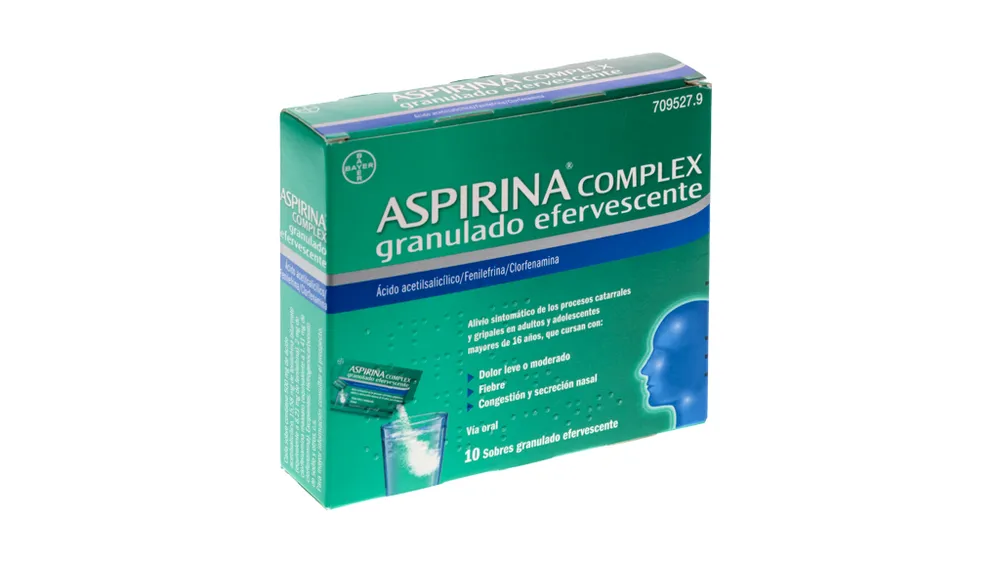
Table of Contents
- Patient Information Leaflet
- Introduction
- 1. What ASPIRINA COMPLEX is and what it is used for
- 2. What you need to know before starting to take ASPIRINA COMPLEX effervescent granules
- 3. How to take ASPIRINA COMPLEX effervescent granules
- 4. Possible adverse effects
- 5. Storage of ASPIRINA COMPLEX effervescent granules
- 6. Contents of the pack and other information
Patient Information Leaflet
Introduction
Patient Information Leaflet
ASPIRINACOMPLEX effervescent granules
Acetylsalicylic acid, phenylephrine, chlorpheniramine
Read the entire patient information leaflet carefully before you start taking this medicine, as it contains important information for you. Always follow exactly the instructions for use provided in this leaflet or those given by your doctor or pharmacist.
|
Package leaflet
- What ASPIRINA COMPLEX effervescent granules is and what it is used for
- What you need to know before taking ASPIRINA COMPLEX effervescent granules
- How to take ASPIRINA COMPLEX effervescent granules
- Possible side effects
- How to store ASPIRINA COMPLEX effervescent granules
- Contents of the pack and other information
1. What ASPIRINA COMPLEX is and what it is used for
ASPIRINA COMPLEX effervescent granules is a combination of acetylsalicylic acid, an analgesic that acts on pain and fever; chlorpheniramine, an antihistamine that reduces sneezing and watery eyes; and phenylephrine, a vasoconstrictor that acts on nasal congestion.
This medicine is indicated for the symptomatic relief of catarrhal and influenza-like conditions associated with mild to moderate pain, fever, nasal congestion, and nasal discharge in adults and adolescents over 16 years of age.
2. What you need to know before starting to take ASPIRINA COMPLEX effervescent granules
Do not take ASPIRINA COMPLEX effervescent granules if:
- you are allergic (hypersensitive) or have had any allergic reaction to acetylsalicylic acid, chlorpheniramine, phenylephrine, or any other component of this medicine.
- you have kidney and/or liver disease (renal and/or hepatic insufficiency).
- you have experienced allergic-type asthma reactions (difficulty breathing, suffocation, bronchospasms, and in some cases coughing or wheezing) when taking anti-inflammatory drugs, acetylsalicylic acid, other analgesics, or tartrazine dye.
- you have asthma.
- you have nasal polyps associated with asthma that are caused or worsened by acetylsalicylic acid.
- you have hemophilia or other blood coagulation disorders.
- you are being treated with oral anticoagulant medications.
- you have heart disease (ischemic heart disease, serious cardiovascular disease).
- you have tachycardia (rapid heartbeat).
- you have a serious arterial disease.
- you have high blood pressure (hypertension).
- you have a thyroid disorder (hyperthyroidism).
- you have gastric or duodenal ulcer or recurrent gastric discomfort.
- you have bladder neck obstruction or urinary retention.
- you are taking medications for depression or Parkinson’s disease that inhibit monoamine oxidase (MAO inhibitors) (see section Use of other medicines below).
- you are under 16 years of age, as the use of acetylsalicylic acid has been associated with Reye's syndrome, a rare but serious illness.
- you are in the third trimester of pregnancy.
Take special care with ASPIRINA COMPLEX effervescent granules:
Before taking this medicine, consult your doctor if:
-
you have hypertension, or reduced kidney, heart, or liver function, or have blood coagulation disorders.
-
you have had stomach or intestinal ulcers.
-
you are being treated with anticoagulants; you must consult your doctor before taking this medicine.
-
you are taking anti-inflammatory or other types of medicines, as certain drugs may interact with Aspirina Complex effervescent granules and cause adverse effects (see section “Use of other medicines”).
-
you are allergic to other anti-inflammatory or anti-rheumatic medicines.
-
you have glucose-6-phosphate dehydrogenase deficiency.
-
you have or have had rhinitis or urticaria.
-
you have recently undergone or are scheduled to undergo surgery within the next 7 days, including dental surgery.
-
you are in the first or second trimester of pregnancy.
-
do not use this medicine to prevent possible discomfort caused by vaccinations.
-
you have diabetes mellitus, prostate disorders (prostatic hypertrophy), pancreatitis (inflammation of the pancreas), or pyloroduodenal obstruction (obstruction between the stomach and intestine).
-
you have thyroid disorders, cardiovascular, pulmonary, or renal diseases, or anemia; consult your doctor before taking this medicine, as your condition may worsen or interact with medications commonly used to treat these conditions.
-
you are being treated with antidepressants such as tricyclics (e.g., maprotiline) or medications with anticholinergic effects (e.g., some drugs used for Parkinson’s disease); inform your doctor as soon as possible if you experience stomach problems, as you may develop paralytic ileus (reduced or stopped intestinal movement).
-
you are intolerant to any antihistamine (used to treat allergies) or analgesic (used to relieve pain), as cross-sensitivity may occur—patients sensitive to one antihistamine may react to others.
Use of other medicines
Inform your doctor or pharmacist if you are currently using or have recently used any other medicines, including over-the-counter products, homeopathic remedies, herbal medicines, or other health-related products, as it may be necessary to interrupt treatment or adjust the dose of one of them.
Due to its content of acetylsalicylic acid, this medicine may interact with the following medicines:
- other analgesics or non-steroidal anti-inflammatory drugs (medicines used to treat pain and/or muscle inflammation),
- certain antidepressants, such as selective serotonin reuptake inhibitors (SSRIs), as they increase the risk of bleeding,
- anticoagulants (medicines used to “thin” the blood and prevent clots), such as warfarin,
- oral antidiabetics (medicines to lower blood sugar levels),
- barbiturates (medicines used to treat seizures),
- beta-blockers (medicines for blood pressure control),
- cimetidine and ranitidine (used for stomach acidity),
- medicines used to prevent transplant rejection (cyclosporine and tacrolimus),
- corticosteroids (used for inflammation), as they may increase the risk of gastrointestinal bleeding,
- digoxin (a heart medicine),
- medicines for high blood pressure (diuretics and ACE inhibitors),
- phenytoin and valproic acid (antiepileptics),
- interferon alpha (used to treat certain viral infections and tumors),
- lithium (used in certain psychiatric conditions),
- methotrexate (used for cancer or rheumatoid arthritis),
- medicines used to treat gout (probenecid),
- vancomycin (an antibiotic used for infections),
- zidovudine (used in the treatment of patients infected with the human immunodeficiency virus, HIV).
Additionally, this medicine may interact with other medicines such as: antihypertensives (medicines to lower blood pressure), nasal decongestants, antidepressants, stimulants, sedatives, tranquilizers, and central nervous system depressants; therefore, consult your doctor or pharmacist if you are taking any of these medicines.
Due to its phenylephrine content, if you are being treated with any of the following medicines or with Aspirina Complex, it may be necessary to interrupt treatment or separate administration by at least 15 days:
- Monoamine oxidase inhibitors (MAOIs) (medicines used for depression, Parkinson’s disease, or other conditions). Administration of ASPIRINA COMPLEX effervescent granules should be separated by at least 15 days after stopping MAOI treatment.
- Alpha-adrenergic blockers (medicines for migraine, childbirth, blood pressure, or other conditions).
- Beta-adrenergic blockers (for blood pressure or other conditions).
- Tricyclic and tetracyclic antidepressants.
- General anesthetics.
- Antihypertensives whose mechanism of action involves the sympathetic nervous system.
- Medicines that cause potassium loss (such as diuretics used to treat hypertension or other conditions).
- Medicines affecting heart conduction (used for heart conditions), such as cardiac glycosides and antiarrhythmics.
- Thyroid hormones.
- Alpha- and beta-adrenergic blockers such as labetalol and carvedilol (used for heart or arterial diseases).
- Atropine sulfate (for heart or digestive disorders).
Due to its chlorpheniramine content, concomitant use with the following medicines may increase the risk of adverse effects:
- Medicines that cause central nervous system depression (such as those used for insomnia or anxiety, or other antihistamines).
-
Monoamine oxidase inhibitors (MAOIs) used to treat depression (e.g., tranilcypramine, moclobemide) or Parkinson’s disease (e.g., selegiline), which may cause serious adverse effects such as severe headache, increased blood pressure, and sudden rise in body temperature. If you have taken any of these medicines, wait at least 15 days before taking ASPIRINA COMPLEX. If you are unsure whether your medication contains an MAOI drug, consult your doctor or pharmacist before taking ASPIRINA COMPLEX effervescent granules.
-
Tricyclic and tetracyclic antidepressants.
Interference with diagnostic tests:
This medicine may interfere with skin tests using allergens. It is recommended to stop taking this medicine at least 3 days before undergoing such tests and to inform your doctor.
If you are scheduled for any diagnostic test (including blood, urine, etc.), inform your doctor that you are taking this medicine, as it may alter test results.
Taking ASPIRINA COMPLEX effervescent granules with food and drinks
Take this medicine after meals or with food.
Do not consume alcohol during treatment with ASPIRINA COMPLEX, as symptoms of overdose and increased sedative effects may occur.
If you regularly consume alcohol (three or more alcoholic drinks – beer, wine, spirits, etc. – per day), taking ASPIRINA COMPLEX effervescent granules may cause stomach bleeding.
Pregnancy
Consult your doctor or pharmacist before using any medicine.
This medicine should not be used during pregnancy.
If you are pregnant or think you might be pregnant, consult your doctor before taking this medicine. |
Pregnancy – third trimester
Do not take Aspirina Complex during the last three months of pregnancy, as it may harm the fetus or cause complications during delivery. This medicine may cause kidney and heart problems in the fetus. It may affect your tendency to bleed and that of your baby, potentially delaying labor or prolonging it beyond the expected duration.
Pregnancy – first and second trimester
You should not take Aspirina Complex during the first six months of pregnancy unless absolutely necessary and advised by your doctor. If you require treatment during this period or while trying to become pregnant, the dose should be limited to the lowest possible for the shortest possible time.
If you take this medicine for several days starting from week 20 of pregnancy, it may cause kidney problems in the fetus, potentially leading to low levels of amniotic fluid (oligohydramnios) or narrowing of a blood vessel (ductus arteriosus) in the baby's heart. If you require prolonged treatment, your doctor may recommend additional monitoring.
Breast-feeding
Consult your doctor or pharmacist before using any medication.
ASPIRINA COMPLEX effervescent granules are excreted in breast milk; therefore, women who are breast-feeding must not use this medicine.
Use in children
Do not administer to children under 16 years of age.
Use in individuals over 65 years of age
Elderly individuals should not take this medicine without consulting their doctor, as they are more susceptible to its adverse effects.
Driving and use of machines
Driving vehicles or operating dangerous machinery should be avoided, as reaction capabilities may be impaired. This medicine may cause drowsiness and sedation.
Important information about some components of ASPIRINA COMPLEX effervescent granules
This medicine contains 468 mg of sodium (the main component of table/cooking salt) per tablet. This corresponds to 24% of the maximum recommended daily sodium intake for an adult.
Consult your doctor or pharmacist if you need one or more sachets daily for a prolonged period, especially if you have been advised to follow a low-salt (low-sodium) diet.
Athletes:
Athletes are advised that this medicine contains a component that may lead to a positive analytical finding in doping control tests.
3. How to take ASPIRINA COMPLEX effervescent granules
Follow these instructions unless your doctor has given you different advice.
Consult your doctor or pharmacist if you have any doubts.
Normal dosage:
Adults and adolescents over 16 years of age:
The dose is 1 sachet every 8 hours, or if necessary every 6 hours.
The maximum daily dose is 4 sachets, with a minimum interval of 6 hours between doses.
Children:
Do not use this medicine in children under 16 years of age.
Patients with reduced liver or kidney function: consult your doctor, as the dose should be reduced.
This medicine is administered orally.
Completely dissolve the entire contents of one sachet in a glass of water and drink the entire contents of the glass once the fizzing has completely stopped.
Take the medicine after meals or with food, especially if you experience digestive discomfort.
Do not take this medicine on an empty stomach.
Always use the lowest effective dose.
The administration of this medicine should be based on the presence of symptoms such as pain, fever, nasal congestion, and nasal discharge. As these symptoms subside, treatment should be discontinued.
If fever persists beyond 3 days of treatment, or if symptoms worsen or do not improve within 5 days, or if new symptoms appear, you must stop treatment and consult your doctor.
If you take more ASPIRINA COMPLEX effervescent granules than you should
If you take more Aspirina Complex than recommended, you may experience the following symptoms: nausea, vomiting, tinnitus, deafness, sweating, vasodilation, and hyperventilation, headache, blurred vision, mental confusion, and occasionally diarrhea, excessive nervous stimulation, anxiety, fear, agitation, headache (which may be a symptom of hypertension), convulsions, insomnia, confusion, irritability, tremors, anorexia (loss of appetite), psychosis with hallucinations (more frequent in children), and cardiovascular effects such as hypertension, cerebral hemorrhage, and pulmonary edema. Peripheral vasoconstriction may occur, potentially reducing blood flow to vital organs (serious effects are more likely in hypovolemic patients, i.e., those with reduced blood volume due to hemorrhage, dehydration, etc.), severe bradycardia (slow heartbeat), increased cardiac workload, irregular or rapid heartbeats, decreased urine output, metabolic acidosis (reduction in blood alkaline reserve), and paresthesias (altered sensation in body areas). With prolonged use, plasma volume depletion (reduction in blood volume), instability, intense numbness, severe dryness of the mouth, nose, or throat, facial flushing, dyspnea (difficulty breathing), cardiac arrhythmias (rapid or irregular heartbeat), and nervous stimulation (hallucinations, convulsions) may occur; these latter symptoms may appear later. Hypotension (fainting sensation) may also occur.
There is no antidote for salicylate poisoning. In case of suspected overdose, the patient should remain under observation for at least 24 hours, as symptoms and blood salicylate levels may not become evident for several hours.
Overdose is treated with gastric lavage, forced alkaline diuresis, and supportive therapy. Restoration of acid-base balance and hemodialysis may be required in acute cases. Treatment of chlorpheniramine and phenylephrine overdose is symptomatic and supportive.
It is recommended to bring the medicine packaging and leaflet to the healthcare professional.
In case of overdose or accidental ingestion, go immediately to a medical center, consult your doctor or pharmacist immediately, or call the Toxicology Information Service at telephone: 91 562 04 20, indicating the medicine and the amount ingested.
If you forget to take ASPIRINA COMPLEX effervescent granules
Do not take a double dose to make up for a missed dose. Resume taking it as indicated in section 3. How to take Aspirina Complex.
4. Possible adverse effects
Like all medicines, ASPIRINA COMPLEX effervescent granules may produce adverse effects, although not everyone experiences them.
Frequent adverse effects (observed in 1 to 10 out of every 100 people):
-
Gastrointestinal disorders, such as stomach ulcer, intestinal ulcer, gastrointestinal bleeding, abdominal pain, indigestion, heartburn, acid reflux, gastric discomfort, nausea, vomiting, constipation.
-
Respiratory disorders, such as difficulty breathing (asthma, bronchospasm), nasal congestion, and rhinitis.
-
Urticaria, skin rashes, angioedema (inflammation and swelling affecting the face, lips, mouth, tongue, or throat, which may cause difficulty swallowing or breathing), and itching.
-
Nervous system disorders: drowsiness, dizziness, vertigo.
-
Hypoprothrombinemia (a coagulation disorder) when administered at high doses.
Uncommon adverse effects (observed in 1 to 10 out of every 1,000 people):
-
Reye's syndrome in individuals under 16 years of age with fever, influenza, or chickenpox (see section “Before taking ASPIRINA COMPLEX effervescent granules”).
-
Liver disorders, especially in patients with juvenile arthritis.
-
Anaemia.
-
Nervous system disorders: confusion (especially in elderly patients), euphoria, nervousness, restlessness (especially in children and elderly patients), insomnia, headache, unusual behaviour.
-
Cardiovascular effects: changes in pulse (palpitations, tachycardia), elevated blood pressure (hypertension), which may sometimes be severe (hypertensive crisis).
-
Difficulty urinating.
-
Dryness of the mouth, nose, or throat.
With prolonged use of acetylsalicylic acid, the following adverse effects have been observed, although their frequency cannot be precisely determined: dizziness, tinnitus (ringing in the ears), deafness, sweating, headache, confusion, renal failure, and acute interstitial nephritis (inflammation of the kidney).
If you experience any of the following symptoms, stop taking the medicine and consult your doctor immediately, as they may indicate the onset of serious side effects requiring urgent medical attention:
- Stomach discomfort or pain, gastrointestinal bleeding, or black stools.
- Skin disorders, such as rashes or redness.
- Difficulty breathing.
- Unexpected changes in the amount or appearance of urine.
- Swelling of the face, feet, or legs.
- Deafness, tinnitus, or dizziness.
Adverse effects due to phenylephrine:
- With frequency not known: anxiety, nervousness, irritability, weakness, dizziness, tremors, insomnia, hypertension (increased blood pressure) (usually with high doses and in sensitive patients), headache (with high doses, may be a sign of hypertension), chest pain or discomfort, severe bradycardia (very slow heart rate), peripheral vasoconstriction (narrowing of blood vessels), reduced cardiac performance particularly affecting elderly patients and those with poor cerebral or coronary circulation, possible onset or worsening of heart disease, urinary retention, respiratory difficulty, pallor, piloerection (goosebumps), increased sweating, hyperglycaemia (elevated blood sugar), decreased potassium levels in blood, metabolic acidosis, cold extremities (arms or legs), flushing, hypotension (feeling of fainting); with high doses: vomiting, palpitations, psychotic states with hallucinations; with prolonged use: reduction in blood volume.
- Rarely: myocardial infarction, ventricular arrhythmia, pulmonary oedema, and cerebral haemorrhage (at high doses or in sensitive patients).
Adverse effects due to chlorphenamine:
- Most commonly observed: mild drowsiness, dizziness, muscle weakness; these adverse effects may disappear after 2–3 days of treatment, facial movement difficulties, clumsiness, tremor, sensory disturbances and tingling, dry mouth, loss of appetite, disturbances in taste or smell, gastrointestinal discomfort which may decrease if the medicine is taken with food (nausea, vomiting, diarrhoea, constipation, stomach pain), urinary retention, dryness of nose and throat, thickening of mucus, sweating, blurred vision or other visual disturbances.
- Less frequent or rare: occasionally nervous excitation (usually with high doses and more common in elderly patients and children), with symptoms such as restlessness, insomnia, nervousness, and even convulsions; other adverse effects: chest tightness, lung sounds, rapid or irregular heartbeat (usually with overdose), liver disorders (which may present as stomach or abdominal pain, dark urine, or other symptoms), allergic reaction, severe hypersensitivity reactions (cough, difficulty swallowing, rapid heartbeat, itching, swelling of eyelids, around the eyes, face, tongue, breathing difficulties, etc.), photosensitivity (sensitivity to sunlight), cross-sensitivity (allergy) to drugs related to chlorphenamine, rarely blood disorders (changes in blood cell counts such as agranulocytosis, leucopenia, aplastic anaemia, thrombocytopenia) with symptoms such as unusual bleeding, sore throat, or fatigue; low or high blood pressure, oedema (swelling), ear disturbances, impotence, menstrual disorders.
If you consider any of the adverse effects you experience to be severe, or if you notice any adverse effects not listed in this leaflet, inform your doctor or pharmacist.
Reporting of adverse effects:
If you experience any type of adverse effect, consult your doctor, pharmacist, or nurse, even if it is a possible adverse effect not listed in this leaflet. You may also report them directly through the Spanish Pharmacovigilance System for Human Medicines: https://www.notificaram.es. By reporting adverse effects, you can help provide more information on the safety of this medicine.
5. Storage of ASPIRINA COMPLEX effervescent granules
No special storage conditions are required.
Keep this medicine out of the sight and reach of children.
Expiry date:
Do not use ASPIRINA COMPLEX effervescent granules after the expiry date stated on the packaging, following the abbreviation CAD. The expiry date refers to the last day of the month indicated.
Medicines must not be disposed of via wastewater or household waste. Dispose of unused medicines and their containers at the SIGRE Point in your pharmacy. If you are in doubt, please ask your pharmacist how to dispose of medicines and containers you no longer need. This will help protect the environment.
6. Contents of the pack and other information
Composition of ASPIRIN COMPLEX effervescent granules
Each sachet contains:
- The active substances are: acetylsalicylic acid 500 mg, phenylephrine 8.21 mg (equivalent to 15.58 mg of phenylephrine bitartrate), and chlorphenamine 1.41 mg (equivalent to 2 mg of chlorphenamine maleate).
- The other components (excipients) are: anhydrous citric acid, sodium hydrogen carbonate, lemon flavor, quinoline yellow dye (E-104).
Appearance of the medicine and pack contents
This medicine is an effervescent granulate. It is supplied in packs containing 10 and 20 sachets.
Marketing Authorization Holder and Manufacturer
Bayer Hispania, S.L. KERN PHARMA, S.L.
Av. Baix Llobregat, 3-5 Polígono Ind. Colón II
08970 Sant Joan Despí (Barcelona) C/Venus, 72
Spain 08228 Terrassa (Barcelona)
Spain
Date of the most recent revision of this package leaflet: October 2023
Detailed and up-to-date information on this medicine is available on the website of the Spanish Agency of Medicines and Health Products (AEMPS) http://www.aemps.gob.es