Amniolina pomada
Spain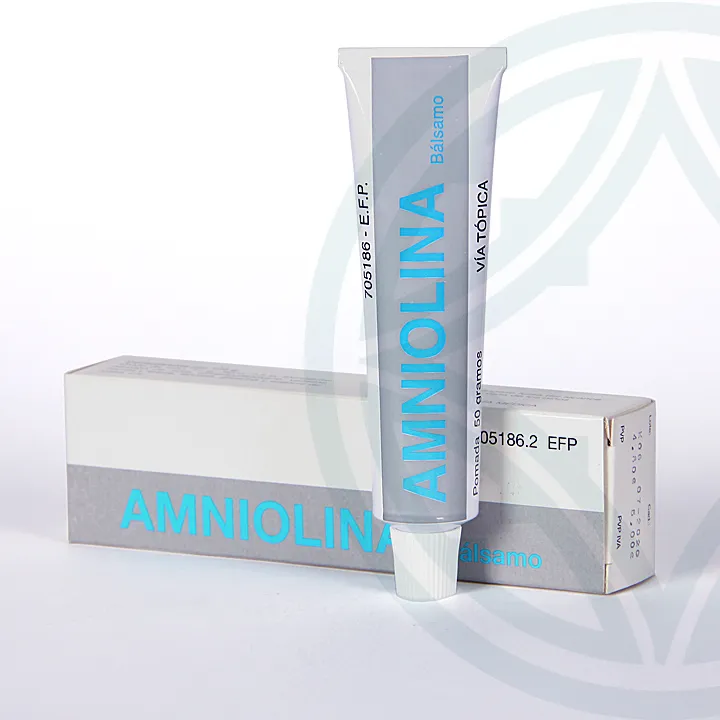
Table of Contents
- Package leaflet: Information for the user
- Introduction
- 1. What Amniolina ointment is and what it is used for
- 2. What you need to know before starting to use Amniolina ointment
- 3. How to use Amniolina ointment
- 4. Possible adverse effects
- 5. Storage of Amniolina ointment
- 6. Contents of the pack and other information
Package leaflet: Information for the user
Introduction
Package leaflet: information for the user
AMNIOLINA ointment
Zinc oxide / Talc
Read all of this leaflet carefully before you start using this medicine, because it contains important information for you.
Follow exactly the instructions for use provided in this leaflet or those given by your doctor or pharmacist.
- Keep this leaflet, as you may need to read it again.
- If you need advice or more information, consult your pharmacist.
- If you experience any adverse reactions, consult your doctor or pharmacist, even if they are not listed in this leaflet. See section 4.
- You should consult a doctor if your condition worsens or does not improve after 4 days.
Contents of this leaflet
- What AMNIOLINA ointment is and what it is used for
- What you need to know before using AMNIOLINA ointment
- How to use AMNIOLINA ointment
- Possible side effects
- How to store AMNIOLINA ointment
- Contents of the pack and other information
1. What Amniolina ointment is and what it is used for
Contains zinc oxide and talc as active ingredients. Zinc oxide is a skin protectant that acts as a barrier between the skin and irritants, and talc helps relieve skin irritations; both facilitate healing.
Amniolina is indicated for the prevention and treatment of diaper area dermatitis (inflammation and irritation of the skin in contact with the diaper) and for the prevention of chafing and irritations in other areas of skin friction with clothing or other skin areas.
Amniolina ointment is indicated in children and incontinent adults.
2. What you need to know before starting to use Amniolina ointment
Do not use Amniolina
- If you are allergic to zinc oxide, talc, or any of the other components of this medicine (listed in section 6).
Warnings and precautions
Consult your doctor or pharmacist before starting to use Amniolina ointment.
- This medicine is for cutaneous (external) use only.
- Avoid contact with the eyes, nose, mouth, ears, or other mucous membranes.
- Do not use if the area of skin to be treated has wounds that are oozing fluid.
Children
This medicine is indicated for use in children. Usual precautions in infants and children are required.
Use of Amniolina ointment with other medicines
Inform your doctor or pharmacist if you are using, have recently used, or might need to use any other medicines.
Pregnancy and breastfeeding
If you are pregnant or breastfeeding, think you may be pregnant, or are planning to become pregnant, consult your doctor or pharmacist before using this medicine.
This medicine may be used during pregnancy or breastfeeding if necessary, but only under due precautions.
Driving and using machines:
This medicine does not affect the ability to drive or operate machinery.
Amniolina ointment contains lanolin
This medicine may cause local skin reactions (such as contact dermatitis) because it contains lanolin.
3. How to use Amniolina ointment
Follow exactly the administration instructions provided in this leaflet or as indicated by your doctor or pharmacist. If in doubt, consult your doctor or pharmacist.
For cutaneous use (on the skin).
Apply the ointment regularly to the affected area, usually after each diaper change.
Method of use
Clean and thoroughly dry the area to be protected or treated. Apply Amniolina to this area, gently but thoroughly spreading the ointment with the fingertips until a thin, even layer covers the entire skin surface to be protected or treated, making sure not to miss any folds or creases in the affected area.
Amniolina should always be applied after bathing and as many other times as necessary, usually coinciding with diaper changes, paying particular attention to areas most prone to irritation (diaper friction, prolonged contact with stools, etc.).
If you use more Amniolina than you should
Intoxication is not expected if the product is used as recommended.
Prolonged use of this medication may cause irritation.
In case of overdose or accidental ingestion, consult your doctor or pharmacist immediately or call the Toxicology Information Service at telephone number 91 562 04 20, indicating the medication and the amount ingested.
If you forget to use Amniolina
Do not use a double dose to make up for missed doses.
Apply Amniolina as scheduled.
If you stop using Amniolina
If you have any further questions about the use of this medication, consult your doctor or pharmacist.
4. Possible adverse effects
Like all medicines, this medicine may produce adverse effects, although not everybody experiences them.
In rare cases, hypersensitivity to one of its components may occur (local or general allergic reactions in sensitive individuals (rash, irritation, etc.)).
Reporting of adverse effects
If you experience any type of adverse effect, consult your doctor or pharmacist, even if it is a possible adverse effect not listed in this leaflet.
You can also report them directly through the Spanish Pharmacovigilance System for Human Medicinal Products: www.notificaRAM.es
By reporting adverse effects, you can help provide more information on the safety of this medicine.
5. Storage of Amniolina ointment
No special storage conditions are required.
Keep this medicine out of the sight and reach of children.
Do not use this medicine after the expiry date stated on the packaging after EXP. The expiry date is the last day of the month indicated.
Medicines should not be disposed of via wastewater or household waste. Dispose of unused medicines and their containers at the SIGRE Point in your pharmacy. If you have any doubts, ask your pharmacist how to properly dispose of unused medicines and their containers. This will help protect the environment.
6. Contents of the pack and other information
Composition of AMNIOLINA ointment
- The active substances are zinc oxide and talc. Each gram of ointment contains 170 mg of zinc oxide (17%) and 75 mg of talc (7.5%).
- The other components (excipients) are: soft paraffin, liquid paraffin, lanolin, dimethicone, glycerol, corn starch, and rose essence.
Appearance of the medicine and contents of the pack
This medicine is presented as an ointment, which is white, greasy to the touch, and has a rose scent.
Each carton contains one tube with 50 g of ointment.
Marketing Authorization Holder
LABORATORIO REIG JOFRE, S.A.
Avda. Gran Capitan, 10
08970 Sant Joan Despí (Barcelona)
Manufacturer
BIOGLAN AB
Borrgatan 31,
211 24, Malmö
Sweden
Date of the most recent revision of this leaflet: 04/2021.
Detailed information on this medicine is available on the website of the Spanish Agency of Medicines and Medical Devices (AEMPS) http://www.aemps.gob.es/.