Acetylcysteine Pensa 200 mg effervescent tablets EFG
Spain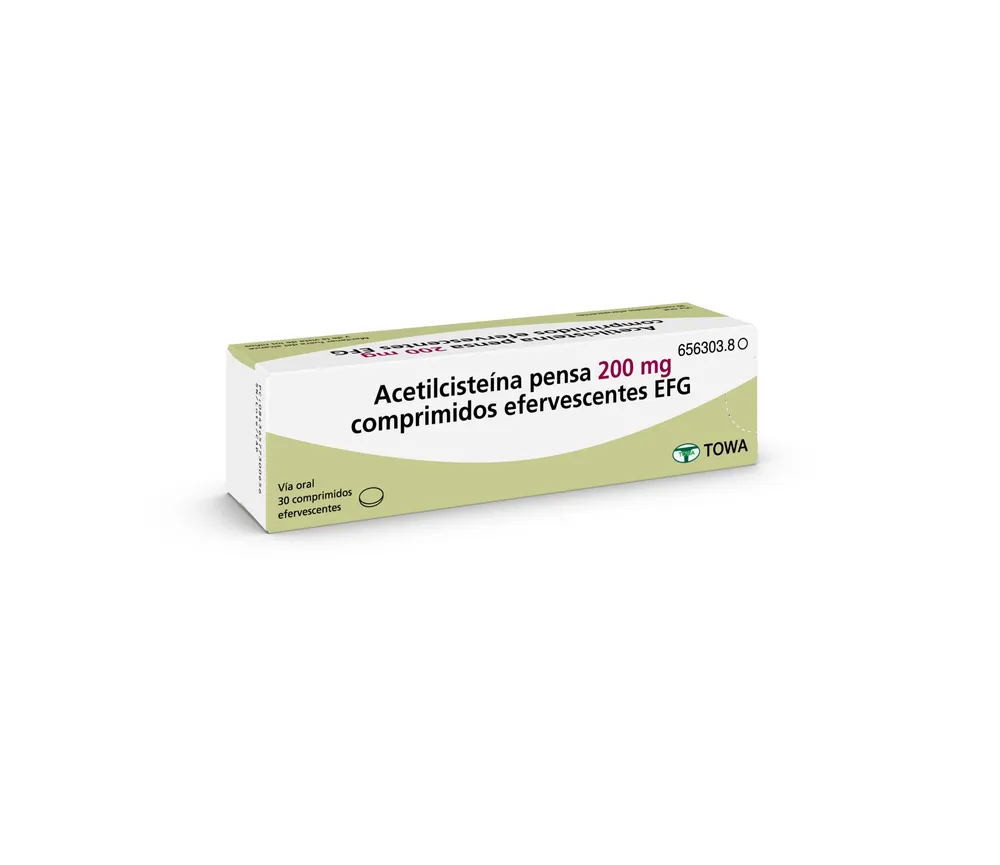
Table of Contents
- Package leaflet: Information for the user
- Introduction
- 1. What Acetilcisteína Pensa is and what it is used for
- 2. Before taking Acetylcysteine Pensa
- **Pregnancy and breastfeeding**
- Breastfeeding
- **Driving and use of machines**
- 3. How to take Acetylcysteine Pensa
- 4. Possible adverse effects
- 5. Storage of Acetylcysteine Pensa
- 6. Additional Information
Package leaflet: Information for the user
Introduction
Package leaflet: information for the user
Acetylcysteine Pensa 200 mg effervescent tablets EFG
Read the entire leaflet carefully before you start taking this medicine.
- Keep this leaflet, as you may need to read it again.
- If you have any questions, ask your doctor or pharmacist.
- This medicine has been prescribed for you only, and you should not give it to others, even if they have the same symptoms as you, because it could harm them.
- If you think any of the side effects you experience is severe or if you notice any side effects not listed in this leaflet, inform your doctor or pharmacist.
Leaflet contents
- What Acetylcysteine Pensa is and what it is used for
- Before you take Acetylcysteine Pensa
- How to take Acetylcysteine Pensa
- Possible side effects
- How to store Acetylcysteine Pensa
- Further information
1. What Acetilcisteína Pensa is and what it is used for
Acetylcysteine belongs to a group of medicines called mucolytics.
Acetilcisteína Pensa is used to liquefy excessive and/or thick bronchial secretions.
It is indicated as supportive treatment in respiratory conditions associated with excessive or thick mucus hypersecretion, such as:
- acute and chronic bronchitis (inflammation of the bronchi),
- chronic obstructive pulmonary disease (COPD),
- emphysema (inflammation of the lung alveoli, leading to reduced respiratory function),
- atelectasis (collapse of a lung region or massive collapse of one or both lungs) due to mucus obstruction, complications of cystic fibrosis, and other related disorders.
2. Before taking Acetylcysteine Pensa
Do not take Acetylcysteine Pensa
-
If you are allergic (hypersensitive) to acetylcysteine or to any of the excipients in Acetylcysteine Pensa.
-
If you have a gastroduodenal ulcer.
-
If you have asthma or severe respiratory insufficiency.
-
If you are a child under 2 years of age.
Take special care with Acetylcysteine Pensa
If you have respiratory problems.
Use of other medicines
Inform your doctor or pharmacist if you are using or have recently used any other medicines, including those obtained without a prescription.
No interactions or incompatibilities with other medicines have been reported; however, it is recommended that you do not take this medicine concomitantly with:
- antitussives (medicines used to suppress cough).
- medicines that reduce bronchial secretions (e.g. Atropine).
Taking Acetylcysteine Pensa with food and drink
No interference has been reported when taking Acetylcysteine Pensa with food or drink.
Pregnancy and breastfeeding
Consult your doctor or pharmacist before using any medication.
Pregnancy
Your doctor will assess the need for using this medicine. It should only be used during pregnancy if, in the opinion of your doctor, the benefits outweigh the potential risks.
Breastfeeding
Your doctor will assess the need to use this medication. It should only be used during breastfeeding when, in the opinion of your doctor, the benefits outweigh the potential risks.
Driving and use of machines
It has not been reported that Acetylcysteine Pensa affects the ability to drive and/or operate machinery.
Important information about some of the components of Acetylcysteine Pensa
This medicine contains lactose. If your doctor has informed you of an intolerance to certain sugars, consult him before taking this medicine.
This medicine contains 99.31 mg of sodium per dose (200 mg), which should be taken into consideration in patients on low-sodium diets.
The possible presence of a slight sulfurous odor does not indicate deterioration of the product, but is characteristic of the active substance acetylcysteine.
3. How to take Acetylcysteine Pensa
Follow exactly the administration instructions for Acetylcysteine Pensa given by your doctor. Consult your doctor or pharmacist if you have any doubts.
Remember to take your medicine.
Your doctor will indicate how long you should continue treatment with Acetylcysteine Pensa. Do not stop the treatment early, as doing so may prevent you from achieving the desired effect.
Adults and children over 7 years of age: The recommended average dosage is 600 mg of acetylcysteine per day, administered orally, either as a single 600 mg dose or in three 200 mg doses every 8 hours.
Pulmonary complications of cystic fibrosis:
The recommended average dosage of acetylcysteine in these cases is as follows:
Adults and children over 7 years of age: 200 to 400 mg of acetylcysteine every 8 hours.
Children from 2 to 7 years of age: 200 mg of acetylcysteine every 8 hours.
Method of administration
Acetilcisteína Pensa tablets are for oral administration by placing the tablet into a glass containing a small amount of water. This produces a solution with a pleasant taste that can be drunk directly from the glass.
If you take more Acetilcisteína Pensa than you should
In case of overdose or accidental ingestion, contact your doctor or pharmacist immediately or call the Toxicology Information Service at telephone number: 91 562 04 20 (indicating the medication and the amount ingested).
If you forget to take Acetilcisteína Pensa
Do not take a double dose to make up for missed doses. If you miss a dose, wait until the next scheduled dose.
If you stop taking Acetilcisteína Pensa
Do not discontinue treatment prematurely, as otherwise you will not achieve the desired effect.
If you have any further questions about the use of this medicine, ask your doctor or pharmacist.
4. Possible adverse effects
Like all medicines, Acetylcysteine Pensa may produce adverse effects, although not everyone will experience them.
Occasionally, mild and transient adverse effects have occurred, the most common being gastrointestinal and intestinal disorders: nausea, vomiting, and diarrhoea.
Allergic reactions are rarely observed, accompanied by urticaria and breathing difficulties (bronchospasm, bronchoconstriction); in such cases treatment should be discontinued and medical advice sought.
If you consider any of the adverse effects you experience to be severe, or if you notice any adverse effects not listed in this leaflet, inform your doctor or pharmacist.
5. Storage of Acetylcysteine Pensa
Keep out of the reach and sight of children.
Store in the original packaging. Do not store above 30 °C.
Do not use Acetylcysteine Pensa after the expiry date stated on the packaging after "EXP". The expiry date refers to the last day of the month indicated.
Medicines must not be disposed of via wastewater or household waste. Dispose of unused medicines and their packaging at the SIGRE collection point at your pharmacy. If in doubt, ask your pharmacist how to properly dispose of unused medicines and packaging. This will help protect the environment.
6. Additional Information
Composition of Acetylcysteine Pensa
The active substance is acetylcysteine. Each tablet contains 200 mg of acetylcysteine.
The other components are: anhydrous citric acid, sodium hydrogen carbonate, anhydrous sodium carbonate, anhydrous lactose, mannitol (E-421), lemon flavor, sodium cyclamate, sodium saccharin, disodium citrate dihydrate.
Appearance of the medicinal product and contents of the container
Acetylcysteine Pensa is presented as round, effervescent, white tablets with a smooth surface. Tube containing 30 effervescent tablets.
Marketing Authorization Holder
Towa Pharmaceutical, S.A.
C/ de Sant Martí, 75-97
08107 Martorelles (Barcelona)
Spain
Manufacturer
HERMES PHARMA GmbH
Hans-Urmiller-Ring 52
82515 Wolfrathausen, Germany
Other presentations
Acetylcysteine Pensa 600 mg effervescent tablets EFG. Tube with 20 tablets.
This leaflet was approved in April 2012
Detailed and up-to-date information on this medicinal product is available on the website of the Spanish Agency of Medicines and Health Products (AEMPS) http://www.aemps.gob.es/