Vitamin d3
Ukraine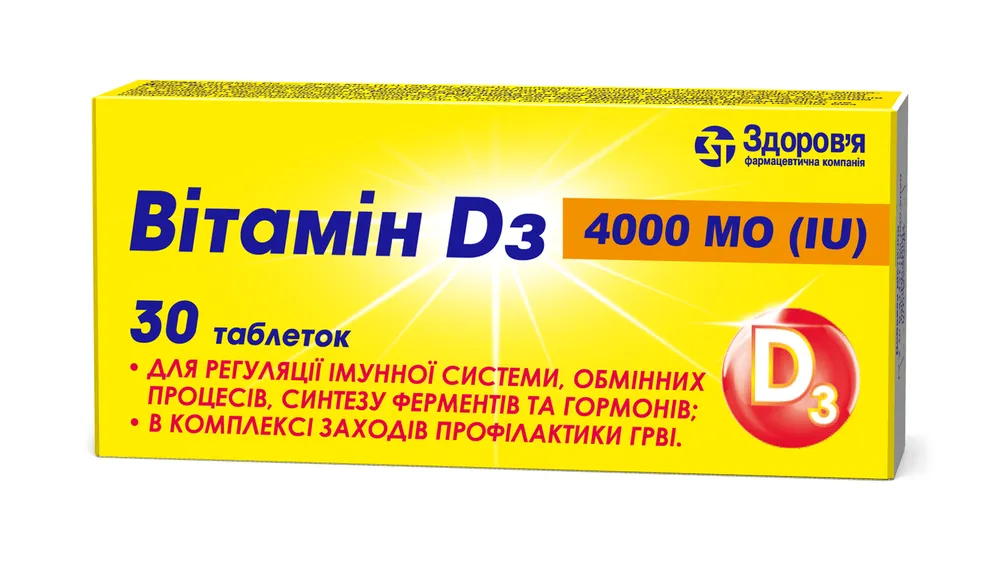
Table of Contents
INSTRUCTIONS FOR MEDICAL USE OF THE MEDICINAL PRODUCT VITAMIN D3 (VITAMIN D3)
Composition:
Active substance: colecalciferol;
1 tablet contains 1000 IU, 2000 IU, 4000 IU, or 5600 IU of cholecalciferol;
Excipients: mannite, microcrystalline cellulose, povidone, sodium croscarmellose, colloidal anhydrous silicon dioxide, magnesium stearate.
Pharmaceutical form. Tablets.
Main physicochemical properties: tablets from white to white with a yellowish tint, flat cylindrical shape with bevel (dosage 1000 IU) or with a notch and bevel (dosage 2000 IU and 4000 IU), or round-shaped with double-convex surface (dosage 5600 IU).
Pharmacotherapeutic group. Vitamins. Vitamin D and its analogues. Cholecalciferol.
ATC code A11C C05.
Pharmacological properties.
Pharmacodynamics.
Cholecalciferol (vitamin D3) is synthesized in the skin from 7-dehydrocholesterol under the influence of ultraviolet radiation and is converted into its biologically active form (1,25-dihydroxycholecalciferol) in two hydroxylation steps: first in the liver (at position 25), then in kidney tissue (at position 1). Together with parathyroid hormone and calcitonin, 1,25-dihydroxycholecalciferol plays a significant role in regulating calcium and phosphate balance. In its biologically active form, vitamin D3 stimulates intestinal absorption of calcium, penetration of calcium into osteoid, and release of calcium from bone tissue. In the small intestine, it promotes rapid and delayed absorption of calcium. In addition, passive and active phosphate transport is enhanced. In the kidneys, it reduces excretion of calcium and phosphates by stimulating tubular reabsorption. The biologically active form of cholecalciferol directly inhibits parathyroid hormone production in the parathyroid glands. Parathyroid hormone secretion is further suppressed due to increased intestinal calcium absorption induced by biologically active vitamin D3.
The so-called vitamin D3, in terms of its formation, physiological regulation, and mechanism of action, can be considered a precursor of a steroid hormone. Cholecalciferol, in addition to endogenous synthesis in the skin, can enter the body with food or as a medicinal product. The latter route may lead to overdose and intoxication, since physiological inhibition of vitamin D production—such as occurs in skin synthesis—does not take place.
Natural occurrence and requirement fulfillment. The recommended daily intake of vitamin D for adults is 20 µg, equivalent to 800 IU. Healthy adults can meet their vitamin D requirements through endogenous synthesis provided sufficient sunlight exposure. Dietary intake of vitamin D is of secondary importance but may be critical under certain conditions (climate, lifestyle).
Foods particularly rich in vitamin D include fish liver oil and fish. Small amounts are also present in meat, eggs—especially yolks—milk, dairy products, and avocado.
Symptoms of vitamin D deficiency. Signs of vitamin D deficiency may occur, for example, in premature newborns, infants exclusively breastfed for more than 6 months without calcium supplementation, or in children on a strict vegetarian diet. Rare vitamin D deficiency in adults may result from inadequate dietary intake, insufficient ultraviolet exposure, impaired absorption and digestion, liver cirrhosis, or renal insufficiency.
In vitamin D deficiency, skeletal calcification does not occur (leading to rickets) or decalcification of bones develops (leading to osteomalacia). Deficiency of calcium and/or vitamin D causes reversible elevation of parathyroid hormone secretion. This secondary hyperparathyroidism increases bone tissue metabolism, potentially leading to bone fragility and fractures.
Pharmacokinetics.
Absorption. Vitamin D, in the amounts present in food, is almost completely absorbed from the diet. It is absorbed together with dietary lipids and bile acids; therefore, administration of vitamin D during the main meal of the day may enhance its absorption.
Distribution and biotransformation. Metabolic conversion of cholecalciferol occurs in the liver via microsomal hydroxylase, forming 25-hydroxycholecalciferol (25(OH)D3). This is subsequently converted in the kidneys into 1,25-dihydroxycholecalciferol, the biologically active form.
After a single oral dose of cholecalciferol, peak serum concentration of 25(OH)D3—the main storage form—occurs approximately one week later. Subsequently, 25(OH)D3 is slowly eliminated, with an apparent half-life in serum of about 50 days. After administration of high-dose vitamin D, serum concentrations of 25-hydroxycholecalciferol may remain elevated for several months. Hypercalcemia caused by overdose may persist for several weeks (see section "Overdose").
Elimination. Metabolites bound to specific α-globulin circulating in the blood are primarily excreted via bile and feces.
Special patient groups. In individuals with impaired kidney function, metabolic clearance rate is reduced by 57% compared to healthy volunteers.
In cases of malabsorption, absorption of vitamin D3 is reduced and elimination increased. In individuals with obesity, the ability to maintain vitamin D3 levels upon sun exposure is diminished, and higher oral doses of vitamin D3 may be required to correct deficiency.
Clinical characteristics.
Indications.
- For the prevention of vitamin D deficiency in children from 12 years of age and adults at high risk of its development, who do not have absorption disorders.
- For the prevention of vitamin D deficiency in adults with malabsorption.
- As an adjunct to specific osteoporosis therapy in adults with vitamin D deficiency or at high risk of vitamin D insufficiency.
- For the treatment of hypoparathyroidism in adults.
Contraindications.
- Hypersensitivity to the components of the medicinal product.
- Hypercalcemia.
- Hypercalciuria.
- Hypervitaminosis D.
- Pseudohypoparathyroidism (the requirement for vitamin D may be lower than during periods of normal sensitivity to vitamin D, with a risk of prolonged overdose).
- Nephrolithiasis (urinary stone disease).
- Renal insufficiency.
- Sarcoidosis.
- Tuberculosis.
- Additional intake of vitamin D (may lead to overdose).
Interaction with other medicinal products and other forms of interaction.
Concomitant use of anticonvulsants (e.g., phenytoin and phenobarbital) or barbiturates (and possibly other drugs inducing liver enzymes) may lead to reduced vitamin D3 effect due to metabolic inactivation.
Rifampicin may reduce the efficacy of cholecalciferol due to induction of liver enzymes.
Isoniazid may reduce the efficacy of cholecalciferol by inhibiting the metabolic activation of cholecalciferol.
Ion-exchange resins, laxatives, orlistat may reduce the gastrointestinal absorption of vitamin D. A similar effect occurs when cholecalciferol is used with neomycin, which reduces the effect of vitamin D.
The cytotoxic agent actinomycin and imidazole-class antifungal agents reduce the activity of vitamin D3 by inhibiting the conversion of 25-hydroxycholecalciferol to 1,25-dihydroxycholecalciferol by renal enzymes, resulting in reduced 25-hydroxyvitamin D-1-hydroxylase activity.
Glucocorticoids increase vitamin D metabolism, which may lead to reduced efficacy of vitamin D3.
Concomitant use of benzothiadiazine derivatives (thiazide-type diuretics) leads to an increased risk of hypercalcemia due to reduced renal excretion of calcium. Therefore, plasma and urinary calcium levels should be monitored.
The combination of this drug with metabolites or analogs of vitamin D should be avoided. Concurrent administration of vitamin D3 with metabolites or analogs of vitamin D is possible only exceptionally and only with monitoring of serum calcium levels (increases the risk of toxic effects).
Oral administration of vitamin D3 together with cardiac glycosides may enhance the efficacy and toxicity of digoxin due to increased calcium levels (risk of cardiac arrhythmias). In such patients, regular ECG monitoring and measurement of plasma and urinary calcium levels are required, as well as determination of digoxin or digitoxin concentrations, if possible.
Concomitant use of the drug with antacids containing aluminum or magnesium may provoke aluminum-induced bone toxicity and hypermagnesemia in patients with renal insufficiency.
Ketoconazole may reduce the biosynthesis and catabolism of 1,25(OH)2-cholecalciferol.
Concomitant use with medicinal products containing high doses of calcium and phosphorus increases the risk of hyperphosphatemia.
Vitamin D may antagonize drugs used in hypercalcemia, such as calcitonin, etidronate, and pamidronate. Vitamin D3 administration should be discontinued in cases of hypercalcemia requiring active treatment.
Special precautions for use.
The medicinal product should be used with special caution in patients with impaired renal function (due to impaired excretion of calcium and phosphates), during treatment with benzothiadiazine derivatives, and in immobilized patients (due to the risk of developing hypercalcemia and hypercalciuria). In such patients, serum levels of calcium and phosphates should be monitored. The risk of soft tissue calcification should be considered.
The medicinal product should be used cautiously in patients taking cardiac glycosides and in patients with cardiovascular diseases.
During treatment with this drug, additional intake of vitamin D should be taken into account (concomitant use of other vitamin D-containing products). Combined therapy with vitamin D or calcium should be administered only under medical supervision and with monitoring of serum and urinary calcium levels.
Individual dosing to meet specific requirements should take into account all possible sources of vitamin intake. Prior to initiating vitamin D3 therapy, a thorough assessment of the patient's condition by a physician is required, including evaluation of additional vitamin D intake from certain food products.
It should be noted that a diet high in fats may enhance the absorption of vitamin D3; therefore, it is recommended to follow a diet not excessively high in fats during treatment with this medicinal product.
Excessively high doses of vitamin D3 administered over a prolonged period or as bolus doses may lead to chronic hypervitaminosis D.
Treatment should be discontinued upon the appearance of symptoms of hypervitaminosis D: fatigue, nausea, diarrhea, polyuria.
The drug should not be used:
- in patients with sarcoidosis due to the risk of accelerated conversion of vitamin D into its active metabolites;
- in patients with pseudohypoparathyroidism, as vitamin D requirements may decrease during phases of normal vitamin D sensitivity. In such cases, vitamin D derivatives that are easier to control are recommended.
In pseudohypoparathyroidism developing after surgical treatment of the thyroid gland, administration of the drug should be discontinued until parathyroid function recovers to prevent vitamin D intoxication.
During long-term treatment with doses exceeding 1000 IU of vitamin D3, monitoring of serum and urinary levels of calcium, phosphates, and glucose, as well as kidney function (by measuring serum creatinine concentration), is recommended. This monitoring is particularly important for elderly patients and during concomitant therapy with cardiac glycosides or diuretics (see section "Interaction with other medicinal products and other types of interactions"). This also applies to patients predisposed to formation of calcium-containing kidney stones.
For certain patients, additional calcium supplementation should be considered. Calcium-containing preparations should be administered under strict medical supervision to prevent hypercalcemia. The medicinal product should not be taken simultaneously with high doses of calcium.
Children. The daily requirement of children for vitamin D and the method of administration should be individually determined and reassessed during periodic examinations.
Use during pregnancy or breastfeeding.
The drug should be used with caution in pregnant women and women who are breastfeeding.
Adequate intake of vitamin D is necessary during pregnancy and breastfeeding. Intake of vitamin D should be monitored.
Pregnancy. Data on the use of cholecalciferol during pregnancy are limited.
Currently, there are no data indicating risks associated with the use of the maximum daily dose of 600 IU of vitamin D3. However, vitamin D3 should be used during pregnancy only if clearly needed and with caution, strictly adhering to the recommended dosage. The daily dose should not exceed 500 IU unless otherwise prescribed by a physician.
Prolonged use of high doses of vitamin D during pregnancy should be avoided, as prolonged hypercalcemia resulting from such use may adversely affect physical and mental development and may cause supravalvular aortic stenosis and retinopathy in the child.
Breastfeeding. Vitamin D and its metabolites pass into breast milk. Cases of overdose in newborns who are breastfed have not been observed. However, this should be taken into account when additional vitamin D supplementation is prescribed for the infant.
Fertility. No effects on reproductive function or fertility were observed in animal studies with cholecalciferol. The benefit-risk ratio in humans remains unknown.
Ability to affect reaction speed when driving or operating machinery.
The medicinal product has no effect or has a negligible effect on the ability to drive or operate machinery.
Dosage and Administration.
Route of administration. For oral use in adults and children aged 12 years and older. The tablet should be swallowed whole with sufficient amount of water, preferably during a main meal.
Dosage. The dosage of vitamin D depends on the severity of the disease and the patient's response to treatment. The dose should be determined by a physician in each individual case. When doses exceeding 1000 IU of vitamin D3 per day are used, or during continuous or long-term treatment, regular monitoring of blood creatinine levels, serum and urinary calcium levels, and renal function is required. If necessary, the dose should be adjusted according to serum calcium concentration (see section "Special precautions for use").
The duration of treatment depends on the course and severity of the disease and is determined individually by the physician.
Prevention of vitamin D deficiency in children aged 12 years and older and adults at high risk of deficiency who do not have malabsorption disorders: 500*–1000 IU of vitamin D3 daily.
Prevention of vitamin D deficiency in adults with malabsorption: the dose is individually determined by a physician. The general recommended dose is 3000–5000 IU of vitamin D3 daily.
Adjunct to specific osteoporosis therapy in adults with vitamin D deficiency or at high risk of vitamin D deficiency: 1000 IU of vitamin D3 daily or 5600 IU of vitamin D3 weekly, in combination with a calcium preparation if required.
Treatment of hypoparathyroidism in adults: the recommended dose depends on serum calcium levels and ranges from 10000–20000 IU of vitamin D3 daily or even higher.
Elderly patients. Dose adjustment is not required; however, renal function should be taken into account.
Patients with renal impairment. Vitamin D3 should be used with caution in patients with mild to moderate renal impairment.
Use is contraindicated in patients with severe renal impairment (see sections "Contraindications" and "Special precautions for use").
Patients with hepatic impairment. Dose adjustment is not required.
*Use cholecalciferol preparations in another pharmaceutical form allowing appropriate dosing.
Children. For use in children aged 12 years and older for prevention of vitamin D deficiency in those at high risk of deficiency and without malabsorption disorders.
For children under 12 years of age (starting from 2 weeks of life), the medicinal product "Vitamin D3", oral drops, solution, 15000 IU/mL, may be used.
Overdose.
Vitamin D3 regulates calcium and phosphate metabolism. Overdose may lead to hypercalcemia, hypercalciuria, renal calculi, bone damage, and cardiovascular system disorders. Hypercalcemia may occur after administration of 50000–100000 IU of vitamin D3 daily.
Symptoms of overdose. Acute and chronic overdose of vitamin D3 may cause hypercalcemia, which can become persistent and life-threatening. Symptoms may be nonspecific and include cardiac arrhythmia, thirst, dehydration, adynamia, and impaired consciousness. Chronic overdose may also lead to calcium deposition in blood vessels and tissues.
In addition to increased serum and urinary phosphate levels, overdose may cause hypercalcemic syndrome, which subsequently leads to calcium deposition in tissues, particularly in the kidneys (nephrolithiasis, nephrocalcinosis, renal failure), as well as in blood vessels.
Symptoms of intoxication are not very specific and may include muscle weakness, loss of appetite, nausea, vomiting, initial frequent diarrhea followed by constipation, anorexia, dyspnea, headache, myalgia, arthralgia, muscle weakness, persistent drowsiness, arrhythmia, azotemia, polydipsia and polyuria, and also (in pre-terminal stages) dehydration, photosensitivity, pancreatitis, rhinorrhea, hyperthermia, decreased libido, conjunctivitis, hypercholesterolemia, increased transaminase activity, arterial hypertension, uremia. Common symptoms include muscle and joint pain.
Renal function impairment may develop, characterized by albuminuria, erythrocyturia, polyuria, increased potassium loss, hypostenuria, nocturia, and moderate increase in blood pressure.
In severe cases, corneal clouding may occur, rarely papilledema, uveitis, up to the development of cataract.
Kidney stones may form, and calcification may occur in soft tissues such as blood vessels, heart, lungs, and skin.
Cholestatic jaundice may rarely develop.
Characteristic biochemical abnormalities include hypercalcemia, hypercalciuria, and elevated serum 25-hydroxycalciferol concentration.
Treatment. The appearance of symptoms of chronic vitamin D overdose may require forced diuresis and administration of glucocorticoids and calcitonin.
In case of overdose, measures must be taken to eliminate chronic and potentially life-threatening hypercalcemia.
First, vitamin D3 intake must be discontinued; normalization of calcium levels after vitamin D intoxication-induced hypercalcemia may take several weeks.
Depending on the degree of hypercalcemia, a calcium-free or low-calcium diet may be used, along with recommendations for high fluid intake, forced diuresis with furosemide, and administration of glucocorticoids and calcitonin.
With normal renal function, calcium levels can usually be reduced by infusion of isotonic sodium chloride solution (3–6 liters within 24 hours) with furosemide. In some cases, sodium edetate administration at a dose of 15 mg/kg body weight/hour is also recommended, with continuous monitoring of calcium levels and ECG. However, in cases of oligoanuria, hemodialysis (using calcium-free dialysate) must be performed.
No specific antidote is known.
Patients undergoing long-term treatment with vitamin D at higher doses should be informed about symptoms of possible overdose (nausea, vomiting, initial frequent diarrhea followed by constipation, anorexia, dizziness, headache, myalgia, arthralgia, muscle weakness, drowsiness, azotemia, polydipsia and polyuria).
Adverse reactions.
Adverse reactions are generally not observed when the product is used at recommended doses.
In cases of individual hypersensitivity to the drug, which is rare, or as a result of using very high doses over a prolonged period, vitamin D toxicity (hypervitaminosis D) may occur.
The adverse reactions listed below are classified by organ systems and frequency of occurrence.
| Organ systems (according to MedDRA classification) |
Frequency of adverse reactions |
||
| Uncommon (≥1/1,000 to <1/100) |
Rare (≥1/10,000 to <1/1,000) |
Frequency not known (cannot be estimated from available data) |
|
| Cardiovascular system |
Arrhythmia, arterial hypertension. |
||
| Gastrointestinal system |
Constipation, flatulence, nausea, abdominal pain, diarrhea, loss of appetite, vomiting, dry mouth, dyspepsia, pancreatitis. |
||
| Nervous system |
Headache, somnolence, psychiatric disturbances, depression. |
||
| Urinary system |
Elevated calcium levels in blood and/or urine, nephrolithiasis and tissue calcification, uremia, polyuria. |
||
| Skin |
Hypersensitivity reactions, including urticaria, rash, pruritus. |
||
| Musculoskeletal system |
Myalgia, arthralgia, muscle weakness. |
||
| Eye organs |
Conjunctivitis, photosensitivity. |
||
| Metabolism and nutrition |
Hypercalcemia and hypercalciuria. |
Hypercholesterolemia, weight loss, polydipsia, increased sweating. |
|
| Immune system |
Hypersensitivity reactions such as angioedema or laryngeal edema. |
||
| Hepatobiliary system |
Increased aminotransferase activity. |
||
| Psychiatric |
Decreased libido. |
||
Cases of rhinorrhea and hyperthermia have also been reported.
Shelf life. 2 years.
Storage conditions. Store in the original packaging at a temperature not exceeding 25 °C.
Keep out of reach of children.
Packaging. Tablets No. 30 (10×3) in a blister pack in a box.
Prescription status. Prescription only.
Manufacturer.
LIMITED LIABILITY COMPANY "CORPORATION "ZDOROVIYA".
Manufacturer's address and location of business activity.
22, Shevchenka Street, Kharkiv, Kharkiv region, 61013, Ukraine.