Vanatex
Ukraine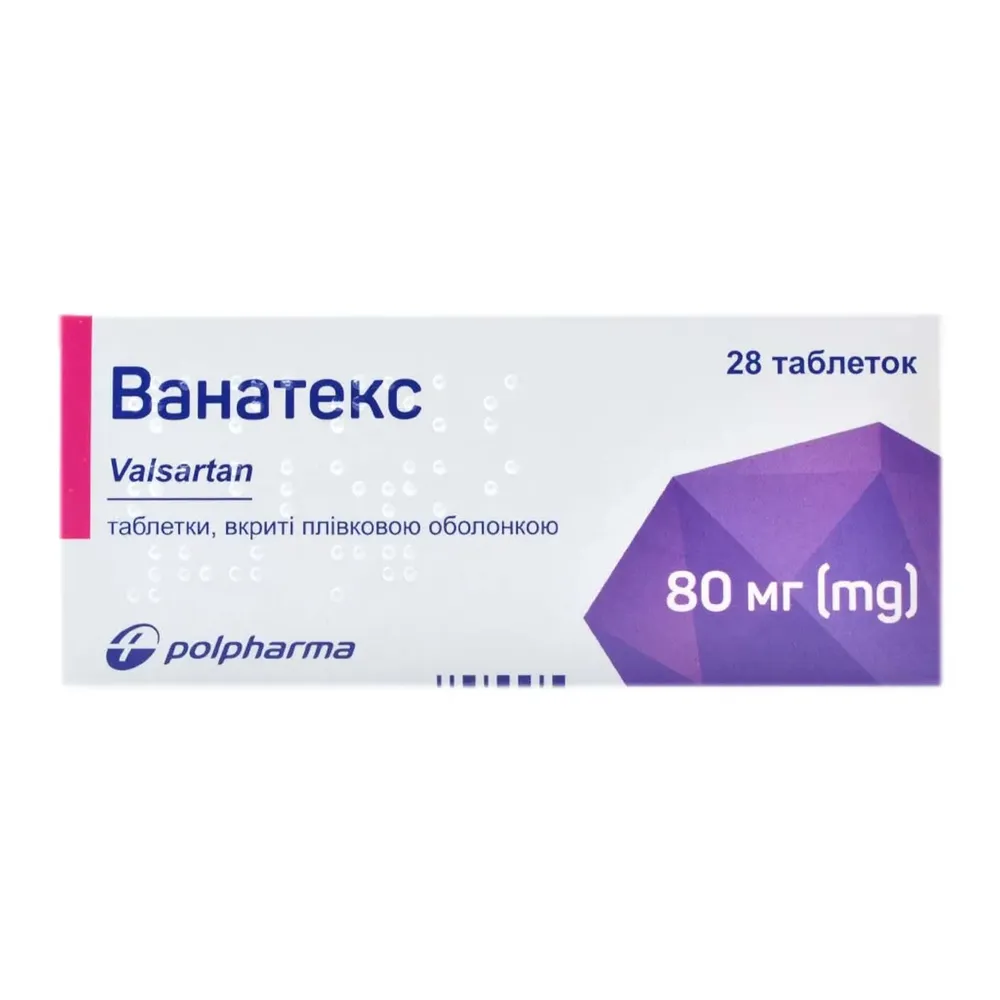
Table of Contents
INSTRUCTION FOR MEDICAL USE OF THE MEDICINAL PRODUCT VANATEX (VANATEX)
Composition:
Active substance: valsartan;
One film-coated tablet contains 80 or 160 mg of valsartan;
Excipients:
Core: lactose monohydrate, sodium croscarmellose, colloidal anhydrous silicon dioxide, magnesium stearate;
Coating of 80 mg tablet (Mixture for coating the tablets – Type 2): hypromellose, polyethylene glycol, titanium dioxide (E 171), iron oxide red (E 172);
Coating of 160 mg tablet (Mixture for coating the tablets – Type 1): hypromellose, polyethylene glycol, titanium dioxide (E 171), iron oxide red (E 172), iron oxide yellow (E 172), iron oxide black (E 172).
Pharmaceutical form. Film-coated tablets.
Main physicochemical properties:
80 mg tablets: pink, round, biconvex film-coated tablets with a score line;
160 mg tablets: light brown, oval, biconvex film-coated tablets with a score line.
Pharmacotherapeutic group.
Single angiotensin II antagonist preparations. ATC code: C09C A03.
Pharmacological properties.
Pharmacodynamics.
Valsartan is an orally active, potent and specific antagonist of angiotensin II (Ang II) receptors. It selectively acts on the AT1 receptor subtype responsible for the effects of angiotensin II. Increased plasma levels of Ang II following AT1 receptor blockade by valsartan may stimulate the unblocked AT2 receptor, which is likely to counterbalance the effects of the AT1 receptor. Valsartan does not exhibit partial agonist activity at the AT1 receptor and has significantly greater (approximately 20,000-fold) affinity for the AT1 receptor than for the AT2 receptor.
It is unknown whether valsartan binds to or blocks other hormone receptors or ion channels known to play an important role in cardiovascular regulation.
Valsartan does not inhibit ACE (also known as kininase II), the enzyme converting Ang I into Ang II and degrading bradykinin. Since there is no effect on ACE and no potentiation of bradykinin or substance P, angiotensin II antagonists are unlikely to be associated with cough.
Arterial hypertension
Administration of valsartan to patients with arterial hypertension results in a reduction of arterial blood pressure without affecting heart rate.
In most patients, antihypertensive activity is observed within 2 hours after a single oral dose, with maximal reduction in blood pressure achieved within 4–6 hours. The hypotensive (antihypertensive) effect persists for 24 hours after dosing. With repeated dosing, the antihypertensive effect is maintained over 2 weeks, and maximal effect is reached within 4 weeks and sustained during long-term treatment. When combined with hydrochlorothiazide, a significant additional reduction in blood pressure is achieved.
Abrupt discontinuation of valsartan is not associated with rebound hypertension or other adverse clinical events.
Recent myocardial infarction
Study results demonstrated that valsartan, like captopril, is effective in reducing overall mortality after myocardial infarction. Valsartan was also effective in reducing cardiovascular mortality, the number of hospitalizations due to heart failure, and recurrent myocardial infarction. The safety profile of valsartan was consistent with the clinical course of patients treated after established myocardial infarction.
Heart failure
Patients treated with valsartan showed significant improvement in signs and symptoms of heart failure, including dyspnea, fatigue, edema, and rales, compared to those receiving placebo. Patients with chronic heart failure treated with valsartan had improved quality of life from baseline to endpoint compared to those receiving placebo. Ejection fraction in patients treated with valsartan was significantly higher, and left ventricular end-diastolic diameter significantly decreased from baseline to endpoint compared to patients receiving placebo.
Children
The antihypertensive effect of valsartan was evaluated in 4 randomized, double-blind clinical studies involving 561 children aged 6 to 18 years and 165 children aged 1 to 6 years. Renal and urinary tract disorders and obesity were the most common underlying medical conditions causing arterial hypertension in children included in these studies.
Clinical experience in children aged 6 years and older
In a clinical study involving 261 hypertensive children aged 6 to 16 years, patients with body weight < 35 kg received 10, 40, or 80 mg of valsartan daily (low, medium, and high doses), while patients with body weight ≥ 35 kg received 20, 80, and 160 mg of valsartan daily (low, medium, and high doses). At the end of 2 weeks, valsartan reduced systolic and diastolic blood pressure in a dose-dependent manner. Overall, the three dose levels of valsartan (low, medium, and high) significantly reduced systolic blood pressure by 8, 10, and 12 mm Hg from baseline, respectively.
Clinical experience in children under 6 years of age
Valsartan is not recommended for use in this age group.
Pharmacokinetics.
Absorption
After oral administration of a single dose of valsartan, maximum plasma concentrations are reached within 2–4 hours. The mean absolute bioavailability is 23%. Food reduces the exposure to valsartan (as measured by mean urinary excretion/AUC) by approximately 40% and peak plasma concentration (Cmax) by approximately 50%, although about 8 hours after dosing, plasma concentrations of valsartan are similar in patients who took food and those who took the drug fasting. However, this reduction in mean urinary excretion is not associated with a clinically significant reduction in therapeutic effect; therefore, valsartan can be administered with or without food.
Distribution
The steady-state volume of distribution of valsartan after intravenous administration is approximately 17 liters, indicating that valsartan does not extensively distribute into tissues. Valsartan is highly bound to plasma proteins (94–97%), primarily to serum albumin.
Biological transformation
Valsartan is not extensively metabolized, as only about 20% of the dose is recovered as metabolites. A hydroxymetabolite has been detected in plasma at low concentrations (less than 10% of the mean urinary excretion of valsartan). This metabolite is pharmacologically inactive.
Elimination
Valsartan exhibits multi-exponential decay kinetics (t½α < 1 hour and t½β approximately 9 hours). Valsartan is primarily eliminated via the biliary route into feces (approximately 83% of the dose) and via the kidneys into urine (approximately 13% of the dose), mainly in unchanged form. After intravenous administration, the plasma clearance of valsartan is about 2 L/h, and renal clearance is 0.62 L/h (about 30% of total clearance). The elimination half-life of valsartan is 6 hours.
Patients with heart failure
The mean time to maximum concentration and elimination half-life of valsartan in patients with heart failure are similar to those observed in healthy volunteers. AUC and Cmax values of valsartan are nearly proportional (linear) over the clinical dose range (40 to 160 mg twice daily). The mean accumulation ratio is approximately 1.7. Apparent clearance of valsartan after oral administration is approximately 4.5 L/h. Age does not affect apparent clearance in patients with heart failure.
Special patient groups
Elderly patients
A slightly greater systemic exposure to valsartan was observed in some elderly patients compared to younger individuals; however, this difference has no clinical significance.
Renal impairment
As expected for a substance with only 30% of total plasma clearance accounted for by renal clearance, no correlation was observed between renal function and systemic exposure to valsartan. Therefore, dose adjustment is not required in patients with renal impairment (creatinine clearance > 10 mL/min). There is currently no experience with the safe use of valsartan in patients with creatinine clearance < 10 mL/min or in patients on dialysis; therefore, valsartan should be used with extreme caution in such patients. Valsartan is highly protein-bound and is unlikely to be removed by dialysis.
Hepatic impairment
Approximately 70% of the absorbed dose is excreted via bile, mainly in unchanged form. Valsartan undergoes no significant biotransformation. A doubling of exposure (AUC) was observed in patients with mild to moderate hepatic impairment compared to healthy volunteers.
However, no correlation was observed between plasma concentration of valsartan and the degree of hepatic dysfunction. Valsartan has not been studied in patients with severe hepatic dysfunction.
Clinical characteristics.
Indications.
Arterial hypertension
Treatment of arterial hypertension in adults and children aged 6 years and older.
Post-infarction state
Treatment of clinically stable adult patients with symptomatic heart failure or asymptomatic left ventricular systolic dysfunction following a recent (12 hours–10 days) myocardial infarction.
Heart failure
Treatment of symptomatic heart failure in adult patients when angiotensin-converting enzyme (ACE) inhibitors cannot be used, or as adjunctive therapy to ACE inhibitors when beta-blockers cannot be used.
Contraindications.
Hypersensitivity to the active substance or to any of the excipients.
Severe hepatic impairment, biliary cirrhosis, and cholestasis.
Pregnancy or planning to become pregnant (see section "Use during pregnancy or breastfeeding").
Concomitant use of angiotensin receptor antagonists or angiotensin-converting enzyme inhibitors with aliskiren is contraindicated in patients with diabetes mellitus or renal impairment (glomerular filtration rate (GFR) < 60 mL/min/1.73 m²).
Interaction with other medicinal products and other forms of interaction.
Dual blockade of the renin-angiotensin-aldosterone system (RAAS) with ARBs, ACE inhibitors, or aliskiren
Caution should be exercised when combining angiotensin receptor blockers (ARBs) with other drugs that block the RAAS, such as ACE inhibitors or aliskiren, due to the potential risk of increased adverse reactions, including arterial hypotension, hyperkalemia, and renal dysfunction (including acute renal failure) (see sections "Contraindications" and "Special precautions for use").
Concomitant use of angiotensin receptor antagonists, including valsartan, or ACE inhibitors with aliskiren in patients with diabetes mellitus or renal impairment (glomerular filtration rate (GFR) < 60 mL/min/1.73 m²) is contraindicated (see section "Contraindications").
Concomitant use not recommended
Lithium
Reversible increases in serum lithium concentrations and lithium toxicity have been reported during concomitant use of ACE inhibitors. Due to the lack of experience with concomitant use of valsartan and lithium, this combination is not recommended. If combination therapy is considered necessary, careful monitoring of serum lithium levels is recommended.
Potassium
Potassium-sparing diuretics (e.g., spironolactone, triamterene, amiloride), potassium supplements, potassium-containing salt substitutes, and other medicinal products that may increase potassium levels (e.g., heparin) may lead to increased serum potassium levels and, in patients with heart failure, to increased creatinine levels.
If concomitant use of a medicinal product affecting potassium levels with valsartan is considered necessary, monitoring of plasma potassium levels is recommended.
Caution required with concomitant use
Nonsteroidal anti-inflammatory drugs (NSAIDs), including selective COX-2 inhibitors, acetylsalicylic acid > 3 g/day, and non-selective NSAIDs
Concomitant use of angiotensin II antagonists with NSAIDs may result in reduced antihypertensive effect. Furthermore, concomitant use of angiotensin II antagonists and NSAIDs may lead to worsening of renal function and increased serum potassium levels. Therefore, monitoring of renal function and adequate hydration of the patient are recommended at the start of treatment.
Transporters
In vitro studies have shown that valsartan is a substrate of the hepatic uptake transporters OATP1B1/OATP1B3 and the hepatic efflux transporter MRP2. The clinical relevance of these findings is unknown. Concomitant use of inhibitors of uptake transporters (e.g., rifampicin, cyclosporine) or efflux transporters (e.g., ritonavir) may increase systemic exposure to valsartan. Appropriate precautions should be taken at the initiation or discontinuation of concomitant therapy with these medicinal products.
Others
No clinically relevant interactions with valsartan or with any of the following substances—cimetidine, warfarin, furosemide, digoxin, atenolol, indomethacin, hydrochlorothiazide, amlodipine, glimepiride—were observed in drug interaction studies.
Children
Caution is recommended when administering valsartan concomitantly with other agents that inhibit the renin-angiotensin-aldosterone system to children and adolescents with arterial hypertension, as this may increase serum potassium levels. Renal function and serum potassium levels should be closely monitored.
Special precautions for use.
Hyperkalemia
Concomitant use of potassium supplements, potassium-sparing diuretics, potassium-containing salt substitutes, or other agents that may increase potassium levels (e.g., heparin) is not recommended. If necessary, potassium levels should be monitored.
Renal impairment
There are no data on the safety of valsartan in patients with creatinine clearance < 10 mL/min or in patients undergoing dialysis; therefore, valsartan should be used with caution in these patients. Dose adjustment is not required in adult patients with creatinine clearance > 10 mL/min.
Concomitant use of angiotensin receptor antagonists or angiotensin-converting enzyme (ACE) inhibitors with aliskiren in patients with renal impairment (glomerular filtration rate (GFR) < 60 mL/min/1.73 m²) is contraindicated.
Hepatic impairment
Valsartan should be used with caution in patients with mild to moderate hepatic impairment without cholestasis.
Patients with sodium and/or circulating blood volume (CBV) depletion
In patients with severe sodium and/or circulating blood volume depletion (e.g., those receiving high-dose diuretic therapy), symptomatic arterial hypotension may occur after initiation of valsartan therapy. Prior to starting valsartan, sodium and/or circulating blood volume should be corrected, for example, by reducing the diuretic dose.
Renal artery stenosis
The safety of angiotensin receptor antagonists has not been established in patients with bilateral renal artery stenosis or stenosis of the artery to a single kidney. Short-term administration of valsartan in 12 patients with renovascular hypertension secondary to unilateral renal artery stenosis did not cause significant changes in renal hemodynamic parameters, serum creatinine, or blood urea nitrogen. Since other drugs affecting the renin-angiotensin-aldosterone system (RAAS) may increase blood urea nitrogen and serum creatinine in patients with unilateral renal artery stenosis, monitoring of renal function is recommended as a safety precaution during treatment with valsartan.
Kidney transplantation
There are currently no data on the safety of valsartan in patients who have recently undergone kidney transplantation.
Primary hyperaldosteronism
Valsartan is not recommended in patients with primary hyperaldosteronism, as the renin-angiotensin system is not activated in these patients.
Aortic and mitral valve stenosis, obstructive hypertrophic cardiomyopathy
As with other vasodilators, valsartan should be used with particular caution in patients with aortic or mitral valve stenosis or obstructive hypertrophic cardiomyopathy.
Pregnancy
Angiotensin II receptor antagonists should not be administered during pregnancy. If continued treatment with the drug is considered necessary, women planning pregnancy should switch to alternative antihypertensive agents with an established safety profile in pregnancy. If pregnancy is confirmed, treatment should be discontinued immediately, and alternative therapy should be initiated if necessary.
Recent myocardial infarction
The combination of captopril and valsartan did not show additional clinical benefit, while the risk of adverse reactions increased compared to monotherapy with either agent. Therefore, combination of valsartan with an ACE inhibitor is not recommended.
Caution should be exercised in patients after myocardial infarction. Assessment of patients after myocardial infarction should always include evaluation of renal function.
Administration of valsartan after myocardial infarction often leads to some reduction in blood pressure, but therapy usually does not need to be discontinued due to persistent symptomatic arterial hypotension, provided dosing instructions are followed.
Heart failure
In patients with heart failure, the triple combination of an ACE inhibitor, beta-blocker, and ARB has not demonstrated any clinical benefit. This combination is likely to increase the risk of adverse effects and is therefore not recommended. Caution should be exercised in patients with heart failure, and renal function should always be evaluated.
Administration of angiotensin receptor antagonists in patients with heart failure often leads to some reduction in blood pressure, but therapy usually does not need to be discontinued due to persistent symptomatic arterial hypotension, provided dosing instructions are followed.
In patients in whom renal function may depend on the activity of the renin-angiotensin system (e.g., patients with severe congestive heart failure), treatment with ACE inhibitors has been associated with oliguria and/or progressive azotemia, and in some cases, acute renal failure and/or death. Since valsartan is an angiotensin II antagonist, renal function impairment cannot be excluded during treatment.
History of angioedema
Angioedema, including laryngeal and glottal edema leading to airway obstruction, and/or facial, lip, pharyngeal, and/or tongue swelling, has been reported in patients receiving valsartan. Some of these patients had previously experienced angioedema during treatment with other drugs, including ACE inhibitors. Angioedema requires immediate discontinuation of Vanatex, and valsartan should not be re-administered.
Intestinal angioedema
Intestinal angioedema has been reported in patients receiving angiotensin II receptor antagonists, including valsartan (see section "Adverse reactions"). These patients experienced abdominal pain, nausea, vomiting, and diarrhea. Symptoms resolved after discontinuation of angiotensin II receptor antagonists. If intestinal angioedema is diagnosed, valsartan should be discontinued and appropriate monitoring initiated until complete resolution of symptoms.
Dual blockade of the renin-angiotensin-aldosterone system (RAAS)
Concomitant use of ARBs with other drugs acting on the RAAS is associated with increased incidence of arterial hypotension, hyperkalemia, and renal function changes compared to monotherapy. Monitoring of blood pressure, renal function, and electrolytes is recommended in patients receiving valsartan and other RAAS-acting agents.
Children
Renal impairment
The use of valsartan in children with creatinine clearance < 30 mL/min or in children undergoing dialysis has not been studied; therefore, valsartan is not recommended in these patients. Dose adjustment is not required in children with creatinine clearance > 30 mL/min. Renal function and serum potassium levels should be carefully monitored during treatment with valsartan, especially in cases where other conditions (e.g., high fever, dehydration) that may impair renal function are present.
Concomitant use of angiotensin receptor antagonists or ACE inhibitors with aliskiren in patients with renal impairment (glomerular filtration rate (GFR) < 60 mL/min/1.73 m²) is contraindicated.
Hepatic impairment
Valsartan is contraindicated in children with severe hepatic impairment, biliary cirrhosis, or cholestasis. Clinical experience with valsartan in children with mild to moderate hepatic impairment is limited. The dose of valsartan should not exceed 80 mg in these patients.
The medicinal product contains lactose; therefore, it should not be administered to patients with rare hereditary forms of galactose intolerance, Lapp lactase deficiency, or glucose-galactose malabsorption.
Use during pregnancy or breastfeeding
The use of angiotensin II receptor antagonists (ARBs) is contraindicated throughout pregnancy.
Epidemiological data on the teratogenic risk associated with ACE inhibitor use during the first trimester of pregnancy are inconclusive, but a small increased risk cannot be excluded. Since there are no controlled epidemiological data on the risk of angiotensin II receptor antagonists, a teratogenic risk may also exist for this class of drugs. Except when continuation of therapy is considered necessary, women planning pregnancy should be switched to alternative antihypertensive therapy with an established safety profile during pregnancy. If pregnancy is diagnosed, treatment with angiotensin II receptor antagonists should be discontinued immediately, and alternative therapy should be initiated if necessary.
It is known that use of angiotensin II receptor antagonists during the second and third trimesters of pregnancy induces fetotoxicity in humans (impaired renal function, oligohydramnios, delayed skull ossification) and neonatal toxicity (renal failure, arterial hypotension, hyperkalemia).
If ARBs have been used from the second trimester of pregnancy, ultrasound examination is recommended to assess renal function and skull ossification.
Newborns of mothers who received ARBs should be carefully monitored for the development of arterial hypotension.
Due to lack of information on the use of valsartan during breastfeeding, Vanatex is not recommended during this period.
Fertility
Valsartan at doses up to 200 mg/kg/day did not cause adverse effects on reproductive function in rats. This dose is 6 times higher than the maximum recommended human dose, based on mg/m² (calculated for an oral dose of 320 mg/day in a 60 kg patient).
Ability to affect reaction speed when driving or operating machinery
No studies have been conducted on the effect on the ability to drive. When driving vehicles or operating machinery, it should be considered that dizziness or fatigue may occasionally occur.
Method of Administration and Dosage
Valsartan can be taken independently of food intake, with water.
Arterial Hypertension
The recommended initial dose of valsartan is 80 mg (1 tablet of Vanatex 80 mg or ½ tablet of Vanatex 160 mg) once daily. Antihypertensive effect is achieved within the first 2 weeks, and the maximum effect is observed within 4 weeks.
For some patients whose blood pressure is not adequately controlled, the dose may be increased to 160 mg and up to a maximum of 320 mg.
Valsartan can be used in combination with other antihypertensive agents.
Adding a diuretic such as hydrochlorothiazide provides additional blood pressure reduction in these patients.
Post-Myocardial Infarction State
Treatment of clinically stable patients may be initiated with valsartan as early as 12 hours after myocardial infarction. After an initial dose of 20 mg twice daily, the dose of valsartan should be increased to 40 mg, then to 80 mg, and subsequently to 160 mg twice daily over the following weeks. The medication Vanatex is not intended for initial treatment. For administration of lower doses (20 mg, 40 mg), a different pharmaceutical formulation should be used.
The target maintenance dose is 160 mg twice daily. Generally, it is recommended that the dose of 80 mg twice daily be reached within 2 weeks of starting treatment, and the maximum dose of 160 mg twice daily be achieved within 3 months, depending on patient tolerance. If symptomatic arterial hypotension or renal dysfunction occurs, dose reduction should be considered.
Valsartan can be administered to patients who are receiving other post-myocardial infarction treatments, such as thrombolytics, acetylsalicylic acid, beta-blockers, statins, and diuretics. Combination with ACE inhibitors is not recommended.
Assessment of patients after myocardial infarction should always include evaluation of renal function.
Heart Failure
The recommended initial dose of valsartan is 40 mg twice daily. The medication Vanatex is not intended for initial treatment. For administration of lower doses (40 mg), a different pharmaceutical formulation should be used.
The dose should be increased to 80 mg and then to 160 mg twice daily at intervals of no less than 2 weeks, depending on patient tolerance. Consideration should be given to reducing the dose of concomitant diuretic therapy. The maximum daily dose studied was 320 mg, administered in divided doses.
Valsartan may be taken with other agents used in the treatment of heart failure.
However, triple combination therapy with an ACE inhibitor, a beta-blocker, and valsartan is not recommended.
Assessment of patients with heart failure should always include evaluation of renal function.
Use in Specific Patient Populations
Geriatric Patients
Dose adjustment is not required in elderly patients.
Renal Impairment
Dose adjustment is not required in adult patients with creatinine clearance > 10 mL/min. Concomitant use of angiotensin receptor antagonists with aliskiren in patients with impaired renal function (glomerular filtration rate (GFR) < 60 mL/min/1.73 m²) is contraindicated.
Diabetes Mellitus
Concomitant use of angiotensin receptor antagonists with aliskiren in patients with diabetes mellitus is contraindicated.
Hepatic Impairment
Angiotensin receptor antagonists are contraindicated in patients with severe hepatic impairment, biliary cirrhosis, and in patients with cholestasis. For patients with mild to moderate hepatic impairment without cholestasis, the dose of valsartan should not exceed 80 mg.
Children
Valsartan is indicated for the treatment of arterial hypertension in children aged 6 years and older. The safety and efficacy of angiotensin receptor antagonists in children aged 1 to 6 years have not been established. The drug is not recommended for the treatment of heart failure or post-myocardial infarction state in children due to lack of data on safety and efficacy.
Arterial Hypertension in Children
Children Aged 6 Years and Older
The initial dose is 40 mg once daily for children with body weight below 35 kg and 80 mg once daily for children with body weight of 35 kg and above. The medication Vanatex is not intended for initial treatment. For administration of lower doses (40 mg), a different pharmaceutical formulation should be used.
Dosage should be adjusted based on blood pressure response. The maximum doses studied in clinical trials are shown in the table below.
Doses higher than those specified have not been studied.
| Body weight |
Maximum valsartan dose studied in clinical trials |
|
| From ≥ 18 kg to < 35 kg |
80 mg |
|
| From ≥ 35 kg to < 80 kg |
160 mg |
|
| From ≥ 80 kg to ≤ 160 kg |
320 mg |
Children under 6 years of age
The safety and efficacy of angiotensin receptor antagonists in children aged 1 to 6 years have not been established.
Use in children aged 6 years and older with renal impairment
Use in children with creatinine clearance < 30 mL/min and in children undergoing dialysis has not been studied; therefore, valsartan is not recommended for use in these patients. Dose adjustment is not required in children with creatinine clearance > 30 mL/min. Renal function and serum potassium levels should be closely monitored.
Use in children aged 6 years and older with hepatic impairment
Angiotensin receptor antagonists are contraindicated in children with severe hepatic impairment, biliary cirrhosis, and in patients with cholestasis. Clinical experience with angiotensin receptor antagonists in children with mild to moderate hepatic impairment is limited. The dose of valsartan should not exceed 80 mg in such patients.
Heart failure and recent myocardial infarction in children
Angiotensin receptor antagonists are not recommended for the treatment of heart failure or recent myocardial infarction in children due to lack of data on safety and efficacy.
Overdose.
Symptoms
Valsartan overdose may lead to pronounced arterial hypotension, which may result in depressed consciousness, vascular collapse, and/or shock.
Treatment
Therapeutic measures depend on the time of ingestion and the type and severity of symptoms; primary importance is given to stabilization of the circulation. In case of arterial hypotension, the patient should be placed in a supine position, and circulating blood volume should be corrected.
It is unlikely that valsartan will be removed by hemodialysis.
Adverse Reactions
During controlled clinical trials in adult patients with arterial hypertension, the incidence of adverse reactions with valsartan was similar to that observed with placebo. The occurrence of adverse reactions was found to be independent of dose or duration of treatment, and no association was observed with patient sex, age, or race.
Adverse reactions reported during clinical, post-marketing, and laboratory studies are listed below by system organ classes.
The frequency of adverse reactions is categorized as follows, starting with the most frequent: very common (> 1/10), common (> 1/100, < 1/10), uncommon (> 1/1000, < 1/100), rare (> 1/10,000, < 1/1000), very rare (< 1/100,000), including isolated case reports. Within each frequency group, adverse reactions are listed in order of decreasing severity.
For all adverse reactions reported during post-marketing and laboratory studies, none of the above frequency categories can be applied; therefore, their frequency is listed as "not known."
Arterial Hypertension
Blood and lymphatic system disorders
Not known: decreased hemoglobin, decreased hematocrit, neutropenia, thrombocytopenia.
Immune system disorders
Not known: hypersensitivity, including serum sickness.
Metabolism and nutrition disorders
Not known: increased serum potassium, hyponatremia.
Ear and labyrinth disorders
Uncommon: vertigo.
Vascular disorders
Not known: vasculitis.
Respiratory, thoracic and mediastinal disorders
Uncommon: cough.
Gastrointestinal disorders
Very rare: angioneurotic intestinal edema.
Uncommon: abdominal pain.
Hepatobiliary disorders
Not known: increased liver function tests, including elevated serum bilirubin levels.
Skin and subcutaneous tissue disorders
Uncommon: angioedema, rash, pruritus.
Not known: bullous dermatitis.
Musculoskeletal and connective tissue disorders
Not known: myalgia.
Renal and urinary disorders
Not known: renal failure and impaired renal function, increased serum creatinine.
General disorders
Uncommon: increased fatigue.
Reactions observed during clinical trials in patients with arterial hypertension, regardless of causal relationship to the investigational drug: arthralgia, asthenia, back pain, diarrhea, dizziness, headache, insomnia, decreased libido, nausea, edema, pharyngitis, rhinitis, sinusitis, upper respiratory tract infections, viral infections.
Children
Arterial Hypertension
The antihypertensive effect of valsartan was evaluated in two randomized, double-blind clinical trials (each followed by an extension or additional study) involving 711 children aged 6 to 18 years, of whom 560 received valsartan. Except for isolated gastrointestinal disorders (such as abdominal pain, nausea, vomiting) and dizziness, no significant differences were observed in the type, frequency, or severity of adverse reactions between the safety profile in children aged 6 to 18 years and the previously established safety profile in adult patients.
Neurocognitive and developmental assessments in children aged 6 to 16 years did not reveal any clinically significant negative outcomes after treatment with valsartan for up to one year.
In a double-blind, randomized study involving 90 children aged 1 to 6 years, followed by an open-label one-year extension study, two fatal cases and isolated cases of marked elevation in liver transaminases were reported. These cases occurred in a population with significant comorbidities. A causal relationship with valsartan was not established. In a second study involving 75 children aged 1 to 6 years, no significant elevations in liver transaminases or fatal events were observed during treatment with valsartan.
Hyperkalemia was more frequently observed in children aged 6 to 18 years with underlying chronic kidney disease.
A pooled analysis was conducted in 560 pediatric patients (aged 6–17 years) with arterial hypertension receiving either valsartan monotherapy [n=483] or combination antihypertensive therapy including valsartan [n=77]. Of the 560 patients, 85 (15.2%) had chronic kidney disease (CKD) (baseline eGFR <90 mL/min/1.73 m²). Overall, 45 (8.0%) patients discontinued the study due to adverse events. A total of 111 (19.8%) patients experienced an adverse drug reaction, the most common being headache (5.4%), dizziness (2.3%), and hyperkalemia (2.3%). In patients with CKD, the most common adverse effects were hyperkalemia (12.9%), headache (7.1%), increased plasma creatinine (5.9%), and arterial hypotension (4.7%). In patients without CKD, the most common adverse effects were headache (5.1%) and dizziness (2.7%). Adverse reactions were more frequent in patients receiving valsartan in combination with other antihypertensive agents compared to monotherapy.
The safety profile observed in controlled clinical trials in adult patients after myocardial infarction and/or with heart failure differs from the general safety profile observed in patients with arterial hypertension. This may be related to the underlying disease status. Adverse reactions observed in adult patients after myocardial infarction and/or with heart failure are listed below.
After Myocardial Infarction and/or Heart Failure
Blood and lymphatic system disorders
Not known: thrombocytopenia.
Immune system disorders
Not known: hypersensitivity, including serum sickness.
Metabolism and nutrition disorders
Common: hyperkalemia.
Not known: increased serum potassium, hyponatremia.
Nervous system disorders
Common: dizziness, postural dizziness.
Uncommon: syncope, headache.
Ear and labyrinth disorders
Uncommon: vertigo.
Cardiac disorders
Uncommon: heart failure.
Vascular disorders
Common: arterial hypotension, orthostatic hypotension.
Not known: vasculitis.
Respiratory, thoracic and mediastinal disorders
Uncommon: cough.
Gastrointestinal disorders
Uncommon: nausea, diarrhea.
Hepatobiliary disorders
Not known: increased liver function tests.
Skin and subcutaneous tissue disorders
Uncommon: angioedema.
Not known: rash, pruritus.
Musculoskeletal and connective tissue disorders
Not known: myalgia.
Renal and urinary disorders
Common: renal failure and impaired renal function.
Uncommon: acute renal failure, increased serum creatinine.
Not known: increased blood urea nitrogen.
General disorders
Uncommon: asthenia, increased fatigue.
Shelf life. 4 years.
Do not use after the expiry date.
Storage conditions.
Store in a dry, light-protected place at a temperature not exceeding 25 °C.
Keep out of the reach of children.
Packaging. 14 tablets in a blister pack, 2 blisters in a cardboard box.
Prescription category. Prescription only.
Manufacturer. Pharmaceutical Works «POLPHARMA» S.A.
Pharmaceutical Works «POLPHARMA» S.A.
Manufacturer's address.
Pelplinska Str. 19, 83-200 Starogard Gdanski, Poland.