Tiurex
Ukraine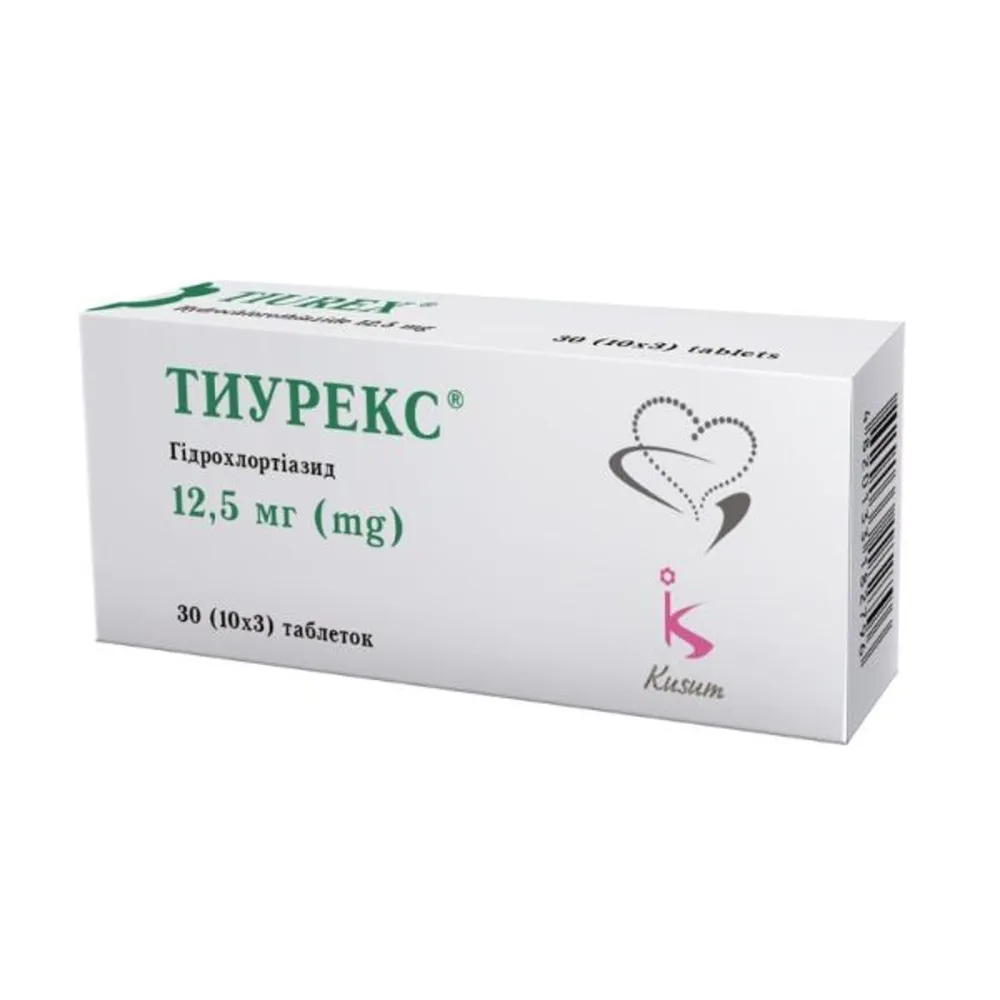
Table of Contents
INSTRUCTIONS FOR MEDICAL USE OF THE MEDICINAL PRODUCT TIUREX® (TIUREX®)
Composition:
active substance: hydrochlorothiazide;
1 tablet contains 12.5 mg or 25 mg or 50 mg of hydrochlorothiazide;
excipients: lactose monohydrate, microcrystalline cellulose, hydroxypropylcellulose, iron oxide red (E 172), iron oxide yellow (E 172), magnesium stearate.
Pharmaceutical form. Tablets.
Main physicochemical properties:
tablets of 12.5 mg, 25 mg: beige or light beige tablets, round, flat, with possible red specks, with a score on one side and smooth on the other side;
tablets of 50 mg: beige or light beige tablets, round, biconvex, with possible red specks, smooth on both sides.
Pharmacotherapeutic group. Diuretics of moderate activity, thiazide group. Simple thiazide diuretics. Hydrochlorothiazide. ATC code C03A A03.
Pharmacological Properties
Pharmacodynamics
Hydrochlorothiazide (HCTZ), the active substance of the medicinal product Thurex®, belongs to the group of benzothiadiazine (thiazide) diuretics, which enhance diuresis by increasing the excretion of electrolytes and osmotically bound water. HCTZ inhibits the reabsorption of Na+ ions primarily in the distal tubules of nephrons, thereby enabling up to 15% of the sodium filtered by the kidneys to be excreted. The amounts of excreted Cl- and Na+ ions are approximately equal. HCTZ also enhances the excretion of K+ ions by increasing their secretion in the distal tubules and collecting ducts of nephrons.
High doses of HCTZ may enhance bicarbonate excretion due to inhibition of carbonic anhydrase activity, resulting in urine alkalinization. Changes in urine pH do not significantly affect the diuretic and natriuretic effects of HCTZ. Glomerular filtration rate initially decreases slightly. With prolonged HCTZ therapy, hypercalcemia may develop due to reduced renal excretion of Ca2+ ions.
Arterial Hypertension
In patients with hypertensive disease, HCTZ demonstrates an antihypertensive effect, the mechanism of which is not yet fully understood. It is hypothesized that the effect of thiazide diuretics on reducing vascular tone is due to decreased sodium concentration in the vascular wall and, consequently, reduced responsiveness to norepinephrine. HCTZ is nearly ineffective in patients with chronic renal insufficiency (creatinine clearance below 30 mL/min and/or serum creatinine above 1.8 mg/100 mL). HCTZ exhibits an antidiuretic effect in patients with nephrogenic and ADH-sensitive diabetes insipidus. Depending on the administered dose, the diuretic effect of HCTZ may last for 10–12 hours, while the antihypertensive effect may persist up to 24 hours.
Non-melanoma skin cancer (NMSC)
Results from two pharmacoepidemiological studies, based on data from the Danish National Cancer Registry, demonstrated a cumulative dose-dependent association between HCTZ and the development of basal cell carcinoma (BCC) and squamous cell carcinoma (SCC). One study included a population of 71,533 patients with BCC and 8,629 patients with SCC, who were compared with 1,430,833 and 172,462 control subjects, respectively. The use of high cumulative doses of HCTZ (≥ 50,000 mg) was associated with an adjusted risk ratio (RR) of 1.29 (95% confidence interval (CI): 1.23–1.35) for BCC and 3.98 (95% CI: 3.68–4.31) for SCC. A clear cumulative dose-dependent association was observed for both BCC and SCC. Another study indicated a possible link between lip cancer (SCC) and HCTZ use: 633 cases of lip cancer (SCC) were compared with 63,067 control subjects using a random sampling strategy. A cumulative dose-dependent association was demonstrated with an adjusted RR of 2.1 (95% CI: 1.7–2.6), increasing to RR 3.9 (3.0–4.9) for high doses (~25,000 mg), and RR 7.7 (5.7–10.5) for the highest cumulative dose (~100,000 mg) (see section "Special Warnings and Precautions for Use").
Pharmacokinetics
Absorption
After oral administration, approximately 80% of HCTZ is absorbed from the gastrointestinal tract (GIT). Absolute bioavailability is approximately 70%. Maximum plasma concentration is reached within 2–5 hours.
Distribution
Plasma protein binding of HCTZ is 64%, and the apparent volume of distribution is 0.5–1.1 L/kg.
Elimination
In healthy volunteers, more than 95% of HCTZ is excreted unchanged by the kidneys. The elimination half-life under normal kidney function is 6–8 hours. In renal impairment, it is prolonged (up to 20 hours in patients with end-stage renal failure).
The diuretic effect begins within 1–2 hours.
Clinical characteristics
Indications
- Arterial hypertension.
- Edema of cardiac, hepatic, or renal origin.
- Hepatic-origin edema, usually in combination with potassium-sparing diuretics.
Contraindications
- Hypersensitivity to HCTZ, other thiazides, sulfonamides, or any other component of the medicinal product.
- Severe renal impairment (creatinine clearance less than 30 mL/min and/or serum creatinine above 1.8 mg/100 mL).
- Anuria.
- Acute glomerulonephritis.
- Hepatic coma or precoma.
- Refractory hypokalemia, hyponatremia, or hypercalcemia.
- Hypovolemia.
- Symptomatic hyperuricemia / gout.
- Arterial hypertension in pregnant women.
Interaction with other medicinal products and other forms of interaction
Other drugs enhancing the antihypertensive effect of HCTZ
The antihypertensive effect of HCTZ may be enhanced by other diuretics, antihypertensive agents, guanethidine, methyldopa, calcium antagonists, angiotensin-converting enzyme inhibitors (ACE inhibitors), angiotensin receptor blockers (ARBs), direct renin inhibitors, β-blockers, nitrates, barbiturates, phenothiazine derivatives, tricyclic antidepressants, vasodilators, and alcohol.
ACE inhibitors
In patients receiving HCTZ concomitantly with ACE inhibitors (e.g., captopril), there is a risk of sudden drop in blood pressure and impaired renal function at the beginning of therapy. To prevent possible arterial hypotension at the start of treatment, diuretic therapy should be discontinued 2–3 days prior to initiating ACE inhibitor therapy.
Acetylsalicylic acid and other nonsteroidal anti-inflammatory drugs (NSAIDs)
Salicylates and other NSAIDs (e.g., indomethacin) may reduce the antihypertensive and diuretic effects of HCTZ. When high doses of salicylates are administered, their toxic effects on the central nervous system may be enhanced. In patients who develop hypovolemia during HCTZ treatment, concomitant use of NSAIDs may lead to acute renal failure.
Allopurinol
Concomitant use of thiazides (including HCTZ) and allopurinol may increase the frequency of hypersensitivity reactions to allopurinol.
Amantadine
Concomitant use of thiazides and amantadine may increase the risk of amantadine-related adverse reactions.
β-blockers
There is an increased risk of hyperglycemia when HCTZ is used concomitantly with β-blockers.
Catecholamines, antidiabetic, and hyperuricemic agents
HCTZ may reduce the effects of norepinephrine, epinephrine, insulin, oral antidiabetic agents, and uricosuric drugs. Therefore, dosage adjustment of insulin or oral antidiabetic agents may be required.
Cardiac glycosides
Myocardial sensitivity to cardiac glycosides, and consequently the risk of related adverse reactions, increases in the presence of hypokalemia and/or hypomagnesemia resulting from their concomitant use with HCTZ.
Other drugs causing decreased plasma potassium levels
Concomitant use of HCTZ with loop diuretics (e.g., furosemide), glucocorticoids, adrenocorticotropic hormone (ACTH), carbenoxolone, penicillin G, salicylates, amphotericin B, antiarrhythmic agents, or laxatives may lead to enhanced potassium loss.
Antidepressants, antipsychotics, and antiepileptic drugs
Concomitant use of HCTZ with antidepressants, antipsychotics, or antiepileptic drugs may lead to hyponatremia due to enhanced sodium loss. Caution is advised during prolonged combined use of these drugs.
Cytostatics
Concomitant use of thiazide diuretics and cytostatic agents (e.g., cyclophosphamide, fluorouracil, methotrexate) may reduce renal excretion of cytostatics and consequently increase their myelotoxic effects (particularly increasing the risk of granulocytopenia).
Medicinal products affecting gastrointestinal motility
Anticholinergic drugs (e.g., atropine, biperiden) may increase the bioavailability of thiazide diuretics, probably due to reduced gastrointestinal motility and consequently delayed gastric emptying. Prokinetic agents (e.g., cisapride), on the contrary, may reduce the bioavailability of thiazide diuretics.
Lithium
Since diuretics increase lithium plasma levels (due to reduced renal clearance), concomitant use of HCTZ with lithium preparations may enhance their cardio- and neurotoxic effects. If use of this combination is necessary, lithium plasma levels must be monitored. Diuretics may exhibit a paradoxical antidiuretic effect in patients with polyuria caused by lithium therapy.
Curare-like muscle relaxants
HCTZ may potentiate or prolong the effect of curare-like muscle relaxants. The anesthesiologist should be informed about HCTZ use if its administration cannot be discontinued prior to the use of curare-like muscle relaxants.
Bile acid sequestrants
Absorption of HCTZ is reduced when administered simultaneously with cholestyramine or colestipol. HCTZ should be taken at least 4 hours before or 4–6 hours after administration of these agents.
Vitamin D
Concomitant use of HCTZ with vitamin D may reduce urinary calcium excretion and consequently lead to hypercalcemia.
Calcium salts
Hypercalcemia may occur when HCTZ is used concomitantly with calcium salts due to enhanced reabsorption of calcium in the renal tubules.
Cyclosporine
Concomitant use of HCTZ with cyclosporine may increase the risk of hyperuricemia (gout) and related complications.
Diazoxide
Thiazides may enhance the hyperglycemic effect of diazoxide.
Methyldopa
A case of hemolytic anemia has been reported due to antibodies against HCTZ formed as a result of its concomitant use with methyldopa.
Adrenergic amines
HCTZ may reduce the effect of adrenergic amines (e.g., norepinephrine). However, the clinical significance of this interaction does not justify withholding its use.
Special precautions for use
Pseudo-Bartter’s syndrome
Chronic abuse of HCTZ may lead to pseudo-Bartter’s syndrome, characterized by the development of edema due to increased renin concentration as a result of secondary hyperaldosteronism.
Water and electrolyte balance
Thiazide diuretics may cause or exacerbate hypokalemia. They should be used with caution in patients with conditions associated with significant potassium loss (e.g., salt-losing nephropathy or pre-renal (cardiogenic) renal insufficiency). Hypokalemia and possible hypomagnesemia should be corrected prior to initiating thiazide diuretic therapy. Serum potassium and magnesium levels should be monitored regularly. Electrolyte balance, particularly serum potassium levels, should be monitored in all patients receiving thiazide diuretics.
Potassium excretion during treatment with thiazide diuretics, including HCTZ, is dose-dependent. In long-term treatment, serum potassium levels should be checked before and 3–4 weeks after initiation of therapy. Thereafter, serum potassium levels should be monitored regularly, except in cases where other influencing factors are present (e.g., vomiting, diarrhea, changes in renal function).
Oral potassium supplements (e.g., KCl), administered in individually adjusted doses, may be used in patients receiving cardiac glycosides (see section "Interaction with other medicinal products and other forms of interaction"), those with signs of ischemic heart disease (if not concurrently receiving ACE inhibitors), those receiving high doses of β-agonists, and all patients with serum potassium concentration below 3.0 mmol/L. Combination of HCTZ with potassium-sparing diuretics may be considered in cases of intolerance to oral potassium supplements.
In any case, when combining therapy with potassium supplements, potassium balance should be maintained or normalized. HCTZ therapy should be discontinued if signs of hypokalemia occur (e.g., muscle weakness, paresis, or ECG changes).
Patients who are concurrently receiving ACE inhibitors, ARBs, or direct renin inhibitors should avoid concomitant treatment with HCTZ and potassium supplements or potassium-sparing diuretics.
Thiazide diuretics may cause or exacerbate existing hyponatremia. In patients with marked reduction in serum sodium levels and/or dehydration (e.g., individuals who have received high doses of diuretics), symptomatic hypotension may rarely occur after initiation of HCTZ therapy. Isolated cases of hyponatremia with neurological symptoms (nausea, progressive disorientation, apathy) have been reported. Thiazide diuretics should be administered only after correction of serum sodium levels and/or dehydration. Otherwise, treatment should be initiated under close medical supervision. Regular monitoring of serum sodium levels is recommended.
Monitoring of serum electrolytes is particularly indicated in patients with ascites due to liver cirrhosis or edema due to nephrotic syndrome. In cases of nephrotic syndrome, HCTZ should be used under strict control and only in patients with normal serum potassium levels, without signs of hypovolemia or marked hypoalbuminemia.
HCTZ, like other diuretics, may increase serum uric acid concentration due to reduced urinary excretion, thereby causing or exacerbating existing hyperuricemia, which may trigger gout attacks in predisposed patients.
Metabolic effects
Thiazide diuretics, including HCTZ, may alter glucose tolerance and may increase serum cholesterol and triglyceride concentrations.
Thiazide diuretics reduce calcium excretion in urine and may cause a slight increase in serum calcium levels in the absence of known metabolic disorders. Since HCTZ may increase serum calcium levels, it should be used with caution in patients with hypercalcemia. Marked hypercalcemia (≥12 mg/dL) or hypercalcemia that does not resolve after discontinuation of thiazides may indicate the presence of a thiazide-independent hypercalcemic process.
In several patients undergoing long-term thiazide therapy, pathological changes in the parathyroid glands have been observed, associated with hypercalcemia and hypophosphatemia. Further evaluation is required if hypercalcemia develops.
During HCTZ therapy, patients should consume adequate fluids and increase intake of potassium-rich foods (e.g., bananas, vegetables, nuts).
Patients with impaired renal function
HCTZ is contraindicated in patients with severe renal impairment (creatinine clearance less than 30 mL/min or serum creatinine concentration greater than 1.8 mg/100 mL), as it lacks diuretic effect and may further impair renal function. In patients with moderate renal impairment (creatinine clearance 30–60 mL/min or serum creatinine concentration greater than 1.0–1.8 mg/100 mL), HCTZ may cause thiazide-induced azotemia. Regular monitoring of serum potassium, creatinine, and uric acid concentrations is recommended in these patients. There is no experience with HCTZ use in patients after kidney transplantation.
Patients with impaired liver function
Patients with mild to moderate liver dysfunction do not require dose adjustment of HCTZ (see sections "Pharmacological properties" and "Dosage and administration"). The use of thiazides, as with other diuretics, for treatment of ascites due to liver cirrhosis may lead to electrolyte imbalance, hepatic encephalopathy, and hepatorenal syndrome. HCTZ should be used with particular caution in patients with severe liver dysfunction.
Acute respiratory toxicity
Very rare, severe cases of acute respiratory toxicity, including acute respiratory distress syndrome (ARDS), have been reported after HCTZ administration. Pulmonary edema usually develops within minutes or hours after HCTZ intake. Initial symptoms include dyspnea, fever, worsening of lung condition, and arterial hypotension. If ARDS is suspected, administration of the medicinal product Thurex® should be discontinued immediately and appropriate treatment initiated. The medicinal product Thurex® should not be prescribed to patients who previously experienced ARDS after HCTZ intake.
Choroidal effusion, acute myopia, and secondary acute glaucoma
HCTZ may cause an idiosyncratic reaction leading to choroidal effusion with visual field defects, acute transient myopia, and secondary acute angle-closure glaucoma. Symptoms are characterized by sudden onset of decreased visual acuity and/or eye pain and usually develop from several hours to several weeks after initiation of HCTZ therapy.
Untreated acute angle-closure glaucoma may lead to permanent vision loss. The primary therapeutic measure is prompt discontinuation of HCTZ. Subsequently, emergency medical or surgical treatment should be considered if intraocular pressure remains uncontrolled. A history of allergy to sulfonamides or penicillin may be a risk factor for the development of acute angle-closure glaucoma.
Non-melanoma skin cancer (NMSC)
An increased risk of NMSC with increasing cumulative dose of HCTZ was identified in two pharmacoepidemiological studies (see section "Pharmacological properties"). The photosensitizing effect of HCTZ may be the mechanism underlying this pathology.
Patients taking HCTZ alone or in combination with other medicinal products should be informed about the risk of developing NMSC (especially with long-term use), the need for regular skin examinations, and the necessity to promptly report any new or changing skin lesions/moles, as well as any suspicious skin neoplasms to their physician. To reduce the risk of skin cancer, patients should be advised to take preventive measures such as limiting exposure to sunlight and UV radiation, and, if exposure occurs, ensuring adequate skin protection. Suspicious skin lesions should be evaluated promptly, including histological examination of biopsy material. The appropriateness of HCTZ therapy should be reconsidered in patients with a history of NMSC (see section "Undesirable effects").
Particular caution and close monitoring are required in patients with:
- hypotension;
- cerebrovascular disorders;
- ischemic heart disease.
Cerebrovascular insufficiency and ischemic heart disease
HCTZ should be used in patients with cerebrovascular insufficiency and ischemic heart disease only under close supervision.
Combination with antihypertensive agents
The antihypertensive effect of ACE inhibitors, ARBs, or direct renin inhibitors is enhanced by agents that increase plasma renin activity (e.g., diuretics).
ACE inhibitors, ARBs, or direct renin inhibitors should be used with caution in combination with HCTZ, especially in patients with marked hyponatremia or dehydration.
Systemic lupus erythematosus
Cases of activation of latent systemic lupus erythematosus have been reported during treatment with thiazide diuretics.
Hypersensitivity reactions to HCTZ occur more frequently in patients with allergies and asthma.
Professional sports
HCTZ intake may result in a positive test during doping control in athletes.
Elderly patients (aged 65 years and older)
Renal function impairment may occur in elderly patients.
Excipients
The product contains lactose monohydrate. If intolerance to certain sugars is diagnosed, consultation with a physician is necessary before taking this medicinal product.
Use during pregnancy or breastfeeding
Pregnancy
Data on the use of HCTZ during pregnancy are limited, especially in the first trimester. Data from animal studies are insufficient. HCTZ crosses the placental barrier. Considering the pharmacological effects of HCTZ, it can be anticipated that its use during the second and third trimesters of pregnancy may reduce fetoplacental blood flow and cause effects in the fetus or newborn such as jaundice, electrolyte imbalance, and thrombocytopenia.
HCTZ should not be used in gestational edema or preeclampsia due to the risk of reducing plasma volume and placental hypoperfusion, which may adversely affect disease progression.
Breastfeeding period
HCTZ may pass into breast milk in small amounts. Thiazide diuretics in high doses, causing significant diuresis, may suppress lactation. Use of the medicinal product during breastfeeding is not recommended. If its use is absolutely necessary, breastfeeding should be discontinued.
Fertility
There are no data on the effect of HCTZ on fertility in humans. In animal studies, the drug did not affect fertility or the ability to conceive.
Ability to influence reaction speed when driving or operating machinery
Treatment of high blood pressure with HCTZ requires regular medical monitoring. The ability to drive or operate machinery may be impaired in cases of individual reactions. This particularly applies to the initial phase of treatment, dose increase of HCTZ, its replacement, and concomitant use with alcohol.
Dosage and Administration
The dosage of the drug is selected and adjusted individually by a physician. Tablets should be taken orally with water after meals. The daily dose may be divided into one or two administrations.
Arterial hypertension
The initial dose is 12.5 or 25 mg once daily. The maintenance dose is 12.5 mg once daily.
Before using the drug in combination with ACE inhibitors, ARBs, or direct renin inhibitors, hyponatremia or dehydration must be corrected. Otherwise, treatment should be initiated under strict medical supervision.
Edema of cardiac, hepatic, or renal origin
The initial dose is 25 or 50 mg daily. The maintenance dose is 25, 50, or 100 mg daily.
In case of impaired liver or kidney function, the drug should be dosed with caution. In patients with decompensated heart failure, drug absorption may be significantly reduced.
The duration of HCTZ therapy is not limited and depends on the type and severity of the disease. If long-term use of the drug is required, discontinuation should be gradual.
Special patient groups
Patients with impaired renal function
No adjustment of the initial dose is required in patients with mild to moderate renal impairment (see sections "Pharmacological properties" and "Special precautions"). The drug is contraindicated in patients with severe renal impairment (creatinine clearance < 30 mL/min) and anuria (see sections "Contraindications" and "Special precautions").
Patients with impaired hepatic function
No adjustment of the initial dose is required in patients with mild to moderate hepatic impairment (see sections "Pharmacokinetics" and "Special precautions"). Thiazides, like other diuretics, when used to treat ascites due to liver cirrhosis, may cause electrolyte imbalance, hepatic encephalopathy, and hepatorenal syndrome. The drug should be used with particular caution in patients with severe hepatic impairment (see section "Special precautions").
Children
The use of the drug in children is not recommended.
Overdose
Symptoms
The clinical picture of acute or chronic overdose of HCTZ depends on the degree of dehydration and electrolyte loss. With significant fluid and sodium loss, overdose may manifest as thirst, weakness, dizziness, vomiting, muscle pain, and muscle spasms (e.g., calf muscle cramps), headache, tachycardia, orthostatic hypotension caused by dehydration and hypovolemia, leading to hemoconcentration, seizures, somnolence, lethargy, confusion, vascular collapse, and acute renal failure. Electrolyte imbalance may lead to cardiac arrhythmias.
Hypokalemia may present as fatigue, muscle weakness, paresthesia, paralysis, apathy, bloating, constipation, or may lead to cardiac arrhythmias. Severe hypokalemia may result in paralytic ileus and impaired consciousness up to hypokalemic coma.
Treatment
If symptoms of overdose occur, the drug should be discontinued immediately. In all cases of drug overdose, general supportive measures should be implemented. Therapeutic interventions include restoration of fluid and electrolyte balance and, in case of vascular collapse, transfer to an intensive care unit and, if necessary, anti-shock therapy.
Adverse Reactions
The following classification is used to assess the frequency of adverse reactions: very common (≥ 1/10), common (≥ 1/100 to < 1/10), uncommon (≥ 1/1,000 to < 1/100), rare (≥ 1/10,000 to < 1/1,000), very rare (< 1/10,000), including isolated cases, and not known (cannot be estimated based on available data).
Metabolic and nutritional disorders:
Very common: hypokalaemia, hyperlipidaemia (especially with high-dose therapy).
Common: hyperuricaemia, hypomagnesaemia, hyponatraemia, decreased appetite.
Rare: hypercalcaemia, hyperglycaemia, glucosuria, exacerbation of metabolic syndrome.
Very rare: hypochloraemic alkalosis.
Skin and subcutaneous tissue disorders:
Common: skin rash, including urticaria.
Rare: photosensitization.
Very rare: systemic lupus erythematosus, lupus-like syndrome, reactivation of systemic lupus erythematosus, toxic epidermal necrolysis.
Gastrointestinal disorders:
Common: nausea, vomiting.
Rare: diarrhoea, abdominal discomfort, constipation.
Very rare: pancreatitis.
Hepatobiliary disorders:
Rare: intrahepatic cholestasis, jaundice.
Cardiovascular disorders:
Common: orthostatic hypotension, which may be exacerbated by alcohol consumption, analgesics, or sedatives.
Rare: cardiac arrhythmia.
Respiratory, thoracic and mediastinal disorders:
Very rare: acute respiratory distress syndrome (see section "Special precautions").
Nervous system disorders:
Rare: headache, dizziness, depression, paraesthesia.
Psychiatric disorders:
Rare: sleep disturbances.
Eye disorders:
Rare: blurred vision, particularly during the first weeks of therapy.
Frequency not known: choroidal effusion, acute angle-closure glaucoma (see section "Special precautions").
Blood and lymphatic system disorders:
Rare: thrombocytopenia, thrombocytopenic purpura.
Very rare: haemolytic anaemia, leucopenia, agranulocytosis, bone marrow suppression.
Reproductive system and breast disorders:
Common: erectile dysfunction.
Immune system disorders:
Very rare: necrotizing vasculitis, hypersensitivity reactions – respiratory distress syndrome, including pneumonitis and pulmonary oedema.
Benign, malignant and unspecified neoplasms (including cysts and polyps):
Frequency not known: non-melanoma skin cancer (BCC and SCC, see sections "Pharmacodynamics" and "Special precautions").
In the post-marketing period, the following adverse reactions have been reported with thiazide and thiazide-like diuretics: aplastic anaemia, angle-closure glaucoma, choroidal effusion, Stevens-Johnson syndrome, muscle cramps, acute renal failure, renal dysfunction, fever, asthenia, NMSC (BCC and SCC).
Description of selected adverse reactions
Cases of choroidal effusion associated with visual field defects have been reported after administration of thiazide and thiazide-like diuretics.
Non-melanoma skin cancer. Epidemiological data indicate a cumulative, dose-dependent association between hydrochlorothiazide use and the occurrence of non-melanoma skin cancer (see sections "Pharmacological properties" and "Special precautions").
Reporting of suspected adverse reactions
Reporting suspected adverse reactions after medicine authorization is important. It allows continued monitoring of the benefit-risk balance of the medicine. Healthcare professionals, pharmacists, patients, or their legal representatives are encouraged to report all suspected adverse reactions and lack of efficacy via the automated pharmacovigilance information system at: https://aisf.dec.gov.ua.
Shelf life
3 years.
Storage conditions
Store at temperatures not exceeding 25 °C.
Keep out of the reach and sight of children.
Packaging
10 tablets per blister. 3, 6 or 9 blisters per cardboard pack.
Prescription status
Prescription only.
Manufacturer
KUSUM PHARM LLC.
Manufacturer's address and location of operations
54 Skryabina Street, Sumy, Sumy region, 40020, Ukraine
or
Manufacturer
GLEDFARM LTD LLC.
Manufacturer's address and location of operations
54 Davydovskoho Hryhorii Street, Sumy, Sumy region, 40020, Ukraine