Ciprofloxacin
Ukraine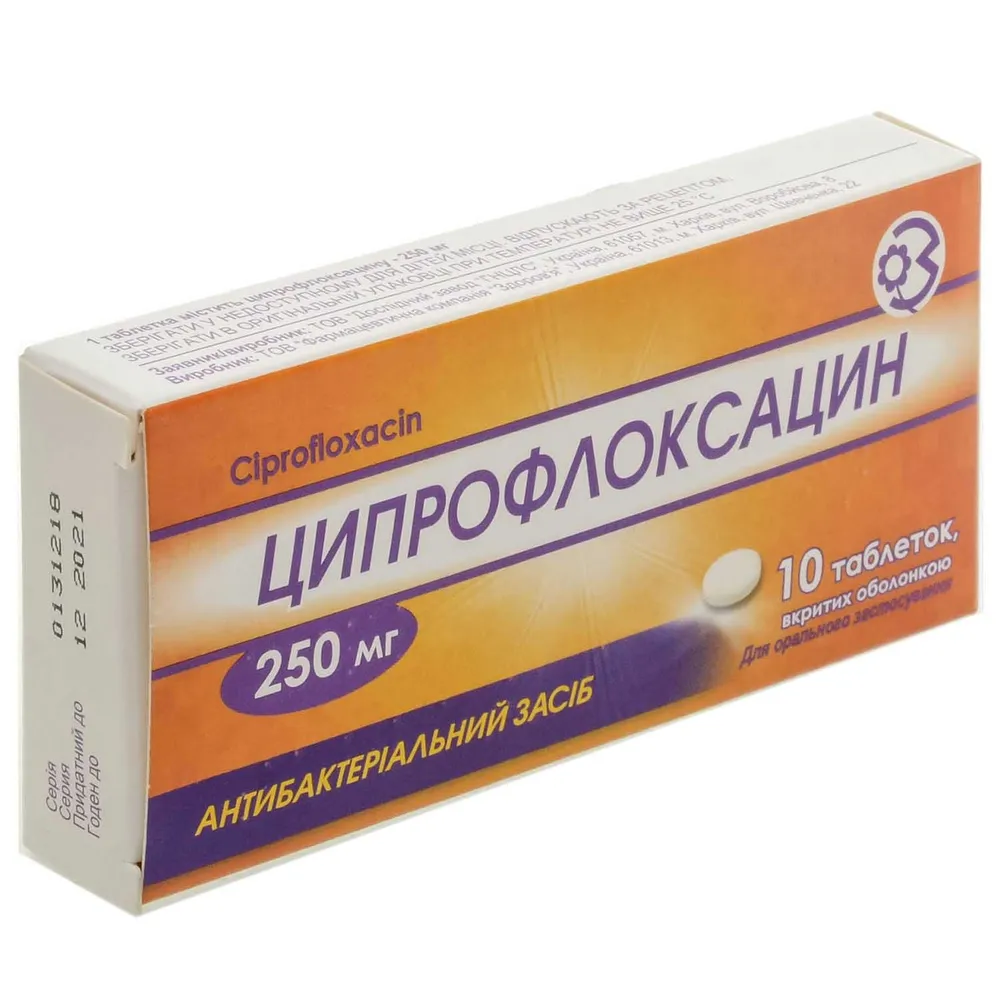
Table of Contents
INSTRUCTIONS FOR MEDICAL USE OF THE MEDICINAL PRODUCT CYPROFLOXACIN (CIPROFLOXACIN)
Composition:
Active substance: ciprofloxacin;
One tablet contains ciprofloxacin hydrochloride equivalent to ciprofloxacin
250 mg;
One tablet contains ciprofloxacin hydrochloride equivalent to ciprofloxacin
500 mg;
Excipients: microcrystalline cellulose, potato starch, maize starch, hypromellose (hydroxypropylmethylcellulose), talc, sodium croscarmellose, magnesium stearate, colloidal anhydrous silicon dioxide, polyethylene glycol 6000 (macrogol 6000), titanium dioxide (E 171), polysorbate 80.
Pharmaceutical form. Film-coated tablets.
Main physicochemical properties: round, film-coated tablets of white or white with a yellowish tinge; both upper and lower surfaces are convex. When broken and examined under a magnifying glass, the core surrounded by a single continuous layer is visible.
Pharmacotherapeutic group. Antibacterial agents for systemic use. Fluoroquinolone group. ATC code J01MA02.
Pharmacological properties.
Pharmacodynamics.
Ciprofloxacin is an antimicrobial agent of the fluoroquinolone group. The mechanism of action of ciprofloxacin is related to its effect on bacterial DNA gyrase (topoisomerase), an enzyme that plays a key role in bacterial DNA replication. Ciprofloxacin exerts a rapid bactericidal effect on microorganisms both in the resting state and during multiplication.
The drug's spectrum of activity includes the following gram-negative and gram-positive microorganisms: E. coli, Shigella, Salmonella, Citrobacter, Klebsiella, Enterobacter, Serratia, Hafnia, Edwardsiella, Proteus (indole-positive and indole-negative), Providencia, Morganella, Yersinia, Vibrio, Aeromonas, Plesiomonas, Pasteurella, Haemophilus, Campylobacter, Pseudomonas, Legionella, Neisseria, Moraxella, Branhamella, Acinetobacter, Brucella, Staphylococcus, Streptococcus agalactiae, Listeria, Corynebacterium, Chlamydia, as well as plasmid forms of bacteria. Variable sensitivity is exhibited by Gardnerella, Flavobacterium, Alcaligenes, Streptococcus pyogenes, Streptococcus pneumoniae, Streptococcus viridans, Mycoplasma hominis, Mycobacterium tuberculosis, Mycobacterium fortuitum. Anaerobes are moderately sensitive (Peptococcus, Peptostreptococcus) or resistant (Bacteroides), with some exceptions. Ciprofloxacin is effective against
bacteria producing β-lactamases. Ciprofloxacin is active against pathogens resistant to almost all antibiotics, sulfonamides, and nitrofuran derivatives. Most commonly resistant organisms include: Streptococcus faecium, Ureaplasma urealyticum, Nocardia asteroides, Treponema pallidum. Resistance to the drug develops slowly and gradually.
Pharmacokinetics.
Ciprofloxacin is rapidly and well absorbed after oral administration (bioavailability is 50–85%). Maximum plasma concentrations are reached within 60–90 minutes. The volume of distribution is 2–3 L/kg. Plasma protein binding is low (20–40%). Ciprofloxacin penetrates well into organs, tissues, and bones. Approximately 2 hours after oral administration, it is detected in tissues and body fluids at concentrations many times higher than its concentration in blood serum.
Ciprofloxacin is excreted from the body mainly in unchanged form: primarily via the kidneys (50–70%). The elimination half-life from plasma after oral administration ranges from 3 to 5 hours. A significant amount of the drug is also excreted with bile and feces (up to 30%), so only substantial impairment of renal function leads to delayed elimination.
Clinical characteristics.
Indications.
Ciprofloxacin is indicated for the treatment of the infections listed below (see sections "Special precautions for use" and "Pharmacological properties"). Prior to initiating therapy, careful consideration should be given to all available information regarding resistance to ciprofloxacin.
Official recommendations on the appropriate use of antibacterial agents should be taken into account.
Adults
- Lower respiratory tract infections caused by Gram-negative bacteria:
- community-acquired pneumonia.
- Exacerbations of chronic sinusitis, particularly when caused by Gram-negative bacteria*.
- Otitis media (chronic suppurative otitis media).
- Uncomplicated acute cystitis*.
- Acute pyelonephritis.
- Complicated urinary tract infections.
- Bacterial prostatitis.
- Gonococcal urethritis and cervicitis.
- Epididymo-orchitis, particularly caused by Neisseria gonorrhoeae.
- Pelvic inflammatory disease, particularly caused by Neisseria gonorrhoeae.
For the above-mentioned genital tract infections, when Neisseria gonorrhoeae is known or suspected as the causative agent, it is especially important to obtain local resistance data and confirm susceptibility by laboratory testing.
- Gastrointestinal tract infections (treatment of traveler's diarrhea).
- Intra-abdominal infections.
- Skin and soft tissue infections caused by Gram-negative bacteria.
- Bone and joint infections.
- Fever in neutropenic patients caused by bacterial infection.
- Inhalational anthrax (post-exposure prophylaxis and radical treatment).
*Only if it has been determined that other antibacterial agents normally used to treat this infection are ineffective or inappropriate.
Children and adolescents
- Bronchopulmonary infections caused by Pseudomonas aeruginosa in patients with cystic fibrosis. (In clinical trials, the age of children receiving treatment ranged from 5 to 17 years.)
- Complicated urinary tract infections and acute pyelonephritis. (In clinical trials, the age of children receiving treatment ranged from 1 to 17 years.)
- Inhalational anthrax (post-exposure prophylaxis and radical treatment).
Treatment should only be initiated by a physician experienced in managing cystic fibrosis and/or severe infections in children and adolescents (see sections "Special precautions for use" and "Pharmacological properties").
Contraindications. Hypersensitivity to ciprofloxacin or to other chemotherapeutic agents of the quinolone group and to any other components of the medicinal product; concomitant use with tizanidine due to clinically significant adverse effects (arterial hypotension, somnolence) associated with increased plasma concentration of tizanidine; glucose-6-phosphate dehydrogenase deficiency.
Interaction with other medicinal products and other forms of interaction.
Caution should be exercised when co-administering ciprofloxacin with class Ia or class III antiarrhythmics, tricyclic antidepressants, macrolides, and antipsychotics, as ciprofloxacin has an additive effect on QT interval prolongation (see section "Special precautions for use").
Chelate complex formation. Concomitant administration of ciprofloxacin (orally) with medicinal products containing polyvalent cations, mineral supplements (e.g., calcium, magnesium, aluminium, iron), phosphate-binding polymers (e.g., sevelamer, lanthanum carbonate), sucralfate or antacids, as well as with products with high buffering capacity (e.g., didanosine tablets) containing magnesium, aluminium or calcium, reduces the absorption of ciprofloxacin. Therefore, ciprofloxacin should be taken either 1–2 hours before or 4 hours after administration of these products.
This restriction does not apply to antacids belonging to the class of H2-receptor blockers.
Milk and other food products. Concomitant administration of ciprofloxacin with milk or mineral-enriched food products (e.g., milk, yoghurt, calcium-fortified orange juice) should be avoided. Other calcium-containing foods have little effect on ciprofloxacin absorption.
Probenecid. Probenecid slows the biliary excretion of ciprofloxacin. Concomitant administration of medicinal products containing probenecid and ciprofloxacin leads to increased plasma concentrations of ciprofloxacin. Probenecid affects renal secretion of ciprofloxacin.
Metoclopramide. Metoclopramide accelerates the absorption of ciprofloxacin (after oral administration), resulting in a shorter time to reach maximum plasma concentration. No effect on the bioavailability of ciprofloxacin has been observed.
Omeprazole. Concomitant administration of ciprofloxacin and medicinal products containing omeprazole results in a slight reduction in Cmax and the area under the concentration-time curve (AUC) of ciprofloxacin.
Tizanidine. Increased serum concentrations of tizanidine are associated with hypotensive and sedative adverse reactions. Therefore, concomitant administration of ciprofloxacin and medicinal products containing tizanidine is contraindicated (see section "Contraindications").
Theophylline. Concomitant administration of ciprofloxacin and medicinal products containing theophylline may lead to undesirable increases in the plasma concentration of theophylline, which may cause adverse reactions. In individual cases, such adverse reactions may be life-threatening or fatal. If concomitant administration of these agents cannot be avoided, serum theophylline concentrations should be monitored and the dose appropriately reduced (see section "Special precautions for use").
Other xanthine derivatives. After concomitant administration of ciprofloxacin and products containing caffeine or pentoxifylline (oxpentifylline), increased serum concentrations of these xanthines have been reported.
Methotrexate. Concomitant administration of ciprofloxacin may slow tubular transport (renal metabolism) of methotrexate, potentially leading to increased plasma concentrations of methotrexate. This may increase the risk of methotrexate-induced toxic adverse reactions. Concomitant administration of ciprofloxacin and methotrexate is not recommended.
Non-steroidal anti-inflammatory drugs (NSAIDs). Animal studies have shown that combined administration of very high doses of quinolones (gyrase inhibitors) and certain non-steroidal anti-inflammatory drugs (except acetylsalicylic acid) may provoke seizures.
Cyclosporine. Transient increases in serum creatinine concentration have been observed when ciprofloxacin and cyclosporine are administered concomitantly. Therefore, regular monitoring of serum creatinine concentration (twice weekly) is required in such patients.
Vitamin K antagonists. Concomitant administration of ciprofloxacin and vitamin K antagonists may enhance the anticoagulant effect of the latter. The degree of risk may vary depending on the type of infection, age, and general condition of the patient, making it difficult to precisely assess the impact of ciprofloxacin on the International Normalized Ratio (INR). Frequent monitoring of INR is required during and immediately after concomitant administration of ciprofloxacin and vitamin K antagonists (warfarin, acenocoumarol, phenprocoumon, or fluindione). Reports exist of increased activity of oral anticoagulants in patients receiving antibacterial agents, particularly fluoroquinolones.
Duloxetine. Despite the absence of clinical data, a potential interaction with ciprofloxacin may be anticipated when administered concomitantly (see section "Special precautions for use").
Ropinirole. Monitoring for adverse effects of ropinirole and appropriate dose adjustment is recommended during and immediately after co-administration with ciprofloxacin (see section "Special precautions for use").
Lidocaine. Studies in healthy volunteers have shown that concomitant administration of medicinal products containing lidocaine and ciprofloxacin, a moderate inhibitor of CYP450 1A2 isoenzyme, reduces the clearance of intravenously administered lidocaine by 22%. Although lidocaine is generally well tolerated, a certain interaction may occur after concomitant administration with ciprofloxacin, potentially accompanied by adverse reactions.
Clozapine. After concomitant administration of 250 mg ciprofloxacin with clozapine for 7 days, serum concentrations of clozapine and N-desmethylclozapine were increased by 29% and 31%, respectively. Clinical monitoring and appropriate dose adjustment of clozapine are recommended during and immediately after concomitant administration with ciprofloxacin (see section "Special precautions for use").
Sildenafil. Studies in healthy volunteers have shown that Cmax and AUC of sildenafil approximately double after oral administration of 50 mg sildenafil together with 500 mg ciprofloxacin. Ciprofloxacin should be prescribed concomitantly with sildenafil cautiously, with careful assessment of the risk-benefit ratio.
Phenytoin. Concomitant administration of ciprofloxacin and phenytoin may lead to increased or decreased serum phenytoin concentrations; therefore, monitoring of phenytoin levels is recommended.
Oral hypoglycemic agents. Hypoglycemia has been reported with concomitant administration of oral antidiabetic agents, particularly sulfonylureas (e.g., glyburide, glimepiride), likely due to potentiation of the effect of oral antidiabetic agents by ciprofloxacin (see section "Adverse reactions").
Special precautions for use.
The use of ciprofloxacin should be avoided in patients who have previously experienced serious adverse reactions to quinolones or fluorinated quinolone-containing drugs (see section "Adverse reactions"). Ciprofloxacin therapy in such patients should be initiated only when no alternative treatment options are available and after careful assessment of benefit/risk (see section "Contraindications").
The benefits of ciprofloxacin therapy, particularly in cases of mild infections, must be evaluated considering the information provided in this section.
Prolonged, disabling, and potentially irreversible serious adverse reactions.
In patients receiving quinolones and fluoroquinolones, regardless of age, very rare cases of prolonged (lasting for months or years), disabling, and potentially irreversible serious adverse reactions affecting various, sometimes multiple organ systems (musculoskeletal, nervous, psychiatric, and sensory organs) have been reported, along with associated risk factors.
Ciprofloxacin should be discontinued immediately at the first signs or symptoms of any serious adverse reaction, and patients should be advised to seek medical consultation.
Severe infections and/or infections caused by Gram-positive or anaerobic bacteria.
For the treatment of severe infections or infections caused by staphylococci or anaerobic bacteria, ciprofloxacin should be used in combination with appropriate antibacterial agents.
Pneumococci. Ciprofloxacin is not recommended for the treatment of pneumococcal infections due to insufficient efficacy against Streptococcus pneumoniae bacteria.
Urinary tract infections. Epididymitis and pelvic inflammatory diseases may be caused by fluoroquinolone-resistant Neisseria gonorrhoeae. Ciprofloxacin should be prescribed concurrently with other appropriate antibacterial agents, except in clinical situations excluding ciprofloxacin-resistant Neisseria gonorrhoeae strains. If there is no clinical improvement within 3 days, therapy should be re-evaluated.
Data on the efficacy of ciprofloxacin in treating postoperative intra-abdominal infections are limited.
Cardiac disorders. Ciprofloxacin has been associated with QT interval prolongation on electrocardiogram (see section "Adverse reactions"). Elderly patients may be more sensitive to the drug's effect on the QT interval. Ciprofloxacin should be used cautiously with concomitant medications that may cause QT interval prolongation (e.g., class Ia or III antiarrhythmics, tricyclic antidepressants, macrolides, antipsychotics), and in patients with risk factors for these conditions (e.g., history of QT prolongation, uncorrected hypokalemia).
Aortic aneurysm and dissection, and cardiac valve regurgitation/insufficiency
Epidemiological studies have reported an increased risk of aortic aneurysm and dissection, particularly in elderly patients, and regurgitation of aortic and mitral valves following fluoroquinolone use. Cases of aortic aneurysm and dissection, sometimes complicated by rupture (including fatal cases), and regurgitation/insufficiency of any heart valve have been reported in patients receiving fluoroquinolones (see section "Adverse reactions").
Therefore, fluoroquinolones should be used only after careful benefit/risk assessment and consideration of alternative therapeutic options in patients with a positive family history of aneurysm or congenital heart valve defects, or in patients with existing diagnoses of aneurysm and/or aortic dissection, or heart valve disease, or in the presence of other risk factors or predisposing conditions:
- for both aortic aneurysm and dissection, and cardiac valve regurgitation/insufficiency (e.g., connective tissue disorders such as Marfan syndrome or Ehlers-Danlos syndrome, Turner syndrome, Behçet’s disease, hypertension, rheumatoid arthritis), or additionally
- for aortic aneurysm and dissection (e.g., vascular disorders such as Takayasu arteritis or giant cell arteritis, or known atherosclerosis, or Sjögren’s syndrome), or additionally
- for cardiac valve regurgitation/insufficiency (e.g., infective endocarditis). The risk of aortic aneurysm and dissection and their rupture may be increased in patients concurrently receiving systemic corticosteroids.
In case of sudden abdominal, chest, or back pain, patients should immediately seek medical attention at an emergency department.
Patients should be advised to seek immediate medical help if acute shortness of breath, a new episode of palpitations, or development of abdominal or lower limb edema occurs.
Children and adolescents. Analysis of available safety data on ciprofloxacin use in children, most of whom had cystic fibrosis, did not provide evidence of cartilage or joint damage associated with treatment. Use of ciprofloxacin for other indications, apart from treatment of pulmonary complications caused by Pseudomonas aeruginosa in children with cystic fibrosis (aged 5–17 years), complicated urinary tract infections and pyelonephritis caused by E. coli (aged 1–17 years), and post-exposure anthrax, has not been studied. Clinical experience with ciprofloxacin use in children for other indications is limited.
Ciprofloxacin use in children and adolescents should be conducted in accordance with current official recommendations. Treatment with ciprofloxacin should be administered only by a physician experienced in managing children and adolescents with cystic fibrosis and/or severe infections.
Hypersensitivity to the drug. In some cases, hypersensitivity and allergic reactions may occur after the first dose of ciprofloxacin, and this should be immediately reported to the physician.
In rare cases, anaphylactic/anaphylactoid reactions may progress to life-threatening shock. Such reactions may occur after the first dose of ciprofloxacin. In such cases, ciprofloxacin administration must be discontinued and immediate medical treatment (anaphylactic shock management) initiated.
Gastrointestinal tract. If severe and persistent diarrhea occurs during or after treatment, the physician should be informed, as this symptom may mask a serious gastrointestinal condition (e.g., pseudomembranous colitis, which may be life-threatening with possible fatal outcome) requiring immediate treatment. In such cases, ciprofloxacin should be discontinued and appropriate therapy initiated (e.g., oral vancomycin 4×250 mg/day). Drugs that inhibit peristalsis are contraindicated.
Cases of Clostridium difficile-associated diarrhea, ranging in severity from mild diarrhea to fatal colitis, have been reported with the use of nearly all antibacterial agents, including ciprofloxacin. Antibacterial therapy alters the normal flora of the colon, leading to overgrowth of Clostridium difficile.
Clostridium difficile produces toxins A and B, which contribute to the development of antibiotic-associated diarrhea. Clostridium difficile may produce high levels of toxin, leading to increased morbidity and mortality due to possible resistance to antimicrobial therapy and the need for colectomy. Clostridium difficile-associated diarrhea should be considered in all patients with diarrhea following antibiotic use. A careful medication history is necessary, as Clostridium difficile-associated diarrhea may develop up to two months after antibiotic administration. If Clostridium difficile-associated diarrhea is suspected or confirmed, antibiotics not active against Clostridium difficile may need to be discontinued. Depending on clinical findings, correction of fluid and electrolyte imbalances, consideration of protein supplementation, and administration of antibiotics to which Clostridium difficile is sensitive should be performed. Surgical intervention may also become necessary.
Cases of liver necrosis and life-threatening hepatic failure have been reported with ciprofloxacin use. If any signs or symptoms of liver disease occur (such as anorexia, jaundice, dark urine, pruritus, or abdominal wall tension), treatment should be discontinued. Transient increases in transaminase and alkaline phosphatase levels, as well as cholestatic jaundice, may also occur, especially in patients with prior liver damage.
Musculoskeletal system. Generally, ciprofloxacin should not be used in patients with tendon disorders or a history of quinolone-related tendon disorders. Nevertheless, in rare cases, after microbiological testing and benefit/risk assessment, ciprofloxacin may be prescribed for the treatment of specific severe infections—particularly when standard therapy is ineffective or bacterial resistance is present—provided microbiological results justify its use. Tendinitis or tendon rupture (especially of the Achilles tendon), sometimes bilateral, may occur within the first 48 hours of treatment. The risk of tendinopathy may be increased in elderly patients or in patients concurrently receiving corticosteroids (see section "Adverse reactions"). If any signs of tendinitis (e.g., painful swelling, inflammation) occur, ciprofloxacin should be discontinued. The affected limb should be rested.
Nervous system. Patients with epilepsy or a history of central nervous system disorders (e.g., lowered seizure threshold, history of seizures, reduced cerebral blood flow, structural brain changes, or stroke) should receive ciprofloxacin only if the expected benefit outweighs the potential risk, as such patients are at higher risk for central nervous system adverse reactions.
In some cases, central nervous system adverse reactions may occur after the first dose of ciprofloxacin. In rare cases, depression or psychosis may progress to a life-threatening condition. In such cases, ciprofloxacin should be discontinued and the physician notified immediately.
Peripheral neuropathy
Cases of sensory or sensorimotor polyneuropathy, leading to paresthesia, hypoesthesia, dysesthesia, or weakness, have been observed in patients taking quinolones, including ciprofloxacin. Patients taking ciprofloxacin should be advised to inform their physician of any neuropathy symptoms such as pain, burning, tingling, numbness, or weakness before continuing treatment to prevent irreversible conditions (see section "Adverse reactions").
Skin and subcutaneous tissue. Ciprofloxacin has been shown to cause photosensitivity reactions; therefore, patients taking ciprofloxacin should avoid intense sunlight or ultraviolet radiation. If photosensitivity reactions (sunburn-like) occur, ciprofloxacin therapy should be discontinued.
Cytochrome P450. Ciprofloxacin is known to be a moderate inhibitor of the cytochrome P450 1A2 enzyme. Caution should be exercised when ciprofloxacin is used concomitantly with drugs metabolized via the same enzymatic pathway (e.g., theophylline, methylxanthines, caffeine, duloxetine, clozapine). Increased serum concentrations of these drugs due to inhibition of their metabolic clearance by ciprofloxacin may lead to specific adverse effects.
Blood glucose alterations.
As with all quinolones, cases of blood glucose alterations, including both hypoglycemia and hyperglycemia, have been reported, typically in diabetic patients receiving concomitant therapy with oral hypoglycemic agents (e.g., glyburide) or insulin. Cases of hypoglycemic coma have been reported. Blood glucose levels should be closely monitored in diabetic patients (see section "Adverse reactions").
Effect on laboratory test results. Ciprofloxacin in vitro may affect Mycobacterium spp. culture results by inhibiting mycobacterial growth, potentially leading to false-negative culture results in patients taking ciprofloxacin.
Ciprofloxacin should not be used as monotherapy for the treatment of severe infections caused by Gram-positive or anaerobic bacteria.
Traveler’s diarrhea.
When selecting ciprofloxacin, information on ciprofloxacin resistance of relevant microorganisms in the countries visited by the patient should be considered.
Bone and joint infections.
Ciprofloxacin should be used in combination with other antimicrobial agents based on microbiological test results.
Pulmonary anthrax.
Human use is based on in vitro susceptibility data, animal studies, and limited human data. The physician should follow national and/or international anthrax treatment protocols.
Ciprofloxacin should be used with caution in patients with myasthenia gravis.
Concomitant administration of ciprofloxacin and methotrexate is not recommended.
Bronchopulmonary infections in cystic fibrosis. Clinical trials included children and adolescents aged 5–17 years. Limited experience exists in treating children aged 1 to 5 years.
Complicated urinary tract infections and pyelonephritis. The possibility of treating urinary tract infections with ciprofloxacin should be considered when alternative treatments are not feasible. Treatment should be based on microbiological test results.
Tendinitis and tendon rupture.
Tendinitis and tendon rupture (not limited to the Achilles tendon), sometimes bilateral, may occur within 48 hours of starting fluoroquinolone or fluoroquinolone therapy, and even several months after discontinuation. The risk of tendinitis and tendon rupture is increased in elderly patients, patients with renal impairment, organ transplant recipients, and patients receiving concomitant corticosteroids. Therefore, concomitant use of corticosteroids should be avoided.
At the first signs of tendinitis (e.g., painful swelling, inflammation), treatment should be discontinued, and alternative therapy considered. The affected limb(s) should be appropriately managed (e.g., immobilization). Corticosteroids should not be used if signs of tendinopathy occur.
Kidneys and urinary system. Crystalluria associated with ciprofloxacin use has been reported. Patients taking ciprofloxacin should receive adequate fluid intake. Excessive urine alkalinity should be avoided.
Resistance. Resistant bacteria may be isolated during or after ciprofloxacin treatment, with or without clinically evident superinfection. There may be a certain risk of isolation of ciprofloxacin-resistant bacteria during prolonged treatment courses and in the treatment of hospital-acquired infections and/or infections caused by Staphylococcus and Pseudomonas species.
Use during pregnancy or breastfeeding.
Ciprofloxacin should not be used in pregnant women or in women who are breastfeeding, due to lack of experience with its use in these patient groups.
Based on animal studies, the possibility of joint cartilage damage in newborns cannot be completely ruled out, although teratogenic effects (malformations) have not been confirmed.
Breastfeeding period.
Ciprofloxacin passes into breast milk. Due to the potential risk of joint cartilage damage in newborns, ciprofloxacin should not be used during breastfeeding.
Ability to affect reaction speed when driving or operating machinery.
Even when taken exactly as directed by a physician, the drug may affect reaction speed, potentially impairing the ability to drive a car or operate machinery. This is particularly relevant when the drug is used concurrently with alcohol.
Method of administration and dosage.
The dosage should be determined according to the indication, severity and site of infection, susceptibility of the causative organism(s) to ciprofloxacin, patient's renal function, and in children and adolescents—according to body weight.
The duration of treatment depends on the severity of the disease, characteristics of the clinical presentation, and the type of causative organism.
Treatment of infections caused by certain bacteria (e.g., Pseudomonas aeruginosa, Acinetobacter, or Staphylococci) may require higher doses of ciprofloxacin and concomitant administration of other necessary antibacterial agents.
Treatment of certain infections (e.g., pelvic inflammatory disease, intra-abdominal infections, infections in neutropenic patients, bone and joint infections) may require concomitant administration of other necessary antibacterial agents depending on the type of pathogens identified.
Adults
| Indications |
Daily dose, mg |
Total duration of treatment (may include initial parenteral administration of ciprofloxacin) |
|
| Lower respiratory tract infections caused by gram-negative bacteria |
Community-acquired pneumonia |
From 500 mg twice daily to 750 mg twice daily |
7–14 days |
| Upper respiratory tract infections |
Exacerbation of chronic sinusitis, especially if caused by gram-negative bacteria |
From 500 mg twice daily to 750 mg twice daily |
7–14 days |
| Ear infections |
Chronic suppurative otitis media |
From 500 mg twice daily to 750 mg twice daily |
7–14 days |
| Urinary tract infections |
Uncomplicated acute cystitis |
From 250 mg twice daily to 500 mg twice daily |
3 days |
| Postmenopausal women may receive a single dose of 500 mg |
|||
| Complicated urinary tract infections |
500 mg twice daily |
7 days |
|
| Acute pyelonephritis |
From 500 mg twice daily to 750 mg twice daily |
At least 10 days; in certain special clinical cases (such as abscesses), treatment may be extended beyond 21 days |
|
| Bacterial prostatitis |
From 500 mg twice daily to 750 mg twice daily |
2 to 4 weeks (acute) and 4 to 6 weeks (chronic) |
|
| Genital infections |
Gonococcal urethritis and cervicitis |
Single dose |
1 day (single dose) |
| Orchiepididymitis, particularly caused by Neisseria gonorrhoeae |
From 500 mg twice daily to 750 mg twice daily |
At least 14 days |
|
| Pelvic inflammatory disease, particularly caused by Neisseria gonorrhoeae |
From 500 mg twice daily to 750 mg twice daily |
At least 14 days |
|
| Gastrointestinal and intra-abdominal infections |
Diarrhea caused by bacterial pathogens, including Shigella spp., except Shigella dysenteriae type 1, and severe traveler's diarrhea as empirical treatment |
500 mg twice daily |
1 day |
| Diarrhea caused by Shigella dysenteriae, type 1 |
500 mg twice daily |
5 days |
|
| Diarrhea caused by Vibrio cholerae |
500 mg twice daily |
3 days |
|
| Typhoid fever |
500 mg twice daily |
7 days |
|
| Intra-abdominal infections caused by gram-negative bacteria |
500 mg twice daily to 750 mg twice daily |
5 to 14 days |
|
| Skin and soft tissue infections caused by gram-negative bacteria |
From 500 mg twice daily to 750 mg twice daily |
7 to 14 days |
|
| Bone and joint infections |
From 500 mg twice daily to 750 mg twice daily |
Up to 3 months |
|
| Febrile neutropenia caused by bacterial infection. |
From 500 mg twice daily to 750 mg twice daily |
Treatment should continue throughout the period of neutropenia |
|
| Post-exposure prophylaxis and radical treatment of pulmonary anthrax in individuals who can receive oral therapy, if clinically indicated. Treatment should be initiated as soon as possible after suspected or confirmed exposure |
500 mg twice daily |
60 days from the date of confirmed exposure to Bacillus anthracis |
|
Children and adolescents
| Indications |
Daily dose, mg |
Total duration of treatment (may include initial parenteral administration of ciprofloxacin) |
| Respiratory tract infections caused by Pseudomonas aeruginosa in patients with cystic fibrosis |
20 mg/kg body weight twice daily, up to a maximum dose of 750 mg |
10 to 14 days |
| Complicated urinary tract infections and acute pyelonephritis |
From 10 mg/kg body weight twice daily up to 20 mg/kg body weight twice daily, with a maximum dose of 750 mg |
10 to 21 days |
| Post-exposure prophylaxis and treatment of inhalational anthrax in patients who can be treated orally, if clinically indicated. Treatment should be initiated as soon as possible after suspected or confirmed exposure. |
10–15 mg/kg body weight twice daily; maximum single dose 500 mg |
60 days from the date of confirmed exposure to Bacillus anthracis |
Geriatric patients
Geriatric patients should receive a dose selected according to the severity of infection and the patient's creatinine clearance.
Renal and hepatic impairment
Recommended initial and maintenance doses for patients with impaired renal function:
| Creatinine clearance [ml/min/1.73 m2] |
Serum creatinine [µmol/L] |
Oral dose [mg] |
| > 60 |
< 124 |
See usual dosage |
| 30–60 |
124–168 |
250–500 mg every 12 hours |
| < 30 |
>169 |
250–500 mg every 24 hours |
| Patients on hemodialysis |
>169 |
250–500 mg every 24 hours (after dialysis) |
| Patients on peritoneal dialysis |
>169 |
250–500 mg every 24 hours |
In patients with hepatic insufficiency, no dosage adjustment of ciprofloxacin is required.
Studies on ciprofloxacin dosing in children with impaired renal and/or hepatic function have not been conducted.
Method of administration
Tablets should be swallowed whole with liquid without chewing. They can be taken independently of food intake. When administered on an empty stomach, the active substance is absorbed more rapidly. Ciprofloxacin tablets must not be taken together with dairy products (e.g. milk, yoghurt) or fruit juices fortified with minerals (e.g. orange juice enriched with calcium) (see section "Interaction with other medicinal products and other forms of interaction").
In severe cases or when the patient is unable to take tablets (e.g. during enteral nutrition), initiation of ciprofloxacin therapy by intravenous route is recommended until transition to oral administration becomes feasible.
Children.
Ciprofloxacin may be used in children as a second- or third-line agent for the treatment of complicated urinary tract infections and pyelonephritis caused by Escherichia coli, as well as for the treatment of pulmonary exacerbations caused by Pseudomonas aeruginosa in children with cystic fibrosis.
Ciprofloxacin therapy should be prescribed only after careful assessment of the benefit-risk ratio due to the potential risk of developing adverse effects affecting joints and/or adjacent tissues.
Clinical experience with the use of ciprofloxacin in children for other indications is limited.
Overdose.
Following overdose by oral administration, reversible toxic effects on renal parenchyma have been observed in some cases. Therefore, in the event of overdose, in addition to standard measures (gastric lavage, emetics, administration of large amounts of fluid, acidification of urine), monitoring of renal function and administration of antacids containing magnesium and calcium, which reduce ciprofloxacin absorption, are recommended. Only a small amount of ciprofloxacin (< 10%) is removed by hemodialysis or peritoneal dialysis.
Cases of overdose with a dose of 12 g have been reported to cause symptoms of moderate toxicity. Acute overdose with a dose of 16 g led to the development of acute renal failure.
Symptoms of overdose included dizziness, tremor, headache, fatigue, seizures, hallucinations, confusion, abdominal discomfort, renal and hepatic failure, as well as crystalluria and hematuria.
Adverse reactions.
Infections and infestations: fungal superinfections (cutaneous candidiasis; oral, gastrointestinal, vaginal candidiasis), antibiotic-associated colitis (very rare – with possible fatal outcome).
Blood and lymphatic system disorders: eosinophilia, leukopenia, anemia, neutropenia, leukocytosis, thrombocytopenia, thrombocytosis, hemolytic anemia, agranulocytosis, pancytopenia (life-threatening), bone marrow suppression (life-threatening), lymphadenopathy, methemoglobinemia, increased monocyte count.
Immune system disorders: allergic reactions, allergic/angioneurotic edema, anaphylactic reactions, anaphylactic shock (life-threatening), serum sickness-like reactions.
Psychiatric disorders*: psychomotor agitation/anxiety, confusion and disorientation, abnormal dreams, depression, hallucinations, psychotic reactions, behavioral disturbances, suicidal thoughts, suicide attempt, manic reaction, phobia, depersonalization.
Nervous system disorders*: headache, migraine, dizziness, somnolence, sleep disorders, insomnia, lethargy, intracranial hypertension, weakness, coordination disturbances, disturbances of smell or taste, paresthesia, dysesthesia, hypoesthesia, hyperesthesia, tremor, seizures, peripheral neuropathy and polyneuropathy.
Aural and vestibular disorders*: hearing disturbances, tinnitus, hearing loss.
Eye disorders*: visual disturbances, color vision disturbances, decreased visual acuity, diplopia, eye pain, nystagmus.
Cardiac disorders**: tachycardia, QT interval prolongation, ventricular arrhythmia, torsades de pointes (these reactions were observed predominantly in patients with additional risk factors for QT prolongation (see section "Special precautions")), atrial flutter, angina pectoris, myocardial infarction, palpitations, cardiac arrest.
Vascular disorders**: vasodilation, hypotension, syncope, hypertension, vasculitis, hemorrhagic diathesis, cerebral vessel thrombosis, phlebitis.
Respiratory, thoracic and mediastinal disorders: dyspnea (including asthmatic states), epistaxis, hemoptysis, bronchospasm, pulmonary or laryngeal edema, hiccup, pulmonary embolism.
Gastrointestinal disorders: dyspeptic disorders, flatulence, anorexia, dysphagia, nausea, vomiting, diarrhea, abdominal pain, pancreatitis, oral mucosal pain, intestinal perforation, gastrointestinal bleeding.
Hepatobiliary disorders: increased levels of transaminases and bilirubin, liver function disturbances, jaundice, hepatitis (non-infectious), liver necrosis (very rare – progressing to life-threatening liver failure).
Skin and subcutaneous tissue disorders: rash, urticaria, pruritus, photosensitivity reactions, appearance of nonspecific blisters, petechiae, erythema, erythema multiforme, nodular erythema, Stevens-Johnson syndrome (potentially life-threatening), toxic epidermal necrolysis (potentially life-threatening), acute generalized exanthematous pustulosis, exfoliative dermatitis; drug rash with eosinophilia and systemic symptoms (DRESS).
Musculoskeletal and connective tissue disorders*: arthralgia, myalgia, arthritis, increased muscle tone and muscle cramps, muscle weakness, tendonitis, tendon ruptures (mainly Achilles tendons), exacerbation of myasthenia symptoms, musculoskeletal pain (limb pain, back pain, chest pain).
Renal and urinary disorders: micturition disturbances, renal function disturbances, renal failure, polyuria, hematuria, cylindruria, crystalluria, tubulointerstitial nephritis, urethral bleeding.
Endocrine disorders: syndrome of inappropriate antidiuretic hormone secretion (SIADH), episodes of hypoglycemic coma.
General disorders*: nonspecific pain syndrome, malaise, fever, edema, increased sweating (hyperhidrosis), hyperpigmentation, gait disturbances, gout exacerbation, vaginitis, breast pain.
Investigations: increased levels of: alkaline phosphatase, amylase, lipase, triglycerides, gamma-glutamyl transferase (GGT), uric acid; hyperglycemia, hypoglycemia, hyperkalemia, deviations from normal prothrombin levels, increased international normalized ratio (INR) in patients taking vitamin K antagonists, acidosis, changes in prothrombin time.
*In very rare cases, patients receiving quinolones and fluoroquinolones, regardless of the presence of risk factors, have experienced prolonged (lasting several months or years), disabling and potentially irreversible serious adverse reactions affecting various organ systems, including sensory organs. Such reactions include tendonitis, tendon rupture, arthralgia, limb pain, gait disturbances, neuropathies manifesting as paresthesia and neuralgia, fatigue, psychiatric disorders (including sleep disturbances, anxiety, panic attacks, depression, and suicidal thoughts), memory and concentration impairment, disturbances of hearing, vision, taste, and smell.
**In patients receiving fluoroquinolones, cases of aneurysm and aortic dissection have been reported, sometimes complicated by rupture (including fatal cases), and regurgitation/insufficiency of any cardiac valve (see section "Special precautions").
The following adverse reactions occur more frequently in subgroups of patients treated with the drug intravenously or sequentially (intravenous followed by oral administration): vomiting, transient increase in transaminase activity, rash; thrombocytopenia, thrombocytosis, confusion and disorientation, hallucinations, paresthesia and dysesthesia, seizures, dizziness, visual disturbances, hearing loss, tachycardia, vasodilation, arterial hypotension, transient liver failure, jaundice, renal failure, edema; pancytopenia, bone marrow suppression, anaphylactic shock, psychotic reactions, migraine, disturbances of smell, disturbances of hearing, vasculitis, pancreatitis, liver necrosis, petechiae, tendon rupture.
Shelf life. 3 years.
Storage conditions.
Store in the original packaging at a temperature not exceeding 25°C.
Keep out of reach of children.
Packaging.
Tablets, coated, 250 mg.
10 tablets in a blister; 1 blister in a cardboard pack;
10 tablets in a blister; 90 blisters in a cardboard box.
Tablets, coated, 500 mg.
10 tablets in a blister; 1 blister in a cardboard pack;
2 tablets in a blister; 70 blisters in a cardboard box;
10 tablets in a blister; 70 blisters in a cardboard box.
Prescription status.
By prescription only.
Manufacturer.
JSC "Tekhnolohiya".
Manufacturer's address.
8 Staroprizhna Street, Uman, Cherkasy region, 20300, Ukraine.