Cefutil®
Ukraine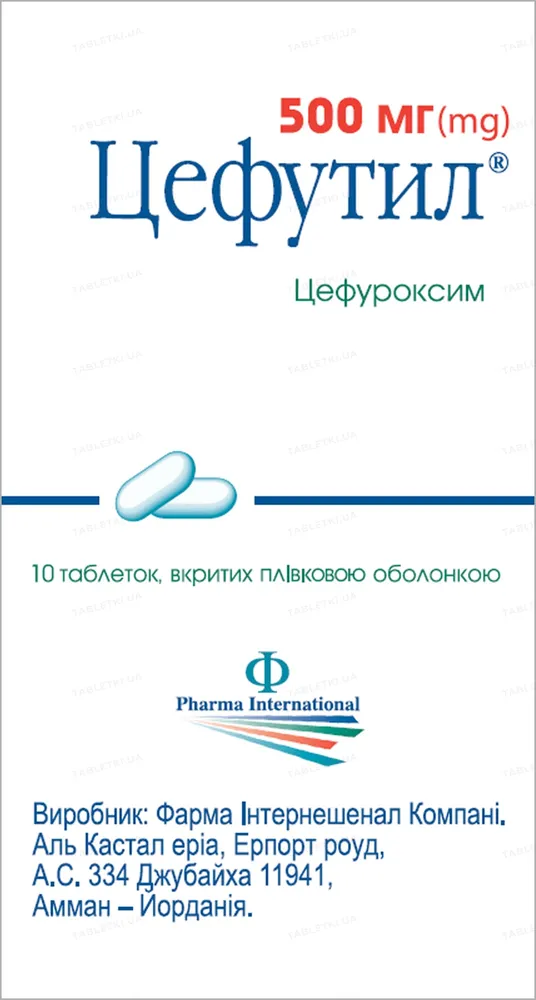
Table of Contents
INSTRUCTIONS FOR MEDICAL USE OF THE MEDICINAL PRODUCT Cefutil® (Cefutil®)
Composition:
Active substance: cefuroxime;
1 tablet contains cefuroxime (as axetil) 250 mg, 500 mg;
Excipients: microcrystalline cellulose, sodium croscarmellose, sodium starch glycolate (type A), sodium lauryl sulfate, colloidal anhydrous silicon dioxide, magnesium stearate, Opadry OY-L white*, FD&C Blue No. 1 (E 133) coloring agent, polyethylene glycol 6000;
*- Composition of Opadry OY-L white: lactose monohydrate; titanium dioxide (E 171); hypromellose; polyethylene glycol.
Pharmaceutical form. Film-coated tablets.
Main physico-chemical properties: oval, biconvex film-coated tablets of blue color, with the imprint «PhI» on one side.
Pharmacotherapeutic group. Antibacterials for systemic use. Other beta-lactam antibiotics. Second-generation cephalosporins. ATC code J01D C02.
Pharmacological properties.
Pharmacodynamics.
Cefuroxime axetil is an oral form of the bactericidal cephalosporin antibiotic cefuroxime, which is resistant to the action of most beta-lactamases and exhibits activity against a broad spectrum of Gram-positive and Gram-negative microorganisms.
The bactericidal effect of cefuroxime results from inhibition of microbial cell wall synthesis.
Cefuroxime has high activity against the following microorganisms:
Gram-negative aerobes:
Haemophilus influenzae (including ampicillin-resistant strains), Haemophilus parainfluenzae, Moraxella (Branhamella) catarrhalis, Neisseria gonorrhoeae (including penicillinase-producing and non-penicillinase-producing strains), Escherichia coli, Klebsiella spp., Proteus mirabilis, Providencia spp., Proteus rettgeri;
Gram-positive aerobes:
Staphylococcus aureus and Staphylococcus epidermidis (including penicillinase-producing strains, but excluding methicillin-resistant strains), Streptococcus pyogenes (and other beta-hemolytic streptococci), Streptococcus pneumoniae, Streptococcus group B (Streptococcus agalactiae);
Anaerobes:
Gram-positive and Gram-negative cocci (including species of Peptococcus and Peptostreptococcus), Gram-positive bacilli (including species of Clostridium), and Gram-negative bacilli (including species of Bacteroides and Fusobacterium), Propionibacterium spp.;
Other microorganisms:
Borrelia burgdorferi;
Microorganisms insensitive to cefuroxime:
Clostridium difficile, Pseudomonas spp., Campylobacter spp., Acinetobacter calcoaceticus, Listeria monocytogenes, methicillin-resistant strains of Staphylococcus aureus and Staphylococcus epidermidis, Legionella spp.;
Some strains of the following microorganisms are insensitive to cefuroxime:
Enterococcus (Streptococcus) faecalis, Morganella morganii, Proteus vulgaris, Enterobacter spp., Citrobacter spp., Serratia spp., Bacteroides fragilis.
Pharmacokinetics.
After oral administration, cefuroxime axetil is absorbed in the intestine, hydrolyzed in the intestinal mucosa, and enters the systemic circulation as cefuroxime.
Optimal absorption occurs when the drug is taken immediately after a meal. Maximum serum concentration of cefuroxime is reached approximately 2–3 hours after administration. The elimination half-life of the drug is approximately 1–1.5 hours. Protein binding ranges from 33% to 55%, depending on the method of determination. Cefuroxime is excreted unchanged by the kidneys via tubular secretion and glomerular filtration.
Concomitant administration of probenecid increases the area under the serum concentration-time curve by 50%.
Serum levels of cefuroxime are reduced by dialysis.
Clinical characteristics.
Indications.
Cefutyl® is indicated for the treatment of the following infections:
- Acute streptococcal tonsillitis and pharyngitis.
- Acute bacterial sinusitis.
- Acute otitis media.
- Exacerbations of chronic bronchitis caused by pathogens sensitive to cefuroxime axetil.
- Cystitis.
- Pyelonephritis.
- Uncomplicated skin and soft tissue infections.
- Early manifestations of Lyme disease.
Contraindications.
Hypersensitivity to cephalosporin antibiotics, cefuroxime, or any component of the drug. History of severe hypersensitivity reactions (e.g., anaphylactic reactions) to any other type of beta-lactam antibiotics (penicillins, monobactams, and carbapenems).
Interaction with other medicinal products and other forms of interaction.
Agents that reduce gastric acidity may decrease the bioavailability of Cefutyl® and may eliminate the enhanced absorption effect observed after food intake.
Like other antibiotics, Cefutyl® may affect intestinal flora, leading to reduced reabsorption of estrogens and decreased efficacy of combined oral contraceptives.
Since pseudonegative results may occur with the ferricyanide test, glucose levels in blood and plasma of patients receiving cefuroxime axetil should be determined using glucose oxidase or hexokinase methods. Cefuroxime does not interfere with the alkaline picrate method for creatinine determination.
Concomitant administration with probenecid leads to a significant reduction in maximum concentration, area under the serum concentration-time curve, and half-life of cefuroxime. Therefore, concomitant use with probenecid is not recommended.
Concomitant use with oral anticoagulants may lead to an increased international normalized ratio (INR).
Serum cefuroxime levels are reduced by dialysis.
Positive Coombs' test has been reported during treatment with cephalosporins. This phenomenon may affect cross-matching tests for blood compatibility.
Special precautions for use.
Hypersensitivity reactions
Particular caution is required in patients with a history of allergic reactions to penicillins or other beta-lactam antibiotics due to the risk of cross-sensitivity. As with all beta-lactam antimicrobial agents, serious and occasionally fatal hypersensitivity reactions have been reported. Hypersensitivity reactions progressing to Kounis syndrome – acute allergic coronary artery spasm that may lead to myocardial infarction – have been reported (see section "Adverse reactions"). In the event of severe hypersensitivity reactions, treatment with cefuroxime should be discontinued immediately and appropriate emergency medical measures should be initiated.
Prior to initiating therapy, it is essential to determine whether the patient has previously experienced severe hypersensitivity reactions to cefuroxime, other cephalosporins, or other types of beta-lactam agents. Cefuroxime should be administered cautiously in patients with a history of mild hypersensitivity reactions to other beta-lactam medicinal products.
Severe cutaneous adverse reactions (SCARs)
Severe cutaneous adverse reactions, including Stevens-Johnson syndrome (SJS), toxic epidermal necrolysis (TEN), and DRESS syndrome, which may be life-threatening or fatal, have been reported during cefuroxime treatment (see section "Adverse reactions").
Patients should be informed about the signs and symptoms of these reactions, and careful monitoring for skin reactions is required during treatment. If signs or symptoms suggestive of these reactions occur, cefuroxime should be discontinued immediately and alternative therapy considered. Re-administration of cefuroxime is contraindicated in patients who have experienced a serious reaction such as SJS, TEN, or DRESS syndrome.
The use of cefuroxime axetil (as with other antibiotics) may result in overgrowth of Candida. Prolonged treatment may also lead to overgrowth of other non-susceptible microorganisms (e.g., Enterococci, Clostridium difficile), which may necessitate discontinuation of therapy.
Antibiotic-associated pseudomembranous colitis, ranging from mild to life-threatening, may occur during antibiotic therapy. Therefore, this possibility should be considered if patients develop severe diarrhea during or after antibacterial treatment. If prolonged or pronounced diarrhea occurs, or if the patient experiences sudden colicky abdominal pain, treatment should be discontinued immediately and the patient should undergo thorough evaluation.
Jarisch-Herxheimer reaction has been observed during treatment with Cefutyl® in Lyme disease, which occurs as a direct result of the bactericidal action of the drug on Borrelia burgdorferi, the spirochete causing Lyme disease. Patients should be informed that this is a common consequence of antibiotic therapy for Lyme disease and resolves without specific treatment.
In sequential therapy, the timing of transition from parenteral to oral therapy depends on the severity of infection, the patient's clinical condition, and the susceptibility of the causative microorganism. Parenteral therapy should be continued if there is no clinical improvement within 72 hours. Prior to initiating sequential therapy, the relevant Instructions for Medical Use of cefuroxime sodium should be consulted.
Cefutyl® contains lactose; therefore, patients with known sugar intolerances should consult their physician before taking this medicinal product.
Use during pregnancy or breastfeeding.
Pregnancy
Limited data are available on the use of cefuroxime in pregnant women. Cefutyl® should be administered during pregnancy only if the potential benefit justifies the potential risk to the fetus.
Breastfeeding period
Cefuroxime is excreted in breast milk in small amounts. Adverse reactions in the nursing infant are not expected with therapeutic doses, but the risk of diarrhea or fungal mucosal infections cannot be excluded. Therefore, these reactions may necessitate discontinuation of breastfeeding. The potential sensitizing effect of the drug should also be considered. Cefuroxime may be used during breastfeeding only after careful assessment by the physician of the benefit-risk ratio.
Fertility
There are no data on the effect of cefuroxime axetil on fertility in humans. Reproductive studies in animals have not shown any effect of this medicinal product on fertility.
Ability to affect reaction speed when driving or operating machinery.
Since the drug may cause dizziness, patients should be advised to exercise caution when driving or operating machinery.
Dosage and administration.
Sensitivity to antibiotics varies depending on the region and may change over time. Local data on antibiotic sensitivity should be consulted when necessary.
The usual duration of treatment is 7 days (may range from 5 to 10 days).
To ensure optimal absorption, the drug should be taken after food.
Dosage for adults and children according to the type of infection is provided in Tables 1 and 2.
Adults and children (≥ 40 kg) Table 1
| Indications |
Dosage |
| Acute tonsillitis and pharyngitis, acute bacterial sinusitis |
250 mg twice daily |
| Acute otitis media |
500 mg twice daily |
| Exacerbation of chronic bronchitis |
500 mg twice daily |
| Cystitis |
250 mg twice daily |
| Pyelonephritis |
250 mg twice daily |
| Uncomplicated skin and soft tissue infections |
250 mg twice daily |
| Lyme disease |
500 mg twice daily for 14 days (treatment may last from 10 to 21 days) |
Children (< 40 kg) Table 2
| Indications |
Dosage |
| Acute tonsillitis and pharyngitis, acute bacterial sinusitis |
10 mg/kg twice daily, maximum dose – 125* mg twice daily |
| Children aged 2 years and older with otitis media or, if necessary, more severe infections |
15 mg/kg twice daily, maximum dose – 250 mg twice daily |
| Cystitis |
15 mg/kg twice daily, maximum dose – 250 mg twice daily |
| Pyelonephritis |
15 mg/kg twice daily, maximum dose – 250 mg twice daily for 10–14 days |
| Uncomplicated skin and soft tissue infections |
15 mg/kg twice daily, maximum dose – 250 mg twice daily |
| Lyme disease |
15 mg/kg twice daily, maximum dose – 250 mg twice daily for 14 days (from 10 to 21 days) |
*Administer the cefuroxime preparation in the appropriate dosage.
Cefutyl® tablets cannot be divided and therefore should not be prescribed to patients who are unable to swallow them. For children, it is recommended to prescribe the preparation in the form of a suspension.
Cefuroxime is also available as a sodium salt for parenteral administration. This allows sequential therapy with a single antibiotic when switching from parenteral to oral administration, if clinically indicated.
Cefutyl® is effective for sequential treatment of acute exacerbations of chronic bronchitis following prior parenteral administration of cefuroxime sodium.
Sequential therapy
Acute exacerbations of chronic bronchitis: 750 mg cefuroxime 2–3 times daily (intravenously or intramuscularly) for 48–72 hours, followed by oral administration of Cefutyl® 500 mg twice daily for 5–10 days.
The duration of both parenteral and oral treatment should be determined according to the severity of infection and the patient's clinical condition.
Patients with renal impairment
Cefuroxime is primarily eliminated via the kidneys. In patients with significantly impaired renal function, the dose of cefuroxime should be reduced to compensate for its slower excretion (see Table 3).
Table 3
| Creatinine clearance mL/min |
T1/2 (hours) |
Recommended dosage |
| ≥30 |
1.4–2.4 |
Dose adjustment not required (use standard dose from 125* mg to 500 mg twice daily) |
| 10–29 |
4.6 |
Standard individual dose every 24 hours |
| <10 |
16.8 |
Standard individual dose every 48 hours |
| During hemodialysis |
2–4 |
An additional standard dose should be administered after each dialysis |
*Administer the cefuroxime preparation in the appropriate dosage.
Patients with hepatic impairment
There are no data on the use of this medicinal product in patients with impaired liver function. Cefuroxime is primarily eliminated via the kidneys; therefore, it is expected that impaired liver function will not affect the pharmacokinetics of cefuroxime.
Children.
There is no experience with the use of cefuroxime axetil for the treatment of children under 3 months of age.
Cefutyl® tablets cannot be split and therefore should not be administered to patients unable to swallow them. In children, the medicinal product is recommended in the form of a suspension.
Overdose.
In case of cephalosporin overdose, cerebral irritation and neurological complications may occur, including encephalopathy, seizures, and coma. Symptoms of overdose may arise if the dose of the medicinal product has not been appropriately adjusted in patients with impaired renal function (see section "Dosage and administration").
Serum cefuroxime levels can be reduced by hemodialysis and peritoneal dialysis.
Adverse Reactions
Adverse reactions associated with the use of cefuroxime axetil are generally moderate in severity and predominantly reversible.
Infections and infestations: Overgrowth of Candida and Clostridium difficile.
Blood and lymphatic system disorders: Eosinophilia, positive Coombs' test, thrombocytopenia, leukopenia (sometimes profound), hemolytic anemia.
Cephalosporins as a class may adsorb onto the surface of erythrocyte membranes and interact with antibodies, potentially leading to a positive Coombs' test (which may interfere with blood compatibility testing) and, very rarely, hemolytic anemia.
Immune system disorders: Hypersensitivity reactions, including skin rashes, urticaria, pruritus, drug fever, serum sickness, anaphylaxis, Jarisch–Herxheimer reaction.
Nervous system disorders: Headache, dizziness.
Cardiac disorders: Kounis syndrome (frequency unknown).
Gastrointestinal disorders: Gastrointestinal disturbances including diarrhea, nausea, abdominal pain, vomiting, pseudomembranous colitis (see section "Special precautions").
Hepatobiliary disorders: Transient elevation of liver enzymes (ALT, AST, LDH), jaundice (mainly cholestatic), hepatitis.
Skin and subcutaneous tissue disorders: Polymorphic erythema, Stevens–Johnson syndrome, toxic epidermal necrolysis (exanthematous necrolysis); angioneurotic edema, drug-induced eosinophilia with systemic symptoms (DRESS syndrome) (frequency unknown).
Children.
The safety profile of cefuroxime in pediatric patients is consistent with that observed in adults.
Reporting suspected adverse reactions after marketing authorization is important. It allows continued monitoring of the benefit-risk balance of the medicinal product. Healthcare professionals, pharmacists, patients, and their legal representatives are encouraged to report all suspected adverse reactions and lack of efficacy through the Automated Pharmacovigilance Information System at: https://aisf.dec.gov.ua
Shelf life. 4 years.
Storage conditions.
Store in the original packaging at a temperature not exceeding 30 °C.
Keep out of reach and sight of children.
Packaging.
Cefutil® 250 mg – 10 tablets in a blister, 1 blister per cardboard box; Cefutil® 500 mg – 10 tablets in a bottle, 1 bottle per cardboard box.
Prescription status. Prescription only.
Manufacturer/Applicant.
Pharma International Company.
Manufacturer's address and location of operations.
Al Kastal area, Export road, P.O. Box 334, Jubaiha 11941, Amman – Jordan.
Applicant's address.
P.O. Box 334, Al-Jubaiha 11941, Amman, Jordan.
Contact details of the manufacturer's/applicant's representative in Ukraine – LLC "Megakom":
195B Klochkivska St., Kharkiv, 61145, Ukraine; phone: +38 (057) 701 37 55.