Cefuroxime-bhfz
Ukraine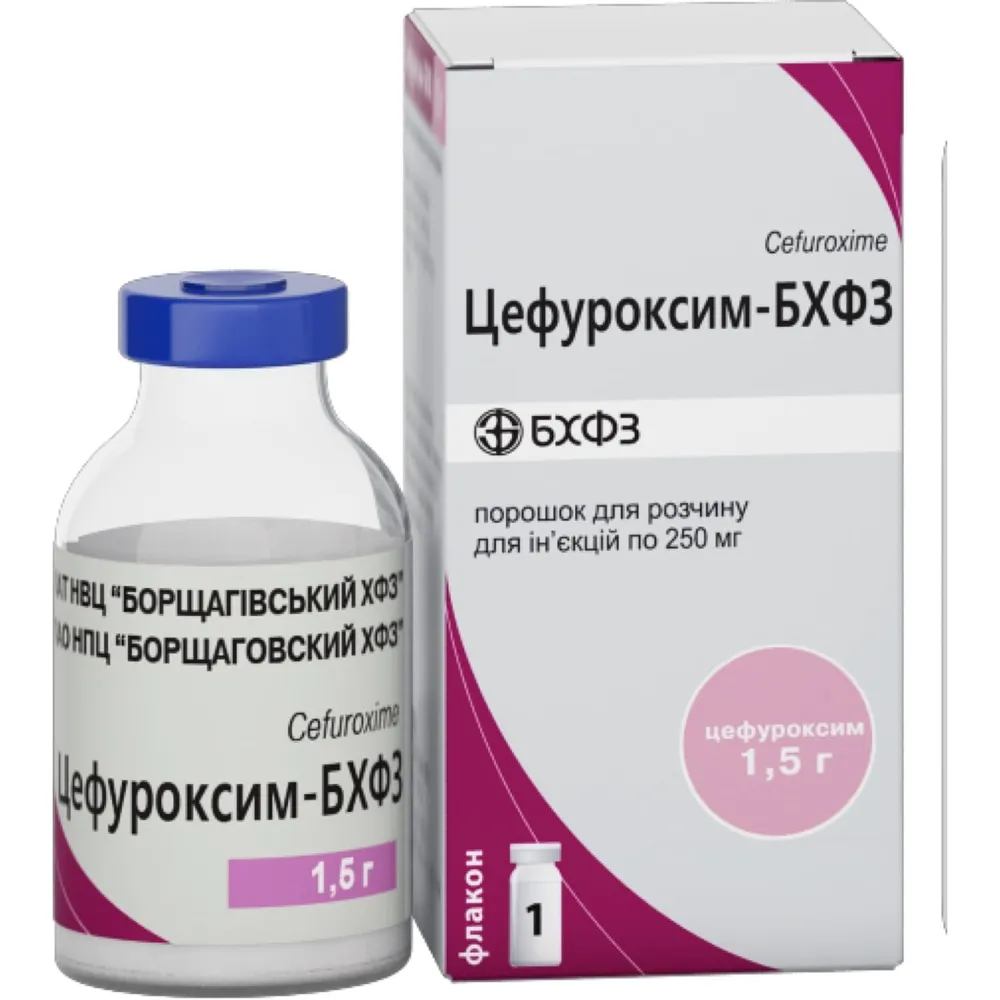
Table of Contents
INSTRUCTIONS FOR MEDICAL USE OF THE MEDICINAL PRODUCT CEFUROXIME-BCPP (CEFUROXIME-BCPP)
Composition:
Active substance: cefuroxime;
1 vial contains cefuroxime (as cefuroxime sodium salt) – 250 mg or 750 mg or 1.5 g.
Pharmaceutical form. Powder for solution for injection.
Main physico-chemical properties: powder of white to cream color.
Pharmacotherapeutic group.
Antibacterial agents for systemic use. Other beta-lactam antibiotics. Second-generation cephalosporins. Cefuroxime. ATC Code J01D C02.
Pharmacological properties.
Pharmacodynamics.
Cefuroxime-BHFS is a second-generation cephalosporin for parenteral administration, exerting a bactericidal effect. The antimicrobial mechanism is associated with inhibition of the microbial enzyme transpeptidase, leading to disruption of peptidoglycan synthesis in the microbial cell wall. The drug has a broad spectrum of activity, is stable in the presence of most β-lactamases, and acts against strains resistant to ampicillin and amoxicillin. It is active against the following microorganisms:
Gram-negative aerobes: Escherichia coli, Klebsiella spp., Proteus rettgeri, Proteus mirabilis, Providencia spp., Haemophilus influenzae (including ampicillin-resistant strains), Haemophilus parainfluenzae (including ampicillin-resistant strains), Moraxella (Branhamella) catarrhalis, Neisseria gonorrhoeae (including penicillinase-producing strains), Neisseria meningitidis, Salmonella spp.;
Gram-positive aerobes: Staphylococcus aureus, Staphylococcus epidermidis (including penicillinase-producing strains, excluding methicillin-resistant strains), Streptococcus pyogenes (as well as other β-hemolytic streptococci), Streptococcus pneumoniae, Streptococcus spp. group B (Streptococcus agalactiae), Streptococcus mitis (viridans group), Bordetella pertussis;
Anaerobes: Peptococcus and Peptostreptococcus species, Gram-positive bacteria (including Clostridium spp.), and Gram-negative bacteria (including Bacteroides spp. and Fusobacterium spp.), Propionibacterium spp.;
Microorganisms with partial resistance to the drug: Proteus morganii, Proteus vulgaris;
Microorganisms insensitive to cefuroxime: Clostridium difficile, Pseudomonas spp., Campylobacter spp., Acinetobacter calcoaceticus, Legionella spp., Listeria monocytogenes, some strains of Serratia spp., Legionella spp.
Pharmacokinetics.
After intramuscular administration of the drug at a dose of 750 mg, maximum concentration is reached within 45–60 minutes and is approximately 27–30 μg/mL. After intravenous administration at doses of 750 mg and 1.5 g, therapeutic plasma concentrations are achieved within 15 minutes and are 50 μg/mL and 100 μg/mL, respectively. Plasma protein binding is approximately 50%. The drug achieves therapeutic concentrations in pleural and synovial fluid, bile, sputum, bone and soft tissues, myocardium, and skin. In cases of meningitis, cefuroxime penetrates well across the blood-brain barrier. The drug crosses the placental barrier and penetrates into breast milk. The elimination half-life (T1/2) of the drug after intramuscular and intravenous administration is approximately 1.5 hours (in neonates and infants, T1/2 is prolonged and ranges from 4 to 6.5 hours). More than 80% of the administered dose is eliminated unchanged by the kidneys: approximately 50% via glomerular filtration and nearly 50% via tubular secretion within 8 hours, resulting in effective concentrations in urine and urinary tract. The drug is no longer detectable in the body after 24 hours.
Clinical characteristics.
Indications.
Infections caused by microorganisms sensitive to the drug, or treatment of infections prior to identification of the causative agent of the infectious disease:
- respiratory tract infections (acute and chronic bronchitis, bacterial pneumonia, infected bronchiectasis, lung abscess, postoperative infections of the thoracic organs);
- infections of the ear, nose and throat organs (sinusitis, tonsillitis, pharyngitis);
- urinary tract infections (acute and chronic pyelonephritis, cystitis, asymptomatic bacteriuria);
- soft tissue infections (cellulitis, erysipelas, wound infections);
- bone and joint infections (osteomyelitis, septic arthritis);
- infections in obstetrics and gynecology (infectious-inflammatory diseases of the pelvic organs);
- gonorrhea, especially when penicillin is contraindicated;
- other infections (including septicemia, meningitis, peritonitis).
Prophylaxis of infections: in cases of increased risk of infectious complications following surgery on the thoracic and abdominal organs, pelvic organ surgery, cardiovascular and orthopedic surgeries.
In most cases, monotherapy with cefuroxime is effective; however, if necessary, the drug may be used in combination with aminoglycoside antibiotics or with metronidazole (orally, as suppositories, or by injection).
In cases of existing or expected mixed aerobic and anaerobic infections (e.g., of pelvic organs or brain, peritonitis, aspiration pneumonia, lung abscess) and high probability of such infections (e.g., during surgery on the large intestine, in gynecological surgery), the use of cefuroxime in combination with metronidazole is acceptable.
For the treatment of pneumonia and exacerbation of chronic bronchitis, the drug may be administered prior to oral administration of cefuroxime axetil when necessary.
Contraindications.
- Hypersensitivity to cefuroxime or to any of the excipients of the drug.
- Hypersensitivity to cephalosporin antibiotics.
- History of severe hypersensitivity (e.g., anaphylactic reactions) to other β-lactam antibiotics (penicillins, monobactams, and carbapenems).
Interaction with other medicinal products and other forms of interactions.
Nephrotoxic agents: concomitant treatment with high doses of cephalosporins and nephrotoxic medicinal products such as aminoglycosides or potent diuretics (e.g., furosemide) may adversely affect renal function. If combination therapy is required, renal function should be monitored throughout the treatment course.
Like other antibiotics, cefuroxime may affect the intestinal flora, leading to reduced reabsorption of estrogens and reduced efficacy of combined oral contraceptives. Therefore, it is recommended to use alternative non-hormonal methods of contraception.
Typhoid vaccine – antibacterial agents should be avoided for 3 days before and after oral typhoid vaccination.
Erythromycin – possible reduction in activity of both antibiotics.
Phenylbutazone and probenecid – reduced clearance of cefuroxime and increased plasma concentration. Cefuroxime is eliminated by glomerular filtration and tubular secretion. Concomitant use with probenecid is not recommended.
Agents that reduce platelet aggregation (nonsteroidal anti-inflammatory agents, salicylates) – increased risk of bleeding.
Oral anticoagulants (including coumarins) – enhanced anticoagulant effect and increased international normalized ratio (INR) have been reported.
Other interactions.
Cefuroxime may slightly interfere with tests using copper reduction methods (Benedict, Fehling, Clinitest), but this does not lead to pseudopositive results, as may occur with some other cephalosporins.
Since false-negative results may occur with the ferricyanide test during cefuroxime administration, blood/plasma glucose levels are recommended to be determined using glucose oxidase or hexokinase methods.
Cefuroxime does not affect the results of enzymatic methods for glucose in urine or the results of creatinine determination by alkaline picrate method.
Special precautions for use.
Hypersensitivity reactions.
As with other cephalosporins and β-lactam antibiotics, cases of severe acute hypersensitivity reactions, sometimes fatal, have been reported. Hypersensitivity reactions progressing to Kounis syndrome (acute allergic coronary artery spasm), which may lead to myocardial infarction, have been observed (see section "Adverse reactions"). If such reactions occur, the drug should be discontinued immediately and appropriate emergency measures should be initiated.
Before initiating treatment, patients should be questioned about any history of severe hypersensitivity reactions to cefuroxime, other cephalosporins, or any other type of β-lactam antibiotics. Cefuroxime should be used with caution in patients with a history of mild hypersensitivity to other β-lactams.
Severe skin adverse reactions (SSARs)
Severe skin adverse reactions have been reported during treatment with cefuroxime, including Stevens-Johnson syndrome (SJS), toxic epidermal necrolysis (TEN), and DRESS syndrome, which may be life-threatening or fatal (see section "Adverse reactions").
Patients should be informed about the signs and symptoms of SSARs, and careful monitoring for skin reactions should be performed during treatment. If symptoms suggestive of these reactions occur, cefuroxime should be discontinued immediately and alternative therapy should be considered. Re-administration of cefuroxime is absolutely contraindicated in patients who have experienced a serious reaction such as SJS, TEN, or DRESS syndrome.
Use with potent diuretics or aminoglycosides.
Cephalosporin antibiotics should be administered with caution in patients receiving concomitant potent diuretics such as furosemide or aminoglycosides. Reports of renal function impairment have been associated with the use of such combinations. Renal function should be monitored in these patients, as well as in elderly patients and those with a history of renal impairment (see section "Method of administration and dosage").
Overgrowth of non-susceptible microorganisms.
As with other antibiotics, prolonged use of cefuroxime may result in overgrowth of non-susceptible microorganisms (e.g., Candida, Enterococci, Clostridium difficile), which may necessitate discontinuation of treatment and appropriate intervention (see section "Adverse reactions").
Cases of antibiotic-associated pseudomembranous colitis have been reported with nearly all antibacterial agents, including cefuroxime. The severity of manifestations may range from mild to life-threatening; therefore, this diagnosis should be considered in any patient who develops diarrhea during or after treatment with cefuroxime (see section "Adverse reactions"). Discontinuation of cefuroxime therapy and initiation of specific therapy against Clostridium difficile should be considered.
Medicinal products that inhibit peristalsis should not be used.
In case of prolonged and severe diarrhea or the development of abdominal cramps, treatment should be discontinued immediately and further patient evaluation should be performed.
Intracameral administration and ocular adverse reactions.
The medicinal product is not intended for intracameral administration. Isolated cases of serious ocular adverse reactions have been reported following intracameral injection of sodium cefuroxime intended for intravenous/intramuscular use. These reactions included macular edema, retinal edema, retinal detachment, retinal toxicity, visual disturbances, decreased visual acuity, blurred vision, corneal opacity, and corneal edema.
Intra-abdominal infections.
Due to its antibacterial spectrum, cefuroxime is not suitable for the treatment of infections caused by gram-negative non-fermenting bacteria.
Effect on diagnostic test results.
A positive Coombs test may occur during cefuroxime therapy, which may interfere with cross-matching during blood transfusion.
Blood/plasma glucose measurement and effects on other laboratory tests – see section "Interaction with other medicinal products and other forms of interaction".
Other important information.
The product contains sodium. This should be taken into account in patients on a sodium-controlled diet.
As with other meningitis treatment regimens, cases of partial hearing loss have been reported in several pediatric patients treated with cefuroxime.
As with treatment with other antibiotics, Haemophilus influenzae has been isolated in cerebrospinal fluid 18–36 hours after cefuroxime injection. However, the clinical significance of this phenomenon is unknown.
When cefuroxime is used in sequential therapy, the timing of the switch to oral antibiotic administration depends on the severity of infection, the patient's clinical condition, and the microorganism's susceptibility. If no clinical improvement is observed within 72 hours, parenteral administration should be continued.
Use during pregnancy or breastfeeding.
There are no data on the embryotoxic or teratogenic effects of cefuroxime; however, as with other medicinal products, it should be used with caution during the first trimester of pregnancy.
Cefuroxime is excreted in breast milk; therefore, breastfeeding should be discontinued during treatment.
Ability to affect reaction speed when driving or operating machinery.
There are no data on the effect of the drug on reaction speed when driving or operating machinery.
Method of Administration and Dosage
Sensitivity to the drug Cefuroxime-BHPhZ varies across different regions and may change over time. When necessary, reference should be made to local antibiotic sensitivity data.
Cefuroxime-BHPhZ should be administered only intramuscularly or intravenously.
Adults.
For many infections, a dose of 750 mg three times daily administered intramuscularly or intravenously is sufficient. For more severe infections, the dose should be increased to 1.5 g three times daily administered intravenously. If necessary, the dosing interval may be reduced to 6 hours (administration frequency – four times daily), and the daily dose of Cefuroxime-BHPhZ may be increased to 3–6 g.
When necessary, some infections may be treated according to the following regimen: 750 mg or 1.5 g twice daily (intravenously or intramuscularly).
Children (including infants).
The drug should be administered at a dose of 30–100 mg/kg body weight per day, divided into 3–4 doses. For most infectious diseases, an effective dose is 60 mg/kg/day.
Newborns.
Cefuroxime-BHPhZ should be administered at a dose of 30–100 mg/kg/day, divided into 2–3 doses. However, it should be noted that the elimination half-life of cefuroxime during the first weeks of life may be 3–5 times longer than in adults.
Gonorrhea.
The drug should be administered as a single dose of 1.5 g via intravenous injection, or the dose may be divided into two 750 mg injections administered intramuscularly into both gluteal muscles.
Meningitis.
Cefuroxime-BHPhZ may be used as monotherapy for bacterial meningitis if caused by susceptible strains.
Adults should be given 3 g intravenously every 8 hours.
Children (including infants) – 200–240 mg/kg/day intravenously, divided into 3–4 doses. This dosage may be reduced to 100 mg/kg/day intravenously after 3 days of treatment or upon clinical improvement.
Newborns should receive an initial daily dose not exceeding 100 mg/kg/day intravenously, divided into 3–4 doses. The dose may be reduced to 50 mg/kg/day upon clinical improvement.
Prophylaxis of postoperative infectious complications.
The usual dose is 1.5 g intravenously at the induction stage of anesthesia during abdominal, pelvic, or orthopedic surgeries. An additional 750 mg injection may be administered intramuscularly 8 and 16 hours later. For cardiac, pulmonary, esophageal, and vascular surgeries, a single dose of 1.5 g of the drug is administered intravenously at the induction of anesthesia, followed by 750 mg of Cefuroxime-BHPhZ administered intramuscularly three times daily for the next 24–48 hours. For total joint replacement, 1.5 g of cefuroxime powder should be mixed with 1 packet of methylmethacrylate polymer cement before adding the liquid monomer.
Sequential therapy
Pneumonia: administer 1.5 g/day of the drug divided into 2–3 doses (intramuscularly or intravenously) for 48–72 hours, followed by a switch to oral antibiotics for 7–10 days.
Exacerbation of chronic bronchitis: 750 mg of the drug 2–3 times daily (intramuscularly or intravenously) for 48–72 hours, followed by a switch to oral antibiotics for 5–10 days.
Duration of both parenteral and oral therapy is determined by the physician depending on the severity of the infection and the patient's clinical condition.
Renal impairment.
Cefuroxime is excreted by the kidneys; therefore, as with other similar antibiotics, patients with impaired renal function should receive reduced doses of cefuroxime to compensate for slower drug excretion.
When creatinine clearance is greater than 20 mL/min, there is no need to reduce the standard dose (750 mg – 1.5 g three times daily).
Patients with severe renal impairment (creatinine clearance 10–20 mL/min) should receive Cefuroxime-BHPhZ 750 mg twice daily; in more severe cases (creatinine clearance less than 10 mL/min) – 750 mg once daily.
During hemodialysis, 750 mg of the drug should be administered intravenously or intramuscularly at the end of each dialysis session. In addition to parenteral administration, cefuroxime can be added to peritoneal dialysis fluid (usually 250 mg per 2 liters of dialysis fluid).
For patients undergoing continuous arteriovenous hemodialysis or high-flux hemofiltration in intensive care units, Cefuroxime-BHPhZ should be administered at a dose of 750 mg twice daily. For patients undergoing low-flux hemofiltration, doses recommended for renal impairment should be used.
Reconstitution instructions.
For intramuscular injection: add 1 mL of water for injection to 250 mg of the drug or 3 mL of water for injection to 750 mg of the drug. Shake gently until a cloudy suspension is formed. Before injection, ensure that the needle is outside blood vessels. The suspension should be injected deeply into the bulk of a relatively large muscle mass, with no more than 750 mg of Cefuroxime-BHPhZ administered at one site.
For intravenous bolus injection: dissolve 250 mg of the drug in not less than 3 mL of water for injection, 750 mg in not less than 6 mL of water for injection, and 1.5 g in 15 mL of a compatible infusion solution. Administer directly into the vein or into the tubing of an infusion set during infusion therapy over 3–5 minutes.
Sodium chloride 0.9% solution or glucose 5% solution may also be used for reconstitution.
For short intravenous infusions (up to 30 minutes): add 750 mg of reconstituted drug to not less than 25 mL of a compatible infusion solution, and 1.5 g of reconstituted drug to 50–100 mL of a compatible infusion solution.
For doses exceeding 1.5 g, the intravenous route should be used.
The solution should be used immediately after preparation. The prepared solution may range in color from pale yellow to light amber. Variations in color intensity do not affect the therapeutic efficacy or safety of the drug.
Children.
The drug may be used in children from the first days of life.
Overdose.
Symptoms. Overdose of cephalosporin antibiotics may lead to symptoms of central nervous system irritation, including encephalopathy, seizures, and coma, especially in patients with renal insufficiency, in whom the risk of drug accumulation is high.
Treatment. Serum levels of cefuroxime can be reduced by hemodialysis or peritoneal dialysis. Symptomatic treatment.
Adverse Reactions
Adverse reactions occur very rarely during administration of the drug, are usually mild in intensity, and are reversible.
Infections and infestations: Overgrowth of non-susceptible microorganisms, e.g., Candida, Clostridium difficile, during prolonged use.
Blood and lymphatic system: Neutropenia, eosinophilia, leukopenia, decreased hemoglobin levels, thrombocytopenia.
Cephalosporins may adsorb onto the surface of erythrocyte membranes and interact with antibodies, potentially leading to a positive Coombs' test and, in some cases, hemolytic anemia.
Immune system: Hypersensitivity reactions, including skin rashes, urticaria, pruritus, drug fever, anaphylaxis, angioneurotic edema, cutaneous vasculitis, interstitial nephritis.
Cardiac disorders: Kounis syndrome (frequency unknown).
Gastrointestinal tract: Gastrointestinal discomfort (nausea, vomiting, diarrhea), pseudomembranous colitis.
Hepatobiliary system: Transient elevation of liver enzymes (ALT, AST, LDH), increased plasma bilirubin levels.
Elevations in liver enzymes and plasma bilirubin are mainly observed in patients with pre-existing liver disease; however, there is no evidence of a direct negative effect of cefuroxime on the liver.
Skin and subcutaneous tissue: Polymorphic erythema, Stevens-Johnson syndrome, toxic epidermal necrolysis, drug reaction with eosinophilia and systemic symptoms (DRESS syndrome) – frequency unknown.
Renal and urinary system: Transient increase in plasma creatinine and blood urea nitrogen levels, decreased creatinine clearance.
Auditory system: A few cases of mild to moderate hearing loss have been reported in children treated for meningitis.
Nervous system: Minor neurological disturbances are possible.
General disorders and administration site reactions: Reactions at the site of injection, including pain, infiltration, thrombophlebitis. The risk of pain following intramuscular injection increases with higher doses, but this is unlikely to lead to discontinuation of treatment.
Reporting of suspected adverse reactions
Reporting suspected adverse reactions after drug authorization is important. It allows continued monitoring of the benefit-risk balance of the medicinal product. Healthcare professionals and patients, or their legal representatives, should report all suspected adverse reactions and lack of efficacy via the Automated Pharmacovigilance Information System at: https://аіsf.dec.gov.ua.
Shelf life
Powder for injection solution 250 mg: 2 years.
Powder for injection solution 750 mg: 3 years.
Powder for injection solution 1.5 g: 3 years.
Do not use the medicinal product after the expiry date.
The reconstituted solution of Cefuroxime-BKhFZ remains stable for 48 hours if stored in a refrigerator (at a temperature not exceeding 4 °C) and for 5 hours at a temperature not exceeding 25 °C.
From a microbiological standpoint, the reconstituted solution should be used immediately.
Storage conditions. Store in the original packaging at a temperature not exceeding 25 °C. Keep out of reach of children.
Incompatibilities
Cefuroxime-BKhFZ should not be mixed in the same syringe with other medicinal products, including aminoglycoside antibiotics.
A 2.74% solution of sodium bicarbonate for injection significantly affects the color of cefuroxime solution and therefore is not recommended for dilution of Cefuroxime-BKhFZ. However, if necessary, when a patient is receiving intravenous sodium bicarbonate infusion, the drug may be administered directly into the infusion line.
1.5 g of cefuroxime sodium dissolved in 15 mL of water for injection may be added to metronidazole solution (500 mg/100 mL); both drugs retain their activity for 24 hours at temperatures below 25 °C.
1.5 g of cefuroxime sodium is compatible with azlocillin at a dose of 1 g (in 15 mL diluent) or 5 g (in 50 mL diluent) for 24 hours at 4 °C and for 6 hours at temperatures up to 25 °C.
Cefuroxime sodium (5 mg/mL) may be stored for 24 hours at 25 °C in 5% or 10% xylitol injection solution, which may be used only for intravenous administration.
Cefuroxime sodium is compatible with aqueous solutions containing up to 1% lidocaine hydrochloride for intramuscular use and with most commonly used intravenous infusion solutions. It remains stable for 24 hours at room temperature in the following solutions:
- 0.9% sodium chloride injection solution;
- 5% glucose injection solution;
- 5% glucose with 0.9% sodium chloride injection solution;
- 10% glucose injection solution;
- 0.18% sodium chloride and 4% glucose injection solution;
- 5% glucose with 0.45% sodium chloride injection solution;
- 5% glucose with 0.225% sodium chloride injection solution;
- Ringer's solution;
- Ringer's lactate solution;
- M/6 sodium lactate solution;
- Hartmann's solution.
The stability of cefuroxime in 0.9% sodium chloride injection solution and 5% glucose injection solution is not altered in the presence of sodium hydrocortisone phosphate.
Cefuroxime is compatible and stable for 24 hours at room temperature when diluted in infusion solutions containing:
- Heparin (10 IU/mL or 50 IU/mL) in 0.9% sodium chloride injection solution;
- Potassium chloride solution (10 mEq/L or 40 mEq/L) in 0.9% sodium chloride injection solution.
Packaging. Powder for injection solution 250 mg in a vial. 1 vial per pack; 5 vials in a cassette, 1 cassette in a case.
Powder for injection solution 750 mg in a vial. 1 vial per pack; 5 vials in a cassette, 1 cassette in a case; 1 vial in a set with diluent (water for injection) 5 mL or 10 mL in an ampoule, in a pack with a cardboard partition.
Powder for injection solution 1.5 g in a vial. 1 vial per pack; 5 vials in a cassette, 1 cassette in a case.
Prescription status. Prescription only.
Manufacturer. Public Joint-Stock Company "Scientific and Production Center "Borshchahivskiy Chemical and Pharmaceutical Plant".
Manufacturer's address and location of business activity.
17 Myru Street, Kyiv, 03134, Ukraine.