Cefoperazone plus
Ukraine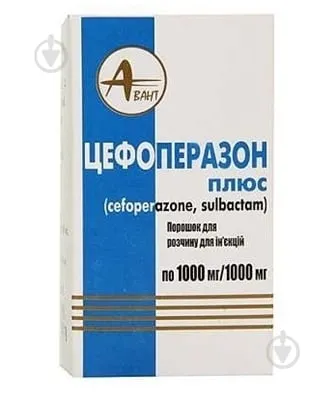
Table of Contents
INSTRUCTIONS FOR MEDICAL USE OF THE MEDICINAL PRODUCT Cefoperazone PLUS
Composition:
Active substances: cefoperazone, sulbactam;
1 vial contains: sodium cefoperazone equivalent to cefoperazone 500 mg, sodium sulbactam equivalent to sulbactam 500 mg
or sodium cefoperazone equivalent to cefoperazone 1000 mg, sodium sulbactam equivalent to sulbactam 1000 mg.
Pharmaceutical form. Powder for solution for injection.
Main physicochemical properties: white or almost white powder.
Pharmacotherapeutic group. Antibacterial agents for systemic use.
Beta-lactam antibiotics. Third-generation cephalosporins.
ATC code J01DD62.
Pharmacological properties.
Pharmacodynamics.
Cefoperazone sodium is a broad-spectrum, semi-synthetic, third-generation cephalosporin antibiotic intended for parenteral use only. Sulbactam sodium is a derivative of the basic penicillin nucleus. Cefoperazone acts by inhibiting the biosynthesis of bacterial cell wall mucopeptide. Sulbactam acts as a beta-lactamase inhibitor, restoring cefoperazone's activity against beta-lactamase-producing strains.
Pharmacokinetics.
The mean serum concentration 30 minutes after intravenous administration of 1 g of cefoperazone is 114 µg/mL. The mean serum concentration 15 minutes after intravenous administration of 500 mg and 1000 mg of sulbactam is 21–40 µg/mL and 48–88 µg/mL, respectively. The mean maximum concentrations of cefoperazone and sulbactam after administration of 2 g of cefoperazone/sulbactam (1 g cefoperazone, 1 g sulbactam) intravenously over 5 minutes are 130.2 µg/mL and 236.8 µg/mL, respectively. This indicates a larger volume of distribution for sulbactam (Vα = 18–27.6 L) compared to cefoperazone (Vα = 10.2–11.3 L).
Plasma protein binding of cefoperazone is 82–93%, and that of sulbactam is 38%.
No significant amount of cefoperazone metabolites has been detected in urine. The mean elimination half-lives in serum are approximately 2 hours for cefoperazone and 1 hour for sulbactam. Cefoperazone is primarily excreted via bile. Approximately 75–85% of sulbactam is excreted in urine within the first 8 hours after administration.
Pharmacokinetics in patients with renal insufficiency does not differ significantly from those with normal renal function.
In patients with impaired hepatic function, the serum elimination half-life is prolonged and urinary excretion time is increased.
Clinical characteristics.
Indications.
- Respiratory tract infections (upper and lower respiratory tract);
- cholecystitis, cholangitis, peritonitis, and other intra-abdominal infections;
- urinary tract infections (upper and lower urinary tract);
- septicemia;
- meningitis;
- skin and soft tissue infections;
- bone and joint infections;
- inflammatory diseases of the pelvic organs, endometritis, gonorrhea, and other genital infections.
Contraindications.
Hypersensitivity to penicillin, sulbactam, cefoperazone, or any cephalosporin; severe renal impairment (creatinine clearance below 30 mL/min).
Interaction with other medicinal products and other forms of interaction.
Aminoglycosides. Mixing the drug with aminoglycosides in the same syringe leads to mutual inactivation; if these groups of antibacterial agents need to be administered simultaneously, they should be given at different sites with a 1-hour interval. The drug increases the risk of nephrotoxicity associated with aminoglycosides and furosemide.
Bacteriostatic agents (chloramphenicol, erythromycin, sulfonamides, tetracyclines) reduce the activity of the drug.
Probenecid decreases tubular secretion of sulbactam; this results in increased plasma concentrations and prolonged elimination half-life of the drugs, as well as an increased risk of intoxication. Enhances the risk of bleeding when used concomitantly with nonsteroidal anti-inflammatory drugs.
Combination therapy. Due to the broad spectrum of antibacterial activity of sulbactam/cefoperazone, most infections can be adequately treated with this antibiotic used as monotherapy. However, under certain indications, sulbactam/cefoperazone may be used in combination with other antibiotics. If aminoglycosides are co-administered, renal function must be monitored throughout the treatment course (see also section "Incompatibility").
Alcohol. Reactions such as facial flushing, increased sweating, headache, and tachycardia have been reported when alcohol is consumed during cefoperazone treatment and for 5 days after its completion. Similar reactions have been observed with other cephalosporins. Patients should avoid alcoholic beverages while receiving this drug. In cases where artificial nutrition (oral or parenteral) is required, solutions containing ethanol should not be used.
Interaction with substances used in laboratory tests. False-positive glucose reactions in urine may occur when using Benedict's or Fehling's solution.
Special precautions.
Hypersensitivity. Severe, and sometimes fatal, hypersensitivity reactions (anaphylactic reactions) have been reported in patients receiving therapy with beta-lactam or cephalosporin antibiotics. The occurrence of such reactions is more frequent in patients with a history of hypersensitivity to multiple allergens. In the event of an allergic reaction, the drug must be discontinued immediately and appropriate treatment initiated. Severe anaphylactic reactions require immediate administration of epinephrine. Oxygen therapy, intravenous administration of corticosteroids, and ensuring airway patency, including intubation, may be indicated as needed.
Use in hepatic impairment. Cefoperazone is predominantly excreted via bile. In patients with liver disease and/or biliary obstruction, the serum half-life of cefoperazone is usually prolonged, and urinary excretion is increased. Even in cases of severe hepatic dysfunction, therapeutic concentrations of cefoperazone are detectable in bile, and the elimination half-life increases only 2–4 fold. Dose adjustment may be necessary in cases of severe biliary obstruction, severe liver disease, or renal impairment associated with any of these conditions.
In patients with hepatic impairment and concomitant renal dysfunction, serum concentrations of cefoperazone should be monitored and dosage adjusted as necessary. In such cases, the dose of cefoperazone should not exceed 2 g/day.
General warnings. As with other antibiotics, treatment with cefoperazone may lead to vitamin K deficiency in some patients. The mechanism of this effect is likely related to suppression of intestinal flora that normally synthesize this vitamin. Thus, high-risk groups include patients with poor nutrition, malabsorption (e.g., in cystic fibrosis), and those receiving prolonged parenteral (intravenous) nutrition. In such patients, as well as in those receiving anticoagulants, prothrombin time (international normalized ratio) should be monitored closely both at the beginning and at the end of treatment. In the indicated cases, exogenous vitamin K should be administered if clinically indicated. As with other antibiotics, prolonged treatment with this drug may lead to overgrowth of non-susceptible microorganisms. Patients should be carefully monitored during therapy. As with other potent systemic agents, periodic monitoring of organ system functions, including renal, hepatic, and hematopoietic systems, is advisable. This is especially important for newborns, particularly premature infants, and infants in general.
Cases of Clostridium difficile-associated diarrhea (CDAD) have been reported with the use of nearly all antibacterial agents, including sodium sulbactam/sodium cefoperazone. The severity of symptoms may range from mild diarrhea to fatal colitis. Antibacterial therapy suppresses the normal flora of the colon, leading to overgrowth of C. difficile.
C. difficile produces toxins A and B, which contribute to the development of CDAD. Hyper-toxin-producing strains of C. difficile are associated with increased morbidity and mortality, as these organisms may be refractory to antimicrobial therapy, potentially requiring colectomy. CDAD should be considered in all patients who develop diarrhea following antibiotic use. A careful patient history is necessary, as cases of CDAD have been reported up to two months after antibiotic administration.
Appropriate treatment should be initiated if superinfection occurs.
Use in renal impairment. In patients with varying degrees of renal dysfunction, the total clearance of sulbactam closely correlates with creatinine clearance. In patients with non-functioning kidneys, the half-life of sulbactam is significantly prolonged. Hemodialysis significantly affects the half-life, total clearance, and volume of distribution of sulbactam. No changes in the pharmacokinetics of cefoperazone have been observed in patients with renal insufficiency. Cefoperazone does not displace bilirubin from plasma protein binding sites.
This medicinal product contains sodium – the product may be unsuitable for patients on a controlled sodium diet.
Use during pregnancy or breastfeeding.
Pregnancy. Sulbactam and cefoperazone cross the placental barrier. However, comprehensive and well-controlled studies in pregnant women have not been conducted. The drug should be used during pregnancy only when the expected benefit to the mother outweighs the potential risk to the fetus, and only if clearly needed.
Breastfeeding period. Only a small fraction of the administered doses of sulbactam and cefoperazone passes into breast milk. Although both components of the drug are excreted in minimal amounts into breast milk, the drug should be used with caution in breastfeeding women. Breastfeeding must be discontinued during treatment.
Ability to influence reaction speed when driving or operating machinery.
The effect of the drug on the ability to drive or operate machinery is unlikely.
Method of administration and dosage.
Before administering the drug, a skin test for tolerance should be performed.
Administration to adults. The standard dose of the drug for adults is 2 to 4 g per day (i.e. 1 to 2 g of cefoperazone per day) administered intravenously or intramuscularly in equal doses every 12 hours.
| Ratio |
Sulbactam/cefoperazone (g) |
Sulbactam dose (g) |
Cefoperazone dose (g) |
| 1 : 1 |
2 – 4 |
1 – 2 |
1 – 2 |
In severe or refractory infections, the daily dose of the drug may be increased to 8 g (i.e., the dose of cefoperazone is 4 g), administered intravenously in equal doses every 12 hours. The recommended maximum daily dose of sulbactam is 4 g (8 g of the drug).
Use in hepatic impairment.
Dose adjustment may be necessary in cases of severe biliary obstruction, severe liver disease, or in the presence of renal impairment associated with any of these conditions. In patients with hepatic impairment and concomitant renal impairment, serum concentrations of cefoperazone should be monitored and dosage adjusted as needed. In such cases, the dose of cefoperazone should not exceed 2 g per day.
Use in renal impairment.
Dosage regimen should be adjusted in patients with significantly reduced renal function (creatinine clearance less than 30 mL/min) to compensate for the reduced clearance of sulbactam. For patients with creatinine clearance of 15–30 mL/min, sulbactam should be administered at a maximum dose of 1 g every 12 hours (maximum daily dose of sulbactam: 2 g). For patients with creatinine clearance less than 15 mL/min, sulbactam should be administered at a maximum dose of 500 mg every 12 hours (maximum daily dose of sulbactam: 1 g). In severe infections, additional separate administration of cefoperazone may be required.
The pharmacokinetic profile of sulbactam is significantly altered during hemodialysis.
The elimination half-life of cefoperazone in serum is slightly reduced during hemodialysis. Therefore, the dosage regimen should be adjusted according to the dialysis schedule.
Use in elderly patients (see section "Pharmacokinetics").
Use in children.
The standard dose of the drug for children is 40 to 80 mg/kg/day (i.e., 20–40 mg/kg/day of cefoperazone), divided into 2–4 equal doses.
| Ratio |
Sulbactam/ cefoperazone (mg/kg/day) |
Dose of sulbactam (mg/kg/day) |
Dose of cefoperazone (mg/kg/day) |
| 1 : 1 |
40 – 80 |
20 – 40 |
20 – 40 |
For severe or refractory infections, the daily dose may be increased to 160 mg/kg (80 mg/kg/day of cefoperazone), divided into 2 – 4 equal doses.
Use in newborns. Newborns during the first week of life should receive the drug every 12 hours. The maximum daily dose of sulbactam for children should not exceed 80 mg/kg/day (160 mg/kg/day of the drug). If administration of a cefoperazone dose exceeding 80 mg/kg/day is required, the additional cefoperazone dose should be given separately.
Intravenous administration. For infusion, the contents of one vial should be dissolved in an appropriate volume of 5% glucose solution in water, 0.9% sodium chloride solution for injection, or sterile water for injection, then diluted to 20 ml with the same solution and administered over 15 – 60 minutes.
| General dose (g) |
Equivalent dose sulbactam + cefoperazone (g) |
Solvent volume (ml) |
Maximum final concentration (mg/ml) |
| 1 |
0.5 + 0.5 |
3.4 |
125 + 125 |
| 2 |
1 + 1 |
6.7 |
125 + 125 |
The drug is compatible with water for injections, 5 % glucose solution, 0.9 % sodium chloride solution, 5 % glucose in 0.225 % sodium chloride solution, and 5 % glucose in 0.9 % sodium chloride solution at concentrations ranging from 10 mg of cefoperazone and 10 mg of sulbactam per 1 mL to 125 mg of cefoperazone and 125 mg of sulbactam per 1 mL.
Ringer's lactate solution is acceptable as a diluent for intravenous infusion, but not for initial reconstitution (see section "Incompatibility").
For intravenous injection, reconstitute the vial contents as described above and administer over at least 3 minutes.
Intramuscular administration. 2 % lidocaine hydrochloride solution is an acceptable solvent for preparing the solution for intramuscular injection, but not for initial reconstitution (see section "Incompatibility"). If lidocaine is used as a solvent, a skin test for tolerance should be performed and lidocaine safety information considered.
Children.
The drug can be used in children. However, comprehensive studies on the use of the drug in premature infants or newborns have not been conducted. Therefore, the potential benefit and possible risk of therapy should be carefully evaluated before initiating treatment in premature infants or newborns.
In newborns with bilirubin encephalopathy, cefoperazone does not displace bilirubin from its binding sites on plasma proteins.
Overdose.
Information regarding acute intoxication with sodium cefoperazone and sodium sulbactam in humans is limited. Overdose is expected to cause manifestations primarily consisting of an intensification of its adverse effects. It should be noted that high concentrations of beta-lactam antibiotics in cerebrospinal fluid may cause neurological reactions, including seizures. Since cefoperazone and sulbactam are removed from the circulation by hemodialysis, this procedure may enhance drug elimination in cases of overdose in patients with impaired renal function.
Adverse Reactions
Infections and infestations: Pseudomembranous colitis, superinfection.
Blood and lymphatic system disorders: Eosinophilia, hypoprothrombinemia, neutropenia (associated with prolonged use, reversible), thrombocytopenia, leukopenia, anemia.
Immune system disorders: Hypersensitivity reactions, anaphylactoid and anaphylactic reactions (including shock).
Nervous system disorders: Headache, restlessness. Cefoperazone may significantly reduce albumin concentration; in the treatment of jaundiced newborns, the risk of developing bilirubin encephalopathy is increased.
Cardiovascular system disorders: Vasculitis, arterial hypotension, bradycardia/tachycardia, cardiogenic shock, cardiac arrest.
Gastrointestinal disorders: The most common adverse effects of the drug, as with other antibiotics, were gastrointestinal symptoms such as diarrhea, nausea, vomiting, pseudomembranous colitis, superinfection, and oral mucosal hyperesthesia.
Hepatobiliary disorders: Jaundice.
Skin and subcutaneous tissue disorders: Maculopapular rash, urticaria, toxic epidermal necrolysis, Stevens–Johnson syndrome, pruritus, erythema, exfoliative dermatitis. As with all penicillins and cephalosporins, hypersensitivity has been reported. The development of these reactions is most likely in patients with a history of allergy, particularly to penicillins.
Renal and urinary system disorders: Hematuria.
Respiratory system disorders: Laryngospasm, bronchospasm, dyspnea, allergic rhinitis.
General disorders and administration site conditions: Chills, fever, drug fever, phlebitis at the catheter site, muscle twitching, injection site pain.
Laboratory test alterations: Prolonged prothrombin time, pseudopositive results in non-enzymatic urine glucose tests, increased alanine aminotransferase levels, increased aspartate aminotransferase levels, increased blood alkaline phosphatase levels, increased blood bilirubin levels, positive Coombs test, decreased hemoglobin levels, decreased hematocrit levels, decreased neutrophil count.
General disorders and administration site conditions: Transient pain at the injection site may occasionally occur following intramuscular administration.
Shelf life. 2 years.
Storage conditions.
Store in the original packaging, out of reach of children, at a temperature not exceeding 25 °C.
Incompatibilities.
Aminoglycosides
Solutions of cefoperazone and sulbactam should not be directly mixed with aminoglycosides due to physical incompatibility. If combination therapy with aminoglycosides is necessary, sequential separate intravenous infusions should be administered using separate secondary intravenous tubing systems. The primary intravenous line must be thoroughly flushed with an appropriate solution between infusions of the drugs. It is also advisable to maximize the time intervals between administration of the drug and aminoglycosides within a 24-hour period.
Lactated Ringer’s solution
Primary dilution of the drug with Lactated Ringer’s solution is not recommended due to incompatibility. However, a two-step dilution process, using sterile water for injection as the primary solvent, can avoid incompatibility when further diluted with Lactated Ringer’s solution. At the first step, use an appropriate volume of sterile water for injection (see table in the section "Dosage and Administration"), then dilute the primary solution with Lactated Ringer’s solution to achieve a sulbactam concentration of 5 mg/mL (i.e., dilute 2 mL of primary solution in 50 mL or 4 mL of primary solution in 100 mL of Lactated Ringer’s solution).
Lidocaine
Primary dilution of the drug with 2% lidocaine solution is not recommended due to incompatibility. However, a two-step dilution process, using sterile water for injection as the primary solvent, can avoid incompatibility when further diluted with 2% lidocaine hydrochloride solution. At the first step, use an appropriate volume of sterile water for injection (see table in the section "Dosage and Administration") to achieve cefoperazone concentrations of 250 mg/mL or higher. The primary solution is then further diluted with 2% lidocaine solution to obtain a solution containing up to 125 mg cefoperazone and 125 mg sulbactam per 1 mL in approximately 0.5% lidocaine hydrochloride solution.
The drug is physically incompatible with amifostine, filgrastim, labetalol, meperidine, nicardipine, ondansetron, perphenazine, pethidine, promethazine, sargramostim, and vinorelbine.
Packaging.
Powder in glass vials; 1 vial per cardboard box, or 25 vials per cardboard box, or 50 vials per cardboard box.
Prescription category.
Prescription only.
Manufacturer.
LLC "AVANT" (packaging of bulk product manufactured by NSPC Hebei Huamin Pharmaceutical Company Limited, China).
Manufacturer's address and location of business operations.
14 Anton Tsidyka Street, Kyiv, 03057, Ukraine.
Tel/fax: 044 496 19 94, e-mail: [email protected]