Trinomia®
Ukraine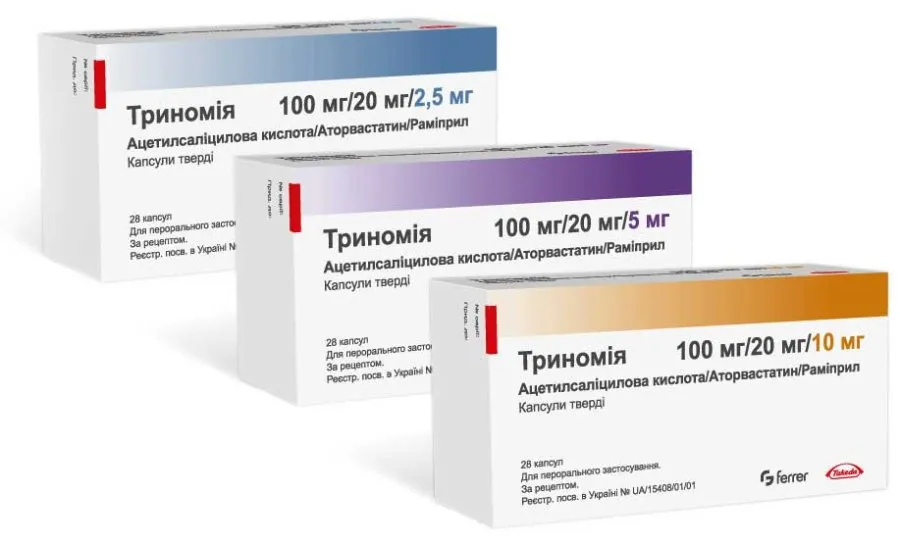
Table of Contents
- INSTRUCTIONS FOR MEDICAL USE OF THE MEDICINAL PRODUCT TRINOMIA® (TRINOMIA®)
- Composition:
- Pharmacological Properties.
- Clinical characteristics.
- See sections «Contraindications», «Special precautions», and «Interaction with other medicinal products and other forms of interaction» to determine clinical significance.
- Special precautions for use.
- Dosage and Administration
- Side effects
INSTRUCTIONS FOR MEDICAL USE OF THE MEDICINAL PRODUCT TRINOMIA® (TRINOMIA®)
Composition:
Active substances:
1 capsule contains 100 mg acetylsalicylic acid, 40 mg atorvastatin (as 43.38 mg atorvastatin calcium trihydrate) and 2.5 mg ramipril;
1 capsule contains 100 mg acetylsalicylic acid, 40 mg atorvastatin (as 43.38 mg atorvastatin calcium trihydrate) and 5 mg ramipril;
1 capsule contains 100 mg acetylsalicylic acid, 40 mg atorvastatin (as 43.38 mg atorvastatin calcium trihydrate) and 10 mg ramipril;
Excipients:
for capsules 100 mg/40 mg/2.5 mg:
for acetylsalicylic acid tablets: microcrystalline cellulose 101; sodium starch glycolate (type A); talc; Opadry AMV White OY-B-28920;
for atorvastatin tablets: lactose monohydrate; pregelatinized starch; calcium carbonate; hydroxypropylcellulose; polysorbate 80; crospovidone type A; colloidal anhydrous silicon dioxide; magnesium stearate; Opadry Pink 06O34427;
for ramipril tablets: hypromellose 2910; pregelatinized starch 1500; microcrystalline cellulose 200; sodium stearyl fumarate; Opadry AMV Yellow 80W32039;
hard capsule: gelatin; titanium dioxide (E 171);
black ink: shellac; iron oxide black (E 172); propylene glycol; concentrated ammonia solution; potassium hydroxide;
for capsules 100 mg/40 mg/5 mg:
for acetylsalicylic acid tablets: microcrystalline cellulose 101; sodium starch glycolate (type A); talc; Opadry AMV White OY-B-28920;
for atorvastatin tablets: lactose monohydrate; pregelatinized starch; calcium carbonate; hydroxypropylcellulose; polysorbate 80; crospovidone type A; colloidal anhydrous silicon dioxide; magnesium stearate; Opadry Pink 06O34427;
for ramipril tablets: hypromellose 2910; pregelatinized starch 1500; microcrystalline cellulose 200; sodium stearyl fumarate; Opadry AMV Yellow 80W32656;
hard capsule: gelatin; titanium dioxide (E 171); iron oxide yellow (E 172); iron oxide red (E 172);
black ink: shellac; iron oxide black (E 172); propylene glycol; concentrated ammonia solution; potassium hydroxide;
for capsules 100 mg/40 mg/10 mg:
for acetylsalicylic acid tablets: microcrystalline cellulose 101; sodium starch glycolate (type A); talc; Opadry AMV White OY-B-28920;
for atorvastatin tablets: lactose monohydrate; pregelatinized starch; calcium carbonate; hydroxypropylcellulose; polysorbate 80; crospovidone type A; colloidal anhydrous silicon dioxide; magnesium stearate; Opadry Pink 06O34427;
for ramipril tablets: hypromellose 2910; pregelatinized starch 1500; microcrystalline cellulose 200; sodium stearyl fumarate; Opadry AMV Yellow 80W32880;
hard capsule: gelatin; titanium dioxide (E 171); iron oxide yellow (E 172); iron oxide red (E 172);
black ink: shellac; iron oxide black (E 172); propylene glycol; concentrated ammonia solution; potassium hydroxide.
Pharmaceutical form. Hard capsules.
Main physicochemical properties:
for capsules 100 mg/40 mg/2.5 mg:
opaque hard gelatin capsules size 0 with white body and cap, marked “AAR 100/40/2.5”, containing two film-coated acetylsalicylic acid tablets, white or almost white, engraved with “AS”, two film-coated atorvastatin tablets, pink, engraved with “AT”, and one film-coated ramipril tablet, pale yellow, engraved with “R2”;
for capsules 100 mg/40 mg/5 mg:
opaque hard gelatin capsules size 0 with orange cap and white body, marked “AAR 100/40/5”, containing two film-coated acetylsalicylic acid tablets, white or almost white, engraved with “AS”, two film-coated atorvastatin tablets, pink, engraved with “AT”, and one film-coated ramipril tablet, pale yellow, engraved with “R5”;
for capsules 100 mg/40 mg/10 mg:
opaque hard gelatin capsules size 0 with orange body and cap, marked “AAR 100/40/10”, containing two film-coated acetylsalicylic acid tablets, white or almost white, engraved with “AS”, two film-coated atorvastatin tablets, pink, engraved with “AT”, and one film-coated ramipril tablet, pale yellow, engraved with “R1”.
Pharmacotherapeutic group.
Agents acting on the cardiovascular system. Lipid-modifying agents, combinations. Atorvastatin, acetylsalicylic acid and ramipril.
ATC code C10BX06.
Pharmacological Properties.
Pharmacodynamics.
Acetylsalicylic acid
Acetylsalicylic acid irreversibly inhibits platelet aggregation. This effect on platelets is due to acetylation of cyclooxygenase, which irreversibly inhibits the synthesis of thromboxane A2 (a substance that promotes platelet aggregation and causes vasoconstriction) in platelets. This effect is permanent and typically lasts throughout the 8-day lifespan of platelets.
Acetylsalicylic acid also suppresses the synthesis of prostacyclin (a prostaglandin that inhibits platelet aggregation but causes vasodilation) in vascular endothelial cells. This effect is transient. After acetylsalicylic acid is eliminated from the blood, nucleated endothelial cells resume prostacyclin synthesis. As a result, a single low daily dose of acetylsalicylic acid (< 100 mg/day) inhibits thromboxane A2 in platelets without significantly affecting prostacyclin synthesis.
Acetylsalicylic acid also belongs to the group of acidic nonsteroidal anti-inflammatory drugs with analgesic, antipyretic, and anti-inflammatory properties. Their mechanism of action involves irreversible inhibition of cyclooxygenase enzymes involved in prostaglandin synthesis. Higher doses of acetylsalicylic acid are used to treat mild to moderate pain, elevated body temperature, and acute and chronic inflammatory conditions such as rheumatoid arthritis.
Experimental data have shown that concomitant administration of ibuprofen with low doses of acetylsalicylic acid may interfere with platelet aggregation. In a study comparing the effect of a single 400 mg dose of ibuprofen taken 8 hours before or 30 minutes before an 81 mg dose of acetylsalicylic acid (as an immediate-release tablet), a reduction in the effect of acetylsalicylic acid on thromboxane formation or platelet aggregation was observed. However, these data are limited due to uncertainty regarding extrapolation of these findings to clinical practice. Therefore, no definitive conclusion can be drawn regarding regular use of ibuprofen, and data on potential clinical effects related to occasional ibuprofen use are lacking.
Atorvastatin
Atorvastatin is a selective competitive inhibitor of HMG-CoA reductase—the enzyme responsible for the rate-limiting step in the conversion of 3-hydroxy-3-methylglutaryl-coenzyme A to mevalonate, a precursor of sterols, including cholesterol. Triglycerides and cholesterol in the liver are incorporated into very-low-density lipoprotein (VLDL) particles, which enter plasma and are transported to peripheral tissues. Low-density lipoprotein (LDL) is formed from VLDL and is primarily catabolized via interaction with high-affinity LDL receptors (LDL receptors).
Atorvastatin reduces plasma cholesterol levels and serum lipoprotein concentrations by inhibiting HMG-CoA reductase, thereby suppressing hepatic cholesterol biosynthesis, and by increasing the number of hepatic LDL receptors on cell surfaces, which enhances the uptake and catabolism of LDL.
Atorvastatin reduces the formation of LDL and the number of LDL particles. It induces a pronounced and sustained increase in LDL receptor activity, combined with a favorable change in the quality of circulating LDL particles. Atorvastatin effectively reduces LDL cholesterol (LDL-C) levels in patients with homozygous familial hypercholesterolemia (a group that has not always responded to lipid-lowering therapy).
Atorvastatin has demonstrated the ability to reduce total cholesterol (30–46%), LDL-C (41–61%), apolipoprotein B (34–50%), and triglycerides (14–33%), while variably increasing HDL-C and apolipoprotein A1 concentrations in dose-response studies. These results are consistent with data from patients with heterozygous familial hypercholesterolemia, non-familial forms of hypercholesterolemia, and mixed hyperlipidemia, including patients with insulin-independent diabetes mellitus.
Reductions in total cholesterol, LDL-C, and apolipoprotein B levels have been proven to reduce the risk of cardiovascular disease and death due to these conditions.
Ramipril
Mechanism of action. Ramiprilat, the active metabolite of the prodrug ramipril, inhibits the enzyme dipeptidyl-carboxypeptidase I (synonyms: angiotensin-converting enzyme; kininase II). In plasma and tissues, this enzyme catalyzes the conversion of angiotensin I into the vasoconstrictive substance angiotensin II, as well as the breakdown of the vasodilator bradykinin. Reduced formation of angiotensin II and inhibition of bradykinin degradation lead to vasodilation.
Since angiotensin II also stimulates aldosterone release, ramiprilat causes a reduction in aldosterone secretion. In non-Caucasian (Afro-Caribbean) patients with arterial hypertension (typically patients with low-renin hypertension), the average response to monotherapy with an ACE inhibitor has been lower than in patients of other ethnicities.
Pharmacodynamic effects
Antihypertensive properties. Ramipril administration results in a marked reduction in peripheral arterial resistance. Renal plasma flow and glomerular filtration rate usually remain unchanged. Ramipril reduces arterial blood pressure in patients with arterial hypertension both in the standing and supine positions, without a compensatory increase in heart rate.
In most patients, the onset of the antihypertensive effect of a single dose becomes evident within 1–2 hours after oral administration. The maximum effect of a single dose is usually achieved within 3–6 hours after administration. The antihypertensive effect of a single dose typically lasts for 24 hours.
With continued ramipril use, the maximum antihypertensive effect is usually achieved within 3–4 weeks. Long-term therapy has been shown to maintain the antihypertensive effect for up to 2 years. Abrupt discontinuation of ramipril therapy does not cause a rapid or excessive rebound increase in blood pressure.
Heart failure. As an addition to conventional therapy with diuretics and cardiac glycosides, ramipril has demonstrated efficacy in patients with heart failure classified as functional classes II–IV according to the New York Heart Association classification. The drug exerts favorable effects on cardiac hemodynamics (reduction in filling pressures of the left and right ventricles, reduction in total peripheral vascular resistance, increased cardiac output, and improved cardiac index). It also reduces neuroendocrine activation.
Pharmacokinetics.
Acetylsalicylic acid.
Acetylsalicylic acid is metabolized to its primary active metabolite, salicylic acid, before, during, and after absorption. Metabolites are primarily excreted by the kidneys. In addition to salicylic acid, the main metabolites of acetylsalicylic acid are the glycine conjugate of salicylic acid (salicyluric acid), the glucuronide ether and ester of salicylic acid (salicyl phenol glucuronide and salicyl acyl glucuronide), and gentisic acid, formed by oxidation of salicylic acid and its glycine conjugate.
Absorption of acetylsalicylic acid after oral administration is rapid, complete, and formulation-dependent. Hydrolysis of the acetyl group of acetylsalicylic acid occurs partially during passage through the gastrointestinal mucosa. Maximum plasma concentrations are reached within 10–20 minutes (acetylsalicylic acid) or 0.3–2 hours (total salicylate) after administration.
After a single dose, food does not affect the total drug exposure but delays the time to maximum concentration (tmax) of acetylsalicylic acid by 1.1 hours and reduces Cmax by approximately 42%.
The elimination kinetics of salicylic acid are highly dose-dependent, as the capacity to metabolize salicylic acid is limited (elimination half-life ranges from 2 to 30 hours).
The elimination half-life of acetylsalicylic acid is only a few minutes; the half-life of salicylic acid is 2 hours after a 0.5 g dose of acetylsalicylic acid, 4 hours after a 1 g dose, and increases to 20 hours after a single 5 g dose.
Plasma protein binding in humans is concentration-dependent; values ranging from 49% to over 70% (acetylsalicylic acid) and from 66% to 98% (salicylic acid) have been reported. Salicylic acid is detectable in cerebrospinal fluid and synovial fluid after acetylsalicylic acid administration. Salicylic acid crosses the placenta and enters breast milk.
Atorvastatin
Absorption. Atorvastatin is rapidly absorbed after oral administration; maximum plasma concentrations (Cmax) are reached within 1–2 hours. The extent of absorption increases proportionally with the atorvastatin dose. After oral administration, the bioavailability of atorvastatin in film-coated tablets is 95% to 99% compared to an oral solution. Absolute bioavailability of atorvastatin is approximately 12%, and systemic availability of HMG-CoA reductase inhibitory activity is approximately 30%. The low systemic availability is due to presystemic clearance in the gastrointestinal mucosa and/or first-pass metabolism in the liver.
After a single dose, food does not affect total drug exposure but delays the time to maximum concentration (tmax) of atorvastatin by 1.7 hours and reduces Cmax by approximately 47%.
Distribution. The mean volume of distribution of atorvastatin is approximately 381 L. Plasma protein binding is ≥ 98%.
Biological transformation. Atorvastatin is metabolized by cytochrome P450 3A4 to ortho- and para-hydroxylated derivatives and other beta-oxidation products. In addition to other metabolic pathways, these products undergo further glucuronidation. In vitro, ortho- and para-hydroxylated metabolites inhibit HMG-CoA reductase to an extent equivalent to that of atorvastatin. The inhibitory effect of the drug on HMG-CoA reductase is almost 70% attributable to the activity of circulating metabolites.
Elimination. Atorvastatin is primarily excreted via bile after hepatic and/or extrahepatic metabolism. However, atorvastatin does not undergo significant hepatic recirculation. The mean elimination half-life of atorvastatin in human plasma is approximately 14 hours. The half-life of HMG-CoA reductase inhibitory activity is approximately 20–30 hours due to the presence of active metabolites.
Atorvastatin is a substrate of hepatic transporters, organic anion-transporting polypeptide 1B1 (OATP1B1) and transporter 1B3 (OATP1B3). Atorvastatin metabolites are substrates of OATP1B1. Atorvastatin is also identified as a substrate of the efflux transporter multidrug resistance protein 1 (MDR1) and breast cancer resistance protein (BCRP), which may limit intestinal absorption and biliary clearance of atorvastatin.
Special patient groups
Geriatric patients. Plasma concentrations of atorvastatin and its active metabolites are higher in healthy elderly subjects compared to younger subjects, whereas the hypolipidemic effects are comparable to those observed in younger patients.
Children. In an open 8-week study, children with Tanner stage 1 (N = 15) and Tanner stage ≥ 2 (N = 24), aged 6–17 years, with heterozygous familial hypercholesterolemia and baseline LDL-C ≥ 4 mmol/L, received atorvastatin chewable tablets at 5 or 10 mg or film-coated tablets at 10 or 20 mg once daily. Body weight was the only significant covariate in the pharmacokinetic model for the atorvastatin group. After oral administration, atorvastatin clearance in children was similar to that in adults when scaled allometrically by body weight. A consistent reduction in LDL-C and total cholesterol was observed across the range of atorvastatin and o-hydroxyatorvastatin exposure.
Sex. Plasma concentrations of atorvastatin and its active metabolites differ between women and men (approximately 20% higher Cmax and 10% lower AUC in women). These differences were not clinically significant and did not lead to substantial clinical differences in lipid effects between men and women.
Renal impairment. Renal function impairment does not affect plasma concentrations of atorvastatin, its lipid effect, or its active metabolites.
Hepatic impairment. In patients with hepatic dysfunction, plasma concentrations of atorvastatin and its active metabolites are increased (approximately 16-fold for Cmax and 11-fold for AUC) in patients with chronic alcoholic liver disease (Child-Pugh class B).
SLCO1B1 polymorphism. Cellular uptake of HMG-CoA reductase inhibitors, including atorvastatin, in the liver is mediated by the OATP1B1 transporter protein. Patients with SLCO1B1 polymorphism are at risk of increased atorvastatin exposure, which may increase the risk of rhabdomyolysis (see section "Special precautions for use"). The polymorphism in the gene encoding OATP1B1 (SLCO1B1 c.521CC) is associated with a 2.4-fold increase in atorvastatin exposure (AUC) compared to patients without this genotype variant (c.521TT). These patients may also have a genetic impairment in hepatic uptake of atorvastatin. The potential impact on efficacy is unknown.
Ramipril
Absorption. After oral administration, ramipril is rapidly absorbed from the gastrointestinal tract: maximum plasma concentration of ramipril is reached within one hour. Based on urinary excretion, the extent of absorption is at least 56% and is not significantly affected by the presence of food in the gastrointestinal tract. The bioavailability of the active metabolite ramiprilat after oral administration of 2.5 and 5 mg ramipril is 45%.
After a single dose, food reduces the mean AUC by 26%, delays the time to maximum concentration (Tmax) of ramipril by 1.2 hours, and reduces Cmax by approximately 69%. The effect of food on AUC and Cmax of ramipril is not considered clinically significant.
The maximum plasma concentration of ramiprilat, the sole active metabolite of ramipril, is reached 2–4 hours after ramipril administration. After administration of usual once-daily doses of ramipril, steady-state plasma concentrations of ramiprilat are achieved after approximately 4 days of treatment.
Distribution. Plasma protein binding of ramipril is approximately 73%, and that of ramiprilat is about 56%.
Metabolism. Ramipril is almost completely metabolized to ramiprilat and diketopiperazine ester, diketopiperazine acid, as well as glucuronides of ramipril and ramiprilat.
Elimination. Metabolite excretion occurs predominantly via renal excretion.
The decline in ramiprilat plasma concentration is multiphasic. Due to strong saturable binding to ACE and slow dissociation from the enzyme complex, ramiprilat exhibits a prolonged terminal elimination phase even at very low plasma concentrations.
The effective elimination half-life of ramiprilat after repeated doses of 5–10 mg ramipril once daily is 13–17 hours and is longer with lower doses (1.25–2.5 mg). This difference is due to the saturable binding capacity of the enzyme for ramiprilat.
After a single oral dose, neither ramipril nor its metabolites were detected in breast milk. However, the effect of repeated dosing is unknown.
Patients with renal impairment (see section "Dosage and administration")
Renal excretion of ramiprilat is reduced in patients with impaired renal function, and renal clearance of ramiprilat is proportionally related to creatinine clearance. This results in elevated plasma concentrations of ramiprilat, which decline more slowly than in individuals with normal renal function.
Patients with hepatic impairment (see section "Dosage and administration")
In patients with impaired liver function, the metabolism of ramipril to ramiprilat is delayed due to reduced activity of hepatic esterases, leading to increased plasma levels of ramipril. However, peak concentrations of ramiprilat in these patients do not differ from those observed in individuals with normal liver function.
Clinical characteristics.
Indications.
Secondary prevention of cardiovascular complications in adult patients when adequate control is achieved with monotherapy using equivalent therapeutic doses.
Contraindications.
- Hypersensitivity to the active substances or other components of the medicinal product, to other salicylates, nonsteroidal anti-inflammatory drugs (NSAIDs), other angiotensin-converting enzyme (ACE) inhibitors, or tartrazine.
- Hypersensitivity to soy or peanuts.
- History of asthma or other allergic reactions induced by acetylsalicylic acid or other nonsteroidal analgesics/anti-inflammatory agents.
- History of acute or recurrent gastric or duodenal ulcer and/or gastrointestinal bleeding or other types of bleeding, such as cerebrovascular hemorrhage.
- Hemophilia and other coagulation disorders.
- Severe renal or hepatic impairment (see section "Dosage and administration").
- Hemodialysis (see section "Dosage and administration").
- Severe heart failure.
- Concomitant use with methotrexate at doses of 15 mg or more per week (see section "Interaction with other medicinal products and other forms of interaction").
- Concomitant use of Trinomia® with aliskiren-containing medicinal products is contraindicated in patients with diabetes mellitus or renal dysfunction (eGFR < 60 mL/min/1.73 m²) (see sections "Interaction with other medicinal products and other forms of interaction" and "Pharmacodynamics").
- Nasal polyps associated with asthma induced or exacerbated by acetylsalicylic acid.
- Liver disease or unexplained persistent elevation of serum transaminases more than 3 times the upper limit of normal (see section "Special precautions for use").
- Pregnancy, breastfeeding; contraindicated in women of childbearing potential who are not using effective contraception (see section "Use during pregnancy or lactation").
- Concomitant use with tipranavir or ritonavir due to risk of rhabdomyolysis (see sections "Special precautions for use" and "Interaction with other medicinal products and other forms of interaction").
- Concomitant use with cyclosporine due to risk of rhabdomyolysis (see sections "Special precautions for use" and "Interaction with other medicinal products and other forms of interaction").
- History of angioedema (hereditary, idiopathic, or induced by ACE inhibitors or angiotensin II receptor antagonists).
- Extracorporeal treatments leading to blood contact with negatively charged surfaces (see section "Interaction with other medicinal products and other forms of interaction").
- Bilateral severe renal artery stenosis or stenosis of the renal artery of a single functioning kidney.
- Hypotensive or hemodynamically unstable conditions (contraindications related to ramipril).
- Pediatric population (under 18 years). In children under 16 years with fever, influenza, or varicella, there is a risk of Reye's syndrome.
- Treatment of hepatitis C with the antiviral agents glecaprevir/pibrentasvir.
- Concomitant use with sacubitril/valsartan. Trinomia® should not be taken less than 36 hours after the last dose of sacubitril/valsartan (see also sections "Special precautions for use" and "Interaction with other medicinal products and other forms of interaction").
Interaction with other medicinal products and other forms of interaction.
Acetylsalicylic acid: pharmacodynamic and pharmacokinetic interactions
Effects of concomitantly administered medicinal products on acetylsalicylic acid
Other platelet aggregation inhibitors. Platelet aggregation inhibitors such as ticlopidine and clopidogrel may prolong bleeding time.
Other nonsteroidal analgesics/anti-inflammatory and anti-rheumatic agents. These agents increase the risk of gastrointestinal bleeding and ulcers.
Systemic glucocorticoids (except hydrocortisone used as replacement therapy in Addison's disease). Systemic glucocorticoids increase the risk of gastrointestinal ulcers and bleeding.
Diuretics. NSAIDs may cause acute renal failure, especially in dehydrated patients. When Trinomia® is used concomitantly with diuretics, adequate hydration of the patient should be monitored.
Alcohol. Alcohol increases the risk of gastrointestinal ulcers and bleeding.
Selective serotonin reuptake inhibitors (SSRIs). SSRIs increase the risk of bleeding, particularly gastrointestinal bleeding, due to synergistic effects.
Uricosuric agents. Concomitant use of Trinomia® reduces the effect of uricosuric agents promoting uric acid excretion and increases plasma levels of acetylsalicylic acid due to reduced elimination.
Metamizole. When used concomitantly, metamizole may reduce the effect of acetylsalicylic acid on platelet aggregation. Therefore, this combination should be used with caution in patients taking low-dose aspirin for cardioprotection.
Effects of acetylsalicylic acid on concomitantly administered medicinal products
Anticoagulant and thrombolytic therapy. Acetylsalicylic acid increases the risk of bleeding when used with or during anticoagulant and thrombolytic therapy. Therefore, patients requiring anticoagulant or thrombolytic treatment should be monitored for signs of external or internal bleeding.
Digoxin. NSAIDs increase plasma digoxin concentrations. When used concomitantly with Trinomia® or upon its discontinuation, monitoring of plasma digoxin levels is recommended.
Antidiabetic agents, including insulin. Concomitant use of Trinomia® with antidiabetic agents, including insulin, enhances the hypoglycemic effect of these agents. Monitoring of blood glucose levels is recommended (see subsection “Ramipril: pharmacodynamic and pharmacokinetic interactions. Precautions for use” below).
Methotrexate. Salicylates may displace methotrexate from plasma protein binding sites and reduce its renal clearance, leading to toxic plasma concentrations of methotrexate. Concomitant use with methotrexate at doses of 15 mg or more per week is contraindicated (see section "Contraindications"). When methotrexate doses below 15 mg/week are used, monitoring of renal function and complete blood count is recommended, especially at the beginning of treatment.
Valproic acid. Salicylates may displace valproic acid from plasma protein binding sites and reduce its metabolism, thereby increasing its plasma concentrations.
- Ibuprofen.* Data on possible interactions with long-term concomitant use of acetylsalicylic acid and ibuprofen are lacking, although some studies have shown reduced antiplatelet effects (see section "Pharmacodynamics").
Antacids. Antacids may increase renal excretion of salicylates by alkalinizing urine.
ACE inhibitors. Although there have been reports that acetylsalicylic acid may reduce the beneficial effects of ACE inhibitors by decreasing vasodilatory prostaglandin synthesis, some studies have shown that negative interactions with ACE inhibitors occur with high (i.e., ≥ 325 mg), but not low (i.e., ≤ 100 mg), doses of aspirin.
Cyclosporine. NSAIDs may increase the nephrotoxicity of cyclosporine through effects mediated by renal prostaglandins. Careful monitoring of renal function is recommended, especially in elderly patients.
Vancomycin. Acetylsalicylic acid increases the risk of vancomycin ototoxicity.
Interferon. Acetylsalicylic acid reduces the activity of interferon α.
Lithium. NSAIDs reduce lithium excretion, increasing its plasma levels to potentially toxic levels. Concomitant use of lithium and NSAIDs is not recommended. If such combination use is necessary, plasma lithium concentrations should be closely monitored at the beginning of treatment, during dose adjustments, and upon discontinuation.
Barbiturates. Acetylsalicylic acid increases plasma barbiturate levels.
Zidovudine. Acetylsalicylic acid may increase plasma zidovudine levels due to competitive inhibition of glucuronide formation or direct inhibition of zidovudine metabolism by hepatic microsomal enzymes.
Phenytoin. Acetylsalicylic acid may increase plasma phenytoin levels.
Laboratory tests. Acetylsalicylic acid may affect the results of the following tests:
- Blood: increased levels (biological) of transaminases (ALT and AST), alkaline phosphatase, ammonia, bilirubin, cholesterol, creatine kinase, digoxin, free thyroxine, lactate dehydrogenase (LDH), thyroxine-binding globulin, triglycerides, uric acid, and valproic acid; increased levels (analytical interference) of glucose, paracetamol, and total protein; decreased levels (biological) of free thyroxine, glucose, phenytoin, TSH, TSH-RH, thyroxine, triglycerides, triiodothyronine, uric acid, and creatinine clearance; decreased levels (analytical interference) of transaminases (ALT), albumin, alkaline phosphatase, cholesterol, creatine kinase, lactate dehydrogenase (LDH), and total protein.
- Urine: decreased levels (biological) of estriol; decreased levels (analytical interference) of 5-hydroxyindoleacetic acid, 4-hydroxy-3-methoxymandelic acid, total estrogens, and glucose.
Atorvastatin: pharmacodynamic and pharmacokinetic interactions
Effects of concomitantly administered medicinal products on atorvastatin
Atorvastatin is metabolized by cytochrome P450 3A4 (CYP3A4) and is a substrate of hepatic transporters, organic anion-transporting polypeptide 1B1 (OATP1B1) and transporter 1B3 (OATP1B3). Atorvastatin metabolites are substrates of OATP1B1. Atorvastatin is also identified as a substrate of multidrug resistance protein 1 (MDR1) and breast cancer resistance protein (BCRP), which may limit intestinal absorption and biliary clearance of atorvastatin (see section "Pharmacokinetics"). Concomitant use of medicinal products that are inhibitors of CYP3A4 or transport proteins may lead to increased plasma concentrations of atorvastatin and increased risk of myopathy. The risk is also increased when atorvastatin is used concomitantly with other medicinal products that may cause myopathy, such as fibric acid derivatives, fusidic acid, and ezetimibe (see sections "Contraindications" and "Special precautions for use").
Inhibitors of CYP3A4. As noted, potent inhibitors of CYP3A4 cause significant increases in atorvastatin concentrations (see Table 1 and information below). Whenever possible, concomitant use of potent CYP3A4 inhibitors (e.g., cyclosporine, telithromycin, clarithromycin, delavirdine, stiripentol, ketoconazole, voriconazole, itraconazole, posaconazole, certain antiviral agents for HIV treatment (e.g., elbasvir/grazoprevir), and HIV protease inhibitors including ritonavir, lopinavir, atazanavir, indinavir, darunavir, etc.) should be avoided. If concomitant use cannot be avoided, consideration should be given to using lower initial and maximum doses of atorvastatin, with appropriate clinical monitoring of the patient (see Table 1).
Moderate inhibitors of CYP3A4 (e.g., erythromycin, diltiazem, verapamil, fluconazole) may increase plasma concentrations of atorvastatin (see Table 1). Increased risk of myopathy has been observed when erythromycin is used concomitantly with statins. Interaction studies evaluating the effect of amiodarone or verapamil on atorvastatin have not been conducted. However, amiodarone and verapamil are known to inhibit CYP3A4 activity, and their concomitant use with atorvastatin may lead to increased atorvastatin exposure. Therefore, when used concomitantly with moderate CYP3A4 inhibitors, consideration should be given to using lower maximum doses of atorvastatin, and appropriate clinical monitoring of the patient is recommended. Appropriate clinical monitoring is recommended after initiation or dose adjustment of the inhibitor.
Inducers of CYP3A4. Concomitant use of atorvastatin with inducers of cytochrome P450 3A (e.g., efavirenz, rifampicin, St. John's wort) may cause variable decreases in plasma concentrations of atorvastatin. Due to the dual interaction of rifampicin (induction of cytochrome P450 3A and inhibition of the hepatic uptake transporter OATP1B1), simultaneous initiation of atorvastatin and rifampicin is recommended, as delayed administration of atorvastatin after rifampicin is associated with a significant reduction in atorvastatin plasma concentrations. However, the effect of rifampicin on atorvastatin concentrations in hepatocytes is unknown; therefore, when concomitant use cannot be avoided, careful clinical monitoring of the efficacy of these agents in patients is recommended.
Inhibitors of transport proteins. Inhibitors of transport proteins (e.g., cyclosporine) may increase systemic exposure to atorvastatin (see Table 1). The effect of inhibition of hepatic uptake transporters on atorvastatin concentration in hepatocytes is unknown. If concomitant use cannot be avoided, dose reduction and clinical monitoring of efficacy are recommended (see Table 1).
Gemfibrozil/fibric acid derivatives. Use of fibrates as monotherapy has occasionally been associated with muscle-related reactions, including rhabdomyolysis. The risk of such events increases when fibric acid derivatives are used concomitantly with atorvastatin. If concomitant use cannot be avoided, clinical monitoring of the patient is recommended (see section "Special precautions for use").
Ezetimibe. Use of ezetimibe as monotherapy has been associated with muscle-related reactions, including rhabdomyolysis. Therefore, the risk of such events increases when ezetimibe is used concomitantly with atorvastatin. Appropriate clinical monitoring of such patients is recommended.
Colestipol. When colestipol and atorvastatin are used concomitantly, plasma concentrations of atorvastatin and its active metabolites are reduced (by approximately 25%). However, lipid-lowering effects are greater when atorvastatin and colestipol are used together than when either is used as monotherapy.
Fusidic acid. The risk of myopathy, including rhabdomyolysis, may increase with concomitant systemic use of fusidic acid and statins. The mechanism of this interaction (pharmacodynamic, pharmacokinetic, or both) is not fully understood. Cases of rhabdomyolysis (including fatal outcomes) have been reported in patients receiving this combination.
If systemic fusidic acid therapy is required, atorvastatin treatment should be discontinued for the entire duration of fusidic acid treatment. See also section "Special precautions for use".
Colchicine. Although interaction studies between atorvastatin and colchicine have not been conducted, cases of myopathy have been reported with concomitant use of atorvastatin and colchicine; therefore, these agents should be co-prescribed with caution.
Effects of atorvastatin on concomitantly administered medicinal products
Digoxin. A slight increase in steady-state digoxin concentrations has been observed when multiple doses of digoxin and 10 mg atorvastatin were used concomitantly. Close monitoring of patients taking digoxin is recommended.
Oral contraceptives. Concomitant use of atorvastatin with oral contraceptives increases plasma concentrations of norethindrone and ethinylestradiol.
Warfarin. In a clinical study of patients on long-term warfarin therapy, concomitant use of atorvastatin 80 mg daily and warfarin caused a slight reduction in prothrombin time of nearly 1.7 seconds during the first 4 days of treatment, which returned to normal within 15 days of atorvastatin therapy. Although clinically significant anticoagulant interactions have been very rarely reported, prothrombin time should be determined before initiating atorvastatin therapy in patients receiving coumarin anticoagulants, and frequently monitored at the beginning of treatment to ensure no significant changes occur. After a stable prothrombin time is established, monitoring can be performed at intervals normally recommended for patients on coumarin anticoagulants. The same procedure should be repeated upon discontinuation of Trinomia®. Atorvastatin therapy was not associated with bleeding or changes in prothrombin time in patients not taking anticoagulants.
Table 1
Effect of concomitant use of medicinal products on the pharmacokinetics of atorvastatin
| Concomitant use of medicinal products and dosing regimen |
Atorvastatin |
||
| Dose (mg) |
Changes in AUC& |
Clinical recommendations# |
|
| Tipranavir 500 mg twice daily/ritonavir 200 mg twice daily for 8 days (from day 14 to day 21) |
40 mg on day 1, 10 mg on day 20 |
↑ 9.4-fold |
Use of Trinomia® is contraindicated in these cases. |
| Telaprevir 750 mg every 8 hours for 10 days |
20 mg, single dose |
↑ 7.9-fold |
|
| Cyclosporine 5.2 mg/kg/day, stable dose |
10 mg once daily for 28 days |
↑ 8.7-fold |
|
| Lopinavir 400 mg twice daily/ritonavir 100 mg twice daily for 14 days |
20 mg once daily for 4 days |
↑ 5.9-fold |
If concomitant use of these medicinal products with atorvastatin is necessary, lower maintenance doses are recommended. Clinical monitoring of patients is recommended if the atorvastatin dose exceeds 20 mg. |
| Clarithromycin 500 mg twice daily for 9 days |
80 mg once daily for 8 days |
↑ 4.4-fold |
|
| Saquinavir 400 mg twice daily/ritonavir (300 mg twice daily from day 5 to day 7, increased to 400 mg twice daily on day 8), and from day 5 to day 18 administered 30 minutes after atorvastatin |
40 mg once daily for 4 days |
↑ 3.9-fold |
If concomitant use of these medicinal products with atorvastatin is necessary, lower maintenance doses are recommended. Clinical monitoring of patients is recommended if the atorvastatin dose exceeds 40 mg. |
| Darunavir 300 mg twice daily/ritonavir 100 mg twice daily for 9 days |
10 mg once daily for 4 days |
↑ 3.3-fold |
|
| Itraconazole 200 mg once daily for 4 days |
40 mg, single dose |
↑ 3.3-fold |
|
| Fosamprenavir 700 mg twice daily/ritonavir 100 mg twice daily for 14 days |
10 mg once daily for 4 days |
↑ 2.5-fold |
|
| Fosamprenavir 1400 mg twice daily for 14 days |
10 mg once daily for 4 days |
↑ 2.3-fold |
|
| Nelfinavir 1250 mg twice daily for 14 days |
10 mg once daily for 28 days |
↑ 1.7-fold^ |
No special recommendations. |
| Grapefruit juice 240 ml once daily* |
40 mg, single dose |
↑ 37% |
Concomitant consumption of large quantities of grapefruit juice and atorvastatin is not recommended. |
| Diltiazem 240 mg once daily for 28 days |
40 mg, single dose |
↑ 51% |
Appropriate clinical monitoring of patients is recommended after initiation or dose adjustment of diltiazem. |
| Erythromycin 500 mg four times daily for 7 days |
10 mg, single dose |
↑ 33%^ |
Lower maximum doses and clinical monitoring are recommended for these patients. |
| Amlodipine 10 mg, single dose |
80 mg, single dose |
↑ 18% |
No special recommendations. |
| Cimetidine 300 mg four times daily for 2 weeks |
10 mg once daily for 4 weeks |
↓ less than 1% |
No special recommendations. |
| Antacid suspension of magnesium hydroxide and aluminum hydroxide 30 ml four times daily for 2 weeks |
10 mg once daily for 4 weeks |
↓ 35%^ |
No special recommendations. |
| Efavirenz 600 mg once daily for 14 days |
10 mg for 3 days |
↓ 41% |
No special recommendations. |
| Rifampicin 600 mg once daily for 7 days (concomitant use) |
40 mg, single dose |
↑ 30% |
If concomitant use of atorvastatin with rifampicin cannot be avoided, clinical monitoring of patients is recommended. |
| Rifampicin 600 mg once daily for 5 days (separate doses) |
40 mg, single dose |
↓ 80% |
|
| Gemfibrozil 600 mg twice daily for 7 days |
40 mg, single dose |
↑ 35% |
A lower initial dose and clinical monitoring are recommended for these patients. |
| Fenofibrate 160 mg once daily for 7 days |
40 mg, single dose |
↑ 3% |
A lower initial dose and clinical monitoring are recommended for these patients. |
| Boceprevir 800 mg three times daily for 7 days |
40 mg, single dose |
↑ 2.3-fold |
A lower initial dose and clinical monitoring are recommended for these patients. When used concomitantly with boceprevir, the atorvastatin dose should not exceed 20 mg daily. |
| Glecaprevir 400 mg once daily/pibrentasvir 120 mg once daily for 7 days |
10 mg once daily for 7 days |
↑ 8.3-fold |
Concomitant use with medicinal products containing glecaprevir or pibrentasvir is contraindicated (see section "Contraindications"). |
| Elbasvir 50 mg once daily/grazoprevir 200 mg once daily for 13 days |
10 mg, single dose |
↑ 1.95-fold |
When used concomitantly with medicinal products containing elbasvir or grazoprevir, the atorvastatin dose should not exceed 20 mg daily. |
& Data presented in terms of fold changes represent a simple ratio between co-administration and atorvastatin monotherapy (i.e., 1-fold = no change). Data presented as percentages represent the percentage difference relative to atorvastatin monotherapy (i.e., 0% = no change).
See sections «Contraindications», «Special precautions», and «Interaction with other medicinal products and other forms of interaction» to determine clinical significance.
* Contains one or more components that inhibit CYP3A4 and may increase plasma concentrations of medicinal products metabolized by CYP3A4. Consumption of 1 glass of grapefruit juice (240 mL) also caused a 20.4% reduction in the area under the concentration-time curve of the active ortho-hydroxymetabolite. Consumption of large amounts of grapefruit juice (more than 1.2 L per day for 5 days) increased the area under the concentration-time curve of atorvastatin by 2.5-fold and this parameter for the active substance (atorvastatin and metabolites).
^ Full equivalent activity of atorvastatin.
Increases are denoted as «↑», decreases as «↓».
Table 2
Effect of atorvastatin on the pharmacokinetics of concomitantly administered medicinal products
| Atorvastatin dose and dosing regimen |
Concomitantly administered medicinal product |
||
| Medicinal product/dose (mg) |
Changes in AUC& |
Clinical recommendations |
|
| 80 mg once daily for 10 days |
Digoxin 0.25 mg once daily for 20 days |
↑ 15% |
Close monitoring of patients taking digoxin is recommended. |
| 40 mg once daily for 22 days |
Oral contraceptive once daily for 2 months |
No special recommendations. |
|
|
↑ 28% |
||
|
↑ 19% |
||
| 80 mg once daily for 15 days |
Phenazone*, 600 mg, single dose |
↑ 3.0% |
No special recommendations. |
| 10 mg, single dose |
Tipranavir 500 mg twice daily/ritonavir 200 mg twice daily, for 7 days |
No change |
No special recommendations. |
| 10 mg once daily for 4 days |
Fosamprenavir 1400 mg twice daily for 14 days |
↓ 27% |
No special recommendations. |
| 10 mg once daily for 4 days |
Fosamprenavir 700 mg twice daily/ritonavir 100 mg twice daily, for 14 days |
No change |
No special recommendations. |
& Data presented as percentages represent differences compared to atorvastatin monotherapy (i.e., 0% = no change).
- Concomitant administration of multiple doses of atorvastatin and phenazone showed minimal or no effect on phenazone clearance.
Increase is indicated as "↑", decrease as "↓".
Ramipril: Pharmacodynamic and pharmacokinetic interactions
Combinations contraindicated
- Extracorporeal treatment methods leading to blood contact with negatively charged surfaces, such as dialysis or hemofiltration using certain high-flux membranes (e.g., polyacrylonitrile membranes) and low-density lipoprotein apheresis using dextran sulfate, due to increased risk of severe anaphylactoid reactions (see section "Contraindications"). If such treatment is necessary, consideration should be given to using a different type of dialysis membrane or a different class of antihypertensive agents.
- Medicinal products that increase the risk of angioedema: concomitant use of ACE inhibitors with sacubitril/valsartan is contraindicated due to increased risk of angioedema (see sections "Contraindications" and "Special precautions").
Special precautions
Potassium-sparing diuretics, potassium supplements, or potassium-containing salt substitutes. Although serum potassium levels usually remain within normal limits, hyperkalemia may occur in some patients receiving ramipril. Potassium-sparing diuretics (such as spironolactone, triamterene, or amiloride), potassium supplements, or potassium-containing salt substitutes may lead to significant increases in serum potassium levels. Caution should also be exercised when ramipril is used concomitantly with other medicinal products that increase serum potassium levels, such as trimethoprim and co-trimoxazole (trimethoprim/sulfamethoxazole), since trimethoprim is known to act as a potassium-sparing diuretic, similar to amiloride. Therefore, combinations of ramipril with the aforementioned medicinal products are not recommended. If concomitant use is necessary, caution should be exercised and frequent monitoring of serum potassium levels is advised.
Heparin. Hyperkalemia may occur when ACE inhibitors are used concomitantly with heparin. Monitoring of serum potassium levels is recommended.
Antihypertensive agents (e.g., diuretics) and other substances that may lower blood pressure (e.g., nitrates, tricyclic antidepressants, anesthetics, high-dose alcohol, baclofen, alfuzosin, doxazosin, prazosin, tamsulosin, terazosin). A potential risk of hypotension should be anticipated.
Clinical trial data have shown that dual blockade of the renin-angiotensin-aldosterone system (RAAS) with combined use of ACE inhibitors, angiotensin II receptor antagonists, or aliskiren is associated with a higher incidence of adverse events such as hypotension, hyperkalemia, and impaired renal function (including acute renal failure), compared to treatment with a single agent acting on the RAAS (see sections "Contraindications", "Special precautions", and "Pharmacodynamics").
Vasopressor sympathomimetics and other substances (e.g., isoprenaline, dobutamine, dopamine, adrenaline) that may reduce the antihypertensive effect of ramipril. Blood pressure monitoring is recommended.
Allopurinol, immunosuppressants, corticosteroids, procainamide, cytostatic agents, and other substances that may alter blood cell counts. Increased risk of hematological reactions (see section "Special precautions").
Lithium salts. Lithium excretion may be reduced during treatment with ACE inhibitors, potentially leading to increased lithium toxicity. Monitoring of lithium levels is recommended.
Antidiabetic agents, including insulin. Hypoglycemic reactions may occur. Monitoring of blood glucose levels is recommended.
Medicinal products that increase the risk of angioedema. Concomitant use of ACE inhibitors with racecadotril, mTOR inhibitors (e.g., sirolimus, everolimus, temsirolimus), or vildagliptin may increase the risk of developing angioedema (see section "Special precautions").
Cyclosporine. Hyperkalemia may occur when ACE inhibitors are used concomitantly with cyclosporine. Monitoring of serum potassium levels is recommended.
Special precautions for use.
Trinomia® should be used only as replacement therapy in patients in whom adequate control of risk factors (hypertension, dyslipidemia, and prothrombotic state) is ensured with concomitant therapy using monocomponent agents at equivalent therapeutic doses.
Warnings for special patient groups
Particular medical supervision is recommended in the following cases:
- Hypersensitivity to other analgesics/anti-inflammatory/antipyretic/antirheumatic agents or other allergens (see section "Contraindications");
- Other known allergic reactions (e.g., skin reactions, pruritus, urticaria), bronchial asthma, pollinosis, mucosal edema of the nose (adenoid vegetations), or other chronic respiratory diseases (see section "Contraindications");
- History of gastric or intestinal ulcers or gastrointestinal bleeding (see section "Contraindications");
- Impaired liver and/or kidney function (see section "Dosage and administration");
- Risk of developing arterial hypotension: in patients with increased activity of the renin-angiotensin-aldosterone system, transient or persistent heart failure after myocardial infarction, patients at risk of cardiac or cerebral ischemia; in cases of acute arterial hypotension, blood pressure should be monitored to reduce the risk of significant blood pressure reduction and worsening of renal function associated with ACE inhibitors (see section "Contraindications");
- Circulatory disorders (vasorenal hypertension, congestive heart failure, dehydration, major surgery, sepsis, or severe hemorrhagic complications);
- Glucose-6-phosphate dehydrogenase deficiency;
- Risk of increased uric acid levels;
- History of alcohol abuse and/or liver disease;
- Pregnancy: treatment with the drug should be discontinued immediately and, if necessary, alternative therapy initiated (see sections "Contraindications" and "Use during pregnancy or breastfeeding");
- ACE inhibitors more frequently cause angioedema in patients of African descent than in patients of other races.
Like other ACE inhibitors, ramipril may have reduced effectiveness in lowering blood pressure in patients of African descent due to the high prevalence of low-renin hypertension in this population.
Required patient monitoring during treatment in cases of:
- Concomitant use with nonsteroidal anti-inflammatory drugs (NSAIDs), corticosteroids, selective serotonin reuptake inhibitors, antiplatelet agents, anticoagulants;
- Concomitant use with ibuprofen;
- Development of signs or symptoms of liver impairment.
Surgery
Treatment with Trinomia® should be temporarily discontinued several days before planned major surgery or in the event of a serious medical or surgical condition. For minor procedures such as tooth extraction, drug administration may affect bleeding time.
Particular careful monitoring is required in patients with renal impairment (see section "Dosage and administration"). There is a risk of developing impaired kidney function, especially in patients with congestive heart failure or after kidney transplantation.
Serum potassium levels
ACE inhibitors may cause hyperkalemia because they suppress aldosterone release. This effect is usually insignificant in patients with normal kidney function. However, in patients with impaired kidney function and/or in patients taking potassium-containing dietary supplements (including salt substitutes), potassium-sparing diuretics, trimethoprim or co-trimoxazole (also known as trimethoprim/sulfamethoxazole), and particularly aldosterone antagonists or angiotensin receptor antagonists, hyperkalemia may occur. Potassium-sparing diuretics and angiotensin receptor antagonists should be used with caution in patients taking ACE inhibitors; regular monitoring of serum potassium levels and kidney function is recommended (see section "Interaction with other medicinal products and other forms of interaction"). Other situations that may increase the risk of hyperkalemia: age > 70 years, uncontrolled diabetes, dehydration, acute heart decompensation, or metabolic acidosis.
Warnings regarding specific adverse effects
Liver
Liver function tests should be performed before starting and periodically during treatment with atorvastatin. Patients who develop symptoms or signs of liver impairment should undergo liver function tests. Patients with elevated transaminase levels should be monitored until normalization of values. If transaminase levels exceed the upper limit of normal by 3 times, the dose should be reduced or Trinomia® discontinued (see section "Adverse reactions").
Trinomia® should be prescribed with caution to patients who abuse alcohol and/or have a history of liver disease.
Stroke prevention through aggressive cholesterol reduction (SPARCL)
In a post-hoc analysis of stroke subtypes in patients without ischemic heart disease (IHD) who recently experienced stroke or transient ischemic attack (TIA), the incidence of hemorrhagic stroke was higher in patients initially receiving 80 mg atorvastatin compared to those receiving placebo. The increased risk was particularly noted in patients with a history of hemorrhagic stroke or lacunar infarction at study entry. For patients with a history of hemorrhagic stroke or lacunar infarction, the benefit-risk ratio of 80 mg atorvastatin is uncertain, and the potential risk of hemorrhagic stroke should be carefully considered before initiating treatment.
Skeletal muscles
Atorvastatin, like other HMG-CoA reductase inhibitors, may rarely affect skeletal muscles and cause myalgia, myositis, and myopathy, which may progress to rhabdomyolysis, a potentially life-threatening condition characterized by markedly elevated creatine kinase (CK) levels (> 10 times the upper limit of normal), myohemoglobinemia, and myoglobinuria, which may lead to renal failure.
Nervous system and visual organs
There have been several reports that statins may cause de novo or exacerbate existing myasthenia gravis or ocular myasthenia (see section "Adverse reactions"). Treatment with Trinomia® should be discontinued if symptoms worsen. Recurrences have been reported when the same or another statin was (re)introduced.
Before starting treatment
Atorvastatin should be prescribed with caution to patients predisposed to rhabdomyolysis. CK levels should be determined before initiating statin therapy in the following situations:
- Impaired kidney function;
- Hypothyroidism;
- Personal or family history of hereditary muscle disorders;
- Muscle toxicity during previous statin or fibrate therapy;
- History of alcohol abuse and/or liver disease;
- In elderly patients (> 70 years), the need for such measurements is determined based on the presence of risk factors for rhabdomyolysis;
- Situations where increased plasma concentration of the drug is possible, e.g., due to interaction with other medicinal products (see section "Interaction with other medicinal products and other forms of interaction") and in certain populations, including patients from genetic subpopulations (see section "Pharmacokinetics").
In such situations, the risks of treatment versus expected benefits should be carefully weighed, and clinical monitoring should be performed.
If CK levels are significantly elevated (> 5 times the upper limit of normal) at the start of treatment, therapy should not be initiated.
Measurement of creatine kinase
Creatine kinase (CK) should not be measured after physical exertion or in the presence of any likely alternative cause of CK elevation, as this complicates interpretation of results. If CK levels are significantly elevated (> 5 times the upper limit of normal) at the start of treatment, repeat measurement should be performed within 5–7 days to confirm results.
During treatment:
- Patients should be informed of the need to immediately report muscle pain, cramps, or weakness, especially if accompanied by malaise or fever;
- If such symptoms occur during treatment with atorvastatin, CK levels should be measured. If levels are significantly elevated (> 5 times the upper limit of normal), treatment should be discontinued;
- If muscle symptoms are severe and cause daily discomfort, discontinuation of treatment should be considered even if CK levels are elevated up to 5 times the upper limit of normal;
- If symptoms resolve and CK levels return to normal, reinitiation of atorvastatin or use of an alternative statin with careful monitoring should be considered;
- Treatment with Trinomia® should be discontinued in case of clinically significant increase in CK levels (> 10 times the upper limit of normal) or diagnosis or suspicion of rhabdomyolysis.
Rare cases of immune-mediated necrotizing myopathy (IMNM) have been reported during or after statin use, including atorvastatin. Clinically, IMNM is characterized by proximal muscle weakness and elevated serum creatine kinase levels, which persist despite discontinuation of statin therapy.
Concomitant use with other medicinal products
The risk of rhabdomyolysis increases with concomitant use of atorvastatin with certain medicinal products that may increase atorvastatin plasma concentration (e.g., potent CYP3A4 inhibitors or transport proteins (including cyclosporine, telithromycin, clarithromycin, delavirdine, stiripentol, ketoconazole, voriconazole, itraconazole, posaconazole, and HIV protease inhibitors, including ritonavir, lopinavir, atazanavir, indinavir, darunavir, tipranavir/ritonavir, etc.)). The risk of myopathy may also increase with concomitant use of gemfibrozil and other fibrates, antiviral agents for hepatitis C (HCV) (boceprevir, telaprevir, elbasvir/grazoprevir), erythromycin, niacin, or ezetimibe. If possible, alternative non-interacting agents should be prescribed.
If concomitant use of these medicinal products with atorvastatin is necessary, the benefit-risk ratio of such treatment should be carefully weighed. When patients receive medicinal products that increase atorvastatin plasma concentration, a lower maximum dose of atorvastatin is recommended. Additionally, when using potent CYP3A4 inhibitors, a lower initial dose of atorvastatin should be considered, and appropriate clinical monitoring of such patients is recommended (see section "Interaction with other medicinal products and other forms of interaction").
Trinomia® must not be used concomitantly with systemic fusidic acid or within 7 days after discontinuation of fusidic acid. In patients for whom systemic fusidic acid is considered necessary, statin therapy should be suspended for the entire duration of fusidic acid treatment. Cases of rhabdomyolysis (including fatal cases) have been reported in patients receiving a combination of fusidic acid and statins (see section "Interaction with other medicinal products and other forms of interaction"). Patients should be advised to seek immediate medical attention if they experience any symptoms of muscle weakness, pain, or painful sensitivity.
Statin therapy may be resumed 7 days after the last dose of fusidic acid.
In exceptional circumstances, when long-term systemic fusidic acid is required, e.g., for the treatment of severe infections, the need for concomitant treatment with Trinomia® and fusidic acid should be considered on an individual basis and conducted under close medical supervision.
Interstitial lung disease
In rare cases, with statin use, particularly with long-term therapy, interstitial lung disease has been reported (see section "Adverse reactions"), the signs of which may include dyspnea, non-productive cough, and worsening general condition (fatigue, weight loss, and fever). If interstitial lung disease is suspected in a patient, statin therapy should be discontinued.
Diabetes mellitus
Some data suggest that statins as a class increase blood glucose levels and in some patients at high risk of developing diabetes may cause hyperglycemia requiring treatment as for diabetes. However, the reduction in vascular risk due to statin use outweighs this risk; therefore, this risk is not a reason to discontinue statin therapy. Clinical and biochemical monitoring of patients at risk of developing diabetes (fasting glucose 5.6 to 6.9 mmol/L, BMI > 30 kg/m², elevated triglycerides, arterial hypertension) should be performed according to recommendations.
Angioedema
Angioedema has been reported in patients taking ACE inhibitors, including ramipril (see section "Adverse reactions"). If angioedema occurs, Trinomia® should be discontinued immediately and emergency treatment initiated. The patient should remain under observation for at least 12–24 hours or until complete resolution of symptoms.
Intestinal angioedema has been reported in patients taking ACE inhibitors, including ramipril (see section "Adverse reactions"). These patients experienced abdominal pain (with or without nausea and vomiting).
Concomitant use of ACE inhibitors with sacubitril/valsartan is contraindicated due to increased risk of angioedema. Sacubitril/valsartan should not be taken earlier than 36 hours after the last dose of Trinomia®. Trinomia® should not be taken earlier than 36 hours after the last dose of sacubitril/valsartan (see sections "Contraindications" and "Interaction with other medicinal products and other forms of interaction").
Concomitant use of ACE inhibitors with racecadotril, mammalian target of rapamycin (mTOR) inhibitors (e.g., sirolimus, everolimus, temsirolimus), or vildagliptin may increase the risk of angioedema (e.g., airway or tongue swelling with or without respiratory impairment) (see section "Interaction with other medicinal products and other forms of interaction"). Caution should be exercised when using racecadotril, mTOR inhibitors (e.g., sirolimus, everolimus, temsirolimus), or vildagliptin in patients already taking ACE inhibitors.
Dual blockade of the renin-angiotensin-aldosterone system (RAAS)
Data indicate that concomitant use of ACE inhibitors, angiotensin II receptor antagonists, or aliskiren increases the risk of arterial hypotension, hyperkalemia, and reduced kidney function (including acute renal failure). Therefore, dual blockade of RAAS by combined use of ACE inhibitors, angiotensin II receptor antagonists, or aliskiren is not recommended (see sections "Interaction with other medicinal products and other forms of interaction" and "Pharmacodynamics").
If dual blockade is considered absolutely necessary, such therapy should be conducted only under specialist supervision and with frequent careful monitoring of kidney function, electrolytes, and blood pressure.
ACE inhibitors and angiotensin II receptor antagonists should not be used concomitantly in patients with diabetic nephropathy.
Anaphylactic reactions during desensitization
The likelihood and severity of anaphylactic and anaphylactoid reactions caused by insect venom and other allergens are increased with ACE inhibition. Consideration should be given to temporarily suspending treatment with Trinomia® prior to desensitization.
Neutropenia/agranulocytosis
Rarely, neutropenia/agranulocytosis, thrombocytopenia, and anemia have been observed, and cases of bone marrow suppression have been reported. Monitoring of leukocyte count is recommended. More frequent monitoring should be performed at the beginning of treatment in patients with impaired kidney function, concomitant collagenosis (e.g., systemic lupus erythematosus or scleroderma), and patients taking other medicinal products that may affect hematological status (see sections "Interaction with other medicinal products and other forms of interaction" and "Adverse reactions").
Cough
Cough has been reported with ACE inhibitor use. Cough is usually non-productive and persistent and resolves after discontinuation of the drug. Cough due to ACE inhibitor therapy should be considered in the differential diagnosis of cough.
Trinomia® contains lactose. Therefore, it should not be prescribed to patients with rare hereditary conditions such as galactose intolerance, Lapp lactase deficiency, or glucose-galactose malabsorption.
This medicinal product contains less than 1 mmol (23 mg)/dose of sodium, i.e., essentially sodium-free.
Use during pregnancy or breastfeeding.
Women of childbearing potential
Women of childbearing potential should use effective contraception during treatment (see section "Contraindications").
Pregnancy
Use of Trinomia® is contraindicated during pregnancy (see section "Contraindications").
Use of ACE inhibitors is not recommended during the first trimester of pregnancy (see section "Special precautions for use"). Use of ACE inhibitors is contraindicated during the second and third trimesters of pregnancy (see sections "Contraindications" and "Special precautions for use").
Epidemiological data on the teratogenic risk after exposure to ACE inhibitors during the first trimester of pregnancy are inconclusive, but a small increased risk cannot be excluded. If continued therapy with ACE inhibitors is not considered necessary, patients planning pregnancy should be switched to alternative antihypertensive therapies with an established safety profile during pregnancy. If pregnancy is detected, treatment with ACE inhibitors should be discontinued immediately and, if necessary, alternative therapy initiated.
It is known that exposure to angiotensin II receptor antagonists during the second and third trimesters of pregnancy causes fetal toxicity in humans (reduced kidney function, oligohydramnios, delayed skull ossification) and neonatal toxicity (renal failure, hypotension, hyperkalemia). If exposure to ACE inhibitors occurred from the second trimester of pregnancy, ultrasound examination of kidney and skull function is recommended. Newborns whose mothers took ACE inhibitors should be closely monitored for hypotension, oliguria, and hyperkalemia (see also sections "Contraindications" and "Special precautions for use").
Acetylsalicylic acid should be taken only if urgently needed during the first and second trimesters of pregnancy.
Inhibition of prostaglandin synthesis may adversely affect pregnancy and/or embryonic/fetal development. Epidemiological study data indicate an increased risk of fetal death and congenital heart defects and gastroschisis after use of a prostaglandin synthesis inhibitor in early pregnancy. The risk is presumed to increase with dosage and duration of treatment.
Prior experience with daily doses of 50–150 mg acetylsalicylic acid in pregnant women during the second and third trimesters did not reveal inhibition of labor, increased bleeding tendency, or premature closure of the arterial duct.
There is insufficient data to confirm or refute an association between acetylsalicylic acid use and increased risk of miscarriage. Additionally, there are no data indicating a link between acetylsalicylic acid use and birth defects, although an increased risk of gastroschisis cannot be excluded.
In a meta-analysis including 6 cohort studies, 1 controlled randomized study, and 15 case-control studies (Kozer et al., 2002) on the association between birth defects and acetylsalicylic acid treatment during the first trimester of pregnancy, no significant increase in the risk of birth defects was found (odds ratio 1.33, 95% CI: 0.94–1.89). The most important cohort study included approximately 15,000 pregnant women who took acetylsalicylic acid during the first trimester of pregnancy.
Animal studies demonstrated reproductive toxicity of the active substances acetylsalicylic acid, atorvastatin, and ramipril.
If women plan to become pregnant or if pregnant women take acetylsalicylic acid during the first or second trimester, treatment duration should be as short as possible.
During the third trimester of pregnancy, all prostaglandin synthesis inhibitors may affect the fetus as follows:
- Cardio-pulmonary toxicity (with premature closure of the arterial duct and pulmonary hypertension);
- Impaired kidney function with possible subsequent development of renal failure with oligohydramnios.
At the end of pregnancy, mother and fetus may experience the following consequences:
- Possible prolongation of bleeding time, antiplatelet effect, which may occur even after very low doses;
- Inhibition of uterine contractions, which may lead to delayed or prolonged labor.
The safety of atorvastatin in pregnant women has not been established. Controlled clinical studies of atorvastatin use in pregnant women have not been conducted. There have been isolated reports of congenital anomalies after intrauterine exposure to HMG-CoA reductase inhibitors. Animal studies demonstrated reproductive toxicity.
Maternal use of atorvastatin may reduce fetal mevalonate levels, a precursor of cholesterol biosynthesis. Atherosclerosis is a chronic process, and discontinuation of lipid-lowering drugs during pregnancy usually has minimal impact on the long-term risk associated with primary hypercholesterolemia.
For these reasons, Trinomia® should not be used in pregnant women or women attempting to become pregnant or suspecting pregnancy. Treatment should be discontinued for the entire duration of pregnancy or until pregnancy is ruled out (see sections "Contraindications" and "Special precautions for use").
Breastfeeding
A small amount of acetylsalicylic acid and its metabolites passes into breast milk. It is unknown whether atorvastatin or its metabolites pass into human breast milk. In rats, plasma concentrations of atorvastatin and its active metabolites are similar to concentrations in milk. Additionally, there is insufficient information on the use of ramipril during breastfeeding (see section "Pharmacokinetics").
Due to the potential for serious adverse reactions, women taking Trinomia® should not breastfeed. Use of Trinomia® is contraindicated during breastfeeding (see section "Contraindications").
Fertility
In animal studies, atorvastatin had no effect on fertility in males or females.
Ability to affect reaction speed when driving or operating machinery.
Acetylsalicylic acid and atorvastatin do not affect or have a negligible effect on reaction speed when driving or operating machinery.
Due to the presence of ramipril, some adverse effects (e.g., symptoms of reduced blood pressure such as dizziness) may impair the patient's ability to concentrate and reaction speed, which is risky in situations where these qualities are of particular importance (e.g., when driving or operating machinery). This is particularly possible, for example, when switching from other treatments or when increasing the dose. Therefore, driving or operating machinery is not recommended for several hours after taking Trinomia®.
Dosage and Administration
Route of Administration
Trinomia® capsules are intended for oral use.
The medication should be taken once daily, preferably after a meal.
The capsule should be swallowed whole with an adequate amount of liquid. The capsule must not be chewed, crushed, or opened. The capsule's sealing system ensures preservation of the pharmacological properties of the active ingredients.
Grapefruit juice should not be consumed during treatment with Trinomia®.
Patients who are adequately controlled on therapy with acetylsalicylic acid, atorvastatin, and ramipril at equivalent therapeutic doses may switch to treatment with Trinomia® capsules.
Treatment should be initiated under medical supervision (see section "Special Warnings and Precautions for Use").
To prevent cardiovascular complications, the maintenance dose of ramipril should be 10 mg once daily.
Special Patient Groups
Patients with Renal Impairment
Creatinine clearance should be considered when determining the daily dose of the drug in patients with renal impairment (see section "Pharmacokinetics"):
- If creatinine clearance is ≥ 60 mL/min, the maximum daily dose of ramipril should be 10 mg;
- If creatinine clearance is 30–60 mL/min, the maximum daily dose of ramipril should be 5 mg.
Trinomia® is contraindicated in patients undergoing hemodialysis and/or in patients with severe renal impairment (creatinine clearance < 30 mL/min) (see section "Contraindications").
Patients with Hepatic Impairment
Trinomia® should be used with caution in patients with hepatic impairment (see sections "Special Warnings and Precautions for Use" and "Pharmacokinetics"). Liver function tests should be performed before initiating and periodically during treatment. Liver function tests should be conducted in patients who develop symptoms or signs of liver injury. Patients with elevated transaminase levels should be monitored until abnormalities resolve. If transaminase levels exceed three times the upper limit of normal, Trinomia® should be discontinued (see section "Adverse Reactions").
Additionally, the maximum daily dose of ramipril in this patient group should be 2.5 mg, and treatment should only be initiated under close medical supervision.
Trinomia® is contraindicated in patients with severe or acute hepatic impairment (see section "Contraindications").
Elderly Patients
Due to the increased risk of adverse reactions, treatment should be initiated cautiously in elderly and very frail patients.
Concomitant Use with Other Medicinal Products
For patients concurrently receiving antiviral agents for hepatitis C treatment (such as elbasvir/grazoprevir) with atorvastatin, the atorvastatin dose should not exceed 20 mg/day (see sections "Special Warnings and Precautions for Use" and "Interaction with Other Medicinal Products and Other Forms of Interaction").
Children
Trinomia® is contraindicated in children and adolescents (under 18 years of age) (see section "Contraindications").
Overdose
Acetylsalicylic Acid
In chronic overdose of acetylsalicylic acid, the most characteristic central nervous system disturbances include drowsiness, dizziness, confusion, or nausea (salicylism). Acute intoxication with acetylsalicylic acid is indicated by significant disturbances in acid-base balance. Even within therapeutic doses, rapid breathing may lead to respiratory alkalosis, which is compensated by increased renal excretion of bicarbonate to maintain normal blood pH. With toxic doses, compensation becomes insufficient, resulting in decreased blood pH and bicarbonate concentration. The partial pressure of carbon dioxide (pCO₂) in plasma may periodically remain within normal limits. This condition—metabolic acidosis—is actually a combination of respiratory and metabolic acidosis caused by respiratory depression following toxic doses; acid accumulation, partly due to reduced renal excretion (sulfuric and phosphoric acids, salicylic acid, lactic acid, acetoacetic acid, etc.), and as a result of severe carbohydrate metabolism disturbances. Additionally, electrolyte imbalance and significant potassium loss occur.
Symptoms of Acute Intoxication
In addition to acid-base and electrolyte imbalances (e.g., potassium loss), hypoglycemia, skin rashes, and gastrointestinal bleeding, other symptoms may include hyperventilation, tinnitus, nausea, vomiting, visual and auditory disturbances, headache, dizziness, and disorientation. In severe overdose (above 400 μg/mL), delirium, tremor, respiratory distress syndrome, sweating, dehydration, hyperthermia, and coma may develop. In fatal intoxication, death is usually due to respiratory center failure.
Treatment of Intoxication
Management of acetylsalicylic acid poisoning depends on the severity, stage, and clinical symptoms of intoxication. Standard measures to reduce absorption of the active substance, restore fluid and electrolyte balance, and normalize body temperature and respiration should be implemented. Key interventions include those that accelerate elimination of the active substance and normalize acid-base and electrolyte balance. Administration of sodium bicarbonate and potassium chloride solutions, along with diuretics, is recommended. Urine pH should be maintained alkaline to increase ionization of salicylic acid, thereby reducing tubular reabsorption. Close monitoring of blood biochemistry (pH, pCO₂, bicarbonate, potassium, etc.) is strongly recommended. In severe cases, hemodialysis should be performed.
In suspected overdose, the patient should be observed for 24 hours, as symptoms of overdose and salicylate levels in plasma may take several hours to appear.
Atorvastatin
There is no specific antidote for atorvastatin overdose. In case of overdose, symptomatic and supportive treatment should be administered as needed. Liver function tests and monitoring of serum creatine kinase (CK) levels should be performed. Due to the high degree of plasma protein binding of atorvastatin, hemodialysis is not expected to significantly enhance its clearance.
Ramipril
Symptoms associated with angiotensin-converting enzyme (ACE) inhibitor overdose may include excessive peripheral vasodilation (with marked arterial hypotension and shock), bradycardia, electrolyte imbalance, and renal failure. Close monitoring of the patient is required. Treatment should be symptomatic and supportive. Supportive measures include initial decontamination (gastric lavage, administration of adsorbents) and interventions to restore hemodynamic stability, including use of α1-adrenergic agonists or angiotensin II (angiotensinamide). Ramiprilat, the active metabolite of ramipril, is only minimally removed from the systemic circulation by hemodialysis.
Side effects
Adverse reactions are classified by frequency of occurrence as follows: very common (≥ 1/10); common (≥ 1/100 to < 1/10); uncommon (≥ 1/1,000 to < 1/100); rare (≥ 1/10,000 to < 1/1,000); very rare (≥ 1/10,000); unknown (cannot be estimated from the available data).
Acetylsalicylic acid
The most common adverse reactions associated with acetylsalicylic acid therapy are gastrointestinal disorders. Peptic ulcers and gastrointestinal bleeding are uncommon (less than 1 case in 100). Gastrointestinal perforation occurs very rarely (less than 1 case in 10,000). Immediately inform your doctor in case of black stools or vomiting blood (signs of severe gastrointestinal bleeding).
Disorders of the blood and lymphatic system
Rare: severe bleeding, which in some cases may be life-threatening, such as intracranial hemorrhage, particularly in patients with uncontrolled hypertension and/or concomitant anticoagulant therapy.
Bleeding types with possible prolonged blood clotting time have been observed: epistaxis, skin bleeding, gingival bleeding, genitourinary bleeding (see section "Special precautions for use"). This effect may last from 4 to 8 days after intake.
Gastrointestinal disorders
Very common: gastrointestinal disorders such as heartburn, nausea, vomiting, stomach pain, and diarrhea.
Minor gastrointestinal blood loss (microbleeding).
Uncommon: development of gastrointestinal ulcers; gastrointestinal bleeding; iron-deficiency anemia due to occult gastrointestinal blood loss after prolonged use.
Very rare: gastrointestinal ulcer perforation. Immediately inform your doctor in case of black stools or vomiting blood (signs of severe gastrointestinal bleeding).
Respiratory, thoracic and mediastinal disorders
Common: paroxysmal bronchospasm, severe dyspnea, rhinitis, nasal congestion.
Unknown (may be symptoms of overdose. See section "Overdose"): headache, dizziness, hearing disturbances or tinnitus, and confusion.
Skin and subcutaneous tissue disorders
Uncommon: skin reactions.
Very rare: erythema multiforme.
Immune system disorders
Rare: hypersensitivity reactions affecting the skin, respiratory tract, gastrointestinal tract, and cardiovascular system, particularly in patients with asthma (possible symptoms include: decreased blood pressure, dyspnea, rhinitis, nasal congestion, anaphylactic shock, angioedema).
Hepatobiliary disorders
Very rare: increased liver function test parameters.
Renal and urinary disorders
Very rare: renal function impairment.
Metabolism and nutrition disorders
Very rare: hypoglycemia. Acetylsalicylic acid at low doses reduces uric acid excretion. In susceptible patients, this may trigger gout attacks.
Atorvastatin
Myalgia (muscle pain, muscle spasms, joint swelling) is a common adverse effect of statin therapy. Myopathy and rhabdomyolysis occur rarely (less than 1 case in 1,000). Monitoring of creatine kinase (CK) should be considered as part of the assessment of patients with markedly elevated baseline CK levels (more than 5 times the lower limit of normal).
In a database of a placebo-controlled clinical trial of atorvastatin involving 16,066 patients (8,755 receiving atorvastatin, 7,311 receiving placebo), who were treated for an average of 53 weeks, 5.2% of patients receiving atorvastatin discontinued treatment due to adverse reactions compared to 4% of patients in the placebo group.
As with other HMG-CoA reductase inhibitors, increased serum transaminase levels have been reported in patients taking atorvastatin. These changes were mostly mild, transient, and did not require discontinuation of therapy. Clinically significant increases in serum transaminase levels (more than 3 times the upper limit of normal) occurred in 0.8% of patients taking atorvastatin. These increases were dose-dependent and reversible in all patients.
Elevated creatine kinase (CK) levels more than 3 times the upper limit of normal were generally observed in 2.5% of patients taking atorvastatin, as with other HMG-CoA reductase inhibitors during clinical trials. Levels exceeding 10 times the upper limit of normal were observed in 0.4% of patients receiving atorvastatin (see section "Special precautions for use").
With the use of some statins, the following adverse reactions have been reported:
- sexual dysfunction;
- depression;
- rare cases of interstitial lung disease, particularly with long-term therapy (see section "Special precautions for use");
- diabetes mellitus: frequency depends on the presence or absence of risk factors (fasting glucose ≥ 5.6 mmol/L, body mass index > 30 kg/m², elevated triglyceride levels, history of arterial hypertension).
Disorders of the blood and lymphatic system
Rare: thrombocytopenia.
Gastrointestinal disorders
Common: dyspepsia, nausea, diarrhea; constipation; flatulence.
Uncommon: upper and lower abdominal pain, belching, pancreatitis.
Respiratory, thoracic and mediastinal disorders
Common: pharyngolaryngeal pain, epistaxis.
Infections and infestations
Common: nasopharyngitis.
Nervous system disorders
Common: headache.
Uncommon: dizziness, paresthesia, dysgeusia, hypoesthesia, amnesia.
Rare: peripheral neuropathy.
Unknown: myasthenia.
Skin and subcutaneous tissue disorders
Uncommon: urticaria, rash, pruritus, alopecia.
Rare: angioedema, bullous dermatitis, including erythema multiforme, Stevens-Johnson syndrome, and toxic epidermal necrolysis.
Immune system disorders
Common: allergic reactions.
Very rare: anaphylaxis.
Hepatobiliary disorders
Uncommon: hepatitis.
Rare: cholestasis.
Very rare: hepatic failure.
Metabolism and nutrition disorders
Common: hyperglycemia.
Uncommon: hypoglycemia, weight gain, anorexia.
Psychiatric disorders
Uncommon: nightmares, insomnia.
Eye disorders
Uncommon: blurred vision.
Rare: visual disturbances.
Unknown: ocular myasthenia.
Ear and labyrinth disorders
Uncommon: tinnitus.
Very rare: hearing loss.
Musculoskeletal and connective tissue disorders
Common: myalgia, muscle spasms; limb pain, joint swelling, back pain; arthralgia.
Uncommon: neck pain, muscle fatigue.
Rare: myopathy, myositis, rhabdomyolysis, muscle rupture, tendinopathy (sometimes complicated by tendon rupture).
Very rare: lupus-like syndrome.
Unknown: immune-mediated necrotizing myopathy (see section "Special precautions for use").
Reproductive system and breast disorders
Very rare: gynecomastia.
General disorders and administration site conditions
Uncommon: chest pain, fatigue; pyrexia; malaise, peripheral edema; asthenia.
Investigations
Common: liver function test abnormalities, increased blood creatine kinase levels.
Uncommon: presence of leukocytes in urine.
Ramipril
Known adverse effects of ramipril therapy include persistent dry cough and reactions related to arterial hypotension. Uncommon (less than 1 case in 100) adverse effects associated with ramipril therapy include angioedema, renal and hepatic dysfunction. Neutropenia and agranulocytosis occur rarely (less than 1 case in 1,000).
Gastrointestinal disorders
Common: dyspepsia, nausea, diarrhea; vomiting; digestive disorders, abdominal discomfort; gastrointestinal inflammation.
Uncommon: constipation; pancreatitis (in rare cases with ACE inhibitors, fatal outcomes have been reported), increased pancreatic enzyme levels, angioedema of the small intestine, upper abdominal pain including gastritis, dry mouth.
Rare: glossitis.
Unknown: aphthous stomatitis.
Respiratory, thoracic and mediastinal disorders
Common: non-productive irritating cough, bronchitis, sinusitis, dyspnea.
Uncommon: bronchospasm, including asthma exacerbation, nasal congestion.
Nervous system disorders
Common: headache; dizziness.
Uncommon: vertigo, ageusia; paresthesia, dysgeusia.
Rare: tremor, loss of balance.
Unknown: cerebral ischemia, including ischemic stroke and transient ischemic attack, psychomotor disturbances, burning sensation, parosmia.
Skin and subcutaneous tissue disorders
Common: rash, including maculopapular.
Uncommon: angioedema; in rare cases, fatal outcomes due to airway obstruction; pruritus, hyperhidrosis.
Rare: exfoliative dermatitis, urticaria, onycholysis.
Very rare: photosensitivity reaction.
Unknown: erythema multiforme; toxic epidermal necrolysis, Stevens-Johnson syndrome; bullous pemphigoid, psoriasis with complications, psoriasiform dermatitis, pemphigoid or lichenoid exanthema or enanthema, alopecia.
Immune system disorders
Unknown: anaphylactic or anaphylactoid reactions, increased levels of antinuclear antibodies.
Hepatobiliary disorders
Uncommon: increased levels of liver enzymes and/or conjugated bilirubin.
Rare: cholestatic jaundice, hepatocellular disorders.
Unknown: acute hepatic failure, cholestatic or cytolytic hepatitis (in rare cases, fatal outcomes have been observed).
Renal and urinary disorders
Uncommon: renal disorders, including acute renal failure, increased urine output, worsening of existing proteinuria, increased blood urea nitrogen, increased blood creatinine.
Metabolism and nutrition disorders
Common: increased blood potassium levels.
Uncommon: anorexia; decreased appetite.
Unknown: decreased blood sodium levels.
Psychiatric disorders
Uncommon: depressive mood, anxiety, nervousness, restlessness, sleep disturbances, including insomnia.
Rare: confusion.
Unknown: attention disturbances.
Eye disorders
Uncommon: blurred vision, visual disturbances.
Rare: conjunctivitis.
Ear and labyrinth disorders
Rare: tinnitus, hearing disturbances.
Musculoskeletal and connective tissue disorders
Common: myalgia, muscle spasms.
Uncommon: arthralgia.
Reproductive system and breast disorders
Uncommon: temporary erectile impotence, decreased libido.
Unknown: gynecomastia.
General disorders and administration site conditions
Common: chest pain, fatigue.
Uncommon: pyrexia.
Rare: asthenia.
Cardiac disorders
Uncommon: myocardial ischemia, including angina or myocardial infarction, tachycardia, arrhythmia, palpitations, peripheral edema.
Vascular disorders
Common: arterial hypotension, orthostatic hypotension, syncope.
Uncommon: hyperemia.
Rare: vascular stenosis, hypoperfusion, vasculitis.
Unknown: Raynaud's syndrome.
Reporting of suspected adverse reactions.
Reporting suspected adverse reactions after the medicine has been authorized is important. It allows continuous monitoring of the benefit-risk ratio of the medicine. Healthcare professionals, pharmacists, patients, or their legal representatives should report all suspected adverse reactions and lack of efficacy through the Automated Information System for Pharmacovigilance at the following link: https://aisf.dec.gov.ua/.
Shelf life. 3 years.
Storage conditions. Store at temperatures not exceeding 25 ºC. Keep out of the reach of children.
Packaging. 7 capsules in a blister; 4 blisters in a cardboard box.
Prescription category. Prescription only.
Manufacturer.
Ferrer Internacional, S.A., Spain.
Manufacturer's address and location of its operations.
Joan Buscalla, 1-9, SANT CUGAT DEL VALLES, 08173 Barcelona, Spain.