Tafinlar®
Ukraine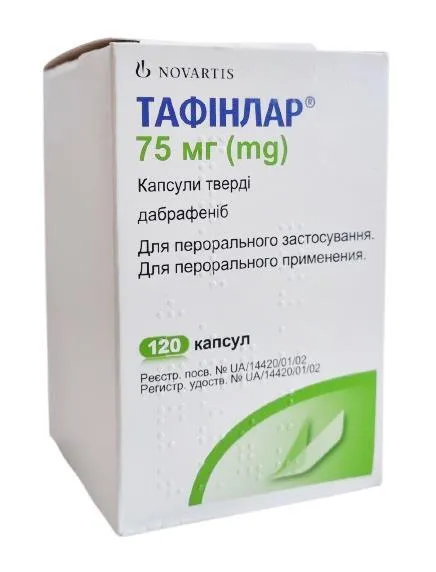
Table of Contents
INSTRUCTIONS FOR MEDICAL USE OF THE MEDICINAL PRODUCT TAFINLAR® (TAFINLAR®)
Composition:
Active substance: dabrafenib;
1 capsule contains 50 mg or 75 mg of dabrafenib (in the form of dabrafenib mesylate);
Excipients: microcrystalline cellulose, magnesium stearate, anhydrous colloidal silicon dioxide;
Capsule shell: iron oxide red (E 172), titanium dioxide (E 171), hypromellose (E 464), ink S-1-17822 or S-1-17823 (shellac, iron oxide black (E 172), propylene glycol (E 1520), ammonium hydroxide (E 527), butyl alcohol, isopropyl alcohol).
Pharmaceutical form. Hard capsules.
Main physicochemical properties: 50 mg capsule – an opaque capsule consisting of a dark red body and a dark red cap; the code GS TEW is printed on the cap, and the dosage "50 mg" is printed on the body of the capsule; 75 mg capsule – an opaque capsule consisting of a dark pink body and a dark pink cap; the code GS LHF is printed on the cap, and the dosage "75 mg" is printed on the body of the capsule.
Pharmacotherapeutic group. Antineoplastic agents. Protein kinase inhibitors. B-Raf serine-threonine kinase (BRAF) inhibitors.
ATC code L01E C02.
Pharmacological properties.
Pharmacodynamics.
Mechanism of action.
Dabrafenib is a kinase inhibitor of the RAF family. Oncogenic mutations in the BRAF gene lead to constitutive activation of the RAS/RAF/MEK/ERK signaling pathway. BRAF mutations have been identified with high frequency in certain types of tumors, including approximately 50% of melanomas. The most common BRAF mutation is the V600E mutation, which accounts for approximately 90% of all BRAF mutations in melanoma.
Dabrafenib also inhibits wild-type BRAF and CRAF enzymes with IC50 values of 3.2 and 5.0 nM, respectively. Dabrafenib inhibits the growth of BRAF-mutated melanoma cells both in vitro and in vivo.
Preclinical data obtained from biochemical assays demonstrated that dabrafenib inhibits BRAF kinases harboring activating codon 600 mutations (Table 1).
Table 1. Inhibitory activity of dabrafenib against RAF family kinases
| Kinase |
Inhibitory concentration 50 (nmol/L) |
| BRAF V600E |
0.65 |
| BRAF V600K |
0.50 |
| BRAF V600D |
1.8 |
| BRAF WT |
3.2 |
| CRAF WT |
5.0 |
Dabrafenib demonstrated suppression of the pharmacodynamic biomarker signaling pathway (phosphorylated ERK) and inhibition of growth of BRAF V600-mutated melanoma cell lines in vitro and in experimental animal models.
In subjects with melanoma expressing the V600-mutant BRAF, treatment with dabrafenib resulted in inhibition of phosphorylated ERK in tumors compared to baseline levels.
Combination with trametinib
Trametinib is a reversible, highly selective allosteric inhibitor of mitogen-activated extracellular signal-regulated kinase 1 (MEK1) and MEK2 activation and kinase activity. MEK proteins are components of the extracellular signal-regulated kinase (ERK) signaling pathway.
Thus, trametinib and dabrafenib inhibit two kinases, MEK and RAF, respectively, and their combination provides dual inhibition. The combination of dabrafenib with trametinib demonstrated antitumor activity in BRAF V600-mutated melanoma cell lines in vitro and delayed the emergence of resistance in BRAF V600-mutated melanoma xenografts in vivo.
Determination of BRAF mutation. Prior to initiating dabrafenib, the presence of the BRAF V600 mutation in tumor cells must be confirmed using a validated testing method. In phase II and III clinical trials, screening for eligibility required a central test for BRAF V600 mutation using a BRAF mutation assay performed on available recent tumor samples. Primary or metastatic tumor tissue was tested only for investigational use (IUO). The IUO method was an allele-specific polymerase chain reaction (PCR) performed on DNA extracted from formalin-fixed, paraffin-embedded (FFPE) tumor tissue samples. The assay was specifically designed to differentiate V600E and V600K mutations. Only subjects with tumors positive for BRAF V600E or V600K mutations were eligible for inclusion in the studies.
Subsequently, all tumor samples were retested using the validated THxID BRAF assay manufactured by bioMerieux (bMx), which carries a CE mark. The THxID BRAF bMx assay is an allele-specific PCR performed on DNA extracted from FFPE tumor tissue samples. The assay was designed to detect V600E and V600K mutations with high sensitivity (detection down to 5% mutant alleles in V600E and V600K wild-type background using DNA from FFPE tissue). Preclinical and clinical studies with retrospective bidirectional Sanger sequencing analyses showed that the test also detects the less common BRAF V600D mutation and the V600E/K601E mutation, albeit with lower sensitivity. Among preclinical and clinical study samples (n = 876) that were positive for mutation by the THxID BRAF assay and subsequently sequenced using a reference method, the specificity of the assay was 94%.
Adjuvant therapy for stage III melanoma
BRF115532 (COMBI-AD)
The efficacy and safety of trametinib in combination with dabrafenib were evaluated in a multicenter, randomized, double-blind, placebo-controlled trial involving patients with stage III cutaneous melanoma (stages IIIA [lymph node metastases >1 mm], IIIB, or IIIC) with a V600 E/K mutation in the BRAF gene following complete resection.
A total of 870 patients were randomized to receive combination therapy (n = 438) or placebo (n = 432). The majority of patients were of Caucasian race (99%) and male (55%), with a median age of 51 years (18% ≥ 65 years). Patients with all stage III sub-stages prior to resection were included; 18% of these patients had lymph node involvement detectable only microscopically and absence of ulceration of the primary tumor. The majority of patients had a BRAF V600E mutation (91%). At the time of primary analysis, the median duration of follow-up (time from randomization to last contact or death) was 2.83 years in the dabrafenib plus trametinib combination group and 2.75 years in the placebo group.
QT interval prolongation. The most severe cases of QT prolongation > 60 milliseconds (ms) were observed in 3% of patients receiving dabrafenib (one case of QT > 500 ms was reported in the safety-evaluable patient group). In phase III study MEK115306, no patients receiving trametinib in combination with dabrafenib experienced the most severe QTcB prolongation to > 500 ms; QTcB increased by more than 60 ms from baseline in 1% (3/209) of patients. In phase III study MEK116513, QTcB prolongation of grade 3 (> 500 ms) was observed in four patients (1%) receiving trametinib in combination with dabrafenib. In two of these patients, grade 3 QTcB prolongation also represented an increase of > 60 ms from baseline.
The potential effect of dabrafenib on QT interval prolongation was evaluated in a dedicated multiple-dose study. A subtherapeutic dose of dabrafenib 300 mg twice daily was administered to 32 individuals with BRAF V600-mutated tumors. No clinically relevant effect of dabrafenib or its metabolites on QTc interval was observed.
Other studies – pyrexia management analysis
Studies CPDR001F2301 (COMBI‑i) and CDRB436F2410 (COMBI‑Aplus)
Pyrexia events were observed in patients receiving combination therapy with dabrafenib and trametinib. In initial registration trials of combination therapy for unresectable or metastatic melanoma (COMBI-d and COMBI-v; total N=559) and adjuvant melanoma therapy (COMBI-AD, N=435), interruption of dabrafenib alone was recommended in case of pyrexia (body temperature ≥38.5°C). In two subsequent trials of therapy for unresectable or metastatic melanoma (control arm of COMBI-i, N=264) and adjuvant melanoma therapy (COMBI-Aplus, N=552), interruption of both drugs was recommended upon body temperature increase ≥38°C (COMBI-Aplus) or at first symptoms of pyrexia (COMBI-i; COMBI-Aplus for recurrent pyrexia). During COMBI-i and COMBI-Aplus trials, a lower frequency of grade 3/4 pyrexia, complicated pyrexia, hospitalization due to serious pyrexia, adverse events of special interest (AESI), AESI "pyrexia duration", and permanent discontinuation of both drugs due to AESI "pyrexia" (latter only in adjuvant therapy) was observed compared to COMBI-d, COMBI-v, and COMBI-AD trials. In the COMBI-Aplus trial, the primary endpoint was met with a cumulative incidence of 8.0% (95% CI: 5.9, 10.6) for grade 3/4 pyrexia, hospitalization due to pyrexia, or permanent discontinuation of treatment due to pyrexia, compared to 20.0% (95% CI: 16.3, 24.1) in the historical control (COMBI-AD).
Pharmacokinetics.
Absorption. Dabrafenib is absorbed following oral administration, with maximum plasma concentration (Cmax) reached within 2 hours after dose administration. The mean absolute oral bioavailability of dabrafenib is 95% (90% CI: 81, 110%). Maximum concentration and exposure of dabrafenib (Cmax and AUC) increase proportionally with dose in the range of 12–300 mg after single administration. Following twice-daily dosing, increases in these parameters are not entirely dose-proportional. A decrease in exposure was observed after repeated dosing, likely due to autoinduction of metabolism. The mean accumulation ratio of AUC day 18/day 1 was 0.73. After administration of 150 mg twice daily, the geometric mean Cmax, AUC(0-τ), and trough concentration (Cτ) were 1478 ng/mL, 4341 ng*h/mL, and 26 ng/mL, respectively.
Administration of dabrafenib with food reduced bioavailability (Cmax and AUC decreased by 51% and 31%, respectively) and delayed absorption of dabrafenib capsules compared to administration in the fasted state.
Distribution. Dabrafenib is 99.7% bound to plasma proteins. The volume of distribution at steady state after intravenous microdose administration is 46 L.
Metabolism. Dabrafenib metabolism is primarily mediated by CYP2C8 and CYP3A4, forming hydroxydabrafenib, which is further oxidized by CYP3A4 to carboxydabrafenib. Carboxydabrafenib may undergo decarboxylation via a non-enzymatic process to form desmethyl-dabrafenib. Carboxydabrafenib is excreted in bile and urine. Desmethyldabrafenib may also be formed in the intestine and undergo enterohepatic recirculation. Desmethyldabrafenib is metabolized by CYP3A4 to oxidative metabolites. The terminal half-life of hydroxydabrafenib corresponds to that of the parent compound and is 10 hours, whereas the carboxy- and desmethyl-metabolites exhibit longer half-lives (21–22 hours). The mean metabolite-to-parent AUC ratio after repeated dosing was 0.9, 11, and 0.7 for hydroxy-, carboxy-, and desmethyl-dabrafenib, respectively. Based on exposure, relative activity, and pharmacokinetic characteristics, both hydroxy- and desmethyl-dabrafenib are likely to contribute to the clinical activity of dabrafenib, whereas the activity of carboxydabrafenib is unlikely to be significant.
In vitro assessment of drug-drug interactions.
Dabrafenib is a substrate of human P-glycoprotein (Pgp) and human BCRP in vitro. However, these transporters have minimal impact on the oral bioavailability and elimination of dabrafenib, and the risk of clinically significant drug interactions with Pgp or BCRP inhibitors is low. Neither dabrafenib nor its three major metabolites are inhibitors of Pgp in vitro.
Although dabrafenib and its metabolites—hydroxydabrafenib, carboxy-dabrafenib, and desmethyl-dabrafenib—are inhibitors of human organic anion transporting polypeptides (OATP) 1B1 and OAT3 in vitro, and dabrafenib and its metabolite desmethyl-dabrafenib are inhibitors of organic cation transporter 2 (OCT2) in vitro, the risk of drug-drug interactions is considered minimal based on clinical exposure levels of dabrafenib and its metabolites.
Elimination. The terminal half-life after intravenous microdose administration is 2.6 hours. The terminal half-life of dabrafenib is 8 hours due to a prolonged terminal phase following oral administration. Intravenous plasma clearance is 12 L/h. Fecal excretion is the major route of elimination after oral administration, accounting for 71% of the radioactive dose, while urinary excretion accounts for 23%.
Special patient populations.
Hepatic impairment. The pharmacokinetics of dabrafenib were studied in 65 patients with mild hepatic impairment (National Cancer Institute [NCI] classification) included in clinical trials using population analysis. Total clearance of dabrafenib did not differ significantly between these subjects and those with normal hepatic function (4% difference). Additionally, mild hepatic impairment does not significantly affect plasma concentrations of dabrafenib metabolites. Dabrafenib should be used with caution in patients with moderate or severe hepatic impairment (see section "Dosage and administration").
Renal impairment. The effect of mild or moderate renal impairment on total dabrafenib clearance was minimal and not clinically significant. Data are lacking in subjects with severe renal impairment (see section "Dosage and administration").
Age. Population analysis indicates that age does not significantly affect the pharmacokinetics of dabrafenib. However, age over 75 years was a significant prognostic factor for plasma concentrations of carboxy- and desmethyl-dabrafenib, with 40% higher exposure in subjects aged ≥75 years compared to those aged <75 years.
Body weight and sex. Population analysis revealed that sex and body weight affect total dabrafenib clearance; body weight also influenced total volume of distribution and distributional clearance. These pharmacokinetic differences were not considered clinically significant.
Race. Pharmacokinetic analysis of patient groups did not reveal any clinically significant differences in dabrafenib pharmacokinetics between Caucasian and Asian populations. Insufficient data are available to assess the potential impact of other racial groups on dabrafenib pharmacokinetics.
Pediatric population. Pharmacokinetic studies of dabrafenib in the pediatric population have not been conducted.
Clinical characteristics.
Indications.
Melanoma
Dabrafenib is indicated as monotherapy or in combination with trametinib for the treatment of adult patients with unresectable or metastatic melanoma whose tumor cells harbor the BRAF V600 mutation.
Adjuvant therapy of melanoma
Dabrafenib in combination with trametinib is indicated for adjuvant therapy in adult patients with stage III melanoma with the BRAF V600 mutation following complete resection.
Non-small cell lung cancer (NSCLC)
Dabrafenib in combination with trametinib is indicated for the treatment of adult patients with metastatic non-small cell lung cancer harboring the BRAF V600 mutation.
Contraindications.
Hypersensitivity to dabrafenib or to any of the excipients of the medicinal product.
Interaction with other medicinal products and other forms of interaction.
Effect of other medicinal products on dabrafenib. Dabrafenib is a substrate of CYP2C8 and CYP3A4 enzymes, while its active metabolites—hydroxydabrafenib and desmethyl-dabrafenib—are substrates of CYP3A4. Therefore, medicinal products that are strong inhibitors or inducers of CYP2C8 or CYP3A4 may increase or decrease dabrafenib concentrations, respectively. When possible, alternative agents should be considered for concomitant use with dabrafenib. Caution is advised when using strong inhibitors (such as ketoconazole, gemfibrozil, nefazodone, clarithromycin, ritonavir, saquinavir, telithromycin, itraconazole, voriconazole, posaconazole, atazanavir) concomitantly with dabrafenib. Concomitant use of dabrafenib with strong inducers of CYP2C8 or CYP3A4 (such as rifampicin, phenytoin, carbamazepine, phenobarbital, or St John’s wort (Hypericum perforatum)) should be avoided.
Co-administration of ketoconazole (a CYP3A4 inhibitor) at a dose of 400 mg once daily with dabrafenib at 75 mg twice daily resulted in a 71% increase in dabrafenib AUC and a 33% increase in Cmax compared to dabrafenib 75 mg twice daily as monotherapy. Combination therapy led to increases in AUC of hydroxy- and desmethyl-dabrafenib (by 82% and 68%, respectively). A 16% decrease in AUC was observed for carboxydabrafenib.
Concomitant administration of gemfibrozil (a CYP2C8 inhibitor) at 600 mg twice daily with dabrafenib at 75 mg twice daily resulted in a 47% increase in dabrafenib AUC, but no change in Cmax compared to dabrafenib 75 mg twice daily as monotherapy. Gemfibrozil had no clinically significant effect on systemic exposure to dabrafenib metabolites (≤13%).
Administration of rifampicin (a CYP3A4/CYP2C8 inducer) at 600 mg once daily with dabrafenib at 150 mg twice daily led to a 27% decrease in Cmax and a 34% decrease in AUC of repeated-dose dabrafenib. No clinically significant changes in AUC of hydroxydabrafenib were observed. A 73% increase in AUC of carboxydabrafenib and a 30% decrease in AUC of desmethyl-dabrafenib were observed.
Concomitant administration of repeated doses of dabrafenib 150 mg twice daily and the gastric pH-elevating agent rabeprazole at 40 mg once daily resulted in a 3% increase in AUC and a 12% decrease in Cmax of dabrafenib. No clinically significant changes in AUC and Cmax of dabrafenib were observed. Medicinal products that alter the pH of the upper gastrointestinal tract (e.g., proton pump inhibitors, H2-receptor antagonists, antacids) do not reduce the bioavailability of dabrafenib.
Effect of dabrafenib on other medicinal products. Dabrafenib is an enzyme inducer and increases the synthesis of enzymes involved in drug metabolism, including CYP3A4, CYP2Cs, and CYP2B6, and may increase the synthesis of transporters. This leads to reduced plasma levels of drugs metabolized by these enzymes and may affect transporter-related drugs. Decreased plasma concentrations may result in loss or reduction of clinical effect of these medicinal products. There is also a risk of increased formation of inactive metabolites of these drugs. Enzymes that may be induced include hepatic and intestinal CYP3A, CYP2B6, CYP2C8, CYP2C9, CYP2C19, and UGTs (glucuronidating enzymes). The P-glycoprotein (Pgp) transporter may also be induced, as well as other transporters such as MRP-2. Induction of OATP1B1/1B3 and BCRP is unlikely based on observations from the rosuvastatin clinical study.
In vitro, dabrafenib causes dose-dependent induction of CYP2B6 and CYP3A4. In a clinical drug interaction study, Cmax and AUC of oral midazolam (a CYP3A4 substrate) decreased by 47% and 65%, respectively, when co-administered with repeated doses of dabrafenib.
Administration of dabrafenib at 150 mg twice daily with warfarin resulted in a 37% and 33% reduction in AUC of S- and R-warfarin, respectively, compared to warfarin monotherapy. Cmax of S- and R-warfarin increased by 18% and 19%, respectively.
Interactions with many drugs that are metabolized or actively transported are expected. If treatment with such agents is essential for the patient and dose adjustment is not easily achievable through monitoring of efficacy or plasma concentrations, these medicinal products should be avoided or used with caution. The risk of liver injury following acetaminophen use is considered higher in patients receiving enzyme inducers.
The number of drugs affected is expected to be large, although the extent of interaction will vary. Groups of medicinal products that may be affected include, but are not limited to:
- Analgesics (e.g., fentanyl, methadone)
- Antibiotics (e.g., clarithromycin, doxycycline)
- Anticancer agents (e.g., cabazitaxel)
- Anticoagulants (e.g., acenocoumarol, warfarin (see section "Special precautions for use"))
- Antiepileptic drugs (e.g., carbamazepine, phenytoin, primidone, valproic acid)
- Neuroleptics (e.g., haloperidol)
- Calcium channel blockers (e.g., diltiazem, felodipine, nicardipine, nifedipine, verapamil)
- Cardiac glycosides (e.g., digoxin (see section "Special precautions for use"))
- Corticosteroids (e.g., dexamethasone, methylprednisolone)
- Antiviral agents for HIV infection (e.g., amprenavir, atazanavir, darunavir, delavirdine, efavirenz, fosamprenavir, indinavir, lopinavir, nelfinavir, saquinavir, tipranavir)
- Hormonal contraceptives (see section "Use during pregnancy or breastfeeding")
- Sedatives (e.g., diazepam, midazolam, zolpidem)
- Immunosuppressants (e.g., cyclosporine, tacrolimus, sirolimus)
- Statins metabolized by CYP3A4 (e.g., atorvastatin, simvastatin)
Induction is likely to occur within 3 days of repeated dabrafenib dosing. After discontinuation of dabrafenib, induction resolves gradually, and concentrations of sensitive substrates of CYP3A4, CYP2B6, CYP2C8, CYP2C9, CYP2C19, UDP-glucuronosyltransferases (UGT), and transporters (e.g., Pgp or MRP-2) may increase; therefore, monitoring of patients for toxicity and need for dose adjustment of these medicinal products is necessary.
In vitro, dabrafenib is capable of inhibiting CYP3A4; therefore, transient inhibition of CYP3A4 may occur during the first few days of treatment.
Effect of dabrafenib on transport systems of other substances. Dabrafenib is an in vitro inhibitor of human organic anion transporting polypeptides (OATP) 1B1 (OATP1B1), OATP1B3, and BCRP. After co-administration of a single dose of rosuvastatin (a substrate of OATP1B1, OATP1B3, and BCRP) with repeated doses of dabrafenib 150 mg twice daily in 16 patients, rosuvastatin Cmax increased 2.6-fold, while AUC changed minimally (7% increase). The increased Cmax of rosuvastatin is unlikely to be clinically significant.
Combination with trametinib. Concomitant administration of repeated doses of trametinib 2 mg once daily and dabrafenib 150 mg twice daily did not result in clinically significant changes in Cmax or AUC of trametinib or dabrafenib, as increases were 16% and 23%, respectively, for Cmax and AUC of dabrafenib. Pharmacokinetic data indicate a slight reduction in trametinib bioavailability, corresponding to a 12% decrease in AUC, when trametinib is used in combination with dabrafenib, a CYP3A4 inducer.
When using dabrafenib in combination with trametinib, refer to the recommendations provided in the sections "Special precautions for use" and "Interaction with other medicinal products and other forms of interaction" of the respective product information for both medicinal products regarding potential interactions between them.
Effect of food on dabrafenib. Patients should take dabrafenib at least 1 hour before or 2 hours after a meal due to the effect of food on dabrafenib absorption (see section "Pharmacokinetics").
Pediatric population. Drug interaction studies have been conducted only in adults.
Special precautions for use.
When using dabrafenib in combination with trametinib, refer to the prescribing information for trametinib prior to initiating combination therapy. Additionally, consult the prescribing information for trametinib for further information regarding warnings and precautions related to trametinib treatment.
Determination of BRAF V600. The efficacy and safety of dabrafenib have not been established in patients with BRAF wild-type malignant melanoma or BRAF wild-type non-small cell lung cancer; therefore, dabrafenib should not be used in patients with BRAF wild-type malignant melanoma or BRAF wild-type non-small cell lung cancer (see sections “Dosage and administration” and “Pharmacodynamics”).
Dabrafenib in combination with trametinib in patients who have experienced disease progression after prior BRAF inhibitor therapy.
Data on patients receiving the combination of dabrafenib with trametinib who have experienced disease progression after prior BRAF inhibitor therapy are limited. These data indicate that efficacy of the combination may be reduced in such patients (see section “Pharmacodynamics”). Therefore, consideration should be given to alternative treatment options before using this combination in patients previously treated with a BRAF inhibitor. The optimal sequence of therapies after disease progression following prior BRAF inhibitor therapy has not been established.
New malignant neoplasms. New primary malignancies, both cutaneous and non-cutaneous, may occur during treatment with dabrafenib as monotherapy or in combination with trametinib.
Cutaneous malignancies.
Cutaneous squamous cell carcinoma (cSCC). Cases of cutaneous squamous cell carcinoma (including those classified as keratoacanthoma) have been reported in patients receiving dabrafenib as monotherapy and in combination with trametinib. In phase III clinical trials MEK115306 and MEK116513 involving patients with unresectable or metastatic melanoma, cSCC occurred in 10% (22/211) of patients receiving dabrafenib monotherapy and in 18% (63/349) of patients receiving vemurafenib monotherapy, respectively. In the integrated safety population with metastatic melanoma and advanced non-small cell lung cancer, cutaneous squamous cell carcinoma was observed in 2% (19/1076) of patients receiving dabrafenib in combination with trametinib. The median time to first diagnosis of cSCC in study MEK115306 was 223 days (range 56 to 510 days) in the combination therapy group and 60 days (range 9 to 653 days) in the dabrafenib monotherapy group. During the phase III BRF115532 (COMBI-AD) adjuvant melanoma study, cutaneous squamous cell carcinoma developed in 1% (6/435) of patients receiving dabrafenib in combination with trametinib compared to 1% (5/432) of patients receiving placebo. During the adjuvant treatment study, the median time to onset of cutaneous squamous cell carcinoma was approximately 18 weeks in the combination therapy group and 33 weeks in the placebo group.
Skin examination is recommended prior to starting dabrafenib therapy, monthly during treatment, and for 6 months after treatment completion. Monitoring should continue for 6 months after discontinuation of dabrafenib or until initiation of another anticancer therapy.
If cSCC develops, surgical excision is recommended, and dabrafenib treatment should continue without dose adjustment. Patients should be informed to promptly report any skin changes to their physician.
New primary melanoma. New primary melanomas have been reported during clinical trials. These cases were detected within the first 5 months of therapy, were managed surgically, and did not require dose modification. Monitoring for skin pathology changes should be performed as described above for cutaneous squamous cell carcinoma.
Non-cutaneous secondary/recurrent malignant neoplasms. In vitro studies have demonstrated paradoxical activation of mitogen-activated protein kinase (MAP kinase) in cells with BRAF wild-type and RAS mutations under the influence of BRAF inhibitors. This may increase the risk of non-cutaneous malignancies during dabrafenib treatment in the presence of RAS mutations. Cases of RAS-associated malignancies have been reported both with another BRAF inhibitor (chronic myelomonocytic leukemia and non-cutaneous head and neck squamous cell carcinoma) and with dabrafenib in combination with MEK inhibitors, trametinib (colorectal cancer, pancreatic cancer).
Prior to initiating treatment, patients should undergo head and neck examination including at least visual inspection of the oral mucosa and palpation of lymph nodes, as well as chest/abdominal computed tomography (CT). During treatment, patient evaluations should be performed according to clinical indications, which may include head and neck examination every 3 months and chest/abdominal CT every 6 months. Examination of the anal region and pelvic organs (in women) is recommended before and at the end of treatment or when clinically indicated. Complete blood count should be performed as clinically indicated.
The benefits and risks of dabrafenib use should be carefully weighed in patients with a history of or ongoing RAS-mutation-associated cancer. No dose modification of trametinib is required when used in combination with dabrafenib.
After discontinuation of dabrafenib, monitoring for non-cutaneous secondary/recurrent malignancies should continue for 6 months or until initiation of another anticancer therapy. Pathological findings should be managed according to approved clinical practices.
Bleeding. Bleeding events, including serious and fatal hemorrhages, have been observed in patients receiving the combination of dabrafenib with trametinib (see section “Adverse reactions”). For additional information, refer to the prescribing information for trametinib (see section “Special precautions for use”).
Visual disturbances. Ophthalmologic events, including uveitis, iridocyclitis, and iritis, have been reported in patients receiving dabrafenib as monotherapy and in combination with trametinib in clinical trials. Patients should be regularly monitored for visual signs and symptoms (e.g., visual changes, photophobia, eye pain) during therapy.
Dose modification is not required as long as effective local therapy controls ocular inflammation. If uveitis does not respond to local ocular treatment, dabrafenib should be withheld until resolution of ocular inflammation, after which treatment may be resumed at a reduced dose level. When used in combination with dabrafenib, no dose modification of trametinib is required following diagnosis of uveitis.
Retinal pigment epithelial detachment and retinal vein occlusion may occur when dabrafenib is used in combination with trametinib. For additional information, refer to the prescribing information for trametinib (see section “Special precautions for use”). No dose modification of dabrafenib is required after diagnosis of retinal vein occlusion or retinal pigment epithelial detachment when dabrafenib is used in combination with trametinib.
Hyperthermia. Fever events have been reported with dabrafenib monotherapy and in combination with trametinib: 1% of patients experienced serious non-infectious hyperthermia defined as fever with severe chills, dehydration, hypotension, and/or acute prerenal renal failure in patients with initially normal baseline renal function (see section “Ad游戏副本
Method of Administration and Dosage
Treatment with dabrafenib should be initiated and managed under the supervision of a qualified physician experienced in the use of anticancer medicinal products.
Prior to starting dabrafenib, the presence of the BRAF V600 mutation in tumor cells must be confirmed using a validated testing method.
The efficacy and safety of dabrafenib have not been established in patients with BRAF wild-type melanoma; therefore, dabrafenib should not be used in patients with BRAF wild-type malignant melanoma (see sections "Special Warnings and Precautions for Use" and "Pharmacological Properties").
Dosage. The recommended dose of dabrafenib, both as monotherapy and in combination with trametinib, is 150 mg (two 75 mg capsules) twice daily (corresponding to a total daily dose of 300 mg).
When used in combination with dabrafenib, the recommended dose of trametinib is 2 mg once daily.
Duration of Treatment. Therapy should be continued as long as clinical benefit is observed or until intolerable toxicity occurs (see Table 2). In the adjuvant melanoma treatment setting, patients should receive treatment for 12 months, provided there is no disease recurrence or unacceptable toxicity.
Missed Doses. If a dose is missed, it may be taken if the interval between the missed dose and the next scheduled dose is more than 6 hours.
If a dose of trametinib is missed while dabrafenib is being used in combination with trametinib, the trametinib dose should be taken if more than 12 hours remain before the next scheduled dose.
Dose Adjustment. Two capsule strengths of dabrafenib are available—50 mg and 75 mg—to facilitate effective dose adjustments.
Management of adverse reactions may require temporary interruption of treatment, dose reduction, or permanent discontinuation of therapy (see Tables 1 and 2).
In the event of cutaneous squamous cell carcinoma (cSCC) or a new primary melanoma, dose modification or interruption of treatment is not recommended (see section "Special Warnings and Precautions for Use").
Dose modification is not required for uveitis, provided effective local therapy controls ocular inflammation. If uveitis does not respond to local ocular treatment, dabrafenib should be withheld until ocular inflammation resolves, after which treatment should be resumed at a reduced dose level (see section "Special Warnings and Precautions for Use").
Recommended dose reduction levels and dose modification guidelines are provided in Table 1 and Table 2, respectively.
Table 1. Recommended Dose Reduction Levels
| Dose Level |
Dabrafenib Dose When used as monotherapy or in combination with trametinib |
Trametinib Dose* Only when used in combination with dabrafenib |
| Full dose |
150 mg twice daily |
2 mg once daily |
| First reduction |
100 mg twice daily |
1.5 mg once daily |
| Second reduction |
75 mg twice daily |
1 mg once daily |
| Third reduction |
50 mg twice daily |
1 mg once daily |
| Regardless of whether dabrafenib is used as monotherapy or in combination with trametinib, reduction of the dabrafenib dose below 50 mg twice daily is not recommended. When used in combination with dabrafenib, reduction of the trametinib dose below 1 mg once daily is not recommended. |
||
| *For information on trametinib dosing as monotherapy, refer to the "Administration and Dosage" section of the trametinib prescribing information. |
||
Table 2. Dose modification scheme for dabrafenib according to the severity of adverse reactions (excluding pyrexia)
| Grade (CTC-AE)* |
Recommended dosage adjustment for dabrafenib (used as monotherapy or in combination with trametinib) |
| Grade 1 or Grade 2 (tolerable) |
Continue treatment and monitor clinically as indicated. |
| Grade 2 (intolerable) or Grade 3 |
Withhold therapy until improvement to Grade 0–1 and reduce dose by one level upon resuming treatment. |
| Grade 4 |
Permanently discontinue treatment or withhold therapy until improvement to Grade 0–1 and reduce dose by one level upon resuming treatment. |
| *The intensity of clinical adverse reactions was assessed according to the Common Terminology Criteria for Adverse Events, version 4.0 (CTC-AE). |
|
In case of effective management of adverse reactions, re-escalation of the dose may be considered in the same increments as dose reduction. The dose should not exceed 150 mg twice daily.
Pyrexia
If a patient develops a temperature ≥ 38 ºC, treatment (dabrafenib in monotherapy, as well as dabrafenib and trametinib in combination therapy) should be interrupted. In case of recurrence, therapy may also be interrupted at the first signs of pyrexia. Antipyretic treatment, such as ibuprofen or acetaminophen/paracetamol, should be initiated. Oral corticosteroids should be considered if antipyretics are insufficient. Patients should be evaluated for signs and symptoms of infection and treated accordingly per local practice (see section "Special warnings and precautions for use"). Dabrafenib treatment, as well as combination therapy with trametinib and dabrafenib, should be resumed if the patient has been afebrile for at least 24 hours, either (1) at the same dose or (2) at a dose reduced by one level if pyrexia recurs and/or is accompanied by other severe symptoms, including dehydration, hypotension, or renal failure.
In case of treatment-related toxicities when dabrafenib is used in combination with trametinib, doses of both agents should be reduced simultaneously or therapy should be interrupted or discontinued. Exceptional situations where dose modification is required for only one of the two agents are described below and relate to uveitis, malignant non-cutaneous neoplasms with RAS mutation, left ventricular ejection fraction reduction, retinal vein occlusion, retinal pigment epithelial detachment, and interstitial lung disease/pneumonitis (primarily associated with trametinib).
Exceptions regarding dose modification (when only one of the two agents has its dose reduced) in case of specific adverse reactions
Uveitis – dose modification is not required while using
Effective topical ophthalmic agents help control ocular inflammation in cases of uveitis. If uveitis does not respond to local ocular therapy, dabrafenib administration should be withheld until resolution of ocular inflammation, after which treatment should be resumed at a reduced dose by one level (see section "Special warnings and precautions for use").
Malignant non-cutaneous neoplasms with RAS mutation
The benefit-risk balance should be carefully considered before continuing dabrafenib treatment in patients with non-cutaneous malignant neoplasms harboring RAS mutations. When used in combination with dabrafenib, dose modification of trametinib is not required.
Reduction in left ventricular ejection fraction (LVEF)/left ventricular dysfunction
For recommendations on trametinib dose modification when dabrafenib is used in combination with trametinib, refer to the trametinib prescribing information (see section "Dosage and administration") if there is an absolute decrease in LVEF of > 10% from baseline and the LVEF value is below the institutional lower limit of normal (LLN). When used in combination with trametinib, dose modification of dabrafenib is not required.
Retinal vein occlusion (RVO) and retinal pigment epithelial detachment (RPED)
For recommendations on trametinib dose modification in patients reporting new visual disturbances such as worsening of central vision, blurred vision, or loss of vision at any time during combination therapy with dabrafenib and trametinib, refer to the trametinib prescribing information (see section "Dosage and administration"). When used in combination with trametinib, dose modification of dabrafenib is not required in confirmed cases of RVO or RPED.
Interstitial lung disease (ILD)/pneumonitis
For recommendations on trametinib dose modification in patients receiving dabrafenib in combination with trametinib who are suspected of having ILD or pneumonitis, including patients who develop new or worsening pulmonary symptoms such as cough, dyspnea, hypoxia, pleural effusion, or infiltrates, refer to the trametinib prescribing information (see section "Dosage and administration") pending clinical evaluation results. Dose modification of dabrafenib is not required in cases of ILD or pneumonitis when used in combination with trametinib.
Non-Caucasian patients. Data on the efficacy and safety of dabrafenib in non-Caucasian patients are limited. A pharmacokinetic analysis of patient subgroups did not reveal any clinically significant differences in dabrafenib pharmacokinetics between Caucasian and Asian patients. Dose adjustment of dabrafenib is not required for Asian patients.
Elderly patients. No special initial dose adjustment is required for patients aged > 65 years.
Renal impairment. No dose adjustment is required for patients with mild or moderate renal impairment. There are no clinical data available in patients with severe renal impairment, so the potential need for dose adjustment cannot be determined (see section "Pharmacokinetics"). Dabrafenib should be used with caution in patients with severe renal impairment when administered as monotherapy or in combination with trametinib.
Hepatic impairment. There are no clinical data available in patients with moderate or severe hepatic impairment, so the potential need for dose adjustment cannot be determined (see section "Pharmacokinetics"). Hepatic metabolism and biliary excretion are the primary pathways of elimination of dabrafenib and its metabolites; increased exposure is possible in patients with moderate or severe hepatic impairment. Dabrafenib should be used with caution in patients with moderate or severe hepatic impairment.
Method of administration. Tafinlar® is for oral use. Capsules should be swallowed whole with a glass of water. They should not be chewed, crushed, or mixed with food or beverages due to the chemical instability of dabrafenib.
It is recommended to take doses of dabrafenib at approximately the same time each day, with an interval of approximately 12 hours between doses. When dabrafenib and trametinib are used in combination, the daily dose of trametinib should be taken each day at the same time, both in the morning and in the evening.
Dabrafenib should be taken at least 1 hour before or at least 2 hours after a meal.
If a patient vomits after taking dabrafenib, the dose should not be repeated; instead, the patient should continue therapy with the next scheduled dose.
For information on the method of administration of trametinib in combination with dabrafenib, refer to the prescribing information for trametinib.
Children
The safety and efficacy of dabrafenib in children (under 18 years of age) have not been established. Clinical data are lacking.
Overdose
There is no specific antidote for dabrafenib overdose. In case of overdose, the patient should receive supportive treatment with appropriate monitoring as necessary.
Adverse reactions
The safety profile is based on data from five clinical studies of monotherapy involving 578 patients with unresectable or metastatic melanoma with BRAF V600 mutation who received dabrafenib at a dose of 150 mg twice daily. The most common adverse reactions (≥15%) reported with dabrafenib were hyperkeratosis, headache, pyrexia, arthralgia, asthenia, nausea, papillomas, alopecia, rash, and vomiting.
The safety of dabrafenib in combination with trametinib was evaluated in a pooled safety assessment of 1076 patients with unresectable or metastatic melanoma with BRAF V600 mutation, stage III melanoma with BRAF V600 mutation after complete resection (adjuvant therapy), and metastatic non-small cell lung cancer who received dabrafenib at a dose of 150 mg twice daily and trametinib at a dose of 2 mg once daily. Of these patients, 559 received combination therapy for BRAF V600-mutated melanoma in two randomized phase III clinical trials, MEK115306 (COMBI-d) and MEK116513 (COMBI-v); 435 received the combination for adjuvant treatment of stage III melanoma with BRAF V600 mutation after complete resection in the randomized phase III trial BRF115532 (COMBI-AD); and 82 patients received combination therapy for BRAF V600-mutated non-small cell lung cancer in the non-randomized, multi-cohort phase II trial BRF113928.
The most common adverse reactions (≥20%) with the combination of dabrafenib and trametinib include pyrexia, fatigue, nausea, headache, chills, diarrhea, rash, arthralgia, and vomiting.
Adverse reactions associated with dabrafenib observed during clinical trials and post-marketing surveillance are listed below for dabrafenib monotherapy (Table 3) and for dabrafenib in combination with trametinib (Table 4).
Reported adverse reactions are listed below by MedDRA system organ classes and frequency. Frequency classification:
very common ≥ 1/10
common ≥ 1/100 to < 1/10
uncommon ≥ 1/1000 to < 1/100
rare ≥ 1/10,000 to < 1/1000
very rare < 1/10,000
not known cannot be estimated from available data
Within each frequency grouping, adverse reactions are listed in order of decreasing severity.
Dabrafenib monotherapy
Table 3. Adverse reactions with dabrafenib monotherapy
| System organ class | Very common (≥1/10) | Common (≥1/100 to <1/10) | Uncommon (≥1/1000 to <1/100) | Rare (≥1/10,000 to <1/1000) | Very rare (<1/10,000) | Not known | |--------------------|----------------------|--------------------------|-------------------------------|-------------------------------|-------------------------|-----------| | Infections and infestations | Cellulitis | | | | | | | Neoplasms benign, malignant and unspecified (including cysts and polyps) | Cutaneous squamous cell carcinoma, Keratoacanthoma, New primary melanoma | | | | | | | Blood and lymphatic system disorders | | Anemia | | | | | | Immune system disorders | | Hypersensitivity | | | | | | Metabolism and nutrition disorders | Decreased appetite | | | | | | | Psychiatric disorders | Insomnia | | | | | | | Nervous system disorders | Headache, Dizziness | Dysaesthesia, Paraesthesia | | | | | | Ear and labyrinth disorders | Vertigo | | | | | | | Cardiac disorders | | | | | | Atrioventricular block | | Vascular disorders | | | | | | | | Respiratory, thoracic and mediastinal disorders | Cough, Dyspnoea | | | | | | | Gastrointestinal disorders | Nausea, Vomiting, Diarrhoea, Constipation, Abdominal pain | | | | | | | Hepatobiliary disorders | | | | | | Drug-induced liver injury | | Skin and subcutaneous tissue disorders | Hyperkeratosis, Alopecia, Rash, Photosensitivity reaction, Dry skin, Pruritus, Palmoplantar erythrodysesthesia syndrome, Skin papilloma, Hyperhidrosis | | | | | | | Musculoskeletal and connective tissue disorders | Arthralgia, Myalgia, Back pain | | | | | | | Renal and urinary disorders | | | | | | | | General disorders and administration site conditions | Pyrexia, Chills, Fatigue, Chest pain, Oedema peripheral | | | | | | | Investigations | | | | | | Blood alkaline phosphatase increased | | Injury, poisoning and procedural complications | | | | | | Second-degree burn |
| System organ class |
Frequency |
Adverse reactions |
| Benign, malignant and unspecified neoplasms (including cysts and polyps) |
Very common |
Papillomas |
| Common |
Squamous cell carcinoma of the skin, seborrheic keratosis, acrochordon (skin tags), basal cell carcinoma |
|
| Uncommon |
New primary melanoma |
|
| Immune system disorders |
Uncommon |
Hypersensitivity |
| Metabolism and nutrition disorders |
Very common |
Decreased appetite |
| Common |
Hypophosphatemia, hyperglycemia |
|
| Nervous system disorders |
Very common |
Headache |
| Eye disorders |
Uncommon |
Uveitis |
| Respiratory, thoracic and mediastinal disorders |
Very common |
Cough |
| Gastrointestinal disorders |
Very common |
Nausea, vomiting, diarrhea |
| Common |
Constipation |
|
| Uncommon |
Pancreatitis |
|
| Skin and subcutaneous tissue disorders |
Very common |
Hyperkeratosis, alopecia, rash, hand-foot syndrome (palmar-plantar erythrodysesthesia) |
| Common |
Skin dryness, pruritus, actinic keratosis, skin ulcers, erythema, photosensitivity reactions |
|
| Uncommon |
Panniculitis |
|
| Musculoskeletal and connective tissue disorders |
Very common |
Arthralgia, myalgia, limb pain |
| Renal and urinary disorders |
Uncommon |
Renal failure, acute renal failure, nephritis |
| General disorders and administration site conditions |
Very common |
Pyrexia, weakness, chills, asthenia |
| Common |
Influenza-like syndrome |
Treatment with combination of dabrafenib and trametinib
Table 4. Adverse reactions with dabrafenib in combination with trametinib
| System organ class |
Frequency |
Adverse reactions |
| Infections and infestations |
Very common |
Nasopharyngitis |
| Common |
Urinary tract infection |
|
| Cellulitis |
||
| Folliculitis |
||
| Paronychia |
||
| Pustular rash |
||
| Benign, malignant and unspecified neoplasms (including cysts and polyps) |
Common |
Cutaneous squamous cell carcinomaa |
| Papillomasb |
||
| Seborrheic keratosis |
||
| Uncommon |
Acrochordon (skin tags) |
|
| New primary melanomac |
||
| Blood and lymphatic system disorders |
Common |
Neutropenia |
| Anemia |
||
| Thrombocytopenia |
||
| Leukopenia |
||
| Immune system disorders |
Uncommon |
Drug hypersensitivityg |
| Sarcoidosis |
||
| Rare |
Hemophagocytic lymphohistiocytosis |
|
| Metabolism and nutrition disorders |
Very common |
Decreased appetite |
| Common |
Dehydration |
|
| Hypotension |
||
| Hypophosphatemia |
||
| Hypertension |
||
| Nervous system disorders |
Very common |
Headache |
| Dizziness |
||
| Eye disorders |
Common |
Blurred vision |
| Visual impairment |
||
| Uveitis |
||
| Uncommon |
Chorioretinopathy |
|
| Retinal detachment |
||
| Periorbital edema |
||
| Cardiac disorders |
Common |
Reduced ejection fraction |
| Uncommon |
Bradycardia |
|
| Not known |
Myocarditis |
|
| Vascular disorders |
Very common |
Hypertension |
| Hemorrhaged |
||
| Common |
Hypotension |
|
| Lymphedema |
| Respiratory, thoracic and mediastinal disorders |
Very common |
Cough |
| Common |
Dyspnoea |
|
| Pneumonitis |
||
| Gastrointestinal disorders |
Very common |
Abdominal pain |
| Constipation |
||
| Diarrhoea |
||
| Nausea |
||
| Vomiting |
||
| Common |
Dry mouth |
|
| Stomatitis |
||
| Uncommon |
Pancreatitis |
|
| Colitis |
||
| Rare |
Gastrointestinal perforation |
|
| Skin and subcutaneous tissue disorders |
Very common |
Dry skin |
| Pruritus |
||
| Rash |
||
| Erythema |
||
| Common |
Acneiform dermatitis |
|
| Actinic keratosis |
||
| Hyperhidrosis |
||
| Hyperkeratosis |
||
| Alopecia |
||
| Palmar-plantar erythrodysesthesia syndrome |
||
| Skin disorders |
||
| Hyperhidrosis |
||
| Panniculitis |
||
| Skin fissures |
||
| Photosensitivity reactions |
||
| Not known |
Stevens-Johnson syndrome |
|
| Drug reaction with eosinophilia and systemic symptoms (DRESS) |
||
| Generalized exfoliative dermatitis |
||
| Musculoskeletal and connective tissue disorders |
Very common |
Arthralgia |
| Myalgia |
||
| Limb pain |
||
| Muscle spasms |
||
| Renal and urinary disorders |
Uncommon |
Renal failure |
| Nephritis |
||
| General disorders and administration site conditions |
Very common |
Fatigue |
| Chills |
||
| Asthenia |
||
| Peripheral oedema |
||
| Pyrexia |
||
| Influenza-like illness |
||
| Common |
Mucosal inflammation |
|
| Facial swelling |
||
| Investigations |
Very common |
Increased alanine aminotransferase |
| Increased aspartate aminotransferase |
||
| Common |
Increased blood alkaline phosphatase |
|
| Increased gamma-glutamyltransferase |
||
| Increased blood creatine phosphokinase |
||
| a Squamous cell carcinoma of the skin includes squamous cell carcinoma, squamous cell carcinoma of the skin, squamous cell carcinoma in situ (Bowen's disease), and keratoacanthoma. b Papilloma, skin papilloma. c Malignant melanoma, metastatic malignant melanoma, and stage III superficial spreading melanoma. d Includes drug hypersensitivity. e Bleeding at various sites, including intracranial haemorrhage, and haemorrhage with fatal outcome. f Abdominal pain, upper and lower gastrointestinal pain. g Erythema, generalized erythema. h Muscle spasms, musculoskeletal stiffness. |
||
Description of individual adverse reactions
Squamous cell carcinoma of the skin. Squamous cell carcinoma of the skin (including cases classified as keratoacanthoma and mixed keratoacanthoma) occurred in 10% of patients receiving dabrafenib. Approximately 70% of cases were observed within the first 12 weeks of treatment, with a median time to onset of 8 weeks. Cutaneous squamous cell carcinoma was diagnosed in 2% of patients receiving dabrafenib in combination with trametinib. Events occurred later than with dabrafenib monotherapy, with a median time to onset of 18–31 weeks. All patients who developed cutaneous squamous cell carcinoma while receiving dabrafenib monotherapy, as well as all patients receiving combination therapy, continued treatment without dose modification.
New primary melanoma. Cases of new primary melanoma were reported during clinical trials with dabrafenib, which were managed by surgical excision and did not require dose adjustment (see section "Special warnings and precautions for use"). No new cases of primary melanoma were observed in the phase II study involving patients with non-small cell lung cancer (BRF113928).
Non-cutaneous malignancies. Activation of mitogen-activated protein kinase (MAP kinase) observed in cells with wild-type BRAF under the influence of BRAF inhibitors may lead to an increased risk of non-cutaneous malignancies, including tumors with RAS mutations. Non-cutaneous malignancies were observed during the comprehensive safety assessment in 1% (6/586) of patients receiving dabrafenib as monotherapy and in ≤1% (8/1076) of patients receiving dabrafenib in combination with trametinib. Patients should be monitored according to clinical indications.
Bleeding. Bleeding events, including serious and fatal hemorrhages, were observed in patients receiving the combination of dabrafenib with trametinib. For additional information, see the prescribing information for trametinib.
Decreased left ventricular ejection fraction. During the comprehensive safety assessment, a reduction in LVEF was recorded in 6% (65/1076) of patients receiving dabrafenib in combination with trametinib. Most cases were asymptomatic and reversible. Patients with LVEF below the institutional lower limit of normal were not included in clinical trials of dabrafenib. Dabrafenib in combination with trametinib should be used with caution in patients with conditions that may impair left ventricular function. For additional information, see the prescribing information for trametinib.
Hyperthermia.
Fever events were reported during clinical trials of dabrafenib as monotherapy and in combination with trametinib, with increased frequency and severity of pyrexia observed with combination therapy (see section "Special warnings and precautions for use"). Among patients receiving dabrafenib in combination with trametinib who developed hyperthermia, nearly half experienced the symptom for the first time within the first month of therapy, and approximately one-third experienced three or more episodes.
In 1% of patients, serious non-infectious hyperthermia events occurred, defined as fever with severe chills, dehydration, hypotension, and/or acute prerenal renal failure in patients with normal baseline renal function (see section "Adverse reactions"). Onset of serious non-infectious fever typically occurred within the first month of therapy. Patients experiencing serious non-infectious fever responded well to treatment interruption and/or dose reduction and supportive therapy (see sections "Dosage and administration" and "Special warnings and precautions for use").
Hepatic events
Hepatic adverse events were reported in clinical trials of dabrafenib in combination with trametinib. For additional information, see the prescribing information for trametinib.
Hypertension
Elevated blood pressure has been observed in patients receiving dabrafenib in combination with trametinib, both in patients with and without pre-existing hypertension. Blood pressure should be measured at the start of treatment and monitored during therapy, with standard antihypertensive treatment used when appropriate.
Arthralgia. Arthralgia was very commonly observed during clinical trials of dabrafenib both as monotherapy (25%) and in combination with trametinib (approximately 25%), although most cases were of grade 1 or 2 severity. Grade 3 events were infrequently reported (1%), and no grade 4 events were observed.
Hypophosphatemia. Cases of hypophosphatemia were reported during clinical trials of dabrafenib monotherapy (7%) and dabrafenib in combination with trametinib (4%). It should be noted that approximately half of these cases with dabrafenib monotherapy (4%) and ≤1% with dabrafenib in combination with trametinib were of grade 3 severity.
Pancreatitis. Cases of pancreatitis were reported in patients receiving dabrafenib as monotherapy and in combination with trametinib. Immediate evaluation should be performed in case of unexplained abdominal pain, including measurement of serum amylase and lipase levels. Careful monitoring is required when restarting dabrafenib therapy after an episode of pancreatitis (see section "Special warnings and precautions for use").
Renal failure. Renal failure due to hyperthermia-associated azotemia or granulomatous interstitial nephritis occurred infrequently; however, there are no studies evaluating the use of dabrafenib in patients with renal impairment (creatinine > 1.5 times the upper limit of normal). The drug should be used with caution in such patients (see section "Special warnings and precautions for use").
Special patient populations
Geriatric patients. Of the total number of patients enrolled in clinical studies of dabrafenib (N = 578), 22% were aged 65 years or older, and 6% were aged 75 years or older. Compared with younger patients (<65 years), more patients aged ≥65 years experienced adverse reactions leading to dose reduction (22% vs. 12%) or treatment interruption (39% vs. 27%). Additionally, more serious adverse reactions were observed in elderly patients compared with younger patients (41% vs. 22%). No overall differences in efficacy were observed.
In the comprehensive safety assessment of dabrafenib in combination with trametinib (n=1076), 265 patients (25%) were aged ≥65 years; 62 patients (6%) were aged ≥75 years.
Across all clinical studies, the incidence of adverse reactions in patients aged <65 years and those aged ≥65 years was similar. However, patients aged ≥65 years were more likely than those aged <65 years to experience adverse reactions leading to drug discontinuation, dose reduction, or treatment interruption.
Dabrafenib in combination with trametinib in patients with brain metastases
The safety and efficacy of the combination of dabrafenib and trametinib were evaluated in an open-label, multicohort phase II study in patients with BRAF V600 mutation-positive melanoma with brain metastases. The safety profile observed in these patients was consistent with the integrated safety profile of the combination.
Reporting suspected adverse reactions
Reporting of adverse reactions after drug registration is important. It allows continued monitoring of the benefit-risk balance of the medicinal product. Healthcare professionals, pharmacists, and patients or their legal representatives should report any suspected adverse reactions and lack of efficacy via the Automated Information System for Pharmacovigilance at: https://aisf.dec.gov.ua/
Shelf life.
3 years.
Storage conditions. Store at temperatures not exceeding 30 °C. Keep in a dark and dry place in the original packaging and do not remove the desiccant. Keep out of reach of children.
Packaging. White opaque high-density polyethylene bottles with child-resistant polypropylene caps, containing 120 capsules per bottle. Each bottle contains a silica gel desiccant.
Prescription status. Prescription only.
Manufacturer.
- Batch release:
«Glaxo Wellcome S.A.», Spain /
«Glaxo Wellcome S.A.», Spain.
- Batch release:
«Novartis Pharmaceutical Manufacturing LLC», Slovenia /
«Novartis Pharmaceutical Manufacturing LLC», Slovenia.
Manufacturers' locations and addresses of their business operations.
-
«Glaxo Wellcome S.A.»,
Avda. Extremadura, 3, Pol. Ind. Allendeduero, Aranda de Duero, Burgos, 09400, Spain /
«Glaxo Wellcome S.A.»,
Avda. Extremadura, 3, Pol. Ind. Allendeduero, Aranda de Duero, Burgos, 09400, Spain. -
«Novartis Pharmaceutical Manufacturing LLC»,
Verovskova Ulica 57, Ljubljana, 1000, Slovenia /
«Novartis Pharmaceutical Manufacturing LLC»,
Verovskova Ulica 57, Ljubljana, 1000, Slovenia.