Sumilar
Ukraine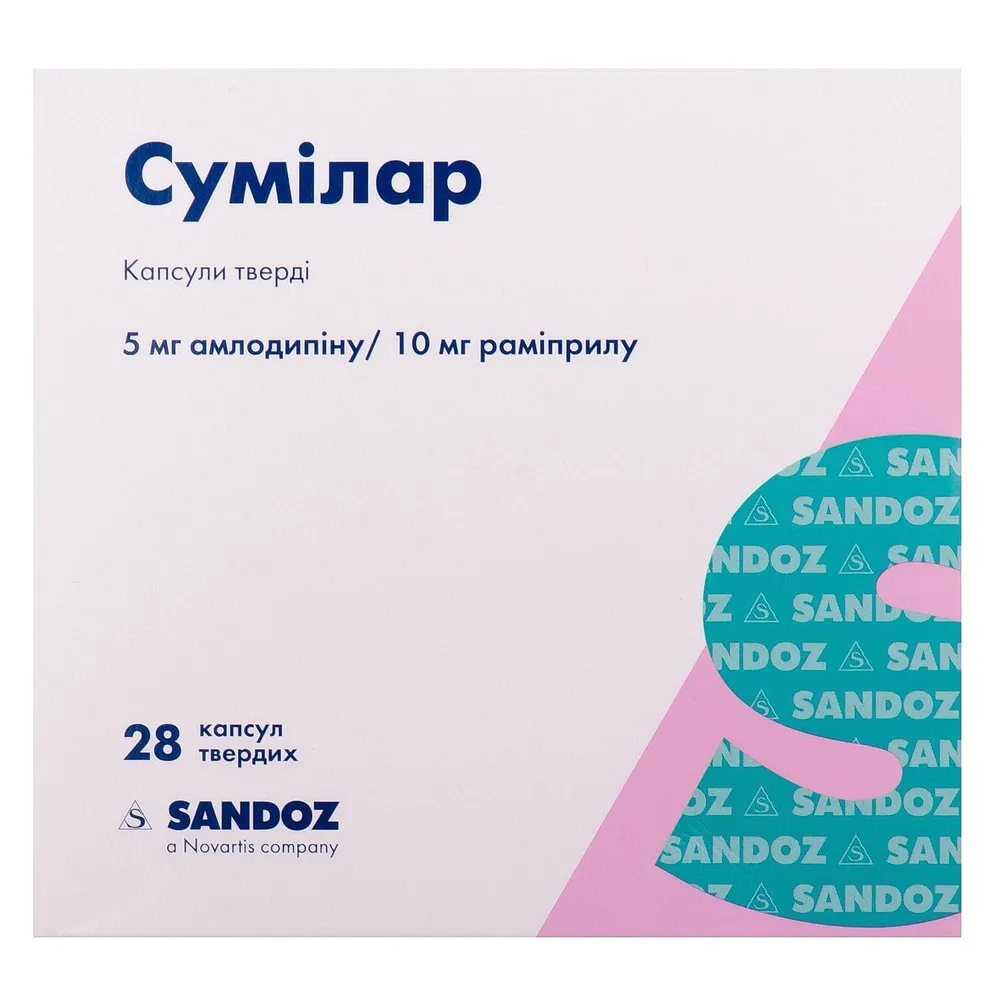
Table of Contents
INSTRUCTIONS for medical use of the medicinal product SULIMAR (SUMILAR)
Composition:
Active substances: amlodipine besylate, ramipril;
One hard capsule contains:
5 mg/5 mg: 6.934 mg amlodipine besylate equivalent to 5 mg amlodipine free base and
5 mg ramipril or
10 mg/10 mg: 13.868 mg amlodipine besylate equivalent to 10 mg amlodipine free base and
10 mg ramipril or
10 mg/5 mg: 13.868 mg amlodipine besylate equivalent to 10 mg amlodipine free base and
5 mg ramipril or
5 mg/10 mg: 6.934 mg amlodipine besylate equivalent to 5 mg amlodipine free base and
10 mg ramipril;
Excipients:
capsule contents: microcrystalline cellulose, calcium hydrogen phosphate anhydrous, pregelatinized corn starch, low moisture pregelatinized corn starch, sodium starch glycolate (type A), sodium stearyl fumarate;
capsule shell 10 mg/5 mg; 5 mg/5 mg; 5 mg/10 mg: titanium dioxide (E 171), gelatin, iron oxide red (E 172);
capsule shell 10 mg/10 mg: iron oxide yellow (E 172), iron oxide red (E 172), iron oxide black (E 172), titanium dioxide (E 171), gelatin.
Pharmaceutical form. Hard capsules.
Main physicochemical characteristics:
Hard capsules 5 mg/5 mg: hard gelatin capsules size №1, opaque pink cap, opaque white body, capsule contents – white or almost white powder.
Hard capsules 10 mg/10 mg: hard gelatin capsules size №1, opaque brown cap, opaque white body, capsule contents – white or almost white powder.
Hard capsules 10 mg/5 mg: hard gelatin capsules size №1, opaque reddish-brown cap, opaque white body, capsule contents – white or almost white powder.
Hard capsules 5 mg/10 mg: hard gelatin capsules size №1, opaque dark pink cap, opaque white body, capsule contents – white or almost white powder.
Pharmacotherapeutic group. Combined ACE inhibitors. ACE inhibitors in combination with calcium antagonists. Ramipril and amlodipine. ATC code C09BB07.
Pharmacological properties.
Pharmacodynamics.
Mechanism of action of ramipril
Ramiprilat, the active metabolite of ramipril, inhibits the enzyme dipeptidyl carboxypeptidase I (synonyms: angiotensin-converting enzyme, kininase II), which catalyzes the conversion of tissue angiotensin I into the active vasoconstrictor angiotensin II, as well as the degradation of the active vasodilator bradykinin. Reduction in angiotensin II levels and inhibition of bradykinin degradation lead to vasodilation.
Since angiotensin II also stimulates the release of aldosterone, ramiprilat reduces aldosterone secretion. On average, the response to monotherapy with ACE inhibitors has been lower in patients of Black race (from the Afro-Caribbean region) with hypertension (typically those with low renin levels and hypertension) compared to other racial groups.
Pharmacodynamic effects
Administration of ramipril results in a pronounced reduction in peripheral arterial resistance. Significant changes in renal plasma flow and glomerular filtration rate are usually not observed. In patients with arterial hypertension, ramipril reduces blood pressure in both supine and standing positions without increasing heart rate.
In most patients, the antihypertensive effect begins within 1–2 hours after drug administration, reaches its maximum within 3–6 hours, and lasts for 24 hours.
Maximum reduction in blood pressure is usually achieved after 3–4 weeks of continuous therapy. It has been established that the antihypertensive effect is maintained during long-term therapy lasting up to 2 years.
Abrupt discontinuation of ramipril does not lead to rapid or excessive rebound increase in blood pressure.
Mechanism of action of amlodipine
Amlodipine inhibits transmembrane influx of calcium ions into cardiac and vascular smooth muscle (a slow calcium channel blocker or calcium ion antagonist).
The mechanism of the antihypertensive action of the drug is due to its relaxing effect on vascular smooth muscle.
The exact mechanism of action of amlodipine in angina pectoris is not fully established, but it is known that the drug reduces myocardial ischemia through two pathways:
- Amlodipine dilates peripheral arterioles, thereby reducing the heart's workload and total peripheral resistance. Since heart rate remains practically unchanged, this reduction in cardiac load leads to decreased myocardial oxygen demand.
- By dilating major coronary arteries and coronary arterioles in both normal and ischemic areas of the myocardium, it improves oxygen supply. Through this mechanism, it increases oxygen delivery to the myocardium even in cases of coronary artery spasm (Prinzmetal's angina or variant angina).
Pharmacological Properties
In patients with arterial hypertension, once-daily dosing provides clinically significant reduction of arterial blood pressure throughout the entire 24-hour interval, both in the supine and standing positions. Due to its slow onset of action, acute arterial hypotension is not a characteristic feature of the drug's use.
In patients with angina pectoris, once-daily dosing increases total exercise duration, time to onset of angina, and time to significant ST-segment depression, as well as reduces both the frequency of angina attacks and the need for nitroglycerin.
The drug is not associated with any unfavorable metabolic effects: it has no influence on plasma lipid levels, blood glucose levels, or serum uric acid levels. The drug is suitable for use in patients with asthma.
Pharmacokinetics
Ramipril
Absorption
Ramipril is rapidly absorbed after oral administration: peak plasma concentration is reached within 1 hour. Based on urinary excretion data, the extent of absorption is at least 56%; food intake does not affect the absorption of ramipril. The bioavailability of the active metabolite, ramiprilat, after oral administration of 2.5 mg and 5 mg ramipril, is 45%.
Peak plasma concentration of ramiprilat, the sole active metabolite of ramipril, is achieved within 2–4 hours after ramipril intake. Steady-state plasma concentration of ramiprilat following once-daily administration of usual doses of ramipril is reached by approximately day 4 of treatment.
Distribution
Protein binding of ramipril to serum proteins is approximately 73%, and for ramiprilat it is approximately 56%.
Metabolism
Ramipril is almost completely metabolized to ramiprilat and to diketopiperazine ester, diketopiperazine acid, and glucuronides of ramipril and ramiprilat.
Excretion
Metabolites are primarily excreted by the kidneys.
Ramiprilat plasma concentrations decline in several phases. Due to strong binding to ACE and slow dissociation from the enzyme, ramiprilat exhibits a prolonged terminal elimination phase at very low plasma concentrations.
After once-daily administration of ramipril, the effective elimination half-life of ramiprilat was 13–17 hours for 5–10 mg doses and longer for 1.25–2.5 mg doses. This difference is related to the enzyme's capacity to bind ramiprilat in a saturable manner.
Patients with Renal Impairment
Renal excretion of ramiprilat is reduced in patients with impaired renal function, and renal elimination of ramiprilat is proportional to creatinine clearance. This results in elevated plasma concentrations of ramiprilat, which decline more slowly than in patients with normal renal function.
Patients with Hepatic Impairment
In patients with impaired liver function, the metabolism of ramipril to ramiprilat is slowed due to reduced hepatic esterase activity. Plasma levels of ramipril are increased in these patients. However, peak plasma concentrations of ramiprilat do not differ from those in patients with normal liver function.
Amlodipine
Absorption
After oral administration, amlodipine is well absorbed. Peak blood levels are reached within 6–12 hours after dose intake. Its bioavailability is not affected by food intake. Absolute bioavailability is 64–80%.
Distribution
The volume of distribution is approximately 20 L/kg. Steady-state plasma concentration (5–15 ng/mL) is achieved within 7–8 days of daily administration. In vitro studies have shown that 93–98% of circulating amlodipine is bound to plasma proteins.
Metabolism and Excretion
Amlodipine is extensively metabolized (approximately 90%) in the liver to inactive pyridine derivatives. About 10% of the parent compound and 60% of inactive metabolites are excreted in urine, and 20–25% in feces.
Plasma concentration decline is biphasic. The terminal elimination half-life from plasma is about 35–50 hours, consistent with once-daily dosing.
Total clearance is 7 mL/min/kg (for a 60 kg patient, 25 L/h). In elderly patients, this value is 19 L/h.
Use in Elderly Patients
Time to reach peak plasma concentration of amlodipine is similar in elderly and younger patients. Clearance of amlodipine is generally somewhat reduced, leading in elderly patients to increased area under the concentration-time curve (AUC) and prolonged elimination half-life. Increased AUC and half-life in patients with congestive heart failure were consistent with expectations for this patient age group (see section "Special Warnings and Precautions for Use").
Patients with Renal Impairment
Amlodipine is extensively biotransformed to inactive metabolites. About 10% of amlodipine is excreted unchanged in urine. Changes in amlodipine plasma concentration do not correlate with the degree of renal impairment. Standard doses of amlodipine can be used in patients with renal impairment. Amlodipine is not dialyzable.
Patients with Hepatic Impairment
The elimination half-life of amlodipine is prolonged in patients with hepatic impairment.
Clinical characteristics.
Indications.
Treatment of arterial hypertension in patients whose blood pressure is adequately controlled by individual drugs administered simultaneously at the same dose as in the combination, but in the form of separate tablets.
Contraindications.
- Concomitant use of drugs containing aliskiren in patients with diabetes mellitus or moderate to severe renal impairment (glomerular filtration rate (GFR) < 60 mL/min/1.73 m²).
- History of angioedema (hereditary, idiopathic, or previous angioedema associated with ACE inhibitors or angiotensin II receptor antagonists).
- Extracorporeal treatments leading to blood contact with negatively charged surfaces.
- Significant bilateral renal artery stenosis or renal artery stenosis of a solitary functioning kidney.
- Pregnancy or planned pregnancy.
- Hypotensive or hemodynamically unstable conditions.
- Severe hypotension.
- Shock (including cardiogenic shock).
- Obstruction of outflow from the left ventricle (e.g., severe aortic stenosis).
- Hemodynamically unstable heart failure following acute myocardial infarction.
- Pediatric age.
- Hypersensitivity to amlodipine, dihydropyridine derivatives, ramipril, or any other ACE (angiotensin-converting enzyme) inhibitors, or to any excipients of the drug.
- Concomitant use with sacubitril/valsartan increases the risk of angioedema. Amlodipine/ramipril must not be used earlier than 36 hours after the last dose of sacubitril/valsartan (see sections "Special precautions for use" and "Interaction with other medicinal products and other types of interactions").
Interaction with other medicinal products and other types of interactions.
Regarding ramipril
Dual blockade of the renin-angiotensin system (RAS) by ACE inhibitors (ACEIs), angiotensin receptor blockers (ARBs), or aliskiren.
Concomitant use of ACE inhibitors, including ramipril, or ARBs with aliskiren is contraindicated in patients with moderate or severe renal impairment (GFR < 60 mL/min/1.73 m²).
Contraindicated combinations
The use of Sumilaro in combination with drugs containing aliskiren is contraindicated in patients with diabetes mellitus or moderate to severe renal impairment (GFR < 60 mL/min/1.73 m²) and is not recommended for other patients.
Extracorporeal therapies leading to blood contact with negatively charged surfaces, such as dialysis or hemofiltration using certain high-flux membranes (e.g., polyacrylonitrile membranes) and LDL apheresis with dextran sulfate, are contraindicated due to an increased risk of severe anaphylactoid reactions. In such cases, consideration should be given to using a different type of dialysis membrane or switching to another class of antihypertensive agents.
Concomitant use of ACE inhibitors with sacubitril/valsartan is contraindicated due to an increased risk of angioedema (see sections "Contraindications" and "Special precautions for use"). Ramipril therapy should be initiated only 36 hours after the last dose of sacubitril/valsartan. Sacubitril/valsartan therapy should be initiated only 36 hours after the last dose of ramipril.
Medicinal products that increase the risk of angioedema
Clinical studies indicate that dual blockade of the renin-angiotensin-aldosterone system (RAAS) by ACE inhibitors, angiotensin II receptor antagonists, or aliskiren is associated with an increased frequency of arterial hypotension, hyperkalemia, and worsening of liver function (including acute liver failure) compared to monotherapy. Monitoring of blood pressure, renal function, and electrolytes is recommended in patients taking ramipril and other agents affecting the RAS.
Precautions for use
Potassium-sparing diuretics, potassium-containing dietary supplements, or potassium-containing salt substitutes
Although serum potassium concentration usually remains within normal limits, hyperkalemia may occur in some patients receiving ramipril. Potassium-sparing diuretics (e.g., spironolactone, triamterene, or amiloride), potassium-containing dietary supplements, or potassium-containing salt substitutes may lead to a significant increase in serum potassium levels. Concomitant use of ramipril with other medicinal products that increase serum potassium levels, such as trimethoprim and co-trimoxazole (trimethoprim/sulfamethoxazole), is not recommended, as trimethoprim, like amiloride, acts as a potassium-sparing diuretic. An increased risk of hyperkalemia has been observed in patients receiving ACE inhibitors concomitantly with trimethoprim or its fixed combination with co-trimoxazole (trimethoprim/sulfamethoxazole). If concomitant use cannot be avoided, the drugs should be administered with caution and with frequent monitoring of serum potassium levels.
Potassium salts, heparin, potassium-sparing diuretics, and other drugs associated with increased plasma potassium levels (e.g., angiotensin II antagonists, trimethoprim, tacrolimus, cyclosporine, spironolactone, triamterene). Hyperkalemia may occur when used concomitantly with ACE inhibitors; therefore, careful monitoring of serum potassium levels is required.
Antihypertensive agents (e.g., diuretics) and other substances that may lower blood pressure (e.g., nitrates, tricyclic antidepressants, anesthetics, large amounts of ethanol, baclofen, alfuzosin, doxazosin, prazosin, tamsulosin, terazosin). An increased risk of arterial hypotension should be expected (for information on diuretics, see section "Dosage and administration").
Vasopressor sympathomimetics and other substances (e.g., isoprenaline, dobutamine, dopamine, epinephrine) that may reduce the antihypertensive effect of ramipril. Blood pressure monitoring is recommended.
Allopurinol, immunosuppressants, corticosteroids, procainamide, cytostatics, and other substances that may alter blood cell counts. Increased risk of hematological reactions.
Litium salts. Under the influence of ACE inhibitors, lithium excretion may decrease, leading to increased lithium concentration and toxicity. Monitoring of lithium levels is required.
Antidiabetic agents, particularly insulin. Hypoglycemic reactions may occur. Blood glucose levels should be monitored.
Nonsteroidal anti-inflammatory drugs and acetylsalicylic acid. A reduction in the antihypertensive effect of ramipril should be expected. Additionally, concomitant use of ACE inhibitors and nonsteroidal anti-inflammatory drugs (NSAIDs) may increase the risk of worsening renal function and hyperkalemia.
Co-trimoxazole (trimethoprim/sulfamethoxazole)
Patients receiving co-trimoxazole (trimethoprim/sulfamethoxazole) concurrently may have an increased risk of hyperkalemia.
An increased frequency of hyperkalemia has been observed in patients taking ACE inhibitors and trimethoprim.
Medicinal products that increase the risk of angioedema
Concomitant use of ramipril with sacubitril/valsartan is contraindicated, as it may increase the risk of angioedema. Initiation of sacubitril/valsartan therapy should not occur earlier than 36 hours after the last dose of ramipril. If treatment with sacubitril/valsartan is discontinued, ramipril therapy should not be initiated earlier than 36 hours after the last dose of sacubitril/valsartan.
Concomitant use of NEP inhibitors (e.g., racecadotril), mTOR inhibitors (such as sirolimus, everolimus, temsirolimus), vildagliptin, and ACE inhibitors may increase the risk of angioedema. These medicinal products should be prescribed with caution after initiation of therapy.
Regarding amlodipine
Effect of other medicinal products on amlodipine
CYP3A4 inhibitors. Concomitant use of amlodipine with potent or moderate CYP3A4 inhibitors (protease inhibitors, azole antifungals, macrolide antibiotics such as erythromycin or clarithromycin, verapamil, or diltiazem) may lead to a significant increase in amlodipine exposure. The clinical interpretation of these pharmacokinetic variations may be more pronounced in elderly patients. Patients receiving clarithromycin in combination with amlodipine have an increased risk of arterial hypotension.
Careful monitoring of patients is recommended when amlodipine is administered concomitantly with clarithromycin.
Therefore, clinical monitoring and dose adjustment may be necessary.
CYP3A4 inducers. Concomitant use of known CYP3A4 inducers may decrease plasma concentrations of amlodipine. Therefore, during and after combination therapy, especially with strong CYP3A4 inducers (e.g., rifampicin, St. John’s wort), blood pressure should be monitored and the dose adjusted if necessary.
Amlodipine should be used with caution when administered with CYP3A4 inducers.
Grapefruit or grapefruit juice. It is not recommended to take amlodipine with grapefruit or grapefruit juice, as bioavailability may increase in some patients, leading to enhanced blood pressure-lowering effects.
Dantrolene (infusion). In animals, lethal ventricular fibrillation and cardiovascular collapse (sometimes fatal) have been observed due to hyperkalemia following verapamil administration and intravenous dantrolene. Due to the risk of hyperkalemia, concomitant use of calcium channel blockers such as amlodipine should be avoided in patients at risk of malignant hyperthermia and during treatment of malignant hyperthermia.
Effect of amlodipine on other medicinal products
Medicinal products with antihypertensive properties. The hypotensive effect of amlodipine potentiates the hypotensive effect of other antihypertensive agents.
Atorvastatin, digoxin, warfarin, or cyclosporine. Clinical interaction studies have shown that amlodipine does not affect the pharmacokinetics of atorvastatin, digoxin, warfarin, or cyclosporine.
Simvastatin. Concomitant administration of multiple doses of 10 mg amlodipine with 80 mg simvastatin resulted in a 77% increase in simvastatin exposure compared to simvastatin alone. In patients receiving amlodipine, the simvastatin dose should be limited to 20 mg per day.
Tacrolimus
There is a risk of increased blood levels of tacrolimus when used concomitantly with amlodipine. To avoid tacrolimus toxicity, regular monitoring of blood tacrolimus levels and dose adjustment if necessary are required when used concomitantly with amlodipine.
Cyclosporine
Interaction studies between cyclosporine and amlodipine have not been conducted in healthy volunteers or other groups, except in kidney transplant patients, in whom variable increases in cyclosporine trough concentrations (on average 0–40%) have been observed. For kidney transplant patients receiving amlodipine, monitoring of cyclosporine concentrations should be considered, and cyclosporine dosage reduced if necessary.
mTOR inhibitors
mTOR inhibitors such as sirolimus, temsirolimus, and everolimus are CYP3A substrates.
Amlodipine is a weak CYP3A inhibitor.
When mTOR inhibitors are used concomitantly with amlodipine, the effects of the former may be increased.
Special precautions for use.
Ramipril
Dual blockade of the renin-angiotensin-aldosterone system (RAAS)
Dual RAAS blockade with a combination of Sumilaru and aliskiren is not recommended due to an increased risk of hypotension, hyperkalaemia, and changes in renal function. The use of Sumilaru in combination with aliskiren is contraindicated in patients with diabetes mellitus or renal impairment (eGFR < 60 mL/min/1.73 m²).
Patients at risk of arterial hypotension
Patients with activated renin-angiotensin-aldosterone system
Patients with an activated renin-angiotensin-aldosterone system are at risk of acute, pronounced drop in blood pressure and worsening of renal function due to angiotensin-converting enzyme (ACE) inhibition, particularly when an ACE inhibitor or concomitant diuretic is used for the first time or during initial dose escalation.
Significant activation of the renin-angiotensin-aldosterone system should be anticipated, and medical supervision, including blood pressure monitoring, is recommended in patients with:
- severe hypertension;
- decompensated congestive heart failure;
- haemodynamically significant obstruction to inflow or outflow from the left ventricle (e.g., aortic or mitral valve stenosis);
- unilateral renal artery stenosis with a functioning contralateral kidney;
- liver cirrhosis and/or ascites;
- existing or potential dehydration and/or salt depletion (including patients taking diuretics);
- recent major surgery or undergoing anaesthesia with agents causing arterial hypotension;
- transient or persistent cardiac failure;
- after myocardial infarction;
- risk of developing cardiac or cerebral ischaemia in case of acute hypotension;
- advanced age.
Before initiating treatment, dehydration, hypovolaemia, or excessive salt loss should be corrected (however, in patients with heart failure, the possibility of such corrective measures must be carefully weighed against the risk of volume overload).
Initial treatment requires special medical supervision.
Surgeries
It is recommended to discontinue treatment with ACE inhibitors such as ramipril, whenever possible, one day before surgical intervention.
Monitoring of renal function
Renal function should be assessed before starting, during treatment, and when adjusting the dose, especially during the first weeks of therapy. Particular caution is required in patients with impaired renal function. There is a risk of worsening renal function, particularly in patients with congestive heart failure or after kidney transplantation.
Hypersensitivity / angioedema
Angioedema has been reported in patients taking ACE inhibitors, including ramipril.
If angioedema occurs, ramipril must be discontinued.
Concomitant use of ramipril with sacubitril/valsartan is contraindicated due to increased risk of angioedema. Initiation of sacubitril/valsartan therapy should not occur earlier than 36 hours after the last dose of ramipril. If treatment with sacubitril/valsartan is discontinued, ramipril therapy should not be initiated earlier than 36 hours after the last dose of sacubitril/valsartan.
Concomitant use of ACE inhibitors with racecadotril, mTOR inhibitors (e.g., sirolimus, everolimus, temsirolimus), and vildagliptin may increase the risk of angioedema (e.g., airway or tongue swelling with or without respiratory distress).
Caution is required when prescribing racecadotril, mTOR inhibitors (e.g., sirolimus, everolimus, temsirolimus), or vildagliptin to patients already receiving an ACE inhibitor.
If angioedema develops, ramipril must be discontinued immediately. Emergency measures should be taken promptly. The patient should remain under medical supervision for at least 12–24 hours and may be discharged only after complete resolution of symptoms.
Cases of intestinal angioedema have been reported in patients taking ACE inhibitors, including ramipril. In such patients, abdominal pain (with or without nausea or vomiting) has been observed.
Anaphylactic reactions during desensitisation
The likelihood and severity of anaphylactic and anaphylactoid reactions to insect venom and other allergens are increased during ACE inhibitor therapy. Consider temporary discontinuation of ramipril therapy prior to desensitisation procedures.
Electrolyte monitoring: hyperkalaemia
Hyperkalaemia has been observed in some patients taking ACE inhibitors, including ramipril. ACE inhibitors may cause hyperkalaemia by suppressing aldosterone release.
Patients at risk of hyperkalaemia include those with renal impairment, elderly patients (>70 years), patients with uncontrolled diabetes mellitus, or those taking potassium supplements, potassium-sparing diuretics, or other active substances that increase plasma potassium levels (e.g., heparin, trimethoprim, co-trimoxazole, also known as trimethoprim/sulfamethoxazole, and particularly aldosterone antagonists or angiotensin receptor antagonists), or those with conditions such as dehydration, acute heart decompensation, or metabolic acidosis. If concomitant use of these agents is necessary, regular monitoring of serum potassium levels is recommended. Potassium-sparing diuretics and angiotensin receptor antagonists should be used with caution in patients receiving ACE inhibitors, and serum potassium levels and renal function should be monitored.
Concomitant use of ACE inhibitors with sacubitril/valsartan is contraindicated due to increased risk of angioedema (see sections "Contraindications" and "Special precautions for use"). Ramipril therapy should be initiated only 36 hours after the last dose of sacubitril/valsartan. Sacubitril/valsartan therapy should be initiated only 36 hours after the last dose of ramipril.
Electrolyte monitoring: hyponatraemia
The syndrome of inappropriate antidiuretic hormone secretion (SIADH) with subsequent hyponatraemia has been observed in some patients taking ramipril. Regular monitoring of serum sodium levels is recommended in elderly patients and in other patients at risk of developing hyponatraemia.
Neutropenia/agranulocytosis
Rare cases of neutropenia/agranulocytosis, as well as thrombocytopenia and anaemia, have been reported, along with bone marrow suppression. Monitoring of white blood cell count is recommended to detect possible leukopenia. More frequent monitoring is recommended at the beginning of treatment or in patients with impaired renal function, concomitant collagen vascular diseases (e.g., systemic lupus erythematosus or scleroderma), or concomitant use of other medicinal products that may cause blood count abnormalities.
Racial differences
ACE inhibitors cause angioedema more frequently in black patients than in patients of other races. Like other ACE inhibitors, ramipril may be less effective in reducing blood pressure in black patients compared to patients of other races, possibly due to a higher prevalence of low-renin hypertension in this population.
Cough
Cough has been reported during treatment with ACE inhibitors. In typical cases, it is described as non-productive, persistent, and resolving after discontinuation of treatment. When performing differential diagnosis of cough, it should be considered that cough may be caused by ACE inhibitor therapy.
Amlodipine
The safety and efficacy of amlodipine in hypertensive crisis have not been established.
Patients with heart failure
Patients with heart failure should be treated with caution. In a long-term, placebo-controlled study in patients with severe heart failure (NYHA class III and IV), a higher incidence of pulmonary oedema was reported in the amlodipine group compared to the placebo group. Calcium channel blockers, including amlodipine, should be prescribed with caution in patients with congestive heart failure, as they may increase the risk of cardiovascular events and mortality.
Patients with hepatic impairment
In patients with hepatic impairment, the elimination half-life of amlodipine is prolonged and AUC values are higher; however, no dose adjustment recommendations are provided.
Administration of amlodipine should be done cautiously at the lower end of the dosing range, both at the start of treatment and during dose escalation.
Patients with hepatic impairment may require slower dose titration and careful monitoring.
Use in elderly patients
Dosage should be increased cautiously in elderly patients.
Use in renal impairment
Amlodipine can be administered to these patients at usual doses. Changes in amlodipine plasma concentrations are not related to the degree of renal impairment. Amlodipine is not dialysable.
Serum potassium
ACE inhibitors may cause hyperkalaemia due to suppression of aldosterone release. This effect is usually mild in patients with normal renal function. However, in patients with impaired renal function and/or in patients taking potassium supplements (including salt substitutes), potassium-sparing diuretics, trimethoprim or co-trimoxazole (also known as trimethoprim/sulfamethoxazole), and particularly aldosterone antagonists or angiotensin receptor blockers, hyperkalaemia may develop. Potassium-sparing diuretics and angiotensin receptor blockers should be used with caution in patients receiving ACE inhibitors, and serum potassium levels and renal function should be monitored.
Special warnings regarding excipients
This medicinal product contains less than 1 mmol sodium (23 mg) per capsule, i.e., essentially "sodium-free".
Use during pregnancy or breastfeeding.
Pregnancy.
Ramipril.
Ramipril is contraindicated during pregnancy. ACE inhibitors may cause foetal and neonatal morbidity and mortality when administered to pregnant women.
Use of ACE inhibitors during the second and third trimesters of pregnancy is associated with foetal and neonatal injury, including arterial hypotension, neonatal skull hypoplasia, anuria, reversible or irreversible renal failure, and death. Oligohydramnios, likely due to impaired foetal renal function, has also been reported; in this context, oligohydramnios is associated with limb contractures, craniofacial deformations, and pulmonary hypoplasia. Cases of prematurity, intrauterine growth retardation, and patent ductus arteriosus have also been reported, although it is unclear whether these are caused by ACE inhibitors. In addition, use of ACE inhibitors during the first trimester of pregnancy is associated with a potentially increased risk of congenital malformations.
If pregnancy is confirmed, ACE inhibitors should be discontinued as soon as possible, and foetal development should be monitored regularly. Women planning pregnancy should not use ACE inhibitors (including ramipril). Women of childbearing potential should be informed of the potential risk, and ACE inhibitors (including ramipril) should be prescribed only after careful counselling and consideration of individual risks and benefits.
The medicinal product is contraindicated in pregnant women or women planning to become pregnant. If pregnancy occurs during therapy, treatment should be discontinued immediately and, if necessary, replaced with another medicinal product approved for use during pregnancy (see section "Contraindications").
Breastfeeding. Breastfeeding should be discontinued if treatment is required.
Fertility. Reversible biochemical changes in sperm heads have been reported in some patients receiving calcium channel blockers. Clinical data on the potential effect of amlodipine on fertility are insufficient.
Ability to influence reaction speed when driving or operating machinery.
Sumilar may have a minor or moderate influence on the ability to drive and operate machinery. Some adverse effects (e.g., symptoms of low blood pressure such as dizziness, headache, fatigue, or nausea) may negatively affect a patient's concentration and reaction speed, thus posing a risk in situations where such ability is particularly important (e.g., driving vehicles or operating machinery).
This may occur, in particular, at the beginning of treatment or when switching from other medications.
Caution is recommended, especially at the beginning of treatment and when changing dosage.
Method of Administration and Dosage
Dosage
The recommended daily dose is one capsule.
Sumilar should be taken once daily, at the same time each day, with or without food. The capsules must not be chewed or crushed.
This fixed combination is not suitable for initial therapy.
If dosage adjustment is required, either the dose of Sumilar may be changed or individual titration of the drug components may be considered. Capsules should be taken with sufficient fluid (e.g., drinking water).
Patients taking diuretics
Caution should be exercised in patients taking diuretics due to the risk of dehydration and/or salt depletion. Renal function and serum potassium levels should be monitored in such patients.
Maximum daily dose – one capsule of 10 mg/10 mg.
Renal impairment
To determine the optimal initial and maintenance dose in patients with impaired renal function, the dose should be individually adjusted by using separate titration of ramipril and amlodipine (for additional information, see the instructions for medical use of medicinal products containing individual active substances).
For patients with impaired renal function, the daily dose of ramipril should be determined based on creatinine clearance:
-
if creatinine clearance is ≥ 60 mL/min, no initial dose adjustment is required; maximum daily dose is 10 mg;
-
if creatinine clearance is < 60 mL/min and in patients undergoing dialysis with hypertensive disease, Sumilar should only be used when the patient has been stabilized on a ramipril dose of 5 mg. The maximum daily dose of ramipril is 5 mg. For patients undergoing hemodialysis, the drug should be administered several hours after hemodialysis.
Dosage adjustment of amlodipine is not required in patients with impaired renal function. Amlodipine is not dialyzable; therefore, it should be used with particular caution in patients undergoing dialysis.
During Sumilar therapy, renal function and serum potassium levels should be monitored. If renal function deteriorates, Sumilar should be discontinued and replaced with individual components of the drug (active substances), with appropriately adjusted doses.
Hepatic impairment
This formulation is not to be used in patients with impaired liver function.
Elderly patients
The lowest initial dose is recommended for elderly patients, and dose escalation should be cautious.
The initial dose of ramipril should be reduced, and subsequent titration should be more gradual, as adverse effects are more likely to occur.
Sumilar is not recommended for very elderly (over 80 years) and frail patients.
Children
Sumilar is contraindicated in children (under 18 years of age) due to lack of data on safety and efficacy.
Overdose
Regarding ramipril
Symptoms associated with overdose of ACE inhibitors may include excessive peripheral vasodilation (with marked hypotension, shock), bradycardia, electrolyte imbalance, and renal failure. Close monitoring of the patient is required. Treatment should be symptomatic and supportive. Supportive measures include primary detoxification (gastric lavage, administration of adsorbents) and measures to restore hemodynamic stability, including use of alpha-1 adrenergic agonists or angiotensin II (angiotensinamide). Ramiprilat, the active metabolite of ramipril, is only minimally removed from systemic circulation by hemodialysis.
Regarding amlodipine
Experience with intentional overdose of the drug in humans is limited.
Rare cases of non-cardiogenic pulmonary edema have been reported as a consequence of amlodipine overdose, which may manifest with delayed onset (24–48 hours after ingestion) and may require mechanical ventilation. Factors contributing to the development of non-cardiogenic pulmonary edema may include early resuscitation measures (including fluid overload) aimed at maintaining perfusion and cardiac output.
Adverse reactions.
With regard to ramipril
The most common adverse effects during ramipril treatment include hyperkalemia, headache, dizziness, hypotension, orthostatic hypotension, fainting, cough (non-productive cough), bronchitis, sinusitis, dyspnea, gastrointestinal inflammation, gastric indigestion, abdominal pain, dyspepsia, diarrhea, nausea, vomiting, skin rash (particularly maculopapular rash), muscle cramps, myalgia, chest pain, and fatigue. Serious adverse effects include hyperkalemia, neutropenia/agranulocytosis, pancytopenia, hemolytic anemia, myocardial infarction, angioedema, vasculitis, bronchospasm, acute pancreatitis, hepatic failure, acute renal failure, hepatitis, exfoliative dermatitis, toxic epidermal necrolysis, Stevens–Johnson syndrome, and erythema multiforme.
With regard to amlodipine
The most common adverse effects during amlodipine treatment include somnolence, dizziness, headache, palpitations, flushing, abdominal pain, nausea, ankle swelling, edema, and fatigue. Serious adverse effects include leukopenia, thrombocytopenia, myocardial infarction, atrial fibrillation, ventricular tachycardia, vasculitis, acute pancreatitis, hepatitis, angioedema, erythema multiforme, exfoliative dermatitis, and Stevens–Johnson syndrome.
The frequency of adverse reactions was classified according to the following conventional scale:
Very common (≥ 1/10); common (≥ 1/100 and < 1/10); uncommon (≥ 1/1,000 and < 1/100); rare (≥ 1/10,000 and < 1/1,000); very rare (< 1/10,000); frequency not known (cannot be estimated from the available data).
During treatment with ramipril and amlodipine used separately, the following adverse reactions have been reported:
| Organ system class |
Frequency |
Ramipril |
Amlodipine |
| Blood and lymphatic system disorders |
Uncommon |
Eosinophilia |
|
| Occasional |
Decreased leukocyte count (including neutropenia or agranulocytosis), decreased erythrocyte count, decreased hemoglobin levels, decreased platelet count |
||
| Rare |
Leukopenia, thrombocytopenia |
||
| Frequency unknown |
Bone marrow depression, pancytopenia, hemolytic anemia |
||
| Immune system disorders |
Rare |
Allergic reactions |
|
| Frequency unknown |
Anaphylactic or anaphylactoid reactions, increased levels of antinuclear antibodies |
||
| Endocrine disorders |
Frequency unknown |
Syndrome of inappropriate antidiuretic hormone secretion (SIADH) |
|
| Metabolism and nutrition disorders |
Common |
Increased blood potassium levels |
|
| Uncommon |
Anorexia, decreased appetite |
||
| Rare |
Hyperglycemia |
||
| Frequency unknown |
Decreased blood sodium levels |
||
| Psychiatric disorders |
Uncommon |
Depressed mood, anxiety, nervousness, restlessness, sleep disturbances including insomnia and somnolence |
Insomnia, mood changes (including anxiety), depression |
| Occasional |
Confusional state |
Confusion |
|
| Frequency unknown |
Attention disturbance |
||
| Nervous system disorders |
Common |
Headache, dizziness |
Insomnia, dizziness, headache (especially at the beginning of treatment) |
| Uncommon |
Vertigo, paresthesia, ageusia, dysgeusia |
Tremor, dysgeusia, syncope, hypoesthesia, paresthesia |
|
| Occasional |
Tremor, impaired balance |
||
| Rare |
Hypertonia, peripheral neuropathy |
||
| Frequency unknown |
Cerebral ischemia, including ischemic stroke and transient ischemic attack, psychomotor impairment, burning sensation, parosmia |
Extrapyramidal disorders |
|
| Eye disorders |
Common |
Visual disturbances, including diplopia |
|
| Uncommon |
Visual disturbances, including blurred vision |
||
| Occasional |
Conjunctivitis |
||
| Ear and labyrinth disorders |
Uncommon |
Tinnitus |
|
| Occasional |
Hearing impairment, tinnitus |
||
| Cardiac disorders |
Common |
Arterial hypotension, orthostatic hypotension, syncope |
Palpitations, flushing |
| Uncommon |
Myocardial ischemia, including angina or myocardial infarction, tachycardia, arrhythmia, palpitations, peripheral edema, flushing |
Arterial hypotension, arrhythmia including bradycardia, ventricular tachycardia and atrial fibrillation |
|
| Occasional |
Vascular stenosis, inadequate perfusion, vasculitis |
||
| Rare |
Myocardial infarction, vasculitis |
||
| Frequency unknown |
Raynaud's phenomenon |
||
| Respiratory system disorders |
Common |
Non-productive cough with tickling sensation, bronchitis, sinusitis, dyspnea |
Dyspnea |
| Uncommon |
Bronchospasm, including asthma exacerbation, nasal congestion |
Cough, rhinitis |
|
| Gastrointestinal disorders |
Common |
Gastrointestinal inflammation, digestive disorders, abdominal discomfort, dyspepsia, diarrhea, nausea, vomiting |
Abdominal pain, nausea, dyspepsia, intestinal motility disorders (including diarrhea and constipation) |
| Uncommon |
Pancreatitis (isolated fatal outcomes reported with ACE inhibitors), increased pancreatic enzyme levels, angioedema of the small intestine, upper abdominal pain, gastritis, constipation, dry mouth |
Vomiting, dry mouth |
|
| Occasional |
Glossitis |
||
| Rare |
Pancreatitis, gastritis, gingival hyperplasia |
||
| Frequency unknown |
Aphthous stomatitis |
||
| Hepatobiliary disorders |
Uncommon |
Elevated liver enzymes and/or conjugated bilirubin levels |
|
| Occasional |
Cholestatic jaundice, hepatocellular damage |
||
| Rare |
Hepatitis*, jaundice*, elevated liver enzymes* |
||
| Frequency unknown |
Acute liver failure, cholestatic or cytolytic hepatitis (isolated fatal cases reported) |
||
| Skin and subcutaneous tissue disorders |
Common |
Rash, including maculopapular |
|
| Uncommon |
Angioedema; in very rare cases – airway obstruction due to angioedema, isolated fatal cases due to airway obstruction from angioedema; pruritus, hyperhidrosis |
Alopecia, purpura, skin discoloration, hyperhidrosis, pruritus, rash, exanthema, urticaria |
|
| Occasional |
Exfoliative dermatitis, urticaria, onycholysis |
||
| Rare |
Photosensitivity reaction |
Angioedema, erythema multiforme, exfoliative dermatitis, Stevens-Johnson syndrome, Quincke's edema, photosensitivity |
|
| Frequency unknown |
Toxic epidermal necrolysis, Stevens-Johnson syndrome, erythema multiforme, pemphigus, exacerbation of psoriasis, psoriasiform dermatitis, pemphigoid or lichenoid exanthema or enanthema, alopecia |
Toxic epidermal necrolysis |
|
| Musculoskeletal and connective tissue disorders |
Common |
Muscle cramps, myalgia |
Swelling of the lower limbs, muscle cramps |
| Uncommon |
Arthralgia |
Arthralgia, myalgia, back pain |
|
| Renal and urinary disorders |
Uncommon |
Renal failure, including acute renal failure, increased diuresis, worsening of existing proteinuria, elevated blood urea levels, elevated blood creatinine levels |
Urination disorders, nocturnal enuresis, increased frequency of urination |
| Reproductive system and breast disorders |
Uncommon |
Temporary erectile impotence, decreased libido |
Impotence, gynecomastia |
| Frequency unknown |
Gynecomastia |
Edema |
|
| General disorders |
Common |
Chest pain, fatigue |
Fatigue, asthenia |
| Uncommon |
Fever |
Chest pain, pain, discomfort |
|
| Occasional |
Asthenia |
||
| Investigations |
Uncommon |
Increased or decreased body weight |
* Most frequently associated with cholestasis.
Ramipril
During clinical safety studies of ramipril in children aged 2 to 16 years, the nature and severity of adverse reactions were found to be similar to those in adults; however, adverse reactions occurred more frequently in children:
- tachycardia, nasal congestion, and rhinitis occurred at a frequency of "common" in pediatric patients and "uncommon" in adults;
- conjunctivitis occurred at a frequency of "common" in pediatric patients and "rare" in adults;
- tremor and urticaria occurred at a frequency of "uncommon" in pediatric patients and "rare" in adults.
The overall safety profile of ramipril in pediatric patients does not differ significantly from that in adults.
Shelf life. 3 years.
Storage conditions. Store at temperatures not exceeding 30 °C. Keep in the original packaging. Keep out of reach of children.
Packaging. 7 hard capsules in a blister, 4 blisters in a cardboard box.
Prescription status. Prescription only.
Manufacturer.
Lek Pharmaceuticals d.d.
Manufacturer's address and place of business.
Verovskova 57, Ljubljana 1526, Slovenia / Verovskova 57, Ljubljana 1526, Slovenia.