Sotalol sandoz®
Ukraine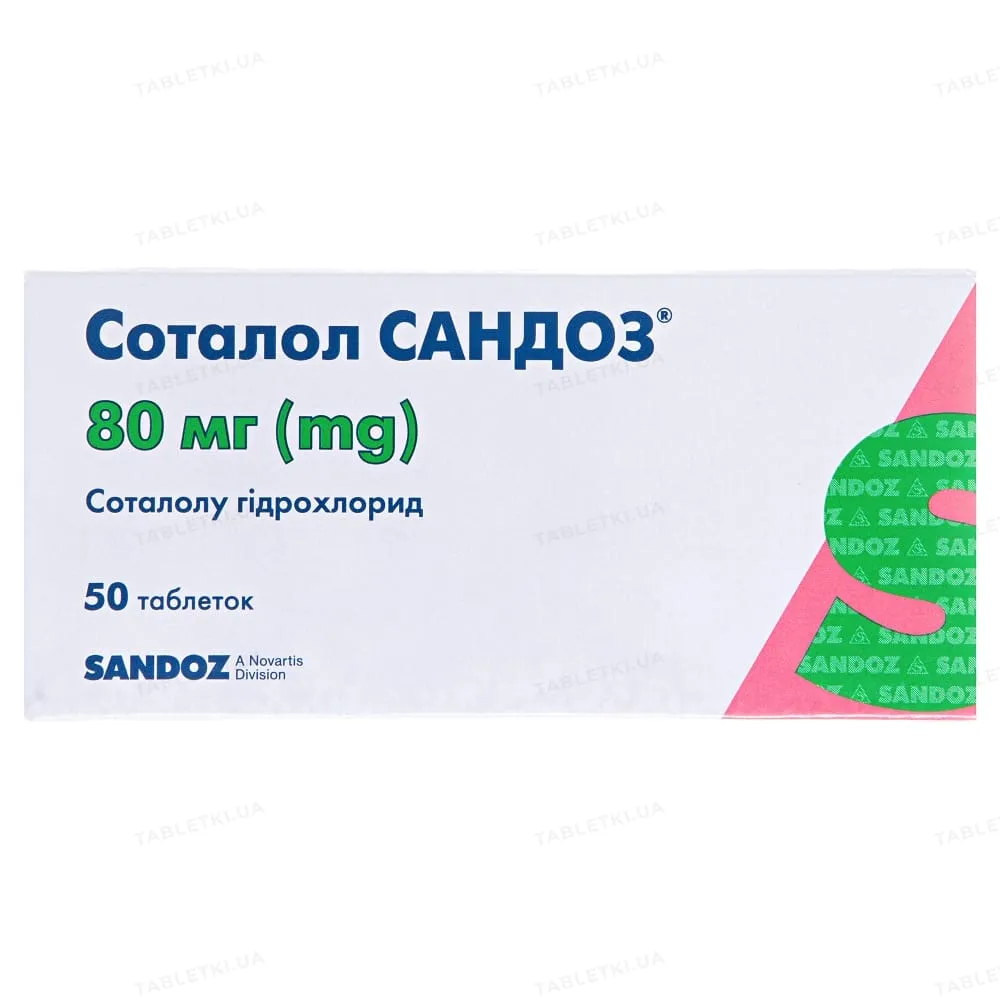
Table of Contents
INSTRUCTION FOR MEDICAL USE OF THE MEDICINAL PRODUCT SOTALOL SANDOZ® (SOTALOL SANDOZ®)
Composition:
Active substance: sotalol;
1 tablet contains 40 mg, 80 mg, or 160 mg of sotalol hydrochloride;
Excipients: maize starch, lactose monohydrate, sodium starch glycolate (type A), hydroxypropylcellulose, colloidal anhydrous silicon dioxide, magnesium stearate.
Pharmaceutical form. Tablets.
Main physicochemical properties:
40 mg tablets: white, round, biconvex tablets with "SOT" imprint on one side;
80 mg tablets: white, round tablets with a breakline on one side and convex with "SOT" imprint on the other side;
160 mg tablets: white, round, biconvex tablets with a breakline on one side and "SOT" imprint on the other side.
Pharmacotherapeutic group.
Non-selective beta-adrenoreceptor blockers. ATC code C07AA07.
Pharmacological properties.
Pharmacodynamics.
Sotalol is a non-selective β-adrenoblocker, acting on β1- and β2-adrenergic receptors. It has pronounced antiarrhythmic activity, the mechanism of which consists in prolonging the action potential duration and refractory period in all areas of the cardiac conduction system (Class III antiarrhythmic agents). It reduces heart rate and myocardial contractility, decreases sinoatrial node automaticity, and slows atrioventricular conduction. By blocking β2-adrenergic receptors, it increases smooth muscle tone in bronchi and blood vessels.
Pharmacokinetics.
After oral administration, 75–90 % of sotalol hydrochloride is absorbed from the gastrointestinal tract. Due to the absence of a first-pass hepatic effect, absolute bioavailability is 75–90 %. Time to reach maximum plasma concentration is 2–3 hours. Volume of distribution is 1.6–2.4 L/kg. Sotalol does not bind to plasma proteins. 75–90 % of the administered dose is excreted unchanged by the kidneys, the remainder is excreted in feces. Renal clearance is 120 mL/min. Elimination half-life is approximately 15 hours. In renal insufficiency, it is prolonged up to 42 hours, which requires dose reduction. The drug is removed during hemodialysis.
Clinical characteristics.
Indications.
Ventricular arrhythmias:
– prevention of recurrence of life-threatening ventricular tachyarrhythmias;
- treatment of symptomatic unstable ventricular tachycardia.
Supraventricular arrhythmias:
- prevention of paroxysmal atrial tachycardia, paroxysmal atrial fibrillation, paroxysmal atrioventricular (AV) nodal reentrant tachycardia, paroxysmal AV reentrant tachycardia in the presence of accessory conduction pathways, paroxysmal supraventricular tachycardia after surgery;
- maintenance of normal sinus rhythm after conversion of atrial fibrillation or atrial flutter.
Contraindications.
- Hypersensitivity to sotalol, sulfonamides, or any component of the medicinal product;
- NYHA (New York Heart Association) Class IV heart failure; acute and chronic heart failure Class II–III (in decompensated stage);
- acute myocardial infarction;
- sick sinus syndrome, including sinoatrial block, if the patient does not have a functioning pacemaker; severe sinus node dysfunction;
- AV block of Grade II–III (if the patient does not have a functioning pacemaker);
- congenital or acquired long QT syndrome or concomitant use of drugs that prolong the QT interval;
- torsade de pointes ventricular tachycardia or use of drugs that promote development of this condition;
- symptomatic sinus bradycardia (≤ 45–50 beats/min);
- uncontrolled congestive heart failure, including right ventricular heart failure following pulmonary hypertension;
- cardiogenic shock;
- anesthesia with agents causing myocardial depression;
- hypokalemia; hypomagnesemia;
- untreated pheochromocytoma;
- arterial hypotension (except that caused by arrhythmia);
- Raynaud’s syndrome and severe peripheral circulatory disorders;
- bronchial asthma and chronic obstructive pulmonary diseases;
- metabolic acidosis;
- renal failure (creatinine clearance < 10 mL/min).
Interaction with other medicinal products and other forms of interaction.
Do not use:
- with Class I antiarrhythmic agents (disopyramide, quinidine, and procainamide) and Class III antiarrhythmics (amiodarone) – potentially may increase myocardial refractoriness. Amiodarone increases the risk of bradycardia and AV conduction depression. When sotalol is used concomitantly with other β-adrenoblockers, additive effects of Class II (reduction in blood pressure and heart rate) may be expected;
- with medicinal products that prolong QT interval (Class I and III antiarrhythmics, phenothiazine derivatives, tricyclic and tetracyclic antidepressants (imipramine, maprotiline), quinolone antibiotics (e.g., sparfloxacin), terfenadine, astemizole, erythromycin, lithium preparations, probucol, haloperidol, halofantrine, pentamidine). The risk of torsade de pointes is increased.
Flocoumafen – β-blockers may interfere with compensatory cardiovascular responses associated with arterial hypotension or shock, which may be induced by flocoumafen.
Calcium channel blockers – concomitant use may lead to development of arterial hypotension, bradycardia, conduction disturbances, and heart failure.
Tricyclic and tetracyclic antidepressants, neuroleptics, narcotic analgesics, antihistamines, sedatives, hypnotics, and ethanol enhance central nervous system depression and increase the risk of ventricular arrhythmias.
Concomitant use of sotalol hydrochloride with tricyclic antidepressants, barbiturates, phenothiazines, narcotic analgesics, as well as antihypertensives, diuretics, and vasodilators may result in excessive reduction of blood pressure.
Inhalational anesthetics (hydrocarbon derivatives) and muscle relaxants increase the risk of myocardial depression and development of arterial hypotension.
Allergens used for immunotherapy or allergen extracts for skin tests increase the risk of severe systemic allergic reactions or anaphylaxis.
When used concomitantly with medicinal products that deplete catecholamine stores (reserpine, guanethidine), excessive reduction in sympathetic tone may occur. Patients should be monitored regularly for blood pressure and heart rate, as hypotension, marked bradycardia, and loss of consciousness may occur.
The negative chronotropic and negative dromotropic effects of sotalol hydrochloride may be enhanced when used concomitantly with reserpine, clonidine, alpha-methyldopa, guanfacine, and cardiac glycosides.
When used concomitantly with digoxin, the risk of proarrhythmic effects increases, and the positive inotropic effect of digitalis glycosides is reduced. Both digitalis glycosides and sotalol hydrochloride slow AV conduction. If, despite adequate digitalis therapy, there is no improvement in severity of heart failure, sotalol administration should be discontinued.
When used concomitantly with antihypertensive agents (diuretics, sympatholytics, clonidine, hydralazine), excessive reduction in blood pressure may occur.
Furosemide, hydrochlorothiazide, and other potassium- or magnesium-wasting diuretics may provoke arrhythmias due to hypokalemia.
When sotalol is used concomitantly with amphotericin B, corticosteroids, potassium levels should be monitored.
Intravenous iodinated contrast agents increase the risk of anaphylactic reactions.
Xanthines and sympathomimetics reduce the activity of sotalol.
When used concomitantly with β2-receptor agonists such as salbutamol, terbutaline, and isoprenaline, an increased dose of the β2-receptor agonist may be required.
Nonsteroidal anti-inflammatory drugs (NSAIDs) and estrogens reduce the antihypertensive effect of sotalol hydrochloride; sulfasalazine increases its plasma concentration.
Calcium antagonists (verapamil and diltiazem), cardiac glycosides, and antiarrhythmic agents (e.g., disopyramide) enhance disturbances in AV conduction, increasing the risk of development or worsening of AV block and heart failure. When used with calcium channel blockers, an additive hypotensive effect on blood pressure is possible. Concomitant use with sotalol should be avoided.
Concomitant use of calcium antagonists of the nifedipine type may lead to a significant reduction in blood pressure and worsening of sick sinus syndrome.
Norepinephrine, MAO-B inhibitors, and abrupt discontinuation of clonidine may potentiate "rebound" hypertension. Sotalol should be discontinued several days before gradual withdrawal of clonidine, and there should be a minimum 14-day interval between discontinuation of MAO-B inhibitors and initiation of sotalol.
Sotalol prolongs the action of non-depolarizing muscle relaxants, the anticoagulant effect of coumarins, increases the plasma concentration of lidocaine, enhances the effect of insulin, and reduces the effect of oral hypoglycemic agents (thus, dose adjustment of antidiabetic agents may be necessary).
Concomitant use with insulin or oral hypoglycemic agents, especially during intense physical exertion, may induce hypoglycemia and mask its symptoms.
Neuromuscular blockade caused by tubocurarine may be enhanced due to β-adrenergic receptor blockade.
The negative inotropic effect of sotalol hydrochloride and narcotic analgesics or antiarrhythmic agents may be additive.
Special precautions for use.
Particular medical monitoring is required in the following cases:
- Renal function impairment (dose reduction required): monitoring of renal function, including serum creatinine determination, is necessary; monitoring of sotalol serum concentration is also advisable;
- Diabetes mellitus with significant fluctuations in blood glucose levels (hypoglycemic symptoms may be masked): blood glucose concentration should be monitored, and patients should be informed that increased sweating is the main symptom of hypoglycemia during sotalol treatment;
- Prolonged fasting;
- Hyperthyroidism; adrenergic symptoms may be masked: in patients suspected of thyrotoxicosis, abrupt discontinuation of sotalol should be avoided, as it may lead to exacerbation of hyperthyroidism symptoms, including thyrotoxic crisis;
- Peripheral perfusion disorders; symptoms may occur especially at the beginning of treatment;
- Pheochromocytoma (see section "Contraindications"): sotalol hydrochloride may be used only after prior α-adrenoreceptor blockade;
- Atopic history, history of anaphylactic reactions in the patient, and desensitization therapy (anaphylactic reactions may be more severe and unresponsive to usual doses of adrenaline (epinephrine) during treatment);
- Vasospastic angina (Prinzmetal's angina), myasthenia gravis, depression (including history);
- Sinus node dysfunction associated with symptomatic arrhythmias (sotalol hydrochloride may cause sinus bradycardia, sinus pauses, or sinus arrest);
- Psoriasis (exacerbation of psoriasis symptoms).
Sotalol hydrochloride may worsen existing arrhythmias or induce new ones. Proarrhythmic effects may vary: from increased frequency of ventricular premature beats to development of more severe ventricular tachycardia, ventricular fibrillation, or torsade de pointes tachycardia. The risk of torsade de pointes is associated with QT interval prolongation, reduced heart rate, decreased serum magnesium and potassium levels, and concomitant use of sotalol with drugs that induce ventricular tachycardia of the torsade de pointes type. Torsade de pointes tachycardia usually develops shortly after initiation of therapy or dose increase and resolves spontaneously in most patients. Although most episodes of this tachycardia resolve spontaneously or symptoms are mild (e.g., syncope), it may progress to ventricular fibrillation. Risk factors for torsade de pointes include high dose, presence of sustained ventricular tachycardia, female sex, excessive prolongation of QTc interval, cardiomegaly, and congestive heart failure.
If during therapy the QTc interval duration exceeds 500 ms, caution is required; if it exceeds 550 ms, dose reduction or discontinuation of the drug is necessary. In clinical trials of patients with arrhythmias receiving sotalol, bradycardia was frequently observed, increasing the risk of torsade de pointes tachycardia. Proarrhythmic effects are most commonly observed within the first 7 days after initiation of therapy or dose increase. To reduce the risk of proarrhythmia, treatment should be initiated at a dose of 80 mg twice daily, followed by gradual dose titration with simultaneous monitoring of efficacy (programmed electrocardiostimulation or Holter ECG monitoring) and safety (QT interval duration, heart rate, and serum electrolyte levels).
In cases of severe diarrhea or concomitant administration of drugs causing magnesium and/or potassium loss, monitoring of electrolyte balance and acid-base equilibrium is required.
Sotalol should not be administered to patients with hypokalemia or hypomagnesemia until the imbalance is corrected, due to the risk of QT interval prolongation and development of ventricular tachycardia of the torsade de pointes type.
Monitoring of patients receiving sotalol should include observation of heart rate, blood pressure, ECG, and blood glucose levels in diabetic patients. In elderly patients, renal function parameters should be monitored. Patients with renal impairment require dose regimen adjustment.
In patients with left ventricular dysfunction who have recently suffered myocardial infarction, the potential benefits and risks of sotalol use should be carefully weighed. Close monitoring and dose titration are extremely important before and after initiation of therapy. Sotalol should not be administered to patients with left ventricular ejection fraction ≤ 40% without severe ventricular arrhythmia.
When combining antiarrhythmic drugs of Class I, especially quinidine-like agents, drugs that may widen the QRS complex should not be used, as this may significantly prolong the QT interval and greatly increase the risk of ventricular arrhythmia.
Concomitant use of sotalol with Class III antiarrhythmic drugs should be avoided, as this may lead to excessive QT interval prolongation.
Before prescribing sotalol, other antiarrhythmic drugs should be discontinued.
At the end of treatment, sotalol hydrochloride should be discontinued gradually over 2 weeks or longer under medical supervision. The dosing schedule must not be altered. Abrupt discontinuation of therapy should be avoided, as it may lead to development of severe arrhythmias and myocardial infarction. Sudden withdrawal may unmask latent heart failure; arterial hypertension may also develop.
When treating elderly patients, possible presence of concomitant conditions, particularly renal impairment and increased sensitivity to the drug, should be considered, even at standard dosing.
Patients who wear contact lenses should be aware that tear production may decrease during treatment.
Due to β-adrenoreceptor blockade, sotalol may increase sensitivity to allergens and severity of anaphylactic reactions; this should be considered when treating patients with severe hypersensitivity reactions (including history) and those undergoing desensitization therapy.
If surgery is required, the anesthesiologist should be informed about sotalol use; sotalol should be discontinued several days before surgery or an anesthetic with minimal negative inotropic effect should be selected.
In rare cases, the drug may cause psoriasis, worsening of its symptoms, or psoriasiform exanthema.
Sotalol should be used with caution in first-degree AV block due to its negative effect on conduction.
Sotalol is contraindicated in severe allergic rhinitis due to increased airway obstruction.
The drug should be prescribed to patients with breathing difficulties only after careful assessment of benefit-risk ratio.
Due to the presence of sotalol hydrochloride in urine, photometric determination of methanephrine may yield falsely elevated values.
In patients suspected of pheochromocytoma who are receiving sotalol hydrochloride, urine analysis should be performed using high-performance liquid chromatography (HPLC) with solid-phase extraction.
The drug contains lactose and therefore should not be administered to patients with rare hereditary forms of galactose intolerance, lactase deficiency, or glucose-galactose malabsorption syndrome.
Sotalol hydrochloride use may result in positive doping test results.
Alcohol consumption should be avoided during treatment due to the risk of orthostatic hypotension.
The medicinal product contains sodium starch glycolate. Caution is advised when administering to patients on a sodium-restricted diet.
Use during pregnancy or breastfeeding.
As there is insufficient experience with sotalol hydrochloride use during pregnancy, the drug should be prescribed only when the expected benefit to the mother outweighs the potential risk to the fetus.
Sotalol hydrochloride crosses the placenta and reaches pharmacologically effective concentrations in fetal tissues; therefore, adverse reactions such as bradycardia, arterial hypotension, and hypoglycemia may occur in the fetus or newborn. For this reason, therapy should be interrupted 48–72 hours before the expected delivery date. β-blockers may reduce placental blood flow, potentially leading to preterm delivery or even intrauterine fetal death. After birth, newborns should be closely monitored for some time (β-receptor blockade may develop).
Sotalol hydrochloride passes into breast milk, reaching concentrations 3–5 times higher than in maternal plasma. Breastfeeding should be discontinued during treatment with the drug.
Ability to affect reaction speed when driving or operating machinery.
During treatment, caution is required when driving or performing other potentially hazardous activities requiring increased attention and speed of psychomotor reactions. This is particularly important at the beginning of treatment, during dose increase, when changing medication, or when interacting with alcohol.
Dosage and Administration.
When treating life-threatening ventricular arrhythmias with antiarrhythmic agents, therapy initiation as well as dose escalation must be performed in a hospital setting with equipment available for monitoring and assessment of heart rate variability.
During treatment, regular follow-up examinations should be conducted (e.g., standard ECG monthly, prolonged ECG monitoring every 3 months, and, if necessary, stress ECG testing).
Therapy should be re-evaluated if certain parameters deteriorate, such as an increase in QRS duration or QT interval prolongation exceeding 25%, PQ interval prolongation exceeding 50%, or increased frequency and severity of arrhythmias.
The recommended dosing regimen is as follows: initial dose is 80 mg daily, administered as a single dose or in two divided doses (40 mg each) 12 hours apart.
If therapeutic response is inadequate, the daily dose may be gradually increased at intervals of no less than 3 days to allow achievement of steady-state plasma concentration of sotalol and monitoring of QT interval duration via ECG.
For individual patients, a daily dose of 160–320 mg divided into two doses may be required.
For prevention of supraventricular arrhythmias, a dose of 320 mg/day in two divided doses 12 hours apart is recommended. For prevention of postoperative supraventricular arrhythmia, the daily dose should be 240 mg given in two divided doses.
Individual patients with life-threatening sustained ventricular arrhythmias may be prescribed 480–640 mg of sotalol daily. However, administration of such doses requires careful assessment of the potential benefit-risk ratio regarding severe adverse reactions (particularly proarrhythmic effects).
Dosing in Renal Impairment.
Since sotalol is primarily eliminated via urine, the dose should be reduced when creatinine clearance is less than 60 mL/min, according to the following table:
| Creatinine clearance (mL/min) |
Dose |
| > 60 |
Recommended dose of sotalol |
| 30–60 |
½ of the recommended dose |
| 10–30 |
¼ of the recommended dose |
| < 10 |
Contraindicated |
Creatinine clearance can be calculated using the following formula:
Men:
(140 – patient's age) × body weight (kg)
72 × serum creatinine level (mg/dL)
Women:
Creatinine clearance calculated for men × 0.85.
If the serum creatinine level is given in µmol/L, the result should be divided by 88.4 (1 mg/dL = 88.4 µmol/L).
Dosing in hepatic impairment.
Dose adjustment is not required.
Elderly patients.
For treatment of elderly patients, possible renal impairment should be taken into account.
Administration method.
Tablets should be taken whole, without chewing, with sufficient liquid (e.g., one glass of water), before meals. The drug should not be taken during meals, as this may reduce the absorption of sotalol hydrochloride from the gastrointestinal tract (particularly with milk and dairy products).
Duration of treatment.
The duration of treatment is determined by the physician.
Patients who have suffered myocardial infarction or have severe cardiac dysfunction require careful and continuous medical supervision during dose adjustment of antiarrhythmic agents.
Patients with ischemic heart disease and/or arrhythmia, as well as those receiving long-term treatment, should discontinue therapy gradually, as abrupt withdrawal may lead to worsening of clinical condition.
Children.
The drug is not recommended for use in children.
Overdose.
Symptoms of overdose depend on the patient's overall cardiac status (left ventricular function, cardiac arrhythmia). In cases of severe heart failure, even administration of the lowest doses of the drug may lead to deterioration of cardiac function.
According to clinical data, depending on the degree of intoxication, the following symptoms of overdose may occur: dizziness, fainting, weakness, asystole, signs of cardiogenic or hypovolemic shock, heart failure, atrioventricular block, arrhythmia, cyanosis of nails or palms, seizures, dyspnea, bronchospasm, hypoglycemia, increased fatigue, loss of consciousness, mydriasis, generalized seizures, arterial hypotension, hypoglycemia, marked bradycardia up to cardiac arrest (escape rhythm often seen on ECG), QT interval prolongation, atypical ventricular tachycardia (torsade de pointes), signs of cardiovascular shock. Overdose with sotalol hydrochloride has led to fatal outcomes in individual cases.
Treatment: administration of the drug must be discontinued; gastric lavage is indicated, along with supportive therapy for vital functions and symptomatic treatment. As indicated, administer atropine 1–2 mg intravenously by infusion (bolus administration possible); sympathomimetics, depending on body weight and response: dopamine, dobutamine, isoprenaline, orciprenaline, and epinephrine; glucagon is effective: initially 1–10 mg intravenously; then 2–2.5 mg per hour as continuous infusion.
For bradycardia: atropine, other anticholinergic agents, β-adrenergic agonists, or transvenous cardiac pacing; for heart block (second- or third-degree): isoproterenol or transvenous cardiac pacing; for heart failure: cardiac glycosides, diuretics, glucagon; for hypotension (depending on associated factors), in addition to atropine and digitalis glycosides, epinephrine is preferable to isoproterenol or norepinephrine; for bronchospasm: β2-adrenergic agonists by aerosol or aminophylline; for hypoglycemia: intravenous glucose; for torsade de pointes tachycardia: epinephrine, magnesium sulfate, transvenous cardiac pacing, or direct current cardioversion.
Since sotalol hydrochloride is a competitive antagonist of isoproterenol, high doses of isoproterenol may neutralize many effects of excessive sotalol doses; however, when using isoproterenol, one must be prepared for complications that high doses may cause.
The drug can be removed by hemodialysis.
Adverse Reactions
The frequency of adverse reactions is classified as follows: very common (≥ 1/10), common (≥ 1/100, < 1/10), uncommon (≥ 1/1000, < 1/100), rare (≥ 1/10000, < 1/1000), very rare (< 1/10000), frequency not known (cannot be estimated due to lack of data).
Immune system disorders: hypersensitivity reactions; sotalol may increase sensitivity to allergens and the severity of anaphylactic reactions.
Metabolism and nutrition disorders: hypoglycemia (signs of low blood sugar (e.g., tachycardia) may be masked during treatment — this should be considered in patients undergoing prolonged fasting, patients with diabetes mellitus, and patients with a history of spontaneous hypoglycemia). Hyperglycemia, hypothyroidism. Increased levels of total cholesterol and triglycerides, decreased levels of high-density lipoprotein cholesterol.
Psychiatric disorders: common – anxiety, restlessness, confusion, mood changes, hallucinations, increased excitability, depression; rare – sleep disturbances.
Nervous system disorders: common – dizziness, somnolence, headache, dysomnia, paresthesia, cold extremities, weakness, cramps, tremor.
Eye disorders: common – visual disturbances; uncommon – conjunctivitis; very rare – keratoconjunctivitis, decreased tear secretion (especially in contact lens wearers), dryness and eye pain, corneal and conjunctival inflammation, photophobia.
Ear and labyrinth disorders: common – hearing disturbances.
Cardiovascular disorders: common – chest pain, orthostatic and arterial hypotension, dyspnea, edema, worsening of heart failure symptoms (ankle, foot swelling, shortness of breath), arrhythmia, bradycardia, palpitations, ECG abnormalities, myocardial conduction disturbances, atrioventricular block, syncope or presyncope, proarrhythmic effects (changes in rhythm or worsening of arrhythmia, which may lead to significant impairment of cardiac function with possible cardiac arrest), reduced myocardial contractility, signs of vasospasm (worsening of peripheral circulation, cold extremities, intermittent claudication, Raynaud's syndrome). Arrhythmogenic effects are more frequently observed in patients with severe, life-threatening arrhythmias and left ventricular dysfunction; very rare – increased frequency of angina attacks and impaired peripheral perfusion. Since sotalol prolongs the QT interval, ventricular tachyarrhythmias (including torsade de pointes) may occur, especially in cases of overdose.
Severe proarrhythmic effects (sustained ventricular tachycardia, ventricular flutter/fibrillation, or torsade de pointes) are dose-dependent and occur predominantly at the beginning of therapy or during dose escalation.
Respiratory disorders: common – rhinitis, dyspnea, bronchospasm, laryngospasm; uncommon – dyspnea: may occur in patients with obstructive lung disorders; very rare – allergic bronchitis with fibrosis.
Gastrointestinal disorders: common – taste disturbances, abdominal pain, nausea, vomiting, diarrhea, dyspepsia, flatulence, xerostomia; rare – constipation, dry mouth, anorexia, liver function abnormalities (dark urine, jaundice of sclera or skin, cholestasis).
Skin and subcutaneous tissue disorders: common – erythema, skin rashes, urticaria, pruritus, exanthema; frequency not known – increased sweating, skin hyperemia; frequency not known – alopecia; very rare – psoriasiform exanthema, onset/worsening of psoriasis symptoms.
Musculoskeletal and connective tissue disorders: muscle spasm or myasthenia, back pain, arthralgia, myalgia.
Reproductive system disorders: erectile dysfunction.
General disorders: common – fever, increased fatigue, cyanosis of extremities, asthenia, withdrawal syndrome.
Investigations: frequency not known — thrombocytopenia, agranulocytosis, leukopenia, formation of antinuclear antibodies, changes in enzyme activity, bilirubin levels.
Shelf life. 5 years.
Storage conditions.
No special storage conditions required.
Keep out of reach of children.
Packaging.
Tablets 40 mg: 10 tablets per blister; 5 (10 × 5) blisters or 25 tablets per blister; 2 (25 × 2) blisters per cardboard box.
Tablets 80 mg and 160 mg: 10 tablets per blister; 5 (10 × 5) blisters per cardboard box.
Prescription category. Prescription only.
Manufacturer.
For all strengths: Solutas Pharma GmbH (complete manufacturing process).
For 160 mg strength: Lek S.A. (primary and secondary packaging, batch release).
Manufacturer's address.
Otto-von-Guericke-Allee 1, 39179 Barleben, Germany.
Domaniewska Street 50C, Warsaw, 02-672, Poland.