Sinmeton
Ukraine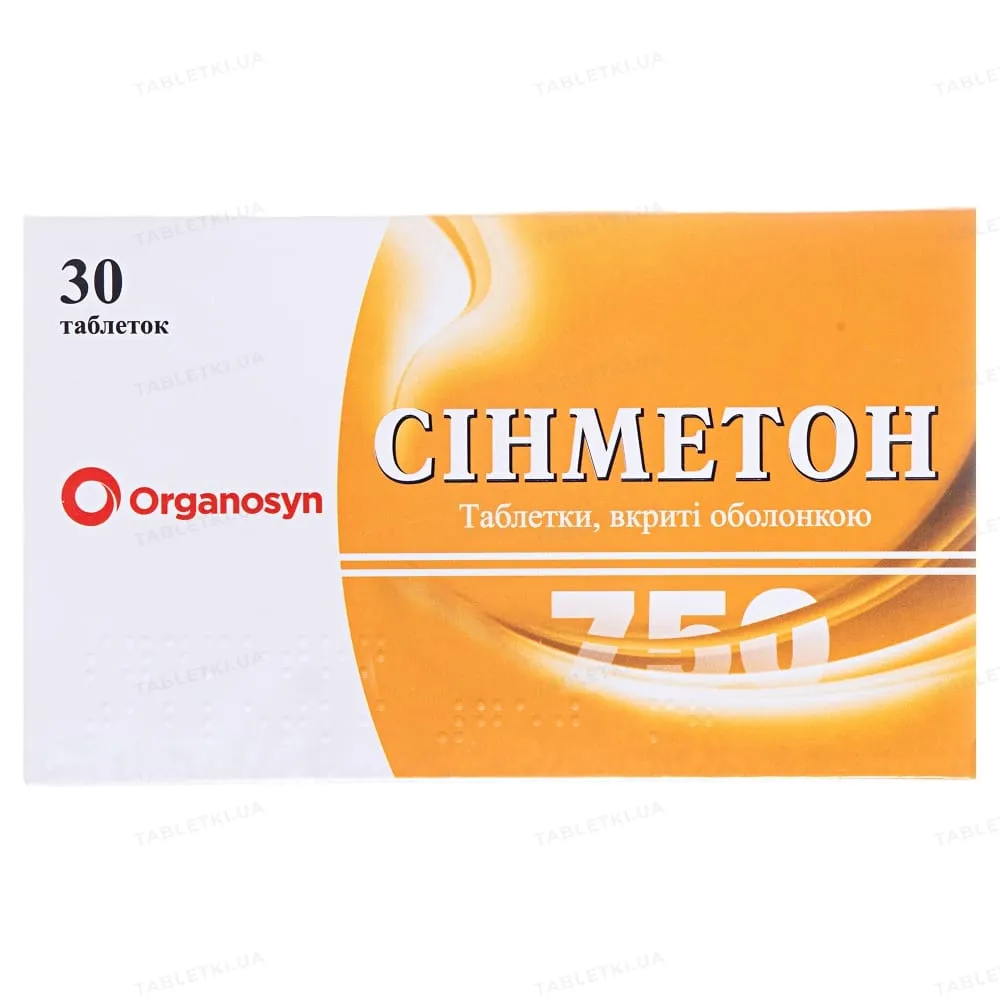
Table of Contents
INSTRUCTION FOR MEDICINAL USE OF THE MEDICINAL PRODUCT SİNMETON (SYNMETON)
Composition:
Active substance: nabumetone;
1 tablet contains: nabumetone 500 mg or 750 mg;
Excipients: microcrystalline cellulose, maize starch, polysorbate 80, sodium lauryl sulfate, sodium starch glycolate (type A), colloidal anhydrous silicon dioxide, talc, hypromellose, titanium dioxide (E 171), polyethylene glycol 6000, iron oxide red (E 172).
Pharmaceutical form. Coated tablets.
Main physicochemical properties:
Sinmeton 500 mg: reddish-brown, round, biconvex coated tablets;
Sinmeton 750 mg: reddish-brown, oval, biconvex coated tablets with a score line.
Pharmacotherapeutic group.
Drugs affecting the musculoskeletal system. Non-steroidal anti-inflammatory and anti-rheumatic drugs. Nabumetone. ATC code M01A X01.
Pharmacological Properties
Pharmacodynamics
The active ingredient of the drug, nabumetone, belongs to the alkanones and is a non-acidic nonsteroidal anti-inflammatory drug (NSAID). After absorption from the gastrointestinal tract, it is rapidly metabolized in the liver into its main active metabolite – 6-methoxy-2-naphthylacetic acid (6-MNA). It exerts anti-inflammatory, antipyretic, and analgesic effects. The mechanism of action is associated with inhibition of cyclooxygenase-2 (COX-2), leading to disruption of arachidonic acid metabolism and reduction in the concentrations of prostaglandins and thromboxanes. It suppresses exudative and proliferative processes at the site of inflammation, reduces bradykinin and histamine concentrations, and increases the pain threshold of nociceptors. The hypothermic effect is due to decreased concentrations of pyrogens in cerebrospinal fluid and the hypothalamic region, along with increased heat dissipation (no effect on heat production).
Since nabumetone exhibits moderate selectivity primarily for COX-2 inhibition, a characteristic feature is its lack of effect on gastric mucosa. A lower incidence of peptic ulcer disease, bleeding, and perforation has been reported compared to other NSAIDs. Nabumetone has minimal effect on collagen-induced platelet aggregation and does not affect bleeding time.
Pharmacokinetics
After oral administration, nabumetone is rapidly absorbed from the gastrointestinal tract (>80%). Food or milk can accelerate its absorption. It is metabolized in the liver to form the active metabolite (6-MNA) – up to 35% of the administered dose – and other unidentified metabolites (50%).
Maximum concentration of the active metabolite is reached approximately 3 hours after administration (range: 1–12 hours). Plasma protein binding is 99%. The drug crosses the placental barrier and is excreted into breast milk. Due to strong protein binding, 6-MNA cannot be removed by hemodialysis.
The active metabolite undergoes further hepatic metabolism via conjugation with glucuronic acid and O-demethylation prior to excretion, primarily in urine.
Approximately 75% of the nabumetone dose is excreted by the kidneys. Elimination half-life is 24 hours.
The plasma elimination half-life of 6-MNA varies significantly (mean values in younger patients range from approximately 22 to 27 hours, and from 25 to 34 hours in elderly patients).
Elderly Patients
Steady-state plasma concentrations in elderly individuals are generally higher, and elimination half-life is longer (29.8 ± 8.1 hours) compared to younger healthy individuals, although the differences are not statistically significant.
Patients with Renal Impairment
In patients with severe renal impairment (creatinine clearance <30 mL/min), the mean elimination half-life of 6-MNA increases to approximately 40 hours, and plasma levels are about 30% higher than in other patients. In patients undergoing hemodialysis, steady-state plasma concentrations of the active metabolite are equivalent to those observed in healthy individuals.
Clinical characteristics.
Indications.
For the treatment of pain and inflammation associated with osteoarthritis and rheumatoid arthritis.
Contraindications.
- Hypersensitivity to the active substance or to any of the excipients.
- History of hypersensitivity (e.g., bronchial asthma, angioedema, urticaria, rhinitis), allergic reactions associated with the use of acetylsalicylic acid or other nonsteroidal anti-inflammatory drugs (NSAIDs).
- Active peptic ulcer, or history of recurrent peptic ulcer (two or more episodes of gastrointestinal bleeding or perforation), or peptic ulcer disease.
- History of gastrointestinal bleeding or perforation related to previous NSAID therapy.
- Severe heart and/or liver and/or renal failure.
- Period following coronary artery bypass grafting (CABG).
- Cerebrovascular or other active bleeding, hemorrhagic diathesis.
- Third trimester of pregnancy.
- Breastfeeding period.
- Pediatric age (under 18 years).
Interaction with other medicinal products and other forms of interaction.
When nabumetone is used concomitantly with other medicinal products, the following interactions are possible:
With anticoagulants – enhanced effect of anticoagulants; these drugs should be used with caution and monitoring for symptoms of anticoagulant overdose should be performed;
With antihypertensive agents (e.g., angiotensin-converting enzyme (ACE) inhibitors, angiotensin receptor antagonists (ARBs), diuretics – reduced effectiveness of antihypertensives; in some patients with impaired renal function (e.g., elderly or dehydrated patients), concomitant use of ACE inhibitors or angiotensin II receptor antagonists with cyclooxygenase enzyme inhibitors may lead to further deterioration of renal function, including risk of acute renal failure; patients should be monitored frequently when these drugs are used together; adequate hydration should be maintained;
With antiplatelet agents, selective serotonin reuptake inhibitors (SSRIs), corticosteroids – increased risk of gastrointestinal bleeding;
*With other nonsteroidal anti-inflammatory drugs, including selective cyclooxygenase-*2 inhibitors – increased risk of adverse reactions; concomitant use of these drugs should be avoided;
With zidovudine – increased risk of hematotoxicity; increased risk of hemarthrosis and hematomas has been reported in HIV-positive patients with hemophilia receiving these drugs concomitantly;
With potassium-sparing diuretics – risk of hyperkalemia;
With lithium, methotrexate – reduced excretion of these drugs;
With mifepristone – reduced effect of mifepristone; NSAIDs should be administered 8–12 days after mifepristone intake;
With cardiac glycosides – worsening of heart failure, decreased glomerular filtration rate, and increased plasma levels of glycosides;
With cyclosporine, tacrolimus – increased risk of nephrotoxicity;
With quinolones – increased risk of seizures;
With probenecid – reduced metabolism of nabumetone and decreased elimination of nabumetone and its metabolites;
With cholestyramine – delayed absorption of nabumetone.
Medicinal products that do not affect the metabolism and bioavailability of nabumetone: antacids, paracetamol, cimetidine, aluminum hydroxide, acetylsalicylic acid.
Nabumetone should be used with caution when administered concomitantly with protein-binding drugs such as sulfonamides, sulfonylureas, and hydantoins, and patients should be monitored for signs of overdose.
Alcohol, bisphosphonates, oxpentifylline (pentoxifylline), and sulfinpyrazone may enhance gastrointestinal adverse effects and increase the risk of bleeding or ulceration.
Special precautions for use.
The adverse reactions of the drug can be minimized by using the lowest effective dose for the shortest duration necessary to control disease symptoms.
Concomitant use with other medicinal products.
Concomitant use of the drug with other nonsteroidal anti-inflammatory drugs (including selective COX-2 inhibitors) should be avoided.
Effect in elderly patients.
Elderly patients have an increased risk of developing adverse reactions, particularly gastrointestinal bleeding and perforations, which may be fatal.
Effect in patients with bronchial asthma.
The drug should be used with caution in patients with a history of asthma, urticaria, or other allergic-type reactions induced by acetylsalicylic acid or other NSAIDs, as bronchospasm and asthma attacks, sometimes fatal, have been reported in these patient groups during treatment with other nonsteroidal anti-inflammatory drugs. The first administration of nabumetone in patients with bronchial asthma should be performed under medical supervision.
Effect on vision.
During treatment with nonsteroidal anti-inflammatory drugs, including nabumetone, disturbances of vision and decreased visual acuity have been reported. If such disturbances occur, patients should undergo an ophthalmological examination.
Effect on the reproductive system.
The use of nonsteroidal anti-inflammatory drugs, including nabumetone, may impair female fertility. The drug is not recommended for women attempting to conceive. Consideration should be given to discontinuing the drug in women undergoing infertility investigations or experiencing difficulties with conception.
Effect on the gastrointestinal tract.
During treatment with all nonsteroidal anti-inflammatory drugs, gastrointestinal bleeding, ulcers, and perforations, which may be fatal, have been reported at any time during therapy, with or without prior symptoms or history of serious gastrointestinal disorders.
Patients with a history of peptic ulcer (especially elderly patients) should be instructed to report any unusual abdominal symptoms, particularly during the initial stages of treatment.
The risk of gastrointestinal bleeding, ulcers, and perforations increases with higher doses of nonsteroidal anti-inflammatory drugs, in patients with a history of gastrointestinal ulceration, particularly complicated by bleeding or perforation, and in elderly patients. Treatment in such patients should be initiated with the lowest possible effective dose.
For these patients, consideration should be given to concomitant therapy with gastroprotective agents (such as misoprostol or proton pump inhibitors), especially in patients requiring concomitant low-dose acetylsalicylic acid or other drugs increasing gastrointestinal risk.
Patients should be informed about the occurrence of any unusual abdominal symptoms, particularly during the initial stages of treatment. The drug should be used cautiously in patients with a history of gastrointestinal disorders (e.g., ulcerative colitis or Crohn’s disease), as the course of these diseases may worsen.
The drug should be used with caution when administered concomitantly with agents that increase the risk of ulcers or bleeding, such as oral contraceptives, anticoagulants (warfarin), nonsteroidal anti-inflammatory drugs, selective serotonin reuptake inhibitors, and antiplatelet agents (acetylsalicylic acid, clopidogrel). If ulceration or bleeding occurs, the drug should be discontinued.
The drug should be used only after a careful benefit-risk assessment in patients with active peptic ulcer disease. Patients must be under close medical supervision.
Nabumetone is better tolerated than most other nonsteroidal anti-inflammatory drugs and has less effect on the gastrointestinal tract. Pre- and post-marketing studies indicate that the incidence rates of perforations, ulcers, and bleeding are lower with nabumetone compared to other nonsteroidal anti-inflammatory drugs: 0.3%, 0.5%, and 0.8% during therapy lasting 3 to 6 months, 1 year, and 2 years, respectively. However, physicians should remember that ulceration may occur even without a prior history.
Despite its relative safety for the gastrointestinal tract and kidneys, the drug should be used with caution in patients:
with active gastrointestinal ulceration; appropriate treatment should be initiated before starting nabumetone therapy;
with a history of bronchial asthma, urticaria, or other hypersensitivity reactions associated with nonsteroidal anti-inflammatory drugs; rare cases of fatal asthma have been reported in such patients; the drug should be administered under medical supervision.
Effect on the skin and subcutaneous tissue.
Serious skin reactions, including exfoliative dermatitis, Stevens-Johnson syndrome, toxic epidermal necrolysis, and drug hypersensitivity syndrome with eosinophilia and systemic symptoms (DRESS syndrome), which may be fatal, have rarely been reported during treatment with nonsteroidal anti-inflammatory drugs, including nabumetone. The highest risk of these disorders occurs during the initial stages of treatment, mostly within the first two months. If skin rashes, mucosal lesions, or any other signs of hypersensitivity occur, the drug should be discontinued immediately and alternative treatments considered.
If widespread rash, high fever, elevated liver enzymes, changes in blood count (eosinophilia), and lymphadenopathy involving other organs occur (drug reaction with eosinophilia and systemic symptoms, known as hypersensitivity syndrome or DRESS), discontinue use of the drug SINMETON, inform your doctor and/or seek immediate medical attention.
Early initiation of systemic corticosteroids is generally recommended for all cases of DRESS syndrome. Most patients recover completely after discontinuation of the drug and appropriate treatment, although chronic complications and fatal outcomes due to irreversible damage to internal organs cannot be excluded.
Nabumetone should never be re-administered to patients who previously experienced serious adverse reactions such as Stevens-Johnson syndrome, toxic epidermal necrolysis, or reactions with eosinophilia and systemic symptoms associated with nabumetone.
Effect on the cardiovascular system.
The use of some nonsteroidal anti-inflammatory drugs (especially at high doses and for prolonged periods) may increase the risk of arterial thrombotic complications (such as myocardial infarction or stroke). Since data to exclude such risk for nabumetone are insufficient, the drug should be used only after careful assessment and under medical supervision in patients with arterial hypertension, mild or moderate congestive heart failure, diagnosed ischemic heart disease, peripheral arterial disease, and/or cerebrovascular disease, and in patients requiring long-term therapy who have cardiovascular risk factors such as hypertension, hyperlipidemia, diabetes, or smoking. Periodic monitoring of patients with a history of arterial hypertension and mild to moderate congestive heart failure is recommended, and advice should be provided as necessary, since fluid retention and edema have been reported.
Effect on the hepatobiliary system.
During treatment with nonsteroidal anti-inflammatory drugs, including nabumetone, liver function disorders have been reported, and in rare cases jaundice and liver failure, which may be fatal. If signs/symptoms of liver dysfunction or elevated liver transaminase levels occur, careful monitoring of the patient should be performed to detect more serious disorders, and discontinuation of the drug may be necessary.
Effect on the urinary system.
The use of nonsteroidal anti-inflammatory drugs leads to dose-dependent reduction in prostaglandin synthesis, resulting in decreased glomerular filtration and may cause renal failure. The drug should be used with caution in patients with risk factors such as impaired kidney and/or liver function, heart failure, concomitant use of diuretics, and in elderly patients. In patients with moderate renal impairment (creatinine clearance of 30 to 49 mL/min), a 50% increase in plasma levels of unbound 6-MNA was observed, and dose reduction may be justified.
Monitoring of kidney function, including creatinine clearance, should be performed at baseline and several weeks after initiation of therapy. If kidney function deteriorates, discontinuation of therapy may be warranted.
In rare cases, aseptic meningitis has developed in patients receiving nabumetone. Although this reaction is more likely in patients with systemic lupus erythematosus and other connective tissue diseases, it has also been reported in patients without concomitant chronic conditions.
The use of nonsteroidal anti-inflammatory drugs, including nabumetone, may mask symptoms of infectious diseases.
This medicinal product contains less than 1 mmol of sodium (23 mg) per dose, i.e., it is practically sodium-free.
Use during pregnancy or breastfeeding
Pregnancy. There are no clinical data on the use of nabumetone during pregnancy. Inhibition of prostaglandin synthesis may adversely affect pregnancy and/or embryonic/fetal development. Epidemiological data suggest an increased risk of miscarriage, cardiac defects, and gastroschisis after use of prostaglandin synthesis inhibitors in early pregnancy. The absolute risk of cardiovascular malformations increased from less than 1% to approximately 1.5%. The risk is considered to increase with higher doses and longer duration of therapy. In animal studies, prostaglandin synthesis inhibitors increased pre- and post-implantation losses and embryonic lethality. In addition, an increased frequency of various developmental abnormalities, particularly cardiovascular, has been reported in animals treated with prostaglandin synthesis inhibitors during the organogenesis period.
From the 20th week of pregnancy, the use of nabumetone may cause oligohydramnios due to fetal renal dysfunction. This phenomenon may occur soon after initiation of treatment and is usually reversible upon discontinuation. Additionally, there have been reports of fetal ductus arteriosus constriction after nabumetone use in the second trimester, which in most cases resolved after discontinuation. Therefore, the use of the drug during the first and second trimesters of pregnancy is possible only if the potential benefit to the mother outweighs the potential risk to the fetus.
If nabumetone is used by a woman attempting to conceive or during the first and second trimesters of pregnancy, the lowest possible dose and shortest duration of treatment should be used. Prenatal monitoring for oligohydramnios and ductus arteriosus constriction may be advisable if exposure to nabumetone occurred for several days starting from the 20th gestational week. The drug should be discontinued if oligohydramnios or ductus arteriosus constriction is detected.
During the third trimester of pregnancy, all prostaglandin synthesis inhibitors may have adverse effects:
on the fetus:
- cardiopulmonary toxicity (due to premature constriction/closure of the fetal ductus arteriosus and pulmonary hypertension);
- renal dysfunction, which may progress to renal failure with oligohydramnios;
on both mother and fetus:
- possible prolongation of bleeding time, anti-aggregatory effect, which may occur even at very low doses;
- inhibition of uterine contractions, leading to delayed or prolonged labor.
Therefore, the drug is contraindicated during the third trimester of pregnancy.
Breastfeeding period. Excretion of nabumetone into breast milk has not been studied. If the drug is used, breastfeeding should be discontinued. There are no clinical data on the use of nabumetone during lactation. It is unknown whether nabumetone passes into human milk; however, 6-MNA has been detected in the milk of lactating rats. Due to the potential risk of serious adverse reactions in breastfed infants, a decision should be made whether to discontinue breastfeeding or to discontinue the drug, taking into account the importance of the therapy for the mother.
Fertility. Nabumetone may impair female fertility and is not recommended for women attempting to conceive. If a woman has difficulties with conception or is undergoing infertility treatment, consideration should be given to discontinuing the drug.
Ability to affect reaction speed when driving vehicles or operating machinery.
During treatment with the drug, adverse reactions such as dizziness, somnolence, confusion, fatigue, and visual disturbances may occur. If such adverse reactions occur, patients should refrain from driving vehicles or operating machinery.
Method of Administration and Dosage
The drug should be administered orally to adults during or after a meal.
The recommended initial dose is 500–750 mg once daily. The recommended daily dose is 1 g once daily before bedtime. In cases of severe or persistent symptoms, the dose may be increased up to 1.5–2 g per day by adding one or two tablets (500 mg–1 g) as a morning dose. The maximum daily dose is 2 g.
The drug should be used for the shortest possible duration and at the lowest effective dose required to control symptoms of the underlying disease.
The duration of treatment is determined individually by the physician depending on the therapeutic response, nature of therapy, and drug tolerability.
Elderly Patients
In elderly patients, the drug may persist longer in the blood and drug levels may be higher; therefore, the recommended daily dose of 1 g should not be exceeded. In some cases, one tablet (500 mg) may provide adequate symptom relief.
Children
The drug is not recommended for use in pediatric practice, as the safety and efficacy of nabumetone in children have not been established.
Overdose
Symptoms: headache, nausea, vomiting, epigastric pain, gastrointestinal bleeding, diarrhea, disorientation, excitement, coma, drowsiness, dizziness, tinnitus, loss of consciousness, seizures. In cases of severe poisoning, acute renal failure and liver damage may occur.
Treatment: There is no specific antidote, and the active metabolite 6-MNA is not removed during hemodialysis. In case of acute overdose, gastric lavage should be performed and activated charcoal administered orally (up to 60 g) within the first hour after overdose, which may effectively reduce nabumetone absorption (reduction of up to 80% in maximum plasma concentrations of the active metabolite has been observed). Forced diuresis should be performed; subsequent treatment is symptomatic. Liver and kidney functions should be carefully monitored. The patient should remain under close observation for at least 4 hours after overdose. Frequent or prolonged seizures should be treated with intravenous diazepam. Other measures may also be indicated depending on the patient's clinical condition.
Adverse Reactions
Serious skin adverse reactions have been reported, including exfoliative dermatitis, Stevens-Johnson syndrome, toxic epidermal necrolysis, drug reaction with eosinophilia and systemic symptoms (DRESS syndrome), associated with nabumetone therapy.
Blood and lymphatic system disorders: thrombocytopenia, leukopenia, agranulocytosis, granulocytopenia, neutropenia, aplastic anemia, hemolytic anemia.
Immune system disorders: hypersensitivity reactions, including anaphylactic shock, anaphylactoid reactions.
Psychiatric disorders: confusion, nervousness, insomnia, depression, hallucinations.
Nervous system disorders: drowsiness, dizziness, headache, paresthesia, agitation, aseptic meningitis (particularly in patients with autoimmune diseases such as systemic lupus erythematosus and mixed connective tissue disorders, presenting symptoms such as neck stiffness, headache, nausea, vomiting, fever, or disorientation).
Eye disorders: visual disturbances, eye disorders, optic neuritis.
Ear and labyrinth disorders: tinnitus, hearing disturbances.
Cardiac and vascular disorders: heart failure, arrhythmias, arterial hypertension, arterial hypotension, edema, vasculitis.
Respiratory, thoracic and mediastinal disorders: dyspnea, breathing difficulties, epistaxis, interstitial pneumonia, asthma, worsening of asthma, bronchospasm.
Gastrointestinal disorders: diarrhea, constipation, dyspepsia, gastritis, nausea, abdominal pain, flatulence, gastrointestinal mucosal ulceration, gastrointestinal bleeding, exacerbation of ulcerative colitis and Crohn’s disease, gastrointestinal disorders, melena, vomiting, heartburn, stomatitis, dry mouth, pancreatitis.
Hepatobiliary disorders: liver failure, jaundice, bitter taste in mouth.
Renal and urinary disorders: renal failure, nephrotic syndrome, interstitial nephritis, dysuria.
Musculoskeletal and connective tissue disorders: myopathy.
Skin and subcutaneous tissue disorders: rash, pruritus, photosensitivity, urticaria, increased sweating, bullous reactions including toxic epidermal necrolysis, Stevens-Johnson syndrome, drug reaction with eosinophilia and systemic symptoms (DRESS syndrome), erythema multiforme, angioneurotic edema, pseudoporphyria, alopecia, purpura.
Reproductive system and breast disorders: metrorrhagia.
General disorders: edema, asthenia, increased fatigue, malaise.
Investigations: elevated liver transaminase levels, hematuria, crystalluria, albuminuria, azotemia.
Clinical and epidemiological data suggest that the use of certain nonsteroidal anti-inflammatory drugs may be associated with an increased risk of arterial thrombotic events (e.g., myocardial infarction or stroke).
Reporting of suspected adverse reactions after drug registration is highly important. It enables continuous monitoring of the benefit-risk balance of the medicinal product. Healthcare professionals, as well as patients or their legal representatives, should report all suspected adverse reactions and lack of efficacy via the automated pharmacovigilance information system at: https://aisf.dec.gov.ua
Shelf life. 2 years.
Storage conditions.
Store at a temperature not exceeding 25 °C. Keep out of reach and sight of children.
Packaging.
10 tablets per blister, 1, 3, or 10 blisters per cardboard box.
Prescription category. Prescription only.
Manufacturer.
Evertogen Life Sciences Limited.
Manufacturer's address and place of business:
Plot No: S-8, S-9, S-13/P & S-14/P TSIIC, Pharma SEZ, Green Industrial Park, Polepally (V), Jadcherla (M), Mahabubnagar, Telangana, IN-509 301, India.