Senna leaves and fruits
Ukraine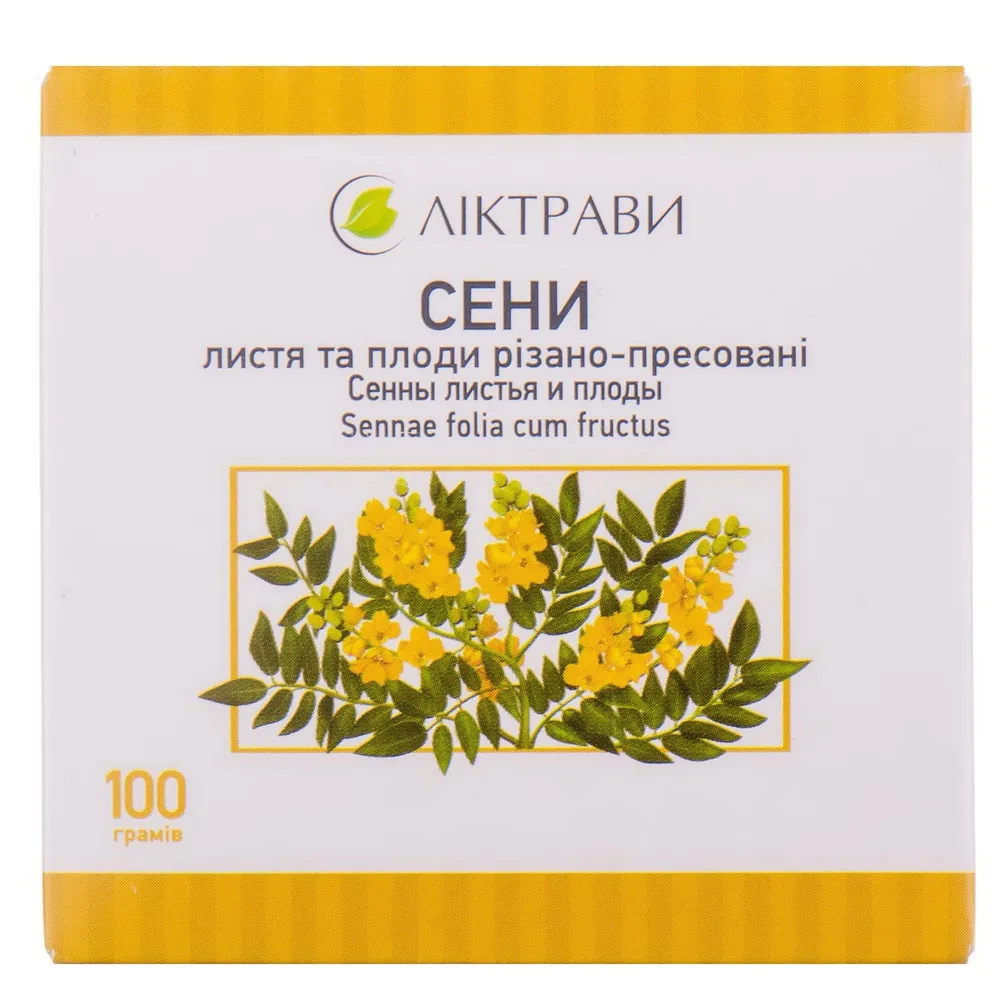
Table of Contents
I N S T R U C T I O N for medical use of the medicinal product SENNA LEAVES AND FRUITS (SENNAEFOLIA CUM FRUCTUS)
Composition:
Active substance: senna leaves and fruits (Sennaefolia cum fructus);
1 packet contains: senna leaves and fruits (Sennaefolia cum fructus) 100 g;
1 packet contains: senna leaves and fruits (Sennaefolia cum fructus) 200 g.
Pharmaceutical form. Cut and compressed leaves and fruits.
Main physico-chemical characteristics: cylindrical fragments; surface smooth, shiny, occasionally dull, marbled, uneven at the ends; color ranging from brownish-green to dark green with yellow specks.
Pharmacotherapeutic group. Contact laxatives. ATC code A06AB06.
Pharmacological properties.
Pharmacodynamics.
Senna leaves and fruits contain flavonoids, anthraglycosides (senoside A and B, rhein, aloe-emodin), organic acids, and resinous substances. This complex of biologically active substances produces a mild laxative effect. The laxative effect of the decoction from Senna leaves and fruits appears 6–10 hours after administration and is caused by anthraglycosides, which enhance motor function of the large intestine.
Clinical characteristics.
Indications. Intestinal atony, chronic constipation.
Contraindications.
Hypersensitivity to biologically active substances of the drug. Metrorrhagia, paralytic intestinal obstruction, hemorrhoids, acute inflammatory bowel diseases (Crohn's disease, ulcerative colitis, appendicitis), peritonitis, peptic ulcer of the stomach and duodenum, gastrointestinal bleeding, anal fissures, spastic colitis, incarcerated hernia, pancreatitis, hepatitis, nephritis, cystitis, abdominal pain of unknown origin, severe disturbances of water-electrolyte balance, nausea, vomiting, diverticulitis, organic liver lesions.
Interaction with other medicinal products and other types of interactions.
Concomitant use with quinidine sulfate reduces serum levels of active substances; with cardiac glycosides causes cardiac arrhythmia; with antiarrhythmic agents, diuretics, and corticosteroids causes muscle weakness.
Special precautions for use.
Before starting treatment with the medication, a physician must determine the cause of constipation in order to rule out intestinal obstruction. The medication should be used only if bowel regularity cannot be achieved through dietary changes or use of agents that increase intestinal content volume. To avoid habituation, it is advisable to alternate this medication with other laxatives and limit duration of use to 1 week.
Use during pregnancy or breastfeeding. Contraindicated.
Ability to affect reaction rate while driving or operating machinery. No effect.
Method of Administration and Dosage
Place 1.5–2 teaspoons of cut and pressed leaves and fruits into an enameled container, pour 200 mL of hot boiled water, cover with a lid, and steep in a water bath for 30 minutes. Allow to cool to room temperature, then strain and squeeze the residue into the resulting decoction. Adjust the volume of the decoction to 200 mL with boiled water.
Adults should take ⅓–½ cup warm, at bedtime, or 1 tablespoon 1–3 times daily. Children aged 12 years and older: 1–2 tablespoons up to ¼ cup at bedtime. Shake the decoction before use.
The prepared decoction should be stored at 8–15°C for no more than 2 days.
The duration of treatment is determined individually by a physician.
Children. The preparation may be used in children aged 12 years and older under medical supervision.
Overdose. In case of overdose, intestinal colic, dyspepsia, diarrhea, and disturbances in water-electrolyte balance may occur, requiring discontinuation of the preparation. Treatment is symptomatic. Prolonged use (up to several years) of high doses may lead to atrophy of the smooth muscle of the colon and impaired innervation.
Side effects.
Allergic reactions (rash, itching, urticaria, localized or generalized exanthema). Gastrointestinal disturbances, colicky intestinal pain, flatulence, diarrhea, anorexia, change in urine color, pseudomelanosis of the intestine, water-electrolyte imbalance (hypokalemia, hypocalcemia), albuminuria, hematuria, hyperaldosteronism, cardiac dysfunction, increased fatigue, muscle weakness, cramps.
Shelf life. 3 years. Do not use after expiry date.
Storage conditions. Store in original packaging at temperature not exceeding 30°C, in a place inaccessible to children.
Packaging. 100 g, 200 g in cartons with inner sachet.
Supply category. Over-the-counter.
Manufacturer/Applicant. JSC "Liktaravy", Ukraine.
Manufacturer's location and address of business activity/Applicant's location.
Ukraine, 10001, Zhytomyr Oblast, Zhytomyr, Kyivske Shose, 21.