Secrepat forte
Ukraine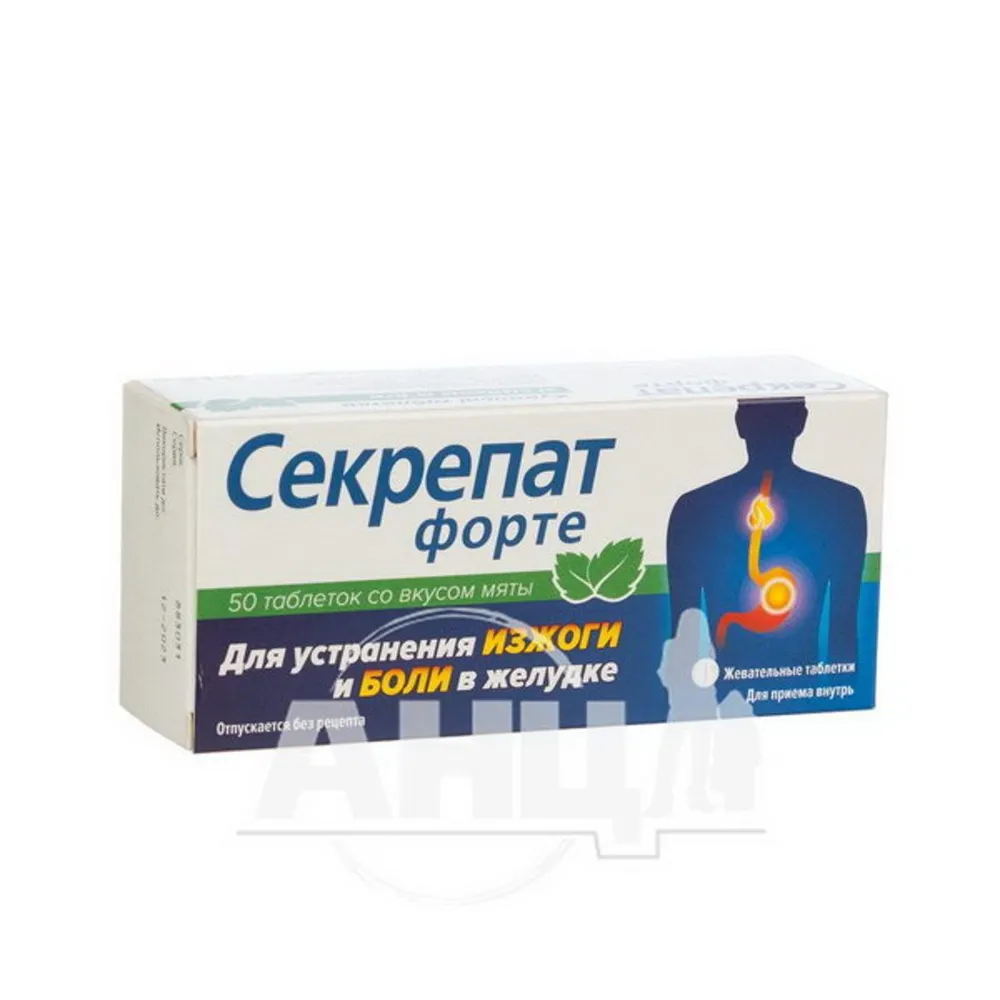
Table of Contents
INSTRUCTIONS FOR MEDICAL USE OF THE MEDICINAL PRODUCT SECREPAT FORTE
Composition:
Active substances: aminoacetate dihydroxyaluminum; aluminum hydroxide, dry gel; calcium carbonate; hydrated magnesium trisilicate;
One tablet contains: aminoacetate dihydroxyaluminum – 400 mg; aluminum hydroxide, dry gel – 100 mg; calcium carbonate – 150 mg; hydrated magnesium trisilicate – 50 mg;
Excipients: glycine, magnesium stearate, flavor (anise or mint), polysorbate 80, sodium saccharin, sucrose.
Pharmaceutical form. Chewable tablets with anise or mint flavor.
Main physicochemical properties: nearly white, round tablets with a flat base, with a mint or anise flavor.
Pharmacotherapeutic group. Antacids. Combined preparations and complex compounds of aluminum, calcium and magnesium.
ATC code A02A D01.
Pharmacological properties.
Pharmacodynamics.
Secrepate Forte is a combined balanced antacid medicinal agent intended for relief of heartburn and stomach pain. Reduction of pain syndrome and heartburn is ensured by the effects of the components contained in the drug.
Calcium carbonate acts within a few minutes after administration, neutralizing hydrochloric acid.
Magnesium trisilicate, due to its floating effect, promotes formation of an antacid film on the surface of gastric contents, which covers the esophageal wall during reflux episodes. Aluminum salts (dihydroxyaluminum aminoacetate and aluminum hydroxide) in Secrepate Forte exert acid-neutralizing, coating, and adsorbing effects, maintaining pH close to 4. Due to their buffering properties, they neutralize only excess hydrochloric acid, preserve physiological conditions of digestion, and do not cause secondary hypersecretion of gastric juice. The cytoprotective action of aluminum salts is due to their ability to activate intrinsic protective factors, particularly synthesis of prostaglandins, which stimulate secretion of mucus and bicarbonates in the gastric mucosa, leading to accumulation of epidermal growth factor at the site of defect and promoting ulcer healing.
During neutralization, carbonic acid is not formed, so flatulence does not occur, and consequently, secondary hypersecretion does not develop.
Pharmacokinetics.
The drug acts locally. Only a negligible amount of aluminum compounds is absorbed, and slightly more of magnesium compounds, which are rapidly excreted from the body in urine. As a result of neutralization of hydrochloric acid, aluminum and magnesium hydroxides are converted into chlorides and excreted from the body in feces.
Clinical characteristics.
Indications.
For symptomatic treatment of pain syndrome and heartburn associated with gastrointestinal tract disorders such as gastric and duodenal peptic ulcer, gastroesophageal reflux disease, dyspepsia, acute and chronic gastritis with increased or normal secretion. Gastric mucosa irritation caused by smoking or dietary irregularities (consumption of alcohol, coffee, sweets, flour products, etc.). As a prophylactic agent during long-term use of nonsteroidal anti-inflammatory drugs, glucocorticoids, and other ulcerogenic agents.
Contraindications.
Hypersensitivity to the components of the drug; severe renal insufficiency (creatinine clearance below 30 ml/min); nephrolithiasis due to calcium-containing stone deposition; Alzheimer's disease; hypophosphatemia; habitual constipation, chronic diarrhea, severe abdominal pain of unknown origin; hypercalcemia and/or conditions leading to hypercalcemia; patient age under 10 years.
Interaction with other medicinal products and other types of interactions.
A 2-hour interval should be maintained between the administration of Secrepate Forte and the following medicinal products: ethambutol, chloroquine, cyclines, diflunisal, bisphosphonates, fexofenadine, sodium fluoride, glucocorticoid agents (interaction described with prednisolone and dexamethasone), indomethacin, kayexalate, ketoconazole, lansoprazole, lincosamides, phenothiazine neuroleptics, penicillamine, phosphorus (supplements), thyroxine.
Secrepate Forte reduces the absorption of certain medicinal products (tetracyclines, fluoroquinolones, isoniazid, naproxen, quinidine, cardiac glycosides (digoxin), histamine receptor blockers, adrenoblockers, iron preparations).
The drug increases the absorption of levodopa, acetylsalicylic acid, and nalidixic acid.
Thiazide diuretics reduce calcium excretion in urine and increase its serum levels. Due to the increased risk of hypercalcemia when used concomitantly with thiazide diuretics, serum calcium levels should be monitored regularly.
Concomitant use with phosphates, fluoride compounds, levothyroxine, and eltrombopag reduces the absorption of the latter.
Simultaneous use of aluminum hydroxide and citrates may lead to elevated aluminum levels, especially in patients with renal insufficiency.
Special precautions for use
Do not exceed the recommended doses of the drug. The drug should not be taken simultaneously with large amounts of milk or dairy products.
If symptoms do not disappear, partially persist, or worsen after 10 days of treatment, an examination should be performed to determine their cause and to reassess the treatment regimen. The treatment course should not exceed 10 days. Patients should consult a physician if they experience weight loss, difficulty swallowing, persistent discomfort in the abdomen, newly developed digestive disturbances, or changes in the course of pre-existing digestive disorders.
Aluminium hydroxide may cause constipation, while hydrated trisilicate of magnesium may lead to intestinal hypokinesia. Use of this drug in high doses may cause or exacerbate intestinal obstruction and intestinal obstruction, particularly in patients at increased risk of such complications, for example, patients with renal insufficiency or elderly patients.
Aluminium salts are generally poorly absorbed in the gastrointestinal tract, and therefore systemic effects occur rarely in patients with normal kidney function. However, administration of excessive doses, prolonged use of the drug, or even use of standard doses in patients whose diet is low in phosphorus may lead to decreased phosphate levels in the body, accompanied by increased bone resorption and hypercalciuria, increasing the risk of osteomalacia (due to aluminium binding with phosphate).
In patients with renal insufficiency, elevated plasma concentrations of both aluminium and magnesium may occur. In such patients, prolonged use of high doses of aluminium and magnesium salts may lead to the development of encephalopathy, dementia, microcytic anemia, or may worsen dialysis-induced osteomalacia.
Aluminium hydroxide may be hazardous for patients with porphyria undergoing hemodialysis.
Calcium and magnesium salts should not be used in hypercalciuria. Secrepat Forte should be prescribed with caution to patients with impaired renal function, especially those on dialysis, patients with metabolic disorders, and patients on a low-phosphate diet, to reduce the risk of aluminium and magnesium intoxication and the development of hypophosphatemia. During prolonged use of the drug, plasma levels of aluminium, magnesium, and calcium should be monitored. Prolonged use of the drug in high doses may increase the risk of kidney stone formation.
The drug should not be used in patients with hereditary conditions associated with fructose intolerance, glucose-galactose malabsorption, or sucrase-isomaltase deficiency due to its sucrose content.
Diabetic patients should take into account that the drug contains sucrose.
Use during pregnancy or breastfeeding.
During pregnancy, the drug may be used only on a physician's prescription and under medical supervision when the expected benefit to the pregnant woman outweighs the potential risk to the fetus. The presence of aluminium and magnesium ions, capable of affecting gastrointestinal transit, should be considered:
- magnesium salts may cause diarrhea;
- aluminium salts may cause constipation and may worsen constipation, which is commonly observed during pregnancy.
Prolonged use of high doses of calcium increases the risk of hypercalcemia with calcification of various organs, including the kidneys.
Prolonged use and exceeding the recommended doses of this medicinal product should be avoided.
Pregnant women should avoid continuous consumption of milk (1 L contains up to 1.2 g of elemental calcium) and dairy products during treatment to prevent calcium overload, which may lead to the so-called milk-alkali syndrome (Burnett's syndrome)—a rare but serious condition requiring medical intervention.
If use of the drug is necessary during lactation, breastfeeding should be discontinued for the entire duration of treatment.
Ability to affect reaction speed when driving or operating machinery.
No effect.
Dosage and Administration
The drug is taken orally. Tablets should be slowly sucked or chewed. Adults are prescribed 1–2 tablets 4–6 times daily, the last dose immediately before bedtime. The drug should be taken 1–1.5 hours after meals. The treatment course lasts 3–4 weeks. For heartburn and stomach pain, the drug is taken at the same dose, but independently of food intake (as needed). For prophylactic purposes, to protect the mucosa from the irritating effects of medications, 1–2 tablets should be taken 2 hours before other drugs. Children aged 10 to 18 years are prescribed half the adult dose. The maximum daily dose for adults is 12 tablets.
Children.
If indicated, the drug may be administered to children aged 10 years and older.
Overdose.
High doses or prolonged use (more than 4 weeks) of the drug may cause nausea, vomiting, constipation, diarrhea, and decreased appetite. Renal failure may also occur, especially in patients with impaired kidney function, as well as hypercalcemia, alkalosis, and electrolyte disturbances (decreased phosphate concentration and increased magnesium and aluminum concentrations in blood serum), which are most likely in chronic renal failure, and muscle weakness. Cases of acute overdose and symptoms of acute toxicity have not been reported in humans. If the above symptoms occur, drug administration should be discontinued and gastric lavage should be performed.
Adverse Reactions
The drug is generally well tolerated by patients. In Secrapat Forte, the potential constipating effects of aluminium and calcium are balanced with the laxative properties of magnesium. However, adverse reactions may still occur.
Immune system disorders: Hypersensitivity reactions, including rash, pruritus, urticaria, angioedema, and anaphylaxis.
Metabolic disorders: In patients, especially those with impaired renal function, prolonged use of high doses may lead to hypermagnesemia (with magnesium-containing antacids) or hypercalcemia and alkalosis. Hypercalciuria and hyperaluminemia may also be observed.
Gastrointestinal disorders: Nausea, vomiting, gastric discomfort, diarrhoea, constipation, and discolouration of faeces may occur.
Musculoskeletal and connective tissue disorders: Muscle weakness may occur; prolonged use may lead to osteomalacia.
Other disorders: In patients with renal insufficiency, prolonged use of high doses of aluminium and magnesium salts may lead to encephalopathy, dementia, microcytic anemia, or may worsen dialysis-induced osteomalacia.
Prolonged use of high doses of magnesium trisilicate may lead to formation of silicate kidney stones.
If any adverse effects or unusual reactions occur, consult your physician regarding further use of the medication.
Reporting of suspected adverse reactions.
Reporting suspected adverse reactions after drug authorization is of great importance. It enables ongoing monitoring of the benefit-risk balance of the medicinal product. Medical and pharmaceutical professionals, as well as patients or their legal representatives, should report all suspected adverse reactions and lack of efficacy via the Automated Pharmacovigilance Information System at: https://aisf.dec.gov.ua.
Shelf life.
5 years.
Do not use after the expiry date stated on the packaging.
Storage conditions.
Store at a temperature not exceeding 25 °C. Keep out of reach of children.
Packaging.
10 tablets per blister made of aluminium foil, 5 blisters per cardboard box.
Availability category.
Over-the-counter (without prescription).
Manufacturer.
Laboratorios Alcala Farma, S.L.
Manufacturer's address.
Avenida de Madrid, 82, Alcala de Henares, 28802 Madrid, Spain.
Marketing Authorization Holder.
SPERCO INTERNATIONAL LIMITED.
Address of Marketing Authorization Holder.
Spyrou Kyprianou, 57, BYBLOSERVE BUSINESS CENTER, 2nd Floor, 6051, Larnaca, Cyprus.