Rixubis
UkraineTable of Contents
INSTRUCTIONS FOR MEDICAL USE OF THE MEDICINAL PRODUCT RIXUBIS
Composition:
Active substance: nonacog gamma*;
1 vial contains:
250 IU** of nonacog gamma, recombinant human blood coagulation factor IX (rDNA), corresponding to a concentration of 50 IU/mL after reconstitution of the product with 5 mL of solvent;
500 IU** of nonacog gamma, recombinant human blood coagulation factor IX (rDNA), corresponding to a concentration of 100 IU/mL after reconstitution of the product with 5 mL of solvent;
1000 IU** of nonacog gamma, recombinant human blood coagulation factor IX (rDNA), corresponding to a concentration of 200 IU/mL after reconstitution of the product with 5 mL of solvent;
2000 IU** of nonacog gamma, recombinant human blood coagulation factor IX (rDNA), corresponding to a concentration of 400 IU/mL after reconstitution of the product with 5 mL of solvent;
3000 IU** of nonacog gamma, recombinant human blood coagulation factor IX (rDNA), corresponding to a concentration of 600 IU/mL after reconstitution of the product with 5 mL of solvent.
Excipients: L-histidine, sodium chloride, calcium chloride, mannitol, sucrose, polysorbate 80.
1 vial of solvent contains: water for injections – 5 mL.
_________________________________________________________________________
* Nonacog gamma (recombinant blood coagulation factor IX (rDNA)) is a purified single-chain glycoprotein containing 415 amino acids. It is produced using recombinant DNA technology in Chinese hamster ovary cell line.
** Activity (IU) is determined by one-stage clotting assay according to the European Pharmacopoeia. The specific activity of RIXUBIS is approximately 200–390 IU/mg protein.
Pharmaceutical form. Powder and solvent for solution for injection.
Main physicochemical properties: white or almost white powder; solvent – clear, colourless solution.
Pharmacotherapeutic group. Antihemorrhagics. Blood coagulation factor IX.
ATC code B02B D04.
Pharmacological Properties
Pharmacodynamics
Mechanism of Action
RIXUBIS contains recombinant coagulation factor IX (nonacog gamma). Factor IX is a single-chain glycoprotein with a molecular mass of approximately 68,000 daltons. It is a vitamin K-dependent clotting factor produced in the liver. Factor IX is activated by factor XIa in the intrinsic coagulation pathway and by the factor VII/tissue factor complex in the extrinsic coagulation pathway. Activated factor IX, together with activated factor VIII, activates factor X. Activated factor X converts prothrombin into thrombin. Thrombin then converts fibrinogen into fibrin, resulting in clot formation.
Pharmacodynamics
Hemophilia B is a sex-linked inherited disorder of the blood coagulation system caused by reduced levels of factor IX, leading to severe bleeding into joints, muscles, or internal organs, either spontaneously or following trauma or surgery. Replacement therapy allows for an increase in plasma factor IX levels, thereby providing temporary correction of the deficiency and reducing the tendency to bleed.
Clinical Efficacy and Safety
Prevention and control of bleeding in previously treated patients aged 12 years and older
The efficacy of RIXUBIS was evaluated in the uncontrolled part of a combined open-label phase 1/3 study, in which 73 previously treated patients aged 12–59 years received RIXUBIS for prophylaxis and/or on-demand treatment of bleeding episodes. All patients had severe (factor IX level < 1%) or moderate (factor IX level < 2%) hemophilia B. Of these, 59 patients received RIXUBIS for prophylaxis. Data from 56 patients who received RIXUBIS for at least 3 months were included in the efficacy analysis dataset. An additional 14 patients received RIXUBIS only for on-demand treatment of bleeding episodes. Patients in the on-demand treatment cohort were required to have at least 12 documented bleeding episodes requiring treatment during the 12 months prior to study enrollment. The mean duration of treatment in the on-demand cohort was 3.5 ± 1.00 months (median 3.4; range 1.2 to 5.1 months). The mean annualized bleeding rate (ABR) was 33.9 ± 17.37, with a median of 27.0 and a range of 12.9 to 73.1.
The median ABR during prophylactic treatment with RIXUBIS was 2.0 for all bleeds, 0.0 for spontaneous bleeds, and 0.0 for joint bleeds. Twenty-four patients (42.9%) experienced no bleeding episodes.
A total of 249 bleeding episodes were treated with RIXUBIS, of which 197 were joint bleeds and 52 were non-joint bleeds (in soft tissues, muscles, body cavities, intracranial cavity, and others). Of the 249 bleeding episodes, 163 were of moderate severity, 71 were mild, and 15 were severe. Treatment was individualized based on the severity, cause, and location of each bleed. The majority (211 episodes; 84.7%) of the 249 bleeding episodes were controlled with 1–2 infusions. Hemostatic efficacy in stopping bleeding was rated as excellent or good in 96% of all treated bleeding episodes.
Prevention and control of bleeding in previously treated patients under 12 years of age
The efficacy of RIXUBIS was evaluated in a combined phase 2/3 study in which 23 male patients aged 1.8–11.8 years (median age: 7.10 years), including 11 patients under 6 years of age, received RIXUBIS for prophylaxis and control of bleeding episodes. All patients had severe (factor IX level < 1%) or moderate (factor IX level < 2%) hemophilia B. All 23 patients received prophylactic treatment with RIXUBIS for at least 3 months and were included in the efficacy analysis.
The median ABR was 2.0, 0.0 for spontaneous bleeds, and 0.0 for joint bleeds.
Nine patients (39.1%) experienced no bleeding episodes.
A total of 26 bleeding episodes were treated with RIXUBIS, of which 23 were trauma-related, 2 were spontaneous, and 1 was of unknown origin. Nineteen bleeds occurred outside joints (in soft tissues, muscles, body cavities, intracranial cavity, and others), and 7 were joint bleeds, one of which was a target joint bleed. Of the 26 bleeding episodes, 15 were mild, 9 were moderate, and 2 were severe. Treatment was individualized based on the severity, cause, and location of each bleed. The majority (23 episodes; 88.5%) were treated with 1–2 infusions. Hemostatic efficacy in stopping bleeding was rated as excellent or good in 96.2% of all treated bleeding episodes.
Perioperative Management
The safety and efficacy of RIXUBIS in the perioperative setting were evaluated in a multicenter, prospective, open-label, uncontrolled phase 3 study involving previously treated males with severe and moderate hemophilia B. The per-protocol efficacy analysis included 37 surgical procedures—comprising major and minor surgeries, dental interventions, or other surgical invasive procedures—performed in 27 patients aged 17 to 57 years. Twenty procedures were classified as major, including 13 orthopedic and 3 dental surgeries. Seventeen procedures, including 10 tooth extractions, were considered minor. Patients undergoing major surgery were required to undergo pharmacokinetic (PK) assessment. All patients received dosing based on the latest stepwise recovery data for factor IX activity. The recommended initial dose of RIXUBIS was intended to maintain factor IX activity levels at 80–100% during major surgeries and 30–60% during minor procedures. RIXUBIS was administered as a bolus infusion.
Hemostasis was maintained throughout the entire study period.
Pharmacokinetics
Patients aged 12 years and older who were previously treated
A randomized, double-blind, crossover pharmacokinetic study comparing RIXUBIS and a comparator product was conducted in male patients without active bleeding (aged ≥15 years) as part of a central combined phase 1/3 study. Patients received either product as a single intravenous infusion. The mean (± standard deviation) and median dose of RIXUBIS in the per-protocol analysis dataset (n = 25) was 74.69 ± 2.37 and 74.25 IU/kg, respectively, with a range of 71.27 to 79.38 IU/kg. Pharmacokinetic parameters were calculated based on measurements of factor IX activity in blood samples collected over a period of up to 72 hours after each infusion.
Pharmacokinetic assessment of RIXUBIS was repeated in an open-label, uncontrolled study involving men who had participated in the initial crossover PK study and who had received prophylactic treatment with RIXUBIS for 26 ± 1 weeks (mean ± standard deviation) with a cumulative exposure to RIXUBIS of at least 30 days. The dose range of RIXUBIS used during the repeat pharmacokinetic study was 64.48 to 79.18 IU/kg (n = 23).
Table 1 presents the pharmacokinetic parameters in all evaluable patients (per-protocol analysis).
Table 1
| Parameter |
RIXUBIS Initial crossover study (N = 25) |
RIXUBIS Repeat evaluation (N = 23) |
| AUC0-72 h (BU • h/dL)a Mean ± standard deviation (SD) Median (range) |
1067.81 ± 238.42 1108.35 (696.07–1571.16) |
1156.15 ± 259.44 1170.26 (753.85–1626.81) |
| In vivo recovery at Cmax (BU/dL : BU/kg)b Mean ± SD Median (range) |
0.87 ± 0.22 0.88 (0.53–1.35) |
0.95 ± 0.25 0.93 (0.52–1.38) |
| Half-life (h) Mean ± SD Median (range) |
26.70 ± 9.55 24.58 (15.83–52.34) |
25.36 ± 6.86 24.59 (16.24–42.20) |
| Cmax (BU/dL) Mean ± SD Median (range) |
66.22 ± 15.80 68.10 (41.70–100.30) |
72.75 ± 19.73 72.40 (38.50–106.30) |
| Mean residence time (h) Mean ± SD Median (range) |
30.82 ± 7.26 28.93 (22.25–47.78) |
29.88 ± 4.16 29.04 (21.32–37.52) |
| Vssc (dL/kg) Mean ± SD Median (range) |
2.02 ± 0.77 1.72 (1.10–3.94) |
1.79 ± 0.45 1.74 (1.12–2.72) |
| Clearance (dL/kg•h) Mean ± SD Median (range) |
0.0644 ± 0.0133 0.0622 (0.0426–0.0912) |
0.0602 ± 0.0146 0.0576 (0.0413–0.0945) |
a Area under the plasma concentration-time curve from 0 to 72 hours after infusion.
b Calculated as the factor IX Cmax (measured after infusion) divided by the dose in IU/kg, where Cmax is the maximum measured factor IX activity level after infusion.
c Volume of distribution at steady state.
Incremental recovery of factor IX activity level, measured 30 minutes after infusion, was determined in all patients enrolled in the combined phase 1/3 study on day 1 of treatment, at physician visits on week 5, week 13, and week 26, and at study completion or discontinuation, if it did not coincide with the week 26 visit. The obtained data indicate that incremental recovery of factor IX activity remains stable over time (see Table 2).
Table 2
| Parameter |
Day 1 of treatment (N = 73) |
Week 5 (N = 71) |
Week 13 (N = 68) |
Week 26 (N = 55) |
End of study/ discontinuation day b (N = 23) |
| Incremental recovery activity 30 min after infusion (IU/dL : IU/kg)a Mean ± SD Median (range) |
0.79 ± 0.20 0.78 (0.26–1.35) |
0.83 ± 0.21 0.79 (0.46–1.48) |
0.85 ± 0.25 0.83 (0.14–1.47) |
0.89 ± 0.12 0.88 (0.52–1.29) |
0.87 ± 0.20 0.89 (0.52–1.32) |
a Calculated as the (30-minute Factor IX level after the start of treatment) divided by the dose in IU/kg, where C30 min is the measurement of Factor IX activity 30 minutes after infusion.
b If not aligned with the visit time at Week 26.
Pediatric population (previously treated, under 12 years of age)
Within the combined Phase 2/3 study, an initial pharmacokinetic assessment of RIXUBIS was conducted in 23 pediatric male patients who were bleed-free. To reduce discomfort from frequent blood sampling in individual patients, they were randomized into two groups with different blood sampling schedules. The mean dose (± standard deviation) and median dose of RIXUBIS in the full analysis set (n = 23) were 75.50 ± 3.016 and 75.25 IU/kg, respectively, with a range of 70.0 to 83.6 IU/kg. Pharmacokinetic parameters were calculated based on measurements of Factor IX activity in blood samples collected over a period of up to 72 hours after infusion.
Table 3 presents the pharmacokinetic parameters for all patients (full analysis set).
Table 3
| Parameter |
Up to 6 years (N = 11) |
From 6 to 12 years (N = 12) |
All (N = 23) |
| AUCinf (MO • h/dL)a Mean ± SD Median (range) |
723.7 ± 119.00 717.2 (488–947) |
886.0 ± 133.66 863.7 (730–1138) |
808.4 ± 149.14 802.9 (488–1138) |
| Half-life (h) Mean ± SD Median (range) |
27.67 ± 2.66 27.28 (24.0–32.2) |
23.15 ± 1.58 22.65 (21.8–27.4) |
25.31 ± 3.13 24.48 (21.8–32.2) |
| Mean residence time (h) Mean ± SD Median (range) |
30.62 ± 3.27 30.08 (26.2–36.2) |
25.31 ± 1.83 24.74 (23.7–30.3) |
27.85 ± 3.73 26.77 (23.7–36.2) |
| Vssb (dL/kg) Mean ± SD Median (range) |
3.22 ± 0.52 3.16 (2.65–4.42) |
2.21 ± 0.32 2.185 (1.70–2.70) |
2.7 ± 0.67 2.69 (1.70–4.42) |
| Clearance (dL/kg • h) Mean ± SD Median (range) |
0.1058 ± 0.01650 0.1050 (0.081–0.144) |
0.0874 ± 0.01213 0.0863 (0.069–0.108) |
0.0962 ± 0.01689 0.0935 (0.069–0.144) |
a Area under the plasma concentration-time curve from 0 hours to infinity.
b Steady-state volume of distribution.
The incremental recovery of factor IX activity level at 30 minutes after infusion was determined in all patients enrolled in the combined phase 2/3 study at the time of initial pharmacokinetic assessment (on Day 1 of treatment), at physician visits on Weeks 5, 13, and 26, and at the time of study completion or discontinuation, if it did not coincide with the Week 26 visit. The obtained data indicate that the incremental recovery remained stable over time across all pediatric age groups (see Tables 4, 5, and 6 below).
Table 4
Incremental recovery of factor IX activity 30 minutes after infusion of RIXUBIS in pediatric patients across both age groups
| Recovery of activity increment 30 min after infusion |
PK (Day 1 of treatment) All (N = 22) |
Week 5 All (N = 23) |
Week 13 All (N = 21) |
Week 26 All (N = 21) |
| (MU/dl: MU/kg)a Mean ± SD Median (range) |
0.67 ± 0.16 0.69 (0.31–1.00) |
0.68 ± 0.12 0.66 (0.48–0.92) |
0.71 ± 0.13 0.66 (0.51–1.00) |
0.72 ± 0.15 0.734 (0.51–1.01) |
a Calculated as the (IX factor activity level at 30 minutes post-infusion before treatment) divided by the dose in IU/kg, where C30 min is the measurement of factor IX activity at 30 minutes after infusion.
Table 5
Incremental recovery of activity following administration of RIXUBIS at 30 minutes post-infusion in pediatric patients under 6 years of age
| Increment of recovered activity 30 min after infusion |
PK (Day 1 of treatment) All (N = 10) |
Week 5, All (N = 11) |
Week 13, All (N = 10) |
Week 26, All (N = 10) |
| (BU/dl: BU/kg)a Mean ± SD Median (range) |
0.59 ± 0.13 0.59 (0.31–0.75) |
0.63 ± 0.10 0.6 (0.49–0.80) |
0.68 ± 0.12 0.66 (0.51–0.84) |
0.65 ± 0.13 0.61 (0.51–0.84) |
a Calculated as the (IX factor activity level at 30 minutes post-infusion prior to treatment initiation) divided by the dose in IU/kg, where C30 min is the measurement of factor IX activity 30 minutes after infusion.
Table 6
Incremental recovery of factor IX activity 30 minutes after infusion of RIXUBIS in pediatric patients aged 6 to 12 years
| Increment of recovered activity 30 min after infusion |
PK (Day 1 of treatment) All (N = 12) |
Week 5, All (N = 12) |
Week 13, All (N = 11) |
Week 26, All (N = 11) |
| (BU/dL: BU/kg)a Mean ± SD Median (range) |
0.73 ± 0.16 0.71 (0.51–1.00) |
0.73 ± 0.13 0.70 (0.48–0.92) |
0.73 ± 0.14 0.70 (0.54–1.00) |
0.8 ± 0.14 0.78 (0.56–1.01) |
a Calculated as the (IX factor level at 30 minutes post-infusion) divided by the dose in IU/kg, where C30 min is the measurement of factor IX activity 30 minutes after infusion.
Clinical characteristics.
Indications.
For treatment and prevention of bleeding in patients with hemophilia B (congenital factor IX deficiency).
RIXUBIS is indicated for patients of all age groups.
Contraindications.
Hypersensitivity to the active substance or to any of the excipients listed in the section "Composition".
Known allergic reaction to hamster proteins.
Interaction with other medicinal products and other forms of interaction.
No interactions have been reported between medicinal products based on human coagulation factor IX (rDNA) and other medicinal products.
Special precautions for use
Traceability
To improve traceability of biological medicinal products, the name and batch number of the administered product should be clearly documented, for example in the patient's personal record.
Hypersensitivity
Allergic-type hypersensitivity reactions have been reported with the use of RIXUBIS. The product contains trace amounts of hamster proteins. If symptoms of hypersensitivity occur, patients or caregivers should be advised to discontinue the product immediately and contact their physician. Patients should be informed about early signs of hypersensitivity reactions, including urticaria, generalized urticaria, chest tightness, wheezing, hypotension, and anaphylaxis.
The risk is highest during initial treatment with factor IX concentrates in previously untreated patients, particularly in patients with a high risk of gene mutations. Publications have reported an association between the development of factor IX inhibitors and allergic reactions, especially in patients with a high risk of gene mutations. Therefore, patients experiencing allergic reactions should be evaluated for the presence of such inhibitors.
In the event of shock, standard shock treatment should be administered.
Inhibitors
Patients receiving repeated treatment with recombinant DNA-derived human coagulation factor IX (rDNA) should be monitored for the development of neutralizing antibodies (inhibitors). Inhibitor levels should be determined in Bethesda Units (BU) using an appropriate biological assay method.
Publications have reported an association between the development of factor IX inhibitors and allergic reactions. Therefore, patients experiencing allergic reactions should be evaluated for the presence of such inhibitors. Patients who develop factor IX inhibitors are at increased risk of anaphylaxis upon subsequent treatment with factor IX.
Due to the risk of allergic reactions with factor IX concentrates, initial administration of factor IX should, at the discretion of the treating physician, be performed under medical supervision to ensure appropriate medical care can be provided in case of allergic reactions.
Nephrotic syndrome
Cases of nephrotic syndrome have been reported following immune tolerance induction in patients with hemophilia B who had previously developed factor IX inhibitors.
Thromboembolism
Due to the potential risk of thrombotic complications, clinical monitoring for early signs of thrombosis and consumptive coagulopathy, supported by appropriate biological testing, should be implemented when administering this product to patients with liver disease, postoperative patients, neonates, or patients at risk of thrombotic events or disseminated intravascular coagulation (DIC). In each of these cases, the benefits of treatment with RIXUBIS should be carefully weighed against the risk of such complications.
Cardiovascular disorders
Replacement therapy with factor IX in patients with pre-existing cardiovascular disorders may increase the risk of cardiovascular pathology.
Catheter-related complications
If a central venous access device (CVAD) is required, potential complications associated with CVAD use should be considered, including local infections, bacteremia, and thrombosis at the catheter site.
Considerations regarding excipients
After reconstitution, this medicinal product contains less than 1 mmol (23 mg) of sodium per vial, i.e., essentially "sodium-free." Depending on body weight and the prescribed dose, patients may receive more than one vial of RIXUBIS, which should be taken into account when following a sodium-controlled diet.
Elderly patients
Patients aged 65 years and older were not included in clinical studies of RIXUBIS. It is unknown whether their response to treatment differs from that of younger patients. As with all other patients, dose selection for elderly patients should be individualized.
Children
The above warnings and precautions apply to the treatment of both adults and children.
Use during pregnancy or breastfeeding
Pregnancy
Data on the use of factor IX in pregnant women are lacking or limited. Reproductive toxicity studies of factor IX in animals have not been conducted.
Factor IX should be used during pregnancy and breastfeeding only if clearly indicated.
Breastfeeding
There are no data on the excretion of factor IX or its metabolites in human breast milk.
Fertility
Information on the effect of factor IX on fertility is not available.
Ability to affect reaction speed when driving or operating machinery
RIXUBIS has no influence on the ability to drive or use machines.
Method of Administration and Dosage
Treatment should be carried out under the supervision of a physician experienced in managing hemophilia.
Monitoring during treatment
During treatment, appropriate monitoring of factor IX levels is recommended as a guide for determining the required dose and frequency of repeat infusions. Individual patient response to factor IX may vary, with differences in half-life and recovery levels. Patients with low or excessive body weight may require dose adjustments based on body weight. During major surgical procedures, precise monitoring during replacement therapy through coagulation factor assays (plasma factor IX activity) is essential.
To ensure achievement of the desired plasma factor IX activity levels, careful monitoring using an appropriate factor IX activity assay is recommended, with corresponding adjustments in dose and frequency of repeat infusions as necessary. When using a one-stage in vitro coagulation factor assay based on activated partial thromboplastin time (aPTT) to determine factor IX activity in patient plasma samples, results may significantly depend on both the type of aPTT reagent and the reference standard used. This is particularly important when changing laboratories and/or reagents used for the assay.
Dosage
The required dose and duration of replacement therapy depend on the severity of factor IX deficiency, the location and seriousness of bleeding, as well as the patient's clinical condition, age, and pharmacokinetic parameters of factor IX, such as the increment in factor IX activity and half-life.
The administered amount of factor IX is expressed in International Units (IU), according to the current WHO standard for factor IX-containing medicinal products. Factor IX activity in plasma is expressed either as a percentage (relative to the normal human plasma value) or in International Units (according to the International Standard for factor IX in plasma).
One International Unit (IU) of factor IX activity corresponds to the activity level found in 1 ml of normal human plasma.
Adults
On-demand treatment
The required dose of factor IX for patients aged 12 years and older is calculated based on empirical data showing that administration of one International Unit (IU) of factor IX per 1 kg of body weight increases plasma factor IX activity by 0.9 IU/dL (range: 0.5 to 1.4 IU/dL) or by 0.9% of normal activity.
The required dose is determined using the formula below.
| Required number of units |
= |
body weight (kg) |
× |
desired increase in factor IX level (% or IU/dL) |
× |
reciprocal of the observed in vivo recovery of factor IX activity (dL/kg) |
For a stepwise increase in the recovery of activity level by 0.9 IU/dL per 1 IU/kg, the dose is calculated using the following formula:
| Required number of units |
= |
body weight (kg) |
× |
desired increase in factor IX level (% or IU/dL) |
× |
1.1 dL/kg |
The dose amount and frequency of scheduled administration should always be directed toward ensuring clinical efficacy in each individual patient.
In the presence of the hemorrhagic events listed below, factor IX activity levels should not be lower than the specified plasma activity level (% of normal or IU/dL) for the appropriate period of time. Table 7 can be used to determine dosing for bleeding episodes and surgical interventions.
Table 7
| Severity of bleeding/ type of surgical intervention |
Required level of factor IX, % or IU/dL |
Frequency of administration (hours)/ duration of treatment (days) |
| Bleeding Early hemarthrosis, muscle hematomas, or oral cavity bleeding |
20–40 |
Repeat every 24 hours. For at least 1 day, until bleeding stops, as indicated by absence of pain, or until wound healing. |
| More pronounced hemarthrosis, muscle hematomas, or hematoma |
30–60 |
Repeat infusion every 24 hours for 3–4 days or longer, until pain subsides and significant functional impairment resolves. |
| Life-threatening bleeding |
60–100 |
Repeat infusion every 8–24 hours until the threat is resolved. |
| Surgical procedures Minor surgical procedures, including tooth extraction |
30–60 |
Every 24 hours, for at least 1 day until wound healing. |
| Major surgical procedures |
80–100 (before and after surgery) |
Repeat infusion every 8–24 hours until adequate wound healing; thereafter continue treatment for at least 7 additional days to maintain factor IX activity levels between 30% and 60% (IU/dL). |
Careful monitoring of replacement therapy is particularly important in the case of major surgical intervention or life-threatening bleeding.
Prevention
For long-term prophylaxis of bleeding in patients aged 12 years and older with severe hemophilia B, doses of 40–60 IU of factor IX per kg body weight administered every 3–4 days are generally used. In some cases, depending on pharmacokinetics, age, bleeding phenotype, and level of physical activity, it may be necessary to shorten the dosing interval or increase the dose.
Continuous infusion
Do not administer RIXUBIS by continuous infusion.
Method of administration
Intravenous administration.
If the patient or a caregiver is to administer the product, they must be properly trained in performing this procedure.
RIXUBIS should be administered at a rate comfortable for the patient, up to a maximum of 10 ml/min.
After reconstitution, the solution is clear, colorless, free of foreign particulate matter, with a pH of 6.8–7.2. The osmolarity is over 240 mOsmol/kg.
Only plastic syringes with a Luer-lock tip should be used for administration of this product.
RIXUBIS is administered intravenously after reconstitution of the powder with the solvent supplied.
- Use only the solvent and reconstitution device (BAXJECT II) supplied in the package for preparation of the solution.
- A syringe with a Luer-lock tip must be used for administration.
- Do not use the BAXJECT II device if it is damaged, if its sterile protection system or packaging is damaged, or if there are any signs of deterioration.
Reconstitution
Use aseptic techniques.
- If the medicinal product has been stored in the refrigerator, remove the RIXUBIS powder vial and the solvent vial from the refrigerator and allow them to warm to room temperature (between 15°C and 30°C).
- Wash hands thoroughly with warm water and soap.
- Remove the caps from the powder and solvent vials.
- Wipe the stoppers with alcohol swabs. Place the vials on a clean, flat surface.
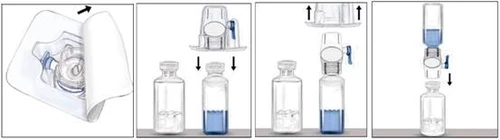
- Open the BAXJECT II device package by peeling off the paper film, taking care not to touch the inner surface of the device (Figure a). Do not remove the device from the package.
- Turn the package upside down and attach the transparent plastic spike to the solvent vial stopper. Hold the package by its edges and remove the packaging from the BAXJECT II device (Figure b). Do not remove the blue cap from the BAXJECT II device.
- With the BAXJECT II device now attached to the solvent vial, invert the system so that the solvent vial is above the device. Attach the white plastic spike to the stopper of the RIXUBIS vial. The vacuum will draw the solvent into the vial containing RIXUBIS (Figure c).
- Gently mix until the powder is completely dissolved. The product dissolves rapidly (within 2 minutes). Ensure that RIXUBIS is completely dissolved, otherwise not all of the reconstituted product will pass through the filter of the device. Reconstituted medicinal products should be inspected visually for particulate matter and discoloration prior to administration. The solution should be clear or slightly opalescent. Do not use solutions that are cloudy or contain a precipitate.
| Figure a |
Figure b |
Figure c |
|
|
||
Do not refrigerate the medicinal product after reconstitution. Use it immediately after preparation.
Administration
Use aseptic techniques.
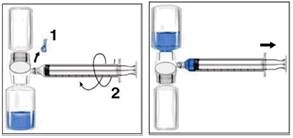
- Remove the blue cap from the BAXJECT II device. Take care not to draw air into the syringe. Attach the syringe to the BAXJECT II device (Figure d).
- Invert the system (the vial with reconstituted solution should be on top). Fill the syringe with the reconstituted solution by slowly pulling back the plunger (Figure e).
- Detach the syringe.
- Attach a butterfly needle to the syringe. Administer the solution intravenously. The solution should be administered slowly at a rate comfortable for the patient, not exceeding 10 mL per minute.
| Figure d |
Figure e |
|
|
|
Always when using the medicinal product RIXUBIS, record its name and batch number (for example, in your personal diary) in order to keep information about the medicinal products you have used.
Any unused medicinal product or waste material should be disposed of in accordance with local requirements.
The chemical and physical in-use stability of the diluted, ready-to-use medicinal product is 3 hours at a temperature not exceeding 30 °C. From a microbiological point of view, although the reconstitution method excludes microbial contamination, the medicinal product should be used immediately. If the medicinal product is not used immediately, the duration and conditions of storage are the responsibility of the user. Do not refrigerate.
Children
Patients aged 12 to 17 years
The dosage is the same for adults and children aged 12 to 17 years.
Patients under 12 years of age
On-demand treatment
The required dose of factor IX for patients under 12 years of age is calculated based on empirical observations indicating that administration of one international unit (IU) of factor IX per 1 kg of body weight results in an increase of factor IX activity in blood plasma by 0.7 IU/dL (range from 0.31 to 1.0 IU/dL) or by 0.7% of normal activity.
The required dose is determined using the formula below.
| Required number of units |
= |
body weight (kg) |
× |
desired increase in factor IX level (% or IU/dL) |
× |
reciprocal of the observed recovery value (dL/kg) |
To achieve a stepwise increase in activity level by 0.7 IU/dL per 1 IU/kg, the dose is calculated using the following formula:
| Required number of units |
= |
body weight (kg) |
× |
desired increase in factor IX level (% or IU/dL) |
× |
1.4 dL/kg |
For determining the dose during bleeding episodes and surgical interventions, the same table as for adults can be used (see Table 7 above).
Prophylaxis
The recommended dose range for treating pediatric patients under 12 years of age is 40 to 80 IU/kg every 3–4 days. In some cases, depending on pharmacokinetics, age, bleeding phenotype, and the patient's level of physical activity, it may be necessary to shorten the dosing intervals or increase the dose.
Overdose.
Effects of administering higher than recommended doses of RIXUBIS have not been described.
Adverse reactions
Rare cases of hypersensitivity or allergic reactions have been observed (which may include angioneurotic edema, burning and itching sensations at the infusion site, chills, facial flushing, generalized urticaria, headache, rash, hypotension, lethargy, nausea, restlessness, tachycardia, chest tightness, tinnitus, vomiting, wheezing), which occasionally may progress to severe anaphylaxis (including shock), occurring in close temporal association with the administration of factor IX inhibitors.
Cases of nephrotic syndrome have been reported in patients with hemophilia B and a history of allergic reactions, following immune tolerance induction in the presence of factor IX inhibitors.
Very rare cases of antibody formation against hamster proteins have been observed, associated with hypersensitivity reactions.
In patients with hemophilia B, neutralizing antibodies (inhibitors) to factor IX may develop, manifesting as suboptimal treatment response. In such cases, consultation with a specialized hemophilia treatment center is recommended.
The use of medicinal products based on factor IX carries a potential risk of thromboembolic events, with a higher risk associated with the use of low-purity purified products. Low-purity factor IX products have been associated with cases of myocardial infarction, disseminated intravascular coagulation, venous thrombosis, and pulmonary embolism. The use of highly purified factor IX products is rarely associated with such adverse reactions.
List of adverse reactions in tabular form
A total of 99 individuals were enrolled in clinical studies involving the use of RIXUBIS, with at least one dose administered, resulting in a total of 5 adverse reactions. The table below presents information on adverse reactions by system organ classes (SOC) according to the MedDRA classification (using preferred terms).
The frequency of adverse reactions was classified as follows: very common (> 1/10), common (from > 1/100 to < 1/10), uncommon (from > 1/1000 to < 1/100), rare (from > 1/10000 to < 1/1000), very rare (< 1/10000), frequency not known (based on available data, frequency cannot be estimated).
Within each frequency category, adverse reactions are listed in descending order of severity.
Table 8
| Adverse reactions reported in clinical trials and spontaneous reports |
||
| MedDRA System Organ Class |
Adverse reactions |
Frequency per patient |
| Immune system disorders |
Hypersensitivity a) |
Unknown |
| Nervous system disorders |
Disturbance of taste |
Common |
| Musculoskeletal and connective tissue disorders |
Limb pain |
Common |
a) ADR (adverse reaction) is explained below in the section.
Description of individual adverse reactions
Hypersensitivity
Allergic-type reactions manifested as dyspnea, pruritus, generalized urticaria, and rash.
Children
The frequency, type, and severity of adverse reactions in children are expected to be the same as in adults. However, data regarding untreated patients are lacking, since clinical trials included only previously treated patients. Therefore, immunogenicity studies regarding inhibitor development in patients in this risk group have not been conducted.
Reporting of suspected adverse reactions
Reporting suspected adverse reactions after authorization of the medicinal product is important. It allows continued monitoring of the benefit-risk balance of the medicinal product. Healthcare professionals and patients, as well as their legal representatives, are encouraged to report all cases of suspected adverse reactions and lack of efficacy via the Automated Pharmacovigilance Information System at the following link: https://aisf.dec.gov.ua.
Shelf life.
3 years.
Storage conditions.
Store at temperatures not exceeding 30 °C. Do not freeze.
Keep out of reach of children.
Incompatibilities.
Due to the lack of compatibility studies, this medicinal product must not be mixed with other medicinal products.
Only plastic syringes with a Luer attachment may be used when administering this medicinal product. Due to adsorption of human coagulation factor IX onto the internal surfaces of certain infusion equipment, the administered dose of the product may be inaccurate.
Packaging.
One vial of powder (250 IU, 500 IU, 1000 IU, 1500 IU, 2000 IU, or 3000 IU) with one vial of solvent (5 ml of water for injections) and one BAXJECT II reconstitution device per carton.
Prescription status.
Prescription only.
Manufacturer.
Baxalta Belgium Manufacturing SA / Baxalta Belgium Manufacturing SA.
Manufacturer's location and address of place of business.
Boulevard Rene Branquart 80, Lessines, 7860, Belgium / Boulevard Rene Branquart 80, Lessines, 7860, Belgium.