Ranselex
Ukraine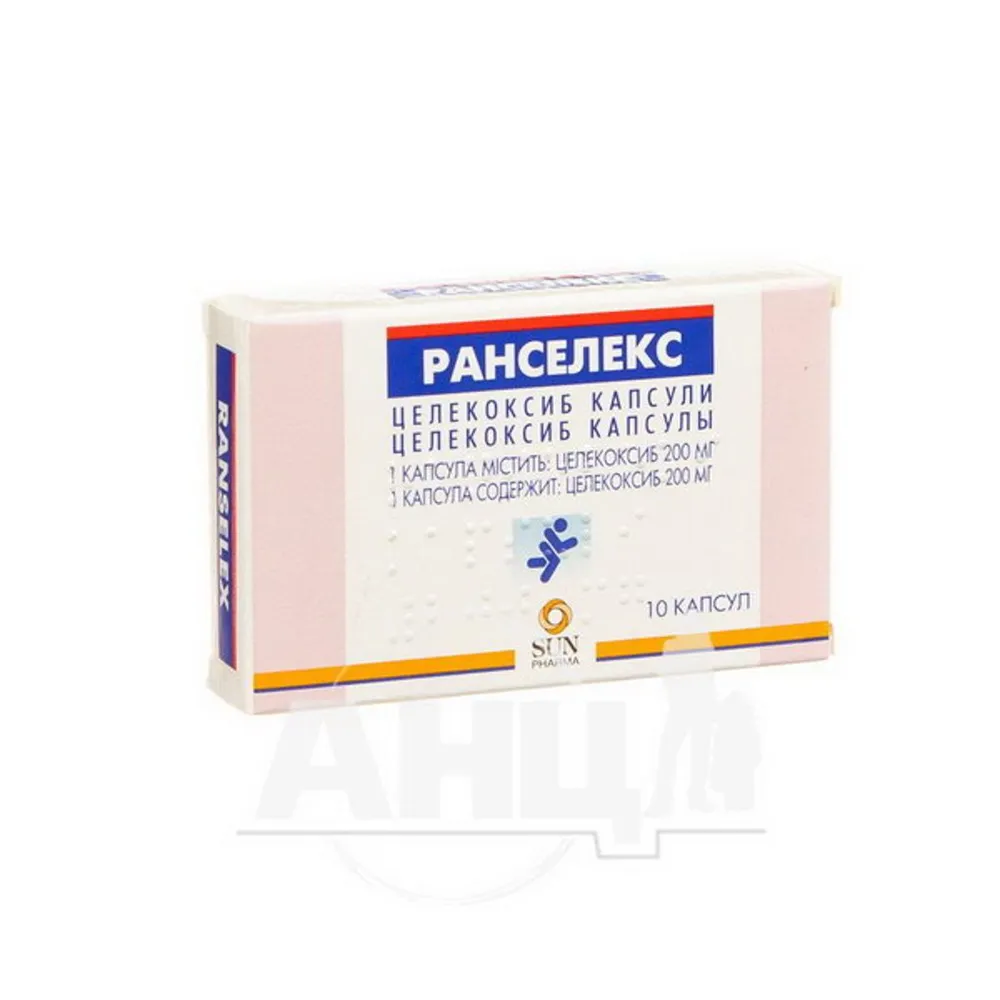
Table of Contents
INSTRUCTION FOR MEDICAL USE OF THE MEDICINAL PRODUCT RANSELEX (RANSELEX)
Composition:
Active substance: celecoxib;
1 capsule contains celecoxib 100 mg or 200 mg;
Excipients: lactose monohydrate; povidone; colloidal silicon dioxide anhydrous; sodium lauryl sulfate; sodium croscarmellose; magnesium stearate;
Capsule shell composition: gelatin, sodium lauryl sulfate, titanium dioxide (E171).
Pharmaceutical form. Capsules.
Main physicochemical properties:
100 mg capsules: white or almost white hard gelatin capsules with the imprint "CC" on the cap and "100" on the body in black ink, containing granular powder of white or almost white color;
200 mg capsules: white or almost white hard gelatin capsules with the imprint "CC" on the cap and "200" on the body in black ink, containing granular powder of white or almost white color.
Pharmacotherapeutic group.
Non-steroidal anti-inflammatory and antirheumatic agents. Coxibs. ATC code M01AH01.
Pharmacological Properties
Pharmacodynamics
Celecoxib is an oral selective inhibitor of cyclooxygenase-2 (COX-2) within the clinical dose range (200–400 mg per day). In healthy volunteers, within this dosing range, no statistically significant inhibition of COX-1 (assessed as ex vivo thromboxane B2 [TxB2] formation inhibition) was observed.
Cyclooxygenase is responsible for prostaglandin formation. Two isoforms of this enzyme have been identified: COX-1 and COX-2. COX-2 is the isoform induced by pro-inflammatory stimuli and is the primary mediator of prostaglandin synthesis involved in pain, inflammation, and fever. COX-2 is also involved in ovulation, implantation, and closure of the arterial duct, regulation of kidney function, and central nervous system functions (fever induction, pain perception, and cognitive function). It may also play a role in ulcer healing. COX-2 has been detected in tissues surrounding gastric ulcers in humans, but its significance in ulcer healing is not established.
Differences in antiplatelet activity between certain nonsteroidal anti-inflammatory drugs (NSAIDs) that inhibit COX-1 and selective COX-2 inhibitors may have clinical relevance for patients at risk of thromboembolic events. Selective COX-2 inhibitors reduce systemic (and therefore likely endothelial) prostacyclin production without affecting platelet thromboxane.
Celecoxib is a diaromatic-substituted pyrazole, chemically similar to other non-arylamine sulfonamides (e.g., thiazides, furosemide), but distinct from arylamine sulfonamides (e.g., sulfamethoxazole and other sulfonamide antibiotics).
After administration of high doses of celecoxib, a dose-dependent effect on TxB2 formation was observed. However, in small studies in healthy subjects receiving multiple doses of 600 mg twice daily (three times the maximum recommended dose), celecoxib did not affect platelet aggregation or bleeding time compared to placebo.
Several studies have been conducted to confirm the efficacy and safety of celecoxib in the treatment of osteoarthritis, rheumatoid arthritis, and ankylosing spondylitis.
The use of celecoxib for the treatment of inflammation and pain in knee and hip osteoarthritis was evaluated in approximately 4,200 patients in placebo- and active-controlled studies lasting up to 12 weeks. The drug was also evaluated for the treatment of inflammation and pain in rheumatoid arthritis in approximately 2,100 patients in placebo- and active-controlled studies lasting up to 24 weeks. Daily doses of celecoxib 200–400 mg provided 24-hour pain relief following administration. Celecoxib was evaluated for symptomatic treatment of ankylosing spondylitis in 896 patients in placebo- and active-controlled studies lasting up to 12 weeks. In these studies, celecoxib at doses of 100 mg twice daily, 200 mg once daily, 200 mg twice daily, and 400 mg once daily demonstrated significant pain relief, reduced overall disease activity, and improved function in ankylosing spondylitis.
Randomized, double-blind, controlled studies involving endoscopic evaluation of the upper gastrointestinal (GI) tract were conducted in patients without baseline ulcers (celecoxib was administered at doses of 50–400 mg twice daily). In 12-week endoscopic studies, celecoxib (at doses of 100–800 mg daily) was associated with a significantly lower risk of gastric and duodenal ulcer formation compared to naproxen (1000 mg daily) and ibuprofen (2400 mg daily). These findings were not consistent when compared to diclofenac (150 mg daily). In two 12-week studies, the percentage of patients with endoscopically detected gastric and duodenal ulcers did not differ significantly between those receiving placebo and those receiving celecoxib at doses of 200 mg and 400 mg twice daily.
In a prospective long-term safety study of long-term outcomes (lasting 6 to 15 months), patients with osteoarthritis and rheumatoid arthritis received celecoxib 400 mg twice daily (4 and 2 times the recommended doses for osteoarthritis and rheumatoid arthritis, respectively), ibuprofen 800 mg three times daily, or diclofenac 75 mg twice daily (therapeutic doses for both drugs). Approximately 22% of participants received concomitant low-dose acetylsalicylic acid (325 mg daily), primarily for cardiovascular disease prevention. Regarding the primary endpoint of complicated ulcers (defined as gastrointestinal bleeding, perforation, or obstruction), celecoxib did not differ significantly from ibuprofen or diclofenac. For the combined NSAID group, there was no statistically significant difference in complicated ulcers (relative risk 0.77, 95% confidence interval [CI] 0.41–1.46, based on total study duration). For the combined endpoint of complicated and symptomatic ulcers, the incidence was significantly lower in the celecoxib group compared to the NSAID group (relative risk 0.66, 95% CI 0.45–0.97), but not between celecoxib and diclofenac. In patients receiving celecoxib with concomitant low-dose acetylsalicylic acid, complicated ulcers occurred four times more frequently than in those receiving celecoxib alone. The incidence of clinically significant hemoglobin decrease (> 2 g/dL), confirmed by repeat testing, was significantly lower in patients receiving celecoxib compared to the NSAID group (relative risk 0.29, 95% CI 0.17–0.48). This significantly lower incidence with celecoxib was maintained both with and without concomitant acetylsalicylic acid use.
In a prospective, randomized 24-week safety study involving patients aged 60 years or older or with a history of gastric or duodenal ulcers (patients taking acetylsalicylic acid were excluded), the percentage of patients with hemoglobin decrease (≥ 2 g/dL) and/or hematocrit decrease (≥ 10%) due to confirmed or possible gastrointestinal disorders was lower in patients receiving celecoxib 200 mg twice daily (N = 2238) compared to those receiving prolonged-release diclofenac 75 mg twice daily plus omeprazole 20 mg once daily (N = 2246) (0.2% vs. 1.1% for etiology related to gastrointestinal disorders, p = 0.004; 0.4% vs. 2.4% for possible etiology related to gastrointestinal disorders, p = 0.0001). The incidence of clinical gastrointestinal complications such as perforation, obstruction, or bleeding was very low, with no differences between treatment groups (4–5 per group).
Cardiovascular safety: long-term studies in patients with sporadic adenomatous polyps
Studies evaluating celecoxib in patients with sporadic adenomatous polyps were conducted. In one study (Study 1), a dose-dependent increase in the composite endpoint of cardiovascular death, myocardial infarction, or stroke (confirmed) was observed with celecoxib compared to placebo over 3 years of treatment. In another study (Study 2), no statistically significant increase in risk for the same composite endpoint was demonstrated.
In Study 1, relative risks compared to placebo for the composite endpoint (confirmed) of cardiovascular death, myocardial infarction, or stroke were 3.4 (95% CI 1.4–8.5) with 400 mg celecoxib twice daily and 2.8 (95% CI 1.1–7.2) with 200 mg celecoxib twice daily. Cumulative rates for this composite endpoint over more than 3 years were 3.0% (20/671 patients) and 2.5% (17/685 patients), respectively, compared to 0.9% (6/679 patients) for placebo. The increased rates in both celecoxib groups compared to placebo were primarily driven by myocardial infarction.
In Study 2, the relative risk compared to placebo for the same composite endpoint (confirmed) was 1.2 (95% CI 0.6–2.4) with 400 mg celecoxib once daily compared to placebo. Cumulative rates for this composite endpoint over more than 3 years were 2.3% (21/933 patients) and 1.9% (12/628 patients), respectively. The incidence of confirmed myocardial infarction was 1.0% (9/933 patients) with 400 mg celecoxib once daily and 0.6% (4/628 patients) with placebo.
Data from a long-term Alzheimer’s disease prevention study did not show a significant increase in cardiovascular risk with 200 mg celecoxib twice daily compared to placebo. The relative risk compared to placebo for a similar composite endpoint (cardiovascular death, myocardial infarction, or stroke) was 1.14 (95% CI 0.61–2.12) with 200 mg celecoxib twice daily. The incidence of myocardial infarction was 1.1% (8/717 patients) with 200 mg celecoxib twice daily and 1.2% (13/1070 patients) with placebo.
Pharmacokinetics
Ransellex is well absorbed, with peak plasma concentrations reached approximately 2–3 hours after administration. Food intake (high-fat meal) delays absorption by about 1 hour.
Celecoxib is primarily eliminated via metabolism. Less than 1% of the dose is excreted unchanged in urine. Individual variability in celecoxib exposure parameters may differ up to 10-fold. Within the therapeutic dose range, celecoxib exhibits dose- and time-independent pharmacokinetics. Plasma protein binding is approximately 97% at therapeutic plasma concentrations, and the drug practically does not bind to erythrocytes. The elimination half-life is 8–12 hours. Steady-state plasma concentration is achieved within 5 days of treatment. Pharmacological activity is attributed to the parent drug. The main metabolites detected in circulation showed no measurable activity against COX-1 or COX-2.
Celecoxib is primarily metabolized via cytochrome P450 2C9. Three of its metabolites detected in human plasma (primary alcohol, corresponding carboxylic acid, and glucuronide conjugate) are inactive regarding inhibition of COX-1 and COX-2.
Cytochrome P450 2C9 activity is reduced in individuals with genetic polymorphisms leading to decreased enzyme activity, such as those with the homozygous CYP2C9*3 polymorphism.
In a pharmacokinetic study of 200 mg celecoxib once daily in healthy volunteers genotyped as CYP2C9*1/*1, CYP2C9*1/*3, or CYP2C9*3/*3, median Cmax and AUC0–24 of celecoxib on day 7 were nearly 4 and 7 times higher, respectively, in individuals genotyped as CYP2C9*3/*3 compared to other genotypes. In three separate single-dose studies involving a total of 5 patients genotyped as CYP2C9*3/*3, AUC0–24 of a single dose was nearly three times higher than in patients with normal metabolism. The homozygous *3/*3 genotype is reported to occur with a frequency of 0.3–1% across various ethnic groups.
Caution is advised when administering celecoxib to patients with known or suspected reduced CYP2C9 activity based on prior history/experience with other CYP2C9 substrates.
No clinically significant differences in pharmacokinetic parameters of celecoxib were observed between elderly African-American patients and Caucasian patients.
Plasma concentrations of celecoxib are increased by nearly 100% in elderly women (> 65 years).
Compared to patients with normal liver function, Cmax of celecoxib is increased by an average of 53% and AUC by 26% in patients with mild hepatic impairment. In patients with moderate hepatic impairment, these values are increased by 41% and 146%, respectively. Metabolic capacity in patients with mild to moderate hepatic impairment correlated best with their serum albumin levels. In patients with mild or moderate hepatic impairment (serum albumin 25–35 g/L), treatment should be initiated at half the recommended dose. Patients with severe hepatic impairment (serum albumin < 25 g/L) were not included in clinical studies; therefore, celecoxib is contraindicated in this patient group.
Experience with celecoxib in patients with renal impairment is limited. The pharmacokinetics of celecoxib have not been studied in patients with renal impairment, but significant changes are unlikely. Therefore, caution should be exercised when treating patients with renal impairment. Use of the drug in patients with severe renal impairment is contraindicated.
Clinical characteristics.
Indications.
Symptomatic treatment of osteoarthritis, rheumatoid arthritis, and ankylosing spondylitis.
Contraindications.
- Hypersensitivity (e.g., anaphylactic reactions and serious skin reactions) to celecoxib or to any component of the medicinal product.
- Hypersensitivity to sulfonamides.
- Active peptic ulcer or gastrointestinal bleeding.
- Asthma, acute rhinitis, nasal polyps, angioedema, urticaria, or other allergic reactions after taking acetylsalicylic acid or nonsteroidal anti-inflammatory drugs (NSAIDs), including cyclooxygenase-2 (COX-2) inhibitors, in medical history.
- Use during pregnancy and breastfeeding.
- Use in women of reproductive age who do not use effective contraception.
- Severe hepatic impairment (serum albumin level < 25 g/L or Child–Pugh score ≥ 10).
- Severe renal impairment (established creatinine clearance < 30 mL/min).
- Inflammatory bowel disease.
- Congestive heart failure (NYHA class II–IV, according to the New York Heart Association criteria).
- Diagnosed ischemic heart disease, peripheral arterial disease, and/or cerebrovascular disease.
- Use following coronary artery bypass graft (CABG) surgery (see section "Special precautions").
Interaction with other medicinal products and other forms of interactions.
Pharmacodynamic interactions
In patients receiving warfarin or other anticoagulants, anticoagulant activity should be monitored particularly closely during the first days of celecoxib treatment and when changing its dose, as these patients have an increased risk of bleeding. Therefore, in patients taking oral anticoagulants, prothrombin time and international normalized ratio (INR) should be frequently monitored, especially during the first days of celecoxib treatment or when changing its dose.
Bleeding (sometimes fatal) has been reported in association with prolonged prothrombin time, primarily in elderly patients and in patients concurrently taking celecoxib and warfarin.
NSAIDs can reduce the effect of antihypertensive agents, including angiotensin-converting enzyme (ACE) inhibitors, angiotensin II receptor antagonists, diuretics, and β-blockers. The risk of acute, usually reversible, renal failure increases in some patients with impaired renal function (e.g., in dehydrated patients or elderly patients) when ACE inhibitors or angiotensin II receptor antagonists are prescribed in combination with NSAIDs, including celecoxib. Therefore, such combination therapy should be prescribed with caution, especially in elderly patients. Patients should be adequately hydrated. Renal function should be monitored after initiation of concomitant therapy and periodically thereafter.
According to a 28-day clinical study involving patients with stage I and II arterial hypertension controlled with lisinopril, administration of celecoxib 200 mg twice daily did not result in clinically significant increases in mean 24-hour diastolic or systolic blood pressure compared to placebo, as determined by 24-hour ambulatory blood pressure monitoring. Among patients receiving celecoxib 200 mg twice daily, 48% were considered non-responsive to lisinopril at the final clinic visit (defined as a cuff diastolic blood pressure > 90 mm Hg or an increase in cuff diastolic blood pressure > 10% compared to baseline). In the placebo group, 27% of patients were non-responsive, and this difference was statistically significant.
Concomitant use of NSAIDs with cyclosporine or tacrolimus is considered to enhance the nephrotoxic effects of these agents. Renal function should be monitored when celecoxib is used concomitantly with either of these drugs.
Ransellex can be used with low-dose acetylsalicylic acid, but it does not replace it for the prevention of cardiovascular diseases. As with other NSAIDs, clinical trial data indicate an increased risk of gastrointestinal ulceration or other gastrointestinal complications with concomitant use of low-dose acetylsalicylic acid compared to celecoxib monotherapy.
Pharmacokinetic interactions
Effect of celecoxib on other drugs
Celecoxib is an inhibitor of CYP2D6. Concomitant use of celecoxib may increase plasma concentrations of drugs that are substrates of this enzyme. Increased plasma concentrations of dextromethorphan by 2.6-fold and metoprolol by 1.5-fold have been reported with concomitant administration of 200 mg celecoxib twice daily. Examples of drugs metabolized by CYP2D6 include antidepressants (tricyclics and serotonin reuptake inhibitors), neuroleptics, antiarrhythmics, etc. At the start of celecoxib treatment, when increasing the dose, or when discontinuing treatment, dose reduction of individually titrated CYP2D6 substrates may be required.
In vitro studies have shown that celecoxib has the potential to inhibit CYP2C19-catalyzed metabolism. The clinical relevance of these in vitro data is unknown. Examples of drugs metabolized by CYP2C19 include diazepam, citalopram, and imipramine.
In an interaction study, celecoxib did not show a clinically significant effect on the pharmacokinetics of oral contraceptives (norethisterone 1 mg/ethinylestradiol 35 µg).
Celecoxib has no clinically significant effect on the pharmacokinetics of tolbutamide (a CYP2C9 substrate) or glyburide.
In patients with rheumatoid arthritis, celecoxib had no statistically significant effect on the pharmacokinetics (plasma and renal clearance) of methotrexate (at doses used for treating rheumatic diseases). However, appropriate monitoring for methotrexate-related toxicity should be performed when these two agents are used concomitantly.
In healthy volunteers, concomitant administration of celecoxib 200 mg twice daily and lithium 450 mg twice daily resulted in an average increase of 16% in maximum plasma concentration (Cmax) of lithium and 18% in area under the concentration–time curve (AUC). Therefore, patients receiving lithium preparations should be closely monitored at the initiation or discontinuation of celecoxib therapy.
Effect of other drugs on Ransellex
In patients with poor CYP2C9 metabolism and increased systemic exposure to celecoxib, concomitant treatment with CYP2C9 inhibitors may further increase celecoxib exposure. Such combinations should not be prescribed to patients with poor CYP2C9 metabolism.
Since celecoxib metabolism is primarily mediated by CYP2C9, patients receiving fluconazole should be given half the recommended dose. Concomitant administration of a single 200 mg dose of celecoxib and 200 mg fluconazole once daily, a strong CYP2C9 inhibitor, resulted in an average increase of 60% in celecoxib Cmax and 130% in AUC. Concomitant use of CYP2C9 inducers such as rifampicin, carbamazepine, and barbiturates may reduce celecoxib plasma concentrations.
No effect of ketoconazole or antacids on the pharmacokinetics of celecoxib has been observed.
Children
Interactions with other medicinal products have been studied only in adults.
Special precautions for use.
Cardiovascular thrombotic events. Clinical studies of several selective and non-selective cyclooxygenase-2 (COX-2) inhibitors from the NSAID class, with durations of up to 3 years, have demonstrated an increased risk of serious thrombotic cardiovascular events, including myocardial infarction and stroke, which may be fatal. Available data do not clarify whether the risk of developing thrombotic cardiovascular complications is similar with the use of all NSAIDs. The relative increase in the frequency of serious thrombotic cardiovascular complications compared to baseline rates associated with NSAID use occurs both in patients with cardiovascular diseases and risk factors for their development, and in patients without such conditions and risk factors. However, patients with cardiovascular disease or cardiovascular risk factors had even higher absolute rates of serious thrombotic cardiovascular complications. In some observational studies, this increased risk of serious thrombotic cardiovascular complications was observed as early as the first weeks of treatment. The increased risk of thrombotic cardiovascular complications was most consistently observed with higher doses of the drug.
In the APC (Adenoma Prevention with Celecoxib) clinical trial, an approximately threefold increase in risk was observed for the combined endpoint (death due to cardiovascular disease, myocardial infarction, or stroke) in the celecoxib treatment groups receiving 400 mg twice daily and 200 mg twice daily, compared to placebo. This increased risk in both celecoxib groups compared to the placebo group was primarily due to an increased frequency of myocardial infarction.
According to the findings of the controlled clinical trial "Prospective Randomized Evaluation of Celecoxib Integrated Safety versus Ibuprofen or Naproxen (PRECISION)" regarding the relative risk of cardiovascular thrombotic events associated with the COX-2 inhibitor celecoxib compared to non-selective NSAIDs naproxen and ibuprofen, celecoxib was not inferior to naproxen and ibuprofen.
To minimize the potential risk of cardiovascular adverse reactions in patients taking NSAIDs, the lowest effective dose should be used for the shortest possible duration of treatment. Physicians and patients should closely monitor for such reactions throughout the entire course of treatment, even in the absence of prior cardiovascular symptoms. Patients should be informed about the symptoms of serious cardiovascular adverse reactions and the measures to be taken if they occur.
There is no direct evidence that concomitant use of aspirin reduces the increased risk of serious thrombotic cardiovascular complications associated with NSAID use. Concomitant use of aspirin and NSAIDs, such as Ransellex, increases the risk of serious gastrointestinal adverse reactions (see section "Special precautions for use," subsection "Gastrointestinal bleeding, ulceration, and perforation").
In the CLASS study, Kaplan-Meier cumulative incidence rates at 9 months for peripheral edema in patients receiving celecoxib 400 mg twice daily, ibuprofen 800 mg three times daily, and diclofenac 75 mg twice daily were 4.5%, 6.9%, and 4.7%, respectively. According to the CLASS study, the incidence of arterial hypertension in patients receiving celecoxib, ibuprofen, and diclofenac was 2.4%, 4.2%, and 2.5%, respectively.
Post-CABG surgery state. In two large controlled clinical trials, the use of selective COX-2 NSAIDs for pain control in the first 10–14 days after coronary artery bypass graft (CABG) surgery was associated with an increased incidence of myocardial infarction and stroke. The use of NSAIDs after CABG surgery is contraindicated (see section "Contraindications").
Patients after myocardial infarction. Observational studies based on the Danish National Registry demonstrated that patients who used NSAIDs in the period following myocardial infarction had an increased risk of recurrent myocardial infarction, cardiovascular death, and all-cause mortality, starting from the first week of treatment. In the same cohort, the rate of mortality in the first year after myocardial infarction was 20 cases per 100 patient-years among NSAID users compared to 12 cases per 100 patient-years among non-users. Although the absolute number of deaths decreases after the first year following myocardial infarction, analysis of results from at least four subsequent years of follow-up demonstrated that the elevated relative risk of mortality in patients taking NSAIDs persists.
The use of celecoxib should be avoided in patients with recent myocardial infarction, except when the expected benefit of treatment outweighs the risk of recurrent thrombotic cardiovascular complications. If celecoxib is used in patients with recent myocardial infarction, patients should be monitored for signs of cardiac ischemia.
Gastrointestinal bleeding, ulceration, and perforation. NSAIDs, including Ransellex, can cause serious gastrointestinal adverse reactions, including inflammation, bleeding, ulceration, and perforation of the esophagus, stomach, small intestine, and large intestine, which may be fatal. These serious adverse reactions may occur at any time during treatment with celecoxib, with or without prior symptoms. Only 1 in 5 patients develops clinical symptoms of serious upper gastrointestinal adverse reactions during NSAID treatment. Approximately 1% of patients treated with celecoxib for 3–6 months and approximately 2–4% of patients treated with celecoxib for one year experienced upper gastrointestinal ulcers, serious bleeding, or perforation due to NSAID use. However, even short-term NSAID therapy is associated with risk.
Gastrointestinal bleeding, ulceration, and perforation risk factors. Patients with a history of peptic ulcer and/or gastrointestinal bleeding who take NSAIDs have more than a 10-fold higher risk of gastrointestinal bleeding compared to patients without such risk factors. Other factors increasing the risk of gastrointestinal bleeding in patients taking NSAIDs include longer duration of NSAID treatment, concomitant oral use of corticosteroids, aspirin, anticoagulants, or selective serotonin reuptake inhibitors, tobacco smoking, alcohol consumption, advanced age, and poor general health. Most reports of fatal gastrointestinal adverse reactions after drug marketing occurred in elderly or debilitated patients. Additionally, patients with progressive liver disease and/or coagulopathy have an increased risk of gastrointestinal bleeding.
In the CLASS study, the incidence of complicated and symptomatic ulcers in all patients at 9 months was 0.78%, and in the subgroup of patients taking low-dose acetylsalicylic acid, it was 2.19%. In patients aged 65 years and older, the incidence was 1.40% at 9 months and 3.06% with concomitant use of acetylsalicylic acid.
Strategies for minimizing gastrointestinal risks in patients taking NSAIDs:
- Use the lowest effective dose for the shortest possible duration;
- Avoid using more than one NSAID simultaneously;
- Avoid use in high-risk patients, except when the expected benefit outweighs the increased risk of bleeding. In such patients, as well as in patients with active gastrointestinal bleeding, consider using alternative medications instead of NSAIDs;
- Continuously monitor patients for signs and symptoms of gastrointestinal ulceration and/or bleeding during NSAID therapy;
- If a serious gastrointestinal adverse reaction is suspected, initiate immediate investigation and treatment, and discontinue celecoxib until the serious gastrointestinal adverse reaction is ruled out;
- With concomitant use of low-dose aspirin for prevention of cardiovascular complications, conduct more careful monitoring for signs of gastrointestinal bleeding (see section "Interaction with other medicinal products and other forms of interaction").
Hepatotoxicity. Elevations in alanine aminotransferase or aspartate aminotransferase levels (3 times or more above the upper limit of normal) were observed in approximately 1% of patients treated with NSAIDs in clinical trials. Additionally, rare, sometimes fatal cases of severe liver function impairment, including fulminant hepatitis, liver necrosis, and liver failure, have been reported.
Elevations in alanine aminotransferase or aspartate aminotransferase levels (less than 3 times above the upper limit of normal) may occur in up to 15% of patients taking NSAIDs, including celecoxib.
In controlled clinical trials of celecoxib, the incidence of minor elevations (exceeding the upper limit of normal by 1.2–3 times) in liver-related enzymes was 6% in patients taking celecoxib and 5% in patients receiving placebo, while significant elevations in alanine aminotransferase and aspartate aminotransferase levels were observed in approximately 0.2% of patients taking celecoxib and 0.3% of patients taking placebo.
Patients should be informed about symptoms of hepatotoxicity (e.g., nausea, increased fatigue, lethargy, diarrhea, pruritus, jaundice, right upper quadrant pain, and flu-like symptoms). If clinical signs and symptoms indicating liver disease or systemic manifestations of disease (e.g., eosinophilia, rash, etc.) occur, celecoxib should be discontinued immediately and a clinical evaluation of the patient should be performed.
Arterial hypertension. The use of NSAIDs, including celecoxib, may lead to the development of arterial hypertension or exacerbation of existing arterial hypertension, and in each case, may increase the frequency of cardiovascular adverse reactions. In patients taking ACE inhibitors, thiazide diuretics, or loop diuretics, a reduced response to these medications may occur with NSAID use (see section "Interaction with other medicinal products and other forms of interaction").
Blood pressure should be monitored at the start of NSAID treatment and throughout the course of therapy.
Heart failure and edema. A meta-analysis by the Antiplatelet Trialists’ Collaboration of randomized controlled trials of coxibs and traditional NSAIDs demonstrated approximately a twofold increase in hospitalization rates for heart failure in patients receiving selective and non-selective COX-2 inhibitors and in patients receiving non-selective NSAIDs compared to patients receiving placebo. According to the Danish National Registry, NSAID use in patients with heart failure increased the risk of myocardial infarction, hospitalization for heart failure, and mortality.
Additionally, fluid retention and edema have been observed in some patients taking NSAIDs. The use of Ransellex may diminish the cardiovascular effects of several medications used to treat these conditions (e.g., diuretics, ACE inhibitors, or angiotensin receptor blockers) (see section "Interaction with other medicinal products and other forms of interaction").
In the CLASS study, the cumulative incidence of peripheral edema, calculated by the Kaplan-Meier method after 9 months of treatment with celecoxib 400 mg twice daily (4 and 2 times higher than the recommended dose for osteoarthritis and rheumatoid arthritis, respectively), ibuprofen 800 mg three times daily, and diclofenac 75 mg twice daily was 4.5%, 6.9%, and 4.7%, respectively.
The use of celecoxib should be avoided in patients with severe heart failure, except when the expected benefit of treatment outweighs the risk of worsening heart failure. If celecoxib is used in patients with severe heart failure, monitoring for signs of worsening heart failure should be performed.
Nephrotoxicity. Long-term use of NSAIDs has led to renal papillary necrosis and other kidney damage.
Nephrotoxicity has also been observed in patients in whom renal prostaglandins play a compensatory role in maintaining renal perfusion. In such patients, NSAID use may cause dose-dependent reduction in prostaglandin production and, consequently, reduced renal blood flow, potentially leading to significant renal decompensation. Patients at increased risk of these reactions include those with impaired renal function, dehydration, hypovolemia, heart failure, liver dysfunction, patients taking diuretics, ACE inhibitors, angiotensin receptor blockers, and elderly patients. Discontinuation of NSAID treatment is usually followed by return to the pre-treatment state.
There is no information from controlled clinical trials on the use of celecoxib in patients with progressive kidney disease. The effect of celecoxib on the kidneys may accelerate the progression of existing renal impairment.
Before starting celecoxib treatment, dehydration or hypovolemia, if present, should be corrected. In patients with impaired renal or liver function, heart failure, dehydration, or hypovolemia, renal function should be monitored during celecoxib use (see section "Interaction with other medicinal products and other forms of interaction"). The use of celecoxib should be avoided in patients with progressive kidney disease, except when the expected benefit outweighs the risk of worsening renal function. If celecoxib is used in patients with progressive kidney disease, patients should be monitored for signs of worsening renal function.
Hyperkalemia. Cases of increased serum potassium concentration, including hyperkalemia, have been reported with NSAID use, even in some patients without impaired renal function. In patients with normal renal function, these effects were associated with hyporeninemic-hypoaldosteronism.
Anaphylactic reactions. The use of celecoxib has been associated with anaphylactic reactions in patients with hypersensitivity to celecoxib or without it, as well as in patients with aspirin-induced asthma. Ransellex is a sulfonamide-containing drug, and both NSAIDs and sulfonamide-containing drugs can cause allergic-type reactions, including anaphylactic symptoms and life-threatening or less severe episodes of bronchial asthma in some sensitive individuals (see section "Contraindications").
In case of an anaphylactic reaction, emergency medical assistance should be sought.
Exacerbation of bronchial asthma related to aspirin sensitivity. Some patients with bronchial asthma may have aspirin-induced asthma, which may include chronic rhinosinusitis complicated by nasal polyps; severe, potentially fatal bronchospasm; and intolerance to aspirin and other NSAIDs. Since cross-reactivity between aspirin and other NSAIDs has been observed in such aspirin-sensitive patients, the use of celecoxib is contraindicated in patients with this form of aspirin sensitivity (see section "Contraindications"). When using celecoxib in patients with bronchial asthma (without known aspirin sensitivity), monitoring for changes in signs and symptoms of bronchial asthma should be performed.
Serious skin reactions. Ransellex may cause serious skin adverse reactions such as erythema multiforme, exfoliative dermatitis, Stevens-Johnson syndrome, toxic epidermal necrolysis, drug rash with eosinophilia and systemic symptoms (DRESS), and acute generalized exanthematous pustulosis. These serious reactions may develop without warning symptoms and may be fatal.
Patients should be informed about the signs and symptoms of serious skin reactions and the necessity to discontinue celecoxib at the first appearance of a skin rash or any other signs of hypersensitivity. Ransellex is contraindicated for use in patients with a history of serious skin reactions to NSAIDs (see section "Contraindications").
Premature closure of the fetal ductus arteriosus. Ransellex may cause premature closure of the fetal ductus arteriosus. The use of NSAIDs, including celecoxib, should be avoided in pregnant women starting from the 30th week of pregnancy (third trimester) (see section "Use during pregnancy or lactation").
Hematological toxicity. Cases of anemia have been reported in patients taking NSAIDs. This may be due to occult or significant blood loss, fluid retention, or an effect on erythropoiesis that is not fully characterized. If a patient exhibits any signs or symptoms of anemia during celecoxib use, hemoglobin or hematocrit levels should be monitored.
In controlled clinical trials, the incidence of anemia was 0.6% with celecoxib use and 0.4% with placebo. In patients undergoing long-term celecoxib therapy, hemoglobin or hematocrit levels should be monitored if any signs or symptoms of anemia or blood loss are present.
NSAIDs, including Ransellex, increase the risk of bleeding. Concomitant factors such as coagulation disorders or concomitant use of warfarin, other anticoagulants, antiplatelet agents (e.g., aspirin), selective serotonin reuptake inhibitors, and serotonin-norepinephrine reuptake inhibitors increase this risk. Such patients should be monitored for signs of bleeding (see section "Interaction with other medicinal products and other forms of interaction").
Masking of inflammation and fever. The pharmacological activity of celecoxib in reducing inflammation and possibly lowering elevated temperature may diminish the practical value of diagnostic signs in detecting infections.
Monitoring of laboratory test results. Since serious gastrointestinal bleeding, hepatotoxicity, and renal damage may occur without warning symptoms and signs, consideration should be given to monitoring patients taking NSAIDs for prolonged periods. Monitoring includes periodic complete blood count and biochemical blood tests (see section "Special precautions for use").
In controlled clinical trials, elevations in blood urea nitrogen levels occurred more frequently in patients taking celecoxib than in those receiving placebo. This laboratory abnormality was also observed in patients receiving comparator NSAID drugs during these trials. The clinical significance of this abnormality has not been established.
Disseminated intravascular coagulation. Since there is a risk of disseminated intravascular coagulation during celecoxib use in children with systemic manifestations of juvenile rheumatoid arthritis, patients should be monitored for signs and symptoms of coagulation disorders or bleeding, and patients and their caregivers should be informed about the need to report symptoms as soon as possible.
Fertility. Given that the mechanism of action of NSAIDs (including celecoxib) is mediated through prostaglandins, the use of these drugs may delay or prevent follicular rupture in the ovary, which may be associated with temporary infertility in some women. Published animal studies have shown that the use of prostaglandin synthesis inhibitors may disrupt prostaglandin-mediated follicular rupture necessary for ovulation. Small studies in women taking NSAIDs have also demonstrated reversible ovulation delay. Consideration should be given to discontinuing NSAIDs, including celecoxib, in women experiencing difficulties with conception or undergoing infertility evaluation.
The product contains lactose. Ransellex should not be administered to patients with rare hereditary conditions such as galactose intolerance, lactase deficiency, or glucose-galactose malabsorption.
The medicinal product contains less than 23 mg/dose of sodium, i.e., practically sodium-free.
Use during pregnancy or lactation.
Pregnancy. The use of NSAIDs, including celecoxib, during the third trimester of pregnancy increases the risk of premature closure of the fetal ductus arteriosus. The use of NSAIDs, including celecoxib, should be avoided in pregnant women starting from the 30th week of pregnancy.
Adequately controlled studies on the use of Ransellex in pregnant women have not been conducted. Based on data from observational studies regarding potential embryofetal risks of NSAID use in women during the first or second trimester of pregnancy, no definitive conclusions could be drawn. In reproductive animal studies, cases of embryofetal lethality and increased incidence of diaphragmatic hernia were observed in rats administered celecoxib orally daily during the organogenesis period at doses approximately 6 times higher than the maximum recommended human dose of 200 mg twice daily. Additionally, structural abnormalities (e.g., septal defects, rib fusions, sternal segment fusions, and sternal segment deformities) were observed in rabbits administered celecoxib orally during the organogenesis period at doses approximately 2 times higher than the maximum recommended human dose. Animal studies have shown that prostaglandins play an important role in regulating endometrial vascular permeability, blastocyst implantation, and decidualization. In these studies, administration of prostaglandin synthesis inhibitors, such as celecoxib, led to increased rates of pre- and post-implantation losses.
All pregnancies are associated with a background risk of congenital defects, fetal loss, or other adverse outcomes. In the general US patient population, regardless of drug exposure, all clinically recognized pregnancies have a background incidence of 2–4% major congenital defects and 15–20% fetal loss during pregnancy. The calculated background risk of major congenital defects and miscarriages for this population is unknown.
Labour and delivery. Studies on the effect of celecoxib on labour or delivery have not been conducted. In animal studies, NSAIDs, including celecoxib, inhibited prostaglandin synthesis, causing delayed delivery and increased incidence of stillbirth.
Human data. Available data do not allow assessment of the presence or absence of embryofetal toxicity associated with celecoxib use.
The effects of celecoxib on the course of labour and delivery in pregnant women are unknown.
Lactation. Limited data from three published reports involving a total of 12 breastfeeding women indicate low levels of celecoxib in breast milk. The calculated average daily infant dose was 10–40 µg/kg/day, which was less than 1% of the therapeutic dose for a two-year-old child on a body weight basis. In a report on two infants aged 17 and 22 months who were breastfed, no adverse reactions were reported.
Celecoxib should be used with caution in women who are breastfeeding. The benefit of breastfeeding for the child's health and development should be weighed against the mother's clinical need for celecoxib and any potential adverse effects of celecoxib or the impact of the mother's underlying condition on the infant.
Ability to influence reaction speed when driving or operating machinery.
If adverse reactions such as dizziness, vertigo, or somnolence occur during the use of Ransellex, driving vehicles and operating machinery should be avoided.
Method of Administration and Dosage
Osteoarthritis
The usual recommended daily dose is 200 mg administered in 1–2 doses. In some patients, if symptom relief is inadequate, increasing the dose to 200 mg twice daily may enhance efficacy. If there is no improvement in therapeutic effect within 2 weeks, alternative treatment options should be considered.
Rheumatoid Arthritis
The recommended initial daily dose is 200 mg, divided into two doses. If necessary, this dose may later be increased to 200 mg twice daily. If there is no improvement in therapeutic effect within 2 weeks, alternative treatment options should be considered.
Ankylosing Spondylitis
The recommended daily dose is 200 mg administered in 1–2 doses. In some patients, if symptom relief is inadequate, increasing the dose to 400 mg in 1–2 doses may enhance efficacy. If there is no improvement in therapeutic effect within 2 weeks, alternative treatment options should be considered.
The maximum recommended daily dose for all indications is 400 mg.
Ransellex capsules can be taken independently of food intake.
Elderly patients (> 65 years of age): As in younger adult patients, treatment should be initiated at a dose of 200 mg per day. If necessary, this dose may later be increased to 200 mg twice daily. Particular caution is advised when prescribing the drug to elderly patients with body weight less than 50 kg.
Hepatic impairment: In patients with diagnosed moderate hepatic impairment and serum albumin levels of 25–35 g/L, treatment should be initiated at half the recommended dose. Experience with use in such patients is limited to administration in patients with liver cirrhosis.
Renal impairment: Experience with use of Ransellex in patients with mild or moderate renal impairment is limited; therefore, such patients should be treated with caution.
Patients with reduced CYP2C9 metabolism: Ransellex should be used with caution in patients with known or expected reduced CYP2C9 activity, based on genotyping or prior history/experience with other CYP2C9 substrates, due to the risk of dose-dependent adverse effects. In such patients, treatment should be initiated at half the lowest recommended dose.
Children
Not applicable.
Overdose
Symptoms of acute NSAID overdose are generally limited to lethargy, drowsiness, nausea, vomiting, and epigastric abdominal pain, and are usually reversible with supportive therapy. Cases of gastrointestinal bleeding have been reported. Rarely, arterial hypertension, acute renal failure, respiratory depression, and coma have been observed (see section "Special Warnings and Precautions for Use").
Clinical experience regarding overdose is limited. In healthy volunteers, single doses up to 1200 mg or repeated doses up to 1200 mg twice daily for 9 days did not result in clinically significant adverse effects.
Treatment: In case of suspected overdose, appropriate supportive medical care should be provided, such as removal of gastric contents, clinical monitoring, and symptomatic treatment if necessary. Dialysis is unlikely to be an effective method for eliminating the drug due to the high degree of protein binding of celecoxib.
Adverse Reactions
Adverse reactions are listed by organ systems and frequency of occurrence.
Frequency of adverse reactions: very common (≥ 1/10), common (≥ 1/100, < 1/10), uncommon (≥ 1/1000, < 1/100), rare (≥ 1/10,000, < 1/1000), very rare (< 1/10,000), frequency not known (the frequency of these reactions cannot be reliably determined).
Infections and infestations: common – sinusitis, upper respiratory tract infection, pharyngitis, urinary tract infection.
Blood and lymphatic system disorders: uncommon – anemia, increased blood creatine phosphokinase; rare – leukopenia, thrombocytopenia, epistaxis; very rare – pancytopenia; frequency not known – agranulocytosis, aplastic anemia.
Immune system disorders: common – hypersensitivity reactions; very rare – anaphylactic shock, anaphylaxis.
Metabolic and nutritional disorders: uncommon – hyperkalemia, hypercholesterolemia, hypokalemia, increased blood non-protein nitrogen, increased alkaline phosphatase levels; frequency not known – hypoglycemia, hyponatremia.
Psychiatric disorders: common – insomnia; uncommon – anxiety, depression, fatigue, anorexia, increased appetite, somnolence; rare – confusion, hallucinations.
Nervous system disorders: common – dizziness, headache; uncommon – paresthesia, somnolence, cerebral infarction, migraine, vertigo; rare – ataxia, taste disturbances; very rare – intracranial hemorrhage (including fatal cases), worsening of epilepsy, aseptic meningitis, anosmia.
Eye disorders: uncommon – blurred vision, conjunctivitis; rare – ocular hemorrhage; very rare – retinal artery or vein occlusion.
Ear and labyrinth disorders: uncommon – tinnitus, hypoacusis, deafness.
Cardiac and vascular disorders: very common – arterial hypertension, including worsening of arterial hypertension; common – myocardial infarction; uncommon – syncope, congestive heart failure, palpitations, tachycardia; rare – arrhythmia, ventricular fibrillation, pulmonary artery thromboembolism, hot flushes, acute cerebrovascular accident, peripheral gangrene, thrombophlebitis; very rare – vasculitis.
Respiratory system disorders: common – rhinitis, dyspnea; uncommon – bronchitis, bronchospasm, exacerbation of bronchospasm, cough, shortness of breath, pharyngitis, laryngitis; rare – pneumonia.
Gastrointestinal disorders: common – nausea, abdominal pain, diarrhea, dyspepsia, flatulence, vomiting, dysphagia; uncommon – constipation, diverticulitis, eructation, stomatitis, dry mouth, gastroesophageal reflux, gastritis and other inflammatory gastrointestinal disorders, including worsening of their course, hemorrhoids, hiatal hernia, tenesmus; rare – gastrointestinal bleeding, duodenal, gastric, esophageal, small and large intestinal ulcers, intestinal perforation, esophagitis, esophageal perforation, melena, pancreatitis, colitis, intestinal obstruction.
Hepatobiliary disorders: uncommon – liver function abnormalities, increased liver enzyme levels, including increased aspartate aminotransferase (AST) and alanine aminotransferase (ALT); rare – hepatitis, cholelithiasis; very rare – liver failure (in some cases fatal or requiring liver transplantation), fulminant hepatitis (in some cases fatal), liver necrosis, cholestasis, cholestatic hepatitis, jaundice.
Skin and subcutaneous tissue disorders: common – rash, pruritus (including generalized pruritus); uncommon – urticaria, ecchymosis, increased sweating, dry skin; rare – angioneurotic edema, alopecia, photosensitivity; very rare – bullous rashes, maculopapular rashes, exfoliative dermatitis, Stevens-Johnson syndrome, toxic epidermal necrolysis, drug reaction with eosinophilia and systemic symptoms (DRESS syndrome), acute generalized exanthematous pustulosis.
Musculoskeletal and connective tissue disorders: common – arthralgia; uncommon – leg cramps, arthrosis, myalgia, synovitis, tendinitis; very rare – myositis.
Renal and urinary disorders: uncommon – increased creatinine levels, increased blood urea nitrogen, albuminuria, cystitis, dysuria, hematuria, frequent urination, urolithiasis; rare – acute renal failure, hyponatremia; very rare – tubulo-interstitial nephritis, nephrotic syndrome, minimal change glomerulonephritis.
Reproductive system and breast disorders: rare – menstrual cycle disturbances, decreased female fertility.
General disorders and administration site conditions: common – influenza-like symptoms, peripheral edema/fluid retention, injuries; uncommon – chest pain, facial swelling, sepsis, sudden death.
Additionally, during clinical studies, adverse reactions were reported in patients receiving celecoxib at a dose of 400 mg per day. Common: angina pectoris, irritable bowel syndrome, nephrolithiasis, increased blood creatinine, benign prostatic hyperplasia, weight gain. Uncommon: ischemic stroke, Helicobacter-induced infections, herpes zoster, bronchopneumonia, labyrinthitis, gingival infection, lipoma, floaters in the vitreous body, conjunctival hemorrhages, deep vein thrombosis, dysphonia, hemorrhoidal bleeding, frequent defecation, oral ulcers, allergic dermatitis, ganglionitis, nocturia, vaginal bleeding, ovarian cyst, breast tenderness, lower limb fracture, increased blood sodium levels.
Shelf life. 2 years.
Storage conditions.
Store in the original packaging at a temperature not exceeding 25 °C, in a place inaccessible to children.
Packaging.
100 mg capsules – 10 capsules per blister; 1 blister per cardboard box.
200 mg capsules – 10 capsules per blister; 1 blister per cardboard box.
Prescription status. Prescription only.
Manufacturer.
Sun Pharmaceutical Industries Limited.
Manufacturer's address and place of business.
Industrial Area 3, Dewas - 455001, India.