Ranozin®
Ukraine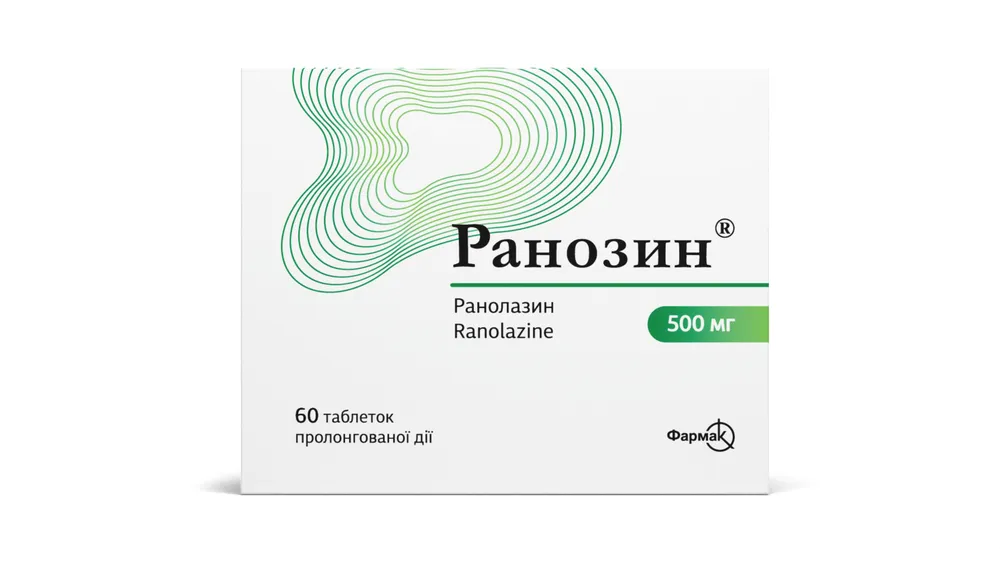
Table of Contents
INSTRUCTIONS FOR MEDICAL USE OF THE MEDICINAL PRODUCT RANOZIN® (RANOZIN)
Composition:
Active substance: ranolazine;
One tablet contains ranolazine 375 mg or 500 mg or 750 mg;
Excipients: microcrystalline cellulose, methacrylic acid – ethyl acrylate copolymer (1:1), hypromellose, sodium hydroxide, magnesium stearate;
Coating for 375 mg tablet: polyvinyl alcohol, titanium dioxide (E 171), macrogol, talc, FD&C Blue No. 2 (indigo carmine aluminum lake (E 132)), iron oxide red (E 172), carnauba wax;
Coating for 500 mg tablet: polyvinyl alcohol, titanium dioxide (E 171), macrogol, talc, iron oxide yellow (E 172), iron oxide red (E 172), carnauba wax;
Coating for 750 mg tablet: polyvinyl alcohol, titanium dioxide (E 171), macrogol, talc, FD&C Blue No. 1 (brilliant blue (E 133)), FD&C Yellow No. 5 (tartrazine (E 102)), carnauba wax.
Pharmaceutical form. Prolonged-release tablets.
Main physicochemical properties:
375 mg tablets: oval-shaped, biconvex tablets with a film coating, light blue in color, engraved with "375" on one side and smooth on the other;
500 mg tablets: oval-shaped, biconvex tablets with a film coating, light pink in color, engraved with "500" on one side and smooth on the other; speckles may be present;
750 mg tablets: elongated-shaped, biconvex tablets with a film coating, light green in color, engraved with "750" on one side and smooth on the other.
Pharmacotherapeutic group. Other cardiac preparations. Ranolazine. ATC code C01EB18.
Pharmacological Properties
Pharmacodynamics
Mechanism of action
The mechanism of action of ranolazine is largely unknown. Ranolazine may exert some antianginal effects by inhibiting the late inward sodium current into cardiac myocytes. This reduces intracellular accumulation of sodium and, consequently, decreases excess intracellular calcium. By reducing the late sodium current, ranolazine reduces intracellular ion imbalance during ischemia. This reduction in excess intracellular calcium promotes myocardial relaxation and thus reduces left ventricular diastolic tension. Clinical evidence of late sodium current inhibition by ranolazine was demonstrated by significant shortening of the QTc interval and improved diastolic relaxation observed in an open-label study involving 5 patients with long QT syndrome (patients with LQT3 syndrome carrying the SCN5A ΔKPQ mutation). These effects of the drug are independent of changes in heart rate, blood pressure, or vasodilation.
Pharmacodynamic effects
Effects on hemodynamics
Clinical studies have shown that in patients receiving ranolazine alone or in combination with other antianginal drugs, there was a reduction in mean heart rate (< 2 beats/min) and mean systolic blood pressure (< 3 mm Hg).
Electrocardiographic (ECG) effects
In patients receiving ranolazine, dose- and plasma concentration-dependent prolongation of the QTc interval (approximately 6 ms with 1000 mg twice daily) has been observed, along with decreased T-wave amplitude and, in some cases, notched T waves. This effect of ranolazine on ECG parameters is believed to result from inhibition of the rapid rectifier potassium current, which prolongs the ventricular action potential, as well as inhibition of the late sodium current, which shortens the ventricular action potential. Population analysis of pooled data from 1308 patients and healthy volunteers showed a mean QTc prolongation of 2.4 ms per 1000 ng/mL of plasma ranolazine relative to baseline. This value corresponds to data from pivotal clinical trials, where mean changes in QTcF (corrected by Fridericia’s formula) from baseline after administration of 500 mg and 750 mg twice daily were 1.9 ms and 4.9 ms, respectively. The slope was steeper in patients with clinically significant hepatic impairment.
In the large MERLIN-TIMI 36 trial involving 6560 patients with acute coronary syndrome (unstable angina/myocardial infarction without ST-segment elevation), no differences were observed between ranolazine and placebo regarding the risk of all-cause mortality (relative risk with ranolazine vs. placebo was 0.99), sudden cardiac death (relative risk with ranolazine vs. placebo was 0.87), or incidence of documented symptomatic arrhythmias (3.0% vs. 3.1%).
In the MERLIN-TIMI 36 trial, among 3162 patients receiving ranolazine undergoing 7-day Holter monitoring, no proarrhythmic effects were recorded. Patients receiving ranolazine had a significantly lower incidence of arrhythmias compared to those receiving placebo (80% vs. 87%), including ventricular tachycardia ≥ 8 beats (5% vs. 8%).
Clinical efficacy and safety
Clinical studies have demonstrated the efficacy and safety of ranolazine when used as monotherapy for chronic angina, as well as when added to therapy in patients with inadequate clinical response to other antianginal drugs.
In the pivotal CARISA trial, ranolazine was added to therapy with atenolol 50 mg once daily, amlodipine 5 mg once daily, or diltiazem 180 mg once daily. A total of 823 patients (23% women) were randomized to receive ranolazine 750 mg twice daily, 1000 mg twice daily, or placebo for 12 weeks. Ranolazine demonstrated superior efficacy compared to placebo in prolonging exercise duration over 12 weeks at both studied doses when used as add-on therapy. However, no difference in exercise duration was observed between the two dosage groups (24 seconds compared to placebo; p ≤ 0.03).
Ranolazine significantly reduced the number of angina attacks per week and the need for short-acting nitroglycerin compared to placebo. Tolerance to ranolazine did not develop during treatment, and no increase in angina attacks was observed after abrupt discontinuation of the drug. Improvement in exercise duration in women was approximately 33% of that observed in men at the 1000 mg twice daily dose. However, both men and women showed similar reductions in frequency of angina attacks and nitroglycerin use. Due to dose-dependent adverse effects and similar efficacy at 750 mg and 1000 mg twice daily, the recommended maximum dose is 750 mg twice daily.
In the second study, ERICA, ranolazine was added to amlodipine 10 mg once daily (maximum recommended dose). A total of 565 patients were randomized to receive ranolazine at an initial dose of 500 mg twice daily or placebo for 1 week, followed by 1000 mg twice daily or placebo for 6 weeks, in addition to concomitant amlodipine 10 mg once daily. Additionally, 45% of the study population also received long-acting nitrates. Treatment with ranolazine resulted in a significant reduction in the number of angina attacks per week (p = 0.028) and use of short-acting nitroglycerin (p = 0.014) compared to placebo. Both the mean number of angina attacks and the number of nitroglycerin tablets used decreased by approximately one per week.
In the MARISA study—the main dose-finding trial—ranolazine was administered as monotherapy. A total of 191 patients were randomized to receive ranolazine 500 mg twice daily, 1000 mg twice daily, 1500 mg twice daily, or placebo in a crossover design for 1 week each. Ranolazine demonstrated significant superiority over placebo in prolonging exercise duration, time to angina onset, and time to 1 mm ST-segment depression at all tested doses, with a clear dose-response relationship. Compared to placebo, exercise duration increased significantly with ranolazine at all three doses, ranging from 24 seconds at 500 mg twice daily to 46 seconds at 1500 mg twice daily, demonstrating a dose-dependent effect. Exercise duration was greatest in the 1500 mg group, but this was associated with disproportionate increases in adverse reactions. Therefore, the 1500 mg twice daily dose was excluded from further study.
In the large outcome trial MERLIN-TIMI 36 involving 6560 patients with acute coronary syndrome (unstable angina/non-ST-elevation myocardial infarction), no differences were observed between ranolazine and placebo regarding all-cause mortality (hazard ratio for ranolazine vs. placebo was 0.99), sudden cardiac death due to cardiovascular causes (hazard ratio 0.87), or incidence of documented symptomatic arrhythmias (3.0% vs. 3.1%) when added to standard medical therapy (including beta-blockers, calcium channel blockers, nitrates, antiplatelets, lipid-lowering agents, and ACE inhibitors). Approximately half of the patients in the MERLIN-TIMI 36 trial had a history of angina. Results showed that exercise duration increased by 31 seconds in patients receiving ranolazine compared to those receiving placebo (p = 0.002). The Seattle Angina Questionnaire demonstrated significant effects of ranolazine on several parameters, including frequency of angina attacks (p < 0.001), compared to placebo.
Only a small number of non-Caucasian patients were included in controlled clinical trials; therefore, conclusions regarding the efficacy and safety of the drug in this patient group cannot be drawn.
In a phase 3, double-blind, placebo-controlled clinical trial (RIVER-PCI) involving 2604 patients aged ≥ 18 years with a history of chronic angina and incomplete revascularization after percutaneous coronary intervention (PCI), the dose was increased to 1000 mg twice daily. No statistically significant difference was observed between the ranolazine group (26.2%) and the placebo group (28.3%) in the primary composite endpoint (time to ischemia-driven revascularization or ischemia-related hospitalization without revascularization): hazard ratio 0.95, 95% CI 0.82–1.10, p = 0.48. Risks of all-cause mortality, cardiovascular death, major adverse cardiovascular events (MACE), and hospitalization for heart failure were similar across groups; however, serious cardiovascular adverse events were more frequent in patients aged ≥ 75 years receiving ranolazine compared to placebo (17.0% vs. 11.3%, respectively). A notable increase in all-cause mortality was also observed in patients aged ≥ 75 years (9.2% vs. 5.1%, p = 0.074).
Pharmacokinetics
After oral administration of ranolazine, maximum plasma concentration (Cmax) is typically observed within 2–6 hours. At twice-daily dosing, steady state is generally achieved within 3 days.
Absorption
The mean absolute bioavailability of ranolazine after oral administration of immediate-release tablets is 35–50%, with high interindividual variability. The effect of ranolazine is dose-dependent. Increasing the dose from 500 mg to 1000 mg twice daily results in a 2.5- to 3-fold increase in the steady-state area under the plasma concentration-time curve (AUC). In a pharmacokinetic study in healthy volunteers, steady-state Cmax averaged approximately 1770 (SD 1040) ng/mL, and steady-state AUC0–12 averaged 13700 (SD 8290) ng × h/mL after administration of 500 mg twice daily. Food does not affect the rate or extent of ranolazine absorption.
Distribution
Approximately 62% of ranolazine is bound to plasma proteins, primarily to alpha-1 acid glycoprotein and weakly to albumin. The mean steady-state volume of distribution (Vss) is approximately 180 L.
Elimination
Ranolazine is primarily eliminated via metabolism. Less than 5% of the dose is excreted unchanged in urine and feces. After a single oral dose of 500 mg radiolabeled [14C] ranolazine in healthy volunteers, 73% of radioactivity was recovered in urine and 25% in feces. Ranolazine clearance is dose-dependent and decreases with increasing dose. The elimination half-life is approximately 2–3 hours after intravenous administration. The terminal half-life at steady state after oral administration is approximately 7 hours due to rate-limited absorption.
Biotransformation
Ranolazine undergoes rapid and extensive metabolism. In young healthy adults, approximately 13% of radioactivity was detected in plasma after a single oral dose of 500 mg [14C]-ranolazine.
Numerous metabolites have been identified in human plasma (47 metabolites), urine (>100 metabolites), and feces (25 metabolites). Fourteen major metabolic pathways have been identified, with O-demethylation and N-dealkylation being the most important. In vitro studies using human liver microsomes indicate that ranolazine is primarily metabolized by CYP3A4 and also by CYP2D6. After administration of 500 mg ranolazine twice daily, AUC in poor metabolizers (with reduced CYP2D6 activity) exceeds that in extensive metabolizers (normal CYP2D6 activity) by 62%. The corresponding difference for the 1000 mg twice daily dose was 25%.
Special patient populations
The impact of various factors on ranolazine pharmacokinetics was evaluated in a population pharmacokinetic study involving 928 patients with angina and healthy volunteers.
Effect of sex
Sex has no clinically relevant effect on pharmacokinetic parameters.
Geriatric patients
Age has no clinically relevant effect on pharmacokinetic parameters; however, increased ranolazine effects may occur in elderly patients due to age-related decline in renal function.
Body weight
In individuals weighing 40 kg, the effect of ranolazine is approximately 1.4 times greater than in those weighing 70 kg.
Chronic heart failure (CHF)
NYHA class III–IV CHF increases plasma ranolazine concentrations by approximately 1.3-fold.
Renal impairment
Studies evaluating the effect of renal function on ranolazine pharmacokinetics showed that in patients with mild, moderate, or severe renal impairment, ranolazine AUC was on average 1.7–2 times higher than in individuals with normal renal function. Considerable interindividual variability in AUC values was also observed in patients with renal impairment. AUC of metabolites increases with declining renal function. AUC of one of the pharmacologically active metabolites was increased 5-fold in patients with severe renal impairment.
Population pharmacokinetic analysis revealed a 1.2-fold increase in ranolazine exposure in patients with moderate renal impairment (creatinine clearance 40 mL/min). In patients with severe renal impairment (creatinine clearance 10–30 mL/min), ranolazine exposure was increased 1.3–1.8-fold.
The effect of dialysis on ranolazine pharmacokinetics has not been evaluated.
Hepatic impairment
Ranolazine pharmacokinetics have been evaluated in patients with mild to moderate hepatic impairment. Data on use in patients with severe hepatic impairment are lacking. In patients with mild hepatic impairment, ranolazine AUC was unchanged, whereas in patients with moderate hepatic impairment, AUC increased by 1.8-fold. These patients also exhibited a more pronounced QT interval prolongation.
Children
Pharmacokinetic parameters of ranolazine in children (< 18 years) have not been studied.
Preclinical safety data
Adverse reactions to ranolazine not observed in clinical trials but seen in animals at exposures similar to clinical effects include seizures and increased mortality in rats and dogs at plasma ranolazine concentrations approximately 3 times higher than the proposed maximum clinical dose.
Chronic toxicity studies in rats showed a treatment-related effect on adrenal glands at exposures slightly exceeding those in clinical patients. This effect is associated with increased plasma cholesterol concentration. Such changes have not been observed in humans. No effect on the adrenal axis has been reported in humans.
In long-term carcinogenicity studies, no significant increase in tumor incidence of any type was observed in mice at doses up to 50 mg/kg/day (150 mg/m²/day) or in rats at doses up to 150 mg/kg/day (900 mg/m²/day). These doses represent 0.1 and 0.8 times, respectively, the maximum recommended human dose of 2 g/m² and are the maximum tolerated doses for these species.
Oral administration of ranolazine to male and female rats, resulting in AUC increases of 3.6- and 6.6-fold, respectively, compared to expected human levels, had no effect on fertility.
Embryo-fetal toxicity studies were conducted in rats and rabbits. At maternal plasma AUC levels similar to those expected in humans, no effects on offspring were observed in rabbits. In rats, no adverse effects on offspring were observed at maternal AUC levels twice the expected human level; however, at 7.5 times the human exposure, reduced fetal weight and delayed ossification were observed. Postnatal mortality was not observed in offspring of lactating rats at maternal exposure 1.3 times the human level, whereas at 3-fold higher exposure, postnatal mortality occurred, and ranolazine was detected in rat milk. No adverse effects were observed in newborn rat offspring at exposure levels similar to those in humans.
Clinical characteristics.
Indications.
The medicinal product Ranoxine® is used alone or in combination therapy for symptomatic treatment of stable angina, particularly in patients in whom adequate response was not achieved or intolerance developed with first-line antianginal agents (beta-blockers and/or calcium antagonists).
Contraindications.
- Hypersensitivity to the active substance or to any of the excipients of the medicinal product.
- Severe renal impairment (creatinine clearance < 30 mL/min).
- Moderate or severe hepatic impairment.
- Concomitant use of strong CYP3A4 inhibitors (e.g., itraconazole, ketoconazole, voriconazole, posaconazole, HIV protease inhibitors, clarithromycin, telithromycin, nefazodone).
- Concomitant use of class Ia (e.g., quinidine) or class III (e.g., dofetilide, sotalol) antiarrhythmic agents, except amiodarone.
Interaction with other medicinal products and other types of interactions.
Effect of other medicinal products on ranolazine
CYP3A4 and P-gp inhibitors
Ranolazine is a substrate of cytochrome CYP3A4. CYP3A4 inhibitors increase plasma concentrations of ranolazine. Increased plasma concentrations may enhance the manifestation of dose-dependent adverse reactions (e.g., nausea, dizziness). During treatment with ranolazine, concomitant administration of ketoconazole 200 mg twice daily increases the AUC of ranolazine by 3–3.9 times. Concomitant use of ranolazine and strong CYP3A4 inhibitors (itraconazole, ketoconazole, voriconazole, posaconazole, HIV protease inhibitors, clarithromycin, telithromycin, nefazodone) is contraindicated (see section "Contraindications"). Grapefruit juice is also a strong CYP3A4 inhibitor.
Diltiazem (180–360 mg once daily), a moderate CYP3A4 inhibitor, increases dose-dependent average steady-state concentrations of ranolazine by 1.5–2.4 times. For patients receiving diltiazem and other moderate CYP3A4 inhibitors (e.g., erythromycin, fluconazole), careful and cautious dose titration of Ranoxine® is recommended. Dose reduction of Ranoxine® may be necessary (see sections "Special precautions" and "Dosage and administration").
Ranolazine is a P-gp substrate. P-gp inhibitors (e.g., cyclosporine, verapamil) increase plasma levels of ranolazine. Verapamil (120 mg three times daily) increases the steady-state plasma concentration of ranolazine by 2.2 times. For patients receiving P-gp inhibitors, careful dose titration of Ranoxine® is recommended. Dose reduction may be necessary (see sections "Special precautions" and "Dosage and administration").
CYP3A4 inducers
Rifampicin (600 mg once daily) reduces steady-state concentrations of ranolazine by approximately 95%. Initiation of Ranoxine® therapy should not be started during concomitant use of CYP3A4 inducers (e.g., rifampicin, phenytoin, phenobarbital, carbamazepine, St. John's wort) (see section "Special precautions").
CYP2D6 inhibitors
Ranolazine is partially metabolized by CYP2D6; therefore, inhibitors of this enzyme may increase plasma concentrations of ranolazine. The strong CYP2D6 inhibitor paroxetine at a dose of 20 mg once daily increases average steady-state plasma concentrations of ranolazine by 1.2 times (with ranolazine 1000 mg twice daily). Dose adjustment is not required. With a ranolazine dose of 500 mg twice daily, concomitant use of a strong CYP2D6 inhibitor may increase the AUC of ranolazine by approximately 62%.
Effect of ranolazine on other medicinal products
Ranolazine is a P-gp inhibitor with moderate to high potency and a weak inhibitor of CYP3A4; therefore, it may increase plasma concentrations of P-gp or CYP3A4 substrates. It may also increase distribution of drugs transported by P-gp.
When prescribing Ranoxine®, dose adjustment may be required for certain drugs, particularly sensitive CYP3A4 substrates (e.g., simvastatin, lovastatin), as well as CYP3A4 substrates with a narrow therapeutic range (e.g., cyclosporine, tacrolimus, sirolimus, everolimus), since Ranoxine® may increase plasma concentrations of these medicinal products.
Available data indicate that ranolazine is a weak inhibitor of CYP2D6. Administration of ranolazine 750 mg twice daily increases plasma concentrations of metoprolol by 1.8 times; therefore, concomitant use may potentiate the effect of metoprolol or other CYP2D6 substrates (e.g., propafenone and flecainide; to a lesser extent tricyclic antidepressants and neuroleptics), possibly requiring dose reduction of these agents.
The potential for CYP2B6 inhibition has not been evaluated. Caution is recommended when using Ranoxine® concomitantly with CYP2B6 substrates (e.g., bupropion, efavirenz, cyclophosphamide).
Digoxin
Data show an average 1.5-fold increase in digoxin plasma concentration when administered concomitantly with ranolazine; therefore, monitoring of digoxin levels is necessary at the beginning and end of Ranoxine® therapy.
Simvastatin
Metabolism and clearance of simvastatin are largely dependent on CYP3A4. Administration of ranolazine 1000 mg twice daily increases plasma concentrations of simvastatin lactone and simvastatin acid by approximately 2 times. Post-marketing surveillance has also reported cases of rhabdomyolysis in patients taking ranolazine and simvastatin. For patients receiving Ranoxine® at any dose, the simvastatin dose should not exceed 20 mg daily.
Atorvastatin
Administration of ranolazine 1000 mg twice daily increases Cmax and AUC of atorvastatin (80 mg once daily) by 1.4 and 1.3 times, respectively, and changes Cmax and AUC of atorvastatin metabolites by less than 35%. When taking Ranoxine®, dose limitation of atorvastatin and appropriate clinical monitoring may be required.
Dose limitation of other statins metabolized by CYP3A4 (lovastatin) may also be necessary when taking Ranoxine®.
Tacrolimus, cyclosporine, sirolimus, everolimus
Administration of ranolazine to patients receiving tacrolimus (a CYP3A4 substrate) resulted in increased plasma concentrations of the latter. When prescribing Ranoxine® to patients receiving tacrolimus, monitoring of tacrolimus plasma concentrations is recommended, with dose adjustment as necessary. Such monitoring is also recommended when using other CYP3A4 substrates with a narrow therapeutic range (e.g., cyclosporine, sirolimus, everolimus).
Medicinal products transported by organic cation transporter 2 (OCT2)
When ranolazine was administered at doses of 500 mg and 1000 mg twice daily to patients with type 2 diabetes, plasma concentrations of concomitantly administered metformin (1000 mg twice daily) increased by 1.4 and 1.8 times, respectively. Plasma concentrations of other OCT2 substrates, including pindolol and varenicline, may be similarly altered.
There is a theoretical risk that concomitant treatment with ranolazine and other drugs that prolong the QTc interval may result in pharmacodynamic interaction and increased risk of ventricular arrhythmias. Examples include certain antihistamines (terfenadine, astemizole, mizolastine), certain antiarrhythmics (particularly quinidine, disopyramide, procainamide), erythromycin, and tricyclic antidepressants (e.g., imipramine, doxepin, amitriptyline).
Special precautions for use.
Caution should be exercised when initiating or increasing the dose of ranolazine in patients in whom its effects may be enhanced due to the following conditions:
- concomitant use of moderate CYP3A4 inhibitors (see sections "Interaction with other medicinal products and other forms of interaction" and "Dosage and administration");
- concomitant use of P-gp inhibitors (see sections "Interaction with other medicinal products and other forms of interaction" and "Dosage and administration");
- mild hepatic impairment (see sections "Pharmacokinetics", "Dosage and administration");
- mild or moderate renal impairment (creatinine clearance 30–80 mL/min) (see sections "Pharmacokinetics", "Dosage and administration" and "Undesirable effects");
- elderly patients (see sections "Pharmacokinetics", "Dosage and administration" and "Undesirable effects");
- patients with low body weight (≤ 60 kg) (see sections "Pharmacokinetics", "Dosage and administration" and "Undesirable effects");
- moderate or severe chronic heart failure (NYHA class III–IV) (see sections "Pharmacokinetics" and "Dosage and administration").
In patients who have several of the above-mentioned factors, an additional enhancement of effect may be expected. Dose-dependent adverse reactions may occur. When administering ranolazine to patients with a combination of several of the above-mentioned factors, frequent monitoring for adverse reactions is recommended, and the dose of ranolazine should be reduced or treatment discontinued if necessary.
The risk of enhanced pharmacological effect of ranolazine, leading to an increased frequency of adverse reactions in the above-mentioned groups, is higher in patients with reduced CYP2D6 activity (poor metabolizers) compared to patients with extensive CYP2D6 activity (extensive metabolizers) (see section "Pharmacokinetics"). The above-mentioned precautions are designed considering the potential risk for patients who are poor CYP2D6 metabolizers and should be applied when the CYP2D6 metabolic status is unknown. These precautions are less relevant for extensive CYP2D6 metabolizers. For patients in whom extensive CYP2D6 metabolism has been determined (e.g., by genotyping) or is known, the medicinal product Ranosin® should be used cautiously if the patient has a combination of several of the above-mentioned risk factors.
QT interval prolongation
IKr blockade and QTc interval prolongation are dose-dependent with ranolazine. Population analysis of pooled data from studies in patients and healthy volunteers showed that the concentration-dependent prolongation of the QTc interval can be estimated at 2.4 ms per 1000 ng/mL, corresponding approximately to an increase from 2 ms to 7 ms across the plasma concentration range achieved with doses of 500 mg to 1000 mg twice daily. Therefore, caution is advised when treating patients with a history of congenital long QT syndrome or familial history of long QT interval, or known acquired QT prolongation, as well as patients receiving treatment with medicinal products that affect QT interval duration (see section "Interaction with other medicinal products and other forms of interaction").
Interaction with medicinal products
Concomitant use with CYP3A4 inducers may lead to reduced efficacy of the medicinal product. Ranosin® should not be administered to patients receiving treatment with CYP3A4 inducers (e.g., rifampicin, phenytoin, phenobarbital, carbamazepine, St. John's wort) (see section "Interaction with other medicinal products and other forms of interaction").
Renal impairment
Renal function declines with age; therefore, regular monitoring of renal function during ranolazine treatment is important (see sections "Pharmacokinetics", "Contraindications", "Dosage and administration" and "Undesirable effects").
Azo dye E102 (750 mg tablet): the medicinal product contains the azo dye tartrazine E102, which may cause allergic reactions.
Sodium
This medicinal product contains less than 1 mmol sodium (23 mg) per prolonged-release tablet, i.e., it is practically sodium-free.
Use during pregnancy or breastfeeding.
Pregnancy
Data on the use of ranolazine in pregnant women are limited. Animal studies have shown embryotoxicity (see section "Non-clinical safety data"). The potential risk in humans is unknown. Ranosin® should not be used during pregnancy except in cases of extreme necessity.
Breastfeeding
It is unknown whether ranolazine passes into human breast milk. Available pharmacodynamic/toxicological data from rat studies indicate that ranolazine is excreted in breast milk (see section "Non-clinical safety data" for details). Risk to the breastfed infant cannot be excluded. Ranosin® should not be administered to women who are breastfeeding.
Fertility
Animal studies have not shown any adverse effect of the medicinal product on fertility (see section "Non-clinical safety data"). The effect of ranolazine on fertility in humans is unknown.
Ability to influence the ability to drive and use machines.
Studies on the effect of ranolazine on the ability to drive or operate machinery have not been conducted. Ranolazine may cause dizziness, blurred vision, diplopia, confusion, coordination disturbances, and hallucinations (see section "Undesirable effects"), which may negatively affect the ability to drive or operate machinery.
Dosage and Administration
Adults
The recommended initial dose of Ranosin® is 375 mg twice daily. After 2–4 weeks, the dose may be increased, if necessary, to 500 mg twice daily, depending on the patient's response, and further increased to the recommended maximum dose of 750 mg twice daily (see section "Pharmacodynamics").
If adverse reactions related to the drug occur (e.g., dizziness, nausea, vomiting), the dose of Ranosin® may be reduced to 500 mg or 375 mg twice daily. Treatment should be discontinued if adverse reactions persist after dose reduction.
Concomitant treatment with CYP3A4 and P-gp inhibitors
Careful dose titration is recommended for patients receiving moderate CYP3A4 inhibitors (e.g., diltiazem, fluconazole, erythromycin) or P-gp inhibitors (e.g., verapamil, cyclosporine) (see sections "Interaction with other medicinal products and other forms of interactions" and "Special warnings and precautions for use").
Concomitant use with strong CYP3A4 inhibitors is contraindicated (see sections "Contraindications" and "Interaction with other medicinal products and other forms of interactions").
Renal impairment
Caution is recommended when titrating the dose in patients with mild to moderate renal impairment (creatinine clearance 30–80 mL/min) (see sections "Pharmacokinetics", "Special warnings and precautions for use", and "Adverse reactions"). Ranosin® is contraindicated in patients with severe renal impairment (creatinine clearance < 30 mL/min) (see sections "Pharmacokinetics" and "Contraindications").
Hepatic impairment
Careful and cautious dose titration is recommended for patients with mild hepatic impairment (see sections "Pharmacokinetics" and "Special warnings and precautions for use"). Ranosin® is contraindicated in patients with moderate to severe hepatic impairment (see sections "Pharmacokinetics" and "Contraindications").
Elderly patients
Dose titration should be performed cautiously in elderly patients (see section "Special warnings and precautions for use"). The effect of ranolazine may be enhanced in the elderly due to possible age-related decline in renal function (see section "Pharmacokinetics"). A higher incidence of adverse reactions has been observed in elderly patients (see section "Adverse reactions").
Low body weight
The incidence of adverse reactions is increased in patients with low body weight (≤ 60 kg). Dose titration in patients with low body weight should be performed cautiously (see sections "Pharmacokinetics", "Special warnings and precautions for use", and "Adverse reactions").
Chronic heart failure (CHF)
Dose titration should be performed cautiously in patients with moderate to severe CHF (NYHA classes III–IV) (see sections "Pharmacokinetics" and "Special warnings and precautions for use").
Administration method
Ranosin® prolonged-release tablets should be swallowed whole, without crushing, breaking, or chewing. The drug may be taken independently of food intake.
Children
The safety and efficacy of ranolazine in children under 18 years of age have not been established.
Overdose
In studies assessing tolerability of increased oral doses in patients with angina, the incidence of dizziness, nausea, and vomiting increased in a dose-dependent manner. In studies of intravenous overdose in healthy volunteers, diplopia, somnolence, and loss of consciousness were additionally observed. In case of overdose, close monitoring is required; symptomatic and supportive therapy is recommended. Since approximately 62% of ranolazine is protein-bound in plasma, complete removal by hemodialysis is unlikely.
During post-marketing surveillance, cases of intentional ranolazine overdose, administered alone or in combination with other drugs, resulting in fatal outcomes, have been reported.
Adverse Reactions
Adverse reactions in patients taking ranolazine are generally mild to moderate in severity and often occur during the first two weeks of treatment. Data on adverse reactions were obtained from Phase III clinical trials involving 1030 patients with chronic angina who received ranolazine therapy.
The adverse reactions associated with the use of the drug, categorized by system organ classes and absolute frequency, are listed below. Frequency is defined as follows: very common (≥ 1/10), common (≥ 1/100 to < 1/10), uncommon (≥ 1/1000 to < 1/100), rare (≥ 1/10000 to < 1/1000), very rare (< 1/10000), frequency not known (cannot be estimated based on available data).
Metabolism and nutrition disorders
Uncommon: anorexia, decreased appetite, dehydration.
Rare: hyponatremia.
Psychiatric disorders
Uncommon: anxiety, insomnia, confusion, hallucinations.
Rare: disorientation.
Nervous system disorders
Common: dizziness, headache.
Uncommon: lethargy, syncope, hypesthesia, somnolence, tremor, postural dizziness, paraesthesia.
Rare: amnesia, clouding of consciousness, loss of consciousness, coordination disorder, gait disturbance, parosmia.
Frequency not known: myoclonus.
Eye disorders
Uncommon: blurred vision, visual disturbances, diplopia.
Ear and labyrinth disorders
Uncommon: dizziness, tinnitus.
Rare: hearing loss.
Vascular disorders
Uncommon: flushing, arterial hypotension.
Rare: cold extremities, orthostatic hypotension.
Respiratory system disorders
Uncommon: dyspnea, cough, epistaxis.
Rare: throat tightness.
Gastrointestinal disorders
Common: constipation, vomiting, nausea.
Uncommon: abdominal pain, dry mouth, dyspepsia, flatulence, stomach discomfort.
Rare: pancreatitis, erosive duodenitis, oral hypesthesia.
Skin and subcutaneous tissue disorders
Uncommon: pruritus, hyperhidrosis.
Rare: angioedema, allergic dermatitis, urticaria, cold sweat, rash.
Musculoskeletal and connective tissue disorders
Uncommon: limb pain, muscle spasms, joint swelling, muscle weakness.
Renal and urinary disorders
Uncommon: dysuria, hematuria, chromaturia.
Rare: acute renal failure, urinary retention.
Reproductive system and breast disorders
Rare: erectile dysfunction.
General disorders and administration site conditions
Common: asthenia.
Uncommon: fatigue, peripheral edema.
Investigations
Uncommon: increased blood creatinine, increased blood urea, prolonged corrected QT interval, increased platelet or leukocyte count, weight decrease.
Rare: increased liver enzymes.
The overall adverse reaction profile is generally consistent with that observed in the MERLIN-TIMI 36 study. In this long-term study, acute renal failure was reported at a frequency of less than 1% in both the placebo and ranolazine groups. Evaluation of patients who may be at increased risk of adverse reactions with other antianginal drugs—such as patients with diabetes, Class I or II heart failure, or obstructive respiratory diseases—confirmed that these conditions were not associated with a clinically significant increase in the frequency of adverse reactions.
An increased frequency of adverse reactions was observed in patients receiving ranolazine in the RIVER-PCI study (see section "Pharmacodynamics"). In this study, patients with incomplete revascularization after percutaneous coronary intervention received up to 1000 mg of ranolazine twice daily or placebo for 70 weeks. During this study, congestive heart failure was reported more frequently in the ranolazine group (2.2%) compared to the placebo group (1.0%).
Transient ischemic attacks also occurred more frequently in patients receiving 1000 mg of ranolazine twice daily compared to placebo (1.0% vs. 0.2%, respectively), although the incidence of stroke was similar between the treatment groups (1.7% in the ranolazine group vs. 1.5% in the placebo group).
Older age, renal impairment, and low body weight
Overall, adverse reactions occurred more frequently in elderly patients and in patients with renal impairment; however, the types of events in these subgroups were similar to those observed in the general patient population. In elderly patients (≥ 75 years) compared to younger patients (< 75 years), placebo-corrected rates of adverse reactions with ranolazine use were higher for constipation (8% vs. 5%), nausea (6% vs. 3%), arterial hypotension (5% vs. 1%), and vomiting (4% vs. 1%).
In patients with mild to moderate renal impairment (creatinine clearance ≥ 30–80 mL/min) compared to those with normal renal function (creatinine clearance > 80 mL/min), placebo-corrected rates of constipation (8% vs. 4%), dizziness (7% vs. 5%), and nausea (4% vs. 2%) were higher during treatment.
Generally, the type and frequency of adverse reactions observed in patients with low body weight (≤ 60 kg) were similar to those in patients with higher body weight (> 60 kg). However, in patients with low body weight, the placebo-corrected frequency was higher for common events such as nausea (14% vs. 2%), vomiting (6% vs. 1%), and arterial hypotension (4% vs. 2%).
Laboratory findings
In healthy volunteers and patients receiving ranolazine, a slight, reversible increase in serum creatinine levels has been observed, which is not clinically significant. This finding was not associated with renal failure. Renal function studies in healthy volunteers showed reduced creatinine clearance without changes in glomerular filtration rate, consistent with inhibition of renal tubular secretion of creatinine.
Reporting of suspected adverse reactions
Reporting suspected adverse reactions after drug registration is important. It allows continued monitoring of the benefit-risk balance of the medicinal product. Healthcare professionals, pharmacists, patients, and their legal representatives are encouraged to report all suspected adverse reactions and lack of efficacy through the automated pharmacovigilance information system at: https://aisf.dec.gov.ua.
Shelf life. 2 years.
Storage conditions. No special storage conditions required.
Keep out of reach of children.
Packaging. 10 tablets per blister, 6 blisters per carton.
Prescription status. Prescription only.
Manufacturer. JSC "Farmak".
Manufacturer's address and location of business activity.
74 Kyrylivska Street, Kyiv, 04080, Ukraine.