Rami sandos®
Ukraine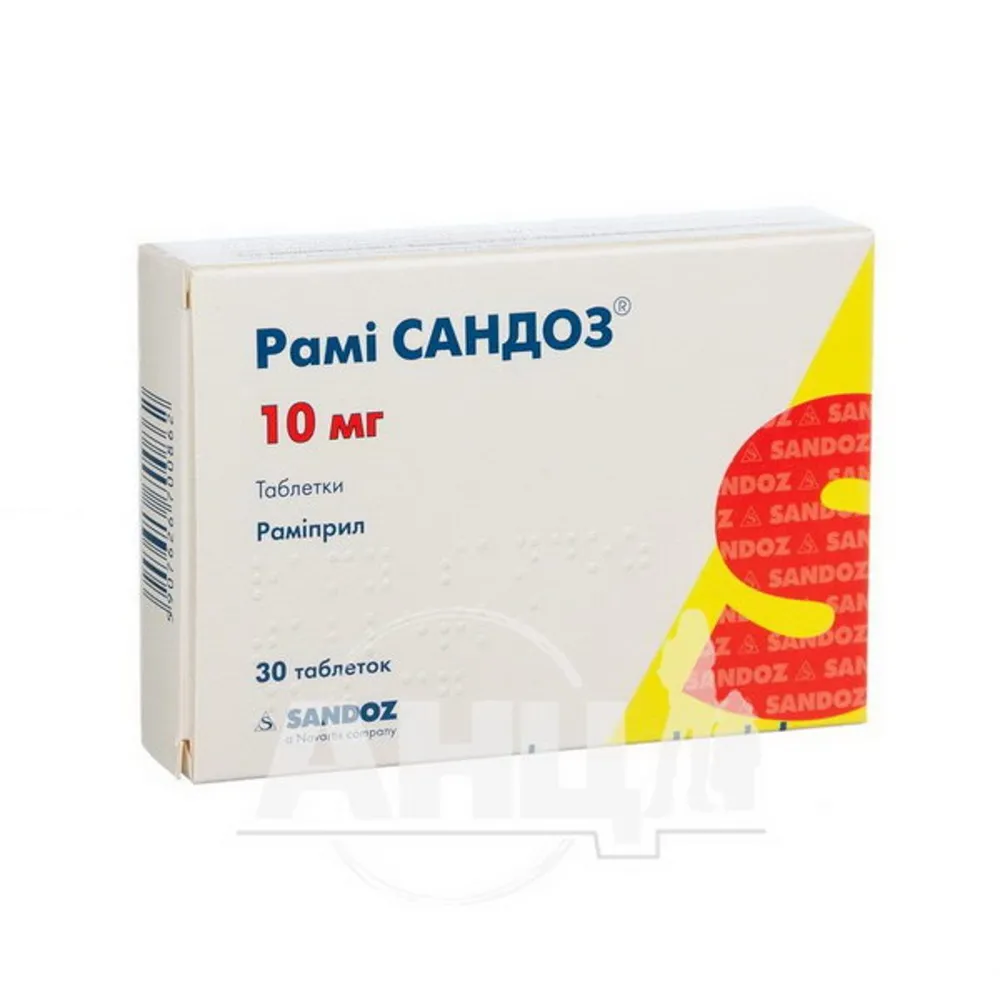
Table of Contents
INSTRUCTIONS FOR MEDICAL USE OF THE MEDICINAL PRODUCT RAMI Sandoz® (RamiSANDOZ®)
Composition:
Active ingredient: ramipril;
1 tablet contains ramipril 2.5 mg or 5 mg or 10 mg;
Excipients: microcrystalline cellulose, pregelatinized starch, precipitated silicon dioxide, glycine hydrochloride, glycerol dibehenate, iron oxide yellow (E 172) (for 2.5 mg tablets), iron oxide red (E 172) (for 5 mg tablets).
Pharmaceutical form. Tablets.
Main physicochemical properties:
2.5 mg tablets: light yellow, slightly mottled, capsule-shaped, with a score on one side;
5 mg tablets: light pink, slightly mottled, capsule-shaped, with a score on one side;
10 mg tablets: white or almost white, capsule-shaped, with a score on one side.
Pharmacotherapeutic group.
Angiotensin-converting enzyme (ACE) inhibitors. Single-component ACE inhibitors. Ramipril. ATC code C09A A05.
Pharmacological Properties
Mechanism of Action. Ramiprilat, the active metabolite of ramipril, inhibits the enzyme dipeptidyl carboxypeptidase I (synonyms: ACE; kininase II). In blood plasma and tissues, this enzyme catalyzes the conversion of angiotensin I into the active vasoconstrictor substance angiotensin II, as well as the breakdown of the active vasodilator bradykinin. Reduced formation of angiotensin II and inhibition of bradykinin degradation lead to vasodilation.
Since angiotensin II also stimulates the release of aldosterone, ramiprilat promotes a reduction in aldosterone secretion. The response to monotherapy with ACE inhibitors has generally been less pronounced in patients of non-Caucasian race (African-Caribbean origin) with arterial hypertension (a population typically characterized by low renin levels in arterial hypertension) compared to individuals of other races.
Pharmacodynamics
Administration of ramipril results in a significant reduction in peripheral arterial resistance. Typically, no significant changes in renal plasma flow or glomerular filtration rate (GFR) occur. Administration of ramipril to patients with arterial hypertension leads to a reduction in blood pressure in both supine and upright positions, without compensatory increase in heart rate.
In most patients, the antihypertensive effect begins within 1–2 hours after a single dose. The maximum effect of a single dose is usually achieved within 3–6 hours. The antihypertensive effect after a single dose generally persists for 24 hours.
The maximum antihypertensive effect during long-term ramipril therapy is generally observed after 3–4 weeks. It has been demonstrated that the antihypertensive effect is maintained for up to 2 years during prolonged therapy.
Abrupt discontinuation of ramipril does not cause a rapid or excessive increase in blood pressure (rebound phenomenon).
Heart Failure. It has been demonstrated that ramipril, when used as an adjunct to conventional therapy with diuretics and, if necessary, cardiac glycosides, is effective in patients with heart failure of NYHA functional classes II–IV. The drug exerts beneficial effects on cardiac hemodynamics (reduction in filling pressures of the left and right ventricles, total peripheral vascular resistance, and improvement in cardiac output and cardiac index). It also reduces neuroendocrine activation.
Clinical Efficacy and Safety
Prevention of Cardiovascular Disease / Nephroprotection.
A preventive, placebo-controlled study (the HOPE study) was conducted involving over 9,200 patients who received ramipril in addition to standard therapy. This study included patients at high risk of cardiovascular disease due to prior atherothrombotic cardiovascular disease (history of ischemic heart disease, stroke, or peripheral vascular disease) or patients with diabetes mellitus who had at least one additional risk factor (documented microalbuminuria, arterial hypertension, elevated levels of total cholesterol, LDL-cholesterol, or smoking).
This study demonstrated that ramipril significantly reduces the incidence of myocardial infarction, cardiovascular death, and stroke, both individually and in combination (primary composite endpoint).
HOPE Study: Key Results
| Parameter |
Ramipril |
Placebo |
Relative risk (95% confidence interval) |
p value |
| % |
% |
|||
| All patients |
n=4,645 |
N=4,652 |
||
| Primary composite endpoint |
14 |
17.8 |
0.78 (0.7–0.86) |
<0.001 |
| Myocardial infarction |
9.9 |
12.3 |
0.80 (0.7–0.9) |
<0.001 |
| Cardiovascular death |
6.1 |
8.1 |
0.74 (0.64–0.87) |
<0.001 |
| Stroke |
3.4 |
4.9 |
0.68 (0.56–0.84) |
<0.001 |
| Secondary endpoints |
||||
| Death from any cause |
10.4 |
12.2 |
0.84 (0.75–0.95) |
0.005 |
| Need for revascularization |
16.0 |
18.3 |
0.85 (0.77–0.94) |
0.002 |
| Hospitalization due to unstable angina |
12.1 |
12.3 |
0.98 (0.87–1.1) |
not significant |
| Hospitalization due to heart failure |
3.2 |
3.5 |
0.88 (0.7–1.1) |
0.25 |
| Complications related to diabetes |
6.4 |
7.6 |
0.84 (0.72–0.98) |
0.03 |
In the MICRO-HOPE study, which was prospectively planned as part of the HOPE study, the effect of adding ramipril 10 mg to existing treatment was compared with placebo in 3577 patients aged 55 years and older (no upper age limit) with normal or elevated blood pressure, most of whom had type 2 diabetes (and at least one cardiovascular risk factor).
The primary analysis results demonstrated that overt nephropathy developed in 117 (6.5%) participants receiving ramipril and in 149 (8.4%) receiving placebo, corresponding to a 24% relative risk reduction; 95% CI [3–40], p = 0.027.
The REIN study was a multicenter, randomized, double-blind, placebo-controlled, parallel-group study conducted to evaluate the effect of ramipril treatment on the rate of decline in glomerular filtration rate (GFR) in 352 patients with normal or elevated blood pressure (aged 18–70 years) who had mild (mean urinary protein excretion >1 to <3 g/day) or severe (mean urinary protein excretion ≥3 g/day) proteinuria due to chronic non-diabetic nephropathy. Both subgroups were prospectively stratified.
The main analysis results in patients with the most severe proteinuria (a subgroup that prematurely discontinued participation in the study because benefit from ramipril treatment was demonstrated) showed that the mean monthly rate of decline in GFR was lower with ramipril than with placebo: −0.54 (0.66) vs −0.88 (1.03) mL/min/month, p = 0.038. Thus, the between-group difference was 0.34 [0.03–0.65] mL/min/month, approximately 4 mL/min/year; 23.1% of patients in the ramipril group reached the combined secondary endpoint—doubling of plasma creatinine concentration and/or end-stage renal disease (requiring hemodialysis or kidney transplantation)—compared with 45.5% in the placebo group (p = 0.02).
Double blockade of the renin-angiotensin-aldosterone system (RAAS). Two large-scale randomized controlled trials [ONTARGET (Ongoing Telmisartan Alone and in combination with Ramipril Global Endpoint Trial) and VA NEPHRON-D (Veterans Affairs Nephropathy in Diabetes)] evaluated the use of a combination of an ACE inhibitor with an angiotensin II receptor antagonist.
The ONTARGET study included patients with a history of cardiovascular or cerebrovascular disease or type 2 diabetes with concomitant target organ damage. The VA NEPHRON-D study included patients with type 2 diabetes and diabetic nephropathy.
These studies did not demonstrate significant benefits of combination therapy regarding renal and/or cardiovascular outcomes or mortality, while an increased risk of hyperkalemia, acute renal failure, and/or arterial hypotension was observed compared to monotherapy. Given the similar pharmacodynamic characteristics of these drugs, these findings are also applicable to other ACE inhibitors and angiotensin II receptor antagonists.
Therefore, ACE inhibitors and angiotensin II receptor antagonists should not be used concomitantly in patients with diabetic nephropathy.
The ALTITUDE trial (Aliskiren Trial in Type 2 Diabetes Using Cardiovascular and Renal Endpoints) evaluated the benefits of adding aliskiren to standard therapy with an ACE inhibitor or angiotensin II receptor antagonist in patients with type 2 diabetes and chronic kidney disease, cardiovascular disease, or both. This study was terminated prematurely due to increased risk of adverse clinical outcomes. In the aliskiren group compared to the placebo group, there was a higher incidence of fatal cardiovascular events and stroke, as well as increased frequency of serious adverse events of special interest (hyperkalemia, arterial hypotension, and renal dysfunction).
Secondary prevention after acute myocardial infarction. The AIRE study included over 2000 patients with ongoing or recent symptoms of heart failure following acute myocardial infarction. Ramipril treatment was initiated 3–10 days after the acute myocardial infarction. This study demonstrated that after a mean follow-up period of 15 months, mortality was 16.9% in the ramipril group and 22.6% in the placebo group. This corresponds to an absolute reduction in mortality of 5.7% and a relative risk reduction of 27% (95% CI [11–40%]).
Pediatric population. In a randomized, double-blind, placebo-controlled clinical study involving 244 pediatric patients (73% of whom had primary arterial hypertension) aged 6–16 years with arterial hypertension, participants received low, medium, or high doses of ramipril to achieve plasma concentrations of ramiprilat corresponding to adult dose ranges of 1.25 mg, 5 mg, and 20 mg, adjusted for body weight. After 4 weeks, ramipril was ineffective in reducing the primary endpoint—systolic blood pressure—but reduced diastolic blood pressure at the highest dose tested. It was shown that both medium and high doses of ramipril significantly reduced systolic and diastolic blood pressure in children with confirmed arterial hypertension.
This effect was not observed in a 4-week randomized, double-blind, dose-escalation study assessing drug withdrawal, involving 218 pediatric patients aged 6–16 years (75% of whom had primary arterial hypertension). In this study, after drug discontinuation, a moderate rebound increase in both diastolic and systolic blood pressure was observed, but it was not statistically significant for return to baseline levels across all dose groups tested [low doses (0.625–2.5 mg), medium doses (2.5–10 mg), or high doses (5–20 mg)] adjusted for body weight. In the studied pediatric population, ramipril did not exhibit a linear dose-response relationship.
Pharmacokinetics.
Absorption. After oral administration, ramipril is rapidly absorbed from the gastrointestinal tract. Maximum plasma concentrations are reached within 1 hour. Based on the amount of substance recovered in urine, the extent of absorption is at least 56%, and is not significantly affected by the presence of food in the gastrointestinal tract. The bioavailability of the active metabolite ramiprilat after oral administration of 2.5 mg and 5 mg ramipril doses is 45%.
Maximum plasma concentrations of ramiprilat, the sole active metabolite of ramipril, are reached 2–4 hours after ramipril administration. After repeated daily dosing of ramipril, steady-state plasma concentrations of ramiprilat are achieved by approximately day 4 of treatment.
Distribution. The binding of ramipril to plasma proteins is approximately 73%, and that of ramiprilat is 56%.
Metabolism. Ramipril is almost completely metabolized to ramiprilat, diketopiperazine ester, diketopiperazine acid, and glucuronides of ramipril and ramiprilat.
Excretion. Metabolite excretion occurs predominantly via renal excretion. The decline in ramiprilat plasma concentration is multiphasic. Due to strong saturable binding to ACE and slow dissociation from the enzyme complex, ramiprilat exhibits a prolonged terminal elimination phase at very low plasma concentrations.
After repeated daily doses of ramipril, the effective half-life is 13–17 hours for doses of 5–10 mg and longer for lower doses (1.25–2.5 mg). This difference is due to the saturable binding capacity of the enzyme for ramiprilat.
After a single oral dose, neither ramipril nor its metabolites were detected in breast milk. However, the effect of repeated dosing is unknown.
Patients with renal impairment (see section "Dosage and administration"). In patients with impaired renal function, renal excretion of ramiprilat is reduced, and the renal clearance of ramiprilat is proportional to creatinine clearance. This leads to higher plasma concentrations of ramiprilat, which decline more slowly than in individuals with normal renal function.
Patients with hepatic impairment (see section "Dosage and administration"). In patients with impaired liver function, the metabolism of ramipril to ramiprilat is slowed due to reduced activity of hepatic esterases, and plasma levels of ramipril are elevated. However, the maximum concentration of ramiprilat in these patients does not differ from that in individuals with normal liver function.
Patients with heart failure. In patients with heart failure, after 2 weeks of therapy with 5 mg ramipril, plasma concentrations of ramiprilat were increased 1.5–1.8 times, along with an increase in the area under the concentration-time curve (AUC).
Lactation. After a single oral dose of ramipril, levels in breast milk were below the limit of detection. However, the effect of multiple dosing is unknown.
Pediatric population. The pharmacokinetic profile of ramipril was studied in 30 pediatric patients aged 2–16 years with arterial hypertension and body weight >10 kg. After administration of doses ranging from 0.05 to 0.2 mg/kg, ramipril was rapidly and extensively metabolized to ramiprilat. Maximum plasma concentrations of ramiprilat were reached within 2–3 hours. Ramiprilat clearance correlated significantly with the logarithm of body weight (p<0.01) and with dose (p<0.001). Clearance and volume of distribution increased proportionally with age within each dosing group. A dose of 0.05 mg/kg in children achieved exposure levels comparable to those in adults receiving 5 mg ramipril. A dose of 0.2 mg/kg in children resulted in exposure levels higher than those achieved with the maximum recommended adult dose of 10 mg/day.
Preclinical safety data. Oral administration of ramipril to animals did not reveal acute toxic effects. Long-term oral administration studies were conducted in rats, dogs, and monkeys. In all three species, changes in electrolyte balance and blood parameters were observed. In dogs and monkeys receiving 250 mg/kg/day, marked enlargement of the juxtaglomerular apparatus was noted, reflecting the pharmacodynamic activity of ramipril. Rats, dogs, and monkeys tolerated daily doses of 2, 2.5, and 8 mg/kg body weight, respectively, without adverse effects.
Reproductive toxicity studies in rats, rabbits, and monkeys did not reveal any teratogenic properties of the drug. No adverse effects on fertility were observed in either male or female rats.
Administration of ramipril to pregnant and lactating female rats resulted in irreversible kidney damage (renal pelvis dilation) in offspring at doses of 50 mg/kg/day and higher.
Numerous mutagenicity tests using various test systems did not reveal mutagenic or genotoxic properties of ramipril.
Clinical characteristics.
Indications.
Treatment of arterial hypertension.
Prevention of cardiovascular disease: reduction of cardiovascular morbidity and mortality in patients with:
- established atherothrombotic cardiovascular disease (history of ischemic heart disease, stroke, or peripheral vascular disease);
- diabetes mellitus with at least one cardiovascular risk factor.
Treatment of kidney disease:
- early diabetic nephropathy indicated by the presence of microalbuminuria;
- advanced diabetic nephropathy indicated by the presence of macroproteinuria, in patients with at least one cardiovascular risk factor (see section "Pharmacological properties");
- advanced non-diabetic glomerular nephropathy indicated by the presence of macroproteinuria ≥ 3 g/day.
Treatment of heart failure with clinical manifestations.
Secondary prevention following acute myocardial infarction: reduction of mortality during the acute phase of myocardial infarction in patients with clinical signs of heart failure, provided that treatment is initiated more than 48 hours after the onset of acute myocardial infarction.
Contraindications.
Hypersensitivity to the active substance, to any other component of the medicinal product, or to other ACE inhibitors.
History of angioedema (hereditary, idiopathic, or associated with the use of ACE inhibitors or angiotensin II receptor antagonists).
Severe bilateral renal artery stenosis or stenosis of the renal artery in a patient with a single functioning kidney.
The medicinal product must not be administered to patients with arterial hypotension or hemodynamically unstable conditions.
Concomitant use with sacubitril/valsartan (see sections "Interaction with other medicinal products and other forms of interaction" and "Special precautions for use").
Pregnancy and planned pregnancy (see section "Use during pregnancy or breastfeeding").
Do not use in combination with medicinal products containing aliskiren in patients with diabetes mellitus or moderate to severe renal impairment (eGFR < 60 mL/min/1.73 m²) (see section "Interaction with other medicinal products and other forms of interaction").
Concomitant use of ACE inhibitors with extracorporeal treatment methods leading to blood contact with negatively charged surfaces must be avoided (see section "Interaction with other medicinal products and other forms of interaction").
Interaction with other medicinal products and other forms of interaction.
Clinical trial data have shown that dual blockade of the RAAS system by combining ACE inhibitors, angiotensin II receptor antagonists, or aliskiren is associated with an increased incidence of adverse events such as arterial hypotension, hyperkalemia, and worsening of renal function (including acute renal failure), compared to using a single agent affecting the RAAS (see sections "Pharmacodynamics", "Contraindications", and "Special precautions for use").
Contraindicated combinations.
Concomitant use of ACE inhibitors with sacubitril/valsartan is contraindicated due to an increased risk of angioedema (see sections "Contraindications" and "Special precautions for use"). Treatment with ramipril should be initiated only 36 hours after the last dose of sacubitril/valsartan. Treatment with sacubitril/valsartan should be initiated only 36 hours after the last dose of ramipril.
Extracorporeal treatment methods involving blood contact with negatively charged surfaces, such as dialysis or hemofiltration using certain high-flux membranes (e.g., polyacrylonitrile membranes) and low-density lipoprotein apheresis using dextran sulfate, are contraindicated due to an increased risk of severe anaphylactoid reactions (see section "Contraindications"). If such treatment is necessary, consideration should be given to using an alternative dialysis membrane or another class of antihypertensive medicinal products.
Combinations requiring precautions.
Potassium salts, heparin, potassium-sparing diuretics, and other active substances that increase plasma potassium levels (including angiotensin II antagonists, trimethoprim and its fixed combinations with sulfamethoxazole, tacrolimus, cyclosporine). Hyperkalemia may occur; therefore, plasma potassium levels should be closely monitored.
Antihypertensive medicinal products (e.g., diuretics) and other substances capable of reducing arterial pressure (e.g., nitrates, tricyclic antidepressants, anesthetics, alcohol, baclofen, alfuzosin, doxazosin, prazosin, tamsulosin, terazosin). An increased risk of arterial hypotension should be anticipated (see section "Special precautions for use" regarding diuretics).
Vasopressor sympathomimetics and other substances (e.g., isoprenaline, dobutamine, dopamine, epinephrine) that may reduce the antihypertensive effect of Ramipril Sandos®. Close monitoring of arterial pressure is recommended.
Allopurinol, immunosuppressants, corticosteroids, procainamide, cytostatics, and other substances that may cause blood count abnormalities. Increased risk of hematological reactions (see section "Special precautions for use").
Lithium salts. ACE inhibitors may reduce lithium excretion, potentially leading to increased lithium toxicity. Lithium levels should be closely monitored.
Antidiabetic agents, including insulin. Hypoglycemic reactions may occur. Close monitoring of blood glucose levels is recommended.
Non-steroidal anti-inflammatory drugs (NSAIDs) and acetylsalicylic acid. A reduced antihypertensive effect of Ramipril Sandos® is expected. Moreover, concomitant use of ACE inhibitors and NSAIDs may be associated with an increased risk of worsening renal function and elevated blood potassium levels.
Salt. Excessive salt intake may reduce the antihypertensive effect of the medicinal product.
Specific hyposensitization. Due to ACE inhibition, the likelihood and severity of anaphylactic and anaphylactoid reactions to insect venom may increase. This effect is also considered possible with other allergens.
mTOR inhibitors (mammalian target of rapamycin) or vildagliptin. There may be an increased risk of angioedema in patients receiving concomitant therapy with mTOR inhibitors (e.g., temsirolimus, everolimus, sirolimus) or vildagliptin. Such therapy should be initiated with caution (see section "Special precautions for use").
Racecadotril. There have been reports of a potential increased risk of angioedema when ACE inhibitors are used concomitantly with neutral endopeptidase (NEP) inhibitors such as racecadotril (see section "Special precautions for use").
Sacubitril/valsartan. Concomitant use of ACE inhibitors with sacubitril/valsartan is contraindicated due to an increased risk of angioedema.
Special precautions for use.
Special patient categories.
Pregnancy. Treatment with ACE inhibitors such as ramipril or angiotensin II receptor antagonists should not be initiated during pregnancy. If continuation of ACE inhibitor therapy is considered necessary, patients who are planning to become pregnant should be switched to an alternative antihypertensive agent with an established safety profile during pregnancy. If pregnancy is diagnosed, treatment with ACE inhibitors/angiotensin II receptor antagonists should be discontinued immediately and, if necessary, alternative therapy should be initiated (see sections "Contraindications" and "Use during pregnancy or breastfeeding").
Patients at particular risk of arterial hypotension.
- Patients with markedly increased RAAS activity. The risk of sudden, symptomatic lowering of blood pressure with worsening renal function due to ACE inhibition is increased in patients with pronounced activation of the RAAS, particularly when the ACE inhibitor or a concomitant diuretic is administered for the first time or during initial dose escalation.
Significant increase in RAAS activity requiring medical supervision, including continuous monitoring of blood pressure, may be expected, for example, in patients:
- with severe arterial hypertension;
- with decompensated congestive heart failure;
- with hemodynamically significant obstruction to inflow or outflow of blood from the left ventricle (e.g., aortic or mitral valve stenosis);
- with unilateral renal artery stenosis and a functioning contralateral kidney;
- who have or may develop fluid or electrolyte depletion (including those receiving diuretics);
- with liver cirrhosis and/or ascites;
- undergoing major surgery or anesthesia with agents that may cause arterial hypotension.
Generally, correction of dehydration, hypovolemia, or electrolyte deficiency should be performed prior to starting treatment (however, for patients with heart failure, such corrective measures should be carefully weighed against the risk of volume overload).
Transient or persistent heart failure after myocardial infarction.
- Patients at risk of cardiac or cerebral ischemia in case of acute arterial hypotension. Special medical supervision is required during the initial phase of treatment.
Dual blockade of the RAAS.
Concomitant use of ACE inhibitors, angiotensin II receptor antagonists, or aliskiren has been associated with an increased risk of arterial hypotension, hyperkalemia, and worsening renal function (including development of acute renal failure). Therefore, dual blockade of the RAAS by combining ACE inhibitors, angiotensin II receptor antagonists, or aliskiren is not recommended (see sections "Pharmacodynamics" and "Interaction with other medicinal products and other forms of interaction").
If such dual blockade therapy is considered absolutely necessary, it should be administered only under specialist supervision and with frequent and careful monitoring of renal function, electrolyte levels, and blood pressure.
ACE inhibitors and angiotensin II receptor antagonists must not be used concomitantly in patients with diabetic nephropathy.
Elderly patients. See section "Dosage and administration".
Surgery. It is recommended to discontinue treatment with ACE inhibitors such as ramipril, if possible, one day prior to surgery.
Monitoring of renal function. Renal function should be assessed before and during treatment, and dosage adjusted accordingly, especially during the first weeks of therapy. Particular caution is required in patients with pre-existing renal impairment (see section "Dosage and administration"). There is a risk of worsening renal function, particularly in patients with congestive heart failure or after kidney transplantation, as well as in those with renal vascular disease, including patients with hemodynamically significant unilateral renal artery stenosis.
Angioedema. Isolated cases of angioedema have been reported in patients receiving ACE inhibitors, including ramipril (see section "Undesirable effects").
The combination of ramipril with sacubitril/valsartan is contraindicated due to an increased risk of angioedema. Ramipril therapy should be initiated only 36 hours after the last dose of sacubitril/valsartan (see sections "Contraindications" and "Interaction with other medicinal products and other forms of interaction").
The risk of angioedema may be increased in patients receiving concomitant medicinal products such as mammalian target of rapamycin (mTOR) inhibitors (e.g., temsirolimus, everolimus, sirolimus), vildagliptin, or racecadotril (symptoms may include, for example, swelling of the airways or tongue, with or without respiratory distress) (see section "Undesirable effects"). Therefore, caution should be exercised when administering mTOR inhibitors (e.g., temsirolimus, everolimus, sirolimus), vildagliptin, or racecadotril to patients already receiving ACE inhibitors.
In case of angioedema, the drug should be discontinued immediately and emergency treatment initiated. Patients should remain under medical supervision for at least 12–24 hours until complete resolution of symptoms.
Cases of intestinal angioedema have been observed during ACE inhibitor therapy (see section "Undesirable effects"). These patients presented with abdominal pain (with or without nausea/vomiting). Symptoms of intestinal angioedema resolved after discontinuation of ramipril.
Anaphylactic reactions during desensitization. The likelihood and severity of anaphylactic and anaphylactoid reactions to insect venom and other allergens are increased during ACE inhibitor therapy. Temporary discontinuation of ramipril should be considered prior to desensitization.
Monitoring of electrolyte balance. Hyperkalemia. Hyperkalemia has been observed in some patients receiving ACE inhibitors, including ramipril. The risk of hyperkalemia is higher in patients with renal impairment, patients aged 70 years or older, patients with uncontrolled diabetes mellitus, those receiving potassium salts, potassium-sparing diuretics, other active substances that increase potassium levels, or in conditions such as dehydration, acute heart decompensation, or metabolic acidosis. If concomitant use of the above-mentioned agents is considered appropriate, regular monitoring of plasma potassium levels is recommended (see section "Interaction with other medicinal products and other forms of interaction").
Monitoring of electrolyte balance. Hyponatremia. The syndrome of inappropriate antidiuretic hormone secretion (SIADH) with subsequent development of hyponatremia has been observed in some patients receiving ramipril. Regular monitoring of serum sodium levels is recommended in elderly patients and in other patients at risk of hyponatremia.
Neutropenia/agranulocytosis. Cases of neutropenia/agranulocytosis, as well as thrombocytopenia and anemia, have been reported rarely. Bone marrow suppression has also been reported. To detect possible leukopenia, monitoring of white blood cell count in plasma is recommended. More frequent monitoring is advisable at the beginning of treatment and in patients with renal impairment, concomitant collagenosis (e.g., systemic lupus erythematosus or scleroderma), or those receiving other medicinal products that may cause blood count abnormalities (see sections "Interaction with other medicinal products and other forms of interaction" and "Undesirable effects").
Ethnic differences. ACE inhibitors cause angioedema more frequently in patients of Black race than in those of Caucasian race. As with other ACE inhibitors, ramipril may be less effective in lowering blood pressure in patients of Black race. This may be due to the higher prevalence of low-renin hypertension in Black patients with arterial hypertension.
Cough. Cough has been reported during treatment with ACE inhibitors. The cough is typically non-productive, persistent, and resolves after discontinuation of therapy. When performing differential diagnosis of cough, the possibility of ACE inhibitor-induced cough should be considered.
Use during pregnancy or breastfeeding.
Pregnancy. The medicinal product is contraindicated in pregnant women or women who are planning to become pregnant. If pregnancy occurs during therapy, the drug should be discontinued immediately and, if necessary, replaced with another medicinal product approved for use during pregnancy (see section "Contraindications").
Breastfeeding. Due to lack of information on the use of ramipril during breastfeeding (see section "Pharmacological properties"), this medicinal product is not recommended for administration to breastfeeding women. Preferably, alternative medicinal products with a more favorable safety profile during lactation should be used, especially when breastfeeding newborns or preterm infants.
Ability to affect reaction speed when driving or operating machinery.
Some adverse effects (e.g., symptoms of low blood pressure such as dizziness) may impair a patient's ability to concentrate and reduce reaction speed, posing a risk in situations where these abilities are particularly important (e.g., when driving vehicles or operating machinery).
This is usually possible at the beginning of treatment or when switching from other medications to ramipril therapy. It is not advisable to drive or operate machinery for several hours after taking the first dose or any subsequent dose increase.
Dosage and Administration.
The drug is administered orally.
Ramipril is recommended to be taken daily at the same time. The drug may be taken independently of food intake, as food does not affect its bioavailability. The 2.5 mg, 5 mg, and 10 mg tablets are intended to be split to achieve doses of 1.25 mg, 2.5 mg, and 5 mg, respectively. They must not be chewed or crushed.
Adults.
Patients receiving diuretics. At the beginning of treatment with the drug, arterial hypotension may occur, with a higher likelihood in patients concurrently receiving diuretics. In such cases, caution is recommended, as these patients may have reduced circulating blood volume and/or electrolyte depletion.
It is advisable to discontinue diuretic therapy 2–3 days before initiating ramipril treatment, if possible (see section "Special Warnings and Precautions for Use"). In hypertensive patients in whom discontinuation of diuretics is not feasible, treatment should be initiated at a dose of 1.25 mg. Renal function and serum potassium levels should be carefully monitored. Subsequent ramipril dosing should be adjusted according to the target blood pressure level.
Arterial Hypertension.
The dose should be individually adjusted based on the patient's clinical condition (see section "Special Warnings and Precautions for Use") and blood pressure monitoring results. Ramipril may be used as monotherapy or in combination with antihypertensive drugs of other classes (see sections "Pharmacodynamics", "Contraindications", "Interaction with Other Medicinal Products and Other Forms of Interaction", and "Special Warnings and Precautions for Use").
Initial dose. Treatment should be initiated gradually, starting with the recommended initial dose of 2.5 mg once daily.
In patients with significant activation of the renin-angiotensin-aldosterone system (RAAS), marked reduction in blood pressure may occur after the initial dose. For such patients, the recommended initial dose is 1.25 mg, and treatment should be initiated under medical supervision (see section "Special Warnings and Precautions for Use").
Titrating dose and maintenance dose. The dose may be doubled every 2–4 weeks until the target blood pressure level is achieved; the maximum daily dose of ramipril is 10 mg. The drug is usually administered once daily.
Prevention of Cardiovascular Diseases.
Initial dose. The recommended initial dose is 2.5 mg once daily.
Titrating dose and maintenance dose. Depending on individual tolerance, the dose should be gradually increased. It is recommended to double the dose after 1–2 weeks of treatment, and then increase it to the target maintenance dose of 10 mg once daily after 2–3 weeks.
Treatment of Kidney Disease.
Patients with diabetes mellitus and microalbuminuria.
Initial dose. The recommended initial dose is 1.25 mg once daily.
Titrating dose and maintenance dose. Depending on individual tolerance, the dose may be increased during continued treatment. After 2 weeks of treatment, the daily dose should be doubled to 2.5 mg, and then to 5 mg after another 2 weeks.
Patients with diabetes mellitus and at least one cardiovascular risk factor.
Initial dose. The recommended initial dose is 2.5 mg once daily.
Titrating dose and maintenance dose. Depending on individual tolerance, the dose should be increased during continued treatment. After 1–2 weeks of treatment, the daily dose should be doubled to 5 mg, and then to 10 mg after another 2–3 weeks. The target daily dose is 10 mg.
Patients with non-diabetic nephropathy, indicated by macroproteinuria ≥ 3 g/day.
Initial dose. The recommended initial dose is 1.25 mg once daily.
Titrating dose and maintenance dose. Depending on individual tolerance, the dose should be increased during continued treatment. After 2 weeks of treatment, the daily dose should be doubled to 2.5 mg, and then to 5 mg after another 2 weeks.
Heart Failure with Clinical Manifestations.
Initial dose. For patients whose condition has been stabilized with diuretic therapy, the recommended initial dose is 1.25 mg daily.
Titrating dose and maintenance dose. The ramipril dose should be titrated by doubling every 1–2 weeks until the maximum daily dose of 10 mg is reached. It is advisable to divide the daily dose into two administrations.
Secondary Prevention after Acute Myocardial Infarction in the Presence of Heart Failure.
Initial dose. 48 hours after the onset of myocardial infarction, a starting dose of 2.5 mg twice daily should be administered for 3 days to patients whose condition is clinically and hemodynamically stable. If the initial dose of 2.5 mg is poorly tolerated, a dose of 1.25 mg twice daily should be administered for 2 days, followed by escalation to 2.5 mg and then 5 mg twice daily. If the dose cannot be increased to 2.5 mg twice daily, treatment should be discontinued.
Titrating dose and maintenance dose. Subsequently, the daily dose should be increased by doubling every 1–3 days until the target maintenance dose of 5 mg twice daily is reached.
When possible, the maintenance daily dose should be divided into two administrations.
If the dose cannot be increased to 2.5 mg twice daily, treatment should be discontinued. Experience with treating patients with severe heart failure (NYHA Class IV) immediately after myocardial infarction is still limited. If treatment of such patients with ramipril is nevertheless considered, therapy should be initiated at a dose of 1.25 mg once daily, and any dose escalation should be performed with extreme caution.
Special Patient Populations.
Patients with impaired renal function. The daily dose for patients with impaired renal function depends on creatinine clearance (see section "Pharmacological Properties"):
- if creatinine clearance is ≥ 60 mL/min, no adjustment of the initial dose (2.5 mg/day) is required, and the maximum daily dose is 10 mg;
- if creatinine clearance is 30–60 mL/min, no adjustment of the initial dose (2.5 mg/day) is required, and the maximum daily dose is 5 mg;
- if creatinine clearance is 10–30 mL/min, the initial dose is 1.25 mg/day, and the maximum daily dose is 5 mg;
- hypertensive patients on hemodialysis: ramipril is only minimally removed during hemodialysis; the initial dose is 1.25 mg, and the maximum daily dose is 5 mg; the drug should be administered several hours after a hemodialysis session.
Patients with impaired hepatic function (see section "Pharmacological Properties"). Ramipril treatment in patients with impaired liver function should be initiated under close medical supervision, and the maximum daily dose in such cases should not exceed 2.5 mg.
Elderly patients. The initial dose should be lower, and subsequent dose titration should be performed more gradually due to the increased risk of adverse effects, especially in very elderly and frail patients. In such cases, a lower initial dose of 1.25 mg of ramipril should be prescribed.
Also refer to the information above regarding dosing for patients receiving diuretics.
Children.
Ramipril is not recommended for use in children (under 18 years of age), as there is insufficient data on the efficacy and safety of the drug in this patient population.
Overdose.
Symptoms of angiotensin-converting enzyme (ACE) inhibitor overdose may include excessive peripheral vasodilation (with marked arterial hypotension, shock), bradycardia, electrolyte imbalances, and renal failure. The patient's condition should be carefully monitored. Symptomatic and supportive treatment should be administered. Recommended measures include primary detoxification (gastric lavage, administration of sorbents) and interventions to restore hemodynamic stability, including administration of α1-adrenergic agonists or angiotensin II (angiotensinamide). Ramiprilat, the active metabolite of ramipril, is poorly removed from systemic circulation by hemodialysis.
Side effects
The safety profile of ramipril includes data on persistent cough and reactions caused by arterial hypotension. Serious adverse reactions include angioedema, hyperkalemia, hepatic or renal dysfunction, pancreatitis, severe skin reactions, and neutropenia/agranulocytosis.
Adverse reactions are classified by frequency of occurrence as follows: very common (≥ 1/10), common (≥ 1/100 and < 1/10), uncommon (≥ 1/1,000 and < 1/100), rare (≥ 1/10,000 and < 1/1,000), very rare (< 1/10,000), frequency not known (frequency cannot be estimated from the available data).
Within each frequency category, adverse events are listed in order of decreasing severity.
Cardiovascular system:
Common – arterial hypotension, orthostatic hypotension, syncope;
Uncommon – myocardial ischemia, including angina or myocardial infarction; tachycardia, arrhythmia, palpitations, peripheral edema, flushing, sensation of heat;
Rare – vascular stenosis, hypoperfusion, vasculitis;
Frequency not known – Raynaud's syndrome.
Blood and lymphatic system disorders:
Uncommon – eosinophilia;
Rare – decreased leukocyte count (including neutropenia or agranulocytosis), decreased erythrocyte count, decreased hemoglobin levels, thrombocytopenia;
Frequency not known – bone marrow failure, pancytopenia, hemolytic anemia.
Nervous system disorders:
Common – headache, dizziness;
Uncommon – vertigo, paresthesia, ageusia, dysgeusia;
Rare – tremor, balance disorder;
Frequency not known – cerebral ischemia, including ischemic stroke and transient ischemic attack, psychomotor impairment, burning sensation, parosmia.
Eye disorders:
Uncommon – visual disturbances, including blurred vision;
Rare – conjunctivitis.
Ear and labyrinth disorders:
Rare – hearing disturbances, tinnitus.
Respiratory system:
Common – non-productive irritating cough, bronchitis, sinusitis, dyspnea;
Uncommon – bronchospasm, including exacerbation of bronchial asthma, nasal congestion.
Gastrointestinal system:
Common – gastrointestinal inflammatory symptoms, digestive disturbances, abdominal discomfort, dyspepsia, diarrhea, nausea, vomiting;
Uncommon – pancreatitis (in rare cases fatal outcomes have been reported with ACE inhibitors), increased pancreatic enzyme levels, angioedema of the small intestine, upper abdominal pain including gastritis, constipation, dry mouth;
Rare – glossitis;
Frequency not known – aphthous stomatitis.
Renal and urinary system:
Uncommon – renal dysfunction, including acute renal failure; increased urine output, worsening of pre-existing proteinuria, increased blood urea and creatinine levels.
Skin and subcutaneous tissue disorders:
Common – skin rash, including maculopapular rash;
Uncommon – angioedema; in very rare cases, airway obstruction due to angioedema, which may be fatal; pruritus, hyperhidrosis;
Rare – exfoliative dermatitis, urticaria, onycholysis;
Very rare – photosensitivity reaction;
Frequency not known – toxic epidermal necrolysis, Stevens-Johnson syndrome, erythema multiforme, pemphigus, exacerbation of psoriasis, psoriatic dermatitis, pemphigoid or lichenoid exanthem or enanthem, alopecia.
Musculoskeletal system:
Common – muscle cramps, myalgia;
Uncommon – arthralgia.
Endocrine disorders:
Frequency not known – syndrome of inappropriate antidiuretic hormone secretion (SIADH).
Metabolic and nutritional disorders:
Common – increased blood potassium levels;
Uncommon – anorexia, decreased appetite;
Frequency not known – decreased blood sodium levels.
General disorders:
Common – chest pain, increased fatigue;
Uncommon – pyrexia;
Rare – asthenia.
Immune system disorders:
Frequency not known – anaphylactic and anaphylactoid reactions, increased levels of antinuclear antibodies.
Hepatobiliary disorders:
Uncommon – increased levels of liver enzymes and/or conjugated bilirubin;
Rare – cholestatic jaundice, hepatocellular injury;
Frequency not known – acute liver failure, cholestatic or cytolytic hepatitis (in very rare cases with fatal outcome).
Reproductive system disorders:
Uncommon – transient erectile dysfunction, decreased libido;
Frequency not known – gynecomastia.
Psychiatric disorders:
Uncommon – depressed mood, anxiety, nervousness, restlessness, sleep disturbances, including somnolence;
Rare – confusion;
Frequency not known – attention disturbances.
Pediatric population.
The safety of ramipril has been evaluated in 325 children and adolescents aged 2–16 years in two clinical trials. According to the results, the nature and severity of adverse reactions in children were similar to those observed in adults, but the frequency of certain reactions was higher in children than in adults, specifically:
Tachycardia, nasal congestion, and rhinitis: common in the pediatric population, uncommon in adults.
Conjunctivitis: common in the pediatric population, rare in adults.
Tremor and urticaria: uncommon in the pediatric population, rare in adults.
Overall, the safety profile of ramipril in children and adults does not differ significantly.
Reporting suspected adverse reactions.
Reporting suspected adverse reactions after drug authorization is important. It allows continued monitoring of the benefit-risk balance of the medicinal product.
Healthcare professionals are required to report any adverse reactions via the pharmacovigilance system of Ukraine.
Shelf life. 2 years.
Storage conditions.
Store at temperatures not exceeding 25 °C in the original packaging.
Keep out of reach of children.
Packaging.
10 tablets in a blister; 3 blisters (10 × 3) in a cardboard box.
Prescription category. Prescription only.
Manufacturer.
Lek S.A., Poland / Lek S.A., Poland.
Manufacturer's address and location of operations.
16, Podlipie Str., 95-010 Strykow, Poland (full-cycle manufacturing).
ul. Domaniewska, 50 C, Warszawa, 02-672, Poland (packaging, batch release).