Rabeprazole-zdorovya
Ukraine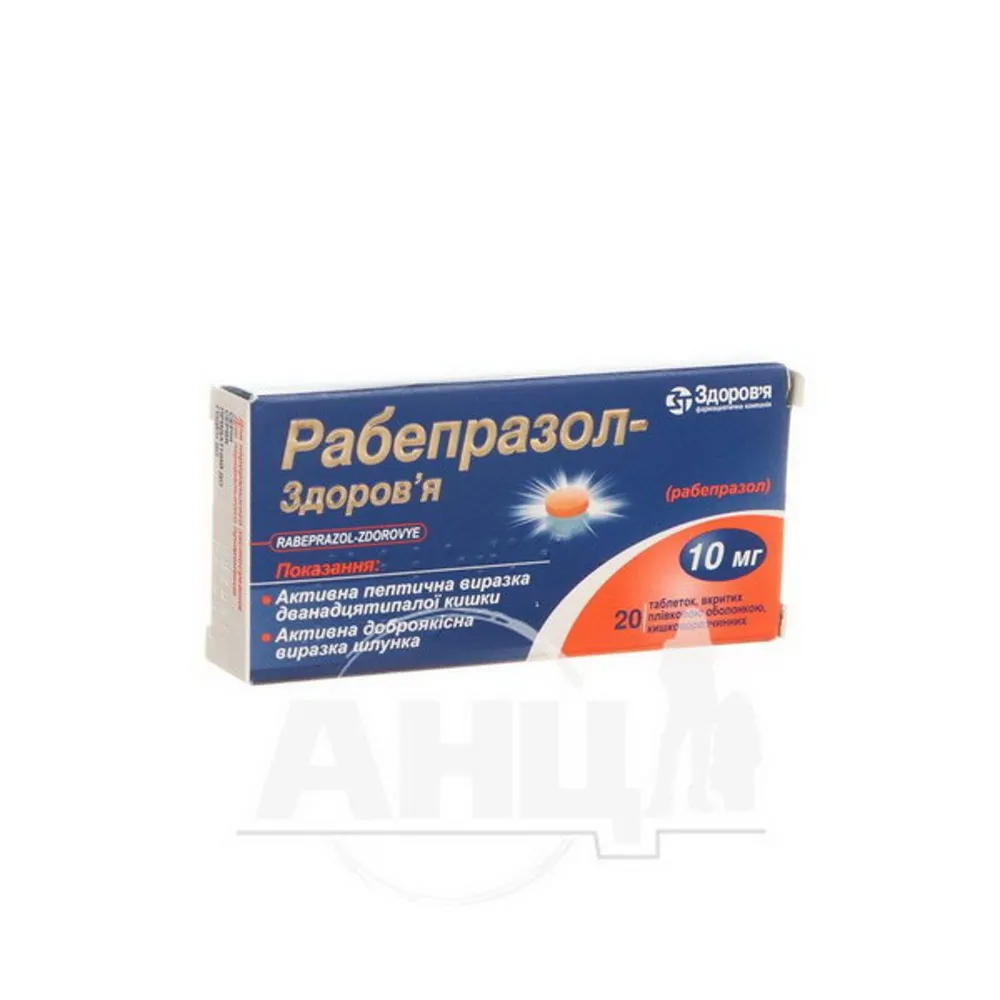
Table of Contents
INSTRUCTION FOR MEDICAL USE OF THE MEDICINAL PRODUCT RABEPRAZOL-ZDOROVYE (RABEPRAZOL-ZDOROVYE)
Composition:
Active substance: rabeprazole;
1 tablet contains 10 mg or 20 mg of sodium rabeprazole;
Excipients: mannite (E 421), microcrystalline cellulose, magnesium stearate, light magnesium oxide, sodium lauryl sulfate, crospovidone; dry mixture "Aquarius Prime" of white color containing hypromellose, titanium dioxide (E 171), polyethylene glycol 400;
10 mg dosage: dry mixture "Aquarius Control" of pink color containing methacrylic acid copolymer (type C), talc, triethyl citrate, titanium dioxide (E 171), silicon dioxide, azorubine (E 129), tartrazine (E 102), sunset yellow FCF (E 110);
20 mg dosage: dry mixture "Aquarius Control" of green color containing methacrylic acid copolymer (type C), talc, titanium dioxide (E 171), silicon dioxide, triethyl citrate, brilliant blue (E 133), tartrazine (E 102), quinoline yellow (E 104).
Pharmaceutical form. Enteric-coated film-coated tablets.
Main physicochemical properties: film-coated tablets with biconvex surface, pink with an orange tint (10 mg dosage) or green with a bluish tint (20 mg dosage). Two layers are visible in cross-section.
Pharmacotherapeutic group. Drugs for treatment of peptic ulcer and gastroesophageal reflux disease. Proton pump inhibitors. ATC code A02BC04.
Pharmacological Properties
Pharmacodynamics
Rabeprazole belongs to the class of antisecretory compounds substituted benzimidazoles. It has no anticholinergic properties and is not a histamine H2-receptor antagonist, but inhibits gastric acid secretion by specifically inhibiting the H+/K+-ATPase enzyme at the secretory surface of gastric parietal cells (the acid or proton pump). The effect is dose-dependent and results in inhibition of both basal and stimulated acid secretion, regardless of the stimulus. Animal studies have shown that after administration, sodium rabeprazole rapidly disappears from both plasma and gastric mucosa. Sodium rabeprazole is weakly basic, is rapidly absorbed at all doses, and accumulates in parietal cells. Sodium rabeprazole is converted to its active sulfenamide form via protonation and thereby reacts with accessible cysteine residues of the proton pump.
Antisecretory activity. After oral administration of 20 mg of sodium rabeprazole, antisecretory effect is observed within 1 hour and reaches maximum within 2–4 hours. Inhibition of basal acid secretion and food-stimulated acid secretion 23 hours after the first dose of sodium rabeprazole was 69% and 82%, respectively, with duration of inhibition lasting up to 48 hours. The inhibitory effect of rabeprazole slightly increases with repeated once-daily administration, with stable suppression of secretion achieved by day 3. After discontinuation of rabeprazole, secretory activity returns to normal within 2–3 days.
Reduction of gastric acidity, regardless of the cause, including proton pump inhibitors (PPIs) such as rabeprazole, increases the number of bacteria in the gastrointestinal tract (GI tract). PPI treatment may increase the risk of gastrointestinal infections such as Salmonella, Campylobacter, and Clostridium difficile.
Effect on serum gastrin concentration. Data are available from patients treated with 10 or 20 mg of sodium rabeprazole once daily for up to 43 months. During the first 2–8 weeks of therapy, serum gastrin concentration increased, reflecting acid secretion inhibition. Gastrin concentrations generally returned to baseline levels within 1–2 weeks after discontinuation of treatment.
Examination of biopsy samples from the gastric fundus and antrum in more than 500 patients who received rabeprazole or a comparator drug for 8 weeks revealed no histological changes in ECL cells, degree of gastritis, increased frequency of atrophic gastritis, intestinal metaplasia, or spread of H. pylori infection. In long-term treatment of more than 250 patients for 36 months, no significant changes were observed in the results of these analyses.
Other effects. Currently, there is no information on systemic effects on the central nervous system (CNS), cardiovascular, or respiratory systems caused by rabeprazole administration. Oral administration of 20 mg of sodium rabeprazole daily for 2 weeks did not affect thyroid function, carbohydrate metabolism, or blood concentrations of parathyroid hormone, cortisol, estrogen, testosterone, prolactin, cholecystokinin, secretin, glucagon, follicle-stimulating hormone (FSH), luteinizing hormone (LH), renin, aldosterone, or growth hormone.
Clinically significant interactions between rabeprazole and amoxicillin are not expected.
Rabeprazole does not negatively affect plasma levels of amoxicillin and clarithromycin when administered concomitantly for the purpose of eradicating H. pylori infection in the upper gastrointestinal tract.
During antisecretory drug therapy, serum gastrin levels increase in response to reduced acid secretion. Also, due to decreased gastric acidity, levels of chromogranin A increase. Elevated chromogranin A levels may affect test results for detection of neuroendocrine tumors.
Available published data indicate that proton pump inhibitors should be discontinued 2 weeks to 5 days before measuring chromogranin A levels to allow levels to return to reference values if elevated during PPI treatment.
Pharmacokinetics
Absorption. Absorption of sodium rabeprazole begins only after the tablet passes through the stomach, due to the presence of an enteric coating. Sodium rabeprazole is rapidly absorbed from the intestine. Peak plasma concentration (Cmax) of rabeprazole is reached approximately 3.5 hours after a 20 mg dose. Cmax in plasma and the area under the curve (AUC) of rabeprazole are linear within the dose range of 10 to 40 mg. Absolute bioavailability after oral administration of 20 mg (compared to intravenous administration) is approximately 52%, primarily due to first-pass metabolism. Furthermore, bioavailability does not increase with repeated administration of sodium rabeprazole. In healthy volunteers, the elimination half-life (T½) from plasma is approximately 1 hour (range 0.7–1.5 hours), and total clearance is estimated at 283±98 ml/min. No clinically significant interaction with food has been observed. Neither type of food nor time of day of administration affects absorption of sodium rabeprazole.
Distribution. In humans, the extent of binding of sodium rabeprazole to plasma proteins is approximately 97%.
Metabolism and excretion. Like other members of the PPI class, rabeprazole is metabolized by the hepatic cytochrome P450 (CYP450) drug metabolism system. In vitro studies with human liver microsomes have shown that rabeprazole is metabolized by CYP450 isoenzymes (CYP2C19 and CYP3A4). At expected human plasma concentrations, rabeprazole does not induce or inhibit CYP3A4. However, since in vitro findings cannot always be extrapolated to in vivo situations, these results suggest that interactions between rabeprazole and cyclosporine are not expected. In humans, the main metabolites present in plasma are thioether (M1) and carboxylic acid (M6), while minor metabolites present at low concentrations include sulfone (M2), dimethylthioether (M4), and mercapturic acid conjugate (M5). Only the dimethyl metabolite (M3) has minor antisecretory activity, but it is not present in plasma.
After a single 20 mg dose of 14C-labeled sodium rabeprazole, unchanged rabeprazole was not detected in urine. Approximately 90% of the administered dose was eliminated in urine, primarily as two metabolites: mercapturic acid conjugate (M5) and carboxylic acid (M6), as well as two unknown metabolites. The remainder of the dose was found in feces.
Sex. After correction for body weight and height, there are no significant differences in rabeprazole pharmacokinetics related to sex.
Renal impairment. In patients with end-stage chronic renal failure on maintenance hemodialysis (CLcr <5 ml/min/1.73 m²), rabeprazole distribution was very similar to that in healthy volunteers. AUC and Cmax of rabeprazole were approximately 35% lower compared to healthy volunteers. Mean T½ was 0.82 hours in healthy volunteers, 0.95 hours in hemodialysis patients, and 3.6 hours in post-dialysis patients. Drug clearance in patients with renal impairment on hemodialysis was approximately twice that in healthy volunteers.
Hepatic impairment. After a single 20 mg dose of sodium rabeprazole in patients with moderate chronic liver disease, AUC was doubled and T½ increased 2–3 times compared to healthy volunteers. Although after daily administration of 20 mg for 7 days, AUC increased only 1.5 times and Cmax in plasma increased 1.2 times. T½ of rabeprazole in patients with impaired liver function was 12.3 hours compared to 2.1 hours in healthy volunteers. Pharmacodynamic response (gastric juice pH-metry) was comparable between the two patient groups.
Elderly patients. Elimination of rabeprazole is somewhat reduced in elderly patients. After 7 days of treatment with 20 mg of sodium rabeprazole daily, AUC was approximately twice as high, Cmax increased by 60%, and T½ increased by 30% compared to young healthy volunteers. However, it should be noted that there were no signs of rabeprazole accumulation.
Polymorphism of CYP2C19. After 7 days of treatment with 20 mg of sodium rabeprazole daily, patients with slow CYP2C19 metabolism had AUC and T½ levels approximately 1.9 and 1.6 times higher, respectively, compared to patients with rapid metabolism; meanwhile, Cmax increased only by 40%.
Clinical characteristics.
Indications.
- Active duodenal ulcer;
- active benign gastric ulcer;
- erosive or ulcerative gastroesophageal reflux disease (GERD);
- long-term treatment of GERD (maintenance therapy for GERD);
- symptomatic treatment of moderate to very severe GERD (symptomatic treatment of GERD);
- Zollinger-Ellison syndrome;
- in combination with appropriate antibacterial treatment regimens for eradication of Helicobacter pylori in patients with gastric and duodenal peptic ulcers.
Contraindications. Hypersensitivity to sodium rabeprazole or to any other component of the medicinal product.
Pregnancy and breastfeeding period (see section "Use during pregnancy or breastfeeding").
Interaction with other medicinal products and other forms of interaction.
Rabeprazole causes strong and prolonged suppression of gastric acid secretion. Therefore, rabeprazole may interact with drugs whose absorption is pH-dependent. Concomitant administration of rabeprazole and ketoconazole or itraconazole may lead to reduced plasma concentrations of the latter. Thus, individual patients receiving these agents together with rabeprazole should be monitored by a physician to determine whether dose adjustment is necessary.
Antacids. No interaction of the drug with liquid formulations of antacids has been observed.
Atazanavir. Concomitant administration of atazanavir 300 mg/ritonavir 100 mg with omeprazole (40 mg once daily) or atazanavir 400 mg with lansoprazole (60 mg once daily) in healthy volunteers resulted in a significant reduction in atazanavir exposure. Absorption of atazanavir is pH-dependent. Although data are lacking, similar results are expected with other PPIs. PPIs, including rabeprazole, should not be used in combination with atazanavir (see section "Special precautions for use").
Metotrexate. Concomitant administration of methotrexate and PPIs (primarily at high doses) may lead to increased serum levels of methotrexate and/or its metabolite hydroxymethotrexate. Although no formal studies have been conducted.
Special precautions for use.
Symptomatic improvement with rabeprozole treatment does not exclude the presence of a malignant tumor of the stomach or esophagus; therefore, malignancy should be ruled out before initiating treatment with this drug.
Patients undergoing long-term therapy (especially those treated for more than 1 year) should be monitored regularly.
The risk of cross-hypersensitivity reactions when used with other proton pump inhibitors (PPIs) or substituted benzimidazoles cannot be excluded.
Patients should be advised that tablets must not be chewed or crushed, but swallowed whole.
There are post-marketing reports of blood abnormalities (thrombocytopenia and neutropenia). In most cases, no other etiology was identified; hematological changes were uncomplicated and resolved after discontinuation of rabeprozole.
Elevations in liver enzymes have been observed. In most cases, no other etiology was identified; abnormalities were mild and reversible upon discontinuation of rabeprozole.
In patients with mild to moderate hepatic impairment, no significant difference in the frequency of adverse effects was observed compared to the control group of similar age and gender not receiving the drug. Physicians should exercise caution when prescribing the drug during the initial stages of therapy to patients with severe hepatic impairment, as there are no clinical data on the use of this drug in such patients.
Concomitant use of atazanavir and rabeprozole is not recommended (see section "Interaction with other medicinal products and other forms of interaction").
Treatment with PPIs, including rabeprozole, may increase the risk of gastrointestinal infections such as Salmonella, Campylobacter, and Clostridium difficile (see section "Pharmacological properties").
Fracture risk. PPIs, particularly when used at high doses and over prolonged periods (more than 1 year), may increase the risk of fractures of the hip, wrist, and spine, primarily in elderly patients or those with other existing risk factors. Observational studies suggest that PPIs may increase the overall fracture risk by 10–40%. Risk may also be increased due to other factors. Patients at risk of osteoporosis should receive appropriate treatment and supplementation with vitamin D and calcium.
Hypomagnesemia. Cases of severe hypomagnesemia have been reported in patients taking PPIs, such as rabeprozole, for at least 3 months, and in most cases, for a year or longer. Severe manifestations of hypomagnesemia may include weakness, tetany, delirium, seizures, dizziness, and ventricular arrhythmia, but symptoms may develop unexpectedly and remain undiagnosed. In most patients, hypomagnesemia resolved after discontinuation of PPI and supplementation with magnesium.
For patients on long-term therapy or those receiving concomitant PPIs with drugs such as digoxin or other agents that may cause hypomagnesemia (e.g., diuretics), physicians should monitor serum magnesium levels before starting and periodically during treatment.
Concomitant use with methotrexate. Published data suggest that concomitant use of proton pump inhibitors and methotrexate (particularly at high doses) may increase serum levels of methotrexate or its metabolites, potentially leading to methotrexate-related toxicity. When high-dose methotrexate is required, discontinuation of PPI therapy should be considered.
Effect on vitamin B12 absorption. Rabeprozole sodium, like all drugs that suppress gastric acid secretion, may reduce absorption of vitamin B12 (cyanocobalamin) due to hypo- or achlorhydria. This should be considered in patients with low body weight or risk factors for reduced vitamin B12 absorption during long-term treatment or in the presence of relevant clinical symptoms.
Subacute cutaneous lupus erythematosus (SCLE). PPI use has been associated with very rare cases of subacute cutaneous lupus erythematosus. If skin lesions develop, particularly in sun-exposed areas and accompanied by arthralgia, patients should seek immediate medical attention, and physicians should consider discontinuing the drug. Previous treatment with a PPI may increase the risk of developing SCLE upon subsequent use of other PPIs.
Laboratory tests. Effect on laboratory test results. Elevated chromogranin A (CgA) levels may interfere with the detection of neuroendocrine tumors. To avoid this effect, rabeprozole treatment should be discontinued at least 5 days before measuring chromogranin A levels. If chromogranin A and gastrin levels have not returned to the reference range after initial measurement, testing should be repeated 14 days after discontinuation of PPI therapy.
Renal function. Acute tubulointerstitial nephritis (TIN) has been observed in patients taking rabeprozole. It may occur at any time during rabeprozole therapy (see section "Adverse reactions") and may progress to renal failure.
If acute TIN is suspected, rabeprozole should be discontinued and appropriate treatment initiated immediately.
Excipients. The medicinal product contains the dyes tartrazine (E 102) and sunset yellow FCF (E 110), which may cause allergic reactions.
Use during pregnancy or breastfeeding.
Pregnancy. There are no data on the safety of rabeprozole use during pregnancy.
Reproductive studies in rats and rabbits did not reveal evidence of impaired fertility or fetal harm associated with rabeprozole administration, although slight placental transfer was observed in rats.
The use of this drug during pregnancy is contraindicated.
Breastfeeding. It is unknown whether rabeprozole passes into human breast milk. Adequate studies have not been conducted. Therefore, the drug should not be administered to women who are breastfeeding.
Rabeprozole sodium passes into the milk of rats.
Ability to affect reaction speed when driving or operating machinery. Considering the pharmacodynamic profile of rabeprozole and its known adverse effect profile, the drug is not expected to negatively affect the ability to drive a vehicle or operate potentially hazardous machinery. However, if drowsiness occurs, patients should avoid driving or operating machinery.
Method of Administration and Dosage
For use in adults, including elderly patients.
Active duodenal ulcer and active benign gastric ulcer: The recommended dose for these conditions is 20 mg once daily in the morning.
In most patients with active duodenal ulcer, healing occurs within 4 weeks. However, some patients may require additional treatment for up to another 4 weeks to achieve healing. In most patients with active benign gastric ulcer, healing occurs within 6 weeks, but some treatment-resistant patients may require additional therapy for up to another 6 weeks.
Erosive or ulcerative gastroesophageal reflux disease (GERD): The recommended dose for these conditions is 20 mg once daily for 4–8 weeks.
Long-term treatment of GERD (maintenance therapy for GERD): For prolonged treatment, maintenance doses of 10 mg or 20 mg once daily may be used, depending on the patient's clinical response.
Symptomatic treatment of moderate to very severe GERD: For patients without esophagitis, the recommended dose is 10 mg once daily. If symptoms persist after 4 weeks of treatment, further patient evaluation is recommended. Once symptoms resolve, symptom control can be maintained using an "on-demand" regimen: 10 mg once daily as needed.
Zollinger-Ellison syndrome:
The recommended initial dose is 60 mg daily. The dose may be gradually increased up to 120 mg daily, as clinically indicated. A single daily dose of up to 100 mg may be used. If a daily dose of 120 mg is required, the dose should be divided into two administrations of 60 mg each. Treatment duration depends on clinical need.
Eradication of H. pylori: Patients with H. pylori should receive the drug in combination with eradication therapy. The recommended 7-day regimen is:
Rabeprazole 20 mg twice daily + clarithromycin 500 mg twice daily and amoxicillin 1 g twice daily.
For indications requiring once-daily dosing, the drug should be taken in the morning before a meal. Although administration during the first half of the day or food intake has not been shown to affect rabeprazole's action, this regimen is considered more favorable for treatment.
Renal and hepatic impairment. Patients with renal or hepatic impairment do not require dose adjustment. For information on use in patients with severe hepatic impairment, see section "Special precautions".
Method of administration.
Tablets must not be chewed or crushed and should be swallowed whole.
Children. The drug is not recommended for use in children, as there is currently insufficient experience with its use in this age group.
Overdose. Experience with intentional or accidental overdose is limited. The highest studied doses did not exceed 60 mg of rabeprazole twice daily or 160 mg of rabeprazole once daily. Observed effects were generally minimal, consistent with the known adverse effect profile, and resolved without the need for further medical intervention. There is no known specific antidote for rabeprazole. Rabeprazole is highly plasma protein-bound and is not effectively removed by dialysis. In case of overdose, symptomatic and supportive treatment should be administered.
Adverse Reactions
The most commonly reported adverse reactions were headache, diarrhea, abdominal pain, asthenia, flatulence, rash, and dry mouth. The observed adverse effects were generally mild, moderate, and transient.
Infections and infestations: infections.
Blood and lymphatic system disorders: neutropenia, leukopenia, thrombocytopenia, leukocytosis.
Immune system disorders: hypersensitivity\1, \2.
Metabolism and nutrition disorders: anorexia, hyponatremia, hypomagnesemia\4.
Psychiatric disorders: insomnia, nervousness, depression, confusion.
Nervous system disorders: headache, somnolence, dizziness.
Eye disorders: visual disturbances.
Vascular disorders: peripheral edema.
Respiratory, thoracic and mediastinal disorders: cough, pharyngitis, rhinitis, bronchitis, sinusitis.
Gastrointestinal disorders: diarrhea, vomiting, nausea, abdominal pain, constipation, flatulence, benign fungicidal polyp, dyspepsia, dry mouth, belching, gastritis, stomatitis, taste disturbance, microscopic colitis.
Hepatobiliary disorders: hepatitis, jaundice, hepatic encephalopathy\3.
Skin and subcutaneous tissue disorders: rash, erythema\2, pruritus, sweating, bullous reactions\2, erythema multiforme, toxic epidermal necrolysis (TEN), Stevens-Johnson syndrome, subacute cutaneous lupus erythematosus.
Musculoskeletal and connective tissue disorders: non-specific pain, back pain, myalgia, leg cramps, arthralgia, fracture of the hip, wrist, or spine\4.
Renal and urinary disorders: urinary tract infections, tubulointerstitial nephritis (TIN) (with possible progression to renal failure).
Reproductive system disorders: gynecomastia.
General disorders and administration site conditions: asthenia, influenza-like syndrome, chest pain, chills, pyrexia.
Investigations: increased liver enzymes\3, increased body weight.
\1 Including facial swelling, hypotension, and dyspnea.
\2 Erythema, bullous reactions, and hypersensitivity reactions usually resolved after discontinuation of treatment.
\3 Hepatic encephalopathy has been observed in isolated cases in patients with cirrhosis. Caution is advised when prescribing the drug to patients with severe hepatic impairment (see section "Special Warnings and Precautions for Use").
\4 See section "Special Warnings and Precautions for Use".
Shelf life. 2 years.
Storage conditions. Store in the original packaging at a temperature not exceeding 25 °C. Keep out of reach of children.
Packaging. Tablets, 10 tablets, 10×2 tablets in blisters, in a box.
Prescription category. Prescription only.
Manufacturer. LIMITED LIABILITY COMPANY "CORPORATION "ZDOROV'YA".
Limited Liability Company "FARMEKS GROUP".
Manufacturer's address and place of business. Ukraine, 61013, Kharkiv region, city of Kharkiv, Shevchenka Street, 22.
(LIMITED LIABILITY COMPANY "CORPORATION "ZDOROV'YA")
Ukraine, 08301, Kyiv region, city of Boryspil, Shevchenka Street, 100.
(Limited Liability Company "FARMEKS GROUP")