Postherisan
Ukraine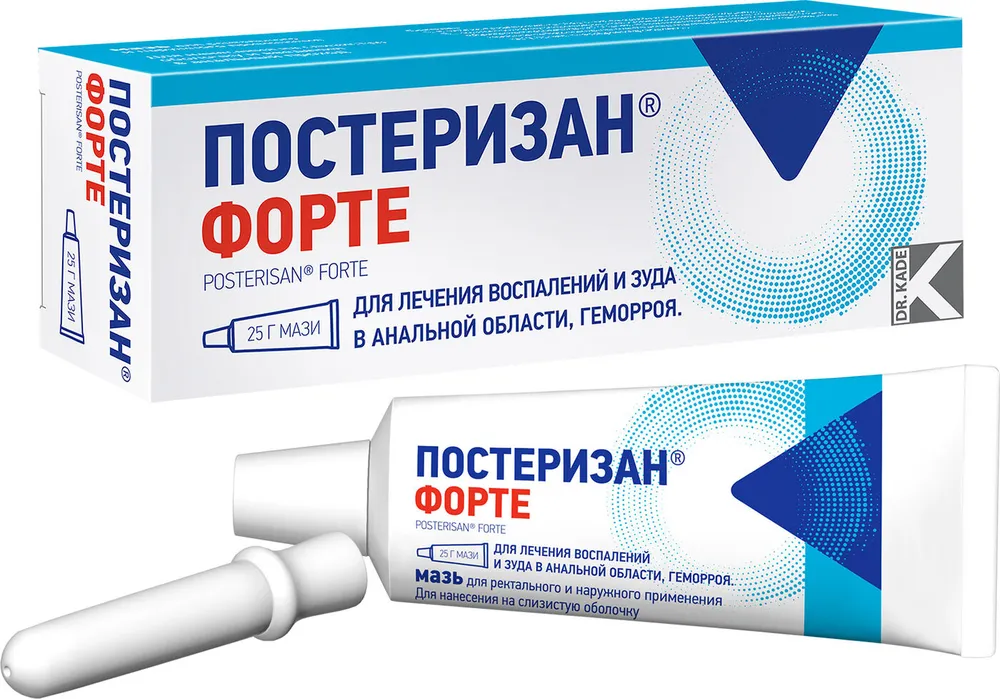
INSTRUCTIONS |
POSTERISAN |
Composition:active substance: 1 g of ointment contains 166.70 mg of standardized bacterial culture suspension (containing 3.3 × 10⁸ E. coli, killed and preserved in 3.3 mg of liquid phenol); excipients: lanolin, yellow soft paraffin. |
| Pharmaceutical form. Ointment. Main physicochemical characteristics: homogeneous ointment of white to beige color with a characteristic phenol odor. |
| Pharmacotherapeutic group. Agents for treatment of hemorrhoids and anal fissures for local use. ATC code C05AX. |
Pharmacological properties.Pharmacodynamics. The active ingredient of the medicinal product is a standardized bacterial culture suspension (BCS) obtained from E. coli. For BCS production, bacteria are inactivated with phenol. Then the aqueous suspension is processed into a galenical form. Thus, the final product contains intact cells, products of cellular degradation, and metabolites, but does not contain live bacteria. After rectal administration (in rats and dwarf pigs), BCS is rapidly absorbed through the intestinal mucosa. When applied to the skin and mucous membranes, BCS stimulates non-specific and specific immune mechanisms. In vitro tests and animal models have shown that BCS induces proliferation of T-lymphocytes and production of immunoglobulins (IgA and IgG). Thus, polyclonal stimulation of the immune response is initiated, natural immune defense is enhanced, and susceptibility of affected tissues to infections is reduced. In in vitro models using human cell systems, lymphocyte proliferation is induced in an antigen-specific manner by Langerhans antigen-presenting cells. In vitro, BCS lyophilisates exert an inhibitory effect on histamine release from mast cells and basophilic granulocytes, demonstrating anti-inflammatory properties. Induction in vitro of various cytokines indicates a potential role in tissue regeneration and thus supports wound healing. Animal and human studies also demonstrate immunogenic effects on inflammatory skin changes and wound-healing activity. Swelling decreases more rapidly when therapy includes BCS. Pharmacokinetics. Studies on absorption, systemic presence, and excretion are not feasible after local application of BCS. However, penetration of immunogenic components of BCS has been demonstrated in immunohistological studies of the rectal mucosa in animals (rats and dwarf pigs). |
Clinical characteristics.Indications. Local treatment of symptoms of hemorrhoids, eczema, and anal fissures. |
| Contraindications. Increased sensitivity to the active substance or to any component of the medicinal product. |
| Interaction with other medicinal products and other forms of interactions. Unknown. |
Special precautions.In case of fungal infections, a topical antifungal medicinal product should be used concomitantly. During treatment with Posterisan ointment, the tensile strength of condoms may be reduced due to the presence of soft yellow paraffin, which may negatively affect condom quality. Posterisan contains wool wax (lanolin). It may cause local skin reactions (e.g. contact dermatitis). Use during pregnancy or breastfeeding. There are no contraindications for the use of the medicinal product during pregnancy or breastfeeding. Ability to influence reaction speed when driving or operating machinery. Data not available. |
Method of administration and dosage.Hygienic procedures of the anal area should be performed before application. For adults, apply the ointment to the affected skin and mucous membranes twice daily (morning and evening), preferably after defecation, and gently rub in with a finger. To administer the ointment into the anal canal and rectum, an applicator with side openings, provided in the package, can be used. The duration of treatment is determined by the physician depending on the nature and course of the disease. Usually, the treatment period is 5–7 days. Children. Do not use in children. |
| Overdose. No cases of overdose or intoxication have been reported. In case of accidental oral ingestion of the ointment (e.g., by children), gastrointestinal disturbances (abdominal pain, nausea) may occur. |
Adverse reactions.In individual cases, patients with increased sensitivity to components of Posterisan ointment may experience hypersensitivity reactions, including itching and burning. May cause contact dermatitis (e.g., due to hypersensitivity to phenol). |
| Shelf life. 3 years. |
| Storage conditions. Store in the original packaging at a temperature not exceeding 25 °C, in a dry, light-protected place, out of the reach of children. |
| Packaging. 25 g in an aluminum tube with an applicator. 1 tube per cardboard pack. |
| Availability. Over-the-counter. |
| Manufacturer. Dr. Kade Pharmazeutische Fabrik GmbH. |
| Manufacturer's address and place of business. Riethstraße 2, 12277 Berlin, Germany. |