Pechevskyy valikardol sugar-free
Ukraine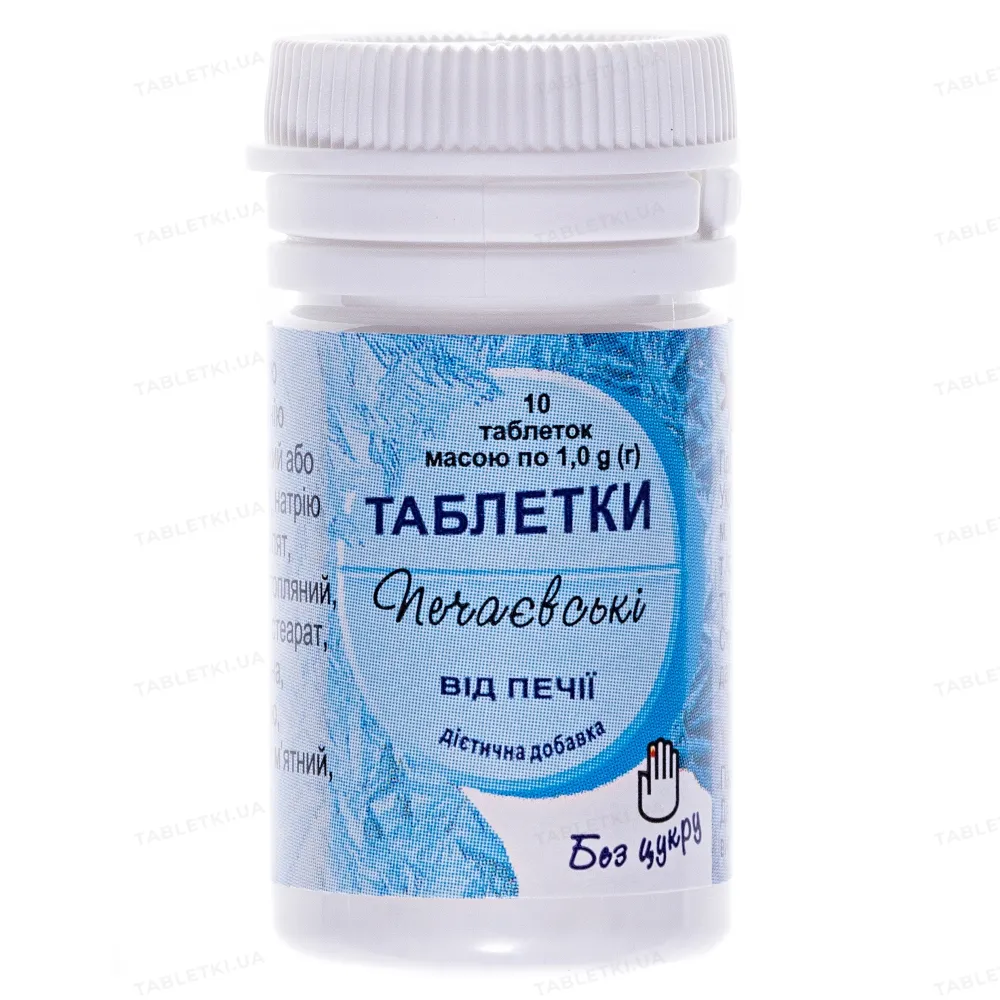
Table of Contents
INSTRUCTIONS FOR MEDICAL USE OF THE MEDICINAL PRODUCT PECHAYEVSKYY VALICARDOL SUGAR-FREE (pechayevskiy valiCARdol free sugar)
Composition:
Active ingredient: menthol solution in menthyl ester of isovaleric acid;
1 tablet contains 60 mg of menthol solution in menthyl ester of isovaleric acid;
Excipients: mannite (E 421), sodium cyclamate, povidone 25, magnesium stearate, colloidal anhydrous silicon dioxide.
Pharmaceutical form. Tablets.
Main physicochemical properties: single-layer, round-shaped tablets with convex upper and lower surfaces, white or white with a creamy tint. Marbling on the tablet surface is permissible. Under magnification, a relatively homogeneous structure is visible at the break.
Pharmacotherapeutic group.
Combined cardiovascular preparations.
ATC code C01EX.
Pharmacological properties.
Pharmacodynamics.
The drug exerts a sedative effect on the central nervous system and also causes a moderate reflex vasodilating (coronary-dilating) effect by reflex stimulation of sensory nerves ("cold" receptors) in the oral mucosa. Stimulation of these receptors induces the release of endorphins, enkephalins, dynorphins, and other opioid peptides, which play an important role in reducing pain perception, normalizing vascular permeability, and regulating other vital mechanisms of the cardiovascular and nervous systems. Under the influence of the drug, physiologically active compounds—histamine, kinins—are released.
Pharmacokinetics.
When administered sublingually, the drug is absorbed through the oral mucosa. Therapeutic effect occurs approximately within 5 minutes.
After absorption, the drug undergoes biotransformation in the liver and is excreted in urine in the form of glucuronides.
Clinical characteristics.
Indications.
- Mild angina attacks (as part of combination therapy);
- neuroses;
- hysteria;
- motion sickness (symptomatic therapy);
- headache associated with nitrate intake.
Contraindications.
Hypersensitivity to the components of the drug. Marked arterial hypotension, acute myocardial infarction.
Interaction with other medicinal products and other forms of interaction.
Reduces the intensity of headache caused by nitrates. Potentiation of sedative and antihypertensive effects is possible when used concomitantly with other psychotropic and antihypertensive agents, opioid analgesics, anesthetics, and alcohol.
Special precautions.
If chest pain does not subside after taking the drug, it is mandatory to consult a physician to rule out acute coronary syndrome.
When using the drug as part of combination therapy for angina attacks, in case of no effect within the first 5 minutes, nitrates should be administered.
Use during pregnancy or breastfeeding.
The use of the drug during pregnancy or breastfeeding is possible if, in the opinion of the physician, the expected positive effect for the mother outweighs the potential risk to the fetus/child.
Ability to affect reaction rate when driving or operating machinery.
Caution is required during the first hours after taking the drug when driving vehicles or operating machinery requiring increased attention, as dizziness, drowsiness, and reduced psychomotor reaction speed may occur.
Method of administration and dosage.
Hold the tablets in the oral cavity (under the tongue) until completely dissolved.
The single dose for adults is 1–2 tablets; the daily dose is 2–4 tablets.
If necessary, the daily dose may be increased. The maximum daily dose is 600 mg.
Duration of treatment – up to 7 days.
Children.
There is no experience with the use of the drug for the treatment of children.
Overdose.
Symptoms: headache, nausea, excitement, cardiac dysfunction, decreased arterial pressure, central nervous system depression, hypersensitivity reactions to drug components (angioneurotic edema, urticaria, pruritus, rash).
Treatment: discontinuation of the drug and symptomatic therapy.
Side effects.
Abdominal discomfort, hypersensitivity reactions to the components of the drug (including angioneurotic edema, urticaria, itching, rash).
With prolonged use, mild nausea, lacrimation, dizziness, transient arterial hypotension, drowsiness may rarely occur, which quickly resolve spontaneously.
Shelf life. 2 years.
Storage conditions.
Store in the original packaging at a temperature from 8 °C to 15 °C.
Keep out of reach of children.
Packaging.
10 tablets in a blister pack;
10 tablets in a blister pack; 1 blister pack in a cardboard box;
10 tablets in a container; 1 container in a cardboard box.
Availability.
Over-the-counter.
Manufacturer.
JSC "Tekhnoloh" (Public Joint-Stock Company "Tekhnoloh").
Manufacturer's address.
8 Stara Prorizna Street, Uman, Cherkasy region, 20300, Ukraine.