Paracetamol
Ukraine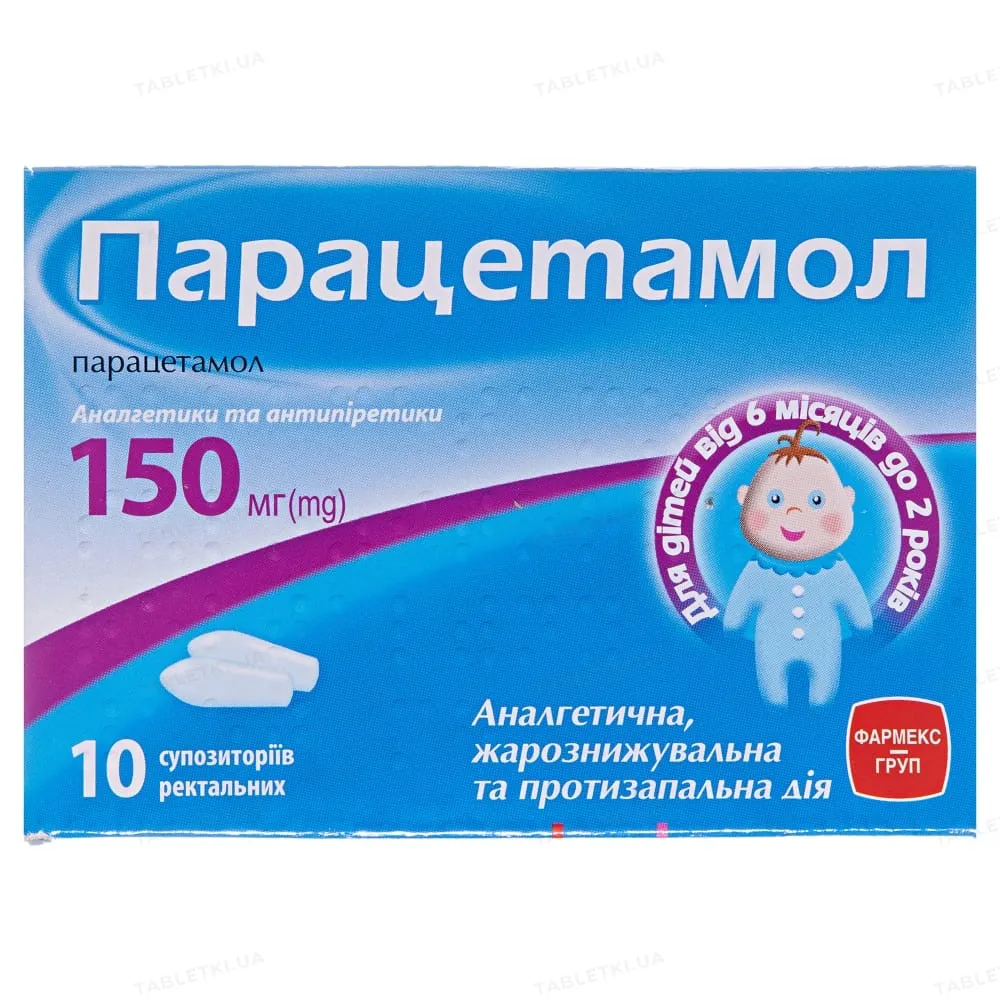
Table of Contents
INSTRUCTIONS FOR MEDICAL USE OF THE MEDICINAL PRODUCT PARACETAMOL (PARACETAMOL)
Composition:
Active substance: paracetamol;
1 rectal suppository contains 80 mg or 150 mg of paracetamol;
Excipient: hard fat.
Pharmaceutical form. Rectal suppositories.
Main physico-chemical properties: smooth suppositories of white or almost white color. On longitudinal section, absence of inclusions; presence of a funnel-shaped depression and an air core is permissible.
Pharmacotherapeutic group. Analgesics and antipyretics. ATC code N02BE01.
Pharmacological properties.
Pharmacodynamics.
Exerts analgesic, antipyretic, and weak anti-inflammatory effects. The mechanism of action is due to inhibition of prostaglandin synthesis and predominant influence on the thermoregulatory center in the hypothalamus.
Pharmacokinetics.
Absorption of paracetamol after rectal administration is slower than after oral administration, but it is more complete. Peak plasma concentrations are reached within 2–3 hours after administration.
Paracetamol is rapidly distributed in all tissues. Concentrations in blood, saliva, and plasma are comparable. Plasma protein binding is weak.
Paracetamol is primarily metabolized in the liver, forming inactive compounds conjugated with glucuronic acid and sulfates.
A minor metabolic pathway, catalyzed by cytochrome P450, leads to the formation of a reactive intermediate (N-acetylbenzoquinoneimine), which under normal conditions is rapidly detoxified by reduced glutathione and excreted in urine after conjugation with cysteine and mercapturic acid. However, in cases of massive overdose, the amount of this toxic metabolite increases.
Excretion is primarily renal. About 90% of the administered paracetamol dose is excreted by the kidneys within 24 hours, mainly as glucuronide conjugates (60–80%) and sulfate conjugates (20–30%).
Less than 5% of the drug is excreted unchanged.
The elimination half-life is 4 to 5 hours.
In severe renal impairment (creatinine clearance below 10 ml/min), elimination of paracetamol and its metabolites is prolonged.
Clinical characteristics.
Indications.
Symptomatic treatment of diseases accompanied by mild to moderate pain and/or elevated body temperature.
Contraindications.
Hypersensitivity to paracetamol or to other components of the drug.
Age under 1 month (infant body weight less than 4 kg).
Severe impairment of kidney and/or liver function, congenital hyperbilirubinemia, glucose-6-phosphate dehydrogenase deficiency, alcoholism, blood disorders, pronounced anemia, leukopenia.
Inflammation of the rectal mucosa and impaired anal function.
Do not use the drug during diarrhea.
Interaction with other medicinal products and other types of interactions.
When taking maximum doses of paracetamol (4 g/day) for at least 4 days, there is a risk of enhanced effect of oral anticoagulants and an increased risk of bleeding. The INR (International Normalized Ratio) should be monitored at regular intervals. If necessary, the dose of oral anticoagulant should be adjusted during paracetamol treatment.
The absorption rate of paracetamol may be increased by metoclopramide and domperidone, and decreased by cholestyramine. Barbiturates reduce the antipyretic effect of paracetamol. Anticonvulsant drugs (including phenytoin, barbiturates, carbamazepine), which stimulate the activity of hepatic microsomal enzymes, may enhance the hepatotoxic effect of paracetamol due to increased conversion of the drug into hepatotoxic metabolites. Concurrent use of paracetamol with hepatotoxic agents increases the hepatotoxic effect of the drug on the liver. Concurrent use of high doses of paracetamol with isoniazid or rifampicin increases the risk of developing hepatotoxic syndrome. Paracetamol reduces the efficacy of diuretics. Do not use concurrently with alcohol.
High concentrations of paracetamol may interfere with laboratory test results for blood glucose measured by the oxidase-peroxidase method and for uric acid when using the phosphotungstic acid method.
Caution is advised when using paracetamol concomitantly with flucloxacillin, as co-administration has been associated with metabolic acidosis with a high anion gap resulting from pyroglutamic acidosis, particularly in patients with risk factors (see section "Special precautions").
Special precautions for use.
Do not administer the drug to children together with other products containing paracetamol.
When treating with paracetamol at a dose of 60 mg/kg/day, concomitant use of another antipyretic is justified only if paracetamol proves ineffective. Recommended doses should not be exceeded.
Do not use the drug in case of diarrhea.
If hyperthermia persists for more than 3 days from the start of treatment with the drug or if the patient's condition worsens, medical advice must be sought.
Cases of high anion gap metabolic acidosis (HAGMA) due to 5-oxoproline (pyroglutamic acid) accumulation have been reported in patients with severe underlying conditions such as severe renal insufficiency and sepsis, or in patients with malnutrition or other sources of glutathione deficiency (e.g., chronic alcoholism), who were treated with paracetamol at therapeutic doses for prolonged periods or in combination with flucloxacillin. If HAGMA due to pyroglutamic acidosis is suspected, immediate discontinuation of paracetamol is recommended, along with careful monitoring of the patient's condition. Measurement of 5-oxoproline levels in urine may be useful in identifying pyroglutamic acidosis as the underlying cause of HAGMA in patients with multiple risk factors.
Use during pregnancy or breastfeeding.
This medicinal product in this pharmaceutical form is intended for use in children only.
Ability to influence reaction rate when driving or operating machinery.
This medicinal product in this pharmaceutical form is intended for use in children only.
Method of Administration and Dosage
The medication should be used under strict medical supervision, with particular caution in children under 1 year of age.
Administer rectally. Suppositories must not be divided to achieve the required dose. If a lower single dose than that contained in one suppository is needed, after consulting a physician, it is recommended to use other dosage forms of paracetamol (e.g., oral solution).
When treating children, the dose should be calculated according to the child's body weight, and an appropriate dosage form should be selected accordingly. The approximate age of children based on body weight is provided only as a guideline.
Paracetamol 80 mg rectal suppositories are intended for children with a body weight of 4 to 6 kg (approximately 1 to 4 months of age). The recommended dosage is 3 to 4 suppositories per day, administered at 6-hour intervals, based on a dose calculation of 60 mg/kg/day according to the child's body weight.
Example calculation for a child weighing 4 kg:
| 4 kg × 60 mg |
= 3 (up to three suppositories per day), |
| 80 mg |
where:
60 mg – daily dose of paracetamol per 1 kg of body weight per day,
80 mg – amount of paracetamol in one suppository.
Paracetamol, rectal suppositories, 150 mg is intended for children with body weight from 8 to 12 kg (approximately from 6 months to 2 years of age). Apply from 3 to 4 suppositories per day at 6-hour intervals, depending on the child's body weight, calculated at 60 mg/kg/day.
Example calculation for a child weighing 10 kg:
| 10 kg × 60 mg |
= 4 (up to four suppositories per day), |
| 150 mg |
where:
60 mg – daily dose of paracetamol per 1 kg of body weight per day,
150 mg – amount of paracetamol in one suppository.
The recommended daily dose of paracetamol is approximately 60 mg/kg body weight/day, which should be divided into 4 doses, i.e. 15 mg/kg body weight every 6 hours. In case of severe renal impairment (creatinine clearance less than 10 ml/min), the interval between doses should be at least 8 hours.
Administration involves rectal insertion of one 80 mg or 150 mg suppository, which may be repeated if necessary at intervals of not less than 6 hours, but without exceeding the daily dose or the number of 4 suppositories per day.
Due to the risk of local toxicity, the use of suppositories more than 4 times a day is not recommended, and the duration of treatment by rectal administration should be kept to a minimum.
Children.
When treating children, the dosing regimen should be followed according to the child's body weight, and the appropriate dosage form should be selected accordingly.
Paracetamol, rectal suppositories, 80 mg is intended for children with body weight from 4 to 6 kg (approximately from 1 month to 4 months).
Paracetamol, rectal suppositories, 150 mg is intended for children with body weight from 8 to 12 kg (approximately from 6 months to 2 years).
Overdose.
To avoid overdose, other medicinal products containing paracetamol should not be used.
There is a risk of overdose in young children (common medication overdose and accidental poisoning). This may lead to fatal outcome.
For children with body weight less than 37 kg, the maximum daily dose of paracetamol should not exceed 80 mg/kg body weight/day.
For children with body weight from 38 kg to 50 kg, the maximum daily dose of paracetamol should not exceed 3 g/day.
For children with body weight over 50 kg, the maximum daily dose of paracetamol should not exceed 4 g/day.
A single dose of 150 mg/kg body weight may cause hepatocellular failure, glucose metabolism disturbances, metabolic acidosis, hemorrhages, hypoglycemia, encephalopathy, coma, and may lead to fatal outcome. In this case, levels of liver transaminases, lactate dehydrogenase, and bilirubin increase; prothrombin levels decrease within 12–48 hours. Acute renal failure with acute tubular necrosis may manifest as severe lumbar pain, hematuria, proteinuria, and may develop even in the absence of severe liver damage. Arrhythmias and pancreatitis have also been reported. With prolonged use of high doses, hematological disorders may include aplastic anemia, pancytopenia, agranulocytosis, neutropenia, leukopenia, thrombocytopenia. With high doses, central nervous system (CNS) effects may include dizziness, psychomotor agitation, and disorientation; urinary system effects may include nephrotoxicity (renal colic, interstitial nephritis, papillary necrosis); digestive system effects may include hepatic necrosis. In patients with risk factors (long-term use of carbamazepine, phenobarbital, phenytoin, primidone, rifampicin, St. John's wort, or other drugs that induce liver enzymes; alcohol abuse; glutathione system deficiency, e.g. due to malnutrition, AIDS, fasting, cystic fibrosis, cachexia), administration of 5 g or more of paracetamol may lead to liver damage. Liver damage may become apparent 12–48 hours after overdose. In case of overdose, the patient should be immediately taken to hospital, even if early symptoms of overdose are absent. Symptoms of overdose appear within the first 24 hours: nausea, vomiting, loss of appetite, pallor, abdominal pain. Symptoms may not reflect the severity of overdose or risk of injury.
Emergency measures:
- immediate hospitalization;
- determination of plasma paracetamol level;
- gastric lavage;
- administration of antidote N-acetylcysteine intravenously or oral methionine within the first 10 hours;
- symptomatic therapy.
Adverse Reactions
Allergic reactions: anaphylaxis, anaphylactic shock, Quincke's edema (angioedema), erythema, urticaria, pruritus, skin and mucous membrane rashes, multiform exudative erythema, toxic epidermal necrolysis.
Hematologic system disorders: anemia, sulfhemoglobinemia and methemoglobinemia (cyanosis, dyspnea, chest pain), hemolytic anemia, thrombocytopenia, leukopenia, and neutropenia.
Respiratory system disorders: bronchospasm in patients sensitive to aspirin and other NSAIDs (non-steroidal anti-inflammatory drugs).
Gastrointestinal system disorders: nausea, epigastric pain, liver function disturbances, increased liver enzyme activity (usually without jaundice), hepatonecrosis (dose-dependent effect).
Endocrine system disorders: hypoglycemia, up to hypoglycemic coma.
Formulation-related reactions: irritation of the rectum and anal opening.
Metabolism and nutrition disorders: metabolic acidosis with high anion gap, frequency "unknown" (cannot be estimated based on available data).
Description of selected adverse reactions
Metabolic acidosis with high anion gap
Cases of metabolic acidosis with high anion gap as a result of pyroglutamic acidosis have been observed during paracetamol use in patients with risk factors (see section "Special precautions"). Pyroglutamic acidosis may occur due to low glutathione levels in these patients.
If any adverse reactions occur, discontinue the drug immediately and consult a physician without delay.
Shelf life.
4 years.
Storage conditions.
Store in the original packaging at a temperature not exceeding 25 °C. Keep out of reach of children.
Packaging.
5 suppositories per strip, 2 strips per cardboard box.
Prescription status. Over-the-counter (without prescription).
Manufacturer.
LLC "FARMEKS GROUP".
Manufacturer's address and place of business.
100 Shevchenka St., Boryspil, Kyiv Oblast, 08301, Ukraine.