Panthenol-teva
Ukraine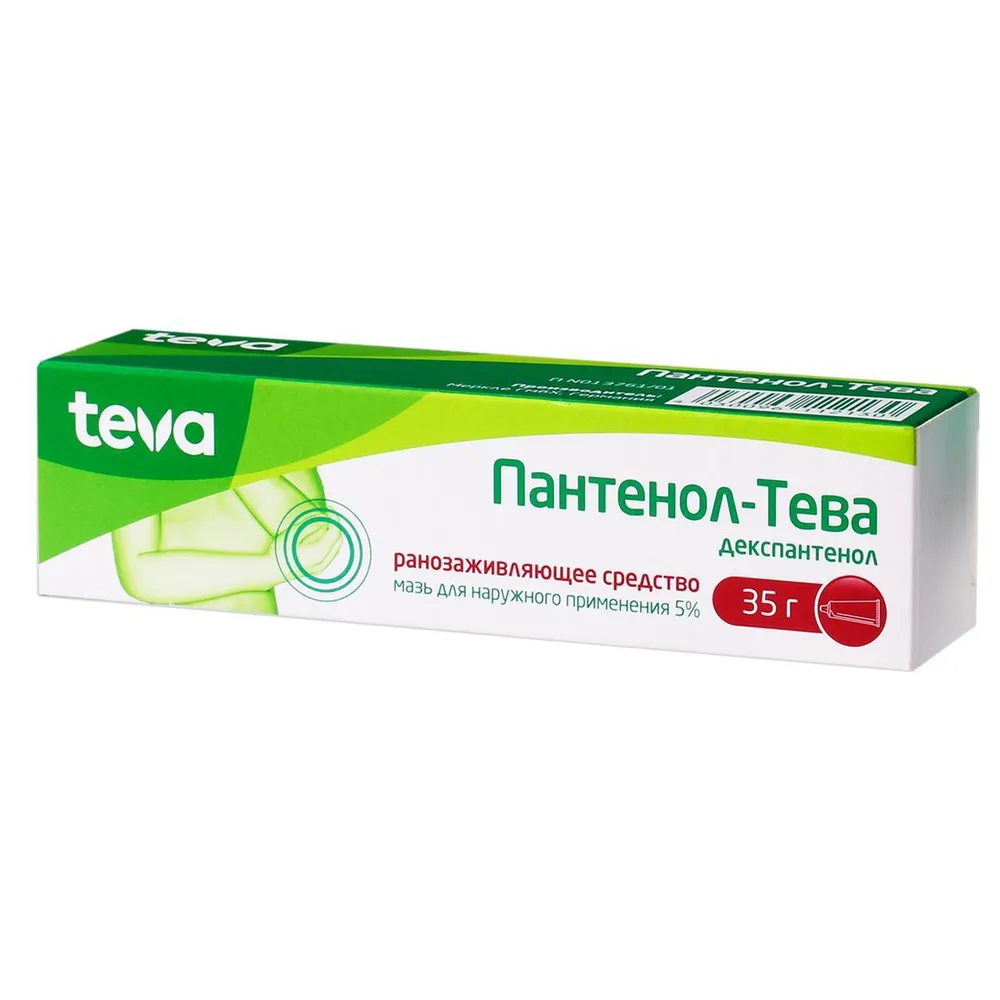
Table of Contents
INSTRUCTION FOR MEDICAL USE OF THE MEDICINAL PRODUCT PANTENOL-TEVA (PANTHENOL-TEVA)
Composition:
Active substance: dexpanthenol;
100 g of ointment contains 5 g of dexpanthenol;
Excipients: potassium sorbate, lanolin, lanolin alcohol, white soft paraffin, medium-chain triglycerides, polyglyceryl-3 polyricinoleate, sodium citrate, citric acid monohydrate, purified water.
Pharmaceutical form. Ointment.
Main physicochemical properties: white or yellowish homogeneous ointment, easily applied, with a characteristic lanolin odour.
Pharmacotherapeutic group. Agents promoting wound healing. ATC code D03AX03.
Pharmacological properties.
Pharmacodynamics.
Dexpanthenol is a precursor of pantothenic acid and exerts the same biological effect as pantothenic acid. Pantothenic acid and its derivatives are water-soluble vitamins that are components of coenzyme A, which, in the form of acetyl-CoA, participates in cellular metabolism. Pantothenic acid is essential for the formation and regeneration of skin and mucous membranes. When applied topically, dexpanthenol (panthenol) accelerates epithelialization and wound healing of damaged skin and mucous membranes.
Pantothenic acid and its derivatives are non-toxic. There is no evidence of mutagenic, teratogenic, or carcinogenic effects of the drug.
Pharmacokinetics.
Dexpanthenol penetrates well into skin and mucous membrane cells, where it is converted into pantothenic acid. Pantothenic acid that enters the systemic circulation accumulates in body tissues, is not metabolized, and is excreted unchanged (60–70% in urine, the remainder in feces).
Clinical characteristics.
Indications.
The drug is used in the following cases:
- to accelerate healing and epithelialization of the skin in minor injuries (mild burns and scratches); in skin irritations (e.g., due to radiotherapy, phototherapy, or ultraviolet radiation exposure); in chronic skin ulcers and pressure sores;
- for prevention and treatment of cracked, rough, or dry skin;
- for regular preventive care of the breasts in breastfeeding women and for treatment of nipple irritation and fissures;
- for infant care: prevention and treatment of diaper dermatitis;
- for skin care in patients during and after topical application of corticosteroids.
Contraindications.
Hypersensitivity to the active substance or to any of the excipients of the drug.
Interaction with other medicinal products and other forms of interaction.
Dexpanthenol may enhance the effect of depolarizing muscle relaxants (succinylcholine chloride, decamethonium bromide) and reduce the effect of non-depolarizing muscle relaxants due to its ability to stimulate acetylcholine synthesis.
Special precautions for use
When using the medication, avoid contact with the eyes.
The ointment must not be applied to weeping wounds.
When applying the ointment to areas of the genital organs or the anus, and simultaneously using a condom, the strength of the condom may be reduced, thus decreasing its effectiveness.
Use during pregnancy or breastfeeding
There are no grounds to consider topical use of the medication during pregnancy or breastfeeding as hazardous. However, during pregnancy, the medication should be used only as prescribed by a physician.
When using the medication for the treatment of nipple fissures, before breastfeeding, any residual product should be removed with a tissue, and the nipple and surrounding skin should be washed with warm boiled water.
Ability to influence reaction rate while driving or operating machinery
Does not affect.
Method of administration and dosage.
Treatment of superficial wounds of any origin and prevention of cracked, dry, or rough skin: apply the ointment as a thin layer to the affected areas of the skin once or several times daily, as needed.
Care of mammary glands in breastfeeding women: apply the ointment to the nipples after each breastfeeding session.
Infant care: apply the oint游戏副本 after each diaper (napkin) change.
The duration of treatment is determined individually by a physician depending on the type and course of the condition.
Children.
The drug can be used in children of various age groups, including infants.
Overdose.
Dexpanthenol is generally well tolerated and considered non-toxic according to specialized literature. Hypervitaminosis has not been reported.
Side effects.
In isolated cases, hypersensitivity reactions have been observed, including allergic dermatitis, itching, erythema, exanthema, rash, urticaria, skin irritation, inflammation, and blisters. Lanolin, potassium sorbate, and lanolin alcohol contained in the formulation may cause local allergic reactions (e.g., contact dermatitis).
Shelf life. 3 years.
After first opening – 12 months.
Storage conditions. Store at a temperature not exceeding 25 °C in a place inaccessible to children.
Packaging.
35 g of ointment in 1 tube; 1 tube in a cardboard box.
Classification. Over-the-counter (without prescription).
Manufacturer. Merckle GmbH.
Manufacturer's address and place of business.
Ludwig-Merkle-Strasse 3, 89143 Blaubeuren, Germany.