Pancreatin 8000
Ukraine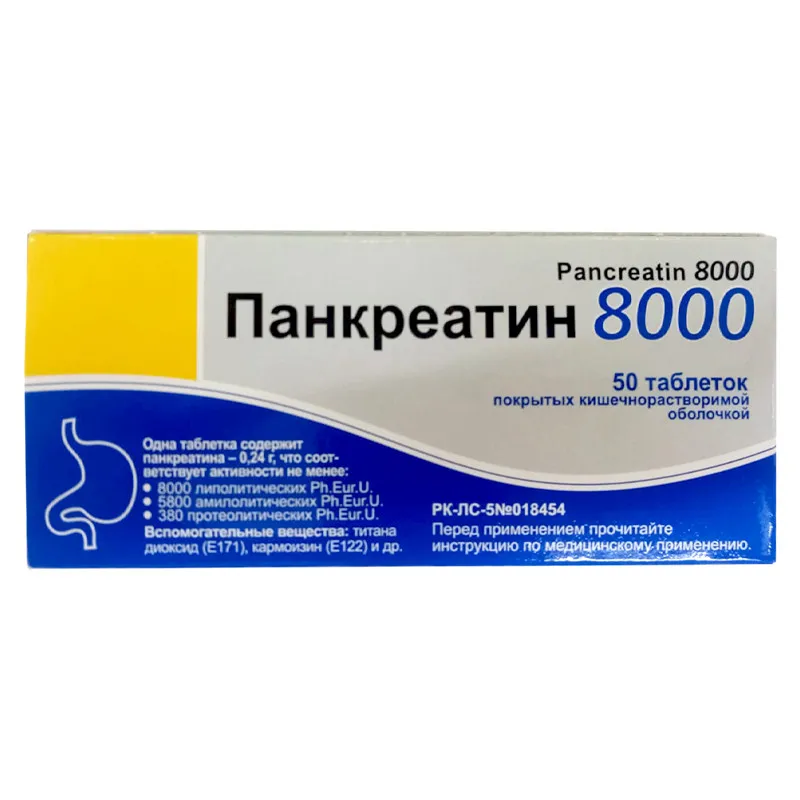
Table of Contents
INSTRUCTIONS FOR MEDICAL USE OF THE MEDICINAL PRODUCT PANCREATIN 8000
Composition:
Active substance: 1 tablet contains 0.24 g of pancreatin, corresponding to not less than 8000 lipolytic Ph. Eur. U., 5800 amylolytic Ph. Eur. U., and 380 proteolytic Ph. Eur. U.;
Excipients: microcrystalline cellulose, crospovidone, sodium chloride, colloidal silicon dioxide, magnesium stearate, methacrylic acid copolymer dispersion, talc, polyethylene glycol (macrogol), titanium dioxide (E 171), carmoisine (E 122).
Pharmaceutical form. Enteric-coated tablets.
Main physicochemical properties: round, biconvex tablets coated with a pink-colored film. A two-layer structure is visible upon breaking.
Pharmacotherapeutic group. Digestive enzymes. ATC code A09AA02.
Pharmacological properties.
Pharmacodynamics.
Enzyme preparation. Pancreatic enzymes (lipase, amylase, and protease) contained in its composition facilitate the digestion of fats, carbohydrates, and proteins, promoting their complete absorption in the small intestine. In pancreatic diseases, the preparation compensates for the insufficiency of its exocrine function and promotes improvement of the digestive process.
Pharmacokinetics.
The acid-resistant coating of the tablets protects the enzymes from inactivation by gastric juice. The coating dissolves and releases the enzymes only under the influence of the neutral or slightly alkaline environment of the small intestine. Maximum enzymatic activity of the drug is observed 30−45 minutes after oral administration.
Clinical characteristics.
Indications.
Conditions associated with impaired digestion due to insufficient secretion of pancreatic digestive enzymes, such as chronic pancreatitis.
Conditions following simultaneous resection of the stomach and small intestine, functional acceleration of food passage through the intestine, intestinal disorders, concurrent intake of poorly digestible plant-based, fatty, and unusual foods.
Intestinal bloating. Preparation for radiological or ultrasound diagnostic examinations.
Contraindications.
Hypersensitivity to the components of the drug; acute pancreatitis or chronic pancreatitis in the exacerbation phase (however, episodic exacerbation may be possible during the subsiding phase of exacerbation when expanding the diet in the presence of pancreatic insufficiency).
Interaction with other medicinal products and other forms of interaction.
Reduces iron absorption (especially during prolonged use).
Special precautions for use.
If a patient develops unusual abdominal symptoms or a change in the nature of the symptoms of the underlying disease, it is recommended to rule out possible involvement of the large intestine, especially when the patient is receiving a dose exceeding 10,000 lipolytic Ph. Eur. U./kg/day.
The product contains active enzymes that may damage the oral mucosa, potentially leading to ulceration; therefore, tablets should be swallowed whole without chewing.
Use during pregnancy or breastfeeding.
During pregnancy or breastfeeding, the medication should be used only as prescribed by a physician, if the expected benefit to the mother outweighs the potential risk to the fetus or infant.
Ability to affect reaction speed when driving or operating machinery.
No precautions are necessary.
Method of Administration and Dosage.
The dose of the drug depends on the degree of pancreatic enzyme deficiency in the duodenum and is determined individually.
If there are no other recommendations, and also in cases of consuming hard-to-digest plant-based food, fatty or unusual food, take 1−2 tablets. In other cases, when digestive disturbances occur, the recommended dose is 2−4 tablets. If necessary, the dose may be increased. Increasing the dose to reduce disease symptoms, such as steatorrhea or abdominal pain, should be performed only under medical supervision. The daily dose of lipase should not exceed 15,000−20,000 lipolytic Ph. Eur. U. per 1 kg of body weight.
The tablets should be taken during meals, swallowed whole and accompanied by a sufficient amount of liquid, for example, a glass of water.
The duration of treatment depends on the course of the disease and is determined by the physician on an individual basis.
The question of dosage and duration of treatment in children is decided by the physician. The drug is prescribed in a daily dose required to normalize bowel movements, but not exceeding 1,500 lipolytic Ph. Eur. U. per 1 kg of body weight in children under 12 years of age. For children aged 12 to 18 years, the daily dose of enzymes should not exceed 15,000−20,000 lipolytic Ph. Eur. U. of lipase per 1 kg of body weight.
Children.
The drug is indicated for use in children aged 6 years and older.
Overdose.
Hyperuricemia and hyperuricosuria have been observed during intake of very high doses of other pancreatin-containing products.
Treatment: symptomatic therapy.
Side effects.
Immune system disorders: allergic reactions, including rash, itching, sneezing, urticaria, lacrimation, bronchospasm, anaphylactic reactions. Due to the presence of carmoisine, allergic reactions are possible.
Gastrointestinal disorders: diarrhea, abdominal pain, nausea, vomiting, changes in bowel habits; intestinal obstruction, constipation, bloating may possibly develop.
If any adverse events occur, consult a physician.
Shelf life. 2 years.
Storage conditions.
Store in the original packaging at a temperature not exceeding 25 °C.
Keep out of reach of children!
Packaging.
No. 10, No. 50 (10 × 5) in blisters.
Supply category. Over-the-counter.
Manufacturer/Marketing Authorization Holder.
LLC "Ternopharm".
Manufacturer's address and place of business.
LLC "Ternopharm".
4 Fabrychna St., Ternopil, 46010, Ukraine.
Tel./Fax: (0352) 521-444, http://www.ternopharm.com.ua