Ospamox®
Ukraine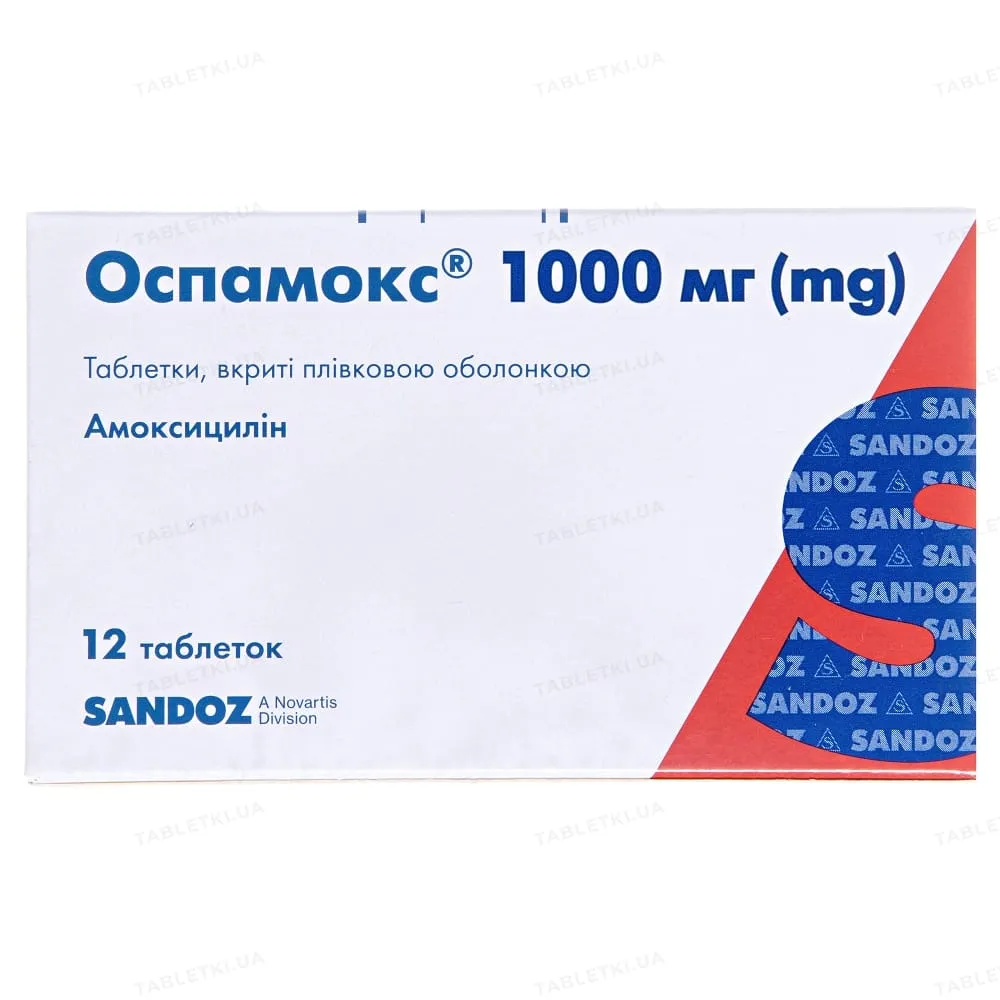
Table of Contents
INSTRUCTION FOR MEDICAL USE OF THE MEDICINAL PRODUCT OSPAMOX® (OSPAMOX®)
Composition:
Active substance: amoxicillin;
One tablet contains amoxicillin 500 mg or 1000 mg in the form of amoxicillin trihydrate;
Excipients: magnesium stearate, povidone (K 25), sodium starch glycolate (type A), microcrystalline cellulose; coating: titanium dioxide (E 171), talc, hypromellose.
Pharmaceutical form. Film-coated tablets.
Main physico-chemical properties: oval, biconvex tablets with a score line on both sides, white to almost white in colour.
Pharmacotherapeutic group.
Antibacterials for systemic use. Beta-lactam antibiotics. Broad-spectrum penicillins. Amoxicillin. ATC code J01CA04.
Pharmacological properties.
Pharmacodynamics.
Amoxicillin is a semi-synthetic aminopenicillin antibiotic with a broad spectrum of activity intended for oral administration. It inhibits bacterial cell wall synthesis. It has a broad spectrum of antimicrobial activity.
Microorganisms sensitive to the drug include:
- Gram-positive aerobes: Enterococcus faecalis, Listeria monocytogenes, Streptococcus agalactiae, Streptococcus bovis, Streptococcus pyogenes;
- Gram-negative aerobes: Helicobacter pylori;
- Anaerobes: Peptostreptococci;
- Others: Borrelia.
Variable sensitivity (acquired resistance may become an issue): Enterococcus faecium, Streptococcus pneumoniae, Streptococcus viridans, Escherichia coli, Haemophilus influenzae, Haemophilus parainfluenzae, Moraxella catarrhalis, Proteus mirabilis, Prevotella, Fusobacterium spp.
Resistant species include: Staphylococcus aureus, Acinetobacter, Citrobacter, Enterobacter, Klebsiella, Legionella, Morganella morganii, Proteus vulgaris, Providencia, Pseudomonas, Serratia, Bacteroides fragilis, Chlamydia, Mycoplasma, Rickettsia.
Pharmacokinetics.
Absorption. Absolute bioavailability of amoxicillin depends on the dose and ranges between 75% and 90%. Within the dose range of 250 mg to 1000 mg, bioavailability (AUC and Cmax parameters) is linearly proportional to the dose. At higher doses, the extent of absorption decreases. Food intake has virtually no effect on drug absorption. After a single 500 mg dose, amoxicillin plasma concentration reaches 6–11 mg/L. Maximum plasma concentration of the active substance is achieved within 1–2 hours.
Distribution. Approximately 17% of amoxicillin binds to plasma proteins. Therapeutic concentrations of the drug are rapidly achieved in blood serum, lungs, bronchial secretions, middle ear fluid, bile, and urine. Amoxicillin concentration in bile exceeds its plasma concentration by 2–4 times. Amoxicillin poorly penetrates into cerebrospinal fluid; however, during inflammation of the meninges (e.g., in meningitis), its concentration in cerebrospinal fluid reaches approximately 20% of plasma concentration.
Metabolism. Amoxicillin is partially metabolized; most of its metabolites are inactive.
Elimination. Amoxicillin is primarily excreted by the kidneys. Approximately 60–80% of the administered dose is eliminated unchanged within 6 hours. The elimination half-life of amoxicillin is 1–1.5 hours. In case of impaired renal function, the elimination half-life of amoxicillin increases and may reach 8.5 hours during anuria.
The elimination half-life of amoxicillin does not change in hepatic impairment.
Clinical characteristics.
Indications.
Infections caused by microorganisms sensitive to the drug:
- respiratory tract;
- urinary and genital system;
- gastrointestinal tract (including eradication of Helicobacter pylori in patients with gastric or duodenal ulcer as part of combination therapy);
- skin and soft tissues.
When using amoxicillin as part of combination therapy for Helicobacter pylori eradication, information regarding other medicinal products used in the combination therapy should be taken into account.
Contraindications.
Hypersensitivity to amoxicillin, other penicillins, or excipients of the medicinal product. History of severe hypersensitivity reactions (including anaphylaxis) to beta-lactam antibiotics (including cephalosporins, carbapenems, or monobactams).
Interaction with other medicinal products and other types of interactions.
Probenecid, phenylbutazone, oxphenbutazone, and to a lesser extent acetylsalicylic acid and sulfinpyrazone, reduce renal tubular secretion of amoxicillin, which may lead to increased plasma levels and prolonged effect. Concomitant use with amoxicillin is not recommended.
Allopurinol. Concomitant use with amoxicillin may promote the occurrence of skin allergic reactions.
Tetracyclines. Tetracyclines and other bacteriostatic agents (tetracycline antibiotics, macrolides, chloramphenicol) may neutralize the bactericidal effect of amoxicillin.
Concomitant use of aminoglycosides is possible (synergistic effect).
Oral anticoagulants. There have been no reports of interaction between penicillin antibiotics and anticoagulants. However, isolated cases of increased international normalized ratio (INR) have been reported in patients receiving amoxicillin concomitantly with acenocoumarol or warfarin. If such concomitant use is necessary, prothrombin time or INR should be closely monitored when starting or stopping amoxicillin therapy. Additionally, dose adjustment of oral anticoagulants may be required.
MTX (methotrexate). Penicillins may reduce methotrexate excretion, potentially increasing its toxicity. Amoxicillin reduces renal clearance of methotrexate; therefore, serum methotrexate concentration levels should be monitored.
Other types of interactions.
Elevated levels of amoxicillin in plasma and urine may affect the results of certain laboratory tests. False-positive results are commonly observed when chemical methods are used.
When testing for glucose in urine, enzymatic glucose oxidase methods are recommended.
The presence of amoxicillin may interfere with quantitative determination of estriol in pregnant women.
Special precautions for use.
Hypersensitivity. Before initiating treatment with amoxicillin, it is essential to carefully assess the patient's history for hypersensitivity reactions to penicillins, cephalosporins, or other beta-lactam antibacterial agents, as well as for allergies to allergens.
Severe hypersensitivity reactions, including anaphylactoid reactions and severe skin adverse reactions, some of which have been fatal, have been reported in patients receiving penicillin therapy. Hypersensitivity reactions may also progress to Kounis syndrome—a serious allergic reaction that may lead to myocardial infarction (see section "Adverse reactions"). Such reactions are more likely in patients with a history of penicillin hypersensitivity or those with atopic disorders. If an allergic reaction occurs, amoxicillin should be discontinued immediately and appropriate alternative therapy initiated.
Resistant microorganisms. Since amoxicillin is not indicated for the treatment of certain types of infections, the drug should only be used when the causative pathogen has been identified or when there is strong clinical suspicion that the infectious agent is likely to be susceptible to amoxicillin (see section "Pharmacological properties"). This is particularly relevant for patients with urinary tract infections and severe ENT infections.
Seizures. Seizures may occur in patients with impaired renal function, those receiving high doses of the drug, or those with predisposing conditions (e.g., history of epileptic seizures, treated epilepsy, meningitis—see section "Adverse reactions").
Renal impairment. The dose of amoxicillin should be adjusted according to the degree of renal impairment in patients with renal insufficiency.
Skin reactions. The early appearance of generalized erythema with fever and pustules during treatment may be a sign of acute generalized exanthematous pustulosis (AGEP). Very rarely, Stevens-Johnson syndrome, toxic epidermal necrolysis, Lyell’s syndrome (toxic epidermal necrolysis), or drug reaction with eosinophilia and systemic symptoms (DRESS syndrome) may occur. In such cases, treatment must be discontinued immediately, and further use of amoxicillin is contraindicated.
Amoxicillin should be avoided in suspected cases of infectious mononucleosis, as the development of a maculopapular rash in this condition may be associated with hypersensitivity to penicillins.
Jarisch-Herxheimer reaction. It should be noted that treatment of Lyme disease with amoxicillin may trigger a Jarisch-Herxheimer reaction (see section "Adverse reactions"), which results from the bactericidal effect of amoxicillin on Borrelia burgdorferi, the spirochete causing Lyme disease.
Resistance. Prolonged use of the drug may occasionally lead to overgrowth of microorganisms not susceptible to amoxicillin. As with other broad-spectrum penicillins, superinfections may occur.
Pseudomembranous colitis. Cases of antibiotic-associated colitis, ranging from mild to life-threatening, have been reported with nearly all antibacterial agents, including amoxicillin. If severe diarrhea characteristic of pseudomembranous colitis develops, the drug should be discontinued and appropriate measures initiated. Antiperistaltic agents are contraindicated.
Appropriate measures should also be taken in the event of hemorrhagic colitis or hypersensitivity reactions.
Long-term therapy. During prolonged treatment, periodic monitoring of organ system functions—including renal, hepatic, and hematopoietic systems—is recommended. Elevations in liver enzyme levels and changes in blood parameters have been reported.
Anticoagulants. Very rare cases of prolonged prothrombin time have been reported in patients receiving amoxicillin. When amoxicillin is co-administered with anticoagulants, appropriate monitoring should be performed, and the anticoagulant dose adjusted if necessary.
Crystalluria. Crystalluria (including acute kidney injury) has been very rarely observed in patients with reduced diuresis, primarily during parenteral therapy. Adequate fluid intake and diuresis should be maintained when high doses of amoxicillin are administered to reduce the risk of amoxicillin crystalluria. In patients with urinary catheters, catheter patency should be checked regularly (see sections "Adverse reactions" and "Overdose").
Precautions in preterm infants and neonates: renal, hepatic, and hematological functions should be monitored.
When amoxicillin is used as part of combination therapy for Helicobacter pylori eradication, the prescribing information for the other drugs in the combination regimen should be consulted.
Cases of drug-induced enterocolitis syndrome (DIES) have been reported, primarily in children receiving amoxicillin (see section "Adverse reactions"). Drug-induced enterocolitis syndrome is an allergic reaction characterized primarily by persistent vomiting (1–4 hours after
Use during pregnancy or breastfeeding.
Amoxicillin crosses the placental barrier; fetal plasma concentrations are approximately 25–30% of those in the pregnant woman. Limited data on amoxicillin use during pregnancy indicate no adverse effects on the fetus/newborn. Animal studies have shown no teratogenic effects of amoxicillin. If amoxicillin is required during pregnancy, a careful benefit-risk assessment should be performed, weighing the potential risk to the fetus against the expected benefit to the mother.
Amoxicillin is excreted in small amounts in breast milk; therefore, the risk of hypersensitivity reactions in the nursing infant cannot be excluded. The drug may be used during breastfeeding only if the expected benefit to the mother outweighs the potential risk to the infant. Breastfeeding should be discontinued if gastrointestinal disturbances (diarrhea, candidiasis, or skin rash) occur in the newborn.
Fertility. There are no data on the effect of amoxicillin on fertility in humans. Reproductive toxicity studies in animals showed no effect on fertility.
Ability to affect reaction speed when driving or operating machinery.
Until individual response to the drug is known (dizziness and seizures may occur), caution is recommended when driving or operating machinery.
Method of Administration and Dosage.
The dosage of amoxicillin is determined by the physician depending on the patient's age, body weight, and renal function, as well as on the microbial sensitivity and the site of infection.
Food intake does not affect the absorption of amoxicillin. The tablet should be swallowed whole or divided into parts, not chewed, and taken with one glass of water.
Dosage. In case of mild to moderate infectious and inflammatory diseases, adults and children aged 12 years and older (with body weight over 40 kg) are recommended to take 500–750 mg twice daily or 500 mg three times daily.
For treatment of chronic diseases, in cases of relapse or severe infections, the dose may be increased and should be divided into three doses: adults are prescribed 750–1000 mg three times daily; children aged 12 years – up to 60 mg/kg/day in three divided doses.
Children with body weight < 40 kg.
The daily dose for children is 40–90 mg/kg/day, divided into 2–3 doses (should not exceed 3 g/day), depending on the indication, severity of the disease, and microbial sensitivity.
Pharmacokinetic and pharmacodynamic data indicate that administration three times daily is more effective than twice daily (the daily dose should be divided into two doses if it approaches the upper recommended limit).
Special recommendations.
Tonsillitis: 50 mg/kg/day in two divided doses.
Acute otitis media: in areas with high prevalence of pneumococci with reduced sensitivity to penicillins, the dosing regimen should follow national/local guidelines.
Early stage of Lyme disease (migratory erythema): 50 mg/kg/day in three divided doses for 14–21 days.
Endocarditis prophylaxis: adults – single dose of 2–3 g of amoxicillin taken 1 hour before a scheduled surgical procedure; children – single dose of 50 mg/kg body weight taken 1 hour before a scheduled surgical procedure.
Gonorrhea (acute, uncomplicated): single dose of 3 g.
Duration of treatment. In cases of mild to moderate infections, the medicinal product is taken for 5–7 days. However, if the infection is caused by streptococcus, the treatment duration should be at least 10 days.
For treatment of chronic diseases, localized infectious lesions, and severe infections, the treatment duration is determined based on the clinical presentation.
The medication should be continued for 48 hours after the disappearance of disease symptoms.
Patients with renal impairment.
Dosage reduction is required in patients with severe renal insufficiency.
For patients with creatinine clearance below 30 mL/min, it is recommended to increase the interval between doses and reduce the daily dose. Short treatment courses (single dose of 3 g) are not recommended in patients with renal impairment.
Table 1
Renal insufficiency in adult patients (including elderly patients)
| Creatinine clearance, mL/min |
Doses, mg |
Interval between administrations |
| > 30 |
No dose adjustment required |
|
| 10–30 |
500 |
12 hours |
| < 10 |
500 |
24 hours |
At the end of the hemodialysis procedure, 500 mg of amoxicillin should be administered.
Table 2
Renal insufficiency in children with body weight less than 40 kg
| Creatinine clearance, mL/min |
Dose |
Interval between administrations |
| > 30 |
Usual dose |
No need for adjustment |
| 10–30 |
Usual dose |
12 hours (corresponds to ⅔ of the dose) |
| < 10 |
Usual dose |
24 hours (corresponds to ⅓ of the dose) |
Patients with impaired liver function.
Dosage adjustment is not required in patients with impaired liver function.
Children.
The recommended dosage form for children under 12 years of age is the suspension.
Overdose.
Symptoms: gastrointestinal disturbances – nausea, vomiting, diarrhea, which may result in fluid and electrolyte imbalances.
Amoxicillin crystalluria has been observed, which in some cases led to renal impairment (see section "Special precautions").
Seizures may occur in patients with impaired renal function or in patients receiving high doses (see sections "Special precautions" and "Adverse reactions").
Treatment: induce vomiting or perform gastric lavage, followed by administration of activated charcoal and an osmotic laxative. Fluid and electrolyte balance should be maintained. Amoxicillin can be removed from the bloodstream by hemodialysis. No specific antidote is known.
Adverse Reactions
The most commonly reported adverse reactions are diarrhea, nausea, and skin rashes.
Criteria for assessing the frequency of adverse reactions:
Common (≥ 1/100, < 1/10),
Uncommon (≥ 1/1000, < 1/100),
Rare (≥ 1/10,000, < 1/1,000),
Very rare (< 1/10,000).
Infections and infestations:
Uncommon – prolonged or repeated use of the medicinal product may lead to development of superinfections and overgrowth of non-susceptible microorganisms or yeasts causing candidiasis of the skin and mucous membranes.
Blood and lymphatic system disorders:
Rare – eosinophilia, hemolytic anemia;
Very rare – leukopenia, severe neutropenia, agranulocytosis, thrombocytopenia, pancytopenia, myelosuppression, granulocytopenia, prolonged bleeding time and prothrombin index. These effects are reversible upon discontinuation of treatment.
Immune system disorders:
Rare – severe allergic reactions including angioneurotic edema (Quincke's edema), anaphylaxis, serum sickness, allergic vasculitis, laryngeal edema, anaphylactic shock;
Not known – Jarisch-Herxheimer reaction (see section "Special Warnings and Precautions for Use").
Gastrointestinal disorders:
Common – diarrhea, nausea, vomiting, flatulence, soft stools, perianal pruritus, loss of appetite, enanthema (especially in the oral area), dry mouth, taste disturbances;
Rare – change in tooth discoloration (especially in children taking the suspension). Appropriate oral hygiene measures can prevent tooth discoloration, as such deposits are usually removed by regular tooth brushing;
Very rare – antibiotic-associated colitis (including pseudomembranous and hemorrhagic colitis), intestinal candidiasis, black hairy tongue. These adverse effects are generally mild and resolve either during treatment or shortly after therapy is completed. The occurrence of these effects can be prevented by administering amoxicillin with food.
Not known – drug-induced enterocolitis syndrome (DIES).
Nervous system disorders:
Very rare – hyperkinesia, hyperactivity, dizziness, convulsions (in patients with epilepsy and meningitis, in case of renal impairment, or when high doses of amoxicillin are administered);
Not known – aseptic meningitis.
Cardiac disorders:
Not known – Kounis syndrome.
Hepatobiliary disorders:
Very rare – hepatitis, cholestatic jaundice, mild and transient increases in liver enzymes (AST, ALT).
Skin and subcutaneous tissue disorders:
Common – skin rashes, urticaria, pruritus;
Very rare – erythema multiforme, Stevens-Johnson syndrome, toxic epidermal necrolysis, bullous and exfoliative dermatitis, acute generalized exanthematous pustulosis, Lyell’s syndrome, drug reaction with eosinophilia and systemic symptoms (DRESS syndrome);
Not known – linear immunoglobulin A (IgA) disease.
Sudden onset of urticaria indicates an allergic reaction to amoxicillin and requires immediate discontinuation of therapy.
Renal and urinary disorders:
Rare – acute interstitial nephritis;
Not known – crystalluria (including acute kidney injury).
Other:
Rare – fever.
Shelf life. 4 years.
Storage conditions.
Store at temperatures not exceeding 25 °C in the original packaging.
Keep out of reach and sight of children.
Packaging.
500 mg tablets: 12 tablets in a blister; 1 (12 × 1) blister per cardboard box;
1000 mg tablets: 6 tablets in a blister; 2 (6 × 2) blisters per cardboard box.
Prescription status. Prescription only.
Manufacturer.
Sandoz GmbH – Production Division Anti-Infectives GLZ and Chemical Operations Kundl (AIHO GLZ Kundl).
Manufacturer's address and place of business.
Biochemiestrasse 10, 6250 Kundl, Austria.