Ospamox
Ukraine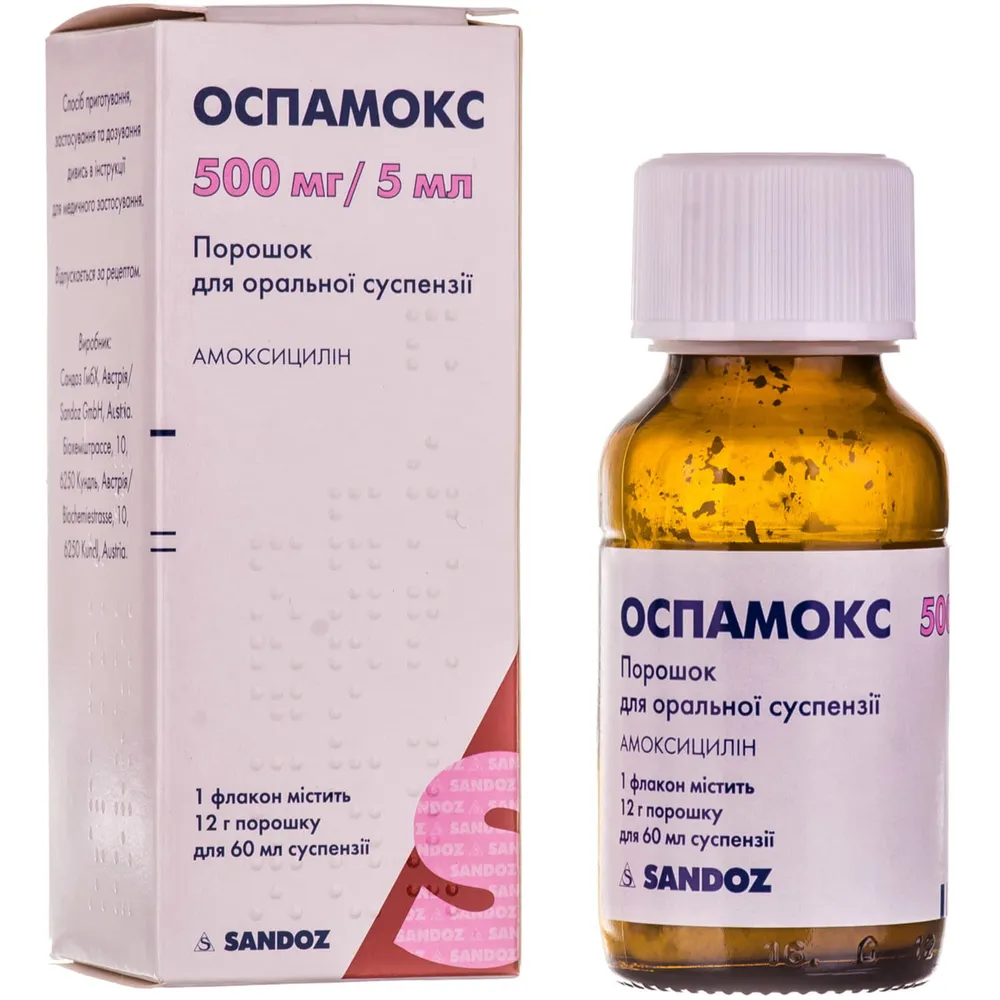
Table of Contents
INSTRUCTION FOR MEDICAL USE OF THE MEDICINAL PRODUCT OSPAMOX (OSPAMOX®)
Composition:
Active ingredient: amoxicillin;
5 ml of suspension contain amoxicillin 125 mg, 250 mg, or 500 mg as amoxicillin trihydrate;
Excipients: citric acid anhydrous, sodium benzoate (E 211), aspartame (E 951), talc, trisodium citrate anhydrous, guar gum, precipitated silicon dioxide, lemon flavor powder, peach-apricot flavor powder, orange flavor powder.
Pharmaceutical form. Powder for oral suspension.
Main physicochemical properties: powder from white to yellowish color; suspension from white to yellowish color.
Pharmacotherapeutic group.
Antibacterials for systemic use. Beta-lactam antibiotics. Broad-spectrum penicillins. Amoxicillin. ATC code J01CA04.
Pharmacological properties.
Pharmacodynamics.
Mechanism of action.
Amoxicillin is a semisynthetic penicillin (beta-lactam antibiotic) that inhibits one or more enzymes [specifically: penicillin-binding proteins (PBPs)] in the biosynthetic metabolism of bacterial peptidoglycan, an essential structural component of the bacterial cell wall. Inhibition of peptidoglycan synthesis leads to weakening of the cell wall, resulting in cell lysis and death. Amoxicillin is inactive against microorganisms that produce beta-lactamases.
Pharmacokinetic/pharmacodynamic relationship.
The time during which the antibiotic concentration exceeds the minimum inhibitory concentration (T > MIC) is a critical factor for successful treatment of bacterial infections with amoxicillin.
Resistance mechanisms.
The main mechanisms of resistance to amoxicillin are:
- inactivation by bacterial beta-lactamases;
- modification of PBPs, leading to reduced affinity of the antibacterial agent for its target sites.
Impermeability of bacteria or efflux pump mechanisms may cause or contribute to resistance, particularly in Gram-negative bacteria.
Breakpoints.
MIC breakpoints for amoxicillin established by the European Committee on Antimicrobial Susceptibility Testing (EUCAST), version 5.0.
| Microorganisms |
Breakpoint MIC values (mg/l) |
|
| Susceptible ≤ |
Resistant ≥ |
|
| Enterobacteriaceae |
81 |
8 |
| Staphylococcus spp. |
Note2 |
Note2 |
| Enterococcus spp. 3 |
4 |
8 |
| Group A, B, C and G Streptococci |
Note4 |
Note4 |
| Streptococcus pneumoniae |
Note5 |
Note5 |
| Viridans group streptococci |
0.5 |
2 |
| Haemophilus influenzae |
26 |
26 |
| Moraxella catarrhalis |
Note7 |
Note7 |
| Neisseria meningitidis |
0.125 |
1 |
| Gram-positive anaerobic bacteria, except Clostridium difficile 8 |
4 |
8 |
| Gram-negative anaerobic bacteria8 |
0.5 |
2 |
| Helicobacter pylori |
0.1259 |
0.1259 |
| Pasteurella multocida |
1 |
1 |
| Non-species-related breakpoints10 |
2 |
8 |
| 1Wild-type Enterobacteriaceae are considered susceptible to aminopenicillins. Some countries prefer to classify wild-type isolates of E. coli and P. mirabilis as intermediate. In such cases, the MIC breakpoint S ≤ 0.5 mg/l is used. 2 Most staphylococci produce penicillinase and are resistant to amoxicillin. Methicillin-resistant isolates are, with few exceptions, resistant to all beta-lactam agents. 3 Susceptibility to amoxicillin can be inferred from ampicillin susceptibility. 4 Susceptibility of group A, B, C and G streptococci to penicillins can be inferred from benzylpenicillin susceptibility. 5 Breakpoints apply only to non-meningitis isolates. Amoxicillin should be avoided orally for isolates with intermediate susceptibility to ampicillins. Susceptibility can be inferred from ampicillin MIC. 6 Breakpoints are defined for intravenous administration. Note that beta-lactamase-positive isolates are resistant. 7 Note that beta-lactamase-producing organisms are resistant. 8 Susceptibility to amoxicillin can be inferred from benzylpenicillin susceptibility. 9 Breakpoints are based on epidemiological cut-off values (ECOFFs) that distinguish wild-type isolates from those with reduced susceptibility. 10 Non-species-related breakpoints are calculated based on dosing regimens of at least 0.5 g × 3 or 4 doses once daily (1.5–2 g/day). |
||
The susceptibility level of sensitive microorganisms may vary depending on the region.
In vitro susceptibility of microorganisms to amoxicillin.
The following microorganism species are susceptible to the drug:
Gram-positive aerobes: Enterococcus faecalis, beta-hemolytic streptococci (groups A, B, C, G), Listeria monocytogenes.
Variable susceptibility (acquired resistance may become an issue).
Gram-negative aerobes: Escherichia coli, Haemophilus influenzae, Helicobacter pylori, Proteus mirabilis, Salmonella typhi, Salmonella paratyphi, Shigella spp., Pasteurella multocida, Vibrio cholerae.
Gram-positive aerobes: coagulase-negative staphylococci, Staphylococcus aureus1, Streptococcus pneumoniae, Viridans group streptococci.
1Almost all S. aureus strains are resistant to amoxicillin due to penicillinase production. In addition, all methicillin-resistant strains are resistant to amoxicillin.
Gram-positive anaerobes: Clostridium spp.
Gram-negative anaerobes: Fusobacterium spp.
Other microorganisms: Borrelia burgdorferi.
Microorganisms with natural resistance to the antibiotic2.
Gram-positive aerobes: Enterococcus faecium2.
2Natural, mediated susceptibility in the absence of acquired resistance mechanisms.
Gram-negative aerobes: Acinetobacter spp., Enterobacter spp., Klebsiella spp., Pseudomonas spp.
Gram-negative anaerobes: Bacteroides spp. (some strains of Bacteroides fragilis are resistant).
Other microorganisms: Chlamydia spp., Mycoplasma spp., Legionella spp.
Pharmacokinetics.
Absorption. Amoxicillin is completely soluble in aqueous solution at physiological pH. It is rapidly and well absorbed after oral administration. Following oral administration, the bioavailability of amoxicillin is approximately 70%. Maximum plasma concentration of the active substance is reached about 1 hour after administration.
The results of pharmacokinetic studies in which amoxicillin at a dose of 250 mg three times daily was administered on an empty stomach to a group of healthy volunteers are given below.
| Cmax |
Tmax* |
AUC(0-24h) |
T1/2 |
| (μg/ml) |
(h) |
(μg∗h/ml) |
(h) |
| 3.3 ± 1.12 |
1.5 (1.0–2.0) |
26.7 ± 4.56 |
1.36 ± 0.56 |
| *Mean value (range) |
|||
In doses ranging from 250 to 3000 mg, bioavailability (AUC and Cmax parameters) is linearly proportional to the dose. Concomitant food intake does not affect absorption.
Hemodialysis can be used to remove amoxicillin.
Distribution. Approximately 18% of amoxicillin binds to plasma proteins, and the apparent volume of distribution is about 0.3–0.4 L/kg. After intravenous administration, amoxicillin has been detected in the gallbladder, abdominal tissue, skin, adipose tissue, muscle tissue, synovial and peritoneal fluid, bile, and pus. Amoxicillin penetrates poorly into cerebrospinal fluid. Animal studies have not revealed any evidence of significant retention of substances derived from any component of the drug in body tissues.
Amoxicillin, like most penicillins, may pass into breast milk. It has been demonstrated that amoxicillin crosses the placental barrier.
Biological transformation. Amoxicillin is partially excreted in urine as inactive penicilloic acid in amounts equivalent to 10–25% of the initial dose.
Excretion. Amoxicillin is primarily excreted by the kidneys. In healthy volunteers, the mean elimination half-life of amoxicillin is approximately one hour, and the mean total clearance is about 25 L/h. Approximately 60–70% of the administered dose is excreted unchanged in urine within the first 6 hours after a single 250 mg or 500 mg dose of amoxicillin. Various studies have shown that urinary excretion of amoxicillin ranges from 50–85% over a 24-hour period. Concomitant administration of probenecid slows the excretion of amoxicillin.
Age. The elimination half-life of amoxicillin is similar in children aged 3 months to 2 years, older children, and adults. For neonates (including premature infants) during the first week of life, the dosing interval should not exceed twice daily due to immaturity of the renal excretion pathway. Since elderly patients are more likely to have decreased renal function, dosage selection should be cautious, and monitoring of renal function is recommended.
Sex. After oral administration of amoxicillin to healthy men and women, no significant effect of sex on the pharmacokinetics of amoxicillin has been observed.
Renal impairment. Total serum clearance of amoxicillin decreases proportionally with reduced renal function.
Hepatic impairment. Patients with impaired liver function should use the medicinal product with caution. Liver function should be monitored regularly.
Clinical characteristics.
Indications.
Amoxicillin is indicated for the treatment of the following infections:
- Acute bacterial sinusitis;
- Acute otitis media;
- Acute streptococcal tonsillitis and pharyngitis;
- Exacerbations of chronic bronchitis;
- Community-acquired pneumonia;
- Acute cystitis;
- Asymptomatic bacteriuria during pregnancy;
- Acute pyelonephritis;
- Typhoid and paratyphoid fever;
- Dental abscesses with spreading cellulitis;
- Prosthetic joint infections;
- Helicobacter pylori eradication (as part of combination therapy);
- Lyme disease.
The drug is used for the treatment and prevention of endocarditis.
Contraindications.
Hypersensitivity to amoxicillin, other penicillins, or excipients of the medicinal product. History of severe hypersensitivity reactions (including anaphylaxis) to beta-lactam antibiotics (including cephalosporins, carbapenems, or monobactams).
Interaction with other medicinal products and other forms of interaction.
Probenecid, phenylbutazone, oxphenbutazone, and to a lesser extent acetylsalicylic acid and sulfinpyrazone, reduce renal tubular secretion of amoxicillin, which may lead to increased plasma levels and prolonged effect. Concomitant use with amoxicillin is not recommended.
Allopurinol. Concomitant use with amoxicillin may increase the likelihood of skin allergic reactions.
Tetracyclines. Tetracyclines and other bacteriostatic agents (macrolides, chloramphenicol) may antagonize the bactericidal effect of amoxicillin.
Concomitant use of aminoglycosides is possible (synergistic effect).
Oral anticoagulants. Oral anticoagulants and penicillin antibiotics are commonly used together in clinical practice, and reports of interactions are rare. However, isolated cases of increased international normalized ratio (INR) have been reported in patients receiving amoxicillin concomitantly with acenocoumarol or warfarin. If such combination is necessary, prothrombin time or INR should be closely monitored. Additionally, dose adjustment of oral anticoagulants may be required.
Methotrexate. Penicillins may reduce methotrexate excretion, potentially increasing its toxicity. Amoxicillin decreases renal clearance of methotrexate; therefore, serum methotrexate concentrations should be monitored.
Digoxin. Absorption of digoxin is increased, thus dose adjustment may be necessary.
Amoxicillin should be used with caution when combined with oral hormonal contraceptives, as plasma levels of estrogens and progestogens may temporarily decrease, potentially reducing the effectiveness of hormonal contraception. Therefore, additional non-hormonal contraceptive methods are recommended.
Other types of interactions.
Forced diuresis leads to decreased plasma concentrations of amoxicillin due to enhanced elimination.
Diarrhea may reduce absorption of other medicinal products and adversely affect their efficacy.
Elevated amoxicillin levels in plasma and urine may interfere with certain laboratory tests. False-positive results may occur with chemical methods.
For glucose testing in urine, the enzymatic glucose oxidase method is recommended.
Amoxicillin may interfere with quantitative determination of estriol in pregnant women.
At high concentrations, amoxicillin may reduce serum glucose levels. Amoxicillin may also interfere with protein determination by colorimetric methods.
Special precautions for use.
Hypersensitivity. Before initiating treatment with amoxicillin, a history of hypersensitivity reactions to penicillins, cephalosporins, or other beta-lactam antibiotics and allergens should be carefully reviewed. Cross-sensitivity (10–15%) between penicillins and cephalosporins is possible.
Severe hypersensitivity reactions, occasionally resulting in fatal outcomes (including anaphylactoid reactions and severe skin adverse reactions), have been reported in patients receiving penicillin therapy. Hypersensitivity reactions may also progress to Kounis syndrome—a serious allergic reaction that may lead to myocardial infarction (see section "Adverse reactions"). These reactions are more likely in patients with a history of penicillin hypersensitivity or those with atopic diseases. If an allergic reaction occurs, amoxicillin should be discontinued immediately and appropriate alternative therapy initiated.
Resistant microorganisms. Since amoxicillin is not indicated for the treatment of certain types of infections, it should be used only when the causative microorganism has been identified or when there is a strong suspicion that the infectious agent is likely to be susceptible to amoxicillin (see section "Pharmacological properties"). This is particularly relevant for patients with urinary tract infections and severe ear, nose, and throat infections.
Seizures. Seizures may occur in patients with impaired renal function, as well as in those receiving high doses of the drug or with predisposition to seizures (e.g., history of epileptic seizures, treated epilepsy, meningitis) (see section "Adverse reactions").
Renal impairment. The dose of amoxicillin should be adjusted in patients with renal impairment according to the degree of renal dysfunction.
Skin reactions. The appearance of generalized erythema associated with fever and pustules at the beginning of treatment may be a symptom of acute generalized exanthematous pustulosis (AGEP). In such cases, treatment must be discontinued and amoxicillin must not be used thereafter.
Amoxicillin may cause severe skin reactions such as toxic epidermal necrolysis, Stevens–Johnson syndrome, and drug reaction with eosinophilia and systemic symptoms (DRESS syndrome). If severe skin reactions occur, amoxicillin should be discontinued immediately, and appropriate treatment and measures should be initiated.
Amoxicillin should be avoided in suspected cases of infectious mononucleosis, as a measles-like rash may develop, which is often associated with hypersensitivity to penicillins. Amoxicillin is not recommended for the treatment of patients with viral infections or acute lymphocytic leukemia due to an increased risk of erythematous skin rashes.
Jarisch–Herxheimer reaction. During treatment of Lyme disease, the Jarisch–Herxheimer reaction may occur (see section "Adverse reactions"), which results from the bactericidal effect of amoxicillin on Borrelia burgdorferi, the spirochete causing Lyme disease.
Resistance. Prolonged use of the drug may occasionally lead to overgrowth of microorganisms resistant to amoxicillin. As with other broad-spectrum penicillins, superinfections may develop.
With the use of nearly all antibacterial agents, including amoxicillin, cases of antibiotic-associated colitis have been reported, ranging from mild to life-threatening. In the event of severe diarrhea characteristic of pseudomembranous colitis (most commonly caused by Clostridium difficile), discontinuation of the drug is recommended and appropriate measures should be taken. Antiperistaltic agents are contraindicated. Appropriate measures should also be taken in the event of hemorrhagic colitis or hypersensitivity reactions.
The drug should not be administered to patients with severe gastrointestinal disorders associated with diarrhea and vomiting due to the risk of reduced absorption.
Long-term therapy. During prolonged treatment, periodic monitoring of organ system functions, including renal, hepatobiliary, and hematopoietic systems, is recommended. Elevated liver enzyme levels and changes in blood parameters have been reported.
Anticoagulants. Very rarely, prolonged prothrombin time has been reported in patients receiving amoxicillin. When amoxicillin is co-administered with anticoagulants, appropriate monitoring is required and the dose of anticoagulants should be adjusted if necessary.
Crystalluria.
Crystalluria (including acute kidney injury) has been very rarely observed in patients with reduced diuresis, primarily during parenteral therapy. Adequate fluid intake and diuresis should be maintained when high doses of amoxicillin are administered to reduce the risk of amoxicillin crystalluria. In patients with urinary catheters, catheter patency should be checked regularly (see sections "Adverse reactions" and "Overdose").
Renal, hepatic, and hematological parameters should be monitored in preterm infants and neonates.
When amoxicillin is used in combination therapy for Helicobacter pylori eradication, the instructions for medical use of the other drugs used in combination therapy should be consulted.
The suspension should be administered with special caution to patients with phenylketonuria, as the product contains aspartame (E 951).
Ospamox contains sodium benzoate (E 211) and sodium citrate, which should be taken into account when prescribing the drug to patients on a sodium-restricted diet.
Cases of drug-induced enterocolitis syndrome (DIES) have been reported, primarily in children receiving amoxicillin (see section "Adverse reactions"). Drug-induced enterocolitis syndrome is an allergic reaction characterized primarily by persistent vomiting (1–4 hours after
Use during pregnancy or breastfeeding.
Amoxicillin crosses the placental barrier; its concentration in fetal plasma is approximately 25–30% of that in maternal plasma. Limited data on the use of amoxic游戏副本
Dosage and method of administration.
Dosage.
When calculating the individual dose of Ospamox for the treatment of infections, the following factors should be taken into account:
- expected pathogens and their likely susceptibility to antimicrobial agents;
- severity and localization of the infectious process;
- patient's age, weight, and renal function, as indicated below.
The duration of treatment is determined by the type of infection and after discussion with the patient. In general, the duration of treatment should be as short as possible. Certain types of infections may require longer treatment periods (see section "Special instructions" regarding prolonged therapy).
Adults and adolescents (≥ 40 kg)
| Indications* |
Dosage* |
| Acute bacterial sinusitis |
250–500 mg every 8 hours or 750–1000 mg every 12 hours For severe infections: 750–1000 mg every 8 hours For acute cystitis: 3000 mg twice daily for 1 day |
| Asymptomatic bacteriuria during pregnancy |
|
| Acute pyelonephritis |
|
| Dental abscesses with spreading cellulitis |
|
| Acute cystitis |
|
| Acute otitis media |
500 mg every 8 hours, 750–1000 mg every 12 hours For severe infections: 750–1000 mg every 8 hours for 10 days |
| Acute streptococcal tonsillitis and pharyngitis |
|
| Exacerbation of chronic bronchitis |
|
| Community-acquired pneumonia |
500–1000 mg every 8 hours |
| Typhoid and paratyphoid fever |
500–2000 mg every 8 hours |
| Infections of prosthetic joints |
500–1000 mg every 8 hours |
| Endocarditis prophylaxis |
Single oral dose of 2000 mg, taken 30–60 minutes before the procedure |
| Helicobacter pylori eradication (as part of combination therapy) |
750–1000 mg twice daily in combination with a proton pump inhibitor (e.g., omeprazole, lansoprazole) and another antibiotic (e.g., clarithromycin, metronidazole) for 7 days |
| Lyme disease (see section "Special precautions for use") |
Early stage: 500–1000 mg every 8 hours up to a maximum daily dose of 4000 mg in several doses for 14 days (10–21 days) Late stage (systemic manifestations): 500–2000 mg every 8 hours up to a maximum daily dose of 6000 mg in several doses for 10–30 days |
| * Guidelines for appropriate treatment should be considered for each indication. |
|
Children with body weight < 40 kg
Children may receive amoxicillin in the form of an oral suspension prepared from the powder for oral suspension Ospamox, or Ospamox DT dispersible tablets (provided that treatment regimens can be ensured using appropriate dosage forms at the corresponding doses). Amoxicillin in the form of oral suspension is prescribed for children under 6 months of age. Children with body weight above 40 kg should receive adult doses.
Recommended dosage:
| Indications+ |
Dose+ |
| Acute bacterial sinusitis |
20–90 mg/kg/day in several divided doses* (do not exceed 3 g/day). |
| Acute otitis media |
|
| Community-acquired pneumonia |
|
| Acute cystitis |
|
| Acute pyelonephritis |
|
| Dental abscesses with spreading cellulitis |
|
| Acute streptococcal tonsillitis and pharyngitis |
40–90 mg/kg/day in several divided doses* (do not exceed 3 g/day) |
| Typhoid and paratyphoid fever |
100 mg/kg/day in 3 divided doses |
| Endocarditis prophylaxis |
Single oral dose of 50 mg/kg, 30–60 minutes before procedure |
| Lyme disease (see section "Special Instructions") |
Early stage: 25–50 mg/kg/day in 3 divided doses for 10–21 days Late stage (systemic manifestations): 100 mg/kg/day in 3 divided doses for 10–30 days |
| + Official treatment guidelines for each indication should be taken into account. |
|
| *Twice-daily administration should only be considered when high doses are prescribed. |
|
Elderly patients. Dose adjustment is not required.
Patients with renal function impairment
| Creatinine clearance (ml/min) |
Adults and children ≥ 40 kg |
Children < 40 kg# |
| Greater than 30 |
No dose adjustment required |
No dose adjustment required |
| 10–30 |
Maximum 500 mg twice daily |
15 mg/kg twice daily (maximum 500 mg twice daily) |
| Less than 10 |
Maximum 500 mg once daily |
15 mg/kg once daily (maximum 500 mg once daily) |
#In most cases, parenteral therapy is preferred.
Patients undergoing hemodialysis
Amoxicillin may be removed from the bloodstream through hemodialysis.
| Adults and children ≥ 40 kg |
Hemodialysis |
| 15 mg/kg/day as a single daily dose. An additional 15 mg/kg should be administered before hemodialysis. To restore the therapeutic drug level in the blood, 15 mg/kg should be taken after hemodialysis. |
Patients undergoing peritoneal dialysis
The maximum daily dose is 500 mg of amoxicillin.
Patients with hepatic impairment
Dosage should be carefully adjusted. Liver function should be monitored at regular intervals (see sections "Special precautions" and "Adverse reactions").
Method of administration
Ospamox is intended for oral administration.
Food intake does not affect the absorption of amoxicillin.
Treatment with recommended doses of intravenous formulations may be initiated parenterally and continued with oral formulations.
Preparation of suspension. Shake the bottle to loosen the powder from the walls and bottom. Add drinking water in two portions (first up to 2/3, then to the circular mark indicated as a groove on the bottle), shaking the bottle each time. SHAKE WELL BEFORE EACH USE.
An oral dosing syringe with adapter and a measuring spoon with a capacity of 5 ml, marked at 1.25 ml and 2.5 ml, are provided for measuring the suspension.
The prepared suspension should be taken undiluted, accompanied by water.
Children
The medicinal product can be administered to children from birth (see section "Dosage and method of administration").
Overdose
Symptoms: gastrointestinal disturbances – nausea, vomiting, diarrhea, which may lead to fluid and electrolyte imbalance.
Amoxicillin crystalluria has been observed, which in some cases led to renal impairment (see section "Special precautions").
Seizures may occur in patients with renal impairment or those receiving high doses of amoxicillin (see sections "Special precautions" and "Adverse reactions").
Treatment: induce vomiting or perform gastric lavage, followed by administration of activated charcoal and an osmotic laxative. Maintain fluid and electrolyte balance. Amoxicillin may be removed from the bloodstream by hemodialysis. There is no specific antidote.
Adverse reactions.
The most commonly reported adverse reactions are diarrhea, nausea, and skin rashes.
Criteria for assessing the frequency of adverse reactions: common (≥ 1/100, < 1/10), uncommon (≥ 1/1000, < 1/100), rare (≥ 1/10000, < 1/1000), very rare (< 1/10000), frequency not known (cannot be estimated due to lack of data).
Infections and infestations: rare – prolonged or repeated use of the drug may lead to superinfections and overgrowth of non-susceptible microorganisms or fungi causing candidiasis of the skin and mucous membranes.
Blood and lymphatic system disorders: uncommon – eosinophilia, hemolytic anemia; rare – leukopenia, severe neutropenia, agranulocytosis, thrombocytopenia, pancytopenia, myelosuppression, granulocytopenia, prolonged bleeding time and prothrombin index. These manifestations are reversible upon discontinuation of treatment.
Immune system disorders: rare – severe allergic reactions including angioneurotic edema (Quincke's edema), anaphylaxis, serum sickness, allergic vasculitis, laryngeal edema, anaphylactic shock; frequency not known – Jarisch-Herxheimer reaction.
Gastrointestinal disorders: common – diarrhea, nausea, vomiting, flatulence, stomach pain, soft stools, perianal itching, loss of appetite, enanthema (especially in the oral area), dry mouth, taste disturbances; uncommon – change in tooth discoloration (especially in children taking the suspension). Proper oral hygiene procedures may prevent tooth discoloration, as such stains are usually removed by tooth brushing; rare – antibiotic-associated colitis (including pseudomembranous and hemorrhagic colitis), intestinal candidiasis, black hairy tongue. These adverse effects are generally not severe and resolve either during treatment or shortly after therapy completion. The occurrence of such effects can be minimized by taking amoxicillin with food. Frequency not known – drug-induced enterocolitis syndrome (DIES).
Nervous system disorders: rare – hyperkinesia, hyperactivity, dizziness, convulsions (in patients with epilepsy and meningitis, in case of renal impairment, or when high doses of amoxicillin are administered); frequency not known – aseptic meningitis.
Cardiac disorders: frequency not known – Kounis syndrome.
Hepatobiliary disorders: rare – hepatitis, cholestatic jaundice, mild and transient increase in liver enzymes (aspartate aminotransferase, alanine aminotransferase).
Skin and subcutaneous tissue disorders: common – skin rashes, urticaria, pruritus; rare – erythema multiforme, Stevens-Johnson syndrome, toxic epidermal necrolysis, bullous and exfoliative dermatitis, acute generalized exanthematous pustulosis, Lyell's syndrome, drug reaction with eosinophilia and systemic symptoms (DRESS syndrome).
Sudden onset of urticaria indicates an allergic reaction to amoxicillin and requires immediate discontinuation of therapy. Frequency not known – linear IgA disease.
Renal and urinary disorders: uncommon – acute interstitial nephritis; frequency not known – crystalluria (including acute kidney injury).
Other: uncommon – fever.
Shelf life. 3 years.
Storage conditions.
Store at a temperature not exceeding 25 **°**C in the original packaging.
Keep out of reach of children.
Reconstituted suspension should be used within 14 days.
Store reconstituted suspension in the refrigerator (2–8 °C).
Packaging.
5.1 g or 8.5 g of powder in a bottle for preparation of 60 ml or 100 ml of suspension (125 mg/5 ml), respectively; 1 bottle with dosing syringe and adapter in a cardboard box;
6.6 g or 11 g of powder in a bottle for preparation of 60 ml or 100 ml of suspension (250 mg/5 ml), respectively; 1 bottle with dosing syringe and adapter in a cardboard box;
12 g or 20 g of powder in a bottle for preparation of 60 ml or 100 ml of suspension (500 mg/5 ml), respectively; 1 bottle with a measuring spoon in a cardboard box.
Prescription category. Prescription only.
Manufacturer.
Sandoz GmbH – Production Unit Anti-Infectives GLZ and Chemical Operations Kundl (AIHO GLZ Kundl).
Manufacturer's address.
Biochemiestrasse 10, 6250 Kundl, Austria.