Oxycodone calcex
UkraineTable of Contents
INSTRUCTIONS FOR MEDICAL USE OF THE MEDICINAL PRODUCT OXICODONE KALCEKS (OXYCODONE KALCEKS)
Composition:
Active substance: oxycodone;
1 ml of solution (1 ampoule) contains 10 mg of oxycodone hydrochloride;
2 ml of solution (1 ampoule) contains 20 mg of oxycodone hydrochloride;
1 ml of solution (1 ampoule) contains 50 mg of oxycodone hydrochloride;
Excipients: citric acid monohydrate, sodium citrate, sodium chloride, hydrochloric acid, sodium hydroxide, water for injections.
Pharmaceutical form. Injection solution.
Main physicochemical properties: clear, colorless solution.
Pharmacotherapeutic group. Analgesics. Opioids. Natural opium alkaloids. Oxycodone.
ATC code N02A A05.
Pharmacological properties.
Pharmacodynamics.
Oxycodone is an opioid agonist without antagonist properties. It has affinity for kappa-, mu-, and delta-opioid receptors in the brain and spinal cord. Oxycodone is similar to morphine in its action. The therapeutic effect is mainly analgesic, anxiolytic, antitussive, and sedative. In the gastrointestinal tract, opioids may cause spasm of the sphincter of Oddi.
In vitro studies and studies in experimental animals indicate a variety of effects of natural opioids such as morphine on components of the immune system; the clinical significance of these findings is unknown. It is not known whether oxycodone, a semi-synthetic opioid, has immunological effects similar to morphine.
Pharmacokinetics.
Absorption
Pharmacokinetic studies in healthy subjects have demonstrated equivalent bioavailability of oxycodone following intravenous and subcutaneous administration of a single 5 mg bolus dose or continuous infusion over 8 hours.
In female subjects, plasma concentrations of oxycodone are on average 25% higher than in males, when corrected for body weight.
Distribution
Following absorption, oxycodone is distributed throughout the body. Approximately 45% is bound to plasma proteins. The drug crosses the placenta and is detected in breast milk.
Biotransformation and elimination
Oxycodone is metabolized in the liver to form noroxycodone, oxymorphone, and various conjugated glucuronides. The analgesic activity of metabolites is clinically insignificant. The active substance and metabolites are excreted in urine and feces.
Special patient groups
Elderly patients.
Plasma concentrations of oxycodone are minimally dependent on age; they are 15% higher in elderly patients compared to younger individuals.
Patients with hepatic and renal impairment.
Compared to patients with normal liver function, patients with mild to severe hepatic impairment may exhibit higher plasma concentrations of oxycodone and noroxycodone and lower plasma concentrations of oxymorphone. This may lead to an increased elimination half-life of oxycodone, potentially resulting in enhanced drug effects.
Compared to patients with normal renal function, patients with mild to severe renal dysfunction may exhibit higher plasma concentrations of oxycodone and its metabolites. This may lead to an increased elimination half-life of oxycodone, potentially resulting in enhanced drug effects.
Clinical characteristics.
Indications.
For the treatment of moderate or severe pain in oncology patients or in the postoperative period.
For the treatment of severe pain requiring the use of a strong opioid.
Oxycontin Kalcex should be used only in adults.
Contraindications.
Hypersensitivity to the active substance or to any of the excipients of the drug.
Oxycodone must not be used in any situations where opioids are contraindicated:
- known hypersensitivity to morphine or other opioids;
- severe respiratory depression with hypoxia;
- severe chronic obstructive pulmonary disease;
- cor pulmonale (cor pulmonale);
- severe bronchial asthma;
- elevated blood carbon dioxide levels;
- paralytic ileus;
- acute abdomen;
- moderate or severe hepatic insufficiency;
- chronic constipation.
Interaction with other medicinal products and other forms of interaction.
Concomitant use of sedative medications such as benzodiazepines or related compounds with opioids increases the risk of sedation, respiratory depression, coma, and fatal outcome due to additive central nervous system (CNS) depressant effects. Dose and duration of concomitant use should be limited (see "Special precautions for use").
Medicinal products affecting the CNS include, but are not limited to: tranquilizers, anesthetics, hypnotics, antidepressants, non-benzodiazepine sedatives, phenothiazines, antipsychotics, alcohol, other opioids, muscle relaxants, and antihypertensive agents.
Anticholinergic agents.
Concomitant use of oxycodone with anticholinergic agents or medicinal products with anticholinergic activity (e.g., tricyclic antidepressants, antihistamines, antipsychotics, muscle relaxants, antiparkinsonian agents) may lead to enhanced anticholinergic adverse effects. Oxycodone should be used with caution in patients receiving these medicinal products; dose reduction may be required.
MAO inhibitors.
MAO inhibitors are known to interact with narcotic analgesics. MAO inhibitors may cause CNS excitation or depression associated with hypertensive or hypotensive crisis (see "Special precautions for use"). Oxycodone should be used with caution in patients receiving MAO inhibitors or who have received MAO inhibitors within the previous 2 weeks (see "Special precautions for use").
Selective serotonin reuptake inhibitors (SSRIs) and serotonin-norepinephrine reuptake inhibitors (SNRIs).
Concomitant use of oxycodone with serotonergic agents such as selective serotonin reuptake inhibitors (SSRIs) (e.g., citalopram, escitalopram, fluoxetine, fluvoxamine, paroxetine, sertraline) or serotonin-norepinephrine reuptake inhibitors (SNRIs) (e.g., duloxetine, venlafaxine) may result in serotonin toxicity. Serotonin toxicity may manifest as symptoms including changes in mental status (e.g., agitation, hallucinations, coma), autonomic instability (e.g., tachycardia, labile blood pressure, hyperthermia), neuromuscular abnormalities (e.g., hyperreflexia, incoordination, rigidity), and/or gastrointestinal symptoms (e.g., nausea, vomiting, diarrhea). Oxycodone should be used with caution, and dose reduction may be required in patients receiving these medications.
Alcohol.
Alcohol may potentiate the pharmacodynamic effects of oxycodone; concomitant use should be avoided.
CYP3A4 inhibitors.
Oxycodone is primarily metabolized by CYP3A4 with involvement of CYP2D6. The activity of these metabolic pathways may be inhibited or induced by various medicinal products or dietary components taken concomitantly.
CYP3A4 inhibitors such as macrolide antibiotics (e.g., clarithromycin, erythromycin, telithromycin), azole antifungal agents (e.g., ketoconazole, voriconazole, itraconazole, posaconazole), protease inhibitors (e.g., boceprevir, ritonavir, indinavir, nelfinavir, and saquinavir), cimetidine, and grapefruit juice may reduce the clearance of oxycodone, potentially leading to increased plasma concentrations of oxycodone. Therefore, the dose of oxycodone may need to be appropriately adjusted.
Some specific examples are listed below:
- itraconazole, a potent CYP3A4 inhibitor administered orally at a dose of 200 mg for 5 days, increased the AUC of oral oxycodone. On average, the AUC was approximately 2.4 times higher (range 1.5–3.4);
- voriconazole, a CYP3A4 inhibitor administered at a dose of 200 mg twice daily for 4 days (400 mg as the first two doses), increased the AUC of oral oxycodone. On average, the AUC was approximately 3.6 times higher (range 2.7–5.6);
- telithromycin, a CYP3A4 inhibitor administered orally at a dose of 800 mg for 4 days, increased the AUC of oral oxycodone. On average, the AUC was approximately 1.8 times higher (range 1.3–2.3);
- grapefruit juice, a CYP3A4 inhibitor administered at a dose of 200 ml three times daily for 5 days, increased the AUC of oral oxycodone. On average, the AUC was approximately 1.7 times higher (range 1.1–2.1).
CYP3A4 inducers.
CYP3A4 inducers such as rifampicin, carbamazepine, phenytoin, and St. John’s wort may induce oxycodone metabolism and increase its clearance, potentially leading to reduced plasma concentrations of oxycodone. Dose adjustment of oxycodone may be required. Some specific examples are listed below:
- St. John’s wort, a CYP3A4 inducer administered at a dose of 300 mg three times daily for 15 days, decreased the AUC of oral oxycodone. On average, the AUC was approximately 50% lower (range 37–57%);
- rifampicin, a CYP3A4 inducer administered at a dose of 600 mg once daily for 7 days, decreased the AUC of oral oxycodone. On average, the AUC was approximately 86% lower.
CYP2D6 inhibitors.
Medicinal products that inhibit CYP2D6 activity, such as paroxetine and quinidine, may reduce the clearance of oxycodone, potentially leading to increased plasma concentrations of oxycodone.
Special precautions for use.
The main risk of opioid overdose is respiratory depression. Caution should be exercised when administering oxycodone to elderly or debilitated patients, patients with severe impairment of lung function, patients with hepatic or renal dysfunction, patients with myxedema, hypothyroidism, Addison's disease, toxic psychosis, benign prostatic hyperplasia, adrenocortical insufficiency, alcoholism, delirium tremens, biliary tract disorders, pancreatitis, inflammatory bowel diseases, hypotension, hypovolemia, increased intracranial pressure, head injury (due to the risk of increased intracranial pressure), or patients taking benzodiazepines, other CNS depressants (including alcohol), or monoamine oxidase inhibitors (MAOIs).
Risk associated with concomitant use of sedatives such as benzodiazepines or related substances.
Concomitant use of benzodiazepines and opioids may result in sedation, respiratory depression, coma, and death. Due to these risks, concomitant prescription of sedative medications such as benzodiazepines or related compounds with opioids should be reserved for patients for whom alternative treatment options are not feasible. If a decision is made to co-prescribe benzodiazepines with opioids, the lowest effective dose should be used, and the duration of treatment should be as short as possible (see also section "Dosage and administration"). Patients should be closely monitored for signs and symptoms of respiratory depression and sedation. Therefore, patients and their caregivers should be informed about these symptoms (see "Interaction with other medicinal products and other forms of interaction").
Surgical procedures.
Oxycodone should be used with caution before or during surgical procedures and during the first 12–24 hours after surgery.
As with all opioid-containing medications, products containing oxycodone should be used cautiously after abdominal surgery, since opioids are known to impair gastrointestinal motility and should not be administered until the physician is confident that gastrointestinal function has normalized.
Pain not associated with malignancy.
For patients suffering from chronic non-malignant pain, opioids may be used as part of a comprehensive treatment program, including other medications and non-pharmacological therapies, when appropriate. An essential part of the patient assessment for chronic non-malignant pain is the presence of substance dependence or a history of substance abuse.
If opioid therapy is considered appropriate for the patient, the primary goal of treatment is not to minimize the opioid dose, but to achieve a dose that provides adequate analgesia with minimal adverse effects.
Endocrine system.
Opioids may affect the hypothalamic-pituitary-adrenal axis and gonadal function. Observable changes may include increased serum prolactin levels and decreased plasma cortisol and testosterone levels. These hormonal changes may manifest as clinical symptoms.
Sleep-related breathing disorders.
Opioids may cause sleep-related breathing disorders, including central sleep apnea (CSA) and sleep-related hypoxemia. Opioid use increases the risk of CSA in a dose-dependent manner. In patients with CSA, consideration should be given to reducing the total opioid dose.
Opioid use disorders (abuse and dependence).
Repeated administration of opioids such as oxycodone may lead to tolerance and physical and/or psychological dependence.
Repeated use of Oxycodone Kalceks may lead to opioid use disorders (OUD). Higher doses and longer duration of opioid treatment may increase the risk of developing OUD. Abuse or intentional misuse of Oxycodone Kalceks may result in overdose and/or death. The risk of developing OUD is increased in patients with pre-existing substance use disorders (including alcohol use disorder) in personal or family history, tobacco users, or patients with personal history of other mental health disorders (e.g., depression, anxiety, and personality disorders).
Prior to initiating and during treatment with Oxycodone Kalceks, treatment goals and a discontinuation plan should be discussed with the patient (see section "Dosage and administration"). Patients should also be informed about the risks and signs of OUD prior to and during treatment. If such signs occur, patients should be advised to consult their physician. Patient behavior should be monitored for signs of drug-seeking behavior (e.g., early refill requests). Such monitoring should include review of concomitant opioid and psychoactive medications (e.g., benzodiazepines). For patients exhibiting signs and symptoms of OUD, consultation with an addiction specialist should be considered.
Tolerance.
Tolerance to the drug may develop in patients receiving chronic treatment, requiring progressively higher doses to maintain pain control. Prolonged use of this medication may lead to physical dependence, and withdrawal syndrome may occur upon abrupt discontinuation of therapy.
Withdrawal syndrome.
When a patient no longer requires oxycodone treatment, it is advisable to gradually reduce the dose to prevent withdrawal symptoms. Opioid withdrawal or abstinence syndrome is characterized by some or all of the following symptoms: anxiety, lacrimation, rhinorrhea, yawning, sweating, chills, muscle pain, mydriasis, and tachycardia. Other symptoms may also develop, including irritability, restlessness, back pain, joint pain, weakness, abdominal cramps, insomnia, nausea, anorexia, vomiting, diarrhea, as well as elevated blood pressure, tachypnea, or increased heart rate.
As with other opioids, newborns of dependent mothers may exhibit withdrawal symptoms and respiratory depression at birth.
Alcohol.
Concomitant use of alcohol and oxycodone may increase the adverse effects of oxycodone; simultaneous use should be avoided.
Hyperalgesia.
Hyperalgesia may occur, in which there is no appropriate response to further increases in oxycodone dose, particularly with high-dose therapy. Dose reduction or switching to an alternative opioid may be necessary.
Hepatobiliary disorders.
Oxycodone may cause dysfunction and spasm of the sphincter of Oddi, thereby increasing the risk of biliary tract symptoms and pancreatitis. Therefore, oxycodone should be used with caution in patients with pancreatitis or biliary tract disorders.
Other.
Oxycodone should not be used if there is a risk of paralytic ileus. If paralytic ileus is suspected or occurs, oxycodone should be discontinued immediately.
This medicinal product contains less than 1 mmol (23 mg) of sodium per 1 ml, i.e., essentially "sodium-free".
Use during pregnancy or breastfeeding.
Pregnancy.
There are limited data on the use of oxycodone in pregnant women. Infants born to mothers who received opioids during the last 3–4 weeks of pregnancy should be closely monitored for respiratory depression. Withdrawal symptoms may occur in newborns of mothers undergoing oxycodone treatment.
No fertility or postnatal studies on the intrauterine effects of oxycodone have been conducted. However, studies in rats and rabbits using oral doses of oxycodone equivalent to 3 and 47 times, respectively, the adult dose of 160 mg/day did not show evidence of fetal harm due to oxycodone. Injection of oxycodone is not recommended for use during pregnancy or during labor.
Breastfeeding.
Oxycodone may pass into breast milk and may cause respiratory depression in the newborn. Therefore, oxycodone should not be used in breastfeeding mothers.
Ability to affect reaction speed when driving or operating machinery.
Oxycodone may impair the ability to drive or operate machinery. Oxycodone may affect patients' reactions to varying degrees depending on dosage and individual sensitivity. Therefore, patients should not drive or operate machinery if such effects are observed.
Method of Administration and Dosage
Administer as intravenous (i.v.) injection or infusion or subcutaneous (s.c.) injection or infusion.
The dose should be adjusted according to the severity of pain, the patient's general condition, and previous or concomitant use of other medicinal products.
Adults aged 18 years and older
The initial doses recommended below should be used. Gradual dose escalation may be necessary if analgesia is inadequate or if pain increases.
Oxycodone Calceks 10 mg/mL:
i.v. (bolus): Dilute to 1 mg/mL in 9 mg/mL (0.9%) sodium chloride injection solution, 50 mg/mL (5%) dextrose solution, or water for injections. Administer bolus doses of 1 to 10 mg slowly over 1–2 minutes. Doses should be administered no more frequently than every 4 hours.
i.v. (infusion): Dilute to 1 mg/mL in 9 mg/mL (0.9%) sodium chloride injection solution, 50 mg/mL (5%) dextrose solution, or water for injections.
The recommended initial dose is 2 mg/hour.
i.v. (patient-controlled analgesia – PCA): Dilute to 1 mg/mL in 9 mg/mL (0.9%) sodium chloride injection solution, 50 mg/mL (5%) dextrose solution, or water for injections.
Bolus doses of 0.03 mg/kg should be administered, observing a minimum interval of 5 minutes between doses.
s.c. (bolus): Use at a concentration of 10 mg/mL. The recommended initial dose is 5 mg, repeated every 4 hours as needed.
s.c. (infusion): If necessary, dilute in 9 mg/mL (0.9%) sodium chloride injection solution, 50 mg/mL (5%) dextrose solution, or water for injections.
An initial dose of 7.5 mg/day is recommended for opioid-naïve patients, with gradual dose titration according to symptom control.
Oncology patients transitioning from oral oxycodone may require substantially higher doses (see below Conversion from Oral to Parenteral Oxycodone).
Oxycodone Calceks 50 mg/mL:
i.v. (bolus): Dilute in 9 mg/mL (0.9%) sodium chloride injection solution, 50 mg/mL (5%) dextrose solution, or water for injections. Administer bolus doses of 1 to 10 mg slowly over 1–2 minutes to opioid-naïve patients. Doses should be administered no more frequently than every 4 hours.
i.v. (infusion): Dilute in 9 mg/mL (0.9%) sodium chloride injection solution, 50 mg/mL (5%) dextrose solution, or water for injections.
The recommended initial dose is 2 mg/hour for opioid-naïve patients.
i.v. (patient-controlled analgesia – PCA): Dilute in 9 mg/mL (0.9%) sodium chloride injection solution, 50 mg/mL (5%) dextrose solution, or water for injections.
Bolus doses of 0.03 mg/kg should be administered, observing a minimum interval of 5 minutes between doses for opioid-naïve patients.
s.c. (bolus): Dilute Oxycodone Calceks 50 mg/mL in 9 mg/mL (0.9%) sodium chloride injection solution, 50 mg/mL (5%) dextrose solution, or water for injections. The recommended initial dose is 5 mg, repeated every 4 hours as needed for opioid-naïve patients.
s.c. (infusion): If necessary, dilute in 9 mg/mL (0.9%) sodium chloride injection solution, 50 mg/mL (5%) dextrose solution, or water for injections.
An initial dose of 7.5 mg/day is recommended for opioid-naïve patients, with gradual dose titration according to symptom control.
Oncology patients transitioning from oral oxycodone may require substantially higher doses (see below Conversion from Oral to Parenteral Oxycodone).
Conversion from Oral to Parenteral Oxycodone
The dose should be based on the following ratio: 2 mg of oral oxycodone corresponds to 1 mg of parenteral oxycodone. It should be emphasized that this is only a guideline for the required dose. Inter-patient variability necessitates careful dose titration for each patient to achieve the appropriate dose. When switching opioid medications, the patient should be under close monitoring until their condition stabilizes.
Elderly Patients
Elderly patients should be treated with caution. The lowest possible dose should be prescribed, with careful titration to achieve pain control.
Patients with Renal or Hepatic Impairment
A conservative approach should be followed when determining the initial dose in these patients. The recommended initial dose for adults should be reduced by 50% (e.g., a total daily oral dose of 10 mg in opioid-naïve patients), and each patient should be individually titrated to achieve adequate pain control according to their clinical situation (see "Pharmacokinetics").
Use in Non-Malignant Pain
Opioids are not first-line therapy for chronic non-malignant pain and are not recommended as sole treatment. Types of chronic pain shown to be responsive to strong opioids include chronic osteoarthritic pain and intervertebral disc disease.
Treatment Goals and Discontinuation
Prior to initiating treatment with Oxycodone Calceks, a treatment strategy, including treatment duration and goals, as well as a plan for treatment discontinuation, should be agreed upon with the patient, in accordance with pain management guidelines. During treatment, regular contact between physician and patient should be maintained to assess the need for continued therapy, consider discontinuation, and adjust dosing as necessary. When a patient no longer requires oxycodone therapy, gradual dose reduction may be appropriate to prevent withdrawal symptoms. In the absence of adequate pain control, consider the possibility of hyperalgesia, tolerance, or progression of the underlying disease (see section "Special Warnings and Precautions for Use").
Duration of Treatment
Oxycodone should not be used longer than necessary.
How to open the ampoule:
- Turn the ampoule so the colored dot faces you. Gently tap the top of the ampoule with your finger to ensure the solution flows to the bottom part of the ampoule (Fig. 1).
- Use both hands to open the ampoule: hold the lower part of the ampoule in one hand and press the top part away from the colored dot with the other hand (Fig. 2).
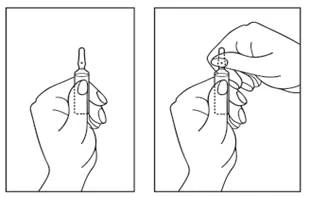
Fig. 1. Fig. 2.
Do not use the solution if visible particles are present.
Use immediately after opening the ampoule. Any unused portion of the solution must be discarded.
Improper handling of the undiluted solution after opening the original ampoule or of the diluted solution may compromise the sterility of the product.
Oxycodone Calceks 10 mg/mL, undiluted or diluted to 1 mg/mL with 9 mg/mL (0.9%) sodium chloride injection solution, 50 mg/mL (5%) dextrose solution, or water for injections, and Oxycodone Calceks 50 mg/mL, undiluted or diluted to 3 mg/mL with 9 mg/mL (0.9%) sodium chloride injection solution, 50 mg/mL (5%) dextrose solution, or water for injections, is chemically and physically stable when in contact with typical brands of polypropylene or polycarbonate syringes, polyethylene or polyvinyl chloride (PVC) tubing, and PVC or EVA infusion bags for 24 hours at room temperature (25°C) and at 2–8°C.
Oxycodone Calceks, undiluted or diluted in the infusion solutions used in these studies and contained in various sets, does not require protection from light.
Oxycodone Calceks is also compatible with the following medicinal products: hyoscine butylbromide, hyoscine hydrobromide, dexamethasone sodium phosphate, haloperidol, midazolam hydrochloride, metoclopramide hydrochloride, levomepromazine hydrochloride, glycopyrronium bromide, ketamine hydrochloride.
Children
There are no data on the use of oxycodone injections in patients under 18 years of age.
Overdose
Symptoms
Acute oxycodone overdose may present with miosis, respiratory depression, hypotension, and hallucinations. Nausea and vomiting frequently occur in less severe cases. Non-cardiogenic pulmonary edema and rhabdomyolysis are particularly common after intravenous administration of opioid analgesics. In more severe cases, circulatory failure and drowsiness progressing to stupor or coma, hypotension, bradycardia, pulmonary edema, and death may occur. Toxic leukoencephalopathy has been observed in cases of oxycodone overdose.
The effects of overdose may be potentiated by concomitant use of alcohol or other psychoactive substances.
Treatment of Overdose
Primary attention should be directed toward establishing a patent airway and instituting assisted or controlled ventilation. Pure opioid antagonists such as naloxone are specific antidotes for respiratory depression caused by opioids. Other supportive measures should be employed as needed.
In cases of massive overdose, administer naloxone intravenously (0.4 to 2 mg for adults and 0.01 mg/kg body weight for children) if the patient is comatose or exhibits respiratory depression. Repeat the dose at 2-minute intervals if there is no adequate response. If repeated doses are required, an infusion of 60% of the initial dose per hour is advisable. A solution of 10 mg in 50 mL of dextrose solution provides 200 µg/mL for infusion using an intravenous pump (the dose should be adjusted according to clinical response). Infusions do not replace frequent clinical assessment of the patient.
Intramuscular naloxone is an alternative if intravenous access is not possible. Because the duration of action of naloxone is relatively short, the patient must be closely monitored until spontaneous respiration is reliably restored. Naloxone is a competitive antagonist, and large doses (up to 4 mg) may be required in patients with severe poisoning.
In less severe overdose, administer 0.2 mg naloxone intravenously, increasing by 0.1 mg every 2 minutes as needed.
The patient should remain under observation for at least 6 hours after the last dose of naloxone.
Naloxone should not be administered in the absence of clinically significant respiratory or circulatory depression caused by oxycodone overdose. Naloxone should be administered with caution in individuals with known physical dependence on oxycodone or when such dependence is suspected. In these cases, abrupt or complete reversal of opioid effects may precipitate pain and acute withdrawal syndrome.
Adverse Reactions
Adverse effects are typical for opioid agonists. Tolerance and dependence may develop (see "Special Warnings and Precautions for Use"). Constipation can be prevented with appropriate laxatives. If nausea or vomiting is troublesome, oxycodone may be combined with an antiemetic.
Very common (≥ 1/10), common (≥ 1/100 to < 1/10), uncommon (≥ 1/1000 to < 1/100), rare (≥ 1/10,000 to < 1/1000), very rare (< 1/10,000), unknown (cannot be estimated from available data).
Immune system disorders:
Uncommon – hypersensitivity; unknown – anaphylactic reaction, anaphylactoid reaction.
Metabolism and nutrition disorders:
Common – decreased appetite; uncommon – dehydration.
Psychiatric disorders:
Common – anxiety, confusion, depression, insomnia, restlessness, thinking abnormalities, unusual dreams; uncommon – excitement, emotional lability, euphoric mood, hallucinations, decreased libido, drug dependence (see "Special Warnings and Precautions for Use"), disorientation, mood changes, agitation, dysphoria; unknown – aggression.
Nervous system disorders:
Very common – somnolence, dizziness, headache; common – tremor, lethargy, sedation; uncommon – amnesia, convulsions, hypertonia, hypoesthesia, involuntary muscle contractions, speech disorder, unconsciousness, paraesthesia, dysgeusia, hypotonia; unknown – hyperalgesia.
Eye disorders:
Uncommon – visual disturbances, miosis.
Ear and labyrinth disorders:
Uncommon – vertigo.
Cardiac disorders:
Uncommon – tachycardia (in the context of withdrawal syndrome), supraventricular tachycardia.
Vascular disorders:
Uncommon – vasodilation, facial flushing; rare – hypotension, orthostatic hypotension.
Respiratory, thoracic and mediastinal disorders:
Common – dyspnoea, bronchospasm, cough suppression; uncommon – respiratory depression, hiccup; unknown – central sleep apnoea syndrome.
Gastrointestinal disorders:
Very common – constipation, nausea, vomiting; common – abdominal pain, diarrhoea, dry mouth, dyspepsia; uncommon – dysphagia, flatulence, eructation, intestinal obstruction, gastritis; unknown – dental caries.
Hepatobiliary and/or biliary disorders:
Uncommon – increased liver enzyme activity, biliary colic; unknown – cholestasis, Oddi sphincter dysfunction.
Skin and subcutaneous tissue disorders:
Very common – pruritus; common – rash, hyperhidrosis; uncommon – dry skin, exfoliative dermatitis; rare – urticaria.
Renal and urinary disorders:
Uncommon – urinary retention, ureteric spasm.
Reproductive system and breast disorders:
Uncommon – erectile dysfunction, hypogonadism; unknown – amenorrhoea.
General disorders and administration site conditions:
Common – asthenia, fatigue; uncommon – drug withdrawal syndrome, malaise, oedema, peripheral oedema, drug tolerance, thirst, hyperthermia, chills; unknown – neonatal drug withdrawal syndrome.
Drug dependence
Repeated administration of Oxycodone Kalceks may lead to drug dependence, even at therapeutic doses. The risk of drug dependence may vary depending on individual patient risk factors, dosage, and duration of opioid treatment (see section "Special Warnings and Precautions for Use").
Shelf life
2 years.
Do not use after the expiry date stated on the packaging.
After first opening
After opening the ampoule, the medicinal product must be used immediately.
Shelf life after dilution
Chemical and physical stability in use has been demonstrated for 24 hours at 25 °C and at temperatures from 2 °C to 8 °C.
From a microbiological standpoint, diluted solutions should be used immediately. If not used immediately, the user is responsible for the storage duration and conditions prior to use, and they should generally not exceed 24 hours at 2 °C – 8 °C, unless reconstitution was performed under controlled and validated aseptic conditions.
Storage conditions
No special storage conditions required.
Do not freeze.
Keep out of the reach and sight of children.
Incompatibilities
Cyclizine at concentrations of 3 mg/mL (or lower) shows no signs of precipitation when mixed with the medicinal product Oxycodone Kalceks, either undiluted or diluted with water for injections, over 24 hours at room temperature. Precipitation has been observed in mixtures with Oxycodone Kalceks when cyclizine concentrations exceed 3 mg/mL, or when diluted with 9 mg/mL (0.9%) sodium chloride solution for injection. However, when the dose of Oxycodone Kalceks at 50 mg/mL is sufficiently diluted with water for injections, concentrations above 3 mg/mL may be possible. Water for injections is recommended as the diluent when cyclizine and oxycodone hydrochloride are co-administered intravenously or subcutaneously by infusion.
Prochlorperazine is chemically incompatible with the medicinal product Oxycodone Kalceks.
Packaging
1 mL (for 10 mg/mL and 50 mg/mL strengths) or 2 mL (for 10 mg/mL strength) in a clear glass ampoule of hydrolytic class I, with marking rings and a break point.
5 ampoules in a blister pack made of polyvinyl chloride film.
1 or 2 blister packs, together with the instructions for medical use, in a cardboard carton.
Prescription status
Prescription only.
Manufacturer
Manufacturer responsible for batch release:
JSC "Kalceks"
Manufacturer's address and place of business
71E Krustpils Street, Riga, LV-1057, Latvia
Marketing Authorisation Holder
JSC "Kalceks"
Address of the Marketing Authorisation Holder
71E Krustpils Street, Riga, LV-1057, Latvia