Nicorrel®
Ukraine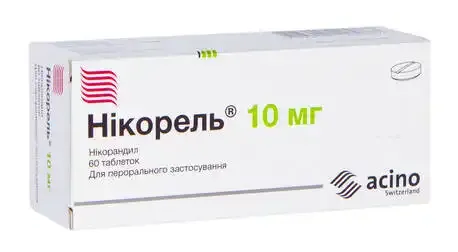
Table of Contents
INSTRUCTIONS FOR MEDICAL USE OF THE MEDICINAL PRODUCT NIKOREL® (NICOREL)
Composition:
Active substance: nicorandil;
1 tablet contains 10 mg or 20 mg of nicorandil;
Excipients: cetyl alcohol, mannitol (E 421), sodium croscarmellose, povidone, sodium stearyl fumarate.
Pharmaceutical form. Tablets.
Main physicochemical properties:
tablets of 10 mg: round tablets of white or almost white color, with a score on one side and engraved "10" on the other side;
tablets of 20 mg: round tablets of white or almost white color, with a score on one side and engraved "20" on the other side.
Tablets of 10 mg and 20 mg can be divided into two equal halves.
Pharmacotherapeutic group.
Other vasodilators used in heart diseases. ATC code C01D X16.
Pharmacological Properties
Pharmacodynamics
Mechanism of action
Nicorandil, a nicotinamide ester, is a vasodilating agent with a dual mechanism of action, inducing relaxation of both venous and arterial smooth muscle.
It has the ability to open potassium channels. As a result, hyperpolarization of vascular cell membranes occurs, leading to relaxation of arterial smooth muscle, arterial dilation, reduction of afterload, and lowering of arterial blood pressure. In addition, activation of potassium channels exerts a cardioprotective effect through preconditioning and adaptation of cardiomyocytes to ischemia.
Moreover, due to the nitrate moiety of the nicorandil molecule, it relaxes vascular smooth muscle, particularly in veins, by increasing intracellular cyclic guanosine monophosphate (cGMP). This leads to blood pooling in capacitance vessels and reduction of preload.
Pharmacodynamic effects
Nicorandil has been shown to directly affect coronary arteries. It acts on both normal and stenotic vascular segments, thus avoiding the "steal" phenomenon. Additionally, reduction of end-diastolic pressure and myocardial wall tension decreases the extravascular component of vascular resistance. Ultimately, this improves myocardial oxygen balance and enhances blood flow in post-stenotic myocardial areas.
Furthermore, both in vitro and in vivo studies have demonstrated that nicorandil has a spasmolytic effect, relieving coronary spasm induced by methacholine and noradrenaline.
Nicorandil does not have a direct effect on myocardial contractile activity.
Clinical efficacy and safety
The IONA study and a randomized, double-blind, placebo-controlled trial included 5126 patients aged 45 years and older with chronic stable angina who were receiving standard antianginal therapy and had a high risk of cardiovascular disease defined by the following criteria: 1) previous myocardial infarction, or 2) coronary artery bypass grafting, or 3) angiographically confirmed coronary artery disease or a positive exercise stress test within the past two years, plus one of the following: left ventricular hypertrophy on ECG, left ventricular ejection fraction ≤ 45%, end-diastolic dimension > 55 mm, age ≥ 65 years, diabetes mellitus, arterial hypertension, peripheral vascular disease, or cerebrovascular disease.
Patients receiving sulfonylureas were excluded from the study, as it was considered that treatment might not be beneficial in these patients (sulfonylureas have the ability to close potassium channels and thus may act as antagonists to certain effects of nicorandil). Follow-up for endpoint analysis lasted from 12 to 36 months, with a mean of 1.6 years.
The primary combined endpoint (death due to ischemic heart disease (IHD), non-fatal myocardial infarction, or unplanned hospitalization for chest pain) occurred in 337 patients (13.1%) receiving 20 mg of nicorandil twice daily, compared to 389 patients (15.5%) receiving placebo (risk ratio 0.83; 95% confidence interval (CI) 0.72–0.97; p = 0.014).
Pharmacokinetics
Nicorandil pharmacokinetics are linear over the dose range of 5 to 40 mg.
Absorption
After oral administration, nicorandil is rapidly and completely absorbed from the gastrointestinal tract, regardless of food intake. Absolute bioavailability is approximately 75%. There is no significant first-pass metabolism. Maximum plasma concentration (Cmax) is reached within approximately 30–60 minutes. Plasma concentration and area under the pharmacokinetic curve (AUC) show linear dose proportionality.
With repeated oral dosing (twice daily), steady state is rapidly achieved (within 4–5 days). At steady state, the accumulation ratio (based on AUC) is approximately 2 for the 20 mg tablet and 1.7 for the 10 mg tablet given twice daily.
Distribution
Drug distribution throughout the body remains stable within the therapeutic range, independent of dose.
The volume of distribution of nicorandil after intravenous administration is 1.04 L/kg body weight. Nicorandil is only minimally bound to human plasma proteins (the bound fraction is approximately 25%).
Biological transformation
Nicorandil is primarily metabolized in the liver via denitration, forming several metabolites that lack cardiovascular activity. In plasma, unchanged nicorandil accounts for 45.5% of the radioactive AUC, and the alcohol metabolite, N-(2-hydroxyethyl)-nicotinamide, accounts for 40.5%. Other metabolites account for 20% of the radioactive AUC.
Nicorandil is primarily excreted in urine as metabolites, with less than 1% of the administered dose excreted unchanged in human urine (0–48 hours). The most prevalent metabolite is N-(2-hydroxyethyl)-nicotinamide (approximately 8.9% of the administered dose within 48 hours), followed by nicotinic acid (5.7%), nicotinamide (1.34%), N-methyl-nicotinamide (0.61%), and nicotinic acid (0.40%). These metabolites represent the main products of nicorandil transformation.
Elimination
Plasma concentration decline occurs in two phases:
- Rapid elimination phase: half-life is approximately 2 hours (this differs from the reference product; the half-life of the reference product is approximately 1 hour);
- Rapid elimination phase: half-life is approximately 1 hour, accounting for 96% of plasma exposure;
- Slow elimination phase: begins approximately 12 hours after oral administration of a 20 mg dose twice daily.
After intravenous administration of 4–5 mg (5-minute infusion), total clearance was approximately 40–55 L/hour.
Nicorandil and its metabolites are primarily excreted via the kidneys; fecal excretion accounts for a very minor portion.
Special patient groups
No clinically significant changes in the pharmacokinetic profile of nicorandil have been observed in at-risk groups (elderly individuals, patients with hepatic disease, and patients with chronic renal insufficiency).
Pharmacokinetic interactions
The metabolism of nicorandil is not significantly altered by cimetidine or rifampicin, an inhibitor and inducer of hepatic microsomal oxidases, respectively.
Clinical characteristics.
Indications.
Nicorandil is indicated in adult patients for symptomatic treatment of stable angina pectoris when first-line antianginal medications (such as beta-blockers and/or calcium antagonists) are insufficiently effective or poorly tolerated, or when contraindications to their use exist.
Contraindications.
- Hypersensitivity to nicorandil or to any of the excipients of the medicinal product.
- Patients with shock (including cardiogenic shock), severe arterial hypotension, or left ventricular dysfunction with low filling pressure or cardiac decompensation.
- Concomitant use of phosphodiesterase-5 inhibitors, as this may lead to severe drop in blood pressure (see section "Interaction with other medicinal products and other forms of interaction").
- Concomitant use of soluble guanylate cyclase stimulators (e.g., riociguat), as this may lead to severe drop in blood pressure (see section "Interaction with other medicinal products and other forms of interaction").
- Hypovolemia.
- Acute pulmonary edema.
Interaction with other medicinal products and other forms of interaction.
Concomitant administration of nicorandil and phosphodiesterase-5 inhibitors, such as sildenafil, tadalafil, vardenafil, is contraindicated, as it may lead to a significant decrease in blood pressure (synergistic effect).
Concomitant use of soluble guanylate cyclase stimulators (such as riociguat) is contraindicated, as it may lead to a significant decrease in blood pressure.
Therapeutic doses of nicorandil may reduce blood pressure in patients with arterial hypotension.
When nicorandil is used concomitantly with antihypertensive agents or other medicinal products that lower blood pressure (e.g., vasodilators, tricyclic antidepressants, alcohol), the blood pressure-lowering effect may be enhanced.
Dapoxetine should be prescribed with caution in patients taking nicorandil due to a possible reduction in orthostatic tolerance.
There have been reports of gastrointestinal perforations associated with concomitant use of nicorandil and corticosteroids. Concurrent use should be considered with caution if necessary (see section "Special precautions for use").
In patients who are concurrently taking nonsteroidal anti-inflammatory drugs (NSAIDs), including acetylsalicylic acid, both at prophylactic doses for prevention of cardiovascular diseases and at doses intended to achieve anti-inflammatory effect, there is an increased risk of severe complications such as gastrointestinal ulcers, perforations, and bleeding (see section "Special precautions for use").
Concomitant use of nicorandil with other medicinal products that may increase potassium levels is recommended to be used with caution (see sections "Special precautions for use" and "Undesirable effects").
Cimetidine (a CYP inhibitor) or rifampicin (a CYP3A4 inducer) do not have a significant effect on nicorandil metabolism. Nicorandil does not affect the pharmacodynamics of acenocoumarol.
Special precautions for use.
Ulcer formation
Gastrointestinal ulcers, skin ulcers, and mucosal ulcers have been reported during nicorandil therapy (see section "Adverse reactions").
Gastrointestinal ulceration
Gastrointestinal ulcers may develop in some patients taking nicorandil. These ulcers are difficult to treat and most resolve only after discontinuation of nicorandil. If ulcers develop, nicorandil should be discontinued (see section "Adverse reactions"). Physicians should be aware of the importance of timely diagnosis of nicorandil-induced ulcers and the necessity of prompt discontinuation of nicorandil therapy if such ulcers occur. Based on available data, the time interval between initiation of nicorandil therapy and onset of ulcer formation ranges from shortly after starting treatment to several years.
Gastrointestinal bleeding due to formation of gastrointestinal ulcers has been reported with nicorandil use. The risk of severe complications, including gastrointestinal hemorrhage, is increased in patients who are concurrently taking acetylsalicylic acid or NSAIDs. Therefore, acetylsalicylic acid or NSAIDs should be prescribed concomitantly with nicorandil with caution (see section "Interaction with other medicinal products and other forms of interaction").
Gastrointestinal ulcers may progress to perforation, fistula formation, or abscesses. Patients with diverticular disease have an increased risk of intestinal fistula or perforation during nicorandil therapy.
Cases of gastrointestinal perforation have been reported with concomitant use of nicorandil and corticosteroids. Therefore, these agents should be used together with caution.
Ocular ulcers
Conjunctivitis, conjunctival ulcers, and corneal ulcers have been reported during nicorandil therapy. Therefore, patients should be informed about signs and symptoms of corneal ulceration before initiating treatment and should be closely monitored. If any ulcer(s) develop, nicorandil therapy should be discontinued (see section "Adverse reactions").
Reduction in blood pressure
Nicorandil should be used with caution in combination with other medicinal products that have a blood pressure-lowering effect (see sections "Interaction with other medicinal products and other forms of interaction" and "Adverse reactions").
Heart failure
Due to lack of data, nicorandil should be used with caution in patients with heart failure, NYHA class III or IV.
Hyperkalemia
Serious cases of hyperkalemia have been reported very rarely during nicorandil therapy. Nicorandil should be used with caution in combination with other medicinal products that may increase potassium levels, particularly in patients with moderate to severe renal impairment (see sections "Interaction with other medicinal products and other forms of interaction" and "Adverse reactions").
Children
Nicorandil tablets are not recommended for use in children, as safety and efficacy have not been established in this patient group.
Glucose-6-phosphate dehydrogenase deficiency
Nicorandil tablets should be used with caution in patients with glucose-6-phosphate dehydrogenase deficiency. Nicorandil acts partially through the organic nitrate component of the molecule. Metabolism of organic nitrates may lead to nitrite formation, which may cause methemoglobinemia in patients with glucose-6-phosphate dehydrogenase deficiency.
This medicinal product contains less than 1 mmol (23 mg) of sodium per dose, i.e., essentially "sodium-free".
Use during pregnancy or breastfeeding.
Pregnancy. There are no or limited data on the use of nicorandil in pregnant women. Animal studies have not shown any direct or indirect adverse effects related to reproductive toxicity.
Nicorandil should be avoided during pregnancy (as a precautionary measure).
Breastfeeding. Animal studies have shown that nicorandil passes into breast milk in small amounts. It is unknown whether nicorandil is excreted in human breast milk; therefore, it is not recommended during breastfeeding.
Fertility. There are insufficient data on the effect of nicorandil on fertility to assess the risk in humans.
Ability to affect reaction speed when driving or operating machinery.
Nicorandil may affect the ability to drive and operate machinery. The blood pressure-lowering effect, as well as dizziness and weakness caused by nicorandil, may impair the ability to drive or operate machinery. This effect may be enhanced when nicorandil is taken concomitantly with alcohol or other drugs that lower blood pressure (e.g., vasodilators, tricyclic antidepressants) (see section "Interaction with other medicinal products and other forms of interaction"). Therefore, patients should refrain from driving or operating machinery if these symptoms occur.
Administration and Dosage
Dosing
The usual therapeutic dose is 10–20 mg twice daily. The usual initial dose is 10 mg twice daily, preferably in the morning and evening. If necessary, the dose may be increased to 40 mg twice daily according to individual patient needs, response, and tolerability. For patients prone to headaches, a lower initial dose of 5 mg twice daily may be used.
Elderly Patients
There are no specific dosage requirements for elderly patients. However, as with all medicinal products, it is recommended to use the lowest effective dose.
Patients with Hepatic and/or Renal Impairment
There are no specific dosage recommendations for patients with hepatic and/or renal impairment.
Administration
Nicorandil tablets are administered orally.
The tablets should be taken in the morning and evening with a glass of water. The tablets should not be crushed or chewed.
The tablet may be divided into two halves.
The administration of the drug is not affected by food intake.
Children
Nicorandil tablets are not recommended for use in pediatric patients, as the safety and efficacy in this population have not been established.
Overdose
Symptoms
In acute overdose, likely symptoms include peripheral vasodilation leading to hypotension and reflex tachycardia.
Treatment
Cardiac monitoring and general supportive measures are recommended. If these are insufficient, expansion of circulating plasma volume with blood substitutes is recommended. In life-threatening situations, the use of vasoconstrictor agents should be considered.
Adverse Reactions
The most commonly reported adverse reaction in clinical trials was headache, occurring in more than 30% of patients, particularly during the first days of treatment, and was the main reason for drug discontinuation in most cases in the studies.
Gradual dose titration can reduce the frequency of headache (see section "Dosage and Administration").
Additionally, serious adverse reactions have been reported during post-marketing surveillance with nicorandil, including ulcers and their complications (see section "Special Warnings and Precautions for Use").
Adverse reactions observed during nicorandil use are listed in the table below by organ system class and frequency. Adverse reactions are categorized by frequency as follows: very common (≥1/10); common (≥1/100 to <1/10); uncommon (≥1/1,000 to <1/100); rare (≥1/10,000 to <1/1,000); very rare (<1/10,000); frequency not known (cannot be estimated from available data).
Within each group, adverse reactions are listed in order of decreasing severity.
Infections and infestations:
Common – abscess (skin abscess)* (see section "Special Warnings and Precautions for Use");
Uncommon – abscess (genital, anal, or fistulae of other gastrointestinal sites)* (see section "Special Warnings and Precautions for Use").
Metabolism and nutrition disorders:
Very rare – hyperkalemia (see sections "Interaction with Other Medicinal Products and Other Forms of Interaction" and "Special Warnings and Precautions for Use").
Nervous system disorders:
Very common – headache;
Common – dizziness;
Frequency not known – paralysis of the III cranial nerve, paralysis of the VI cranial nerve (often associated with headache).
Eye disorders:
Very rare – corneal ulcers*, conjunctival ulcers, conjunctivitis* (see section "Special Warnings and Precautions for Use");
Frequency not known – diplopia, ophthalmoplegia (often associated with headache).
Cardiac disorders:
Common – increased heart rate.
Vascular disorders:
Common – skin vasodilation with flushing;
Uncommon – decreased blood pressure (see section "Special Warnings and Precautions for Use").
Gastrointestinal disorders:
Common – diverticulitis*, gastrointestinal hemorrhage*, nausea, vomiting, gastrointestinal ulceration (stomatitis, aphthae, oral ulcers, tongue ulcers, small intestinal ulcers, large intestinal ulcers, anal ulcers)* (see below and section "Special Warnings and Precautions for Use");
Uncommon – gastrointestinal perforation*, fistula (anal, genital, gastrointestinal, and skin fistula)* (see section "Special Warnings and Precautions for Use").
Hepatobiliary disorders:
Very rare – liver function abnormalities, such as hepatitis, cholestasis, or jaundice.
Skin and subcutaneous tissue disorders:
Common – skin and mucosal ulcers (mainly perianal ulcers, genital ulcers, and parastomal ulcers) (see section "Special Warnings and Precautions for Use");
Rare – rash, pruritus;
Very rare – angioedema.
Musculoskeletal and connective tissue disorders:
Rare – myalgia.
General disorders and administration site conditions:
Common – feeling of weakness.
*Frequency was calculated based on results from a post-authorization retrospective cohort safety study conducted using the UK database (CPRD). The stated frequency represents the incidence of adverse reactions among the UK population.
Description of selected adverse reactions
Gastrointestinal ulceration
Complications of gastrointestinal ulcers have been reported, including perforation, fistula formation, or abscess development, which sometimes led to gastrointestinal bleeding and weight loss (see section "Special Warnings and Precautions for Use").
Additional information
Furthermore, in the IONA study ("Impact of Nicorandil on Angina"), where nicorandil was added to standard therapy in patients with stable angina and high cardiovascular risk, the following adverse reactions were observed with varying frequency:
Gastrointestinal disorders:
Common – rectal bleeding;
Uncommon – oral ulcers;
Very rare – abdominal pain.
Skin and subcutaneous tissue disorders:
Uncommon – angioedema.
Musculoskeletal and connective tissue disorders:
Uncommon – myalgia.
Reporting suspected adverse reactions
Reporting suspected adverse reactions after a medicinal product is authorized is important. It allows continued monitoring of the benefit-risk balance of the medicinal product. Healthcare professionals and patients, as well as their legal representatives, are encouraged to report all suspected adverse reactions and lack of efficacy through the Automated Pharmacovigilance Information System at: https://aisf.dec.gov.ua.
Shelf life. 18 months.
Storage conditions. Store in the original packaging, protected from moisture, in a place inaccessible to children, at a temperature not exceeding 25°C.
Packaging. 10 tablets per blister; 3 or 6 blisters per cardboard box.
Prescription status. Prescription only.
Manufacturer. Dexcel Ltd.
Manufacturer's address and place of business.
1 Dexcel St., Or Akiva, 3060000, Israel
Marketing Authorization Holder. Dexcel Pharma Technologies Ltd., Israel
In case of adverse reactions or questions regarding the safety and efficacy of this medicinal product, please contact the Pharmacovigilance Department of LLC "ASINO UKRAINE" at: 8 Vatslava Havela Boulevard, Kyiv, 03124, Ukraine; tel./fax: +38 044 281 2333.