Sodium iodide na131i polatom
Ukraine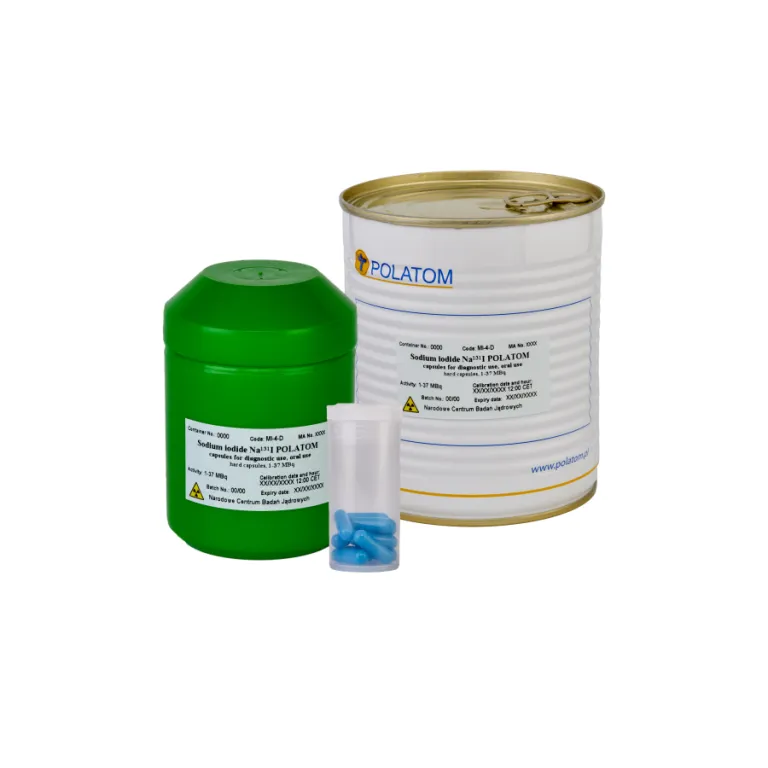
Table of Contents
INSTRUCTIONS FOR MEDICAL USE OF THE MEDICINAL PRODUCT SODIUM IODIDE Na131I POLATOM (Sodium Iodide Na131I POLATOM)
Composition:
Active substance: sodium iodide-131;
1 capsule contains sodium iodide-131 with activity of: 1000 MBq, 2000 MBq, 4000 MBq, 5500 MBq;
Excipients: anhydrous sodium carbonate; sodium hydrocarbonate; sodium thiosulfate pentahydrate; sodium hydrogen phosphate dihydrate; hard gelatin capsule.
Pharmaceutical form. Hard capsules.
Main physicochemical properties: absence of mechanical damage.
Radioactive isotope iodine [131I] is obtained from tellurium oxide by neutron irradiation in a nuclear reactor or from uranium fission products. The half-life of iodine-131 is 8.02 days. This isotope decays into stable xenon-131, emitting gamma radiation with energies of 365 keV (81.7%), 637 keV (7.2%), and 284 keV (6.1%), as well as beta radiation with a maximum energy of 606 keV.
Pharmacotherapeutic group.
Therapeutic radiopharmaceutical preparation. Compounds containing radioactive iodine (131I). ATC code V10X A01.
Pharmacological properties.
Pharmacodynamics. Sodium iodide Na131I POLATOM, at doses used for therapeutic purposes, produces no pharmacological effect.
Pharmacokinetics. After oral administration, sodium iodide Na131I POLATOM is rapidly absorbed in the upper gastrointestinal tract (90% within 60 minutes). The pharmacokinetic properties of radioactive iodine are similar to those of stable iodine. After entering the bloodstream, iodides are distributed outside the thyroid gland. They are primarily taken up by the thyroid gland or excreted by the kidneys. Sodium iodide Na131I POLATOM accumulates in small amounts in the salivary glands, gastric mucosa, choroid plexuses of the brain, and also accumulates in the placenta and is secreted into human breast milk. The effective half-life of radioactive iodine in blood plasma is approximately 12 hours, whereas for iodine accumulated in the thyroid gland, this period is about 6 days. Thus, after administration of sodium iodide Na131I POLATOM, the effective half-life of about 40% of the activity is 0.4 days, and that of the remaining 60% is 8 days. Approximately 37–75% of the activity is excreted in urine, about 10% in feces, and a small amount is also eliminated through sweat.
Sodium iodide Na131I POLATOM accumulates in the thyroid gland via active transport across the gland's cell membrane. In the thyroid gland, iodide is oxidized to iodine, followed by incorporation of iodine into tyrosine amino acid residues and subsequent binding to thyroglobulin. Under normal conditions, approximately 2% of circulating radioactive iodine is taken up by the thyroid gland each hour.
Clinical characteristics.
Indications.
For the treatment of nontoxic nodular goiter, hyperthyroidism in Graves' disease, solitary nodule, and toxic multinodular goiter. Used for ablation of residual thyroid tissue after surgical interventions in differentiated thyroid cancers and for treatment of iodine-accumulating metastases.
Contraindications.
Sodium iodide Na131I POLATOM must not be used:
- in patients with hypersensitivity to the active substance or to any of the excipients;
- in pregnant women or women with suspected pregnancy, or when pregnancy has not been excluded;
- in breastfeeding women;
- in patients with dysphagia, esophageal stricture, esophageal stenosis, esophageal diverticulum, active gastritis, gastric erosion, or peptic ulcer;
- in patients with suspected reduced gastrointestinal motility.
Special safety precautions.
When handling the medicinal product Sodium iodide Na131I POLATOM, as with other radioactive medicinal products, caution must be exercised and appropriate safety measures taken to minimize radiation exposure to clinical staff and patients to the lowest possible level.
Handling of radiopharmaceuticals is permitted only for personnel authorized to work with radiopharmaceuticals. Storage, administration, transportation, and waste disposal of radiopharmaceuticals must be carried out in accordance with national licensing regulations.
Dosimetry
Iodine-131 decays into unstable xenon and emits beta radiation with a maximum energy of 606 keV and gamma radiation with an energy of 365 keV. Iodine-131 has a half-life of 8.02 days.
The absorbed radiation dose in the patient depends on iodine uptake by the thyroid gland.
The dosimetry model established by the ICRP (International Commission on Radiological Protection) for calculating absorbed dose applies to intravenous administration.
Since absorption of radioactive iodine is rapid and complete, this calculation is also applicable for oral administration of iodine. However, additional consideration must be given to the amount of radiation absorbed by the stomach wall, apart from the dose excreted via gastric juice and salivary glands. Assuming an average residence time of iodine-131 in the stomach of 0.5 hours, the absorbed dose in the stomach after oral administration increases by approximately 30% compared to intravenous administration. Changes in the absorbed dose in other organs and tissues are minimal. In cases where the thyroid gland is blocked, no iodine uptake occurs in other organs and tissues. A uniform distribution is assumed, with an effective elimination half-life of 8 hours.
When 55% of iodine-131 is taken up by the thyroid gland through the circulation of organic iodine and recycled iodide, the radiation dose to the gastrointestinal tract and urinary bladder increases.
Radiation dose received by organs not targeted by treatment depends on pathophysiological changes caused by thyroid diseases. It is recommended, as part of the risk-benefit assessment, to evaluate the effective dose and organ-specific doses prior to initiation of therapy. Thus, the therapeutic activity dose can be adjusted according to thyroid gland mass, biological half-life, and iodine utilization factor, taking into account the patient's physiological condition (including iodine deficiency) and disease-related changes.
Table 1
Radiation dosimetry according to ICRP Publication 53 (International Commission on Radiological Protection), radiation doses to patients following administration of the radiopharmaceutical.
| Organ |
Absorbed dose per unit of activity administered to the patient [mGy/MBq] (with blocked thyroid gland, thyroid uptake 0%) |
||||||||
| Adults |
15 years |
10 years |
5 years |
1 year |
|||||
| Adrenal glands Urinary bladder wall Bone surface Breast Digestive system: Stomach wall Small intestine Large intestine – upper section Large intestine – lower section |
0.037 0.610 0.032 0.033 0.034 0.038 0.037 0.043 |
0.042 0.750 0.038 0.033 0.040 0.047 0.045 0.052 |
0.067 1.100 0.061 0.052 0.064 0.075 0.070 0.082 |
0.110 1.800 0.097 0.085 0.100 0.120 0.120 0.130 |
0.200 3.400 0.190 0.170 0.190 0.220 0.210 0.230 |
||||
| Kidneys Liver Lungs Ovaries Pancreas |
0.065 0.033 0.031 0.042 0.035 |
0.080 0.040 0.038 0.054 0.043 |
0.120 0.065 0.060 0.084 0.069 |
0.170 0.100 0.096 0.130 0.110 |
0.310 0.200 0.190 0.240 0.210 |
||||
| Bone marrow Spleen Testes Thyroid gland Uterus |
0.035 0.034 0.037 0.029 0.054 |
0.042 0.040 0.045 0.038 0.067 |
0.065 0.065 0.075 0.063 0.110 |
0.100 0.100 0.120 0.100 0.170 |
0.190 0.200 0.230 0.200 0.300 |
||||
| Other organs |
0.032 |
0.039 |
0.062 |
0.100 |
0.190 |
||||
| Effective dose (mSv/MBq) |
0.072 |
0.088 |
0.140 |
0.210 |
0.400 |
||||
| Dose received by the urinary bladder wall accounts for up to 50.8% of the effective dose. For sodium iodide [131I], the effective dose in adults receiving 5.55 GBq with 0% thyroid uptake is 399.6 mSv. |
|||||||||
| Partial blockade Effective dose (mSv/MBq) with low iodine uptake |
|||||||||
| Uptake 0.5% |
0.300 |
0.450 |
0.690 |
1.500 |
2.800 |
||||
| Absorption 1.0 % |
0.520 |
0.810 |
1.200 |
2.700 |
5.300 |
| Absorption 2.0 % |
0.970 |
1.500 |
2.400 |
5.300 |
10.00 |
Table 2
| Organ |
Absorbed dose per unit of activity administered to the patient [mGy/MBq] |
||||
| Adults |
15 years |
10 years |
5 years |
1 year |
|
| Adrenal glands Urinary bladder walls Bone surface Breast Gastrointestinal tract: Stomach wall Small intestine Upper large intestine Lower large intestine |
0.036 0.520 0.047 0.043 0.460 0.280 0.059 0.042 |
0.043 0.640 0.067 0.043 0.580 0.350 0.065 0.053 |
0.071 0.980 0.094 0.081 0.840 0.620 0.100 0.082 |
0.110 1.500 0.140 0.130 1.500 1.000 0.160 0.130 |
0.220 2.900 0.240 0.250 2.900 2.000 0.280 0.230 |
| Kidneys Liver Lungs Ovaries Pancreas |
0.060 0.032 0.053 0.043 0.052 |
0.075 0.041 0.071 0.059 0.062 |
0.110 0.068 0.120 0.092 0.100 |
0.170 0.110 0.190 0.140 0.150 |
0.290 0.220 0.330 0.260 0.270 |
| Bone marrow Spleen Testes Thyroid gland Uterus |
0.054 0.042 0.028 210.0 0.054 |
0.074 0.051 0.035 340.0 0.068 |
0.099 0.081 0.058 510.0 0.110 |
0.140 0.120 0.094 1100.0 0.170 |
0.240 0.230 0.180 2000.0 0.310 |
| Other organs |
0.065 |
0.089 |
0.140 |
0.220 |
0.400 |
| Effective dose (mSv/MBq) |
6.600 |
10.00 |
15.00 |
34.00 |
62.00 |
| For sodium iodide [131I], the effective dose in adults receiving 5.55 GBq with 15 % thyroid uptake is 36.630 mSv. |
|||||
Table 3
| Organ |
Absorbed dose per unit of activity administered to the patient (mGy/MBq) |
||||
| Adults 4.2E-02 4.0E-01 7.6E-02 6.7E-02 4.6E-01 2.8E-01 5.8E-02 4.0E-02 |
15 years 5.0E-02 5.0E-01 1.2E-01 6.6E-02 5.9E-01 3.5E-01 6.5E-02 5.1E-02 |
10 years 8.7E-02 7.6E-01 1.6E-01 1.3E-01 8.5E-01 6.2E-01 1.0E-01 8.0E-02 |
5 years 1.4E-01 1.2E+00 2.3E-01 2.2E-01 1.5E+00 1.0E+00 1.7E-01 1.3E-01 |
1 year 2.8E-01 2.3E+00 3.5E-01 4.0E-01 3.0E+00 2.0E+00 3.0E-01 2.4E-01 |
|
| Adrenal glands Urinary bladder wall Bone surface Breast |
0.042 0.400 0.076 0.067 |
0.050 0.500 0.120 0.066 |
0.087 0.760 0.160 0.130 |
0.140 1.200 0.230 0.220 |
0.280 2.300 0.350 0.400 |
| Digestive system: Stomach wall Small intestine Large intestine – upper section Large intestine – lower section |
0.460 0.280 0.058 0.040 |
0.590 0.350 0.065 0.051 |
0.850 0.650 0.100 0.080 |
1.500 1.000 0.170 0.130 |
3.000 2.000 0.300 0.240 |
| Kidneys Liver Lungs Ovaries Pancreas |
0.056 0.037 0.090 0.042 0.054 |
0.072 0.049 0.120 0.057 0.069 |
0.110 0.082 0.210 0.090 0.110 |
0.170 0.140 0.330 0.140 0.180 |
0.290 0.270 0.560 0.270 0.320 |
| Bone marrow Spleen Testes Thyroid gland Uterus |
0.086 0.046 0.026 500.0 0.050 |
0.120 0.059 0.032 790.0 0.063 |
0.160 0.096 0.054 1200.0 0.100 |
0.220 0.150 0.089 2600.0 0.160 |
0.350 0.280 0.180 4700.0 0.300 |
| Other organs |
0.110 |
0.160 |
0.260 |
0.410 |
0.710 |
| Effective dose (mSv/MBq) |
15.00 |
24.00 |
36.00 |
78.00 |
140.00 |
| For sodium iodide [131I], the effective dose in adults receiving 5.55 GBq with 35% thyroid uptake is 83.25 mSv. |
|||||
Table 4
| Organ |
Absorbed dose per unit of activity administered to the patient (mGy/MBq) |
||||
| Adults |
15 years |
10 years |
5 years |
1 year |
|
| Adrenal glands Urinary bladder wall Bone surface Breast Lower large intestine Upper large intestine Small intestine Stomach wall |
0.049 0.290 0.110 0.091 0.039 0.058 0.280 0.460 |
0.058 0.360 0.170 0.089 0.049 0.067 0.350 0.590 |
0.110 0.540 0.220 0.190 0.078 0.110 0.620 0.860 |
0.170 0.850 0.320 0.310 0.130 0.180 1.000 1.500 |
0.340 1.600 0.480 0.560 0.240 0.320 2.000 3.000 |
| Kidneys Liver Lungs Ovaries Pancreas |
0.051 0.043 0.130 0.041 0.058 |
0.068 0.058 0.180 0.056 0.076 |
0.100 0.097 0.300 0.090 0.130 |
0.170 0.170 0.480 0.150 0.210 |
0.290 0.330 0.800 0.270 0.380 |
| Bone marrow Spleen Testes Thyroid gland Uterus |
0.120 0.051 0.026 790.0 0.046 |
0.180 0.068 0.031 1200.0 0.060 |
0.220 0.110 0.052 1900.0 0.099 |
0.290 0.170 0.087 4100.0 0.160 |
0.460 0.330 0.170 7400.0 0.300 |
| Other organs |
0.160 |
0.240 |
0.370 |
0.590 |
1.000 |
| Effective dose (mSv/MBq) |
24.00 |
37.00 |
56.00 |
120.00 |
220.00 |
| For sodium iodide [131I], the effective dose in adults receiving 5.55 GBq with 55% thyroid uptake is 133.2 mSv. |
|||||
Interaction with other medicinal products and other forms of interaction.
Many substances affect the mechanisms of iodide binding to proteins, the pharmacokinetics of the drug, or alter the effects of radioactive iodine. This underscores the necessity of reviewing all medications used by the patient and making a decision regarding the possible discontinuation of other drugs prior to administration of the medicinal product Sodium Iodide Na131I POLATOM (see Table 5).
Table 5
| Active substances |
Period during which administration of the specified substances must be discontinued prior to administration of sodium iodide (131I) |
| Antithyroid drugs (e.g., carbimazole, methimazole, propylthiouracil), perchlorates |
1 week before the start of treatment and for several days after administration |
| Salicylates, corticosteroids, sodium nitroprusside, sodium sulfobromophthalein, anticoagulants, antihistamines, antiparasitic drugs, penicillins, sulfonamides, tolbutamide, thiopental |
1 week |
| Phenylbutazone |
1–2 weeks |
| Expectorant medicinal products and iodine-containing vitamins |
Approximately 2 weeks |
| Thyroid hormones |
2–6 weeks |
| Benzodiazepines, lithium |
Approximately 4 weeks |
| Amiodarone* |
3–6 months |
| Topical medicinal products containing iodine compounds |
1–9 months |
| Iodine-containing contrast medicinal products:
|
6–8 weeks > 6 months |
- Due to the long half-life of amiodarone in the body, the time for iodine uptake by the thyroid gland may be reduced for several months.
Special precautions for use.
Potential for hypersensitivity or anaphylactic reactions
In the event of hypersensitivity or anaphylactic reactions, administration of the medicinal product should be discontinued immediately and, if necessary, intravenous symptomatic therapy should be initiated. To ensure immediate availability of emergency measures, appropriate medications and equipment, such as an endotracheal tube and a mechanical ventilator, should be readily accessible.
Justification of individual benefit/risk
The individual benefit/risk ratio should be considered when prescribing doses. The lowest effective dose sufficient to achieve the desired therapeutic effect should be used.
The medicinal product Sodium Iodide Na131I POLATOM should be used with caution in patients:
- with uncontrolled hyperthyroidism;
- with swallowing difficulties or gastrointestinal disorders causing regurgitation or vomiting (due to the risk of improper administration and radioactive contamination, consideration should be given to using iodine-131 in a different pharmaceutical form other than capsules or an alternative route of administration).
Due to the risk of environmental radioactive contamination, caution should be exercised when treating patients with radioactive iodine who do not comply with medical staff recommendations or who suffer from urinary incontinence.
Some patients receiving therapeutic doses of iodine-131 activity may require hospitalization due to the necessity of adhering to radiation protection principles. The need for hospitalization is determined by treatment protocols.
There is limited evidence of increased incidence of cancer, leukemia, or mutations in patients after iodine-131 treatment for benign thyroid disorders, despite its widespread use. In a study involving patients treated for malignant thyroid disease who received sodium iodide (131I) doses exceeding 3700 MBq, an increased incidence of bladder cancer was reported. Another study indicated a slight increase in leukemia among patients who received very high doses. Therefore, cumulative total doses exceeding 26,000 MBq are not recommended.
Renal impairment
A careful benefit/risk assessment is required for such patients, as there may be increased radiation exposure. Dose adjustments may be necessary for these patients.
Children
Indications should be carefully evaluated, as the effective dose is higher than in adults. When treating children, greater tissue sensitivity and longer life expectancy should be taken into account. Risks should be weighed against those of other possible treatment options.
Individuals who received radiation therapy to the thyroid gland during childhood should undergo annual follow-up examinations.
Male gonadal function
Sperm banking may be considered to compensate for potential reversible impairment of gonadal function in males due to high therapeutic doses of radioiodine in patients with extensive disease.
Patients with upper gastrointestinal tract disorders
Special precautions are required for these patients. The capsule should be swallowed whole with sufficient liquid to ensure its free passage into the stomach and small intestine. Concomitant use of H2-receptor antagonists or proton pump inhibitors is recommended.
When high doses of the medicinal product are administered, for example, for the treatment of thyroid cancer, the risk of bladder irradiation may be reduced by encouraging the patient to drink large amounts of fluid, leading to frequent bladder emptying.
In patients with active Graves’ ophthalmopathy (especially smokers), administration of iodine-131 may worsen ophthalmopathy. In such cases, consideration should be given to prescribing glucocorticoids during iodine-131 therapy or using alternative treatment methods for thyroid hyperthyroidism.
Patient preparation
Patients should be encouraged to increase oral fluid intake and to urinate as frequently as possible to reduce bladder irradiation, especially after high-activity administration, such as for thyroid cancer treatment. Patients with bladder dysfunction should be catheterized after administration of high-activity iodine-131.
Soft laxatives (but not stool softeners that do not stimulate intestinal motility) may be required for patients with bowel movements less than once daily to reduce radiation exposure to the large intestine.
To prevent sialadenitis, which may occur after administration of high doses of iodine-131, patients should be advised before therapy to consume sweets or beverages containing citric acid (lemon juice, vitamin C) to stimulate salivary secretion. Additional pharmacological protective agents may also be used.
Prior to treatment with Sodium Iodide Na131I POLATOM, the patient should follow a low-iodine diet, which may enhance iodine uptake by the thyroid gland. Prior to initiating thyroid cancer treatment with Sodium Iodide Na131I POLATOM, thyroid hormone therapy may be temporarily discontinued to enhance uptake of the medicinal product by cancer cells. Recombinant human TSH may also be administered for this purpose.
During hyperthyroidism treatment with Sodium Iodide Na131I POLATOM, antithyroid medications should be discontinued.
It is recommended that the patient remain fasting for approximately 2 hours before and after capsule ingestion to optimize drug accumulation.
After administration of the medicinal product
Contraception is recommended for at least 4 months following treatment with Sodium Iodide Na131I POLATOM.
After administration of therapeutic doses of Sodium Iodide Na131I POLATOM, close contact with other individuals, especially young children and pregnant women, should be avoided for the period specified in applicable regulations.
In case of vomiting, the risk of contamination should be considered.
Patients undergoing thyroid therapy should be re-evaluated at appropriate intervals.
Special warnings
The medicinal product contains between 80 and 96 mg of sodium per capsule. This should be taken into account for patients on a low-sodium diet.
Patients with hypersensitivity to gelatin and its metabolites are advised to use sodium iodide [131I] solution.
Use during pregnancy or breastfeeding.
Women of reproductive potential
Pregnancy must be excluded before administering the medicinal product to women of reproductive age. A woman who misses her expected menstrual period should be considered pregnant until pregnancy is ruled out. In cases of uncertainty regarding possible pregnancy (e.g., missed or irregular menstruation), alternative therapeutic methods not involving ionizing radiation should be offered to the patient, if available.
Contraception is recommended for at least four months after treatment with Sodium Iodide Na131I POLATOM.
Pregnancy
Administration of Sodium Iodide Na131I POLATOM is contraindicated if pregnancy is confirmed or cannot be excluded (the absorbed radiation dose to the uterus ranges from 11 to 511 mGy, and the fetal thyroid gland actively accumulates iodine during the second and third trimesters of pregnancy).
In cases of diagnosed differentiated thyroid cancer during pregnancy, iodine-131 treatment should be postponed until after delivery.
Breastfeeding
Before administering a radiopharmaceutical, a woman who is breastfeeding should be advised to consider delaying administration of the radioactive agent until breastfeeding has ended.
If administration of Sodium Iodide Na131I POLATOM is necessary in a woman who is breastfeeding, breastfeeding must be discontinued.
Fertility
Radioactive iodine treatment for thyroid cancer may impair fertility in both men and women.
Ability to affect reaction speed when driving or operating machinery.
Sodium iodide (131I) has no effect or a negligible effect on the ability to drive a vehicle or operate machinery.
Method of Administration and Dosage
Sodium iodide Na131I POLATOM is intended for oral administration in the form of capsules with different radioactivity levels.
Therapeutic radioactivity is determined by a specialist in radiological medicine. The activity dose is individually determined for each patient.
Adults
- Treatment of hyperthyroidism and nodular goiter. The radioactivity usually ranges from 200–800 MBq. Repeated administration of the drug is generally possible. The therapeutic activity depends on the disease, the size or rate of change in the size of the thyroid gland, iodine uptake by the thyroid gland, and the effective half-life of Sodium iodide Na131I POLATOM in the thyroid gland. Prior to administration of the drug, clinical signs of thyroid thyrotoxicosis must be reduced using appropriate pharmacological treatment.
- Ablation of thyroid tissue, treatment of metastatic thyroid cancer. After thyroidectomy, an activity dose of 1850–3700 MBq is typically administered to complete removal of residual thyroid tissue. This dose may vary depending on the amount of tissue remaining after surgery and the rate of iodine uptake. If radioisotope therapy is indicated for metastases, 3700–11100 MBq of sodium iodide-131 activity is usually administered.
Particular attention is required for patients with renal insufficiency. For such patients, an appropriate iodine-131 activity should be selected, taking into account their limited elimination capacity.
When high doses are administered, e.g., for the treatment of thyroid cancer, radiation exposure to the urinary bladder can be reduced by having the patient consume large amounts of fluid, leading to frequent bladder emptying.
Prior to treatment with Sodium iodide Na131I POLATOM, the patient should follow a low-iodine diet to enhance iodine uptake in thyroid tissues.
It is recommended that the patient remain fasting approximately 2 hours before and after taking the capsule containing sodium iodide-131 to improve drug absorption.
Children
Used for the treatment of patients with well-differentiated thyroid cancer.
Administration of radioactive iodine to children is possible only after careful clinical evaluation, taking into account clinical indications and risk/benefit assessment for this patient group. The therapeutic activity is calculated similarly to adults, but dose adjustments based on the child's body weight and/or age may be considered.
Therapeutic effect following administration of radioactive iodine becomes evident after several months.
Overdose
The medicinal product is supplied in capsules with a known radioactivity level, which helps the physician control the administered dose.
The drug must be used by authorized personnel under inpatient conditions. Therefore, the risk of overdose is theoretical.
In case of overdose, the absorbed dose should be reduced, if possible, by enhancing radionuclide elimination from the body through forced diuresis combined with frequent bladder emptying. Additionally, thyroid blockade (e.g., with potassium perchlorate) should be recommended to reduce radiation exposure to the gland. To reduce absorption of sodium iodide (131I), emetics may be administered.
Adverse reactions.
The impact of ionizing radiation for each patient should be justified by the expected benefit from the use of the radiopharmaceutical. Exposure to ionizing radiation carries a risk of cancer and congenital defects. The dose of ionizing radiation received during therapy may lead to an increased frequency of neoplasms and mutations. In all cases, it should be ensured that the risk associated with radiation exposure is lower than the risk associated with the disease.
Adverse reactions observed after administration of the radiopharmaceutical are listed in the tables below, categorized by frequency: very common (≥ 1/10), common (≥ 1/100 to <1/10), uncommon (≥ 1/1,000 to <1/100), rare (≥ 1/10,000 to <1/1,000), very rare (<1/10,000), and not known (cannot be estimated from available data).
Table 6
Adverse reactions following treatment of benign diseases
| System organ class |
Adverse reaction |
Frequency |
| Immune system disorders |
Anaphylactoid reactions |
Unknown |
| Endocrine disorders |
Permanent hypothyroidism, hypothyroidism |
Very common |
| Transient hyperthyroidism |
Common |
|
| Thyroid storm, thyroiditis, hypoparathyroidism (decreased blood calcium, tetany) |
Unknown |
|
| Eye disorders |
Endocrine ophthalmopathy (in Graves' disease) |
Very common |
| Sjögren's syndrome |
Unknown |
|
| Respiratory, thoracic and mediastinal disorders |
Vocal cord paralysis |
Very rare |
| Gastrointestinal disorders |
Sialadenitis |
Common |
| Hepatobiliary disorders |
Liver function disorders |
Unknown |
| Skin and subcutaneous tissue disorders |
Iodine-induced acne |
Unknown |
| Congenital, familial and genetic disorders |
Congenital hypothyroidism |
Unknown |
| General disorders and administration site conditions |
Local swelling |
Unknown |
Table 7
Adverse reactions following treatment of malignant diseases
| System organ class |
Adverse reaction |
Frequency |
| Benign, malignant and unspecified neoplasms (including cysts and polyps) |
Leukemia |
Uncommon |
| Solid tumors, bladder cancer, colorectal cancer, stomach cancer, breast cancer |
Not known |
|
| Blood and lymphatic system disorders |
Erythropenia, bone marrow failure |
Very common |
| Leukopenia, thrombocytopenia |
Common |
|
| Aplastic anemia, persistent or severe bone marrow suppression |
Not known |
|
| Immune system disorders |
Anaphylactoid reactions |
Not known |
| Endocrine disorders |
Thyroid storm, transient hyperthyroidism |
Rare |
| Thyroiditis (transient leukocytosis), hypoparathyroidism (decreased blood calcium, tetany), hypothyroidism, hyperparathyroidism |
Not known |
|
| Nervous system disorders |
Parosmia, anosmia |
Very common |
| Cerebral edema |
Not known |
|
| Eye disorders |
Sjögren's syndrome (conjunctivitis, dry eyes, dry nose) |
Very common |
| Lacrimal duct obstruction (increased lacrimation) |
Common |
|
| Respiratory, thoracic and mediastinal disorders |
Dyspnea |
Common |
| Throat constriction*, pulmonary fibrosis, respiratory distress, obstructive airway disorder, pneumonia, tracheitis, vocal cord dysfunction (vocal cord paralysis, dysphonia, hoarseness), oropharyngeal pain, stridor |
Not known |
|
| Gastrointestinal disorders |
Sialadenitis (dry mouth, salivary gland pain, salivary gland swelling, dental caries, tooth loss), radiation sickness syndrome, nausea, ageusia, anosmia, dysgeusia, decreased appetite |
Very common |
| Vomiting |
Common |
|
| Gastritis, dysphagia |
Not known |
|
| Hepatobiliary disorders |
Liver function abnormalities |
Not known |
| Renal and urinary disorders |
Radiation cystitis |
Not known |
| Reproductive system and breast disorders |
Ovarian failure, menstrual cycle disturbance |
Very common |
| Azoospermia, oligospermia, reduced male fertility |
Not known |
|
| Congenital, familial and genetic disorders |
Congenital hypothyroidism |
Not known |
| General disorders and administration site conditions |
Influenza-like illness, headache, fatigue, neck pain |
Very common |
| Local swelling |
Common |
* Especially in the presence of tracheal stenosis.
Description of individual adverse reactions
General advice
The effects of ionizing radiation are associated with the induction of cancer and the potential for hereditary defects. The radiation dose resulting from therapeutic irradiation may lead to an increased incidence of cancer and mutations. In all cases, it is necessary to ensure that the risks of radiation are less than the risks of the disease itself. The effective dose after therapeutic doses of sodium iodide (131I) is 3108 mSv following administration of the maximum recommended activity of 11100 MBq (with 0% uptake by the thyroid gland).
Disorders of the thyroid and parathyroid glands
Hypothyroidism may occur depending on the dose, as a result of delayed treatment with iodine-131.
Hypothyroidism is frequently reported as an adverse reaction during treatment of malignant disease; however, treatment of malignancies with iodine-131 is usually performed after thyroidectomy.
Radiation-induced destruction of thyroid follicles caused by sodium iodide (131I) may lead to exacerbation of pre-existing hyperthyroidism within 2–10 days or may trigger a thyrotoxic crisis. Occasionally, immune hyperthyroidism may develop (latent period 2–10 months) after initial normalization. Within 1–3 days after administration of a high dose of iodine-131, transient thyroiditis and tracheitis may occur, potentially causing severe tracheal narrowing, especially in the presence of pre-existing tracheal stenosis.
In rare cases, transient hyperthyroidism may even occur after treatment of functional thyroid carcinoma.
Cases of transient hypoparathyroidism have been observed after administration of radioactive iodine, which should be adequately monitored and treated with replacement therapy.
Late effects
Dose-dependent hypothyroidism may occur as a delayed consequence of iodine-131 treatment for hyperthyroidism. This hypothyroidism may manifest weeks or years after treatment; therefore, monitoring of thyroid function and appropriate hormone replacement therapy are required. Hypothyroidism typically does not appear earlier than 6–12 weeks after administration.
Visual disturbances
Endocrine ophthalmopathy may progress or new ophthalmopathy may develop after radioiodine therapy for hyperthyroidism or Graves’ disease. Treatment of Graves’ disease with iodine-131 should be accompanied by corticosteroid therapy.
Local radiation effects
Dysfunction or paralysis of the vocal cords has been reported after administration of sodium iodide (131I), although in some cases it is not possible to determine whether vocal cord dysfunction was caused by radiation or by surgical treatment.
High uptake of iodine-131 by tissues may be associated with local pain, discomfort, and local swelling. For example, treatment of residual thyroid tissue with iodine-131 may cause diffuse and severe pain in the soft tissues of the head and neck region.
In patients with diffuse lung metastases from differentiated thyroid carcinoma, radiation pneumonitis and pulmonary fibrosis have been observed due to destruction of metastatic tissue. This occurs primarily after high-dose iodine-131 therapy.
When treating metastatic thyroid cancer with central nervous system (CNS) involvement, local brain edema and/or worsening of pre-existing cerebral edema should also be considered.
Gastrointestinal disorders
High levels of radioactivity may also lead to gastrointestinal disturbances, usually within the first hours or days after administration.
Salivary and lacrimal gland dysfunction
Sialadenitis with swelling and pain in the salivary glands, partial loss of taste, and dry mouth may occur. Sialadenitis usually resolves spontaneously or with anti-inflammatory treatment, but cases of dose-dependent persistent ageusia and dry mouth have been described. Lack of saliva may lead to infections such as dental caries, potentially resulting in tooth loss.
Dysfunction of salivary and/or lacrimal glands, manifesting as dryness syndrome, may also appear with a delay of several months up to two years after iodine-131 treatment. Although dry mouth syndrome is usually a temporary effect in most patients, in some individuals this symptom may persist for years.
Bone marrow depression
As a late effect, reversible bone marrow depression may develop, accompanied by isolated thrombocytopenia or erythrocytopenia, which may be fatal. Bone marrow depression occurs more frequently after a single administration of more than 5000 MBq or after repeated administrations with intervals less than 6 months.
Secondary malignant neoplasms
After higher activities, typically those used in the treatment of malignant thyroid tumors, an increased incidence of leukemia has been observed. Data also indicate an increased frequency of solid cancers associated with administration of high activity (over 7.4 GBq).
Pediatrics
The type of adverse effects expected in children is identical to that in adults. However, due to the greater radiosensitivity of children's tissues and longer life expectancy, the frequency and severity may differ.
Reporting of adverse reactions
Reporting of adverse reactions after drug registration is of great importance. It enables ongoing monitoring of the benefit-risk balance of the medicinal product. Healthcare and pharmaceutical professionals, as well as patients or their legal representatives, should report all suspected adverse reactions and lack of efficacy through the Automated Pharmacovigilance Information System at: https://aisf.dec.gov.ua/.
Shelf life.
21 days from the date of manufacture.
Storage conditions.
Store in the original packaging at a temperature not exceeding 25 °C.
Store in the original lead protective container.
Incompatibility.
Do not mix with other medicinal products in the same container. Compatibility studies have not been conducted.
Packaging.
Hard capsule in a polypropylene vial. The vial with a polypropylene stopper impregnated with iodide is placed in a lead protective container. The packaging contains 1 capsule. Each package includes a polypropylene applicator for capsule administration and a certificate of quality for the radiopharmaceutical.
Prescription category.
By prescription only.
For hospital use only. Radioactive iodine-131I is supplied only to specialized medical facilities authorized to handle radiopharmaceuticals. A special certificate is provided for each shipment of the radiopharmaceutical.
Manufacturer.
National Centre for Nuclear Research /
National Centre for Nuclear Research.
Manufacturer's location and address of its place of operation.
ul. Andrzeja Soltana 7, Otwock, 05-400, Poland /
ul. Andrzeja Soltana 7, Otwock, 05-400, Poland.