Moxotens
Ukraine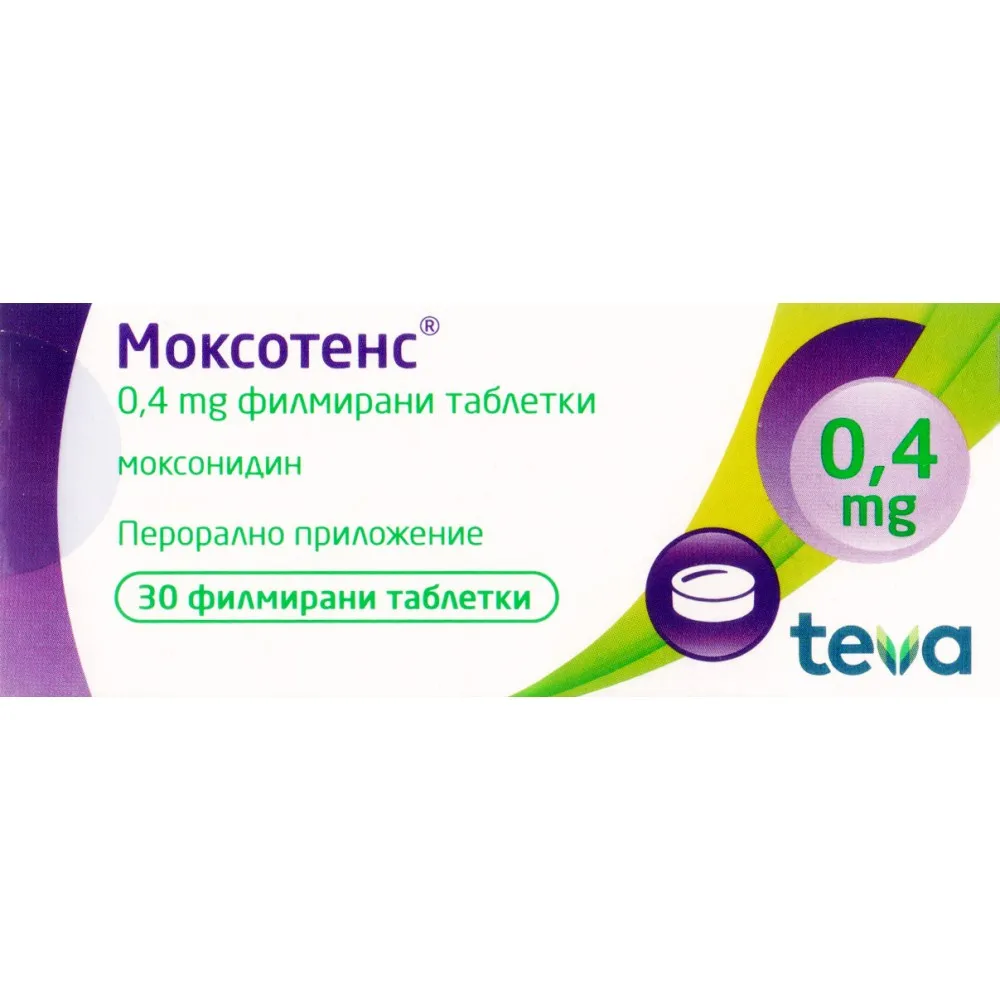
Table of Contents
INSTRUCTIONS FOR MEDICAL USE OF THE MEDICINAL PRODUCT MOXOTENS (MOKSOTENS)
Composition:
Active substance: moxonidine;
One tablet contains moxonidine, calculated as 100 % substance, 0.2 mg or 0.4 mg;
Excipients: lactose monohydrate; povidone; crospovidone; magnesium stearate;
Film-coating mixture:
hypromellose; lactose monohydrate; macrogol; iron oxide yellow (E 172); iron oxide red (E 172); titanium dioxide (E 171) – for 0.2 mg tablets;
hypromellose; lactose monohydrate; macrogol; carmine; iron oxide yellow (E 172); titanium dioxide (E 171) – for 0.4 mg tablets.
Pharmaceutical form. Film-coated tablets.
Main physicochemical properties:
0.2 mg tablets – film-coated tablets, orange-pink in color, round-shaped, biconvex;
0.4 mg tablets – film-coated tablets, pink in color, round-shaped, biconvex.
Pharmacotherapeutic group. Antihypertensive agents. Imidazoline receptor agonists. Moxonidine. ATC code C02AC05.
Pharmacological Properties.
Pharmacodynamics.
Moxonidine has been proven to be an effective antihypertensive agent. Available experimental data indicate that the central nervous system (CNS) is the site of moxonidine's antihypertensive action. Moxonidine is a selective agonist of imidazoline receptors. These imidazoline-sensitive receptors are concentrated in the rostral ventrolateral part of the medulla oblongata—a region considered to be the center regulating peripheral sympathetic nervous system activity. Stimulation of imidazoline receptors leads to a reduction in sympathetic nervous system activity and a consequent decrease in arterial blood pressure.
Moxonidine differs from other sympatholytic antihypertensive agents by its relatively low affinity for known α2-adrenergic receptors compared to imidazoline receptors. Due to this selectivity, sedative effects and dry mouth occur rarely with moxonidine use.
In humans, moxonidine administration leads to a reduction in peripheral vascular resistance, resulting in decreased arterial blood pressure. The antihypertensive effect of moxonidine has been demonstrated in double-blind, placebo-controlled, randomized studies. Published data indicate that combining an angiotensin II antagonist (AIIA) with moxonidine in patients with arterial hypertension and left ventricular hypertrophy, achieving comparable blood pressure reduction, resulted in enhanced regression of left ventricular hypertrophy compared to a free combination of a thiazide and a calcium channel blocker.
In therapeutic studies lasting 2 months, moxonidine increased insulin sensitivity index by 21% compared to placebo in patients with moderate hypertension, obesity, and insulin resistance.
Pharmacokinetics.
Absorption. After oral administration, moxonidine is rapidly (time to reach maximum plasma concentration (tmax) – approximately 1 hour) and almost completely absorbed in the upper gastrointestinal tract. Absolute bioavailability is approximately 88%, indicating negligible first-pass metabolism in the liver. Concomitant food intake does not affect the pharmacokinetics of moxonidine.
Distribution. The extent of plasma protein binding, determined in vitro, is approximately 7.2%.
Biological transformation. Only dehydrogenated moxonidine has been identified in human plasma samples. The pharmacodynamic activity of dehydrogenated moxonidine is approximately 1/10 that of moxonidine.
Elimination. Within a 24-hour period, 78% of the total dose of moxonidine is excreted in urine unchanged, and 13% as dehydrogenated moxonidine. Other minor metabolites in urine account for approximately 8% of the dose. Less than 1% is excreted in feces. The elimination half-life of moxonidine and its metabolite is approximately 2.5 hours and 5 hours, respectively.
Pharmacokinetics in patients with arterial hypertension. In patients with arterial hypertension, the pharmacokinetics of moxonidine do not differ significantly from those in healthy volunteers.
Pharmacokinetics in elderly patients. Age-related changes in pharmacokinetics have been observed, most likely due to reduced metabolism and/or slightly higher bioavailability in elderly patients. However, these pharmacokinetic differences are not considered clinically significant.
Pharmacokinetics in children. Since moxonidine is not recommended for use in children, pharmacokinetic studies have not been conducted in this subpopulation.
Pharmacokinetics in renal impairment. Elimination of moxonidine is largely dependent on creatinine clearance. In patients with moderate renal impairment (glomerular filtration rate (GFR) – 30–60 mL/min), the steady-state plasma concentration and terminal half-life are approximately 2 and 1.5 times higher, respectively, than in patients with arterial hypertension and normal renal function (GFR > 90 mL/min). In patients with severe renal impairment (GFR < 30 mL/min), steady-state plasma concentration and terminal half-life are approximately 3 times higher. No accumulation of moxonidine was observed in these patients after repeated administration. In patients with end-stage renal impairment (GFR <10 mL/min) undergoing hemodialysis, the area under the plasma concentration-time curve (AUC) and terminal half-life are 6 and 4 times higher, respectively, compared to patients with arterial hypertension and normal renal function. In patients with moderate renal impairment, maximum plasma concentration (Cmax) of moxonidine is only 1.5–2 times higher.
Based on the above data, the dose of moxonidine in patients with renal impairment should be individually adjusted. Moxonidine is only minimally removed during hemodialysis.
Preclinical safety data
Preclinical data do not indicate any special risk for humans based on results from standard studies on pharmacological safety, chronic toxicity, genotoxicity, carcinogenic potential, and reproductive toxicity.
Animal studies revealed embryotoxic effects at doses that were toxic to the maternal organism. Reproductive toxicity studies did not reveal effects on fertility or teratogenic potential. Embryotoxic effects were observed in rats at doses ≥ 9 mg/kg/day and in rabbits at doses > 0.7 mg/kg/day. In peri- and postnatal developmental studies in rats, effects on development and viability were observed at doses ≥ 3 mg/kg/day.
Clinical characteristics.
Indications.
Arterial hypertension.
Contraindications.
Moxonidine is contraindicated in:
- hypersensitivity to the active substance or to any component of the medicinal product;
- sinus node weakness syndrome;
- bradycardia (resting heart rate below 50 beats/min);
- second- and third-degree atrioventricular (AV) block;
- heart failure.
Interaction with other medicinal products and other forms of interaction.
Concomitant use of moxonidine with other antihypertensive agents may result in an additive effect.
Since tricyclic antidepressants may reduce the effectiveness of centrally acting antihypertensive agents, concomitant administration of these drugs with moxonidine is not recommended.
Moxonidine may enhance the sedative effect of tricyclic antidepressants (concomitant use should be avoided), tranquilizers, alcohol, sedatives, and hypnotics.
Moxonidine moderately enhances cognitive impairment in patients receiving lorazepam. Moxonidine may increase the sedative effect of benzodiazepines when used concomitantly.
Moxonidine is eliminated via tubular secretion. Interactions with other agents also eliminated by tubular secretion cannot be excluded. However, studies with digoxin and hydrochlorothiazide have not shown any evidence of interaction. The bioavailability of glyburide (glibenclamide) was reduced by 11% following concomitant oral administration.
Special precautions for use
During the post-marketing period, cases of atrioventricular block of varying severity have been reported in patients treated with moxonidine. Therefore, a causal role of moxonidine in atrioventricular conduction delay cannot be completely excluded. Hence, caution is recommended when treating patients predisposed to developing atrioventricular block.
Moxonidine should be used with particular caution in patients with first-degree atrioventricular block to avoid bradycardia. Moxonidine is contraindicated in patients with higher-degree atrioventricular block (see section "Contraindications").
Moxonidine should be used cautiously in patients with severe ischemic heart disease or unstable angina, as experience with use of the drug in such patients is limited.
It is recommended that moxonidine be used cautiously in patients with renal impairment, as moxonidine is primarily excreted via the kidneys. These patients should have their dose titrated carefully, especially at the beginning of therapy. Treatment should be initiated at a dose of 0.2 mg once daily. The dose may be increased up to a maximum of 0.4 mg once daily in patients with moderate renal impairment (creatinine clearance >30 ml/min but <60 ml/min) and up to a maximum of 0.3 mg once daily in patients with severe renal impairment (creatinine clearance <30 ml/min), if clinically indicated and the drug is well tolerated.
If moxonidine is used concomitantly with a β-blocker and both agents need to be discontinued, the β-blocker should be withdrawn first, followed by moxonidine a few days later.
To date, no rebound effects on blood pressure have been observed after discontinuation of moxonidine. Nevertheless, abrupt cessation of moxonidine therapy is not recommended; instead, the dose should be gradually reduced over a two-week period.
Elderly patients may be more sensitive to the effects of antihypertensive agents. Therefore, treatment should be initiated at the lowest dose, with cautious dose escalation to avoid serious adverse reactions.
Excipients
If you have been diagnosed with an intolerance to certain sugars, consult your doctor before taking this medicinal product.
Use during pregnancy or breastfeeding
Pregnancy
There are no adequate data on the use of moxonidine in pregnant women. Animal studies have shown embryotoxic effects (see section "Pharmacological properties – Preclinical safety data"). The potential risk to humans is unknown. Moxonidine should not be used during pregnancy unless clearly necessary.
Breastfeeding
Moxonidine passes into breast milk and therefore should not be used during breastfeeding. If moxonidine therapy is considered absolutely necessary, breastfeeding must be discontinued.
Ability to affect reaction speed when driving vehicles or operating machinery
Studies on the influence of the drug on the ability to drive vehicles or operate machinery have not been conducted.
Treatment of arterial hypertension with this medicinal product requires regular medical supervision. Various adverse reactions reported in individual cases (e.g., dizziness, somnolence) may impair reaction ability to such an extent that the ability to drive vehicles, operate machinery, or work without safety equipment may be compromised. This is particularly relevant during the initial phase of treatment, dose escalation, change of medication, and in combination with alcohol.
Dosage and Administration
The standard initial dose of moxonidine is 0.2 mg once daily. The maximum single dose is 0.4 mg. The maximum daily dose is 0.6 mg, administered in two divided doses. The dose should be individually adjusted according to the patient's response.
Moxonidine may be taken independently of food intake, with a small amount of liquid.
Renal Impairment
For patients with moderate or severe renal impairment, the initial dose of moxonidine is 0.2 mg daily. If necessary and provided the drug is well tolerated, the dose may be increased to 0.4 mg daily in patients with moderate renal impairment and to 0.3 mg daily in patients with severe renal impairment (see section "Special Warnings and Precautions for Use").
For patients undergoing hemodialysis, the initial dose of moxonidine is 0.2 mg daily. If necessary and provided the drug is well tolerated, the dose may be increased to 0.4 mg daily.
Hepatic Impairment
Studies in patients with hepatic impairment have not been conducted. Since moxonidine is not subject to significant hepatic metabolism, no major impact on pharmacokinetics is expected. Therefore, the recommended dose for patients with mild to moderate hepatic impairment corresponds to the standard recommended dose for adults.
Duration of treatment is not limited.
Although rebound hypertension (withdrawal effect) has not been observed in a limited number of studies following abrupt discontinuation of moxonidine, abrupt cessation of moxonidine therapy (if necessary) is not recommended, as is generally the case with all antihypertensive agents. The dose of moxonidine should be gradually reduced over a two-week period.
Children
Moxonidine is not recommended for use in children and adolescents (under 18 years of age) due to insufficient data on safety and efficacy in this patient group.
Overdose
Symptoms of overdose
In isolated cases, even single doses of moxonidine up to 19.6 mg have not resulted in fatal outcomes. Signs and symptoms of overdose include headache, sedative effect, drowsiness, hypotension, dizziness, asthenia, bradycardia, dry mouth, vomiting, fatigue, and upper abdominal pain. In cases of severe overdose, careful monitoring for disturbances in consciousness and respiratory depression is recommended.
Following accidental ingestion of an unknown amount of moxonidine (possibly 14 mg) by a two-year-old child, sedation, coma, hypotension, miosis, and dyspnea were observed. Gastric lavage, glucose infusion, controlled ventilation, and immobilization led to complete resolution of symptoms within 11 hours.
Based on animal studies with high doses of the drug, additional expected effects may include orthostatic dysregulation, transient hypertension, tachycardia, and hyperglycemia.
Management of overdose
No specific antidotes are known. In case of hypotension, hemodynamic support with dopamine and plasma volume expanders is recommended. Atropine may be used in the event of bradycardia.
Alpha-adrenergic antagonists may reduce or eliminate paradoxical hypertensive effects associated with moxonidine overdose.
Adverse reactions.
The most common adverse reactions during moxonidine treatment include dry mouth, dizziness, asthenia, and somnolence. These symptoms often diminish after the first few weeks of treatment.
Below is a list of adverse reactions observed during placebo-controlled clinical trials in 886 patients treated with moxonidine, grouped by system organ classes and categorized by frequency (very common (≥1/10), common (≥1/100 to <1/10), uncommon (≥1/1000 to <1/100)).
Psychiatric disorders:
Common – insomnia;
Uncommon – restlessness.
Nervous system disorders:
Common – headache*, dizziness, vertigo, somnolence;
Uncommon – syncope*.
Ear and labyrinth disorders:
Uncommon – tinnitus.
Cardiovascular disorders:
Uncommon – bradycardia, hypotension* (including orthostatic hypotension).
Gastrointestinal disorders:
Very common – dry mouth;
Common – diarrhea, nausea, vomiting, dyspepsia.
Skin and subcutaneous tissue disorders:
Common – rash, pruritus;
Uncommon – angioneurotic edema.
Musculoskeletal and connective tissue disorders:
Common – back pain;
Uncommon – neck pain.
General disorders:
Common – asthenia;
Uncommon – edema.
* Frequency not increased compared to placebo.
Shelf life.
2 years.
Storage conditions.
In the original packaging at a temperature not exceeding 25 °C. Keep out of reach of children.
Packaging.
10 tablets per blister, 2 blisters per carton.
Prescription status.
Prescription only.
Manufacturer.
JSC "Kyivmedpreparat".
Manufacturer's address and location of business activity.
139 Saksaganskogo Street, Kyiv, 01032, Ukraine.