Myorix®
Ukraine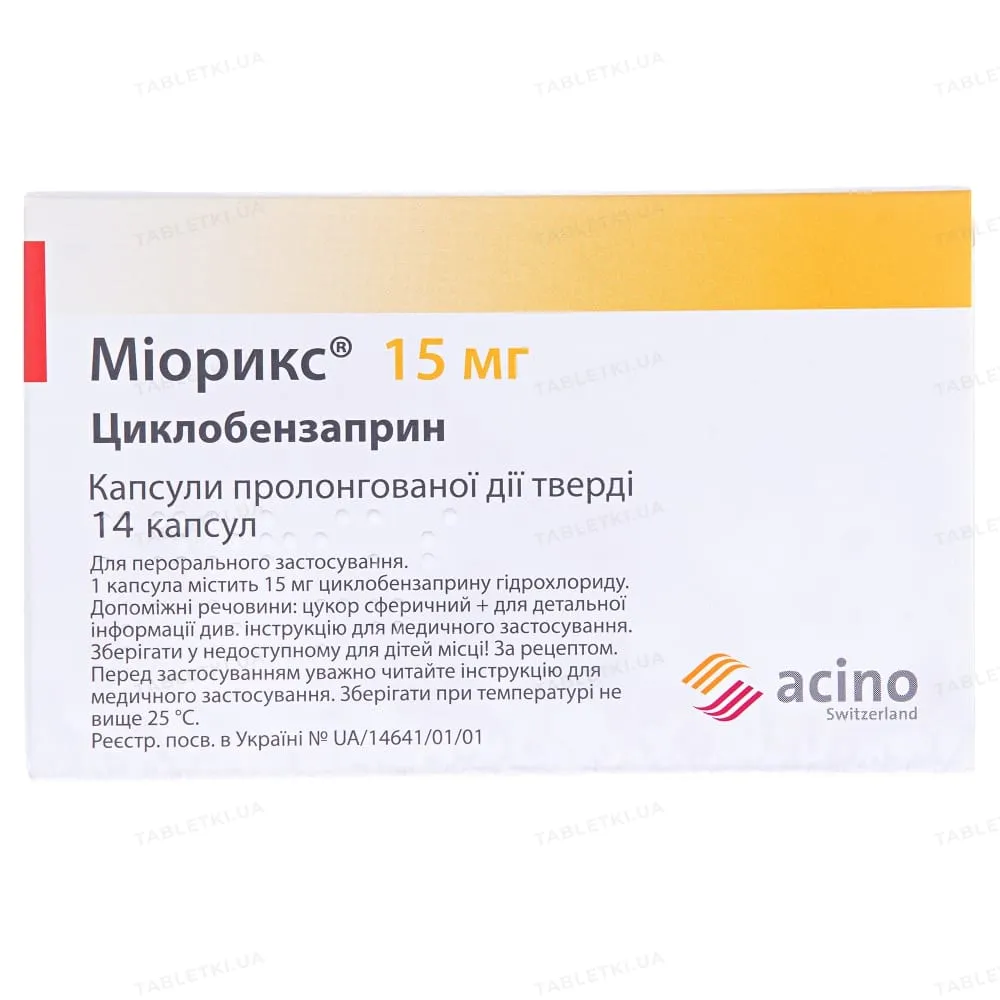
Table of Contents
INSTRUCTIONS FOR MEDICAL USE OF THE MEDICINAL PRODUCT MYORIX®
Composition:
Active substance: cyclobenzaprine hydrochloride;
1 capsule contains 15 mg or 30 mg of cyclobenzaprine hydrochloride;
Excipients: spherical sugar, Opadry Clear YS-1-7006, ethylcellulose, diethyl phthalate;
Capsule shell for 15 mg capsules: iron oxide red (E 172), iron oxide yellow (E 172), titanium dioxide (E 171), gelatin, blue ink TekPrint™ SB-6018;
Capsule shell for 30 mg capsules: FD&C Blue No. 2, FD&C Blue No. 1, FD&C Red No. 40, FD&C Yellow No. 6, titanium dioxide (E 171), gelatin, white ink Opacode® S-1-7085.
Pharmaceutical form.
Prolonged-release hard capsules.
Main physicochemical properties:
15 mg capsules: opaque, hard gelatin capsules of orange-brown color, with the marking "1002-15" on the body and "EUR" on the cap. The capsule contents are spherical granules ranging from white to yellow;
30 mg capsules: opaque, hard gelatin capsules with a dark blue body marked "1002-30" and a red cap marked "EUR". The capsule contents are spherical granules ranging from white to yellow.
Pharmacotherapeutic group.
Muscle relaxants. Other centrally acting muscle relaxants.
ATC code: M03BX08.
Pharmacological properties.
Pharmacodynamics.
Cyclobenzaprine relieves local skeletal muscle spasm without affecting muscle function. Cyclobenzaprine has not been shown to be effective in muscle spasms resulting from central nervous system (CNS) disease. In animal models, cyclobenzaprine reduces or abolishes skeletal muscle hyperactivity. Preclinical studies indicate that cyclobenzaprine does not act at the neuromuscular junction or directly on skeletal muscle. These studies suggest that cyclobenzaprine acts on the central nervous system primarily at the brainstem level rather than at the spinal cord level, although additional effects at the latter may contribute to the overall muscle relaxant effect of cyclobenzaprine. Evidence indicates that the effect of cyclobenzaprine results in reduced tonic somatic motor activity due to effects on both gamma (γ) and alpha (α) motoneurons. Pharmacological preclinical studies have demonstrated similarities between the effects of cyclobenzaprine and structurally related tricyclic antidepressants, including antagonism to reserpine, potentiation of norepinephrine effects, strong peripheral and central anticholinergic effects, and sedative effect. Cyclobenzaprine causes an increase (from mild to moderate degree) in heart rate in animals.
Pharmacokinetics.
Absorption.
After administration of a single dose of Miorex® 15 mg or 30 mg to healthy volunteers (n = 15), Cmax, AUC0–168h, and AUC0–∞ increased approximately dose-proportionally over the range of 15 to 30 mg. The time to reach maximum plasma concentration of cyclobenzaprine (Tmax) was 7–8 hours for both dosage strengths.
A food-effect study conducted in healthy volunteers (n = 15) using a single 30 mg dose of Miorex® demonstrated a statistically significant increase in bioavailability of Miorex® 30 mg when administered with food compared to fasting conditions. A 35% increase in peak plasma concentration (Cmax) and a 20% increase in exposure (AUC0–168h, AUC0–∞) were observed when the drug was taken with food. However, no effect was observed on Tmax or on the time-dependent profile of mean plasma cyclobenzaprine concentration. Cyclobenzaprine was first detected in plasma 1.5 hours after administration, both under fasting and fed conditions.
In a multiple-dose study of Miorex® 30 mg once daily for 7 days in healthy volunteers (n = 35), a sustained 2.5-fold increase in plasma cyclobenzaprine levels was observed.
Metabolism and elimination.
Cyclobenzaprine is extensively metabolized and eliminated primarily via the kidneys as glucuronide conjugates. Cytochrome P450 enzymes 3A4 and 1A2, and to a lesser extent 2D6, mediate N-demethylation, one of the oxidative metabolic pathways of cyclobenzaprine. The elimination half-life of cyclobenzaprine is 32 hours (range 8–37 hours, n = 18); plasma clearance is 0.7 L/min after administration of a single dose of Miorex®.
Special patient populations.
Elderly patients.
In patients over 65 years of age, AUC of cyclobenzaprine in plasma was increased by 40%, and the elimination half-life of cyclobenzaprine in plasma was prolonged to 50 hours after a single dose compared to patients aged 18 to 45 years (32 hours), although no significant differences were observed in Cmax or Tmax values. The pharmacokinetic properties of cyclobenzaprine after multiple doses of Miorex® in elderly patients have not been evaluated.
Patients with hepatic impairment.
In a pharmacokinetic study of immediate-release cyclobenzaprine in 16 individuals with hepatic impairment (15 mild, 1 moderate according to Child–Pugh classification), both AUC and Cmax values were approximately twice as high as those observed in the control group of healthy volunteers. The pharmacokinetics of cyclobenzaprine in individuals with severe hepatic impairment are unknown.
Clinical characteristics.
Indications. Relief of muscle spasm associated with acute painful conditions of the musculoskeletal system, as an adjunct to rest and physical therapy. Improvement is characterized by relief of muscle spasm and related signs and symptoms, namely pain, tenderness, and limitation of motion.
Contraindications.
- Hypersensitivity reactions to any component of the drug, including anaphylactic reactions, urticaria, facial and/or tongue swelling, pruritus. If hypersensitivity reactions are suspected, use of Miorix® should be discontinued.
- Concomitant use with monoamine oxidase inhibitors (MAOIs) or within 14 days of their discontinuation. In patients who received cyclobenzaprine (or structurally similar tricyclic antidepressants) concomitantly with MAOIs, hyperpyretic crises, seizures, and death have been observed.
- During the recovery phase following acute myocardial infarction and in the presence of cardiac rhythm and conduction disorders, including heart blocks, or congestive heart failure.
- Hyperthyroidism.
Interaction with other medicinal products and other types of interactions.
Due to structural similarity with tricyclic antidepressants, the medicinal product Miorix® may cause life-threatening interactions with MAOIs (see section "Contraindications"), may potentiate the effects of alcohol, barbiturates, and other central nervous system (CNS) depressants, may increase the risk of seizures in patients taking tramadol, or may block the antihypertensive effect of guanethidine and related compounds.
During the post-marketing period, cases of serotonin syndrome have been reported with concomitant use of cyclobenzaprine and other medicinal products such as selective serotonin reuptake inhibitors (SSRIs), serotonin-norepinephrine reuptake inhibitors (SNRIs), tricyclic antidepressants (TCAs), tramadol, bupropion, meperidine, verapamil, or MAOIs.
Special precautions for use.
Limitations of use.
- Miorix® should be used only for a short duration (up to 2–3 weeks), as there is insufficient evidence of efficacy with longer-term use. Moreover, muscle spasm associated with acute musculoskeletal pain is generally short-lived, and prolonged specific therapy is rarely justified.
- Miorix® has not demonstrated efficacy in the treatment of muscle spasticity related to diseases of the brain or spinal cord or to cerebral palsy in children.
Serotonin syndrome.
A potentially life-threatening serotonin syndrome has been reported when cyclobenzaprine is used concomitantly with other agents such as SSRIs, SNRIs, TCAs, tramadol, bupropion, meperidine, verapamil, or MAO inhibitors. Concomitant use of Miorix® with MAO inhibitors is contraindicated (see section "Contraindications"). Symptoms of serotonin syndrome may include mental status changes (e.g., confusion, agitation, hallucinations), autonomic nervous system disturbances (such as diaphoresis, tachycardia, labile blood pressure, hyperthermia), neuromuscular abnormalities (particularly tremor, ataxia, hyperreflexia, clonus, muscle rigidity), and/or gastrointestinal symptoms (e.g., nausea, vomiting, diarrhea). If such reactions occur, Miorix® and any concomitant serotonergic agents should be discontinued immediately, and symptomatic treatment should be initiated. If concomitant treatment with Miorix® and other serotonergic drugs is clinically warranted, careful monitoring of the patient is recommended, especially at the beginning of treatment or when the dose is increased.
Effects similar to those of tricyclic antidepressants.
Cyclobenzaprine is structurally similar to tricyclic antidepressants such as amitriptyline and imipramine. Arrhythmias, sinus tachycardia, and prolonged cardiac conduction time leading to myocardial infarction and stroke have been reported with the use of tricyclic antidepressants (see section "Contraindications"). Miorix® may potentiate the effects of alcohol, barbiturates, and other CNS depressants.
Some of the more serious CNS reactions observed with tricyclic antidepressants have been reported in short-term studies of cyclobenzaprine used for indications other than muscle spasm associated with acute musculoskeletal conditions, and mostly at doses somewhat higher than those recommended for relief of skeletal muscle spasm. If clinically significant CNS symptoms occur, Miorix® should be discontinued.
Elderly patients.
Use of Miorix® in elderly patients is not recommended due to a 40% increase in cyclobenzaprine plasma levels and a 56% increase in plasma elimination half-life compared to younger patients.
Patients with hepatic impairment.
Miorix® is not recommended for patients with mild, moderate, or severe hepatic impairment due to a doubling of cyclobenzaprine plasma levels in patients with mild hepatic dysfunction compared to healthy volunteers after administration of immediate-release cyclobenzaprine, and due to limited dosing flexibility of the product.
Anticholinergic (atropine-like) effects.
Due to its anticholinergic (atropine-like) activity, Miorix® should be used with caution in patients with a history of urinary retention, narrow-angle glaucoma, elevated intraocular pressure, and in patients taking anticholinergic medications.
Dependence.
Pharmacological similarity to tricyclic compounds may lead to certain withdrawal symptoms after discontinuation of Miorix®, even if not commonly reported. Sudden discontinuation after prolonged use may occasionally cause nausea, headache, and malaise. These symptoms do not indicate development of dependence.
Use during pregnancy or breastfeeding.
Pregnancy
Available case reports on cyclobenzaprine use during pregnancy do not identify a clear association with major congenital malformations, miscarriage, or other adverse outcomes for the mother or fetus.
In rats, reduced body weight and survival of offspring were observed when cyclobenzaprine was administered orally at doses ≥10 mg/kg/day (approximately ≥3 times the maximum recommended human daily dose (MRHD) of 30 mg/day, on a mg/m² basis) during pregnancy and lactation.
The baseline risk of major congenital malformations, miscarriage, or other adverse outcomes in the general population is unknown. All pregnancies carry a background risk of such events.
Animal study data
No adverse embryofetal effects were reported in mice or rabbits following oral administration of cyclobenzaprine during organogenesis at doses up to 20 mg/kg/day (3 and 15 times the maximum recommended human daily dose (MRHD) of 30 mg/day, respectively, on a mg/m² basis). Maternal toxicity, characterized by reduced body weight, was observed only in mice at the highest tested dose of 20 mg/kg/day.
Reduced body weight and survival of rat pups were observed in prenatal and postnatal studies when pregnant rats were treated orally with cyclobenzaprine at doses of 10 and 20 mg/kg/day (3 and 6 times the MRHD on a mg/m² basis) during pregnancy and lactation. Maternal toxicity, characterized by reduced body weight, was observed only at the highest tested dose of 20 mg/kg/day.
Breastfeeding
There are no data on the presence of cyclobenzaprine in human or animal milk, its effects on the breastfed infant, or its impact on milk production. The decision to use cyclobenzaprine during breastfeeding should consider the benefits of breastfeeding for the infant's health and development, the mother's clinical need for cyclobenzaprine, and the potential for adverse effects in the breastfed child from cyclobenzaprine or from the mother's underlying condition.
Ability to affect reaction speed when driving or operating machinery.
Use with caution in patients who are driving or operating machinery until it has been established that the treatment does not adversely affect their ability to perform such activities.
Method of Administration and Dosage
The recommended dose for adults is 15 mg (1 capsule of Miorix® 15 mg) once daily. Some patients may require an increase in dose to 30 mg once daily (1 capsule of Miorix® 30 mg or 2 capsules of Miorix® 15 mg).
The medication should be taken daily at approximately the same time.
Administration of Miorix® for longer than 2–3 weeks is not recommended.
Elderly patients (aged 65 years and older).
Clinical data on the use of Miorix® in this patient group are insufficient. Use of Miorix® in elderly patients is not recommended.
Patients with hepatic impairment.
Use of Miorix® is not recommended in patients with mild, moderate, or severe hepatic impairment (see section "Special Warnings and Precautions for Use").
Children.
Clinical data on the efficacy and safety of the drug for treatment in children are lacking; therefore, Miorix® is not recommended for use in pediatric practice.
Overdose.
Symptoms.
Death following overdose may occur in rare cases. Intentional overdose with cyclobenzaprine is commonly associated with concomitant use of multiple drugs (including alcohol).
As approaches to overdose management are complex and may vary, physicians are advised to consult a toxicologist to obtain up-to-date therapeutic information.
Signs and symptoms of toxicity may develop rapidly after cyclobenzaprine overdose; therefore, prompt hospitalization for medical observation is necessary.
The most common symptoms of cyclobenzaprine overdose are drowsiness and tachycardia. Less frequent manifestations include tremor, agitation, coma, ataxia, arterial hypertension, slurred speech, confusion, dizziness, nausea, vomiting, and hallucinations. Rare but potentially life-threatening manifestations of overdose include cardiac arrest, chest pain, cardiac arrhythmia, severe arterial hypotension, seizures, and neuroleptic malignant syndrome. ECG abnormalities, particularly changes in the height or width of the QRS complex, are clinically significant indicators of cyclobenzaprine overdose. Other potential consequences of overdose include any of the adverse reactions listed in the "Adverse Reactions" section.
Intentional cyclobenzaprine overdose is frequently associated with concomitant use of multiple medications and/or alcohol. Symptoms of poisoning may develop rapidly after cyclobenzaprine overdose, necessitating immediate inpatient monitoring. Overdose of Miorix® may rarely result in fatal outcome.
Treatment.
General.
To prevent the occurrence of rare but potentially life-threatening manifestations described above, an ECG should be performed and cardiac monitoring should be initiated immediately. It is also necessary to secure the patient's airway, establish intravenous access, and initiate gastrointestinal decontamination. Continuous observation is required to detect signs of CNS or respiratory depression, hypotension, cardiac arrhythmia and/or conduction block, and seizures. If signs of poisoning occur at any time during this period, extended monitoring will be required. Monitoring of blood drug levels should not influence patient management. Dialysis is likely ineffective due to the low plasma concentration of the drug.
Gastrointestinal decontamination.
All patients suspected of Miorix® overdose should undergo gastrointestinal decontamination. This should include gastric lavage with large volumes of fluid, followed by administration of activated charcoal. If consciousness is impaired, airway patency must be ensured prior to gastric lavage. Ipecac-induced emesis is contraindicated.
Cardiovascular system.
A QRS duration of 0.10 seconds or more in standard leads may be the best indicator of overdose severity. Serum alkalinization to a pH of 7.45–7.55 by intravenous sodium bicarbonate and hyperventilation (if needed) should be performed in patients with arrhythmia and/or widened QRS complex. A pH level > 7.60 or pCO2 < 20 mmHg should be avoided. Arrhythmias unresponsive to sodium bicarbonate/hyperventilation therapy may respond to lidocaine, bretylium, or phenytoin. Class 1A and 1C antiarrhythmic agents (e.g., quinidine, disopyramide, procainamide) are generally contraindicated.
CNS.
Patients with CNS depression should undergo early intubation due to the risk of sudden clinical deterioration. Seizures should be controlled with benzodiazepines or, if these are ineffective, with other anticonvulsants (e.g., phenobarbital, phenytoin). Physostigmine is not recommended except for the treatment of life-threatening symptoms refractory to other therapies, and only under inpatient conditions.
Psychiatric monitoring.
Since overdose is often intentional, patients may attempt suicide by other means during recovery. Psychiatric consultation may be appropriate for such patients.
Treatment of overdose in children.
The principles of managing overdose in children are similar to those in adults. Physicians are advised to consult a toxicologist for specialized pediatric care.
Adverse Reactions
The following adverse reactions have been reported during clinical studies or post-marketing use of immediate-release cyclobenzaprine or tricyclic compounds. Information on some reactions has been provided voluntarily from an undefined population size; therefore, it is not always possible to reliably estimate their frequency or establish a causal relationship to drug exposure.
In the post-marketing surveillance program for immediate-release cyclobenzaprine, the most commonly reported adverse reactions were: drowsiness, dry mouth, and dizziness. Reactions occurring in 1–3% of patients included: fatigue/tiredness, asthenia, nausea, constipation, dyspepsia, unpleasant taste, blurred vision, headache, nervousness, and confusion.
Listed below are adverse reactions reported during post-marketing use of extended-release cyclobenzaprine or immediate-release cyclobenzaprine, in clinical trials of immediate-release cyclobenzaprine (with a frequency < 1%), or during post-marketing use of other tricyclic compounds:
General disorders:
fainting, malaise, chest pain, edema.
Cardiovascular system:
tachycardia, arrhythmia, vasodilation, palpitations, arterial hypotension, arterial hypertension, myocardial infarction, heart conduction block, stroke.
Gastrointestinal system:
vomiting, anorexia, diarrhea, abdominal pain, gastritis, thirst, flatulence, tongue edema, liver function abnormalities, rare cases of hepatitis, jaundice, cholestasis, paralytic ileus, tongue discoloration, stomatitis, swelling of the parotid gland.
Endocrine system:
syndrome of inappropriate antidiuretic hormone secretion (SIADH).
Blood and lymphatic system:
purpura, bone marrow suppression, leukopenia, eosinophilia, thrombocytopenia.
Hypersensitivity reactions:
anaphylactic shock, angioneurotic edema, pruritus, facial swelling, urticaria, rash.
Metabolic, nutritional, and immune disorders:
increased or decreased blood glucose levels, weight gain or weight loss.
Musculoskeletal and connective tissue:
local muscle weakness, myalgia.
Nervous system and psychiatric disorders:
seizures, ataxia, vertigo, dysarthria, tremor, arterial hypertension, convulsions, muscle twitching, disorientation, insomnia, depressed mood, unusual feelings, anxiety, agitation, psychosis, abnormal thoughts and dreams, hallucinations, excitement, paresthesia, diplopia, serotonin syndrome, neuroleptic malignant syndrome, decreased or increased libido, gait disturbances, delirium, aggressive behavior, paranoia, peripheral neuropathy, Bell’s palsy, EEG changes, extrapyramidal symptoms.
Respiratory system:
dyspnea.
Skin and subcutaneous tissue:
sweating, photosensitivity, alopecia.
Sensory organs:
ageusia, tinnitus.
Renal and urinary system:
increased and/or decreased frequency of urination, urinary retention, urinary tract dilation, impotence, testicular swelling, gynecomastia, breast enlargement, galactorrhea.
Shelf life.
4 years.
Storage conditions.
Store at a temperature not exceeding 25 °C. Keep out of reach of children!
Packaging.
14 capsules in a blister; 1 blister per cardboard box.
Prescription status.
Prescription only.
Manufacturer.
Acino Estonia OU, Estonia.
Manufacturer’s address and place of business.
Jaama tn 55B, Polva linn, Polva Vald, Polva maakond, 63308, Estonia.