Mikogel®
Ukraine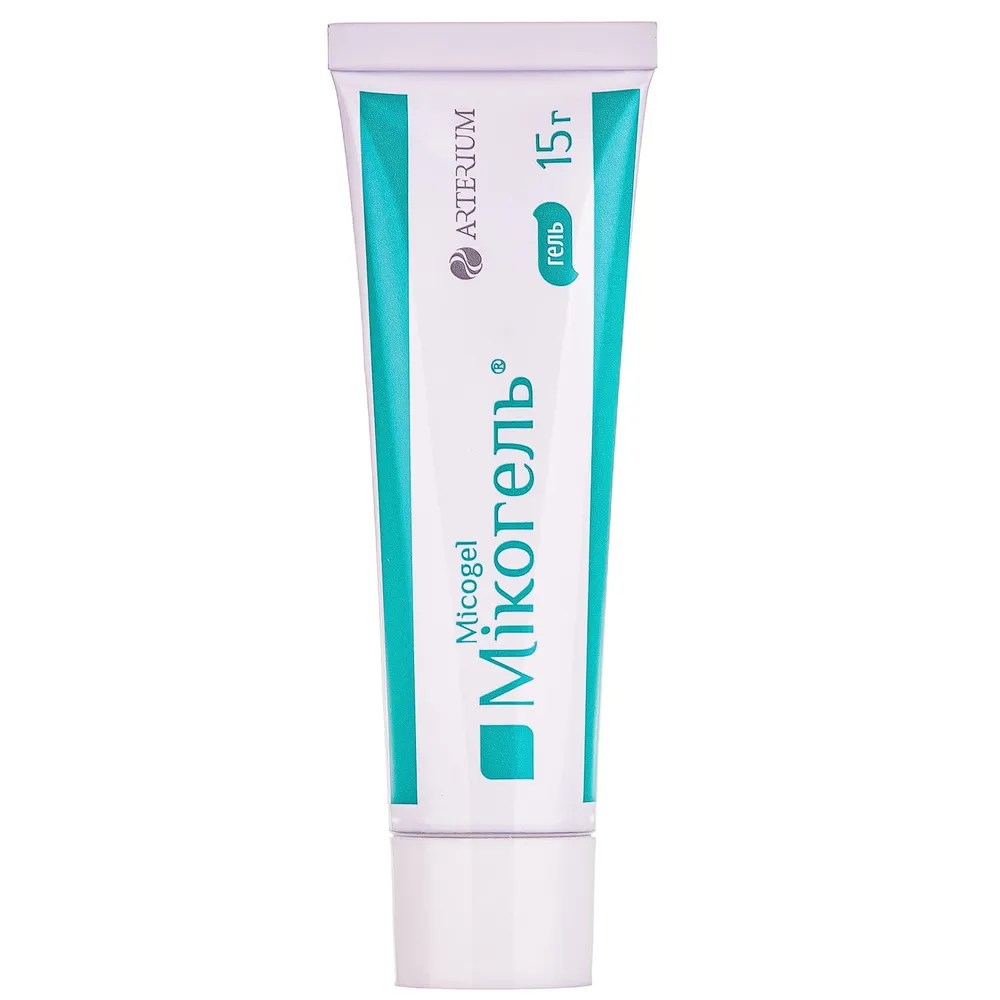
Table of Contents
INSTRUCTIONS FOR MEDICAL USE OF THE MEDICINAL PRODUCT MICOГEL® (MICOGEL)
Composition:
Active substance: miconazole;
1 g of gel contains micronized miconazole nitrate, recalculated to 100 % substance – 20 mg;
Excipients: carbomer, glycerol, propylene glycol, ammonia solution 15 %, ethanol 96 %, polysorbate, mineral oil, formaldehyde solution, purified water.
Pharmaceutical form. Gel.
Main physicochemical characteristics: white or white with a slightly yellowish tint, homogeneous in consistency, with a faint specific odor.
Pharmacotherapeutic group.
Topical antifungal agents. Imidazole and triazole derivatives.
ATC code D01AC02.
Pharmacological properties.
Pharmacodynamics.
Mykogel® is an antifungal and antibacterial agent.
The active ingredient of the medicinal product, miconazole, inhibits ergosterol biosynthesis and alters the lipid composition of the membrane, leading to fungal cell death. Pronounced antifungal activity is observed against dermatophytes (Microsporum canis, Trichophyton rubrum, Epidermophyton floccosum), Candida and Cryptococcus species, some other fungi, as well as Aspergillus species. It also exhibits antibacterial activity against Gram-positive microorganisms (primarily staphylococci) and, to a lesser extent, against Gram-negative bacteria.
Pharmacokinetics.
Miconazole is practically not absorbed through intact skin; the plasma concentration of miconazole is minimal following topical application.
Clinical characteristics.
Indications.
- Skin and nail infections caused by dermatophytes or Candida species sensitive to miconazole.
- Superinfection caused by gram-positive microorganisms.
Contraindications.
Hypersensitivity to the active substance and/or to other components of the medicinal product.
Skin disorders caused by herpes viruses.
Interaction with other medicinal products and other forms of interaction.
Concomitant use of the product with other topical agents is not recommended. It has been reported that miconazole inhibits CYP3A4/2C9 when administered systemically. Due to limited systemic availability following topical application, clinically significant interactions are rarely observed. Therefore, existing information regarding a possible potentiation of the effects of oral hypoglycemic agents—sulfonylurea derivatives—and phenytoin when used concomitantly with miconazole is not considered clinically significant.
However, if a patient is taking oral anticoagulants such as warfarin, caution should be exercised and monitoring of the prothrombin index (INR) should be performed.
Special precautions for use.
Avoid contact of the drug with eyes and open wounds.
Use with caution in patients with microcirculation disorders and diabetes mellitus.
In nail involvement, nails should be trimmed as short as possible.
When feet are affected, thoroughly treat the interdigital spaces, wear loose-fitting and well-ventilated footwear, and change socks daily.
If allergic reactions develop, discontinue use of the drug.
The presence of propylene glycol in the formulation may cause skin irritation.
The presence of formaldehyde in the solution may cause local skin reactions (e.g. contact dermatitis).
Use during pregnancy or breastfeeding.
Topical use of the drug during pregnancy is possible, but should be performed with caution (after consultation with a physician).
During topical use, women are advised to discontinue breastfeeding for the duration of treatment.
Ability to influence reaction rate while driving or operating machinery.
No reports available.
Method of Administration and Dosage.
For adults and children, apply Mikogel® thinly (without rubbing) to affected skin areas twice daily. If necessary, can be used under occlusive dressing.
The duration of treatment depends on treatment efficacy and results of mycological tests, and ranges from 1 to 6 weeks. The average duration of treatment is:
1–3 weeks for cutaneous candidiasis,
3–4 weeks for infections caused by dermatophytes,
5–6 weeks for more prolonged infections.
After disappearance of clinical symptoms, the application of the drug should be continued for at least 1 additional week.
For onychomycosis treatment, after prior separation of the affected nail plate, apply the gel thinly to the nail bed 1–2 times daily. Treatment should be continued continuously for a minimum of 3 months until complete formation of a new nail.
Children.
The drug is permitted for use in children from birth, after consultation with a physician.
Overdose.
Due to the absence of systemic absorption, cases of overdose have not been reported. Symptoms of overdose may include skin irritation, which usually resolves after discontinuation of the medicinal product.
The product is intended for topical application only. In case of accidental ingestion of large amounts of the medicinal product, appropriate gastric evacuation measures should be applied.
Side effects.
The drug is well tolerated in most cases.
Possible side effects:
Skin and related structures: reactions at the application site, including redness, irritation, burning, rash, itching, dry skin; contact dermatitis;
Immune system: hypersensitivity reactions, including urticaria, angioedema, anaphylactic reactions.
Shelf life. 3 years.
Storage conditions.
Store in the original packaging at a temperature of 2 °C to 8 °C.
Keep out of reach of children.
Packaging. 15 g in tubes, 1 tube per carton.
Supply category. Over-the-counter.
Manufacturer. JSC "Kyivmedpreparat".
Manufacturer's location and address of business activity.
139 Saksaganskogo Street, Kyiv, 01032, Ukraine.