Midazolam-vista
Ukraine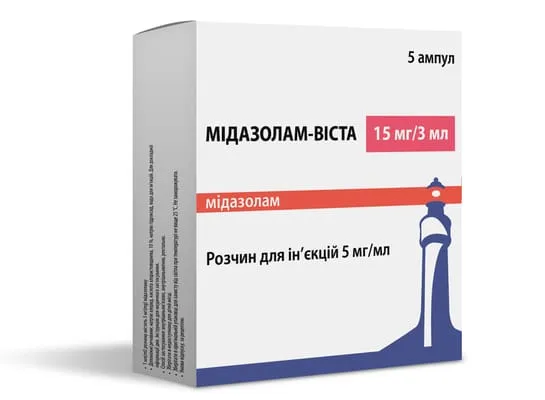
Table of Contents
INSTRUCTIONS FOR MEDICAL USE OF THE MEDICINAL PRODUCT MIDAZOLAM-VISTA (MIDAZOLAM-VISTA)
Composition:
active ingredient: midazolam;
1 ml of injection solution contains 5 mg of midazolam (5 %);
excipients: sodium chloride, hydrochloric acid 10 %, sodium hydroxide, water for injections.
Pharmaceutical form. Injection solution.
Main physicochemical properties: colorless, clear or slightly yellow liquid.
Pharmacotherapeutic group. Hypnotics and sedatives. Benzodiazepine derivatives. ATC code N05CD08.
Pharmacological Properties
Pharmacodynamics
The active ingredient of the medicinal product Midazolam-Vista, midazolam, belongs to the group of imidazobenzodiazepine derivatives. The free base is a lipophilic substance with low water solubility.
The presence of a basic nitrogen atom at position 2 of the imidobenzodiazepine ring enables the active substance, midazolam, to form water-soluble salts with acids. These salts are used to prepare injectable solutions that are well tolerated. Due to its low toxicity, midazolam has a wide therapeutic range.
Mechanism of action
The pharmacological effect of midazolam is characterized by short duration due to rapid metabolic transformation. Midazolam stimulates ionotropic GABA receptors located in the central nervous system (CNS). In the presence of GABA, midazolam binds to benzodiazepine receptors on chloride ion channels, leading to activation of GABA receptors and reduced excitability of subcortical brain structures. As a result, midazolam exerts pronounced sedative and hypnotic effects, as well as anxiolytic, anticonvulsant, and central muscle relaxant effects.
After intramuscular or intravenous administration, short-term anterograde amnesia occurs (the patient does not remember events that occurred during the period of maximum intensity of the active substance). Midazolam suppresses psychomotor function after single and/or repeated administration, but causes only minimal hemodynamic changes.
Pharmacokinetics
Absorption
Midazolam is rapidly and completely absorbed after intramuscular injection. Maximum plasma concentration is achieved within 30 minutes. Absolute bioavailability after intramuscular injection is over 90%.
After rectal administration, midazolam is rapidly absorbed. Cmax in plasma is reached within 30 minutes. Absolute bioavailability is approximately 50%.
Distribution
After intravenous administration of midazolam, the area under the pharmacokinetic concentration-time curve (AUC) is characterized by one or two clearly defined distribution phases. The volume of distribution at steady state is 0.7–1.2 L/kg. 96–98% of midazolam is protein-bound in plasma. The main binding to plasma proteins occurs via albumin. Midazolam passes slowly and in small amounts into cerebrospinal fluid. It has been demonstrated that in humans, midazolam passes slowly through the placental barrier and enters fetal circulation. Small amounts of midazolam are found in breast milk. Midazolam is not a substrate of drug transporters.
Biotransformation
Midazolam is almost completely eliminated via biotransformation. The fraction of dose excreted by the liver is estimated at 30–60%. Midazolam is hydroxylated by cytochrome P450 isoenzymes CYP3A4 and CYP3A5, and the main metabolite in urine and plasma is α-hydroxymidazolam. The concentration of α-hydroxymidazolam in plasma is 12% of the concentration of the parent compound. α-Hydroxymidazolam is pharmacologically active, but contributes only minimally (approximately 10%) to the effects of intravenously administered midazolam.
Elimination
In healthy young volunteers, the elimination half-life of midazolam is 1.5–2.5 hours. Plasma clearance ranges from 300 to 500 mL/min. Midazolam is primarily excreted by the kidneys (60–80% of the administered dose) and is recovered as the glucuronide of α-hydroxymidazolam. Less than 1% of the dose is excreted unchanged in urine. The elimination half-life of α-hydroxymidazolam is less than 1 hour; therefore, after midazolam administration, concentrations of the parent compound and main metabolite decrease in parallel. The elimination kinetics of midazolam administered by intravenous infusion do not differ from those after bolus injection.
Repeated administration of midazolam does not induce enzymes involved in drug metabolism that participate in biotransformation.
Special patient groups
Elderly patients
In adults aged 60 years and older, the elimination half-life may increase up to 4-fold.
Children
In children aged 3 to 10 years, the elimination half-life after intravenous and rectal administration is shorter (1–1.5 hours) than in adults. This difference corresponds to increased metabolic clearance of the drug.
The rate of rectal absorption in children is similar to that in adults, but bioavailability is lower (5–18%).
Neonates
In preterm infants and full-term neonates, possibly due to hepatic immaturity, the elimination half-life averages 6–12 hours, and drug clearance is slowed (see section "Special precautions for use"). In neonates with hepatic and renal insufficiency caused by asphyxia, there is a risk of unexpectedly high midazolam serum concentrations due to significantly reduced and variable clearance.
Patients with obesity
The mean elimination half-life is longer in patients with obesity compared to patients with normal body weight (5.9 vs. 2.3 hours after oral administration, and 8.4 vs. 2.7 hours after intravenous administration, respectively). This is related to an approximately 50% increase in volume of distribution adjusted for total body weight. Clearance does not significantly differ between obese patients and those with normal body weight.
Patients with hepatic impairment
In patients with liver cirrhosis, compared to healthy volunteers, the drug's elimination half-life may be prolonged and clearance reduced (see section "Special precautions for use").
Patients with renal impairment
The elimination half-life of the drug in patients with chronic renal insufficiency is similar to that in healthy volunteers. The main pharmacokinetically active metabolite of midazolam, α-hydroxymidazolam glucuronide, is excreted by the kidneys and accumulates in patients with severe renal insufficiency. This accumulation leads to prolonged sedation. Therefore, midazolam should be administered cautiously and titrated to the desired level of sedation.
Critically ill patients
In critically ill patients, the elimination half-life of midazolam may be increased up to 6-fold.
Patients with heart failure
The elimination half-life in patients with congestive heart failure is longer compared to healthy volunteers (see section "Special precautions for use").
Clinical Characteristics
Indications
Indicated as a short-acting sedative agent.
Adults:
- for sedation before or during diagnostic or therapeutic procedures, with or without local anesthesia;
- for anesthesia:
- as premedication prior to induction of general anesthesia;
- induction of anesthesia;
- as a sedative component in combined anesthesia;
- for sedation in intensive care units.
Children:
- for sedation before or during diagnostic or therapeutic procedures, with or without local anesthesia;
- for anesthesia:
- as premedication prior to induction of general anesthesia;
- for sedation in intensive care units.
Contraindications
- Hypersensitivity to benzodiazepines or to any other component of the medicinal product.
- Use of the medicinal product for sedation with preserved consciousness in patients with severe respiratory insufficiency or acute respiratory depression.
Interaction with Other Medicinal Products and Other Forms of Interaction
Midazolam is metabolized by cytochrome P450 (CYP3A4 and CYP3A5).
Inhibitors and inducers of CYP3A4 may increase or decrease, respectively, midazolam plasma concentrations and, consequently, its pharmacological effect, requiring appropriate dose adjustment.
Pharmacokinetic interactions with CYP3A4 inhibitors or inducers are more pronounced after oral administration compared to intravenous administration of midazolam, particularly because CYP3A4 is also present in the upper gastrointestinal tract. This is due to changes in both systemic clearance and bioavailability after oral intake, whereas only systemic clearance is altered after parenteral administration.
After intravenous administration of a single dose of midazolam, the maximum clinical effect of CYP3A4 inhibition is minor, but the duration of effect may be prolonged. However, with prolonged midazolam administration, both the intensity and duration of effect increase in the presence of CYP3A4 inhibition.
There are no available study data on the effect of CYP3A4 reduction on midazolam pharmacokinetics after rectal or intramuscular administration. These interactions are expected to be less pronounced with rectal than with oral administration, while the impact of CYP3A4 reduction after intramuscular administration should not significantly differ from that after intravenous administration.
Therefore, careful monitoring of clinical effects and vital signs is recommended during midazolam use, as effects may be stronger and longer-lasting when co-administered with a CYP3A4 inhibitor, even if the inhibitor was administered only once. Administration of high doses of midazolam or prolonged infusions to patients receiving strong CYP3A4 inhibitors, e.g., during intensive care, may result in prolonged sedative effects, delayed recovery of consciousness, and respiratory depression, necessitating dose adjustment.
Regarding induction, it should be noted that the induction process requires several days to reach maximum effect and several days for its decline. Unlike prolonged treatment with an inducer, short-term treatment is expected to result in less pronounced drug-drug interactions with midazolam. However, with strong inducers, relevant induction cannot be excluded even after short-term treatment.
Midazolam alters the pharmacokinetics of other medicinal products.
Medicinal Products Inhibiting CYP3A4
azole antifungal agents
Ketoconazole increased midazolam plasma concentration by 5-fold after intravenous administration, while the terminal elimination half-life increased by 3-fold. When midazolam is administered parenterally together with ketoconazole, a strong CYP3A4 inhibitor, it should be administered in an intensive care unit or similar setting providing close clinical monitoring and appropriate treatment in case of respiratory depression and/or prolonged sedation. Dose titration or dose adjustment should be considered, especially when more than a single dose of midazolam is administered. This recommendation may also apply to other azole antifungal agents, as increased sedative effects of intravenous midazolam have been reported, although to a lesser extent.
Voriconazole increased midazolam plasma concentration by 3–4-fold after intravenous administration, while its elimination half-life increased approximately 3-fold.
Fluconazole and itraconazole increased midazolam plasma concentration by 2–3-fold after intravenous administration, also resulting in an increase in terminal elimination half-life by 2.4-fold for itraconazole and 1.5-fold for fluconazole, respectively.
Posaconazole increased midazolam plasma concentration by approximately 2-fold after intravenous administration.
It should be noted that the effect will be significantly higher when midazolam is administered orally compared to the aforementioned agents, especially when used concomitantly with ketoconazole, itraconazole, voriconazole, or posaconazole.
Midazolam in ampoules is not indicated for oral administration.
Macrolide antibiotics
Erythromycin increased midazolam plasma concentration by approximately 1.6–2-fold after intravenous administration, also increasing the terminal elimination half-life of midazolam by 1.5–1.8-fold.
Clarithromycin increased midazolam plasma concentration up to 2.5-fold, along with a 1.5–2-fold increase in terminal elimination half-life.
Additional Information on Oral Midazolam Formulation
Telithromycin may increase midazolam plasma concentration by 6-fold with oral administration.
Roxithromycin
Although there are no data on the effect of roxithromycin on intravenously administered midazolam, a weak effect on the terminal elimination half-life of oral midazolam (approximately 30% increase) suggests a minor potential effect of roxithromycin on intravenously administered midazolam.
Intravenous anesthetics
The distribution of intravenous midazolam was also altered by intravenous administration of propofol (AUC and elimination half-life increased by 1.6-fold).
Protease inhibitors
Saquinavir and other HIV protease inhibitors. Concomitant administration with protease inhibitors may cause a significant increase in midazolam concentration. When administered concurrently with lopinavir boosted with ritonavir, plasma concentrations of intravenously administered midazolam increased by 5.4-fold, with a similar increase in terminal elimination half-life. When administered parenterally together with HIV protease inhibitors, the treatment regimen should follow the description provided above for azole antifungal agents, ketoconazole.
Hepatitis C virus (HCV) protease inhibitors. Boceprevir and telaprevir reduce midazolam clearance. This effect led to a 3.4-fold increase in midazolam AUC after intravenous administration and a 4-fold increase in elimination half-life.
Additional Information on Oral Midazolam Formulation
Based on data from other CYP3A4 inhibitors, midazolam plasma concentration is expected to be significantly higher with oral administration of midazolam. Therefore, protease inhibitors should not be administered concomitantly with oral midazolam.
Calcium channel blockers
Diltiazem. When a single dose of diltiazem was administered to patients undergoing coronary artery bypass grafting, the plasma concentration of intravenously administered midazolam increased by approximately 25%, and the terminal elimination half-life was prolonged by 43%. This is less than the 4-fold increase observed after oral administration of midazolam.
Additional Information on Oral Midazolam Formulation
Verapamil increased midazolam concentration 3-fold after oral administration. The terminal elimination half-life of midazolam increased by 41%.
Other medicinal products / herbal preparations
Atorvastatin demonstrated a 1.4-fold increase in midazolam plasma concentration after intravenous administration compared to the control group.
Fentanyl, when administered intravenously, is a weak inhibitor of midazolam elimination. AUC and elimination half-life of intravenous midazolam increased by 1.5-fold in the presence of fentanyl.
Additional Information on Oral Midazolam Formulation
Fluvoxamine increased midazolam plasma concentration after oral administration (approximately 40%), and the terminal elimination half-life doubled.
Neuroleptic increased midazolam plasma concentration after oral administration by 4.6-fold, with a 1.6-fold increase in terminal elimination half-life.
Tyrosine kinase inhibitors are potent CYP3A4 inhibitors in vitro (imatinib, lapatinib) or after oral administration in vivo (idelalisib). Concomitant use of idelalisib increased exposure to orally administered midazolam by 4.4-fold.
NK1 receptor antagonists (aprepitant, netupitant, casopitant) increased exposure to orally administered midazolam by 1.5–3.5-fold and prolonged its terminal elimination half-life by 1.6–2-fold, depending on the dose.
Chlorzoxazone reduced the ratio of the CYP3A-mediated metabolite 1'-hydroxymidazolam (also known as α-hydroxymidazolam) to midazolam, indicating CYP3A inhibitory activity.
For some medicinal products and herbal preparations, a weak effect on midazolam elimination has been observed, with concurrent changes in midazolam exposure (change in AUC < 2-fold) (bicalutamide, everolimus, cyclosporine, simeprevir, propiverine, berberine, also found in goldenseal (Hydrastis canadensis))). This weak interaction is expected to be further attenuated after intravenous administration.
Medicinal Products Inducing CYP3A4
Rifampicin reduced midazolam plasma concentration by approximately 60% after intravenous administration on day 7 of treatment with 600 mg rifampicin once daily. The terminal elimination half-life was shortened by approximately 50–60%.
Ticagrelor is a weak CYP3A inducer and has a minor effect on intravenous midazolam (-12%) and 4-hydroxymidazolam (-23%).
Additional Information on Oral Midazolam Formulation
Rifampicin reduced midazolam plasma concentration by 96% after oral administration in healthy volunteers, and psychomotor effects were almost completely absent.
Carbamazepine / phenytoin. Repeated dosing of carbamazepine or phenytoin resulted in up to 90% reduction in midazolam plasma concentration after oral administration and a 60% reduction in terminal elimination half-life.
Mitotane / enzalutamide. Very strong induction of CYP3A4 observed after mitotane or enzalutamide administration led to marked and prolonged reduction in midazolam levels in cancer patients. AUC values of orally administered midazolam decreased to 5% and 14% of normal values, respectively.
Efavirenz and clobazam are weak inducers of midazolam metabolism, reducing initial AUC by approximately 30%. This leads to a 4–5-fold increase in the ratio of active metabolite to parent compound, although the clinical significance of this is unknown.
Vemurafenib affects CYP isoenzymes and is a mild inhibitor of CYP3A4. Repeated dosing resulted in a mean 32% reduction in midazolam exposure after oral administration (up to 80% in some individuals).
Herbal preparations and food
Hypericum perforatum (St. John's wort) reduced midazolam plasma concentration by approximately 20–40%, along with a 15–17% reduction in terminal elimination half-life. Depending on the specific Hypericum perforatum extract, the CYP3A4-inducing effect may vary.
Additional Information on Oral Midazolam Formulation
Quercetin (also present in Ginkgo biloba) and Panax ginseng exert a weak enzyme-inducing effect and reduce the effect of midazolam after oral administration by approximately 20–30%.
Acute protein displacement
Valproic acid increases free midazolam concentration due to displacement from plasma protein binding sites, but the clinical significance of this interaction is unknown.
Pharmacodynamic interactions
Sedatives and hypnotics
Concomitant administration of midazolam with other sedatives/hypnotics and CNS depressants, including alcohol, is likely to enhance sedation and cardiovascular depression.
Examples include: opioid derivatives (used as analgesics, antitussives, or for substitution therapy), antipsychotics, other benzodiazepines used as anxiolytics or hypnotics, barbiturates, propofol, ketamine, etomidate, antidepressants with sedative effects, H1-antihistamines, and centrally acting antihypertensive agents.
Alcohol
Alcohol may markedly enhance the sedative effect of midazolam; therefore, alcohol consumption is contraindicated during use of the medicinal product (see section "Special Warnings and Precautions for Use").
Inhalational anesthetics
Midazolam reduces the minimum alveolar concentration (MAC) of inhalational anesthetics.
Opioids
Concomitant use of sedative medicinal products such as benzodiazepines and related substances with opioids increases the risk of sedation, respiratory depression, coma, and fatal outcomes due to additive CNS depressant effects. Dosage and duration of concomitant use should be limited (see section "Special Warnings and Precautions for Use").
Special precautions for use
Midazolam should be administered only by experienced physicians in a fully equipped setting for monitoring and supporting respiratory and cardiovascular functions, and by personnel who have undergone specialized training in recognizing and managing expected adverse reactions, including respiratory and cardiac resuscitation.
Serious cardiorespiratory adverse reactions have been reported: respiratory depression, apnea, respiratory arrest, and/or cardiac arrest. Such life-threatening events occur most frequently when the injection is administered too rapidly or when a high dose of the drug is given. Particular caution is required when administering sedation with preserved consciousness to patients with impaired respiratory function. Benzodiazepines are not recommended as primary therapy for psychotic disorders.
Pediatric patients
Infants under 6 months of age are particularly susceptible to airway obstruction and hypoventilation; therefore, careful dose titration with small increments until the desired clinical effect is achieved, along with close monitoring of respiratory rate and oxygen saturation, is essential. When midazolam is used for premedication, adequate patient observation after administration is necessary due to individual variability in sensitivity and the potential for overdose symptoms.
Special caution should be exercised when administering midazolam to high-risk patients:
- adults aged 60 years and older;
- chronically ill or debilitated patients:
- patients with chronic respiratory insufficiency;
- patients with chronic renal insufficiency, hepatic impairment (benzodiazepines may induce or exacerbate encephalopathy in patients with severe liver dysfunction), or cardiac dysfunction;
- pediatric patients, especially those with cardiovascular instability.
Such high-risk patients require lower doses and continuous monitoring for early signs of vital function disturbances.
As with any agent exerting a depressant effect on the CNS and/or possessing muscle relaxant properties, particular caution should be exercised when administering midazolam to patients with myasthenia gravis.
Tolerance
Reduced effectiveness has been reported with prolonged use of midazolam for sedation in intensive care units (ICU).
Dependence
When midazolam is used for prolonged sedation in ICU, physical dependence on midazolam may develop. The risk of dependence increases with higher doses and longer duration of treatment, and is also higher in patients with a history of alcohol and/or drug abuse.
Withdrawal syndrome
Prolonged midazolam treatment in ICU may lead to physical dependence. Therefore, abrupt discontinuation of therapy may result in withdrawal syndrome. Symptoms may include headache, muscle pain, diarrhea, anxiety, tension, restlessness, confusion, irritability, sleep disturbances, and mood changes. In severe cases, symptoms such as depersonalization, hallucinations, seizures, numbness and tingling in extremities, increased sensitivity to light, noise, and physical contact may occur. Since the risk of withdrawal syndrome is higher after abrupt discontinuation, doses should be gradually tapered.
Amnesia
Midazolam causes anterograde amnesia (an effect often desirable during and after surgical and diagnostic procedures), the duration of which is directly related to the administered dose. Prolonged amnesia may pose problems in outpatient settings where discharge is planned shortly after the procedure. After parenteral administration of midazolam, patients should be discharged from hospital or physician’s office only in the presence of a caregiver.
Paradoxical reactions
Paradoxical reactions such as restlessness, excitement, irritability, involuntary movements (including tonic/clonic seizures and muscle tremor), hyperactivity, hostile behavior, delirium, anger, aggression, anxiety, nervousness, nightmares, unusual dreams, hallucinations, psychoses, maladaptive behavior, and other negative behavioral effects, paroxysmal excitement, and episodes (physical or verbal) have been reported with midazolam use. These reactions may occur with high doses and/or rapid administration of the drug. Such reactions are more common in children and elderly patients. If such reactions occur, discontinuation of midazolam should be considered.
Altered midazolam elimination
Midazolam elimination may be altered in patients receiving substances that are inhibitors or inducers of CYP3A4, and individual dose adjustment may be required. Midazolam elimination may also be delayed in patients with hepatic impairment, low cardiac output, and in neonates.
Sleep apnea
Midazolam should be used with particular caution in patients with sleep apnea syndrome. Close monitoring is required in such patients.
Premature infants, neonates, and children under 6 months of age
Due to the increased risk of apnea, extreme caution is recommended when performing non-intubated sedation in premature infants and neonates.
Close monitoring of respiratory rate and oxygen saturation is necessary. In neonates, rapid injections should be avoided. Neonates have reduced and/or immature organ function and are vulnerable to profound and/or prolonged effects of midazolam. Hemodynamic disturbances have been reported in pediatric patients with cardiovascular instability; rapid intravenous administration should be avoided in this patient group.
Midazolam is indicated for sedation in children under 6 months of age only in intensive care units. Infants under 6 months of age are particularly prone to airway obstruction and hypoventilation. Therefore, dose titration with small increments until the desired clinical effect is achieved, along with careful monitoring of respiratory rate and oxygen saturation, is required.
Concomitant use of alcohol / CNS depressant drugs. Concomitant use of midazolam with alcohol and/or CNS depressant drugs should be avoided. Such concomitant use carries a potential risk of enhancing the clinical effects of midazolam, including profound sedation, which may lead to coma or fatal outcome, or clinically significant respiratory depression (see section "Interaction with other medicinal products and other forms of interaction").
Risk associated with concomitant use of opioids
Concomitant use of midazolam and opioids may result in sedation, respiratory depression, coma, and death. Due to these risks, concurrent administration of sedative medicinal products such as benzodiazepines or related substances like midazolam with opioids should be reserved only for patients for whom alternative treatment options are not feasible. When deciding to use midazolam concomitantly with opioids, the lowest effective dose should be used, and the duration of treatment should be as short as possible.
Patients should be closely monitored for signs and symptoms of respiratory depression and sedation. Patients and their caregivers (where applicable) should be informed about these symptoms.
Alcohol or drug abuse
The use of midazolam, as with other benzodiazepines, should be avoided in patients with a history of alcohol or drug abuse.
Discharge criteria
After receiving midazolam, patients should be discharged from hospital or physician’s office only upon recommendation of the treating physician or in the presence of a caregiver. It is recommended that patients be accompanied home after discharge.
Excipients
Sodium. This medicinal product contains less than 1 mmol sodium (23 mg) per dose, i.e., essentially "sodium-free."
Use during pregnancy or breastfeeding
Pregnancy
Data on the safety of midazolam during pregnancy are insufficient. Animal studies do not indicate teratogenic effects, but fetotoxicity has been observed, as with other benzodiazepines. It is presumed that the use of benzodiazepines, including midazolam, during the first trimester of pregnancy is associated with an increased risk of congenital malformations.
Reports indicate that administration of high doses of midazolam in the third trimester of pregnancy, during labor, or as an induction agent for cesarean section may lead to adverse effects in the mother or fetus (risk of aspiration in the mother, fetal heart rate disturbances, hypotonia, weak sucking reflex, hypothermia, and respiratory depression in the newborn). Additionally, infants born to mothers who received benzodiazepines for a prolonged period during the third trimester may develop physical dependence with a certain risk of withdrawal syndrome in the postnatal period. Therefore, midazolam should be used during pregnancy only if absolutely necessary. It is recommended to avoid the use of midazolam for cesarean section. The risk to the newborn should be considered when administering midazolam for any surgical procedure prior to delivery.
Breastfeeding
Midazolam passes into breast milk in small amounts; therefore, women should not breastfeed for 24 hours after midazolam administration.
***Ability to affect reaction speed when driving or operating machinery ***
Sedation, amnesia, impaired concentration, and muscle function may negatively affect the ability to drive vehicles or operate machinery. Patients should be warned before receiving midazolam not to drive or operate machinery until consciousness is fully restored. The physician must determine when such activities can be resumed. It is recommended that patients be accompanied home after discharge. The likelihood of impaired alertness may be increased if sleep duration after midazolam administration was insufficient or if the patient consumes alcohol.
Method of Administration and Dosage
Midazolam-Vista is a potent sedative agent that requires slow administration and individual dose titration. Dose titration is recommended to achieve a safe and desired level of sedation according to clinical needs, physical condition, age, and concomitant therapy. Midazolam-Vista should be administered with caution in patients aged 60 years and older, debilitated patients, chronically ill patients, and children; risk factors for each patient should be individually assessed. Standard dosages are provided in the table below. Additional information is given in the text following the table.
| Indication |
Adults <60 years |
Adults ≥60 years / debilitated or chronically ill patients |
Children |
| Conscious sedation |
IV Initial dose: 2–2.5 mg Titration increment: 1 mg Total dose: 3.5–7.5 mg |
IV Initial dose: 0.5–1 mg Titration increment: 0.5–1 mg Total dose: <3.5 mg |
IV in children aged 6 months to 5 years Initial dose: 0.05–0.1 mg/kg Total dose: <6 mg IV in children aged 6 to 12 years Initial dose: 0.025–0.05 mg/kg Total dose: <10 mg Rectal in children >6 months 0.3–0.5 mg/kg IM in children aged 1 to 15 years 0.05–0.15 mg/kg |
| Preanesthetic medication before anesthesia induction |
IV 1–2 mg repeated IM 0.07–0.1 mg/kg |
IV Initial dose: 0.5 mg Gradual dose increase by titration if needed IM 0.025–0.05 mg/kg |
Rectal in children >6 months 0.3–0.5 mg/kg IM in children aged 1 to 15 years 0.08–0.2 mg/kg |
| Anesthesia induction |
IV 0.15–0.2 mg/kg (0.3–0.35 mg/kg without premedication) |
IV 0.05–0.15 mg/kg (0.15–0.3 mg/kg without premedication) |
|
| Sedative component in anesthesia maintenance |
IV Intermittent doses 0.03–0.1 mg/kg or continuous infusion 0.03–0.1 mg/kg/hour |
IV Lower doses than recommended for adults <60 years |
|
| Sedation in intensive care unit |
IV Loading dose: 0.03–0.3 mg/kg Titration increment: 1–2.5 mg Maintenance dose: 0.03–0.2 mg/kg/hour |
IV in neonates ≤32 weeks gestational age 0.03 mg/kg/hour IV in neonates >32 weeks gestational age and infants up to 6 months 0.06 mg/kg/hour IV in children >6 months Loading dose: 0.05–0.2 mg/kg Maintenance dose: 0.06–0.12 mg/kg/hour |
|
Dosing for Sedation with Consciousness Preservation
Midazolam-Vista should be administered intravenously for analgesic sedation prior to diagnostic or surgical procedures. The appropriate dose must be individually titrated. The drug must not be administered rapidly or as a bolus injection, but only by dose titration. The onset of sedative effect may vary individually depending on the patient's physical condition and the dosing regimen used (e.g., rate of administration, dose size). Additional doses may be administered as needed according to individual requirements. The effect begins approximately 2 minutes after injection. Maximum effect is achieved within approximately 5–10 minutes.
Adults
Midazolam-Vista should be administered intravenously slowly at a rate of approximately 1 mg/30 seconds. For adults under 60 years of age, an initial dose of 2 to 2.5 mg should be administered 5–10 minutes before the procedure. The initial dose may be followed by additional doses of 1 mg as needed. The average total dose ranges from 3.5 to 7.5 mg. Administration of a total dose exceeding 5 mg is generally unnecessary.
For patients aged 60 years and older, patients with weakened general condition, or patients with chronic diseases, the initial dose is 0.5–1 mg administered 5–10 minutes before the procedure. Additional doses of 0.5–1 mg midazolam may be administered as needed. These patients may require more time to reach maximum effect; therefore, additional doses of midazolam should be titrated very slowly and cautiously. Administration of a total dose exceeding 3.5 mg is generally unnecessary.
Pediatric Population
Intravenous Administration. Midazolam doses should be slowly titrated to achieve the desired clinical effect. The initial dose should be administered over 2–3 minutes. An additional 2–5 minutes should be waited before starting the procedure or repeating the dose to fully assess the sedative effect. If deeper sedation is required, titration should continue in small increments until the desired level of sedation is achieved. Infants and children under 5 years of age may require significantly higher doses compared to older children and adolescents.
- Children under 6 months of age: This age group is particularly susceptible to airway obstruction and hypoventilation; therefore, conscious sedation is not recommended.
- Children aged 6 months to 5 years: The initial dose is 0.05 to 0.1 mg/kg. Doses up to 0.6 mg/kg may be required to achieve the desired effect, but the total dose should not exceed 6 mg. Higher doses may cause prolonged sedation and risk of hypoventilation.
- Children aged 6 to 12 years: The initial dose is 0.025 to 0.05 mg/kg. A total dose of 0.4 mg/kg may be required (maximum dose – 10 mg). Higher doses may cause prolonged sedation and risk of hypoventilation.
- Children aged 12 to 16 years: Apply recommended adult doses.
Rectal Administration: The total dose of midazolam is usually 0.3 to 0.5 mg/kg. The solution contained in the ampoule is administered rectally using a plastic applicator attached to a syringe. If the volume to be administered is too small, water may be added to achieve a total volume of 10 ml. The entire dose must be administered immediately. Repeated rectal administration should be avoided. Rectal administration is not recommended for children under 6 months of age due to limited data in this age group.
Intramuscular Administration: Doses range from 0.05 to 0.15 mg/kg. A total dose exceeding 10.0 mg is usually unnecessary. Intramuscular administration is possible only in exceptional cases. Rectal administration should be preferred, as intramuscular injection is painful.
For children with body weight less than 15 kg, midazolam solutions with concentration higher than 1 mg/ml are not recommended. Higher concentrations should be diluted to 1 mg/ml.
Dosing for Anesthesia
Premedication
Midazolam premedication administered shortly before the procedure produces a sedative effect (induction of drowsiness and anxiety relief) and anterograde amnesia.
Midazolam may also be administered in combination with anticholinergic agents. In such cases, midazolam should be administered intravenously or intramuscularly (deep into muscle mass, 20–60 minutes before anesthesia induction), while rectal administration is preferred for children. After premedication, the patient must remain under continuous close monitoring, as individual sensitivity to the drug varies and symptoms of overdose may occur.
Adults
The recommended dose for preoperative sedation and anterograde amnesia in patients classified as ASA physical status I and II, as well as in patients under 60 years of age, is 1 to 2 mg intravenously (the dose may be repeated if necessary) or 0.07 to 0.1 mg/kg intramuscularly. For patients aged 60 years and older, weakened patients, or chronically ill patients, the dose should be reduced and adjusted according to the individual case. The recommended initial intravenous dose is 0.5 mg, which may be increased slowly by titration if necessary. The recommended initial intramuscular dose is 0.025 to 0.05 mg/kg. When opioids are co-administered, the midazolam dose should be reduced. The usual dose is 2 to 3 mg.
Pediatric Population
Neonates and Children under 6 Months of Age
This medicinal product is not recommended for children under 6 months of age due to limited data in this age group.
Children Aged 6 Months and Older
Rectal Administration: The total dose of midazolam (usually in the range of 0.3 to 0.5 mg/kg) should be administered 15–30 minutes before anesthesia induction. The solution contained in the ampoule is administered rectally using a plastic applicator attached to a syringe. If the volume to be administered is too small, water may be added to achieve a total volume of 10 ml.
Intramuscular Administration: Intramuscular administration is painful; therefore, this route should be used only in exceptional cases. Rectal administration should be preferred. The range of effective and safe doses for intramuscular administration is 0.08 to 0.2 mg/kg. Children aged 1 to 15 years require proportionally higher doses per body weight compared to adults.
For children with body weight less than 15 kg, midazolam solution with concentration higher than 1 mg/ml is not recommended. Higher concentration solutions should be diluted to 1 mg/ml.
Anesthesia Induction
Adults
When midazolam is used before or in combination with other anesthetic agents for anesthesia induction, individual patient response varies widely. The dose should be increased by titration until the desired effect is achieved. The dose should be titrated according to the patient's age and clinical status. If midazolam is used before or in combination with other intravenous or inhalational agents used for anesthesia induction, the initial dose of all these agents should be significantly reduced, sometimes to 25% of the usual initial dose.
The desired level of anesthesia is achieved by gradual dose escalation. For intravenous anesthesia induction, midazolam should be administered slowly in divided doses. Each dose portion (not exceeding 5 mg) should be administered over 20–30 seconds with two-minute intervals between doses.
- For adults under 60 years of age who have received premedication, a dose of 0.15 to 0.2 mg/kg intravenously is usually recommended.
- For adults under 60 years of age without premedication, higher doses (0.3–0.35 mg/kg intravenously) may be used. Additional doses of approximately 25% of the patient's initial dose may be administered if necessary to complete induction. Induction may also be achieved using inhalational anesthetics. In refractory cases, a total dose of up to 0.6 mg/kg may be used for induction, but such higher doses may result in prolonged recovery after anesthesia.
- For adults aged 60 years and older who have received premedication, weakened patients, or patients with chronic diseases, the dosage should be significantly reduced, e.g., to 0.05–0.15 mg/kg intravenously, administered over 20–30 seconds, with a drug onset time of 2 minutes.
- For adults aged 60 years and older without premedication, higher doses of midazolam are usually required for induction. The recommended initial dose is 0.15 to 0.3 mg/kg. For debilitated patients or patients with severe systemic disease without premedication, a smaller amount of midazolam is usually administered for induction. An initial dose of 0.15 to 0.25 mg/kg is usually sufficient.
As a Sedative Component in Combined Anesthesia
Adults
Midazolam-Vista may be administered as a sedative component in combined anesthesia either by repeated small intravenous doses (in the range of 0.03 to 0.1 mg/kg) or by continuous intravenous infusion of midazolam (in the range of 0.03 to 0.1 mg/kg/hour), usually in combination with analgesics. The dose and intervals between doses vary depending on the individual patient response.
Lower doses are required for maintenance in adults aged 60 years and older, weakened patients, or chronically ill patients.
Sedation in Intensive Care Units
The desired level of sedation is achieved by stepwise titration of midazolam dose followed by either continuous infusion or intermittent bolus administration. Midazolam should be administered according to clinical needs, patient status, age, and concomitant medications (see section "Interaction with Other Medicinal Products and Other Forms of Interaction").
Adults
Intravenous Loading Dose: 0.03 to 0.3 mg/kg should be administered slowly in increments. Each dose of 1 to 2.5 mg should be administered over 20–30 seconds with two-minute intervals between doses. For patients with hypovolemia, vasoconstriction, or hypothermia, the loading dose should be reduced or omitted. If midazolam is administered simultaneously with potent analgesics, the analgesics should be administered first. This ensures safe titration of the sedative effect of midazolam, thereby avoiding the influence of analgesic sedation.
Intravenous Maintenance Dose: 0.03 to 0.2 mg/kg/hour. For patients with hypovolemia, vasoconstriction, or hypothermia, the maintenance dose should be reduced. The level of sedation should be assessed regularly. Prolonged sedation may lead to tolerance development, which may require dose escalation.
Pediatric Population
Neonates and Children under 6 Months of Age
Midazolam-Vista should be administered as a continuous intravenous infusion. The initial dose for neonates with gestational age less than 32 weeks is 0.03 mg/kg/hour (0.5 µg/kg/min), and for neonates with gestational age over 32 weeks as well as for children under 6 months of age, it is 0.06 mg/kg/hour (1 µg/kg/min).
Intravenous loading doses are not recommended for preterm neonates, full-term neonates, and children under 6 months of age; higher infusion rates during the first hours of administration are preferable to achieve therapeutic concentrations. The infusion rate should be frequently and carefully reviewed to select the lowest effective dose and prevent drug accumulation (especially during the first 24 hours). Close monitoring of respiratory rate and oxygen saturation is required.
Children Aged 6 Months and Older
For children on mechanical ventilation and those who are intubated, a loading dose of 0.05 to 0.2 mg/kg should be administered slowly intravenously over at least 2–3 minutes to achieve the desired clinical effect.
Midazolam-Vista should not be administered as a rapid intravenous injection. After administration of the loading dose, midazolam should be administered as a continuous infusion at a rate of 0.06 to 0.12 mg/kg/hour (1 to 2 µg/kg/min). If necessary, the infusion rate may be increased or decreased (usually by 25% of the initial or subsequent infusion rate), or additional midazolam doses may be administered intravenously to maintain or enhance the desired effect.
If midazolam infusion is initiated in hemodynamically unstable patients, the usual loading dose should be titrated in low increments, and the patient should be monitored for hemodynamic changes (e.g., hypotension). These patients are more sensitive to the respiratory depressant effects of midazolam; therefore, respiratory rate and oxygen saturation must be closely monitored.
For preterm neonates, neonates, and children with body weight below 15 kg, midazolam solutions with concentration higher than 1 mg/ml are not recommended. Higher concentration solutions should be diluted to 1 mg/ml.
Use in Special Populations
Renal Impairment
In patients with severe renal insufficiency, midazolam may be associated with more pronounced and prolonged sedation, which may include clinically significant respiratory and cardiovascular depression. Therefore, midazolam should be used with caution in this patient group and titrated to achieve the desired effect (see section "Special Warnings and Precautions for Use").
Hepatic Impairment
Hepatic dysfunction reduces the clearance of intravenously administered midazolam, resulting in prolonged terminal elimination half-life. Therefore, clinical effects may be stronger and longer-lasting. The required midazolam dose may need to be reduced, and appropriate monitoring of vital functions should be established.
Method of Administration
Midazolam-Vista is compatible with the following solutions: 0.9% sodium chloride solution, 5% levulose solution, 10% glucose solution, 5% glucose solution, Ringer's solution, Hartmann's solution.
To avoid possible incompatibility with other solutions, Midazolam-Vista should not be mixed with solutions other than those listed above.
For single use only. Any unused portion of the solution should be discarded.
The solution should be inspected visually before administration. Only clear solution free of visible particles should be used.
Chemical and physical stability in use has been demonstrated for 24 hours at room temperature and for 3 days at 2–8°C.
From a microbiological standpoint, the solution should be used immediately. Midazolam-Vista is intended for single use. If not used immediately, responsibility for storage time and conditions prior to use lies with the user.
The diluted solution may be stored for 24 hours at 2–8°C.
Children
Midazolam is not recommended for sedation in children under 6 months of age, as this age group is highly sensitive to hypoventilation and airway patency disturbances.
Overdose
Symptoms. Like other benzodiazepines, midazolam commonly causes drowsiness, ataxia, dysarthria, and nystagmus. Overdose of the drug is rarely life-threatening when midazolam is used as monotherapy, but it may lead to areflexia, apnea, hypotension, cardiorespiratory depression, and in rare cases, coma. Coma, if it occurs, usually lasts several hours but may be more prolonged and cyclic, especially in elderly patients. The respiratory depressant effect of benzodiazepines is stronger in patients with respiratory disorders. Benzodiazepines potentiate the effects of other CNS depressants, including alcohol.
Treatment. Vital signs should be monitored, and supportive measures should be implemented as clinically indicated according to the patient's condition. Patients may require symptomatic treatment of cardiorespiratory or CNS effects. In case of oral ingestion, further absorption should be prevented by appropriate methods, e.g., activated charcoal treatment within 1–2 hours. When using activated charcoal, airway protection is mandatory in drowsy patients. Gastric lavage may be considered in cases of mixed ingestion, but not as a routine procedure. In cases of severe CNS depression, the use of flumazenil, a benzodiazepine antagonist, should be considered. It should be administered only under strict monitoring conditions. It has a short elimination half-life (approximately 1 hour), so patients receiving flumazenil will require observation after its effect ends. Flumazenil should be used with extreme caution in patients taking drugs that lower the seizure threshold (e.g., tricyclic antidepressants). For additional information on the proper use of this medicinal product, refer to the flumazenil product information leaflet.
Adverse Reactions
The adverse reactions listed below may occur following parenteral administration of midazolam.
The frequency of occurrence of adverse effects is defined as follows: very common (≥ 1/10); common (≥ 1/100, < 1/10); uncommon (≥ 1/1000, ≤ 1/100); rare (≥ 1/10000, ≤ 1/1000); very rare (≤ 1/10000); frequency not known (cannot be estimated based on available data).
| System organ class |
Frequency of adverse reactions |
Adverse reactions |
| Immune system disorders |
Frequency unknown |
Hypersensitivity, anaphylactic shock, angioedema |
| Psychiatric disorders |
Frequency unknown |
Confusional state, disorientation, emotional disorders and mood changes, changes in libido. |
| Nervous system disorders |
Frequency unknown |
Sedation (prolonged and postoperative), decreased attention, somnolence, headache, dizziness, ataxia, anterograde amnesia**, duration of which is directly related to the administered dose. Localized seizures have been reported in preterm neonates and newborns, seizures as a symptom of withdrawal. |
| Cardiac and vascular disorders |
Frequency unknown |
Cardiac arrest, bradycardia, hypotension, vasodilation, Cushing's syndrome****. |
| Respiratory, thoracic and mediastinal disorders |
Frequency unknown |
Respiratory depression, apnea, respiratory arrest, dyspnea, laryngospasm, hiccup. |
| Gastrointestinal disorders |
Frequency unknown |
Nausea, vomiting, constipation, dry mouth. |
| Skin and subcutaneous tissue disorders |
Frequency unknown |
Rash, urticaria, pruritus. |
| General disorders and administration site reactions |
Frequency unknown |
Redness at injection site, pain at injection site, thrombophlebitis, thrombosis, fatigue. |
| Injury, poisoning and procedural complications |
Frequency unknown |
Falls, fractures*** |
| Social circumstances |
Frequency unknown |
attacks* |
*Such paradoxical adverse reactions have been reported particularly in children and elderly patients (see section "Special precautions").
**Anterograde amnesia may still be present at the end of the procedure, and in some cases prolonged amnesia has been reported (see section "Special precautions").
***In patients receiving concomitant sedative medicinal products (including alcoholic beverages) and in elderly individuals, the risk of falls and fractures is increased.
****Especially after parenteral administration.
Dependence
The use of midazolam, even at therapeutic doses, may lead to the development of physical dependence. Discontinuation of treatment (particularly abrupt discontinuation) after prolonged intravenous administration may be accompanied by withdrawal syndrome, including seizures (see section "Special precautions"). Cases of abuse have been reported.
Severe adverse events affecting the heart and respiratory system have occurred. Life-threatening events are more likely to occur in adults aged 60 years and older, and in those with a history of respiratory insufficiency or cardiac dysfunction, particularly when the injection is administered too rapidly or a high dose of the medicinal product is given (see section "Special precautions").
Reporting of suspected adverse reactions
Reporting suspected adverse reactions after registration of the medicinal product is important. It allows ongoing monitoring of the benefit-risk balance of the use of this medicinal product. Medical and pharmaceutical professionals, as well as patients or their legal representatives, should report all suspected adverse reactions and lack of efficacy through the Automated Pharmacovigilance Information System at the following link: https://aisf.dec.gov.ua.
Shelf life. 4 years.
The diluted solution may be stored for 24 hours at a temperature of 2 to 8 °C. Do not freeze.
Storage conditions
Store in the original packaging to protect from light at a temperature not exceeding 25 °C. Do not freeze. Keep out of reach of children.
Incompatibilities
The contents of the ampoule of Midazolam-Vista medicinal product must not be diluted with 6% dextran solution, nor mixed with injectable solutions having an alkaline pH. Midazolam is precipitated by sodium bicarbonate (NaHCO₃).
The contents of the ampoule of Midazolam-Vista medicinal product must not be mixed with other solutions except those specified in the section "Dosage and administration".
Packaging
3 ml or 10 ml of solution in an ampoule; 5 ampoules in a cardboard box.
Prescription status
Prescription only.
Manufacturer
VEM Ilac San. Ve Tic. A.S.
Manufacturer's address and place of business
Cerkezkoy Organize Sanayi Bolgesi, Karagac Mahallesi, Fatih Bulvari No: 38, Kapakli, Tekirdag, Turkey.