Metaphin® ic
Ukraine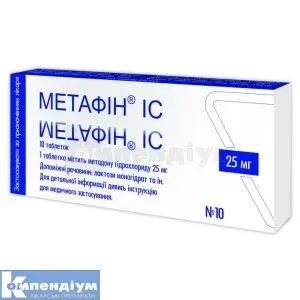
Table of Contents
INSTRUCTIONS FOR MEDICAL USE OF THE MEDICINAL PRODUCT MÉTHAPHINE® IS
Composition:
Active substance: methadone;
1 tablet contains 5 mg, 10 mg, or 25 mg of methadone hydrochloride;
Excipients: lactose monohydrate, microcrystalline cellulose, magnesium stearate.
Pharmaceutical form. Tablets.
Main physicochemical properties: white-colored tablets, flat cylindrical shape with beveled edges; the company trademark is imprinted on one side of the tablet; tablets with dosages of 10 mg and 25 mg have a score line for division.
Pharmacotherapeutic group.
Agents affecting the nervous system. Agents used in addictive disorders. Agents used in opioid dependence.
ATC code N07B C02.
Pharmacological properties.
Pharmacodynamics.
Methadone is a synthetic opioid analgesic whose action is in many ways similar to that of morphine. Methadone primarily affects the central nervous system (CNS) and organs containing smooth muscle. Methadone has analgesic and sedative effects and also produces a detoxifying or maintenance effect in opioid dependence. Methadone causes withdrawal syndrome qualitatively similar to that induced by morphine, but with a slower onset and less pronounced symptoms compared to morphine. The effects of methadone are essentially the same as those of other opioids.
Signs of analgesia appear within 30–60 minutes after administration. Methadone is a medication with a very long duration of action (36–48 hours).
Pharmacokinetics.
After oral administration, methadone is well absorbed from the gastrointestinal tract, with bioavailability ranging from 80% to 95%. It can be detected in blood plasma as early as 30 minutes after intake. Maximum plasma concentration is reached within 4 hours. The elimination half-life ranges from 24 to 36 hours (individual variations may range from 10 to 80 hours), allowing once-daily dosing. Due to considerable individual variability in half-life, steady-state concentration of methadone may be achieved within 2–9 days. Methadone is metabolized in the liver via CYP3A4 and is excreted from the body as metabolites in urine and feces.
Clinical characteristics.
Indications.
For detoxification in the treatment of opioid dependence (dependence on heroin and other morphine-like drugs), as well as for maintenance therapy in patients with opioid addiction.
Moderate to severe pain not relieved by non-narcotic analgesics (for 5 mg and 10 mg tablets).
Contraindications.
Hypersensitivity to methadone hydrochloride or to any other component of the medicinal product.
Respiratory depression.
Obstructive respiratory diseases.
Exacerbation period of bronchial asthma.
Accumulation of excess carbon dioxide in the blood.
Diarrhea associated with pseudomembranous colitis caused by cephalosporins, lincomycin, clindamycin, penicillins.
Diarrhea caused by poisoning.
Paralytic intestinal obstruction (including medication-induced gastrointestinal hypotonia).
Increased intracranial pressure, head injuries.
Pheochromocytoma.
Concomitant use with monoamine oxidase inhibitors (MAOIs) and within 2 weeks after discontinuation of their use.
Dependence on non-opioid drugs.
Patients dependent on "mild" narcotic agents (codeine, meperidine, and similar opioid receptor agonists).
Use during childbirth.
Interaction with other medicinal products and other types of interactions.
CYP450 3A4 inducers. The use of rifampicin in patients who have achieved stabilization on methadone maintenance therapy leads to a significant decrease in serum methadone levels with the appearance of withdrawal symptoms.
Administration of phenytoin (250 mg twice daily on the first day, then 300 mg once daily for 3−4 days) to patients receiving methadone therapy results in decreased methadone concentration and development of withdrawal syndrome. These effects resolve after discontinuation of phenytoin. Pharmacokinetic parameters of methadone return almost completely to baseline levels after phenytoin discontinuation.
Co-administration of methadone with other CYP3A4 inducers (St. John’s wort, phenobarbital, carbamazepine) may lead to withdrawal symptoms.
Antiretroviral medicinal products (nevirapine, efavirenz, nelfinavir, ritonavir, abacavir) may reduce methadone plasma concentration by accelerating its hepatic metabolism. Withdrawal syndrome has been reported in patients receiving combined therapy with methadone and certain antiretroviral agents (including nevirapine, efavirenz). Patients receiving methadone maintenance therapy and concomitant antiretroviral therapy should be closely monitored for signs of withdrawal syndrome; dose adjustment of methadone may be necessary. Administration of ritonavir and ritonavir/lopinavir together with methadone results in decreased methadone plasma concentration. However, withdrawal syndrome is not always observed. Nevertheless, co-administration of these drugs with methadone requires caution.
Methadone administration increases the area under the concentration-time curve (AUC) for zidovudine, which may lead to toxic effects. Methadone administration decreases the AUC for didanosine and stavudine. This effect is more pronounced for didanosine. Methadone distribution is not significantly altered.
Protease inhibitors. Co-administration of methadone with agenerase (amprenavir) leads to a 25% and 13% reduction in maximum plasma concentration and AUC for R-methadone, respectively. Close monitoring of patients is required when methadone and agenerase (amprenavir) are used concomitantly to prevent a reduction in effective methadone dose, especially if ritonavir is also administered. Co-administration of methadone and agenerase (amprenavir) reduces AUC, maximum concentration, and minimum concentration of agenerase (amprenavir) by 30%, 27%, and 25%, respectively.
Changes in methadone plasma levels have been observed when viracept (nelfinavir) is used concomitantly with methadone. An increase in methadone dose may be required.
Non-nucleoside reverse transcriptase inhibitors. When methadone is used concomitantly with rescriptor (delavirdine), a reduction in methadone dose may be required.
CYP450 3A4 inhibitors. Concomitant use of methadone with drugs that inhibit CYP3A4 (anti-HIV agents, macrolide antibiotics, cimetidine, and azole antifungals) reduces methadone clearance (since methadone undergoes hepatic biotransformation involving cytochrome CYP3A4). As a result, its effects may be enhanced or prolonged. When azole antifungal agents (including ketoconazole) and macrolide antibiotics (including erythromycin) are prescribed, dose adjustment of methadone may be necessary. Concomitant use of certain selective serotonin reuptake inhibitors (sertraline, fluvoxamine) with methadone may lead to increased methadone plasma levels and the appearance of toxic effects.
Repeated oral administration of voriconazole increases maximum plasma concentration and AUC of the pharmacologically active enantiomer of methadone (R-methadone) in patients receiving maintenance doses of methadone (30−100 mg once daily). Increased methadone plasma concentration may lead to toxic effects associated with QT interval prolongation. A reduction in methadone dose may be required.
Grapefruit juice. There are several reports of increased methadone plasma levels due to inhibition of its metabolism.
Antibacterial medicinal products
Rifampicin. When used concomitantly with rifampicin, a decrease in methadone plasma levels and increased urinary excretion may occur. Therefore, methadone dose adjustment may be necessary.
Cyprofl oxacin. When methadone and ciprofloxacin are used concomitantly, methadone plasma levels may increase due to inhibition of CYP1A2 and CYP3A4, while ciprofloxacin plasma levels may decrease. Concomitant use may lead to sedation, confusion, and respiratory depression.
Erythromycin. Theoretical potential for increased methadone plasma levels due to inhibition of its metabolism when used concomitantly with erythromycin.
Fluconazole and ketoconazole. May increase methadone plasma levels by inhibiting its metabolism.
Antiepileptic agents (phenytoin, phenobarbital, carbamazepine, primidone) induce methadone metabolism, which may be associated with a risk of withdrawal syndrome. Consideration should be given to the need for methadone dose adjustment.
Gabapentinoids. Concomitant use of opioids and gabapentinoids (gabapentin and pregabalin) increases the risk of opioid overdose, respiratory depression, and fatal outcome.
Medicinal products that acidify or alkalinize urine may affect methadone clearance, which increases with acidic urine pH and decreases with alkaline pH.
Histamine H2-receptor antagonists such as cimetidine may reduce the degree of methadone binding to plasma proteins, thereby enhancing opioid action.
MAO inhibitors. Concomitant use with MAO inhibitors is contraindicated due to the potential for prolonged and enhanced respiratory depressant effects of methadone. MAO inhibitors should be discontinued at least 14 days before starting substitution therapy; otherwise, this may lead to life-threatening CNS, respiratory, and circulatory depression or excitation (see section "Contraindications").
Interaction with other medicinal products that depress CNS activity. Due to the potential for respiratory depression, arterial hypotension, profound sedation, and even coma, methadone should be used cautiously in patients receiving concomitant tricyclic antidepressants, other narcotic analgesics, anesthetics, phenothiazines, and certain other major tranquilizers, sedatives, hypnotics (including benzodiazepines, chloral hydrate, and chloralodiazepoxide), and other CNS depressants. Anxiolytics, barbiturates may enhance the overall depressant effect of methadone when used concomitantly. Antipsychotics may enhance sedative and hypotensive effects of methadone.
Methadone may double desipramine levels.
It has been reported that antidepressants such as fluvoxamine and fluoxetine may increase methadone serum levels.
Other serotonergic medicinal products.
Methadone is a weak inhibitor of serotonin reuptake. There is an increased risk of serotonin syndrome when methadone is used concomitantly with meperidine, MAO inhibitors, and other serotonergic agents (including selective serotonin reuptake inhibitors, serotonin-norepinephrine reuptake inhibitors, tricyclic antidepressants, serotonergic antiemetics, serotonergic antimigraine agents, etc.). Symptoms of serotonin syndrome may include mental status changes, autonomic instability, neuromuscular disturbances, and/or gastrointestinal disorders.
Alcohol may enhance the sedative and hypotensive effects of methadone and its respiratory depressant action.
Antihistamines with sedative properties (including cyclizine). Possible additive psychotropic effects; antimuscarinic effects at high doses.
Opioid agonists. Additive CNS, respiratory, and circulatory depressant effects.
Opioid antagonists, mixed agonists/antagonists, partial agonists. Patients with heroin addiction or those receiving methadone maintenance therapy may experience withdrawal symptoms upon administration of opioid antagonists or mixed agonist/antagonist drugs. The interval between buprenorphine and methadone administration should be at least 20 hours. Naloxone and naltrexone antagonize the analgesic effect of methadone and its CNS and respiratory depressant effects and may provoke rapid onset of withdrawal syndrome (see section "Overdose"). Buprenorphine and pentazocine may also cause withdrawal symptoms.
Cannabidiol. Concomitant use of cannabidiol may lead to increased methadone plasma concentration.
Antiarrhythmic agents. Methadone slows mexiletine absorption.
Potentially arrhythmogenic medicinal products. When methadone is used concomitantly with drugs affecting cardiac conduction or those that may affect electrolyte balance, there is a risk of cardiovascular events (see section "Special precautions"). Particular caution should be exercised when using methadone with drugs that may prolong the QT interval. Such drugs include Class I and III antiarrhythmics, certain neuroleptics, tricyclic antidepressants, and calcium channel blockers. Concomitant use of methadone with drugs that disrupt electrolyte balance may promote QT interval prolongation (hypomagnesemia, hypokalemia). These include diuretics, laxatives, and rarely mineralocorticoids.
Antihypertensive agents, particularly clonidine, prazosin, reserpine, and urapidil, may enhance the effect of methadone.
Central-acting α-adrenergic blockers. When methadone is used concomitantly with centrally acting α-adrenergic blockers (lofexidine, clonidine), there is an increased risk of arterial hypotension, cognitive effects, and ECG changes (including PR and QT interval prolongation).
Medicinal products that accelerate gastric emptying. Domperidone and metoclopramide may increase the rate of methadone absorption (but not the extent) by counteracting opioid-induced delayed gastric emptying. Conversely, methadone may antagonize the effects of domperidone/metoclopramide on gastrointestinal motility.
Other medicinal products. Due to decreased gastrointestinal motility, methadone may affect other medicinal products.
Pregnancy tests. Methadone may affect urine test results for pregnancy markers.
Special precautions for use.
Metaphin® IS is intended for oral use only. The medicinal product must not be used for injections.
Methadone may cause drowsiness and suppress consciousness; however, tolerance to these effects may develop after repeated dosing.
Sudden discontinuation of methadone therapy may lead to a withdrawal syndrome qualitatively similar to that observed with morphine, although it develops more slowly and is less pronounced than with morphine.
If it becomes necessary to resume treatment with the medicinal product after its discontinuation, the initial dose should be low, and dose escalation should be gradual to avoid serious toxic effects and respiratory depression.
There is a significant risk of respiratory depression when switching abruptly from other opioids to methadone; therefore, transition to methadone should be performed cautiously.
Incomplete cross-tolerance between methadone and other opioids. Patients tolerant to other opioids may have partial tolerance to methadone, especially in individuals sensitive to other μ-opioid receptor agonists. In such cases, determining the appropriate methadone dose may be difficult. Fatal cases have been reported when switching to methadone after long-term use of other opioid agonists.
A high degree of opioid tolerance does not eliminate the risk of toxic effects when using methadone.
Interaction with alcohol and narcotics. Methadone should be used with particular caution in patients with alcohol dependence. Methadone has additive effects when used concomitantly with alcohol and other central nervous system (CNS)-depressant drugs, including other opioids. Fatal cases have been reported in individuals who abuse benzodiazepines when using methadone.
Anxiety states. Since Metaphin® IS, administered in regular maintenance doses to patients tolerant to it, is not a tranquilizer, anxiety states with typical symptoms may develop in patients receiving maintenance therapy in response to life problems and stress. The physician should not confuse these symptoms with withdrawal symptoms and should not attempt to treat such conditions by increasing the methadone dose. The action of methadone during maintenance therapy is limited to controlling opioid-related symptoms and does not extend to alleviating anxiety states.
Head injuries and increased intracranial pressure. In head trauma, respiratory depression and elevated cerebrospinal fluid pressure caused by methadone may be significantly more pronounced (see section "Contraindications"). The same danger exists in other intracranial pathologies or in patients with a history of increased intracranial pressure. Side effects of opioids may mask the true clinical condition of patients with head injuries.
Bronchial asthma and other respiratory disorders. Due to the slow tissue accumulation of methadone in the body, respiratory depression may not become fully apparent within 1–2 weeks and may worsen bronchial asthma by inducing histamine release. The main danger of methadone use lies in the potential for respiratory depression. This issue is particularly important in elderly patients, debilitated individuals, and in cases of hypoxia or hypercapnia (see section "Contraindications"), where even moderate therapeutic doses of methadone may significantly reduce pulmonary ventilation. Therefore, methadone should be prescribed with particular caution in conditions associated with hypoxia or reduced respiratory reserve, such as bronchial asthma (see section "Contraindications"), marked obesity, myxedema, kyphoscoliosis, sleep apnea syndrome (see Sleep-related breathing disorders), and CNS depression (see section "Contraindications"). In such patients, even usual therapeutic doses of methadone may cause depression of the respiratory center, especially when combined with increased airway resistance, potentially leading to respiratory arrest. In such cases, non-opioid analgesics are recommended; if they are insufficiently effective, methadone may be used only under adequate patient monitoring.
Sleep-related breathing disorders. Opioids may cause sleep-related breathing disorders, including central sleep apnea and nocturnal hypoxemia. The risk of developing central sleep apnea is dose-dependent. Consideration should be given to reducing the total opioid dose in patients with central sleep apnea.
Hypotensive effect. Methadone use may lead to pronounced arterial hypotension in individuals with impaired ability to maintain blood pressure due to reduced blood volume or when used concomitantly with phenothiazines or certain anesthetics.
Use in outpatient settings. Methadone may impair mental and physical ability to work with high-risk sources (driving vehicles, operating machinery). Like other opioids, methadone may cause orthostatic hypotension in outpatients.
Use in acute pain. In cases of physical trauma, postoperative pain, or other instances of acute pain in patients receiving methadone maintenance therapy, the maintenance doses used will not provide effective analgesia. In such cases, analgesics, including opioids indicated for similar pain syndromes in other patients, should be prescribed. Since methadone induces opioid tolerance, higher doses of these medicinal products may be required.
Relapse risk in opioid-dependent patients receiving maintenance therapy. Sudden discontinuation of opioid use may lead to the development of a withdrawal syndrome. This creates a risk of the patient returning to illicit drug use, which should be considered when evaluating the risk/benefit ratio of prescribing maintenance methadone therapy.
Disorders related to opioid use (abuse and dependence). Methadone is an opioid analgesic with strong addictive potential. Due to its long elimination half-life, methadone may accumulate in body tissues. A single dose that relieves symptoms may lead to accumulation and potentially fatal consequences when taken repeatedly daily. As with other opioids, repeated use of methadone may lead to tolerance, physical and/or psychological dependence. Repeated use of Metaphin® IS for pain relief may lead to disorders related to opioid use (DRO). Increasing opioid doses and duration of use may increase the risk of DRO development. Before initiating and during treatment with Metaphin® IS, the treatment goals and discontinuation plan should be discussed with the patient (see section "Dosage and administration"), and the patient should be informed about the risks and signs of DRO. Patients should be advised to consult a physician if such signs appear. Abuse or intentional misuse of Metaphin® IS may lead to overdose and/or fatal outcome. The risk of DRO development is increased in patients with a personal or family history (parents or siblings) of disorders related to psychoactive substance use (including alcohol-related disorders), in tobacco users, and in patients with other psychiatric disorders in their history (e.g., major depression, anxiety states, and personality disorders). Patients should be under appropriate supervision to detect signs of drug-seeking behavior (e.g., early patient requests for prescription renewal). This includes reviewing concomitant treatment with opioids and psychoactive medicinal products (e.g., benzodiazepines). Patients showing signs and symptoms of DRO should be referred for consultation with an addiction specialist.
Tolerance is characterized by the need for increasing opioid doses to maintain a certain effect, such as analgesia. Physical dependence manifests as a withdrawal syndrome after abrupt discontinuation of opioids or administration of their antagonists. Both tolerance and physical dependence are possible during prolonged therapy with opioid medicinal products.
Abrupt discontinuation of methadone therapy in physically dependent patients may lead to the development of an abstinence syndrome. The withdrawal syndrome is characterized by symptoms such as anxiety, increased lacrimation, rhinorrhea, excessive sweating, chills, yawning, myalgia, and miosis. Other symptoms may also develop: irritability, insomnia, back pain, joint pain, weakness, anorexia, nausea, vomiting, abdominal cramps, diarrhea, elevated blood pressure, increased heart rate, and respiratory rate. Therefore, abrupt discontinuation of methadone after prolonged use is not recommended.
Special use in specific patient groups. Methadone should primarily be prescribed to patients in whom the benefit of opioid analgesia outweighs the known risks associated with its use (cardiac conduction disturbances, respiratory depression, changes in mental status, postural hypotension).
Methadone should be used cautiously and at low initial doses in debilitated patients, elderly patients, patients with severe hepatic or renal dysfunction, hypothyroidism, benign prostatic hyperplasia, urethral stricture, or adrenal insufficiency. There is an increased risk of endocrinopathy, including hypoadrenalism and hypogonadism, especially with prolonged methadone use. Methadone should be used cautiously in patients with arterial hypotension, inflammatory or obstructive intestinal diseases (see section "Contraindications"), myasthenia gravis, or in shock states. Methadone should be used with particular caution in patients with seizure disorders.
Repeated doses of methadone should be used with particular caution in patients with concomitant diseases. It should also be noted that methadone use may lead to respiratory depression.
Use in elderly patients. Dose selection for methadone should generally be cautious, starting with relatively low doses, considering that many elderly individuals have some degree of hepatic, renal, or cardiovascular impairment. Repeated doses of methadone should be used with particular caution in elderly patients.
Use in patients with renal impairment. Methadone should be used cautiously in patients with impaired renal function. Safety data on methadone use in patients with renal insufficiency are lacking.
Use in patients with hepatic impairment. Methadone should be used cautiously in patients with impaired liver function. Data on methadone use in this patient group are insufficient. However, it should be noted that methadone is metabolized in the liver; therefore, impaired liver function may lead to methadone accumulation in tissues.
Methadone should be used cautiously in patients with severe liver damage, as methadone may accelerate the development of portosystemic encephalopathy in these patients.
Like other opioids, methadone may cause pronounced constipation, which is particularly dangerous in patients with severe hepatic dysfunction; therefore, preventive measures against constipation should be implemented during methadone therapy in these patients.
Use in patients with adrenal insufficiency. Opioid analgesics may cause reversible adrenal insufficiency, requiring patient monitoring and glucocorticoid replacement therapy. Symptoms of adrenal insufficiency may include nausea, vomiting, loss of appetite, fatigue, weakness, dizziness, or low blood pressure.
Reduction in sex hormone levels and increase in prolactin levels. Long-term use of opioid analgesics may be associated with reduced sex hormone levels and increased prolactin levels. Symptoms include decreased libido, impotence, or amenorrhea.
Effect on cardiac conduction. Methadone is a cardiac potassium channel blocker and prolongs the QT interval. Cases of QT interval prolongation and torsades de pointes have been reported during methadone treatment, especially at high doses (> 100 mg/day). Serious arrhythmias (ventricular flutter and fibrillation) have been observed during methadone use. These cases most frequently occurred with repeated administration of high daily doses of methadone (> 200 mg/day) for pain relief, although complications have also been reported during maintenance therapy in opioid-dependent individuals.
Methadone should be used cautiously in patients at risk of QT interval prolongation, including patients with a history of cardiac conduction disorders, progressive heart disease, ischemic heart disease, liver disease, electrolyte imbalances (hypokalemia, hypomagnesemia), family history of sudden cardiac death, concomitant use of medicinal products that prolong the QT interval, products that may cause electrolyte imbalances, or cytochrome P450 CYP3A4 inhibitors (see section "Interaction with other medicinal products and other forms of interaction"). Methadone use in patients with a history of conduction disorders or arrhythmia risk is possible only with careful monitoring of such patients. In patients with risk factors for QT interval prolongation, electrocardiographic examination should be performed before initiating methadone treatment, with subsequent ECG monitoring during dose stabilization. In patients without known risk factors for QT interval prolongation, ECG monitoring should be performed before increasing the methadone dose above 100 mg/day and one week after dose escalation.
QT interval prolongation during methadone use has been recorded in some patients without a history of cardiac dysfunction, especially when high doses of methadone are used. When QT interval prolongation occurs during methadone use, attempts should be made to eliminate known risk factors, including attention to concomitant medicinal products that may affect cardiac function, products that may alter electrolyte balance, and products that may inhibit methadone metabolism.
When prescribing methadone for pain relief, the risk of QT interval prolongation and cardiac rhythm disturbances must be considered. This risk should be weighed against the potential benefits of pain syndrome treatment, and the availability of alternative therapeutic options should be evaluated. Methadone use for analgesia in acute or chronic pain should only be initiated when the potential beneficial analgesic or palliative effect outweighs the risk of life-threatening complications associated with high-dose methadone use.
When prescribing methadone, an individualized assessment of potential benefit versus potential risk is required, considering both patient history and clinical examination findings. When risk factors are identified, careful monitoring of cardiovascular status, including QT interval duration and arrhythmia development, is necessary.
Hypoglycemia. Cases of hypoglycemia have been reported during methadone overdose or dose escalation. Blood glucose levels should be monitored regularly during methadone dose escalation (see sections "Overdose," "Adverse reactions").
Methadone should be used cautiously in patients concomitantly using medicinal products that depress the CNS (see section "Interaction with other medicinal products and other forms of interaction").
Due to lactose content, the medicinal product should not be administered to patients with rare hereditary galactose intolerance, lactase deficiency, or glucose-galactose malabsorption syndrome.
Use during pregnancy or breastfeeding.
Methadone penetrates saliva, breast milk, amniotic fluid, and umbilical cord plasma.
Pregnancy
Data proving the safety of methadone use in pregnant women are lacking. Before prescribing methadone to pregnant women, a careful benefit/ risk assessment must be conducted due to the increased risk of stillbirth and potential adverse effects in the newborn, including respiratory depression, low birth weight, and neonatal abstinence syndrome. However, it is known that methadone use does not cause congenital developmental defects in children whose mothers used methadone during pregnancy.
Pregnant women have significantly lower plasma methadone concentrations and higher methadone clearance compared to the postpartum period; therefore, methadone use during pregnancy may lead to withdrawal syndrome in some patients. If withdrawal symptoms occur, dose increase, shorter intervals between doses, or splitting the dose into multiple administrations may be required.
When prescribing methadone, the pregnant woman must be informed about the potential consequences of methadone use for both herself and the child. Methadone use in pregnant women should be conducted under strict medical supervision.
Cases of visual organ disorders, including reduced visual acuity, strabismus, and nystagmus, have been reported in newborns exposed to methadone in utero. A direct causal relationship between methadone use and the development of visual disorders has not been established, as factors such as use of other medicinal products during pregnancy (including benzodiazepines), alcohol consumption, and treatment of neonatal abstinence syndrome (including phenobarbital) may influence the development of these adverse reactions.
Infants whose mothers used opioids within 4 weeks before delivery may potentially be opioid-dependent. Therefore, such infants should be carefully observed for at least 2 weeks to detect possible withdrawal symptoms (irritability, seizures, poor feeding, diarrhea, high-pitched crying).
Delivery and childbirth
As with other opioids, methadone use shortly before delivery may lead to respiratory depression in the newborn, especially with high doses; therefore, Metaphin® IS is not recommended for obstetric analgesia. Methadone use during labor carries a risk of gastroparesis and aspiration pneumonia in the mother and fetal distress syndrome. Methadone use during labor is contraindicated (see section "Contraindications").
Narcotic medicinal products with mixed agonist-antagonist properties should not be used for pain relief during labor in patients who have used methadone long-term, as these medicinal products may trigger acute withdrawal syndrome.
Breastfeeding
Methadone passes into breast milk in low concentrations. The decision to recommend breastfeeding should be made based on a clinical specialist's assessment, considering whether the woman is receiving maintenance methadone doses and whether she continues to use prohibited substances. If breastfeeding is recommended, the methadone dose should be as low as possible. The physician should inform the breastfeeding woman about the need to monitor the infant for sedation and breathing difficulties and to seek immediate medical help if these conditions develop. Methadone passes into breast milk at concentrations insufficient to fully suppress abstinence symptoms in breastfed infants, but methadone at these concentrations may reduce the severity of neonatal abstinence syndrome. If breastfeeding must be discontinued, weaning should be gradual, as abrupt weaning may exacerbate abstinence symptoms in the child.
Ability to affect reaction speed when driving vehicles or operating machinery.
Methadone may significantly affect the ability to drive vehicles or operate machinery, as it may cause drowsiness and reduced attention concentration.
Method of Administration and Dosage.
Patients receiving methadone must be under close medical supervision and receive appropriate psychological and social support.
Detoxification
Detoxification with methadone should be conducted with gradual dose reduction over a period not exceeding 180 days.
When using methadone to control pronounced symptoms of withdrawal syndrome, recommended dosing regimens may vary depending on the patient's clinical condition. A single dose of 20 to 30 mg of methadone is usually sufficient to alleviate withdrawal symptoms. The initial dose should not exceed 30 mg. If dose adjustment is required on the same day, the patient should wait 2–4 hours until peak levels are reached before the next dose. If withdrawal symptoms are not controlled or reappear, an additional dose of 5 to 10 mg of methadone may be administered.
The total daily dose of methadone on the first day of treatment generally does not exceed 40 mg. Dose adjustments during the first week of treatment should be based on monitoring of withdrawal symptoms at the peak of drug activity (i.e., 2–4 hours after administration).
For adults, a daily dose of 40 mg (administered as a single dose or divided into several doses) is generally an adequate stabilizing dose. Stabilization may take 2–3 days, after which the methadone dose should be gradually reduced. The extent of dose reduction is determined individually by the physician for each patient. Depending on the patient's response, the dose should be reduced at intervals of one or two days. In any case, the dose must always be sufficient to ensure that withdrawal symptoms do not exceed an acceptable level. In hospitalized patients, a daily dose reduction of 20% is well tolerated and causes minimal discomfort. Outpatients may have a slower dose reduction.
If methadone is used for the treatment of heroin dependence for more than 180 days, such treatment constitutes maintenance therapy, even though the ultimate goal of treatment is complete recovery from narcotic dependence.
Changing the Type of Therapy
When switching a patient from levomethadone to methadone hydrochloride, the dose should be calculated according to a 1:2 ratio (levomethadone : methadone hydrochloride), i.e., 5 mg of levomethadone is equivalent in efficacy to 10 mg of methadone hydrochloride. In some cases, this substitution may require additional dose adjustment of the latter.
Maintenance Therapy
Maintenance therapy is aimed at relieving respiratory depression or other effects of acute intoxication. The initial dose should be individually titrated according to the patient's degree of opioid tolerance.
During maintenance treatment, methadone should be titrated to a dose at which opioid symptoms do not manifest over 24 hours, drug craving is reduced, euphoric effects of opioids are blocked or diminished upon self-administration, and the patient is insensitive to the sedative effects of methadone.
If an adult patient had been using significant doses of heroin up to the day of admission to a treatment facility, the initial dose may be 20 mg, followed by another 20 mg or 40 mg of methadone after 4 or 8 hours. If opioid tolerance before the start of treatment is low, the initial dose may be half of this amount. In case of any doubts, it is better to reduce the initial dose. The patient should remain under observation, and if withdrawal symptoms appear, an additional 10 mg of the drug may be administered. Subsequently, the dose should be individually adjusted within a range of up to 80 mg/day, considering tolerability and need. In most cases, a dose below 80 mg/day is sufficient for adults.
The maximum daily dose for adults is 120 mg/day.
For pregnant women with opioid dependence, maintenance doses should be as low as possible, sufficient to prevent withdrawal syndrome (usually below 80 mg/day). In later stages of pregnancy, the dose may need to be increased by 10–20 mg or divided into two doses.
Discontinuation of Therapy After a Period of Maintenance Treatment
Discontinuation of replacement therapy should be performed slowly, with gradual reduction of the daily dose over several weeks or months. There are significant differences in methadone dose reduction regimens for patients who choose to discontinue methadone therapy under medical supervision. Generally, it is recommended that the dose be reduced by less than 10% of the established maintenance dose, with dose reductions occurring every 10–14 days. Patients must be informed about the high risk of relapse into drug dependence after discontinuation of methadone maintenance therapy.
Pain Syndrome
The drug dose must be carefully titrated according to the intensity of pain and the patient's response to the medication. The safest approach to initiating treatment and dose titration of methadone is to start with a low initial dose and gradually adjust the dose.
Generally, methadone should not be used for severe pain in patients who have not previously taken other opioid medications.
Typically, adults should be prescribed the drug orally at a dose of 2.5–10 mg every 4 hours for the first 3–5 days. The dose should be slowly titrated until the desired effect is achieved, after which a fixed dose should be administered every 8–12 hours depending on the patient's condition and response to treatment.
Elderly patients should receive the drug once daily.
For administration of a 2.5 mg dose, methadone hydrochloride in a dosage form with appropriate strength should be prescribed.
Method of Administration
Tablets should be taken with sufficient fluid (1 glass of water).
Patients should be informed that oral administration of the drug is the only effective and safe method of use.
Treatment Goals and Discontinuation
Treatment of Pain Syndrome
Before initiating treatment with Metaphin® IS, a treatment strategy, including duration and treatment goals, should be agreed upon with the patient in accordance with the pain management protocol. During therapy, the physician should frequently monitor the patient's condition to assess the need for continued treatment, adjust the dose if necessary, and make decisions regarding discontinuation of therapy. If treatment with methadone is discontinued, gradual dose reduction may be advisable to prevent withdrawal symptoms (see section "Special Instructions"). In the absence of adequate pain control, tolerance development and progression of the underlying disease should be considered (see section "Special Instructions").
Treatment of Opioid Dependence
The duration of therapy depends on the success of substitution therapy and the patient's subjective well-being, in accordance with general principles of substitution therapy. The goal of therapy is for the patient to cease drug use. The duration of therapy may range from a short-term course (e.g., as a substitute for narcotics during a patient's inpatient stay) to long-term therapy.
Children.
The safety and efficacy of methadone use in children have not been studied.
Overdose.
Symptoms. In significant overdose, methadone causes respiratory depression (decreased respiratory rate and/or reduced tidal volume, Cheyne-Stokes respiration, cyanosis), pronounced somnolence progressing to stupor or coma, pinpoint pupils, muscle weakness, cold and clammy skin, and sometimes bradycardia and arterial hypotension. In severe overdose, particularly following intravenous administration of methadone, apnea, circulatory failure, cardiac arrest, and death may occur. Cases of hypoglycemia have been reported. Toxic leukoencephalopathy has been observed in methadone overdose.
Treatment. Airway patency must be ensured, and assisted or artificial ventilation of the lungs should be provided. If the physician is certain that respiratory depression is solely due to methadone overdose, respiratory stimulants are not indicated.
In cases of overdose in individuals without tolerance to methadone, effective antagonists can be used to counteract potentially lethal respiratory center depression. It should be noted that methadone is a long-acting opioid (36–48 hours), whereas methadone antagonists act only for 1–3 hours. Therefore, careful patient monitoring is required. If antagonist administration is necessary, it should be repeated. Intravenous injections of naloxone or nalmefene may be used in cases of intoxication. Since the elimination half-life of naloxone is shorter than that of methadone, multiple naloxone injections may be required until the patient's condition stabilizes. Intravenous infusions of naloxone may also be used. Administration of nalorphine (0.1 mg/kg, IV) or levallorphan (0.02 mg/kg, IV) should be initiated as soon as possible and, if necessary, repeated every 15 minutes. Opioid antagonists should not be used in the absence of clinically significant respiratory or cardiovascular depression. In patients with physical opioid dependence, administration of opioid antagonists may precipitate acute withdrawal syndrome. The severity of withdrawal depends on the degree of physical dependence and the dose of antagonist administered. In cases of severe respiratory depression in physically dependent patients, the use of such antagonists must be performed with extreme caution, and during titration, antagonist doses lower than usual (10–20% of the recommended dose) should be used.
Oxygen, intravenous fluid infusions, vasopressor agents, and other supportive measures may be used as indicated.
Caution. Administration of opioid antagonists in usual doses to individuals physically dependent on opioids may trigger acute withdrawal syndrome. The use of opioid antagonists in physically dependent individuals should be avoided if possible; however, if administration of an opioid antagonist is necessary to treat acute respiratory depression, it should be given with special caution.
Adverse Reactions.
Heroin withdrawal.
At the beginning of substitution therapy, withdrawal syndrome symptoms are often observed: lacrimation, rhinorrhea, sneezing, yawning, excessive sweating, fever, goosebumps, alternating chills and hot flushes, restlessness, irritability, anxiety, dizziness, nausea, vomiting, stomach cramps, intestinal spasms, diarrhea, tachycardia, pupillary dilation, tremor, involuntary muscle twitching, spontaneous clonic compulsive movements, physical pain, weight loss, anorexia, depression.
The frequency and severity of adverse effects gradually decrease over several weeks.
Initial dose.
Special attention must be paid to the individual selection of the initial dose. Excessively high doses during the initial period may cause adverse effects.
The most dangerous adverse reactions associated with methadone use are respiratory depression and arterial hypotension. Cardiac arrest, apnea, and shock may occur with methadone use. Fatal outcomes have been reported.
The most commonly observed adverse reactions include dizziness, sedative effect, nausea, vomiting, and increased sweating. In such cases, the methadone dose may be reduced.
Use in patients with impaired liver function.
During long-term maintenance methadone therapy, adverse effects gradually diminish over several weeks, although increased sweating and constipation may persist.
Other adverse reactions reported during methadone use.
Psychiatric disorders: hallucinations, euphoria, dysphoria, depressed state, agitation, dependence, disorientation, confusion, decreased libido; frequency unknown – dependence.
Nervous system disorders: headache, insomnia, somnolence, fatigue, sedation, syncope, seizures.
Eye disorders: visual disturbances (dysopia), decreased visual acuity, miosis, dry eye syndrome, nystagmus, strabismus.
Ear and labyrinth disorders: vertigo.
Cardiovascular system disorders: arrhythmia, bradycardia, extrasystoles, bigeminy, tachycardia, flutter and ventricular fibrillation/tachycardia, T-wave inversion, cardiomyopathy, heart failure, arterial hypotension (including orthostatic hypotension), phlebitis, circulatory disturbances, syncope, edema, facial skin hyperemia, strong heartbeat, palpitations, shock, cardiac arrest. Cases of QT interval prolongation and torsades de pointes have been reported during methadone treatment, particularly at high doses.
Blood and lymphatic system disorders: bleeding, eosinophilia. Reversible thrombocytopenia has been reported in opioid-dependent patients with chronic hepatitis.
Respiratory system disorders: pulmonary edema, worsening of bronchial asthma, dryness of nasal mucosa, respiratory depression (especially with high doses), respiratory arrest; frequency unknown – central sleep apnea.
Gastrointestinal disorders: vomiting, nausea, constipation, dry mouth, glossitis, abdominal pain.
Hepatobiliary disorders: biliary tract dyskinesia.
Metabolism and nutrition disorders: fluid retention, decreased appetite, hypokalemia, hypomagnesemia, hypoglycemia (frequency unknown).
Endocrine disorders: increased prolactin levels with long-term use, hypoadrenalism, hypogonadism.
Renal and urinary disorders: urinary retention and micturition disorders, antidiuretic effect, amenorrhea, dysmenorrhea, decreased potency, galactorrhea.
Skin and subcutaneous tissue disorders: transient rashes, urticaria, other skin rashes, rarely urticarial-hemorrhagic rashes; pruritus, increased sweating, skin hyperemia, hot flushes.
General disorders: weakness, asthenia, edema (including lower limb edema), hypothermia, development of tolerance.
Investigations: decrease or increase in body weight.
Shelf life. 4 years.
Storage conditions.
Store in the original packaging at a temperature not exceeding 25 °C.
Keep out of the reach of children.
Packaging.
10 tablets in a blister; 1 or 5 blisters per carton (for 5 mg and 10 mg tablets).
10 tablets in a blister; 1 or 4 blisters per carton (for 25 mg tablets).
Prescription status. Prescription only.
Manufacturer.
Limited liability company "INTERKHIM".
Manufacturer's address and location of business activity.
40-A, 21st km, Starokyivska Road, Odesa, 65025, Ukraine.